
Experts Matter. Find Yours.
Connect for media, speaking, professional opportunities & more.

Advantage Ukraine? A surprising surge has Russia in retreat
The war in Ukraine has taken a surprising turn. A hard surge in the northeast of the country has seen Ukraine soldiers reclaiming lost ground and in some cases, even pushing Russian troops back to the border. It's a David and Goliath scenario, and at the moment, Ukraine finally seems to have the upper hand over the larger and more equipped Russian forces that have been clawing away at the country since February. There's been an enormous amount of media attention and reporters are looking to experts for perspective, opinion and explanation. “It seems to be a complete failure of logistics and strategy tactics on the Russian side," said Dr. Craig Albert, director of the Master of Arts in Intelligence and Security Studies at Augusta University. "Everything is just falling apart; their lines are collapsing. Troops are running and leaving behind all their ammunition, leaving vehicles, leaving weapons. That’s just astonishing to me that it is such a disorganized kind of retreat. Russia can use all their propaganda and say they are retrenching elsewhere and trying to solidify their forces further east and further south, but it’s a disorganized retreat and they’re losing lots of numbers but leaving all their equipment to the Ukrainians." Albert can explain what could happen next in Ukraine, as there are several possible scenarios and outcomes in the long and short term of this war. And if you’re a journalist looking to know more about what lies ahead as the war between Ukraine and Russia continues and how it may impact the United States, then let us help with your questions and coverage. Albert is director of the Master of Arts in Intelligence and Security Studies at Augusta University. He is a leading expert on war, terrorism and American politics. This is an important national and international issue. Albert is available to speak with media – simply click on his name to arrange an interview today.


Russia historian on legacy of Mikhail Gorbachev
Kathryn David, Mellon Assistant Professor of Russian and East European Studies, is available for media commentary on the legacy of Russian and Soviet leader Mikhail Gorbachev. Kathryn specializes in the history of Ukraine and Russia, with research interests including connections between religious and national belonging and the aftermath of World War II in the Soviet Union. In particular, she can speak to Gorbachev's mixed legacy in Ukraine. Her initial thoughts: "On the one hand, Gorbachev made the case for Russia and Eastern Europe to be closer to the West and built on a foundation of democratic values, goals that Ukraine is fighting for today. But on the other hand, as much as Gorbachev wanted deep reforms, he still wanted the USSR to stay together. While he was willing to let the countries of Eastern Europe go their own way, he tried desperately to keep Russia, Ukraine and other republics together, reluctant to let Moscow's empire break apart. For many in Ukraine, Gorbachev represents a figure that remains common in Russian society today: one who believes in liberal values, but still clings to the idea of empire."


Aston University graduate takes boxing gold for Team England at Commonwealth Games
Delicious Orie came from behind to win Commonwealth Games men's super-heavyweight gold He beat India's Sagar Sagar in the NEC Arena to claim England's second gold of the day The 25-year-old graduated from Aston University in April having studied economics and management. Aston University alumnus, Delicious Orie, has won a boxing gold medal at the 2022 Commonwealth Games in Birmingham. The 25-year-old came from behind to win in the men's super-heavyweight fight, beating India's Sagar Sagar in the NEC Arena on 7 August to claim England's second gold of the day. Born in Moscow to his Nigerian father, Justin, and Russian mother, Natalie, he spent the first seven years of his life in the city of Voronezh, 520 kilometres from the Russian capital, before the family moved to London to escape racism and to seek a better life. There was another upheaval at the age of 11, when the family moved to Wolverhampton. He once again threw himself into his schooling, enjoyed whatever extracurricular activities were on offer and took advantage of the opportunities he was afforded. Delicious graduated with a first class honours degree from Aston University in April having studied economics and management (2020). Speaking to BBC Sport after the fight, Delicious said: “I was an emotional wreck earlier but when that final bell went, I knew I had it in the bag. “The only way I did it was through the support of the fans. “I had two rounds to prove myself and I'd never heard a roar like that. The English fans are the best in the world. “I was determined to not let anyone else win. I've never felt anything like this.” Kerrie Holland, director of alumni relations and development at Aston University, said: “We are just delighted for DJ for this amazing achievement. “He’s a fantastic ambassador for Aston University and has been so generous with his time to inspire alumni and students – including as the cover star of the 2021 alumni magazine! “We are proud of all of our Aston University graduates and I know the whole #TeamAston family will be celebrating Delicious’ Commonwealth Gold alongside him.” You can find out more about Delicious Orie’s story here.


Levity Aside, the 2022 White House Correspondents Dinner Reminded Us of Our Mission
As expected, Trevor Noah, host of Comedy Central’s “The Daily Show” did a fantastic job presiding over last Saturday night’s White House Correspondents’ Association dinner. True to form, Noah didn’t hold back, delivering some clever comedy that poked fun at everyone - both on the right and left. No one, including President Biden, was spared. What’s notable is that it’s been a long time since the WHCA event was attended by the President. Six years to be exact. And while it provided a great platform to lighten the mood and share some laughs, it was the message on the role that a free press plays in a civil society that Noah spoke to that stood out. His speech also reminded us of the important role our university and corporate clients have in helping national and local media find and connect with credible experts for their stories. Here are some highlights of the speech: Noah reminded us just how fortunate we are to live in a society where the media plays a critical role in our democracy. “So as we sit in this room tonight, I really hope we all remember what the real purpose of this evening is. Yes, it’s fun. Yes, we dress nice. Yes, the people eat, they drink, and have fun. But the reason we are here is to honor and celebrate the Fourth Estate and what you stand for — an additional check and balance that holds power to account. And gives voice to those who otherwise wouldn’t have one." Noah went on to focus on the importance of local media: "I’m not just talking about CNN or Fox or any of the other major organizations. I’m talking about everyone.” “Every single one of you, whether you like it or not, is a bastion of democracy,” Then, Noah went on to underscore the importance of a free press by addressing the Ukrainian invasion and the way Russia has violently suppressed its media outlets and free speech. Noah said: “If you ever begin to doubt your responsibilities — how meaningful it is — look no further than what’s happening in Ukraine. Journalists are risking and even losing their lives to show the world what’s really happening. In America, you have the right to seek the truth and speak the truth even if it makes people in power uncomfortable. Even if it makes your viewers or your readers uncomfortable. You understand how amazing that is? I stood here tonight and I made fun of the president of the United States and I’m going to be fine. Do you really understand what a blessing it is? Maybe it’s happened for so long, it might slip your mind. It’s a blessing.” Noah then reminded us that we all have responsibilities by asking everyone in the room this important question: “Ask yourself this question. If Russian journalists who are losing their livelihoods and their freedom for daring to report on what their own government is doing — if they had the freedom to write any words, to show any stories, or to ask any questions, if they had basically what you have, would they be using it in the same that you do? Ask yourself that question every day because you have one of the most important roles in the world.” It was a very fitting end to an event that has in a lighthearted way since 1920 allowed us to laugh at our differences and come together across the aisle. I hope as you begin your week, you will remember that while the news is a business, our role in educating the public, countering mis/disinformation and speaking truth to power is something we can’t take for granted. President Biden in his WHCD remarks said it best: “I mean this from the bottom of my heart, that you, the free press, matter more than you ever did in the last century,” he said. “You are the guardians of the truth.” A link to the full broadcast of Trevor Noah’s remarks at the 2022 White House Correspondents Association is here:

'A Fundamental Part of Being Human' - UConn Expert on the Ritual of Caring for the Dead
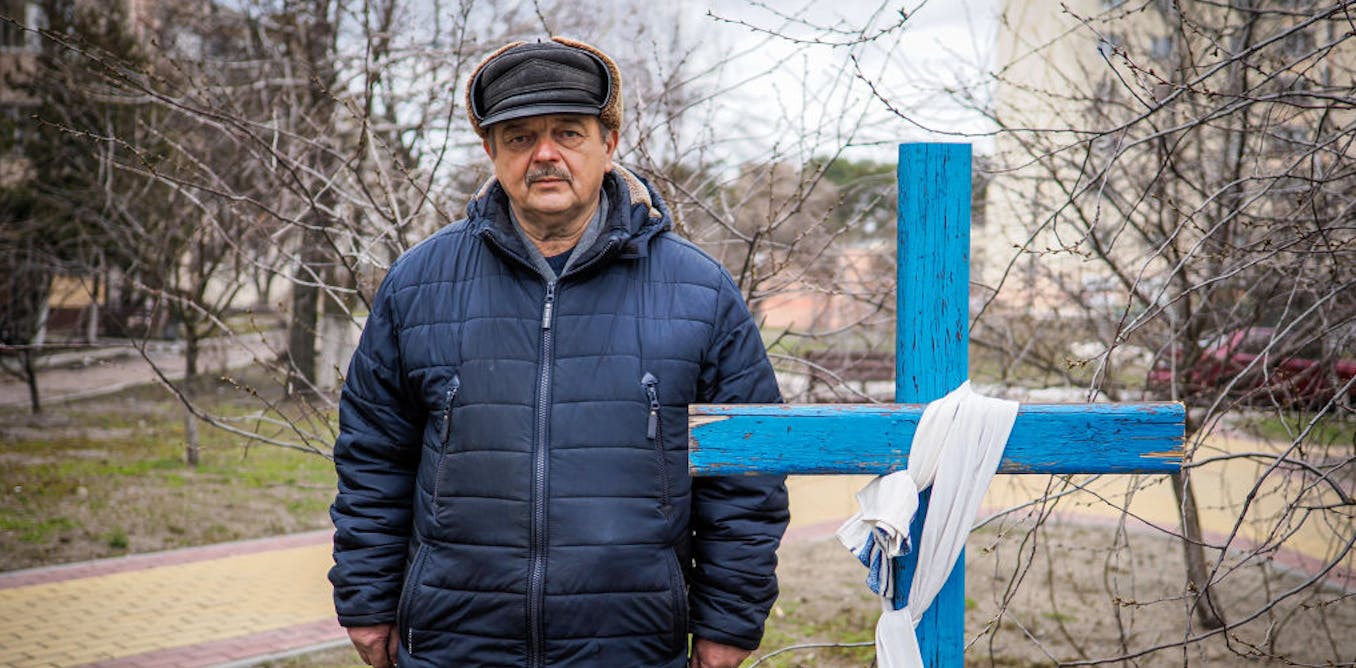
The War in Ukraine has brought images of death and mourning onto screens across the globe and directly into public consciousness. Funerary rights, explains UConn expert Dimitris Xygalatas, are among the traits that archeologists find distinguishing between humans and other species. While those rituals are ostensibly about the dead, their importance, he writes in a new essay published in The Conversation, lies in the roles they play for those still living: They allow them to grieve, seek comfort, face the reality of death and find the strength to move on. They are deeply human acts, which is why being deprived of them can feel devastating and dehumanizing. This is what is happening in Ukraine. In besieged cities, people cannot retrieve the bodies of their loves ones from the streets out of fear of being killed. In other cases, Ukrainian officials have accused the Russian army of burying victims in mass graves to hide war crimes. Even when they are retrieved, many of the corpses have been mutilated, making them difficult to identify. To people who have lost their loved ones, the lack of a proper send-off can feel like a second loss. The need for closure is widely recognized to be indispensable – not only by anthropologists and psychologists, but also first responders, governments and international organizations. This is why armies go to great lengths to return the remains of fallen soldiers to their families, even if that takes decades. The right to a burial is acknowledged even for one’s foes. The Geneva Convention stipulates that belligerents must ensure that the bodies of enemies are “honorably interred” and that their graves are respected and “properly maintained and marked so that they may always be found.” Given the importance of those rites, it is also striking that the Russian defense ministry has reportedly been reluctant to bring their own dead back home, because they are concerned with covering up the scale of the losses. This seeming indifference to the suffering of Russia’s own people and their need for closure may be yet another act of dehumanization. Professor Xygalatas is an anthropologist and cognitive scientist at the University of Connecticut who specializes in some of the things that make us human, including ritual, music, cooperation, and the interaction between cognition and culture. He is available to speak with media, simply click on his icon to arrange an interview today.


As the war rages in Ukraine, what's next? Augusta University expert answers key questions
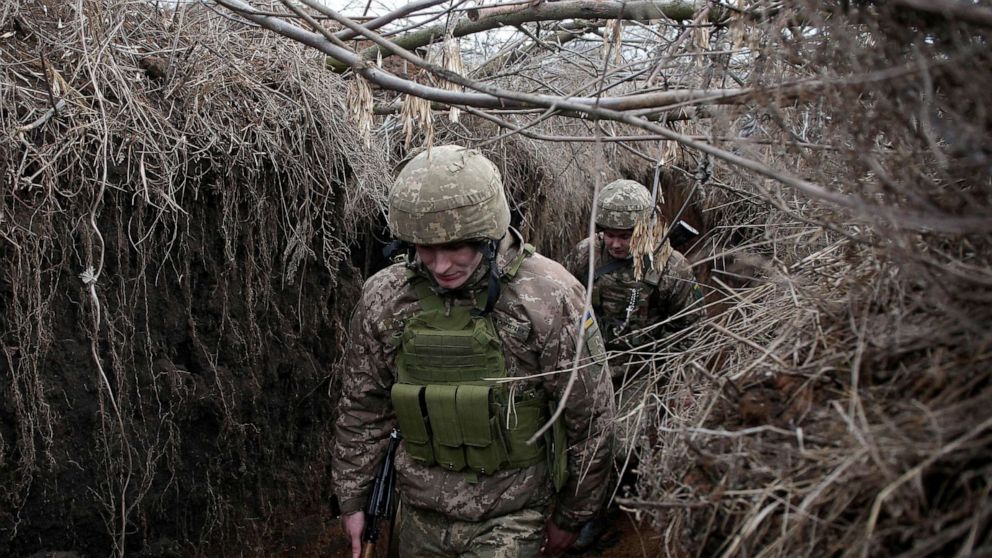
For a month now, the world has watched the invasion of Ukraine by Russian forces. The war has dominated news coverage since before the invasion, with journalists asking why Russia would invade a sovereign country and whether this could expand to an all-out war in Europe for the first time since World War II? There are still many questions to be asked, which is why we’ve enlisted Dr. Craig Albert, from Augusta University. Albert has been speaking extensively with the media answering key questions about the invasion. Q: How has Russia ramped up their war efforts and are the latest attacks a signal that they are going "all in" in taking over Ukraine? “Right now, Russia is still not fighting the war they are prepared for. In other words, they have a massive war-machine but are still only using small parts of it in this war. There are several reasons for this: they may not want to expose their hands to great powers; they may want to bring Ukraine back to the fold, so annihilating them, vis-à-vis, Grozny, might not be the best play. As it is, Russia is still poised to take Kyiv within a few months unless Ukraine has alliance boots on the ground, which is not likely since it will raise the specter of WWIII." Q: What do you expect we will see next? "I think we will most likely see the rise in dirty war tactics and techniques, with more mercenaries, more artillery bombardment, and more foreign fighters joining on both sides, especially former NATO special operations forces moving into the Ukraine International Legion, and well-paid Syrians on the side of Russia. With this increase in contract soldiers, we can expect more human rights atrocities and atrocities committed against soldiers as well as a relaxation of Geneva rules for armed conflict amongst combatants." Q. Do you expect to see Russia direct more cyber warfare the U.S. way? "I expect a steady, prolonged consistent cyber-conflict campaign waged by Russia against Ukraine and its allies, including the US. I don’t expect an escalation on this front at least at it applies to NATO forces. Russia is saving its most savvy cyberweapons for a possible larger-scaled conflict against a major power." If you’re a journalist looking to know more about what lies ahead as the war between Ukraine and Russia continues and how it may impact the United States, then let us help with your questions and coverage. Dr. Craig Albert is director of the Master of Arts in Intelligence and Security Studies at Augusta University. He is a leading expert on war, terrorism, and American politics. This is an important national and international issue. Albert is available to speak with media – simply click on his name to arrange an interview today.

Podcast: Russia expert discusses fears of Putin's 'madness' over Ukraine
Speculation that isolation caused by Covid-19 pandemic could have affected his state of mind Closest advisers said to fear for their lives if they speak out against him Potential scenarios considered include a ‘heart attack-style’ assassination of dictator by senior military and secret services. Two years spent isolating during the coronavirus pandemic have led to a debate that Russian President Vladimir Putin has gone ‘bonkers’, resulting in the invasion of Ukraine. There is now even speculation that only a “heart attack-style” assassination of the dictator by his senior military and secret services could prevent Putin from seeking to expand his borders even further. These themes were discussed by Dr Elisabeth Schimpfössl, a senior lecturer in sociology and policy at Aston University, and author of the award-winning book Rich Russians: From Oligarchs to Bourgeoisie. Dr Schimpfössl, speaking about the ongoing Russian invasion of Ukraine as part of the 'Society matters' podcast series, presented by journalist Steve Dyson, explained there were two reasons why Putin had decided to invade its neighbour. She considered two potential reasons behind the invasion: “The first is he has always had ambitions to incorporate eastern Ukraine and, particularly, keep NATO at bay and not have it anywhere so close to Russia’s own borders. The second thought is whether Putin might have simply lost it, in a clinical sense.” Dr Schimpfössl said Putin had been “extremely isolated” during the pandemic, with very few people allowed to see him in his “bunker”. She added: “It might well be, as bizarre as it sounds and unimaginable as it might be, that he is losing it and courting advice from people who have such fear of him that they would say what he wanted to hear.” While such madness is currently pure speculation, Dr Schimpfössl explained how people close to him would potentially “fear for their lives” if they contradicted him or alerted him to what a “crazy idea” war was. She said Russian Foreign Minister Sergey Lavrov, whose daughter lives in New York, had wanted to retire “years ago” but Putin would not let him. And she mentioned claims that the former head of Russia’s foreign secret service died from an apparent heart attack after he “pretty much messed up” the poisoning of double agent Sergei Skripal in Salisbury in 2018. She said: “It’s pretty obvious that similar fears were deep in the bones of all the closest entourage of Putin. They all know pretty well how the system works.” Dr Schimpfössl described reports on how opposition activists and investigative journalists “suddenly, suspiciously, jump off their balcony to their death. And they threaten people that if they don’t jump then their family will suffer”. She suggested that Russia’s billionaire oligarchs could have taken measures if they had seen what was coming. However, the European Union had now added oligarchs onto the sanctions list for the first time after being deeming them “Putin’s cronies” instead of business leaders. Dr Schimpfössl said: “Until Friday, Putin’s plan was to succeed within maybe a week and sanctions would have become effective in weeks, or months from now. Now things have changed and the EU sanctions have gone a big step further on.” She said it will be a “catastrophe” for Russia’s oligarchs now they are subject to sanctions. The only thing that could “save their skin”, she added, is if they create an image of being “anti-war, anti-Putin”. But would this help stop Putin? “Not if he’s completely gone bonkers, then nothing will stop him,” Dr Schimpfössl again speculated. “It makes him extremely dangerous in terms of his announcement of using nuclear weapons. It would be the maddest possible thing to do, but there is no guarantee anymore.” The only thing that could stop him, she hypothesised, was if Putin suffered the similar fate of a “sudden heart attack” following a “silent coup” by Russia’s top military and secret services, although it is pure conjecture that any such actions are being planned. Opinion polls in Russia suggest that only 40 per cent of the population support the action against Ukraine, compared to 80 per cent over the annexation of Crimea in 2014. Dr Schimpfössl said she hoped negotiations between Russia and Ukraine would lead to an agreement, but added: “We know from history when an aggressor sees itself being on the losing end, or things not go according to plan, they often lash out at the very last moment. Any escalation of the conflict could easily and very quickly get very cruel and barbaric.” Episode 1 in series 3 of the ‘Society matters’ podcast and all previous episodes can be found HERE.


Understanding Ukraine and Russia's long history - let UMW's expert help
As the war in Ukraine now extends past a week, many people are trying to understand the reasoning behind Russia’s invasion of its neighbor. Like most of Eastern Europe, the ink that draws the modern borders we see now on maps is still not dry. If you are a journalist looking to know more about this topic and how the past is now affecting the future of Russia, Ukraine and likely Europe – then let our experts help with your stories. Steven Harris is a professor in the University of Mary Washington's Department of History and American Studies. He is a sought-after expert on modern Russian and European history. Dr. Harris is available to speak with media about this important aspect of the crisis in Ukraine – simply click on his icon now to arrange an interview today.


As the world watches Russia invade Ukraine – what’s next?
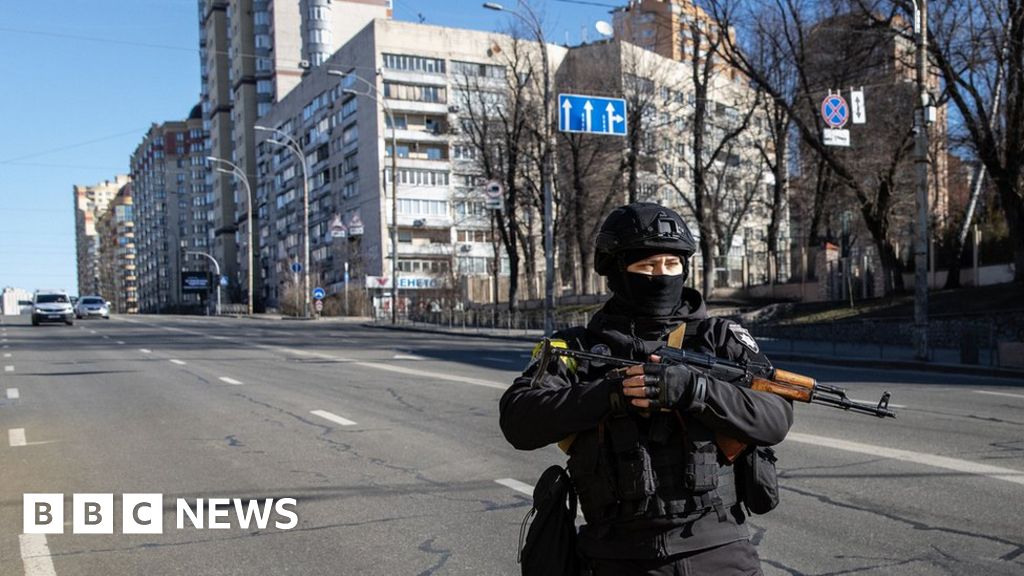
For a week the world has watched as Russian forces have pounded Ukraine from the sky and a full-on ground invasion is now underway. Support in the form of sanctions, speeches and supplies has poured in from NATO and non-NATO allies from across the globe. Ukraine’s army is out-manned and out-gunned, but their resistance has so far defied expectations. But how will this outright show of unprovoked forces that has shocked the world impact global relations moving forward? If you are covering the ongoing invasion of Ukraine by Russia, then let our experts help with your questions and coverage. University of Mary Washington Political Science and International Affairs Professor Jason Davidson is an expert in American foreign and security policy, and international security. To arrange an interview with Dr. Davidson, simply click on his icon.

UCI expert sources for the Russia/Ukraine Conflict
On Friday, Feb. 25, 2022, UCI’s School of Social Sciences hosted a webinar titled, “Understanding the Russia-Ukraine Crisis.” Several of the experts below offered perspective on key issues surrounding the escalating conflict between Russia and Ukraine. You can watch or listen to the webinar here: https://www.socsci.uci.edu/newsevents/news/2022/2022-02-25-understanding-the-russia-ukraine-crisis.php UCI faculty members available to comment, and their areas of expertise, are found below. Matthew Beckmann, Associate Professor, Political Science. Professor Beckman studies the organizational structures and operational strategies presidents can use to pick their team, invest their time, focus their attention, channel their effort, discipline their thinking, coordinate their subordinates, and, most importantly, make decisions. Contact: beckmann@uci.edu Jeffrey Kopstein, Professor, Political Science. In his research, Professor Kopstein focuses on interethnic violence, voting patterns of minority groups, and anti-liberal tendencies in civil society, paying special attention to cases within European and Russian Jewish history. As pertains to the Russia/Ukraine conflict, he can speak to politics in Russia and Ukraine, Authoritarianism, NATO and the transatlantic alliance, and European Union policy. Contact: kopstein@uci.edu Erin Lockwood, Assistant Professor, Political Science. Professor Lockwood’s research areas include international political economy and global financial politics. She can speak to questions related to economic sanctions, financial sanctions/financial infrastructure and payments systems more generally (for example, the prospect of cutting off Russian access to the SWIFT financial communications system.) Contact: eklockwo@uci.edu David Meyer, Professor, Sociology, Political Science and Planning, Policy & Design. Professor Meyer’s research examines the relationships between social movements and the political contexts in which they emerge. Topics surrounding the Russia/Ukraine conflict that align with his expertise include sanction strategy; the resistance strategy that might emerge in Ukraine in the face of occupation; the history of the Cold War and its influence today; and the possibility of a powerful peace/isolationist movement emerging in the U.S. Contact: dmeyer@uci.edu Gustavo Oliveira, Assistant Professor, Global & International Studies. Professor Oliveira is a specialist in global political economy and critical geopolitics, focusing on the BRICS countries (Brazil, Russia, India, China, and South Africa) and international commodity markets, especially agricultural trade and natural resource governance. He can speak to the basis of the Russia/Ukraine conflict on natural resources, and the repercussions of the conflict for international commodity markets, inflation, and disruptions to global food supply chains. He can also speak about the anti-war movements in Russia, Europe, the United States, and broader political repercussions of the conflict in Brazil, Latin America, and the U.S. Contact: gustavo.oliveira@uci.edu Stergios Skaperdas, Professor, Economics and Director of the Center for Global Peace and Conflict Studies. His general area of research is political economy, the interaction of economics and politics. Among other issues, he has studied conflict and wars, the role of the modern state in economic development, and the interaction of globalization and geopolitics. Contact: sskaperd@uci.edu Etel Solingen, Distinguished Professor, Political Science and Thomas T. and Elizabeth C. Tierney Chair in Peace and Conflict Studies. Solingen studies the reciprocal influence between international political economy and international security, globalization and its discontents. She can discuss the crisis in terms of historical precedents (of international crises), the utility of sanctions, bargaining in crisis, Russia’s economic decline and how it bears on the current crisis. Contact: etel.solingen@uci.edu Media Contacts: • Tom Vasich, Communications Officer, UCI | 949-285-6455 | tmvasich@uci.edu • Heather Ashbach, Executive Director of Marketing and Communications, School of Social Sciences | 719-651-3224 | hashbach@uci.edu
