
Experts Matter. Find Yours.
Connect for media, speaking, professional opportunities & more.

Winnipeg, MB, September 3, 2020 – COVID-19 has changed the way we do many things and, the return to school is no different. Many Manitoba students are heading back to school next week and CAA Manitoba (CAA MB) is reminding everyone to slow down and take extra caution while travelling through school zones. Pedestrian safety begins with drivers, and this year more than ever, it’s important to put away distractions such as phones and be extra attentive in school zones, be it a parent driving or a child walking or biking to school. “As students prepare to reunite with friends and classmates after a six-month hiatus, many might forget to take the extra precautions needed to stay safe. This means there is an even bigger responsibility to watch for children travelling to and from school,” says Heather Mack, manager of government and community relations for CAA MB. Drivers can also use the following CAA tips to ensure they are staying safe in school zones: Make eye contact with children: With the excitement of back to school, anticipate that children may not easily see or hear your moving vehicle. Make eye contact with passing pedestrians and cyclists. Reduce traffic by walking: Incorporate a short walk into your commute to school. CAA encourages parents to park a block away and walk to school, if possible, to reduce congestion and make school zones safer. Slow down: Know the speed limit in your neighbourhood’s school zones and respect them. Watch for more school buses: Always stop for the buses’ flashing lights and wait for children to get safely on or off. Stay alert and watch for children or parents crossing the road when the bus moves on. Choose a safe spot to drop off and pick up your children from school: Follow your school’s rules and don’t park illegally, it can put your child’s safety at risk. Instead, use the designated drop off areas or consider a spot a bit farther away from school that is easily accessible and safe. The above tips are crucial in maintaining a safe school zone. According to CAA poll, nearly 25 per cent of drivers reported witnessing a near miss or collision in a school zone, more than half of which involved a child. The poll also revealed 70 per cent of Canadians said they have witnessed someone speeding in a school zone. CAA supports safety in school zones through the CAA School Safety Patrol® program. The program was developed to protect, educate and empower elementary school children on safe road-crossing practices.


MEDIA RELEASE: CAA Manitoba celebrates School Safety Patrols at first-ever virtual event!
Winnipeg, MB, June 18, 2020 – The CAA School Safety Patrol (SSP) Team hosted its first-ever virtual ‘Patroller Jam’ on Wednesday, June 17, 2020 via Event Stream. This year-end celebration honoured the commitment of all Manitoba and Ontario Patrollers in a safe and innovative way. CAA Manitoba is proud to recognize the efforts and achievements of School Safety Patrollers across the province for their dedication to keeping children safe on their way to and from school and in school zones. “These students go above and beyond to keep their community safe and we wanted to ensure we still recognized them despite the pandemic. This event was an amazing way to celebrate these dedicated kids and all that they’ve done this school year,” says Heather Mack, manager of government and community relations, CAA Manitoba. The event was a great success with co-hosts DJ, Sarah Barrable-Tishauer and choreographer, Boneless, entertaining the 1300 patrollers who tuned in! The event also included a live chat, interactive games and an award ceremony. Click here for a highlight reel of the CAA ‘Patroller Jam’ for your coverage. For 84 years the CAA Manitoba SSP program has been keeping students safe. Approximately 300 schools and over 8,000 students participate in the CAA School Safety Patrol program in Manitoba each year. The program is a colloboration between CAA, the police, school boards, teachers, program partners, parents and students. Those involved give their time to ensure students and peers are safe at road crossings throughout Manitoba. During the ‘Patroller Jam’, CAA Manitoba, in partnership with the Winnipeg Police Service - School Engagement Section, Manitoba Public Insurance (MPI) and the Manitoba Moose Hockey Club, announced the recipients of three Patroller awards: City Wide Placing-- Clifton School Most Improved School-- École Précieux-Sang Louise Staples Award Recipient—Remington L. from Stevenson-Britannia School For more information, visit www.schoolpatrolmanitoba.com.
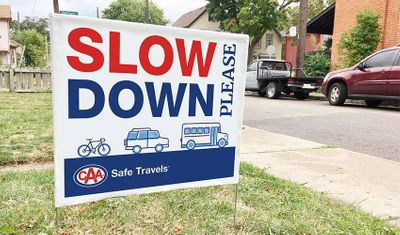
MEDIA RELEASE: CAA urges drivers to protect lives on first national Slow Down Move Over Day
WINNIPEG, May 14, 2019 – CAA is urging motorists to make space for tow trucks providing service on the side of the road on Canada’s first national Slow Down Move Over day. The day promotes a safe working environment for tow truck operators across the country. CAA has long advocated for the protection of roadside assistance workers through Slow Down, Move Over legislation. CAA Clubs across Canada have designated May 14 as Slow Down Move Over day to bring attention to this important issue. “Lack of driver awareness is one of the largest threats to tow-truck operator safety on this day and all others,” said Raymond Chan, government relations, CAA. “Everyone should slow down and move over when they see a tow truck operator on the side of the road.” CAA’s eight Clubs across Canada will be launching public education campaigns and events today to draw attention to the safety risks tow truck operators face. There are approximately 24 million motorists and 15,000 tow truck operators on the road annually in Canada. This leads to thousands of near misses experienced by emergency roadside operators annually and, across North America, nearly 100 tow truck drivers are killed every year after being struck by oncoming traffic while helping stranded motorists with flat tires, breakdowns and collisions. Every tow truck driver knows the number of close calls they've experienced while pulled over on busy roadways. "I figured that was going to be the end, that I was going to be done," said one CAA tow-truck operator after a near-miss during a roadside assistance call. In 2011, the Slow Down Move Over law became part of Manitoba’s Highway Traffic Act. Most provinces and territories have Slow Down Move Over legislation that mandates motorists must slow down and change lanes, if it is safe to do so, to ensure the safety of emergency workers on the roadside, but it is often not observed. Learn more about the Slow Down Move Over Day here: caamanitoba.com/slowdown

MEDIA RELEASE: Empress Street tops list for second year running
WINNIPEG, May 8, 2019 – The votes are in, and Manitoba’s Worst Road for 2019 is Empress Street in Winnipeg for the second consecutive year. “Manitoba’s Worst Roads campaign is about uniting the public in sharing their views,” says Tim Scott, president of CAA Manitoba. “Even with construction taking place on Empress Street at this moment, voters identified it as the Worst Road once again. Empress is a major arterial road that many Winnipeggers rely on to get where they are going. Properly maintained roads lead to safer travels and a healthy economy, but the public understands that further delay leads to a direct financial impact on them. We’re proud to give a voice to Manitobans who want to pave the way for better roads in the province.” Over 2,700 votes were cast for more than 400 roads. Road users of all types voted for the streets they wanted to focus on. Potholes and crumbling pavement continue to be the most critical issue identified by motorists, followed by traffic congestion. Cyclists pointed to potholes and poor cycling infrastructure as their top gripes, while pedestrians cited inadequate walking infrastructure as their biggest problem. Seven of the top ten Worst Roads are in Winnipeg, while three are rural roads. In second place is Provincial Trunk Highway 34 found in western Manitoba near Austin. Eighth place is Provincial Trunk Highway 23, which passes through numerous communities in southern Manitoba, and tenth is Provincial Trunk Highway 32 by Winkler. Some of the Winnipeg roads that have appeared on the Worst Roads list in previous years include Saskatchewan Avenue, Sherwin Road and St. James Street. Earlier this year, both the federal and provincial governments announced that a combined total of approximately $300 million will be spent to improve 350 kilometers of the highway network across Manitoba, and the City of Winnipeg recently announced that one-time federal gas tax funding will be spent on road repairs, road safety initiatives and the promotion of active transportation. “We know that CAA’s ongoing advocacy efforts are working and that governments are listening,” says Scott. “CAA will continue to bring the voice of Worst Roads voters to government and work with stakeholders on how to create infrastructure and transportation that we can all be proud of.”

MEDIA RELEASE: Manitobans can vote on Worst Roads in province
WINNIPEG, March 20, 2019 – Manitobans from across the Province rely on the existing road network to travel each and every day. Whether you are driving, cycling, walking or taking public transit, many of these roads are in a state of disrepair. Today, representatives from Bike Winnipeg join CAA Manitoba in encouraging all road users to focus on safety and infrastructure challenges when they vote on their Worst Roads for 2019. “Everyone has a role to play in making our roads safer, and that’s why we want to hear from all Manitobans about their concerns,” says CAA Manitoba president Tim Scott. “Our annual CAA Worst Roads campaign has influenced change for over seven years by taking input and bridging the public’s interest in the state of good repair of our roads and bridges. In fact, a recent survey of CAA Manitoba members showed that 90 per cent of respondents were concerned about the state of Manitoba’s roads. Moreover, nearly 75 per cent of CAA Members believe that not enough is being done to maintain roads, and that repairs are not occurring in a timely fashion.” Best in class asset management includes prioritizing connectivity for commuters, fixing infrastructure, focusing on safer roads, and includes cycling lanes and increasing transit options. A well-balanced road user program will reduce the wear and tear on Manitoba’s infrastructure and taxpayers’ pocketbooks. “Properly maintained roads and a healthy transportation system translates into safer travels, a healthier economy, and efficient delivery of goods and services,” says Raymond Chan, Government Relations, CCG Club Group. “From our analysis, further delay in road repairs leads to greater costs for governments and has a direct financial impact to the public.” Worst Roads are classified as having potholes, crumbling pavement, poor road signage, limited or nonexistent cycling or walking infrastructure, traffic congestion, or limited crossing opportunities. Mark Cohoe, Executive Director of Bike Winnipeg, sees a variety of issues that need attention. “When people vote in the CAA Worst Roads campaign, they should think of how the roads affect people walking and cycling along our streets as well as those driving along them. Potholes are very dangerous for someone on a bike, and new bike facilities provide a tremendous improvement in safety, comfort, and connectivity. That’s where CAA’s Worst Roads campaign comes in – people on bikes can have their voice heard on infrastructure safety by nominating roads,” says Cohoe. Voting runs until midnight on April 16, 2019. Manitobans can nominate their Worst Road online at caaworstroads.com or through the CAA app. Voters can identify themselves as motorists, cyclists, pedestrians or transit riders and pinpoint a particular stretch of the road for crumbling infrastructure, safety and congestion.

A recent school zone safety survey conducted on behalf of CAA South Central Ontario (CAA SCO) indicates that 78 per cent of Ontario parents report having seen unsafe driving behaviours and only 37 per cent consider the roads around their child’s school to be safe. Some of the most common unsafe driving behaviours parents have witnessed include speeding, double parking and stopping at undesignated areas. “We all have a role to play in keeping our school zones safe,” says Tracy Marshall, manager of community relations at CAA SCO. “These dangerous driving behaviours can lead to serious consequences and CAA is urging motorists to slow down and follow the rules of the road when driving through school zones.” The survey also identified that more than half of parents in the province (66 per cent) support the use of Automated Speed Enforcement (ASE) in school zones, with 79 per cent believing its presence would deter speeding around schools. According to the survey, two in three parents consider that ASE should remain permanent in school zones. “When you’re behind the wheel, you have the responsibility to look out for everyone else around you, including parents, guardians and children,” says Marshall. “It’s important to always watch out for Community Safety Zone signs as they indicate areas where public safety is of special concern and drive with caution through school zones, residential areas and any other areas where children may be walking or playing.” Motorists should also keep an eye out for school buses that are now equipped with amber and red upper flashing lights. Under the new system, upper flashing amber lights will turn on as the bus slows down, indicating that drivers need to be cautious and slow down too. The amber-red system will hopefully provide more clarity when to stop, preventing illegal passings and dangerous sudden stops. CAA reminds motorists that it is an offence to pass a stopped school bus with its red lights flashing and stop arm extended. Fines for a first offense range up to $2,000. It can also result in a significant number of demerit points. Motorists can also use the following CAA tips to ensure they are staying safe in school zones: Help reduce traffic with active school travel: Encourage your kids to walk or ride to school to ease traffic congestion. If your school is a further distance, CAA encourages parents and guardians to park a block away and walk to school, if possible, to reduce traffic and make school zones safer. Slow down: Know the speed limit in your neighbourhood’s school zones and respect them. Ensure you give yourself plenty of time to drop off your kids at school to avoid rushing. Follow the rules of the road near school buses: Always stop for a stopped school bus with its upper flashing red light and/ stop arm activated and wait for children to get safely on or off. Stay alert and watch for children or parents/guardians crossing the road when the bus moves on. Choose a safe spot to drop off and pick up your children from school: Follow your school’s rules and avoid double parking or stopping on crosswalks, dropping off or picking up your kids on the opposite side of the street, and stopping in moving traffic as kids rush out. Instead, use the designated drop off areas or consider a spot a bit farther away from school that is easily accessible and safe. Make eye contact with passing pedestrians and cyclists: With the excitement of going back to school, anticipate that children may not easily see or hear your moving vehicle. Use eye contact to ensure pedestrians are aware of you driving your vehicle. Watch for CAA School Safety Patrollers: As one of the largest youth volunteer programs in Canada, they play an important role by keeping their peers safe on school buses and in school zones. Keep a lookout for their bright safety vests. CAA supports safety in school zones through the CAA School Safety Patrol® program, developed to protect and educate elementary school children on safe road-crossing practices. CAA’s Ontario Road Safety Resource is a toolkit with valuable lesson plans for teachers to help educate students about road safety. To learn more please visit www.caasco.com/schoolzone The study, commissioned by CAA SCO and conducted by Dig Insights between April 13th to 22nd 2022, surveyed 1,402 Ontario parents/guardians between the ages of 18 and 74 with children attending school from kindergarten to grade 8. The margin of error for a sample of this size is plus or minus 2.6% at the 95% confidence level.


Sharing photos of your kids online? Here's what you should consider.
By Emma Richards Today’s parents are the first to raise children alongside social media and in this era of likes, comments and shares, they must also decide when to post images of their children online and when to hold off to protect their privacy. The practice of “sharenting” – parents posting images of their children on social media platforms — has drawn attention to the intersection between the rights of parents and the rights of their children in the online world. Stacey Steinberg, a professor in UF’s Levin College of Law, author and mother of three, says parents need to weigh the right to post their child’s milestones and accomplishments online against the right of a child to dictate their own digital footprint and maintain their privacy. Steinberg, like many parents, avidly posted photographs of her children online to document their childhoods. When she left her job as a child welfare attorney to become a professor, Steinberg also began writing about her motherhood experiences. She also began rethinking posting about her children online, realizing that it could be doing more harm than good. And yet, there was little guidance for parents on to consider when posting images and how to do so with their children’s safety in mind. Among the problematic issues: Machine learning and artificial intelligence allow for the collection of information about people from online posts but there is little control over or understanding of how that stored information is being used or how it will future impact on the next generation. According to Steinberg, a Barclays study found that by the year 2030, nearly two-thirds of all identity theft cases will be related to sharenting. There are also concerns pedophiles may collect and save photographs of children shared online. For example, one article she reviewed reported that 50% of pedophile image-sharing sites had originated on family blogs and on social media. Steinberg says parents should model appropriate social media behavior for their children, such as asking permission before taking and posting an image and staying present in the moment rather than living life through a lens or being fixated with what’s online. “I think it’s a danger that we’re not staying in the moment, that we’re escaping to our newsfeed or that we’re constantly posting and seeing who’s liked our images and liked what we’ve said instead of focusing on real connections with the people in front of us,” Steinberg said in an episode of the From Florida Podcast. While parents serve as the primary gatekeepers for children’s access to the online world, tech companies and policymakers also have roles to play in setting parameters and adopting law that protect children’s safety. Numerous European countries have already moved in this direction with such concepts as the “right to be forgotten,” which allows people to get information that is no longer relevant or is inaccurate removed to protect their name or reputation on platforms such as Google. “The United States really would have a hard time creating a right to be forgotten because we have really strong free speech protections and we really value parental autonomy Steinberg said. Google has, however, created a form that allows older kids to request that old photographs and content about them be removed from the internet, which Steinberg says is a promising step. Steinberg would love to see other mechanisms adopted to minimize the amount of data that is collected about children and ensure artificial intelligence is used responsibly and ethically when collecting online data. In the meantime, parents can proactively make online privacy issues a topic of discussion with their children and take proactive steps to limit their digital footprints, such as deleting old childhood photos. “One thing that I really want to encourage families to do is not to fear the technology, but to try to learn about it,” Steinberg said.


Research team aims to enhance security of medical devices
Tamer Nadeem, Ph.D., the principal investigator of the VCU-based MedKnights project, explained that the project’s focus is on the Internet of Medical Things (IoMT). Nadeem and co-PI Irfan Ahmed, Ph.D., both associate professors in the VCU College of Engineering Department of Computer Science, recently received $600,000 from the NSF’s Office of Advanced Cyberinfrastructure to put together a framework to improve IoMT security. IoMT devices are used in a range of diagnostic, monitoring and therapeutic applications. IoMT includes patient monitors, ventilators, MRI machines — even “smart beds.” Ahmed cited the internet-connected insulin pump is a good example of an IoMT device. Internet connectivity allows for both monitoring and adjusting the dosage remotely — functions that require a high degree of security for patient privacy as well as safety. All IoMT devices are potentially vulnerable to ransomware, denial of service and other malicious hacker attacks. Nadeem points out that IoMT devices have a higher security requirement than traditional IoT devices such as smart doorbells and smart thermostats in homes. “The most important thing in the medical domain is privacy,” Nadeem said. “For IoT devices in your home, you wouldn’t care that much about privacy, but for medical devices, it is an essential thing. You wouldn’t want anyone to know what your health conditions are, or what problems you might have had.” The work of the MedKnights group is important, as the IoMT domain is expanding; there is growth in terms of types of devices, number of patients using them and number of IoMT vendors. Nadeem added that the COVID pandemic and accompanying quarantine and stay-home orders increased the focus of medical-technology providers on the possibilities of IoMT. “Talking to some of the medical-device providers, I’ve learned that they are considering a line of products where they can remotely monitor patients on those devices, and they also can configure those devices remotely,” Nadeem said. Security is a large concern for the new generation of devices, because the current IoMT devices have been hit hard by hackers, he said. Security is an issue that extends from the individual patient to the institution. “Statistics show there are a lot of ransom attacks being done on the health sectors during the pandemic,” Nadeem said. “That motivated us.” The MedKnights team’s preparation for taking on the dragon of malicious IoMT attacks includes building a “test bed,” an isolated hardware/software assembly that Nadeem says will mimic the internet-enabled hospital setting. “In the hospital environment, there’s set of rooms. Each room has a lot of medical devices; they could be wired, or they could be wireless devices,” he said. “But there is no way that we can do what we want to do in a hospital.” The test bed will incorporate IoMT datasets based on typical device behavior, traffic and known malicious attacks. Nadeem explained that MedKnights will explore vulnerabilities of various IoMT hardware and software by subjecting the elements of the IoMT test bed to a range of attacks. “We will try to see in real time how efficient our technologies to monitor or detect these attacks, then try to intervene if we notice any change in the activities on the network,” he said. “Now, if the attacks manage to get into the device, we would like to also to start to see whether we can monitor these devices and observe abnormality or any misbehavior.” Nadeem said the next step is to isolate the source of fishy activity in the test bed network and begin to reverse-engineer the malware. He explained the group will work on understanding the question by looking for the “hole” that created the vulnerability. Ahmed said the MedKnights will bring undergraduates into the project through DURI, the Dean’s Undergraduate Research Initiative at the VCU College of Engineering. High school students will have an opportunity to join the team through a similar program known as the Dean’s Early Research Initiative, or DERI. DURI and DERI are just two ways of getting younger scientists and engineers involved in actual research. “For the last couple of years, I’ve been contacted by local high schools to host a couple of their students during the summer,” Nadeem added. “The students were really excited about it. We came up with some nice ideas about how to extend that work to their classrooms. As we continue this project, we will reach out to the schools, because we would love having a couple of their students involved.”


Driving the Ambitious $30M Plan for an Autonomous Vehicle Test Track and Research Center
Innovation and the automobile industry are on the move at UConn -- after four years of planning, coordinating, and developing, a major project is moving closer to reality in Connecticut: UConn’s Board of Trustees recently approved an option agreement to sell 105 acres in the southwest portion of the school’s Mansfield Depot Campus to a private company — Promesa Capital LLC — headed by Cortese, who would lead a group of investors in developing the site as the region’s first-ever connected and autonomous vehicle test track and research facility. Such a facility, Jackson and Cortese said, would be a boon for the university and region, helping make UConn a leader in autonomous vehicle research, technology and safety. “My goal is to raise the stature of UConn to a school where world-class research takes place on this technology, and students come to UConn specifically to work with leading faculty on projects that will change the way we travel,” Jackson said. “UConn will be transformational in terms of research and will provide a world-class facility to open opportunities we’ve never had before for the future of transportation.” August 15 - Hartford Business Journal The endeavor has the potential for lasting positive impact in areas including innovation, research, investment, and the economy, and Eric Jackson -- director of the Connecticut Transportation Safety Research Center at UConn -- is at the forefront of this exciting development. If you are a journalist looking to know more, let us help. Simply click on Jackson’s icon to arrange an interview today.



Politics, policy and public safety: Experts explain why a popular Atlanta festival was canceled
A sad tune is being hummed in Atlanta, where it was announced the popular annual Music Midtown festival is not happening, possibly in part due to the state’s laws surrounding guns in public parks. The event's cancellation, which brought tens of thousands of music lovers to the city -- along with the tourism dollars they spend -- has caused disappointment and drawn local and national media coverage. Calling it a “sad day” for the city, Atlanta City Council President Doug Shipman wrote on Twitter that: “Public policy has real impacts and, in this case, economic and social implications on a great tradition.” And state Democrats chastised Republicans for adopting a raft of pro-gun legislation, including a 2022 law that allows Georgians to carry concealed handguns without first getting a license from the state. The governor, who is seeking a second term, did not immediately comment on the festival’s decision. But state Rep. Rick Jasperse, a Jasper Republican who sponsored the 2014 law, said the measure is designed with public safety in mind. He said those intent on “causing chaos and crime in Georgia” won’t care if the festival bans firearms and would try to bring them in regardless. “Good Georgians who can qualify for a permit and carry a weapon do so to protect themselves from that element in our society,” he said. -- The Atlanta Journal Constitution, Aug. 1, 2022 Organizers of events like Music Midtown could look at Georgia’s gun laws and regulation of firearms as a potential legal liability. If there is a firearms incident, organizers may fear being held legally accountable and sued for any potential damages. The companies and their risk management advisors might think twice about holding large events in Georgia. Augusta University's Dr. William Hatcher, an expert when it comes to public administration and social, economic and political institutions in local communities, agrees that event organizers might be rethinking their plans in the state. "Yes. I think so. These types of laws have an impact on the economy and the business decisions of firms. We may see future effects on the economic behavior of individuals and firms." This topic could have further economic impact beyond canceled events, including affecting property values and home prices. If you're a journalist looking to know more, then let us help with your stories. Dr. William Hatcher is a professor of political science and chair of Augusta University’s Department of Social Sciences. He is an expert in the areas of public administration and social, economic and political institutions. Hatcher is available to speak with media regarding this topic. To arrange an interview today, simply click on his icon now.

