
Experts Matter. Find Yours.
Connect for media, speaking, professional opportunities & more.

How safe is your baby food? A UConn expert explains.
A new congressional report has raised concerns from regulators and outcry from parents about the level of heavy metals - including things like lead, arsenic, and mercury - that are found in commercial baby foods. Dr. C. Michael White, chair of Department of Pharmacy Practice at the University of Connecticut and an expert in the safety of drugs and dietary supplements, has weighed into the baby food debate with a recent piece for The Conversation. In his article, Dr. White examines such topics as: How do heavy metals get into baby food? How much heavy metal is too much? What can parents do to reduce a child’s exposure? Is anyone doing anything about it? Dr. White says that, while there are steps for parents to take now, baby food manufacturers will ultimately have to alter certain practices to reduce the presence of heavy metals in their products. The U.S. has made important inroads in reducing heavy metals in air and water since the 1980s, dramatically lowering exposure. With additional focus, it can further reduce heavy metal exposure in baby food, too. Dr. White is available to speak with media regarding this topic. Simply click on his icon now, to arrange an interview today.


Study of auto recalls shows carmakers delay announcements until they can 'hide in the herd'
BLOOMINGTON, Ind. - Automotive recalls are occurring at record levels, but seem to be announced after inexplicable delays. A research study of 48 years of auto recalls announced in the United States finds carmakers frequently wait to make their announcements until after a competitor issues a recall - even if it is unrelated to similar defects. This suggests that recall announcements may not be triggered solely by individual firms' product quality defect awareness or concern for the public interest, but may also be influenced by competitor recalls, a phenomenon that no prior research had investigated. Researchers analyzed 3,117 auto recalls over a 48-year period -- from 1966 to 2013 -- using a model to investigate recall clustering and categorized recalls as leading or following within a cluster. They found that 73 percent of recalls occurred in clusters that lasted 34 days and had 7.6 following recalls on average. On average, a cluster formed after a 16-day gap in which no recalls were announced. They found 266 such clusters over the period studied. "The implication is that auto firms are either consciously or unconsciously delaying recall announcements until they are able to hide in the herd," said George Ball, assistant professor of operations and decision technologies and Weimer Faculty Fellow at the Indiana University Kelley School of Business. "By doing this, they experience a significantly reduced stock penalty from their recall." Ball is co-author of the study, "Hiding in the Herd: The Product Recall Clustering Phenomenon," recently published online in Manufacturing and Service Operations Management, along with faculty at the University of Illinois, the University of Notre Dame, the University of Minnesota and Michigan State University. Researchers found as much as a 67 percent stock market penalty difference between leading recalls, which initiate the cluster, and following recalls, who follow recalls and hide in the herd to experience a lower stock penalty. This indicates a "meaningful financial incentive for auto firms to cluster following recalls behind a leading recall announcement," researchers said. "This stock market penalty difference dissipates over time within a cluster. Additionally, across clusters, the stock market penalty faced by the leading recall amplifies as the time since the last cluster increases." The authors also found that firms with the highest quality reputation, in particular Toyota, triggered the most recall followers. "Even though Toyota announces some of the fewest recalls, when they do announce a recall, 31 percent of their recalls trigger a cluster and leads to many other following recalls," Ball said. "This number is between 5 and 9 percent for all other firms. This means that firms are likely to hide in the herd when the leading recall is announced by a firm with a stellar quality reputation such as Toyota. "A key recommendation of the study is for the National Highway Traffic Safety Administration (NHTSA) to require auto firms to report the specific defect awareness date for each recall, and to make this defect awareness date a searchable and publicly available data field in the auto recall dataset NHTSA provides online," Ball added. "This defect awareness date is required and made available by other federal regulators that oversee recalls in the U.S., such as the Food and Drug Administration. Making this defect awareness date a transparent, searchable and publicly available data field may discourage firms from hiding in the herd and prompt them to make more timely and transparent recall decisions." Co-authors of the study were Ujjal Mukherjee, assistant professor of business administration at the Gies College of Business at the University of Illinois who was the lead author; Kaitlin Wowak, assistant professor of IT, analytics, and operations at the Mendoza College of Business at the University of Notre Dame; Karthik Natarajan, assistant professor of supply chain and operations at the Carlson School of Management at the University of Minnesota; and Jason Miller, associate professor of supply chain management at the Broad College of Business at Michigan State University.


Trump’s reaction to defeat further confirms urgency for school focus on social-emotional skills
Sandra Chafouleas, psychologist and behavioral health expert from the University of Connecticut, weighs in: Imagine what would happen if a preschooler didn’t “use their words” when they got upset about sharing, instead stomping around yelling while adults simply observed in silence. Think about what the school climate would feel like if a student punched another during recess while others watched without seeking help. Now consider the actions – and inactions – by Donald Trump on January 6 as the electoral vote counts occurred at the U.S. Capitol. Those behaviors show a desperate need for social emotional learning. According to the Collaborative for Academic, Social, and Emotional Learning (CASEL), social emotional learning involves five core competencies: self-awareness, self-management, social awareness, relationship skills, and responsible decision-making. Trump did not demonstrate these competencies when the election didn’t go the way he wanted. Connecting these school scenarios and Trump’s behaviors is not intended to contribute to the ever-mounting list of recommended consequences that could result from his fueling the insurrection that our nation has just experienced. It does bear noting, however, that if Trump were a Black teenager, he most certainly would have received exclusionary disciplinary action such as suspension and perhaps even expulsion from school. The purpose in connecting the two scenarios is to draw energies toward actions that propel us forward in bridging a divided nation. The responsibility for forward movement falls to future generations, which means it is critical that we pay attention to what happens in schools right now. We need to demand that policies and practice — and necessary resources — are put in place to strengthen school capacity to support students on their path to holding responsibility for democracy. Many excellent resources have quickly appeared to assist educators in teaching about the insurrection. Discussion guides are available to facilitate defining key terms, contrasting events through a social justice lens, and comparing justifications for action using fact checking. Other resources have been released that help adults talk about violence and support emotional safety of kids. What seems to be less prominent, however, is a direct connection to the social, emotional, and behavioral skills that we have just witnessed are missing. Education systems have begun the work of acknowledging their historic roles in contributing to exclusion, inequity, and intolerance of differences. Educators are working hard to turn the tide toward promising alternative approaches. Prominent among those approaches is a focus on social emotional skills. In either classroom scenario above, educators would be jumping into discussion about what supports are needed to address student needs. Social and emotional well-being fulfills us throughout every stage of life – integrating those skills should be in all that we do as adults to model, teach, and give feedback to our children. Of course schools must teach academic content areas and have high expectations, but there is tremendous potential to increase capacity to embed exploration, active practice, and positive feedback about social and emotional skills within each corner of the day. As one example, history professor Kellie Carter Jackson writes about challenges in teaching violence in political history. The author describes the need to question how political violence should be labeled, which could reveal an expression of unmet need by marginalized people. Learning through this analysis offers social and emotional parallels, such as examining biases, recognizing emotions, and examining integrity. As another, Facing History and Ourselves offers a classroom resource specific to the insurrection. Activities reference principles of social and emotional learning, such as steps for educators to practice self-awareness and relationship skills by examining their own emotions and perspectives. Student self-management and social awareness builds through reflection activity that builds civic agency. All of these examples offer incredible opportunity in social and emotional learning that could be advanced with more explicit connection. Entrenching social and emotional learning within the school day beyond this immediate teachable moment also is needed to enable sustained effort. CASEL identifies adults as key to social emotional strategies that will maintain safe, supportive, and equitable learning environments for this moment in history. To do so requires a strong collection of social, emotional, and behavioral education policies and practices. Responsibility for urgently resourcing this collection rests within each of us, right now, to ensure future generations who can and do take part in a resilient democratic nation. Dr. Chafouleas is licensed psychologist and Distinguished Professor, with expertise in school psychology and school mental health at the University of Connecticut’s Neag School of Education. If you’re a reporter looking to speak with Dr. Chafouleas about this topic – let us help. Simply click on her icon to arrange an interview today.


Are vaccine passports legal in a post-COVID-19 era? Let our experts explain
As America and the world look to slowly round the corner of the safety measures enacted during the COVID-19 pandemic, the new coronavirus vaccines are giving hope of an eventual return to normal. However, with an active anti-vaccination movement afoot and many still skeptical of getting that essential poke in the arm, the World Health Organization said some government officials are suggesting the idea of vaccine passports. A simple piece of identification would end the uncertainty that comes with travel, work and the much sought-after leisure that often means crowded places and smaller spaces. The idea has already caught on in countries in Europe and South America. It may be the safety blanket many seek, but are vaccine passports actually legal? It is a question that’s beginning to get serious coverage. “Having proof of vaccination can be essential for a number of sectors other than health, but we cannot overlook the potential discriminatory consequences that may arise,” said Dr. William Hatcher, an expert in public policy and interim chair of the Department of Social Sciences at Augusta University. Another idea being floated is immunity passports, but Hatcher suggests¬ allowing only people with immunity to work might disadvantage those who haven’t gotten sick or those without the antibodies to prove it. It’s as if, in the eyes of their employer, their lack of infection constitutes a disability. The inequality that immunity passports could foster in these situations may be illegal under the Americans with Disabilities Act. There are also other ethical, practical, and cultural aspects to consider as well. If you are covering this emerging topic and are looking to know more, our experts can help. Dr. Hatcher is a professor of political science and interim chair of Augusta University’s Department of Social Sciences. He is an expert in the areas of public administration and social, economic, and political institutions in local communities. Hatcher is available to speak with media regarding the concept of vaccination and immunity passports. To arrange an interview, simply click on his name.


Resilience in the Face of COVID-19
Brunswick Senior Advisor Paddy McGuinness, former UK Deputy National Security Adviser, on how businesses can chart a course amid the fear and uncertainty. We are all becoming more familiar with this disease than we care to be—and may become yet more so. Still uncertainty remains. It began even with the terminology. Coronavirus is a descriptor, a general term. Under the microscope, the virus has crown-like spikes, hence corona. The common cold and variances of it are coronaviruses. COVID-19 (as in Corona Virus Disease 2019) is the effect that this particular coronavirus has on the human being—that’s the disease the world’s grappling with. That’s the distinction between the two terms. We’ve now spoken to more than 150 clients about their situation. That has given us a broad view of the corporate response across affected geographies from Asia, through the Middle East and Europe to the Americas, a window into how those responses have played out and the challenges continually unfolding. Here’s what we’ve been advising our clients: First, develop a single view that’s grounded in professional, well-sourced information. In government we called this “a commonly recognized information picture.” That view has to be based on the responsible medical experts: the World Health Organization, the Center for Disease Control, Public Health England and similar bodies. You do not get it from the newspapers, from social media, from friends, or even your local medic. You operate on the basis of informed medical and public health advice. The current vocal challenge to that advice in Europe and the US is not reason to depart from it as your foundation for the actions you take. A leadership team needs to develop the discipline to clarify that generic narrative into a specific frame for their business context and then operate within it. It’s dangerous for leaders to start pretending they’re epidemiologists. Have a single view and stick to it. I’ve been on calls with leadership teams where there’s agreement on that view and then someone says, “But I read that the disease ...” Don’t go there. Don’t work on that basis. The uncertainty is difficult enough to deal with. Don’t add to it. You will be focused first on the safety—the human consequences—of your course of action and then on the resilience of your business. That may cause you to anticipate some of the “Non Pharmaceutical Interventions” that government makes. Brunswick has. Having established your position, think through how you’re going to communicate it to employees, customers, and investors. What about your suppliers and regulators? How might you engage with local public health officials and local authorities? Exaggeration and understatement are equally unhelpful. These engagements need to be tailored, yet aligned within your broader narrative. Leaders also need to plan for reasonable worst-case scenarios. Covid-19 has already spread in a way that we hoped wouldn’t happen, and in a way that standard business continuity planning doesn’t cover. Now, many in the workforce have to work from home. Among other considerations, that produces additional cyber and data vulnerability. What if schools close and your employees have children at home they have to look after? What will your IT capabilities be if 20 to 40 percent of your team is incapacitated at any one time during the peak period? Are your HR teams prepared to deal with the most unfortunate case, where employees or their close relatives pass away? In extreme times, it can be tempting to take extreme positions. A lesson of crises is never to enter into something without knowing how you’re going to get out of it, how to reverse it. If companies are going to start shutting down their operations, how are they going to open again? On what justification? Taking fixed positions amid great uncertainty can prove restrictive—or counterproductive—when circumstances change. Resilience is the ability to respond and recover to the state prior to the event, having learned the lessons of the event. Respond and recover—that’s the long-term goal here. Covid-19 will pass. We know from other pandemics that recovery does come. How can you position yourself to take advantage of that recovery, to get back with speed and strength? Because some companies will. Now more than ever senior leaders need to talk about how things will be the other side of the crisis and to describe signs of recovery. This is easiest for enterprises with transnational reach. They recount what is happening in Asia as the disease passes so that European and US stakeholders can see beyond the immediate demands of emergency response. On a personal level, stick close to the medical experts and the people who know what they’re talking about. I may well get Covid-19 here in the United Kingdom. I assume that, like the vast majority of healthy people who get it, I will experience mild to moderate symptoms and recover just fine. If I don’t, I want health services to be available. I want the spread to be managed at sustainable levels, so I am doing what Government asks of me and avoiding all but essential contact with others and unnecessary travel. I expect that more will be asked of me, my family and colleagues before we are through this. I wouldn’t let Covid-19 overwhelm you in your daily life, given what we know. That’s certainly my intention: carry on with as much normality as possible, support others and use the unexpected circumstances to prepare for the recovery phase which will come.



Criminals are opportunists, and the COVID-19 global onslaught has brought with it not just health threats but cybersecurity risks, too. Within weeks of the COVID-19 outbreak, hackers have already commandeered the virus to unleash cyberattacks, sending emails purporting to provide coronavirus guidance laced with cyberattack software. In one more alarming case, they appear to have attacked a hospital and forced it to cancel operations and take key systems offline. As the outbreak continues to intensify, the UK National Cyber Security Centre (NCSC) warned that the volume of these attacks will likely increase, pointing to the increased registration of coronavirus-related webpages. Criminals are opportunists, and the COVID-19 global onslaught has brought with it not just health threats but cybersecurity risks, too. As companies move to protect the health of their workforce, it’s also important to protect the systems they’re using to run their businesses. It’s especially important for hospitals to shore-up their cyber defenses. If they don’t, just as they are racing to respond to COVID-19, they could face situations like University Hospital Brno in the Czech Republic, which earlier this month was forced to divert patients and cancel planned operations while it worked to address an attack. The most likely cyber threats are email “phishing” campaigns that use the coronavirus as a lure to get the recipient to open an attachment that contains malware. According to the NCSC, such “phishing” attempts are happening on a global scale in multiple countries, which has led to both a theft of money and sensitive data. Similarly, known hacker groups have been launching websites purporting to sell masks or other safety-related measures for coronavirus, possibly to use them as another vector for cyberattacks. The NCSC has also cautioned that these attacks are “versatile and can be conducted through various media, adapted to different sectors and monetized via multiple means, including ransomware, credential theft, bitcoin or fraud.” The cybersecurity firm ProofPoint has seen a rise in these cyberattack emails with COVID-19 themes since January. Both ProofPoint and IBM’s X-Force cybersecurity unit identified a campaign that targeted users in Japan with an email masquerading as a coronavirus information email that carries with it a potent type of cybercrime software. In the US, the Secret Service recently warned of scams from online criminals posing as sellers of high-demand medical supplies to prevent coronavirus. They’ll require payment upfront and not send the products. Cyber criminals have also been posing as the World Health Organization and the US Centers for Disease Control and Prevention (CDC), sending fraudulent emails from the former and “creating domain names similar to the CDC’s web address to request passwords and even bitcoin donations to fund a vaccine” for the latter. In addition to the use of the coronavirus as a cyberattack vector, the growing need for working remotely to mitigate the spread of COVID-19 has increased companies’ exposure to cyber threats. The increase in remote work creates more opportunities for hackers to make inroads from less secure locations. Companies should also ensure they can provide adequate security when their whole workforce is remote. They should quickly work through the security implications of workers choosing to switch to insecure personal devices. With national-level pressures on home broadband, staff will also resort to mobile hotspots, which are often less secure. And enabling remote connectivity at scale, with the right security configurations, can be a challenge even with months of preparation time. A recent US Department of Homeland Security COVID-19 cybersecurity notice pointed to the importance of making sure that security measures are up to date for companies’ remote access systems. Additional measures to consider include enabling multifactor authentication—which can require two or more steps to verify a user’s identity before granting access to corporate networks. The NCSC is also working to identify malicious sites responsible for phishing and cyberattack software. A final looming cyberthreat related to Covid-19 is disinformation. The World Health Organization and other agencies have for months been combatting disinformation campaigns spreading false information about the origins of and treatments for COVID-19—reports that seed more confusion and increase risks to society. All of that means that computer virus risks are emerging as the biological virus spreads—and both are a threat to business. Cyber risk mitigation efforts should account for the different ways that a company can be affected, including impacts on the technical, operational, legal and reputational aspects of a business. Often, the reputational effects of a cyberattack are more significant than direct the business or technical impact. To mitigate all of the potential impacts of cyberattacks taking advantage of the Covid-19 outbreak, companies should: Review and update crisis and cybersecurity response plans, and ensure internal and external communications response plans are robust. Confirm that members of the crisis management team understand their roles and responsibilities. Make sure all communications channels have the latest security patches. Review and update access controls, particularly when remote access is used heavily, to make sure that only those who require access to sensitive systems to do their jobs have it. Take extra care when handling medical information. For companies managing employees who have contracted Covid-19, it’s important that personal health information is handled with strong security measures, including encryption. Educate employees about the cyber risks that may attempt to capitalize on fear of the Covid-19 virus—whether it be phishing email or disinformation. Covid-19 poses a number of short- and long-term challenges to business resilience, and the virus’s trajectory is quick and unpredictable. But it’s possible to anticipate and mitigate a number of the cyber threats that will try to ride the virus’s coattails. The companies that do will be more resilient and better positioned to withstand the direct health and operational effects of the virus.

Optimizing the delivery speed promise can boost sales
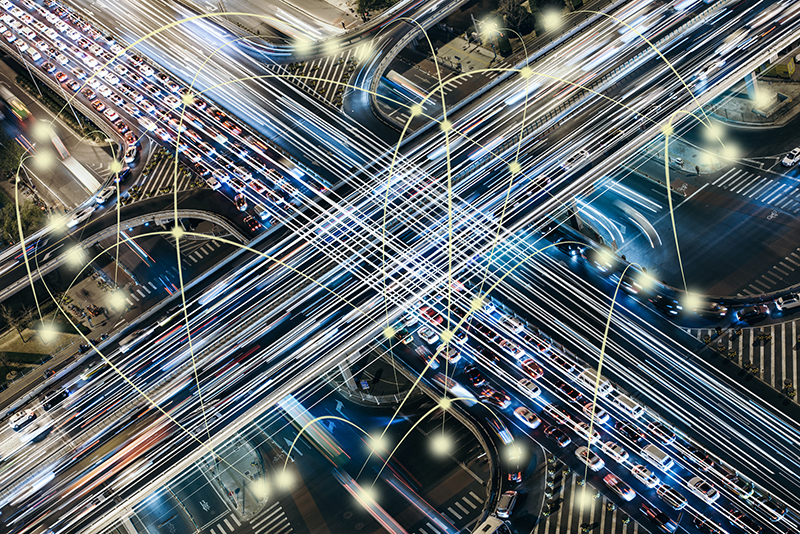
After the coronavirus pandemic forced most of the country into lockdown, online shopping soared. According to CCInsights.org, by the end of April 2020 there was a 146% year-over-year increase in U.S. and Canadian online retail orders. Amazon was so overwhelmed by the combination of increased demand, logistical nightmares, and warehouse worker safety issues that the company announced significant delays in its Amazon Prime shipping speeds. When the company announced it would prioritize the shipping of essential items, the online retailer’s third-party sellers were left to manage their own shipping — something Amazon usually did for them. Shoppers who placed orders for non-essential products at the end of March sometimes received estimated delivery dates of more than a month away. While consumers often received their orders sooner than the 30-day estimate, for Prime shoppers used to getting their items delivered for free the next day, the change in delivery speed was a shock. Amazon shoppers turned to alternative outlets that promised much quicker delivery speeds. Companies with strong e-commerce positions and supply chains, such as Walmart, took advantage of Amazon’s situation. “People are very sensitive to delivery and how fast they can get products,” said Ruomeng Cui, assistant professor in information systems & operations management. “Maybe, just maybe, Amazon would be able to deliver faster than one month, but they chose to promise customers one month — that was their choice.” Unfortunately for Amazon, by setting conservative delivery speed promises, they exacerbated an already bad situation. According to Cui’s paper “Sooner or Later? Promising Delivery Speed in Online Retail” (Ruomeng Cui, Tianshu Sun, Zhikun Lu and Joseph M. Golden), optimizing delivery speed promise can have a substantial effect on a company’s sales. How substantial? Without changing the actual delivery speed itself — only the delivery speed promise — Cui’s research showed that when the retailer promised customers one day faster shipping, sales increased, profits increased, and customers spent more on each order. “It’s a very critical decision for retailers to try to determine how to manage delivery and how to manage the information aspect of delivery,” added Cui. The study is attached and found two key findings: The value of communicating delivery times From a customer satisfaction standpoint, the conservative disclosure lowered customer satisfaction while the aggressive disclosure didn’t affect the company’s satisfaction score, although it did increase product returns when shipping speed was overly aggressive and products were delivered late. “These results indicate that in our research context, promising customers a faster delivery speed can boost sales and profitability but at the cost of a higher product return rate,” the researchers wrote. They go on to caution retailers that promising a conservative shipping speed can be costly. “It’s a careful balance that companies need to think about — how to manage customers’ expectations properly,” explained Cui. Crafting the delivery promise Given online retailers’ adoption of machine learning, Cui believes companies could tweak their algorithms to explore what products and which types of customers are more tolerant to over-promising as it relates to the delivery speed promise. “Companies can then use the analysis to customize and differentiate the types of products that adopt different types of information strategies,” Cui said. “Just change your algorithm, learn and incorporate some of the data-driven decisions and methods.” Going forward, Cui hopes to customize algorithms for companies in an effort to help them dynamically optimize how to promise the correct delivery speed to customers. While many companies, like Collage.com, don’t own their own delivery function and can’t change the actual delivery speed by changing infrastructure, these companies can “manage the information,” said Cui. “It’s easy, and I think it should be the retailer’s responsibility and job to optimize.” “I want to advocate for all retailers to think strategically in their information aspect,” said Cui. “Don’t let such an easily fixed lever just sit there at almost zero cost.” If you are a journalist looking to cover this study or speak with Professor Ciu about subjects like online shopping and operations management, simply click on her icon now to arrange an interview today.



MEDIA RELEASE: Stay Alert Stay Safe: Daylight saving time ends soon
CAA South Central Ontario ( CAA SCO) is reminding all motorists and pedestrians to stay alert as daylight saving time ends at 2 a.m. on Sunday, November 1. The return to standard time means fewer daylight hours and reduced visibility for all road users. “We know that typically, in November, there is a spike in collisions between motorists and pedestrians. Road safety and pedestrian safety are a shared responsibility. Taking precautions and being aware of other road users helps us all arrive at our destinations safely,” says Raymond Chan, manager of government relations, CAA SCO. While pedestrian incidents increase every year at this time, the latest research indicates the potential for harm is even higher today due to COVID-19. Earlier this year, CAA SCO conducted a study of 1500 Ontario licenced drivers that found, because of COVID-19, people are most comfortable driving their vehicles, walking or cycling to get around over the coming months. The study also found that: Respondents were more likely walking one to three times a week before the pandemic but are more likely to walk four to seven times per week during the pandemic. These numbers are in line with a CAA National survey that also found 30 per cent of cyclists increased their activity. “Our study also showed that not yielding to cyclists/pedestrians and drivers running stop signs or red lights were the most reckless driving behaviours seen within city limits during the pandemic," says Chan. "We are facing additional challenges this year. Physical distancing means pedestrians may step out onto the road to keep their distance from others or may take longer to cross at intersections. It is important now more than ever to remind road users to follow the rules of the road and be patient." What motorists can do to stay safe: Always look for pedestrians crossing the road. Be alert and attentive while driving and yield to pedestrians who are stepping on to the road to maintain physical distancing. Mind your blind spots. Be aware of blind spots when making turns at intersections. Stay focused and vigilant behind the wheel. Avoid distractions inside and outside of your vehicle. Slow down in school zones. Reduce your speed and obey speed limits in school zones and residential neighbourhoods. Prepare for the unexpected. Residential streets and school zones have different types of obstacles, such as children playing outdoors, riding bikes, skateboarding, etc. Be cautious and considerate. Be alert around stopped transit vehicles and be courteous to pedestrians with different mobility needs that may require more time. Use your lights. Motorists should use their full lighting system when it gets dark and in low visibility situations. What pedestrians can do to stay safe: Be careful when physical distancing on the sidewalk. Try to avoid stepping out onto road and if you end up stepping on the road, ensure there are no vehicles in the lane. Always be aware of your surroundings. Avoid distractions and be alert while crossing the street and stepping onto the road. Follow the flow. Follow signals and cross at designated locations or crosswalks. Stop, look, and listen. Ensure all traffic has come to a complete stop before crossing the road. Keep an eye out. Make eye contact with motorists—never assume that drivers can see you or know your intentions. Be visible. Pedestrians should wear bright or reflective clothing or accessories at night to help with visibility. Additionally, motorists should take extra caution on Halloween as some regions could have trick or treaters and they may have the added visual restrictions of wearing a mask or face shield. CAA SCO is offering free reflector tags at CAA Stores that can be attached to backpacks and jackets. Find your nearest CAA Store here and stop by to get up to four free tags per family.


STORY: The CAA School Safety Patrol team receives international award for their work
Scoring top marks in the category of Communications/PR Campaign of the Year, for Events and Observances, CAA School Safety Patrol ® team was awarded the Gold Stevie Award in the 17th Annual Business Awards for their work on CAA School Safety Patrol 90th Anniversary Campaign. The team worked on campaign elements like, alumni videos, a vest redesign, a choreographed dance called ‘The 45’ Dance and an float entry into the Toronto Santa Claus Parade. The award recognizes the achievements and positive contributions of organizations and working professionals worldwide. This year, the winners were chosen from a pool of over 3,800 nominations from 63 nations and territories. Some quotes from the judges on our entry: "All activities promoting the 90th anniversary reached perfectly their targets and especially the dancing must have leveraged the activities to something cool and awesome – just as kids said… Great ideas, at the same time simple and engaging! Great job." "Impressive and innovative campaign, very interesting!" "Most thrilling and engaging anniversary celebrations for an extremely important cause - safety of the school going kids. Thoroughly enjoyed the videos." The CAA School Safety Patrol program was developed to protect, educate and empower elementary school children on safe road-crossing practices. Along with CAA, the police, school boards, teachers, busing consortia, parents, and approximately 20,000 dedicated student volunteers give their time to ensure road crossings and school buses remain safe for young Ontarians. Approximately 900 schools in Ontario participate in the CAA School Safety Patrol program and works with over 50 partners to help deliver the program. For more information, visit https://www.caaschoolsafetypatrol.com/.

Air Flow Expert Working to Make Sure New Jet Fighters Take Flight — and Land — Safely
The next generation of jet fighters are being designed to be both stealthy and high-speed and, as part of this makeover, their geometry will be unique and won’t include a vertical tail. The new design will improve the aircraft’s maneuvering, minimalize its visibility, and improve its overall performance — but it will also decrease the aircraft’s performance during takeoff and landing. Miki Amitay, an endowed professor of mechanical, aerospace, and nuclear engineering at Rensselaer and the director of the Center for Flow Physics and Control (CeFPaC), is an expert in this type of problem. With the support of a new grant from the Office of Naval Research, Amitay and his team will use their extensive knowledge of flow physics to determine how air flow will affect these new jet fighters and how that flow can be manipulated or changed for optimal operation. More specifically, the team will use state-of-the-art wind and water tunnels within CeFPaC to research the flow physics associated with this new plane geometry and then explore options for mitigating difficult flow conditions during takeoff and landing. Those options can’t include changing the shape of the plane itself, so the researchers will employ active flow techniques they have developed. For example, Amitay has developed almost weightless actuators that can electrically generate a strong jet — called a synthetic jet — that pushes out puffs of air in such a way that it helps control the flow of air around various parts of the aircraft at specific and optimal times. Amitay is available to talk about the flow physics associated with aircraft flight and new technologies — like his synthetic jet — that can improve performance, efficiency, and safety.

