
Experts Matter. Find Yours.
Connect for media, speaking, professional opportunities & more.
Georgia Southern professor re-elected to board of world’s largest scientific society
Professor of chemistry and chair of the Department of Biochemistry, Chemistry and Physics Will Lynch, Ph.D., has been re-elected to the American Chemical Society’s (ACS) board of directors. This marks his second three-year term on the board. With ACS serving as the largest science organization in the world, Lynch says the society’s work impacts lives every day. “We support the scientific enterprise by advocating for everything from research funding to laboratory safety,” said Lynch. “That work strengthens scientific integrity that ACS champions and ultimately shows up in the things that people rely on daily. Bottled water, medicines, cellphones and computer screens all come from chemistry. Many people do not realize how deeply science shapes their world.” With a budget of nearly $900 million and a global community of over 200,000, planning is essential to the success of ACS. Lynch is proud to have chaired the committee that created the society’s next five-year strategic plan. He hopes that his work will continue to put the society’s vast resources to use helping advocate for scientists around the world. “My focus now is implementing ACS’ strategic plan, which envisions a world built on science and setting up the indicators to measure our success,” said Lynch. “We want to make sure we support chemists whether they are in academia, industry, government labs or retired.” Serving in a leadership role for a world-renowned scientific organization is part of Lynch’s calling to help others. He began his service with ACS over 40 years ago when he volunteered at a regional meeting while pursuing his bachelor’s degree. He started making connections immediately and grew his professional network from the local to the national level. Forming friendships in the scientific community and witnessing the ways their work changed lives inspired Lynch to continue to grow his own knowledge so he could do more for others. “Getting to do research as an undergraduate pulled me in, and I knew that chemistry was where I could make a difference. I realized I had a path to help society through science and I never looked back.” Looking to know more about Georgia Southern University or connect with Will Lynch? Simply contact Georgia Southern's Director of Communications Jennifer Wise at jwise@georgiasouthern.edu to arrange an interview today.


Sun-Sentinel: What happens when parents go beyond sharenting?
So many parents routinely share photos and news about their kids on social media that the behavior has a name: sharenting. Usually harmless and well-meaning, it can also take a dangerous turn, exposing children to online predators, allowing companies to collect personal information and creating pathways for children to become victimized by identity theft. The risks are most pervasive when parents overshare to profit from their social media accounts. Whenever parents share, they are the gatekeepers, tasked with protecting their children’s information, but they are also the ones unlatching the gates. When parents profit from opening the gates, it is especially challenging to balance protecting their kids’ privacy against sharing their stories. Federal and state laws typically give wide deference to parents to raise their children as they see fit. But the state can and does intervene when parents abuse their children. Those laws protect children in the physical world. However, few laws shield children when parents risk harming them online. Let’s consider this hypothetical situation based on a composite of real-life events. Mia (fictional name) is a 7-year-old girl growing up in Orlando. Her mother is a stay-at-home parent who has a public Instagram account and considers herself an influencer. Many lingerie brands pay Mia’s mom to model their clothing. When a lingerie company from overseas offers Mia’s mom some money to have Mia also pose in their clothing, Mia’s mom says yes. Over the next few weeks, Mia and her mom model the clothing together in pictures and videos, sometimes wearing the outfits while reading together in bed, having pillow fights or being playful around the house — always in clearly intimate but arguably appropriate settings. Mia’s mom’s social media page explodes with new followers, many of whom appear to be grown men. The images on the page receive hundreds of likes and multiple comments. Mia’s mom deletes the most inappropriate comments but leaves others, hoping to increase engagement. As Mia’s mom’s social media following grows, so does the amount of money she earns. Mia tells her teacher about the social media page. Her teacher reaches out to Mia’s parents, to no avail. Mia’s mom keeps sharing. The teacher sees this as a potential form of abuse and neglect and, according to her obligation as a mandatory reporter of abuse, she calls in a report to the state’s central abuse registry. The teacher isn’t trying to get Mia’s mom in criminal trouble, but she thinks the family could use some education surrounding safe social media use and possibly access to financial support if they need this type of online exposure to pay the bills. The intake counselor declines to accept the hotline call. The counselor explains that the posting of pictures is not grounds for an abuse, abandonment or neglect investigation. The parent is sharenting, the counselor says, and that is within a parent’s right. Of course, child sexual abuse material is illegal, but the photos posted by Mia’s mom fall into a gray area — not illegal material, but likely harmful to Mia. Should there be a law to stop this? I believe there should be. Just as our views regarding child abuse have evolved, so must our views on sharenting. Merely 150 years ago, it was legal for parents to beat their children. It wasn’t until 1874, when a little girl named Mary Ellen was beaten severely by her caregiver, that courts began to step in. Drawing from existing laws prohibiting animal cruelty, the Society for the Prevention of Cruelty to Animals argued that Mary Ellen had the right to be free from abuse. At the time, there were laws protecting animals from harm by their caregivers but no laws protecting children from such harm! Back to the present: Mia’s disclosure to her teacher could have changed her life and led to her family getting online safety help, if only the child welfare laws were suitably tailored to protect her in the online world as they attempt to do offline. Child protection laws should be expanded to include harms that can be caused by online sharing. The law can both protect parental autonomy and honor children’s privacy through a comprehensive and multidisciplinary new approach toward protecting children online — one that allows for thoughtful investigation, education, remediation and prosecution of parents who use social media in ways that are significantly harmful to their children. This conduct, which falls beyond sharenting, is ripe for legal interventions that reset the balance between a parent’s right to share and a child’s right to online privacy and safety. Stacey Steinberg grew up in West Palm Beach and now lives in Gainesville, where she is a professor at the University of Florida Levin College of Law; the supervising attorney for the Gator TeamChild Juvenile Law Clinic; the director of the Center on Children and Families; and the author of “Beyond Sharenting,” forthcoming in the Southern California Law Review. This piece was also published in the South Florida Sun-Sentinel.


My MBA Journey at 69: Because Apparently, Climbing Everest Base Camp Wasn't Enough
If you watched CBS 60-Minutes host, Cecilia Vega set out on a challenging 10-day trek to Everest Base Camp (EBC) in the Himalayas, for last week's episode, you couldn't help but marvel at the gruelling physical demands and the profound experience of being at the foot of Mount Everest. Her journey, which involved intense training, navigating dangerous suspension bridges, and dealing with extreme altitude, also highlighted the massive industry around Everest and the vital, underappreciated role of the Sherpa community. Her journey is an inspiring look at how we can push our own boundaries. Bravo Cecilia! Vega described hiking Everest Base Camp as "the hardest thing I've ever done physically," battling low oxygen (like breathing through a straw) and fatigue, despite months of training. She experienced sub-freezing temperatures, crossed dizzying suspension bridges, and even witnessed close calls with avalanches, with trusty Sherpas conducting nightly tent checks to ensure her safety. Hiking to Everest Base Camp is hard. I know. Because I did it. At 60 Let me explain. I have a tradition of celebrating milestone birthdays with a bang. When I turned 60, I gave myself six physical challenges — one for each decade lived. The grand finale? Climbing to Everest Base Camp. It was epic, exhausting, and left me with both altitude sickness and lifetime bragging rights. But as I approached 69, I craved something different. Not hiking boots this time — just highlighters. Not mountain peaks — mental peaks. I wanted an intellectual challenge that would prove my brain still had some miles left on it. No oxygen tanks required this time. Just caffeine, reliable Wi-Fi, and an iron will. How I Got Here (And Why I'm Questioning My Sanity) I've always wanted an MBA — partly for the knowledge, but let's be honest, mostly for the prestige. There's something irresistible about joining that club of spreadsheet-loving scholars. For years, I've imagined myself casually tossing around terms like "synergy" and "stakeholder engagement" while sipping something expensive in a sleek business lounge. What I didn't imagine was attempting this after a 46-year hiatus from university. Spoiler alert: It's harder than I thought. Like, significantly harder. Enter the MBA: Twenty-four courses. Two years or so, and approximately one hundred "What was I thinking?" moments. I enrolled at the Sprott School of Business at Carleton University, which offers a generous seniors' discount. I briefly debated whether to ask for the student discount or the seniors' discount — then thought, why not request both? I've earned these wrinkles and this tuition bill. Bonus perks: I qualify for the student medical and dental plans. My classmates use them for wisdom tooth extractions. I'm eyeing the denture clause. Term One: The Tech Tsunami Let's talk about the software situation. Brightspace. Turnitin. eProctor. Excel (the betrayer). Word. APA 7th Edition. And about a dozen other platforms that might as well have been written in Klingon. I expected a gentle introduction — maybe some academic foreplay before diving into heavy coursework. Instead, I was shoved into the deep end with weights tied to my ankles. Each assignment came with a forest's worth of readings, PowerPoint slides, and discussion board posts. I was up at 5 a.m., trying to squeeze in extra hours in the day. (Spoiler: you can't.) Despite decades spent managing teams, I was barely scraping 60% on quizzes — the open-book ones. How is that even possible? Accounting became my personal Everest. People kept telling me, "Excel is your friend." That's a lie. Excel is that friend who borrows your car, crashes it, returns it on empty, and then asks if you've bothered reading the manual. Casualties of War: Family, Friends, and Dottie My family was neglected. My friends assumed I'd entered witness protection. Even my little dog Dottie stopped talking to me. She'd give me this look — a devastating combination of pity and disappointment — every time I said, "Sorry, no walk today. Mommy has to study debits and credits." You haven't experienced true shame until you've been judged by a 10-pound dog wearing a sweater. The Breaking Point (And the Breakthrough) I'll admit it — I had serious moments where quitting felt like the only rational option. The workload was relentless. The jargon was endless. The pressure was overwhelming. I contacted teaching assistants, professors, and even the university librarian, desperately searching for a lifeline. They were all kind and patient. But ultimately, I had to figure it out myself. And somewhere between the caffeine highs and APA citation lows, something clicked. Even Cs get Degrees! By midterm, I began to suspect something radical: perhaps the large amount of work was the real test. Not the material itself, but the sheer volume. Maybe this was the school's way of differentiating dedicated students from curious ones, the serious from the casual observers. Was it possible that the secret to MBA success was learning what not to do? After all, the passing grade is a B- (70%). At this point in my life, I'd be happy with a 71% and a full night's sleep. Hence the title, Even Cs get Degrees! Working Smarter, Not Harder Somewhere between week three and mild hysteria, I made a radical decision: stop trying to do everything. I focused on lectures and study notes instead of drowning in supplementary readings. I prioritized assignments strategically. I stopped pretending perfection was achievable — or necessary. The results were immediate: • My grades improved • My panic attacks decreased • Dottie started making eye contact again I also began scheduling regular Zoom calls with professors and TAs — not just for assistance, but to foster genuine relationships (my lifelong superpower). Once I stopped pretending, I had everything under control; everything truly improved. School life has improved. Home life has also improved. I was finally able to brush my hair again. Slowing Down to Soak It In Next term, I'm taking just one course. Because honestly, what's the rush? I'm not chasing a promotion or striving for a corner office. I'm doing this for myself — for the simple joy of learning and the satisfaction of knowing I still can. I want to enjoy the journey, not rush through it gasping. I want to look forward to lectures rather than fear them. I want my sleep score (and my sanity) restored. The goal isn't speed. It's savouring. What I've Learned So Far Here's what these first two courses have taught me: ✓ I can still learn — even when my brain occasionally reboots mid-sentence ✓ I can focus — especially with enough coffee ✓ I'm still gloriously, endlessly curious ✓ I need sleep (The 5 a.m. club can keep their membership) ✓ I need fun (Revolutionary concept, I know) ✓ I love to learn (Turns out, I always have) ✓ I make mistakes — and they're not terminal ✓ I need help — and I must ask for it ✓ APA 7th Edition is real — and I finally understand what it means (Sort of. Mostly. Sometimes.) ✓ Even Cs or, in my case, a B- get a Degree — consistent, sustainable B- work will win most every race Looking Ahead: The Big 7-0 By the time I graduate, I'll be at least 70 years old. And honestly? I can't think of a better birthday gift for myself. When most people talk about slowing down, I'm actually ramping up. While others are downsizing, I'm uploading assignments at 11:58 p.m. When my friends ask why I do this, I smile and say: "Because I still want to know what I'm capable of." To Be Continued... This is just the beginning of my MBA adventure. I've completed two courses out of twenty-four. Twenty-two more to go — one term at a time, one course at a time, one small victory at a time. I'll update this blog periodically with new stories, fresh insights, and probably more tales of Dottie's disappointment. As We Start the New Year Here's a toast to all of us who refuse to act our age. To everyone starting something new — whether it's an MBA, a marathon, or a pottery class. To everyone who believes it's never too late to learn, to laugh, or to start again. Because learning doesn't stop when you retire. Sometimes, it's only just beginning. Stay tuned for Term Two updates, where I'll tackle another course, hopefully retain my sanity, and continue proving that 69 is just a number (and so is 70, 71, 72...). All the best to you in 2026 and beyond! Sue Don’t Retire… ReWire! Want to become an expert on serving the senior demographic? Just message me to be notified about the next opportunity to become a "Certified Equity Advocate" — mastering solution-based advising that transforms how you work with Canada's fastest-growing client segment. Here's the link to sign up.


UF professor to expand proven disease-prediction dashboard to monitor Gulf threats
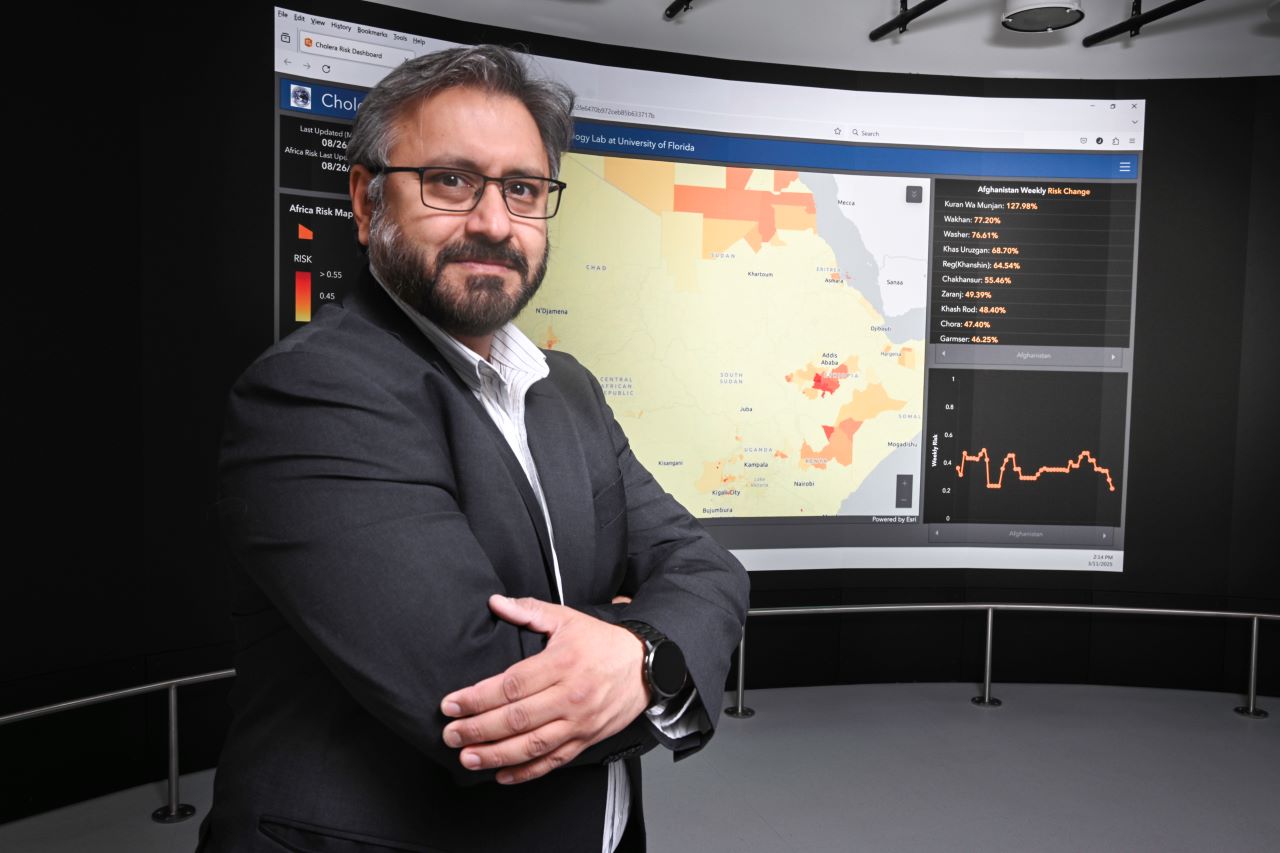
After deploying life-saving cholera-prediction systems in Africa and Asia, a University of Florida researcher is turning his attention to the pathogen-plagued waters off Florida’s Gulf Coast. In the fight to end cholera deaths by 2030 – a goal set by the World Health Organization – UF researcher and professor Antar Jutla, Ph.D., has deployed his Cholera Risk Dashboard in about 20 countries, most recently in Kenya. Using NASA and NOAA satellite images and artificial intelligence algorithms, the dashboard is an interactive web interface that pinpoints areas ripe for thriving cholera bacteria. It can predict cholera risk four weeks out, allowing early and proactive humanitarian efforts, medical preparation and health warnings. Cholera is a bacterial disease spread through contaminated food and water; it causes severe intestinal issues and can be fatal if untreated. The US Centers for Disease Control reports between 21,000 and 143,000 cholera deaths each year globally. Make no mistake, the Cholera Risk Dashboard saves lives, existing users contend. His team now wants to set up a similar pathogen-monitoring and disease-prediction system for pathogenic bacteria in the warm, pathogen-fertile waters of the Gulf of America. “Its timeliness, its predictiveness and its ease of access to the right data is a game changer in responding to outbreaks and preventing potentially catastrophic occurrences.” - Linet Kwamboka Nyang’au, a senior program manager for Global Partnership for Sustainable Development Data Closer to home Jutla is seeking funding to develop a pathogen-prediction model to identify dangerous bacteria in the Gulf to warn people – particularly rescue workers – to use protective gear or avoid contaminated areas. He envisions post-hurricane systems for the Gulf that will help the U.S. Navy/Coast Guard and other rescue workers make informed health decisions before entering the water. And he wants UF to be at the forefront of this technology. “If we have enough resources, I think within a year we should have a prototype ready for the Gulf,” said Jutla, an associate professor with UF’s Engineering School Sustainable Infrastructure and Environment. “We want to build that expertise here at UF for the entire Gulf of America.” Jutla and his co-investigators have applied for a five-year, $4 million NOAA RESTORE grant to study pathogens known as vibrios off Florida’s West Coast and develop the Vibrio Warning System. These vibrios in the Gulf can cause diarrhea, stomach cramps, nausea, vomiting, fever and chills. One alarming example is Vibrio vulnificus, commonly known as flesh-eating bacteria, a bacterium that often leads to amputations or death. The Centers for Disease Control and Prevention (CDC) has reported increases in vibrio infections in the Gulf region, particularly from 2000 to 2018. The warm and ecologically sensitive Gulf waters provide a thriving habitat for harmful pathogens. “The grant builds directly on the success of our cholera-prediction system," Jutla noted. "By integrating AI technologies into public health decision-making, we would not only lead the nation but also become self-reliant in understanding the movement of environmentally sensitive pathogens, positioning ourselves as global leaders.” Learning from preparing early Jutla’s dashboards are critical tools for global health and humanitarian officials, said Linet Kwamboka Nyang’au, a senior program manager for Global Partnership for Sustainable Development Data. “Its timeliness, its predictiveness and its ease of access to the right data is a game changer in responding to outbreaks and preventing potentially catastrophic occurrences,” Kwamboka Nyang’au said. Over the last few years, Jutla and several health/government leaders have been working to deploy the cholera-predictive dashboard. “Our partnership with UF, the government of Kenya and others on the cholera dashboard is a life-saving mission for high-risk, extremely vulnerable populations in Africa. By predicting potential cholera outbreaks and coordinating multi-stakeholder interventions, we are enabling swift action and empowering local governments and communities to prevent crises before they unfold,” said Davis Adieno, senior director of programs for the Global Partnership for Sustainable Development Data. The early warnings for waterborne pathogens also allows the United Nations time to issue early assistance to residents in the outbreak’s path, said Juan Chaves-Gonzalez, a program advisor with the United Nations’ Office for the Coordination of Humanitarian Affairs. “There are several things we do with the money ahead of time. We provide hygiene kits. We repair and protect water sources. We start chlorination, we set up hand-washing stations, train and deploy rapid-response teams. At the community level, we try to inject funding to procure rapid-diagnostic tests,” he said. “We identify those very, very specific barriers and put money in organizations’ hands in advance to remove those barriers.” Eyes on the Gulf In the United States, hurricanes stir up vibrios in the Gulf, posing a high risk of infection for humans in the water. There has been a nearly 200% increase in these cases over the last 20 years in the U.S., according to the CDC. “After Hurricane Ian, we saw a very heavy presence of these vibrios in Sarasota Bay and the Charlotte Bay region. Not only that, but they were showing signs of antibiotic-resistance. Last year, we had one of the largest number of cases of vibriosis in the history of Florida,” Jutla said. Samples from 2024 hurricanes Helene and Milton are being analyzed with AI and complex bioinformatics algorithms. “If there is a risky operation by rescue personnel, not using personal protective equipment, then we would want them to know there is a significant concentration of these bacteria in the water,” Jutla said. “As an example, Navy divers operating in contaminated waters are at risk of infections from vibrios and other enteric pathogens, which can cause severe gastrointestinal and wound infections.” Safety and economics “Exposure to vibrios and other enteric pathogens,” Jutla added, “can disrupt economic activities, particularly in coastal regions that are dependent on tourism and fishing. And vibrios may be considered potential bioterrorism agents due to their ability to cause widespread illness and panic.” In developing the Vibrio Warning System, Jutla noted, he and his team want to significantly enhance public health safety and preparedness along the Gulf Coast. By leveraging advanced AI technologies, satellite datasets and predictive modeling, they plan to mitigate the risks posed by environmentally sensitive pathogenic bacteria, ensuring timely interventions and safeguarding human health and economic activities. “Hospital systems and healthcare providers in the Gulf region will have a tool for anticipatory decision making on where and when to anticipate illness from these environmentally sensitive vibrios, and issue a potential warning to the general public,” he said. “With the potential to become a leader in environmental pathogen prediction, UF stands at the forefront of this critical research, poised to make a lasting impact on local, regional, national and global health and safety.”

With the MOMitor™ app, Florida mothers have better maternal care right at their fingertips
A program spearheaded by University of Florida physicians recently expanded to improve care for new mothers throughout the state, using tools they have right at home. Five years ago, a team of obstetricians and researchers at the UF College of Medicine launched MOMitor™, a smartphone app that allows new mothers to answer health screening questions and check vitals like blood pressure in the comfort of their own homes, using tools given to them by their health care providers. Depending on the data, the clinical team can then follow up with patients as needed for further medical intervention. Now, the app is expanding beyond North Central Florida — where nearly 4,400 mothers have participated in the program — to other areas in the state. Clinicians are also teaming up with data scientists at the College of Medicine who are using artificial intelligence to study data and identify trends that can lead to more personalized care. Program expansion Thanks to funding from the Florida Department of Health to support the state’s Telehealth Maternity Care Program, MOMitor™ has recently expanded for use in Citrus, Hernando, Sumter, Flagler, Volusia, Martin, St. Lucie and Okeechobee counties, said Kay Roussos-Ross, M.D. ’02, MPAS ’98, a UF professor of obstetrics/gynecology and psychiatry who is leading the program. “The Florida Legislature was really motivated and interested in improving maternal morbidity and mortality, and through this program we’re touching additional parts of the state and helping patients beyond North Central Florida,” she said. Maternal mortality is a serious concern in the United States, with more than 18 deaths recorded per 100,000 births in 2023, according to the latest data available from the U.S. Centers for Disease Control and Prevention. This is a much higher rate than most other developed countries, Roussos-Ross said. Common factors that may lead to maternal mortality, which is measured from pregnancy through the first year after giving birth, include infection, mental health conditions, cardiovascular conditions and endocrine disorders. Many of these complications can go unnoticed or unmonitored, particularly if at-risk mothers are not reporting complications to clinicians. A 2025 study published in the Journal of the American Medical Association shows that up to 40% of women do not attend postpartum visits. “By leveraging AI, we have the opportunity to target moms and moms-to-be who might be at greater risk of complications ... and encourage them to participate in the program to mitigate these.” — Tanja Magoc, Ph.D. “Whereas we’re used to seeing patients pretty routinely during pregnancy, after delivery visits quickly drop off and some women don’t make it back for postpartum care, so we may not have an opportunity to continue supporting them,” Roussos-Ross said. “This can often be because of barriers such as housing, transportation or food insecurity. We offer referrals to help with some of these services.” With MOMitor™, patients can let their clinician know how they are recovering without visiting the clinic, improving access to care in situations where that is not always an easy option for new mothers. “It’s a way to be proactive,” Roussos-Ross said. “Instead of waiting for a patient to come to us when they haven’t been doing well for a while, we connect with them through the app and follow up when they initially begin not doing well, so we can address concerns more quickly.” Studying data to personalize care Roussos-Ross’ team is collaborating with data scientists from the College of Medicine’s Quality and Patient Safety initiative, or QPSi, to determine how AI can assist in finding ways to further improve processes. “By leveraging AI, we have the opportunity to target moms and moms-to-be who might be at greater risk of complications, such as developing postpartum depression or hypertension, and encourage them to participate in the program to mitigate these complications,” said Tanja Magoc, Ph.D., the associate director of QPSi’s Artificial Intelligence/Quality Improvement Program. David Hall, Ph.D., a QPSi data scientist, said his team is working alongside the clinical team to analyze data that can be used to create recommendations for patients. “Everything we do comes from information supported in the patients’ charts,” Hall said. “We also make sure the data upholds compliance standards and protects patients’ privacy.” “We’re interested in finding out what areas might be hot spots and determining what makes them this way, so we can ... better identify areas where there may be high-risk patients and provide interventions to those who need it most.” — David Hall, Ph.D. The teams aim to intervene before patients encounter postpartum complications, addressing potential issues before they become significant problems. After taking into account a patient’s personal and family medical history, the team looks at information such as geolocation, drilling down to areas much smaller than the ZIP code level in order to find points of potential concern. “We’re interested in finding out what areas might be hot spots and determining what makes them this way, so we can study these patterns throughout the state and better identify areas where there may be high-risk patients and provide interventions to those who need it most,” Hall said. Roussos-Ross said she is proud of the work her team has done to improve patient outcomes through the program so far and is excited to empower more patients. “Every year, the participants give us recommendations on how to improve the app, which we love. But they also say, ‘This is so great. It helped me think about myself and not just my baby. It helped me learn about taking care of my own health. It made me remember I’m important too, and it’s not just about the baby,’” Roussos-Ross said. “And that is so gratifying, because women are willing to do anything to ensure the health of their baby, sometimes at the expense of their own care. This is a way for us to let them know they are still important, and we care about their health as well.”

As holiday shopping season nears, UF experts warn retail theft is growing more sophisticated
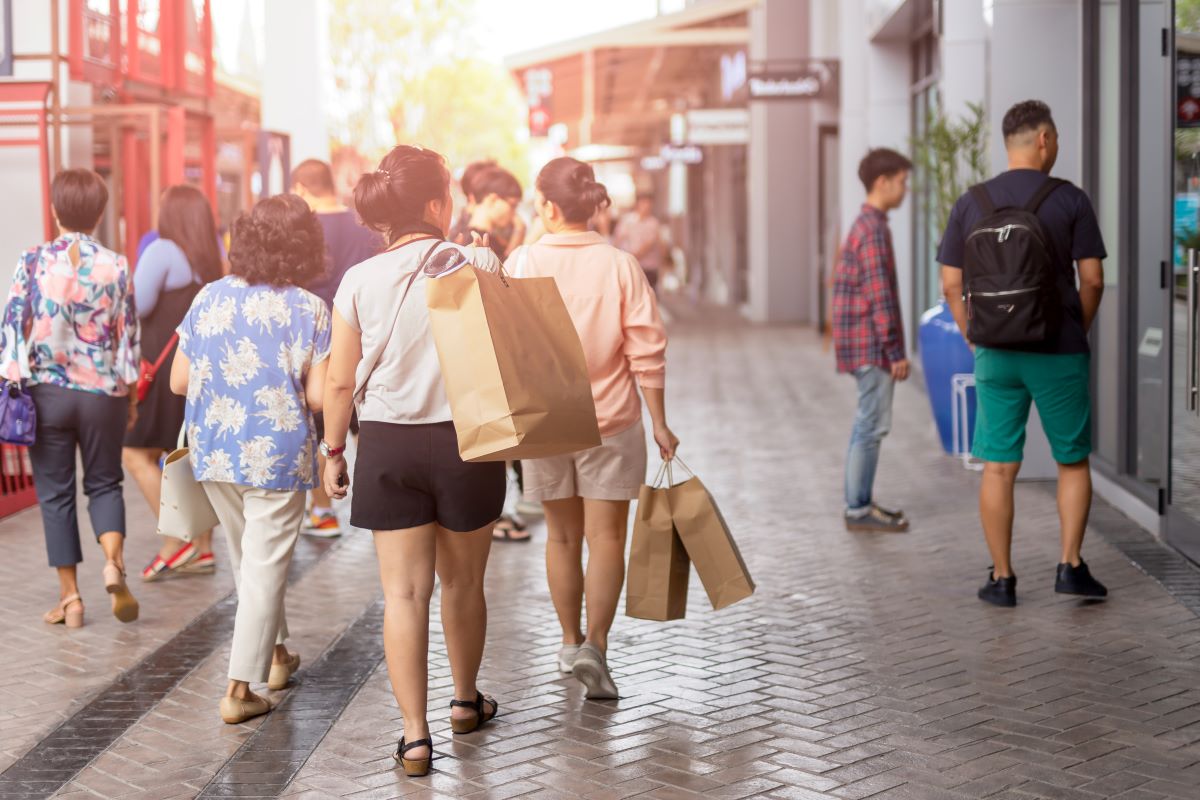
With the busiest shopping season of the year approaching, new findings from the National Retail Federation’s Impact of Retail Theft and Violence 2025 report — developed by the University of Florida’s SaferPlaces Lab and the Loss Prevention Research Council — show retailers are facing increasingly complex and technology-driven threats. UF researchers say early preparation, better data and stronger collaboration will be essential as stores brace for heavier foot traffic and heightened safety risks. Despite public reports that retail theft is decreasing, Read Hayes, Ph.D., a UF research scientist and director of the LPRC at UF Innovate, said retailer surveys tell a different story: Incidents of shoplifting, organized retail crime, online fraud and other external theft continue to rise, even as some law enforcement statistics appear flat or declining. The gap, he said, reflects how much crime goes unreported or unrecorded. “Retailers have always had a difficult time reporting much of their crime, and if you look only at police data, like calls for service or arrests, it can look like retail crime is flat or even slightly down,” he said. “But when we survey retailers, who are the actual crime victims, they consistently report year-over-year increases in theft and violence.” Criminal groups are also becoming more sophisticated. Hayes said offenders are increasingly using technology to defeat protective systems, disrupt cameras and identify vulnerable stores. They also rely heavily on social media platforms such as TikTok and Reddit to coordinate attacks and share tactics. “It’s a little disconcerting how much criminals rely on social media now to scout stores, map out easy targets, learn from each other or just plain brag about how they did it,” he said. LPRC scientists monitor social media signals to help retailers and law enforcement understand emerging threats — not in real time, Hayes said, but to help build best practices organizations can use to defend themselves. Criminals continue to focus on high-demand items such as branded apparel and footwear, prompting retailers to rethink how those products are displayed and secured. Hayes said many companies are testing new approaches to better protect vulnerable merchandise without driving customers away. One example is automated self-service systems for locked items, where customers can retrieve a product by having a code sent to their phone without waiting for a store employee. Safety remains retailers’ top concern, Hayes said. LPRC’s latest report, developed in collaboration with the security technology company Verkada, found that frontline retail workers report feeling less safe than ever, a trend that typically intensifies during the holiday rush. Rising incidents of in-store violence, limited law enforcement support in some areas and increased guest-related confrontations are pushing retailers to reassess how they protect both employees and customers. “Nothing is more important than protecting the frontline retail associates who keep this industry running,” Hayes said. “This report helps reinforce what retailers need to do to ensure those workers feel safe.” LPRC teams are also studying ways to improve safety beyond store walls, testing parking lot technologies, including license plate readers and flashing deterrent systems designed to discourage potential offenders and reassure law-abiding shoppers. At the federal level, Hayes said he and partners across the country are urging Congress to pass a bill to address organized retail crime and establish a centralized platform for reporting retail theft threats. As the holiday season approaches, Hayes said the need for evidence-based solutions has never been clearer. “Retailers are under pressure to keep their stores safe, welcoming and competitive,” Hayes said. “The more we can understand offender behavior, customer expectations and emerging technologies, the better we can help retailers, communities and law enforcement reduce harm.” The LPRC, headquartered at UF Innovate, brings together more than 200 major retailers, technology companies and public safety agencies to conduct research that strengthens store safety, reduces loss and enhances the customer experience.
VR Technology Offers Lessons in Navigating a Snow Squall
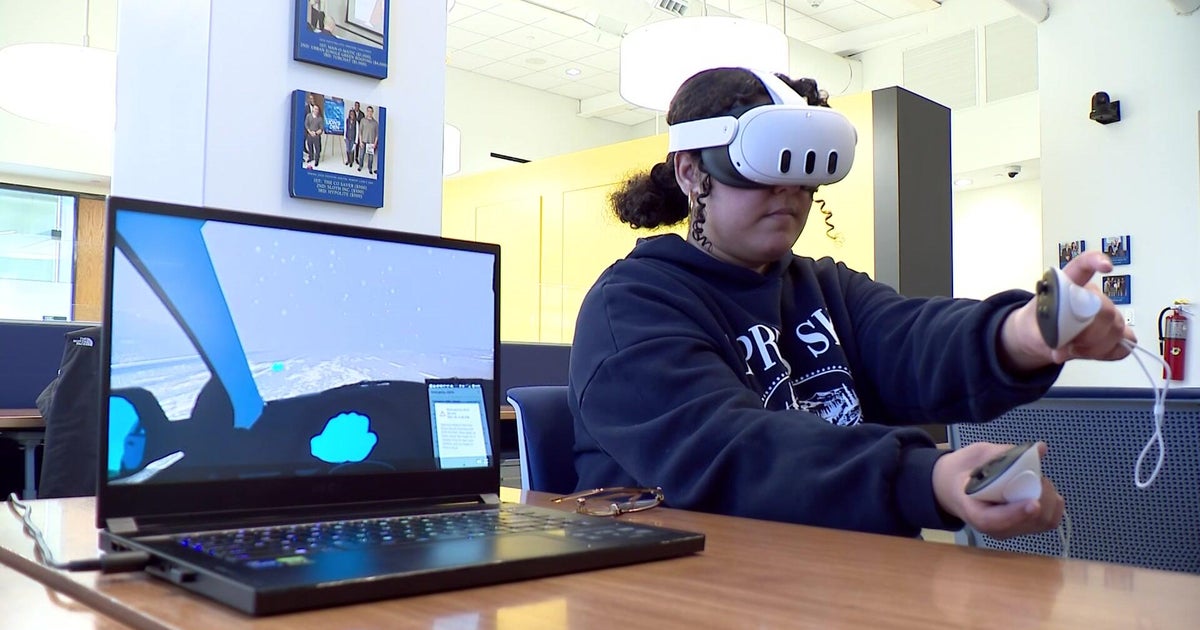
WCBS-TV, WPIX 11, and WNYW Fox 5 interviewed Dr. Jase Bernhardt, Hofstra associate professor of geology, environment, and sustainability, about his virtual reality program designed to teach the public about the danger of driving in a snow squall. Funded by a $100,000 Road to Zero Community Traffic Safety Grant from the National Safety Council, Dr. Bernhardt’s project emphasizes the importance of heeding emergency weather advisories and what drivers should do if they are on the road when a snow squall occurs. Users wear a headset and hold a device – like a video game controller – in each hand to replicate the movements of a steering wheel. Bernhardt’s collaborators include Assistant Professor of Sustainability Sasha Pesci; software developer Frank Martin ’22, ’23, who earned both a BS and an MS in Computer Science from Hofstra University; and John Banghoff and other meteorologists at the U.S. National Weather Service (NSW) Office, State College, PA.


Why Are Canadian Banks Not Protecting Seniors? The $40 Billion Dollar Question
After an 89-year-old Victoria man lost $1.7 million to phone scammers despite bank red flags, retirement expert and authour, Susan Pimento, exposes a critical protection gap: while U.S. banks like Bank of America offer "Trusted Contacts" (designated people banks call to verify suspicious transactions) for all accounts, Canadian banks restrict this safeguard to investment accounts only—leaving everyday banking vulnerable where most fraud occurs. In Canada, senior fraud is vastly underreported (RCMP estimates only 5-10% surface), and banks are treating this as a cost issue rather than a moral crisis. Susan Pimento is available for interviews to discuss practical solutions, industry insights from her decades of work within financial institutions, and why Canadian banks are failing to implement a simple fix that could save seniors' life savings. Connect with her directly through ExpertFile to schedule TV, radio, podcast, or print interviews. As I was polishing this post for Canadian Financial Literacy Month, another senior fraud story flashed across my screen. This one stopped me cold. According to this CBC story, an 89-year-old man in Victoria, B.C., was tricked into handing over nearly $1.7 million of his life savings in a months-long phone scam. The caller claimed to be from the fraud department at CIBC and said he was helping with a national money-laundering case. (Spoiler: he wasn't.) Despite red flags and staff awareness, the bank still allowed large in-person withdrawals. He was told to buy gold bars — yes, actual gold bars — with drafts of up to $395,000, which couriers then collected like some twisted Uber Eats retirement fraud. Every week in Canada, we see another heartbreaking headline: a senior sends thousands, sometimes millions, to a scammer pretending to be their grandchild, the CRA, or — the ultimate irony — their bank. These scams targeting seniors don't require fancy hacking. They rely on fear, isolation, and misplaced trust. Once the money's gone, it's gone—no refund policy. And here's the kicker: what we're reading about is just the tip of the iceberg. For seniors, fraud now ranks as the top crime, and most fraud goes unreported—especially in this demographic. In a previous post, I showed how the data suggests the real figures could be 10 to 20 times higher than what's officially reported. The RCMP estimates that only 5-10% of fraud victims come forward. Many victims never speak out due to embarrassment, fear, or confusion. Translation? For every story that makes the news, countless others suffer in silence. How The Banking Industry Can Actually Fight Fraud I've worked within financial institutions for decades. Let's just say I understand how the process works. Banks have billion-dollar tech stacks, layers of compliance, and advanced fraud detection systems that can flag a suspicious $47 transaction in milliseconds. But the solution for this type of fraud isn't a multimillion-dollar algorithm or a new "AI-powered fraud prevention dashboard." Instead, it's a human-based approach called a Trusted Contact. What's a "Trusted Contact," Anyway? It's not an app, a chatbot, or some new gadget that requires a firmware update every Thursday. It's a person. Someone you trust — a family member, attorney, accountant, or another third-party who you believe would respect your privacy and know how to handle the responsibility of communicating with your bank in your best interests if something suspicious occurs. They don't access your money or view your accounts. They can't see that you spent $47 at the LCBO last Tuesday (Your secret is safe). They're simply your human safety net — a fraud wing person, if you will. The Origins of the Trusted Contact The concept began in the U.S. in 2018, when FINRA mandated investment firms to request a Trusted Contact Person. Canada followed in 2022, when the Canadian Securities Administrators introduced similar guidance for investment accounts. What things can be discussed with a trusted contact? As its name implies, a Trusted Contact is a designated person who is inherently trusted by the individual (and has no authority to transact business on a client’s account), so there is little to no danger that any reasonable disclosure would violate a client’s trust or give rise to any material issue.” What Canadian Banks Are Doing...And Not Doing Here's the good news. If you invest through Wealthsimple, RBC Direct Investing, TD Direct, or BMO InvestorLine, you can already designate a Trusted Contact. But here's where it gets ridiculous: RBC Direct might have that security feature — but your regular RBC chequing account? Not so much. That protection vanishes the moment Mom or Dad logs into their everyday banking. And that's where most fraud actually occurs. It's like installing a state-of-the-art security system on your front door but leaving the back door wide open with a welcome mat that says "Scammers Enter Here!" Fraud in Canada for Banks is Still a Budget Item: Not a Moral Crisis Here's the uncomfortable truth: For banks, fraud is considered a "cost of doing business." And since most of those losses are borne by customers, not the bank, there isn't much urgency to innovate. The Big Five earned over $40 billion in total last year. They have the means to care. They're not particularly motivated to actually do so. The Big Opportunity for Banks: Add a Little Humanity to the System Banks like to boast about their AI, blockchain, and next-gen fraud analytics. But most scams don't occur because of breached firewalls — they happen because of breached hearts. A Trusted Contact provides an additional simple, low-tech layer: human verification. Picture this: The bank spots an unusual transaction — a large new payee, an international wire transfer, or a sudden gold-bar purchase (it happens). Instead of sending another automated text alert, the system could ask: "This looks unusual. Would you like us to confirm with your Trusted Contact before proceeding?" or “Just a heads-up: scammers often use urgent or unusual requests. Prefer we run this by your Trusted Contact before we proceed?” That's it. One additional step. One extra set of eyes. One brief conversation could save someone's life savings. This isn't about limiting independence — it's about safeguarding autonomy. Ensuring your decisions are genuinely yours, not the scammer's. Banks could even call it "Senior Protection Mode." I'd sign up tomorrow. Heck, I'd pay extra for it. (Shhh, don't tell them that.) Here's the Proof Trusted Contacts Work: Bank of America Did It In 2022, Bank of America became the first major bank to extend Trusted Contacts beyond investment accounts to everyday banking clients. Customers can now add a trusted person the bank can call if something seems wrong, if they can't reach you, or if staff suspect undue influence. That person can't access your money — they're just the human speed bump before disaster: one simple form, one phone number, and much heartbreak avoided. If Bank of America can do it, why can't ours? Canadian banks already have the tech — and indeed the profits — to make it happen. What's Holding Canada's Banks Back? Cue the usual excuses: "Our legacy systems can't handle that." Sure — some of your code still thinks "Y2K" is an active threat. But if you can build an app that tracks my latte points and sends me notifications about my "spending insights," you can add one field for a Trusted Contact. "Privacy laws make it risky." Nope. FINRA and the CSA already provide safe-harbour protections. With consent, banks can legally contact a Trusted Person. Just add a checkbox. You love checkboxes. You make us check dozens of them every time we update our password. "Customers haven't asked for it." They're asking now. Loudly. With megaphones. And pointing at stories like the Victoria gentleman who lost $1.7 million in gold bars. The business case has historically been weak because most fraud losses affect customers, not the bank's balance sheet. But here's the catch: every fraud story damages trust. And in banking, trust is supposed to be the core of the business. For Canadian Banks There's a Competitive Advantage in Caring Rolling out a Trusted Contact feature isn't just good ethics; it's good business. Imagine the marketing campaign: "We don't just protect your password — we protect your peace of mind." Seniors would love this. So would their kids. That's multi-generational loyalty money can't buy. If EQ Bank or any challenger brand wanted a PR home run, this would be it. It's Time to Take Action on Fraud To the Banks: Stop waiting for regulators to force your hand. Lead. Be the first to offer Trusted Contacts for all customers — not just investors. You have the framework, the talent, and the budget. You absolutely do not need another consultant to tell you this is the right thing to do. To Policymakers: The Financial Consumer Agency of Canada should update its Code of Conduct to include a mandatory Trusted Contact option for all customers, safe-harbour rules allowing banks to pause suspicious transactions, and annual public reporting on outcomes. Because sunshine is the best disinfectant, even in banking. To Consumers: Don't wait for policy — be the policy. Ask your bank today if you can add a Trusted Contact. If they say no, ask why not — and post it. Loudly. Talk to your family. Choose your Trusted Person now. Write your MP or MPP and ask why U.S. banks protect seniors better than ours. Remember the $3 ATM Fee Rebellion? Canadians once revolted over paying $3 to access their own money at ATM's. We later got no-fee accounts, digital challengers, and a whole new generation of more innovative banking. If we can rally over an ATM fee, surely we can rally to protect our parents and grandparents from losing their life savings. Fraud isn't an inevitable part of aging — it's a solvable problem. And Trusted Contacts are one of the simplest, most human solutions we have. Don't Forget Two-Factor Authentication for the Soul Adding a Trusted Contact won't stop all fraud — let's be clear about that. But it will go a long way toward slowing it down, adding a common-sense pause, and potentially saving even one senior from losing any part of their hard-earned money. It's unfortunately too late for that gentleman and his family in BC, but it's not too late for countless others. This won't crash legacy systems or drain bank profits. It just adds a little humanity back into banking — right where it belongs. Because the best kind of security isn't just two-factor authentication. It's two people who care. And if we don't care about protecting our elders, who exactly do we care about? Sue Don’t Retire…Re-Wire! Want to become an expert on serving the senior demographic? Just message me to be notified about the next opportunity to become a "Certified Equity Advocate" — mastering solution-based advising that transforms how you work with Canada's fastest-growing client segment.
Five Million Airbnb Reviews Illuminate Guests’ Crime and Safety Concerns
Concerns about crime and safety have a dramatic impact on the behavior of Airbnb customers, according to new research co-authored by Liad Wagman, Ph.D., Dean of the RPI Lally School of Management. In an analysis of nearly 5 million reviews left by Airbnb guests, Wagman and his colleagues found that a short-term rental property’s occupancy rate and rental price dropped by significant amounts after a guest left a review mentioning safety concerns at or around the property: occupancy rates fell by anywhere from 1.5 to 2.4 percent, while average nightly prices dropped by roughly 1.5 percent. These negative safety reviews influenced the behavior not only of potential future customers, but also of the people who wrote them. A customer who mentioned concerns about crime and safety in the neighborhood around a property, for instance, became 60 percent less likely to ever use Airbnb again. “To see the effect of these dynamics play out in action is always fascinating to me," Wagman said. “Given that humans have different preferences, and that information transmittal is imperfect, it’s unsurprising that the effect of self-experience is larger than that of reading a critical review that resulted from it.” Worries about safety within a property — say, a broken step or a slippery tub — also reduced customers’ willingness to return to the platform, but by a more modest amount. The study also found that when people with neighborhood safety concerns did return to the platform, they tended to book properties in areas with lower rates of crime. The study, co-authored by Aron Culotta of Tulane, Ginger Zhe Jin of the University of Maryland, and Yidan Sun of Binghamton University, was published in the journal Marketing Science. Overall, the researchers found that safety-oriented reviews were rare: only about 0.5 percent of customer reviews mentioned safety concerns. But those reviews tend to be more negative in sentiment than the typical customer review, giving them an outsize impact on the behavior of subsequent would-be customers. The findings illustrate a delicate balancing act digital platforms have to perform, particularly those that rely heavily on user reviews: while highlighting negative experiences can help consumers make more informed choices, too much emphasis can drive customers away completely. The team ran several simulations calibrated by their empirical analysis to test how these dynamics play out in the market. They found that if a platform suppressed negative safety reviews completely, customers might assume that safety information was being hidden, and become more wary of using the platform in general. Conversely, while more transparency around safety issues could lead to fewer bookings of impacted properties in the short term, in the long run such a policy could boost user trust and draw more people to the platform, offsetting the short-term losses. “Platforms with the competitive space to focus on long-term objectives may benefit from a higher level of transparency, which can be facilitated by making information that is relevant to their buyers’ decision-making more readily available,” Wagman said. “Doing so facilitates trust and helps incentivize sellers to work to improve the quality of their offerings, as well as help shape sellers' decisions to enter a market (e.g., offer their listings) in the first place.”


New AI model predicts harmful videos before they go viral
Certain short-form videos on major social media platforms can trigger suicidal thoughts among vulnerable viewers, according to new research led by the University of Delaware's Jiaheng Xie. His team developed an AI model that can predict and flag these videos. In the study, published Nov. 17 in Information Systems Research, UD professor Jiaheng Xie and his co-authors showed how AI can assist with safety by predicting high-risk videos before they go viral by looking through both the content and what people write in the comments. • Distinguish what creators choose to post from what viewers think or feel after watching. • Separate known medical risk factors from emerging social media trends, such as viral heartbreak clips or challenges that may influence teens. • This system is especially novel because it predicts the high-risk videos before they reach large audiences. Xie is available for a Zoom interview to share how the model was developed and how it could potentially change the way platforms such as TikTok moderate.
