
Experts Matter. Find Yours.
Connect for media, speaking, professional opportunities & more.

New findings from a recent survey conducted by CAA Manitoba (CAA MB) highlight a concerning trend: substance use, particularly cannabis, is on the rise both recreationally and behind the wheel. “Cannabis is more accessible than ever, and that means more Manitobans are not only choosing to drive after consuming it but are also getting behind the wheel soon after and expressing increased confidence in their ability to do so,” says Ewald Friesen, manager, government & community relations for CAA Manitoba. The data shows that 24 per cent of drivers admitted to consuming cannabis before driving, which is up six per cent from last year, while ten per cent of Manitobans reported driving after consuming cannabis in the past few months, a three per cent increase from 2024. Among cannabis-impaired drivers, most (63 per cent) say they drove within three hours of consumption, which is up 10 per cent from last year. Over a third of cannabis-impaired drivers acknowledged feeling high while driving. In addition to the survey conducted by CAA MB, a recent study with funding support from CAA, conducted by the University of Saskatchewan, examined 50 drivers aged 19 to 30 to assess how consuming edible cannabis influences collision risk. This age group of young drivers, identified as having the highest crash rates and a greater tendency toward risky driving behaviour, offers new insights into the impact of cannabis on driving. Drivers often have a false sense of confidence when driving high. This study examined how consuming edible cannabis affects collision risk. Findings indicate that critical driving skills, including reaction time, lane discipline, and speed control, were impaired even shortly after consumption. Contrary to popular belief that cannabis edibles take hours to take effect, this study shows that impairment is evident 90 minutes after consumption. When asked if they felt safe to drive after consuming edibles, only four per cent felt safe getting behind the wheel 90 minutes after eating an edible cannabis product. What is interesting about this is that in a controlled environment, young drivers feel unsafe driving under the influence of cannabis. However, the study conducted by CAA MB shows that drivers often have a false sense of confidence when they have driven high in the past. “This study marks an important first step in understanding how cannabis edibles impact driving performance,” adds says Friesen. “Too often, decisions about whether someone is fit to drive are made in the moment, relying on judgment rather than evidence. Cannabis impairment studies like this are essential. Each one brings new learnings that help us refine our approach and ensure that safety is never left to chance.” According to CAA Manitoba’s data, more drivers have reported feeling confident in their driving ability (77 per cent), which is up ten per cent from 2024. More drivers this year (33 per cent) also say that they are unsure about how much cannabis is needed for effects to kick in, up six per cent from 2024. Alarmingly enough, more than half of Manitobans are unaware that the penalties associated with driving under the influence of alcohol, drugs, or a combination of substances are the same. “Drivers may face enhanced roadside sanctions, including an administrative penalty of $700, vehicle impoundment, mandatory Ignition Interlock participation for one year, an impaired driver assessment and movement of 10 levels down the Driver Safety Rating scale,” says Friesen. “Depending on the severity of convictions, impaired drivers may be charged further under the Criminal Code of Canada.” This holiday season, CAA Manitoba is asking that those who do consume cannabis, alcohol or other drugs to plan ahead by making alternate arrangements, such as a designated driver or using a rideshare service, to get home safely. Methodology CAA MB The online survey was conducted by DIG Insights from June 27 to July 14, 2025, with 514 Manitoba drivers aged 19 and older. Based on the sample size of n=514 and with a confidence level of 95 per cent, the margin of error for this research is +/- 3%.) Methodology of University of Saskatchewan study The study collected extensive data from 50 young adult drivers (aged 19–30), resulting in 250 assessments across multiple realistic driving scenarios using a simulator after consuming a 10mg THC edible.



MEDIA RELEASE: New CAA Study Sheds Light on Edible Cannabis and Collision Risk Among Young Drivers
A recent study with funding support from CAA, conducted by the University of Saskatchewan, examined 50 drivers aged 19 to 30 to assess how consuming edible cannabis influences collision risk among young drivers. This demographic, which is known for having a higher tendency to engage in risky driving behaviour, currently holds the highest crash rates nationwide. “This study marks an important first step in understanding how cannabis edibles impact driving performance,” says Michael Stewart, Community Relations Consultant for CAA South Central Ontario. “Too often, decisions about whether someone is fit to drive are made in the moment, relying on judgment rather than evidence. Cannabis impairment studies like this are essential. Each one brings new learnings that help us refine our approach and ensure that safety is never left to chance.” The findings indicate that critical driving skills, including reaction time, lane discipline, and speed control, were impaired. Consumption times may vary to feel the effects of edible cannabis from driver to driver. However, the study found that impairment was most evident at 90 minutes after consumption, so its effects may not be noticeable until a motorist is already behind the wheel. When asked if they felt safe to drive after consuming edibles, only four per cent felt safe getting behind the wheel 90 minutes after eating an edible cannabis product. What is interesting about this is that in a controlled environment, young drivers feel unsafe driving under the influence of cannabis. However, a recent survey of 1,510 Ontario drivers from CAA SCO shows that drivers often have a false sense of confidence when they have driven high in the past. The perception of safety doesn’t match reality The survey found that the number of people admitting to cannabis-impaired driving in Ontario (nearly 20 per cent) has remained stable compared to last year. However, a concerning trend has emerged, with more cannabis-impaired drivers (78 per cent) saying they are confident in their driving abilities while under the influence – a 13 per cent overall increase from 2021. Why is this concerning? The perception of safety doesn’t match reality. More than a third of cannabis-impaired drivers acknowledged feeling high while driving, relying on their personal judgment for signs of impairment, such as drowsiness, slowed reaction time, or brain fog. “This misplaced confidence can lead to dangerous decisions, increasing the risk of collisions and endangering road users,” adds Stewart. “We must recognize that getting behind the wheel is not just a personal choice it’s a responsibility that affects the safety of everyone on our roads.” Growing issue of poly-use The research also points to a growing issue of poly-use, or the consumption of multiple substances and is on the rise. This trend adds another layer of complexity to road safety efforts, as the combined effects of different substances can further impair judgment and reaction times. Most respondents (57 per cent) say they consume cannabis in combination with other substances – most commonly, alcohol. However, painkillers, psilocybin, ecstasy, and MDMA are on the rise. CAA SCO continues to advocate for safer roads by encouraging motorists to make responsible choices. The message is clear: do not get behind the wheel when impaired. “While we’re all aware that alcohol-impaired driving can be dangerous, we should also take the same attitude towards cannabis-impaired driving,” says Stewart. “With the holiday season coming up, cannabis can be consumed legally and responsibly but should never be used when driving.” CAA is asking that those who do consume cannabis, alcohol or other drugs to plan ahead by making alternate arrangements, such as a designated driver or using a rideshare service, to get home safely this holiday season. Methodology The online survey was conducted by DIG Insights from June 27 to July 14, 2025, with 1,510 Ontario drivers aged 19 and older. Based on the sample size of n=1,510 and with a confidence level of 95 per cent, the margin of error for this research is +/- 2%.) Methodology of the University of Saskatchewan study The study collected extensive data from 50 young adult drivers (aged 19–30), resulting in 250 assessments across multiple realistic driving scenarios using a simulator after consuming a 10mg THC edible.


Let's get one thing straight: the stock market doesn't care that you're retired. It doesn't care that you finally cleaned out that drawer full of ancient T4 slips, promised yourself you'd stop checking your RRIF balance daily, or told your spouse, "This year, we're sticking to the plan." The Market Doesn't Care About Your Retirement Date Markets wobble because they wobble. Headlines panic. Analysts disagree sharply — and confidently. And somewhere, a retiree stands in front of the fridge, wondering whether to sell everything or simply turn off the news. But retirement isn't a day-trading contest; it's a decades-long longevity project. The aim is to generate reliable income, maintain sleep-at-night discipline, and avoid the common mistake among retirees of saving too much while living too little. Your Retirement Income Defense: Sectors That Weather Any Storm Read the news, and you'll see a constant blizzard of rising prices created by our neighbours to the south. Not just little price increases, but if economists are right about what we can expect, it's best to “inflation-proof” yourself - before you need it. But keep in mind, every downturn follows the same pattern: a few key sectors keep humming while everything else goes through a mild identity crisis. The Classic Defensive Trio for Canadian Retirees: Consumer Staples (groceries, household essentials) Utilities (keeping the lights on and heat up) Healthcare (aging doesn't pause for recessions) Research on past downturns shows these sectors experienced significantly smaller losses than the S&P 500 during selloffs. When markets tantrum, these industries act like the sensible cousin who says, "We'll get through this. Have a muffin." Canadian-Specific Additions: Telecoms (we'll cut many things, but not Wi-Fi) Pipelines (fee-for-service revenue, though rate-sensitive) Combine these with low-volatility or dividend ETFs, and your portfolio suddenly feels less like a roller coaster and more like a slow-moving Via Rail train: reasonably steady, unfussy, and you still get to where you're going. The Cash Wedge: And Why You Need One Think of your retirement plan as a three-layer cake: Long-term investments (stocks, dividend ETFs, balanced portfolios) Intermediate safety assets (short GICs, T-bills, high-interest savings) Cash you can actually live on (your wedge) Your Cash Wedge sits at the very front of the line — a 12–24-month cushion of living expenses held in stable, boring, absolutely-not-newsworthy places: High-interest savings accounts Short-term GICs Treasury bills Cashable deposits It's essentially the "dry powder" you need to ride through market volatility without panic-selling. Three Critical Risks Your Cash Wedge Protects Against 1. Sequence-of-Returns Risk in Early Retirement This is the risk that markets drop early in your retirement while you're withdrawing. It's the silent killer of portfolios. A cash wedge buys you: Time for dividends to arrive Time for markets to recover Time for calm to return 2. Emotional Decision-Making During Market Downturns When markets fall, too many retirees experience "sell-and-suffer syndrome": They sell low Lock in losses Delay recovery Reduce the lifespan of their savings 3. Portfolio Depletion at Critical Moments Without a cash wedge, every withdrawal during a downturn digs a deeper hole. With a cash wedge, withdrawals can pause while investments rebound. "Think of a cash wedge as retirement jiu-jitsu — using stability to neutralize volatility." How to Calculate Your Ideal Cash Wedge Size There's no magic number, but here's a practical framework: 12 months of essential expenses for retirees with pensions or steady income sources 18 months for those relying heavily on investments 24 months for anyone highly risk-averse or aging in place on a fixed budget This isn't a pile of cash sitting in a chequing account — it's a structured, laddered buffer. Why Canadian Retirees Often Resist Building a Cash Wedge I've heard all of these comments over the years from many retirees: "Cash earns nothing." Not true anymore — HISAs and T-bills offer competitive yields. "I don't want my money sitting around doing nothing." It isn't doing nothing — it's protecting your future income. "I've always been fully invested." Retirement changes the rules. What worked during the accumulation phases of retirement can be dangerous during deaccumulation. The Cash Wedge is not an investment strategy. It is an income preservation strategy — the most important one in retirement. Real-Life Example: The 2020 Market Crash Test Remember 2020? Stock markets dropped nearly 35% in just weeks. Let's consider two couples with similar assets: Couple A : had a 2-year cash wedge Couple B : had none Couple A simply shifted withdrawals from their wedge, not their portfolio. Couple B sold their best assets at their worst prices — causing permanent damage. This is why I tell retirees: "The Cash Wedge protects your portfolio from you." It’s 12–24 months of living expenses kept in cash, high-interest savings accounts (HISA), short-term GICs, or T-Bills. It's not exciting. No one flaunts a 6-month GIC at brunch. But the emergency fund prevents disaster: selling investments at the worst possible time. It buys you time. It buys you calm. It buys you the uninterrupted ability to buy groceries. The Cash Wedge alone is powerful. But for Canadian homeowners — especially those whose wealth sits mostly in their property — there’s a second buffer that can dramatically strengthen your financial resilience: your home equity. We'll explore that in Part 2 of this post tomorrow. Sue Don’t Retire… ReWire!!! Want to become an expert on serving the senior demographic? Just message me to be notified about the next opportunity to become a "Certified Equity Advocate" — mastering solution-based advising that transforms how you work with Canada's fastest-growing client segment.


Experts share practical guidance for a healthier, happier holiday season
The holiday season is a time of tradition, connection and celebration – but it also brings its own set of challenges, from food safety concerns to emotional stress. University of Delaware experts are available to speak with reporters and provide practical, research-backed guidance to help audiences make the most of the season. Avoid common food safety mistakes Holiday meals are a centerpiece of celebration, but preparing them safely is essential. Diane Oliver, UD Health and Well-being Extension agent, has identified the top five mistakes people make when handling and preparing turkey – and how to avoid them. She can offer timely food safety tips to ensure families enjoy their meals without risk. Protect your mental well-being The holidays can stir up complex emotions as families come together. UD psychology professors Franssy Zablah and Zachary Meehan can provide expert insight into how to maintain mental wellness, manage stress, and set healthy boundaries during holiday gatherings. Find genuine holiday joy Beyond checklists and shopping, how do people actually experience lasting happiness during the holidays? Assistant professor Amit Kumar can share research-backed strategies on pursuing meaningful, authentic joy rather than fleeting holiday pressure. Preserve your decorations for years to come Family ornaments and decorations often carry sentimental value. Art conservation expert Debra Hess Norris can explain how to properly store and care for holiday decorations so they remain vibrant and intact year after year. Connect with these experts All of these University of Delaware experts are available for media interviews and commentary. Reporters and editors interested in speaking with them can reach out to mediarelations@udel.edu for a quick response and support.



Ready or not, winter weather has decided to make an early cameo! So, the question is: are you actually ready for winter driving? CAA South Central Ontario (CAA SCO), Ministry of Transportation of Ontario (MTO), Ontario Provincial Police (OPP), and Toronto Police Service (TPS) have joined forces to encourage Ontario drivers to get ready now for the cold and snowy weather, before the next unexpected snow event hits. “Now is the ideal time for motorists to install winter tires, check their car battery, and ensure they have an emergency car kit packed,” says Nadia Matos, manager of external communications, CAA SCO. “These simple steps can help motorists confidently navigate winter roads. Ontario weather can be unpredictable, and snowstorms can hit without much notice, so it’s always best to ensure your vehicle is prepared beforehand.” Besides vehicle preparedness, driver behaviour is just as critical in ensuring safe driving operations in winter weather. “Road safety is everyone’s responsibility,” says Sergeant Murray Campbell of the Toronto Police Service. “As daylight hours shorten and visibility decreases, we encourage all road users to stay alert, watch out for one another, adjust their driving to match weather conditions, keep their vehicle lights on, and plan ahead to accommodate longer travel times.” This year, the organizations are focused on protecting motorists who may be caught in unexpected winter weather. “We always encourage motorists to drive according to the road and weather conditions,” says Sergeant Kerry Schmidt of the Ontario Provincial Police. “Drivers should also slow down and move over when approaching stopped emergency vehicles and tow trucks with their emergency lights flashing while they are assisting vehicles and motorists in need of help. It is also unsafe and illegal to try to pass a full echelon of snowplows that are clearing all lanes of a highway during winter events.” Before heading out on the road this winter, MTO encourages motorists to download and use the 511 app to check the weather and road conditions before they leave home. The 511 app can be found at 511on.ca or in the app store on their mobile devices. For a safer trip this winter, motorists can also follow these additional safety tips: • Install winter tires for better traction. On cold and snowy roads, winter tires can help reduce your braking distance by up to 25 per cent. Members can call CAA before Dec. 20 to have our mobile tire service change them at home for a fee. • Test your car battery. If necessary, replace it before it fails. CAA SCO will test Members’ batteries free of cost during a service call. • Pack a fully stocked emergency car kit. The kit should include a flashlight, extra batteries, warning devices (e.g., flares, reflective vests/strips), a first aid kit, blankets, jumper cables, non-perishable food and water, and a phone charger. Be sure to always keep an ice scraper, small shovel, and snow brush handy in your car. • Service your vehicle. Have your brakes checked, oil changed, and top up your windshield washer fluid and any other fluids that are getting low. • Always keep your gas tank at least half full. Cold weather causes condensation in the system, which can lead to a fuel line freeze-up and prevent the car from starting. • Check your lighting system. Ensuring you have full lighting is very important in the winter months. Check your headlights and signal lights to ensure they work correctly.

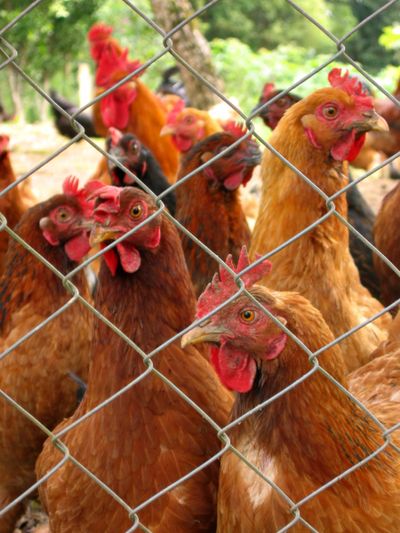
UF expert answers questions about local risk of bird flu
Consumers may have noticed the rising price of eggs and even some shortages at grocery stores lately due to H5N1 avian influenza, but as cases of human and animal infections continue to rise, how concerned should you be about the virus? Benjamin Anderson, Ph.D., an assistant professor in the University of Florida College of Public Health and Health Professions’ Department of Environmental and Global Health and lead for UF’s Emerging Pathogens Institute bird flu response team answers some questions about the risk of infection to humans and animals from bird flu and how to protect yourself. Who is at risk? Currently, the Centers for Disease Control and Prevention says the risk to humans is low. “That is correct on an overall level,” Anderson said. There is no human-to-human transmission right now. Anderson said that while there have been an “alarming” number of human cases, the number of infections is still fewer than 100. Of those, most have resulted in mild illness and were in people who had direct exposure to infected animals. So far, there has been only one death attributed to the current outbreak of H5N1, known more commonly as bird flu – a man in Louisiana who was infected by a backyard flock. “We do have a lot of people who keep chickens,” Anderson said. “Because of the situation in Louisiana, this has, I think, piqued the concern even more so among folks who might have backyard poultry to recognize that is a potential pathway for transmission.” If you see a dead chicken, do not touch it or try to investigate yourself. Instead, report it to the Florida Department of Agriculture and Consumer Services. Report dead wildlife, including migratory birds, to the Florida Fish and Wildlife Commission. Anderson said while the risk to the public is currently low, the future risk, including human-to-human transmission that could result in a pandemic, is still uncertain. Right now, he said, “Unless you’re handling poultry or working with or near dairy cattle, where bird flu outbreaks have been ongoing, your risk is relatively low.” Can I catch the virus from my backyard bird feeder? Gainesville is on a major flyway for migratory birds – a draw for birdwatching enthusiasts, particularly in the winter. This may be how bird flu has made its way into backyard flocks, since infected migratory birds shed the virus in their waste. So far, there is no data that suggests bird feeders could pose a significant transmission risk to people, and no reported human cases of bird flu have been traced to feeders. “However, when I say there’s no data, that means there’s no data. It hasn’t been investigated,” Anderson said. Waterfowl such as ducks and geese are more likely to carry the virus than songbirds. But if backyard birdwatchers are concerned, he said, take precautions such as wearing gloves and disinfecting bird feeders. And whether there’s an elevated risk of bird flu or not, always take care to avoid touching bird feces, which can contain salmonella. “Using some common sense, good hygiene practices, is going to be an effective way of protecting yourself,” he said. Are my outdoor cats in danger? Outdoor cats are susceptible to bird flu through exposure to dairy cattle, wild birds and contaminated raw milk. There is also new evidence of some sources of raw cat food being contaminated with H5N1. H5N1 causes severe infection in cats, with neurological symptoms that could mimic rabies. Infected cats may be disoriented, lethargic or disinterested in food. Florida residents can contact the Florida Health Department if they notice these symptoms in their pet. “If you see something unusual, seeking out professional care for that animal is an important thing to do,” Anderson said. As of now, it’s unclear whether cats can transmit the virus to humans, but as it adapts, transmission to other species could become easier and more widespread. What about eggs and poultry from the farmers market? Florida state statutes require sellers to register as a food supplier and meet certain criteria for food handling safety. But the regulations can be unclear to some small, local egg and poultry producers, and others operate under the radar. “I wouldn’t say that if you go to a farmers market, it’s a guarantee that the products you’re buying are produced under the proper regulations,” Anderson said, but the regulations themselves can be unclear. Some things you can do to keep yourself safe are asking the vendor if they’re registered and permitted with the state’s agriculture agency and checking that the products are labeled. Per the statutes, eggs must be refrigerated at all times between packaging and sale to the consumer. And definitely steer clear of raw milk, which has been tied to several human and animal H5N1 infections and always carries a risk of salmonella. “Don’t drink it, and don’t give it to your animals,” Anderson said. Is there a vaccine? How else can I protect myself? There is a vaccine for bird flu. While it isn’t currently being administered to humans in the U.S., Anderson said some agriculture workers in Europe have received it. “There is a potential justification for starting to release some of the stock of the H5N1-specific vaccine,” but it would come with tradeoffs, he said, such as maintaining stockpiles and keeping the vaccine matched well to an evolving virus. In his opinion, though, it makes sense to start the process now, both to protect workers who are already at higher risk of contracting the virus, and to begin collecting data on how well the vaccine is working. The idea that the U.S. should hold off on releasing a vaccine until bird flu becomes a pandemic is contrary to protecting public health, he said, adding that the tipping point for him was seeing the virus start to show up in backyard poultry. “That’s the rationale that I base my opinion off of,” Anderson said.


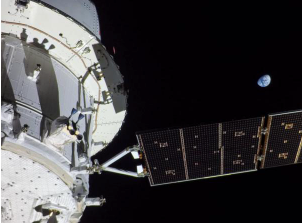
RPI Awarded Air Force Grant to Monitor Growing Traffic Between Earth and Moon
As nations and private companies prepare to ramp up the number of missions to the Moon, researchers at Rensselaer Polytechnic Institute (RPI) and Texas A&M University have secured a $1 million grant from the Air Force Office of Scientific Research to develop a system to track and monitor resident space objects — including spacecraft, satellites and debris — moving through the vast cislunar space between the Earth and the Moon. The initiative, called RCAT-CS (Reconfigurable Constellations for Adaptive Tracking in Cislunar Space), will develop intelligent networks of sensor satellites that can be reconfigured to perform resilient tracking of objects as they maneuver through this complex orbital environment. "Right now, we're seeing an explosive growth in cislunar missions, including everything from commercial lunar landers and orbiters to next-generation spacecraft that secure national interests in this contested domain," said engineering professor Sandeep Singh, Ph.D., RPI’s lead investigator on the project. "But our ability to track what's happening out there hasn't kept pace. Ground-based sensor systems have blind spots and cannot reliably provide measurements. A space-based constellation is the answer, but placing spacecraft in orbit is expensive and solving the resource constraint problem is essential." The cislunar region presents unique challenges for space domain awareness applications. Competing gravitational forces from the Earth and the Moon create complex orbital dynamics, while the sheer distances involved make tracking difficult. When spacecraft and satellites perform maneuvers in this space or behave unexpectedly, current systems can lose track of them entirely. RCAT-CS will tackle these problems by designing constellations of space-based sensors that can dynamically reposition themselves based on what they're observing. Professor Singh and his colleagues will develop novel algorithms to detect maneuvers made by tracked objects, balance fuel costs, track performance of the sensing satellites, and quantify the uncertainties underlying it all. The system addresses critical safety and security needs as cislunar space becomes increasingly congested and contested. The research will also advance fundamental knowledge in orbital dynamics and autonomous space systems, with implications for mission planning, collision avoidance, and safe coordination of a growing cislunar economy. Additionally, the project will train the next generation of space engineers in cutting-edge technologies essential for American leadership in space operations. “Congratulations to Professor Sandeep Singh and his team on securing a research grant in the important area of lunar space exploration,” said Shekhar Garde, Ph.D., the Thomas R. Farino Jr. ’67 and Patricia E. Farino Dean of the School of Engineering. “RPI has always been at the frontier of space exploration, from George Low’s work on the Apollo program to the forthcoming Artemis II mission, led by Commander Reid Wiseman ’97.” “Professor Singh’s work will not only advance research, it will strengthen RPI’s recently launched Aerospace Engineering undergraduate program by bringing the latest research into our classrooms,” Garde added. Looking to know more? Shekhar Garde, Ph.D. is available to discuss this topic. Simply click on his icon now to arrange an interview today.


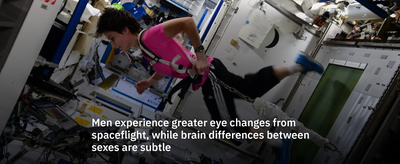
A new study into how spaceflight impacts the human brain and eyes revealed notable sex differences in brain fluid shifts, with female astronauts showing a greater reduction in fluid around the uppermost part of the brain than their male counterparts. Led by Rachael D. Seidler, Ph.D., director of the University of Florida’s Astraeus Space Institute and professor of applied physiology and kinesiology, the study analyzed data from astronauts to determine how factors such as sex, age and body metrics relate to structural brain and eye changes after space travel. The findings, published in August in npj Microgravity, provide key information for protecting astronaut health on long-duration missions to the moon and Mars. This is one of the first studies to look at sex differences in the physiological response to spaceflight. “The data on sex differences in response to spaceflight are scant, given the historically low number of female astronauts.” — Rachael D. Seidler, Ph.D., director of the University of Florida’s Astraeus Space Institute In addition to changes in fluid around the brain, the team also found that a form of eye compression, a hallmark of Spaceflight Associated Neuro-ocular Syndrome known as globe flattening, was the most consistent eye change among crew members. “By far the most prevalent sign of eye changes that we observed was globe flattening, suggesting that this should be the primary monitoring target for ocular health,” Seidler said. “Interestingly, eye changes were more prevalent in males than females.” Globe flattening, when the back of the eyeball becomes slightly indented or pushed inward, might sound minor, but it can have significant effects on vision and raise concerns for long-duration space missions. Surprisingly, there was no strong link between brain structural changes and eye changes, suggesting that the effects on the eyes and brain may arise from distinct mechanisms rather than shared physiological causes. The research underscores UF’s growing leadership in space health science. Through the Astraeus Space Institute, Seidler leads multidisciplinary collaborations that connect neuroscience, physiology and space research to advance human performance and safety in spaceflight. “We used UF's HiPerGator computing cluster for our analyses in this study, enabling us to analyze our data at high speeds,” Seidler said. Read the full study in npj Microgravity.


Creepy, crawly, and totally cool: Florida’s “spooktacular” spiders aren’t so scary after all
As Halloween approaches, it’s the perfect time to spotlight some of Florida’s coolest and spookiest spiders —that aren’t so scary after all. Spiders are often misunderstood, but many are shy, harmless and downright fascinating. Lisa Anne Taylor, assistant research scientist at the University of Florida Institute of Food and Agricultural Sciences (UF/IFAS), said that spiders “get a bad rap and aren’t so frightening.” Here are 10 standout species that bring both cool, spooky vibes and ecological value to the Sunshine State. This Halloween, instead of fearing spiders, celebrate their mysterious style and ecological superpowers. They’re nature’s pest control, silk engineers and stealthy hunters. As Taylor puts it, “No one should be afraid of them.” For even more spider fun, check out Taylor’s kid-friendly coloring book, “Coloring with Spiders: Our favorites from Florida.” Black Widow The black widow is perhaps the most iconic Halloween spider, the OG creepy crawly, instantly recognizable by the red hourglass on its jet-black abdomen. Despite its reputation, black widows are shy and rarely bite unless provoked — like when someone slips on a shoe that the spider was hiding in. “Nobody should be scared of them; they should just not hold them. They should keep a respectful distance,” said Taylor, who works for the Department of Entomology and Nematology. Florida is home to both native southern and northern black widows. Brown Recluse The brown recluse is feared but is actually very uncommon in Florida. Most “sightings” in Florida are misidentifications, and bites are rare. “They get blamed for a lot of things, but it’s rarely actually a brown recluse bite,” Taylor explained. Red Widow The red widow is a stunning native Florida spider with a black body with red and white splotches and bright red legs. Found only in Florida’s scrub habitats, this spider is rarely seen and even more rarely bites. Its vivid, spotted red-and-black patterns and elusive nature make it a mysterious and beautiful part of Florida’s spider diversity. Brown Widow The brown widow, an invasive species in Florida, is a close relative of the other widows but their venom seems to be less potent for humans. It has a dark-orange hourglass marking on its brown abdomen and is often identified by its spiky egg sacs. While it may look spooky, the brown widow is not aggressive and prefers to stay hidden in quiet corners. Like the black widow, it’s best to check shoes and outdoor gear before use for these stowaways. Golden Silk Orb Weaver The golden silk orb weaver, also known as the banana spider, adds dramatic flair to Florida’s landscapes with its large, golden webs that shimmer in the sunlight. Females can grow impressively large and display vibrant colors of gold, white and black. Their webs often span several feet, serving as natural Halloween decorations in gardens and forests. Ogre-faced Spider The ogre-faced spider is one of the more bizarre-looking and captivating spiders. With enormous eyes and a unique net-casting hunting style, it can see in near-total darkness and uses a silk net to snatch prey mid-air. During the day, it hangs motionless, resembling a twig. At night, it becomes a stealthy predator, making it a true Halloween terror to its prey. Regal Jumping Spider The regal jumping spider is a fan favorite, known for its iridescent green or pink jaws and bold, colorful patterns. These spiders are curious and often seem to watch humans with interest. “They’ve become internet famous,” said Taylor, noting that influencers even keep them as pets. They tend to be larger than other spiders, making them easy to hold, and they do well in a small terrarium. Green Lynx Spider The green lynx spider blends perfectly into Florida’s foliage with its bright green body and long, spiny legs. It’s a master of camouflage and a skilled hunter, often found on flowers and shrubs. Though it looks fierce, it poses no threat to humans and helps control garden pests. Taylor noted they’re common in gardens and flowerbeds and are great for natural pest control. Twin-flagged Jumping Spider The twin-flagged jumping spider is a tiny acrobat with oversized eyes and a curious nature. These spiders are known for their impressive leaps and use silk safety lines like bungee cords. Their bold movements and alien-like appearance make them a fun and fascinating species to watch. Though they may look intimidating, they’re completely safe for people – but horrifying to ants. “If you’re an ant, these are ferocious predators,” Taylor said. “They’re completely harmless to people, but they’re ant specialists.” Spitting Spider The spitting spider brings a comic-book twist to the mix. It spits sticky glue to trap prey, à la Spiderman, using a rapid-fire technique that’s highly effective against insects. These spiders are small and secretive, but their hunting method is one of the most unique in the arachnid world. For even more spider fun, check out Taylor’s kid-friendly coloring book, “Coloring with Spiders: Our favorites from Florida.”


UD physicists track one of the most powerful solar flares in nearly two decades
A massive solar flare – possibly the strongest recorded in nearly 20 years – has unleashed a wave of charged particles toward Earth, sparking radio blackouts across parts of Africa and Europe and triggering measurable increases in radiation levels worldwide. At the University of Delaware, physicists Pierre-Simon Mangeard and John Clem are closely monitoring the event through UD’s neutron monitor network, a global system that tracks cosmic radiation from observatories in Newark, Greenland, Canada, Antarctica and Hawaii. “This is a significant event, still in progress,” said Mangeard. The physicists are seeing a roughly 65% increase in ground-level radiation, which is possibly the largest since 2006. These elevated readings are known as a Ground Level Enhancement (GLE) – a rare occurrence caused by high-energy particles accelerated by solar flares that penetrate Earth’s magnetic field and reach the surface. The data being collected now will help researchers better understand how such bursts of solar activity impact Earth’s atmosphere, communications systems and even aviation safety. Clem and Mangeard’s work at UD’s Bartol Research Institute and Department of Physics and Astronomy contributes to global efforts to monitor and predict space weather events, including solar storms and coronal mass ejections. The team’s continuous, real-time data help scientists worldwide assess potential disruptions to satellites, power grids and high-altitude flights. As analysis of this flare continues, UD’s neutron monitor network will remain a key resource for understanding how space weather events ripple through our planet’s systems. Experts available for interviews: • Pierre-Simon Mangeard, research associate, Department of Physics and Astronomy • John Clem, associate professor, Department of Physics and Astronomy To contact Mangeard or Clem, email mediarelations@udel.edu.