
Experts Matter. Find Yours.
Connect for media, speaking, professional opportunities & more.

Oil Shock: How the War in Iran Could Send Global Fuel Prices Soaring
The ongoing war involving Iran has rapidly become one of the most consequential energy stories in the world. Oil markets have reacted sharply as military escalation threatens critical energy infrastructure and shipping routes in the Persian Gulf. Brent crude prices have surged past $100 per barrel as traders react to supply disruptions and the growing risk that the conflict could persist or expand across the region. At the heart of the concern is the Strait of Hormuz, a narrow but vital shipping corridor through which roughly one-fifth of the world’s oil and liquefied natural gas flows. Any disruption to this route has immediate ripple effects across global energy markets, transportation costs, supply chains, and ultimately consumer fuel prices. Analysts warn that if disruptions continue, the world could face sustained higher oil prices, tighter energy supply, and inflationary pressure across multiple sectors including transportation, manufacturing, and food production. In some scenarios, oil prices could climb significantly higher if shipping through the region remains restricted or if energy infrastructure becomes a sustained target in the conflict. For journalists covering the evolving situation, the energy implications of this conflict are complex and rapidly changing. From geopolitical strategy and energy security to economic ripple effects and consumer fuel prices, reporters need credible expert voices who can explain what’s happening and what comes next. ExpertFile connects journalists with leading experts across energy economics, geopolitics, global supply chains, and international security who can provide timely analysis on questions such as: Why the Strait of Hormuz is so critical to global oil markets How war in the Middle East impacts gasoline and diesel prices worldwide Whether oil prices could spike to $120 or higher The economic ripple effects of energy shocks on inflation and global markets How governments and energy companies respond to supply disruptions What the conflict could mean for long-term energy security and global trade Journalists covering the global energy story can connect with the many experts available through ExpertFile to provide context, analysis, and insight as this rapidly evolving crisis unfolds. Our experts can help! Connect with more experts here: www.expertfile.com

Strategic Closure of Strait of Hormuz Puts Pressure on U.S., Threatens Global Oil Trade Stability
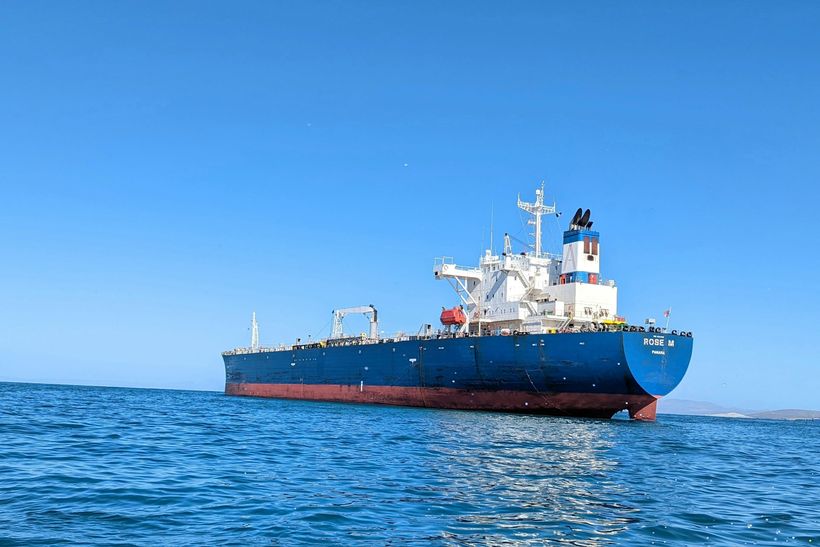
Less than a week after the onset of the war in Iran, and amid escalating conflict in the region, Iran effectively closed the Strait of Hormuz to shipping tankers moving oil from the Middle East by threatening attacks against any vessel who entered the waterway. Thus, the small body of water, which moves a large percentage of the world’s crude oil, has become one of the most discussed places in the world in recent days. Frank Galgano, PhD, is a professor of Geography and the Environment at Villanova University. He is an expert in military and Middle East geography and has also studied global maritime shipping and access to natural resources. Dr. Galgano says there geographic, geopolitical, military and economic factors at play, along with widespread potential consequences, as Iran holds steady on their closure of the strait and the U.S. considers how, or if, it will attempt to help escort oil ships through. Geography and Significance of Strait of Hormuz Situated between Iran to the north and Oman and the United Arab Emirates to the south, the Strait of Hormuz is a narrow shipping lane that connects the Persian Gulf to the Gulf of Oman and, further out, the Arabian Sea. It is one of the most vital chokepoints in the Middle East, along with the Suez Canal, Straits of Tiran, Bab al-Mandab and the Turkish Straits. “Right now, because of oil, it is the most important,” Dr. Galgano said. “Every day, roughly 20 percent of global petrochemical use goes through Hormuz.” The strait itself is barely over 20 nautical miles at its narrowest, but only a small portion of that is shipping lanes. Depth constraints limit shipping to two lanes, each two miles wide, with a two-mile buffer between. “You’re essentially looking at all of that shipping constrained to six nautical miles, and the ships are relatively slow,” Dr. Galgano said. “There are usually about 14-25 tankers every 24 hours transiting the Gulf, so there is always a ship in line." By Iran threatening military action against any oil-carrying ships in Hormuz—and by shipping companies refusing to attempt to traverse it— one-fifth of the global oil trade is essentially cut off indefinitely. That is concerning, given that it takes very little to send global oil prices skyrocketing. Dr. Galgano referenced the 2010-11 Somali pirate issue that caused supertankers—which cost upward of $50,000 a day to operate—to be rerouted. “That alone caused gas prices to raise 10 cents per gallon,” he said. In this case, the biggest impact will be felt throughout Asia, which relies more heavily on oil imports. But the U.S., despite being the second-biggest producer of crude oil last year, will still feel significant effects, since oil is traded globally. “It takes these supertankers eight or 12 days to reach the East Coast from Hormuz,” Dr. Galgano said. “So, a few days later you might see diminished supplies, but there is a critical point where we would face a real shortage.” Attempting to Move Ships Through Hormuz Poses Huge Danger Unlike the Iranian-backed Houthi rebels attacks on Israeli ships and those belonging to its allies in the Red Sea last year, Iran itself has far more sophisticated weapons, along with a strong motive to do whatever it can to put pressure on the U.S. and involved allies. In addition to drones designed for attacking ships—like the ones used by Houthis—Iran also possesses Chinese and Russian anti-ship missiles, according to the professor. “Ships are very vulnerable,” he said, then referencing the 2000 bombing of the USS Cole by Al Qaeda operatives. “That was just two guys in a rubber boat with an explosive device, and it almost sunk the whole ship. If one is carrying oil, it becomes almost like a large fuel bomb.” The United States has weighed the idea of sending a convoy to help escort and protect these ships. They did as much in the late 1980s in Operation Earnest Will, in which President Reagan ordered Kuwaiti supertankers—which were being fired at—to reflag under the U.S. flag so the Navy could legally escort them. But weapons technology has changed, and while U.S. naval ships could certainly defend themselves, “supertankers are slow and it is still an incredibly dangerous operation,” Dr. Galgano said. “The convoy would have to be lucky 100 percent of the time. Iran would only have to be lucky once to hit a ship and cause an immediate fiasco, both physically and in the media.” Global Dependance on Shipped Goods According to Dr. Galgano, between 75 and 90 percent of all items you handle on a day-to-day basis come from inside the hull of a ship: shocks on your car, clothes on your back, or components of your computer. When shipment is disrupted, it can cause supply chain and cost issues. “During the pandemic, Ford was waiting on chips for F-150s, and HP was waiting in chemicals to make ink,” Dr. Galgano said. “Even the ship that got stuck in the Suez Canal a few years ago caused $10 billion in losses per day due to the backup.” For commodities like oil, the indefinite inability to utilize perhaps the most important shipping lanes in the world due to large scale conflict quickly raises the economic stakes to even greater levels. “Iran absolutely knows that, and they see this as a bargaining chip,” Dr. Galgano said. “Cause economic pain to force cessation of the attacks.”



Operation Epic Fury: Florida Atlantic's Expert is Ready for Your Questions and Coverage
As tensions surrounding Operation Epic Fury in the Middle East intensifies and the risk of regional escalation grows, Robert G. Rabil, Ph.D., professor of political science at Florida Atlantic University, stands out as one of the most authoritative voices journalists can turn to for clear, strategic analysis. A nationally recognized scholar of Middle Eastern politics, political Islam, terrorism and U.S. foreign policy, Rabil brings decades of research, regional expertise and media experience to breaking developments. He does not simply react to headline, he explains the historical forces, ideological movements and geopolitical calculations driving them. At a time when the conflict’s implications stretch far beyond Iran’s borders, affecting Israel, Gulf states, global energy markets and U.S. national security, Rabil provides critical context on both state and non-state actors shaping events on the ground. Robert Rabil, Ph.D., professor of political science at Florida Atlantic University, is a leading authority on Middle Eastern politics, security, and U.S.–Middle East relations. View his profile Recent media coverage: WINK: Dr. Robert Rabil, a political science professor at Florida Atlantic University, said the attack marks one of the most significant escalations in regional conflict in years. "I would say now the joint attack today is one of the very few, if not the only, as a matter of fact, attack on a country in the Middle East," said Rabil. "And today, as we have seen, I believe that the President has taken the final decision, and he said, Listen, it's about time, mainly, either to change the regime or produce a change within the regime.” ABC News: “What the president has done recently, what he did with Maduro, and the assassination of Soleimani — all of that changes the regime’s behavior,” Rabil said. Rabil said if Iran’s government were to collapse or dramatically change, cooperation with Western nations, including the United States, could resume, especially if Iranians pursue a democratic alternative. The Jerusalem Post Op-Ed - The writer is a professor of political science at Florida Atlantic University. He served as chief of emergency of the Red Cross in East Beirut during Lebanon’s civil war. CNN Robert G. Rabil, Special to CNN Rabil offers measured, informed analysis rooted in decades of scholarship and policy study and can help with key story angles such as: • Iran’s Regime Stability and Internal Pressures How domestic dissent, economic strain and political factions inside Iran influence wartime decision-making. • U.S.–Iran Strategic Calculus What options Washington realistically has, historical precedents shaping current policy, and risks of escalation or miscalculation. • Israel and Regional Security Dynamics How Israel, Saudi Arabia and Gulf states are responding — and whether a broader regional war is possible. • Proxy Warfare and Militant Networks The role of Hezbollah, Hamas and other non-state actors in expanding or containing the conflict. • Iran’s Nuclear Program How the conflict affects nuclear negotiations, deterrence strategy and global security concerns. • Energy Markets and Global Economic Fallout Implications for oil prices, shipping lanes and international economic stability. • Long-Term Regional Realignment Whether this conflict accelerates a reshaping of alliances in the Middle East.


ExpertSpotlight: Why the Strait of Hormuz Matters: The World’s Most Critical Chokepoint
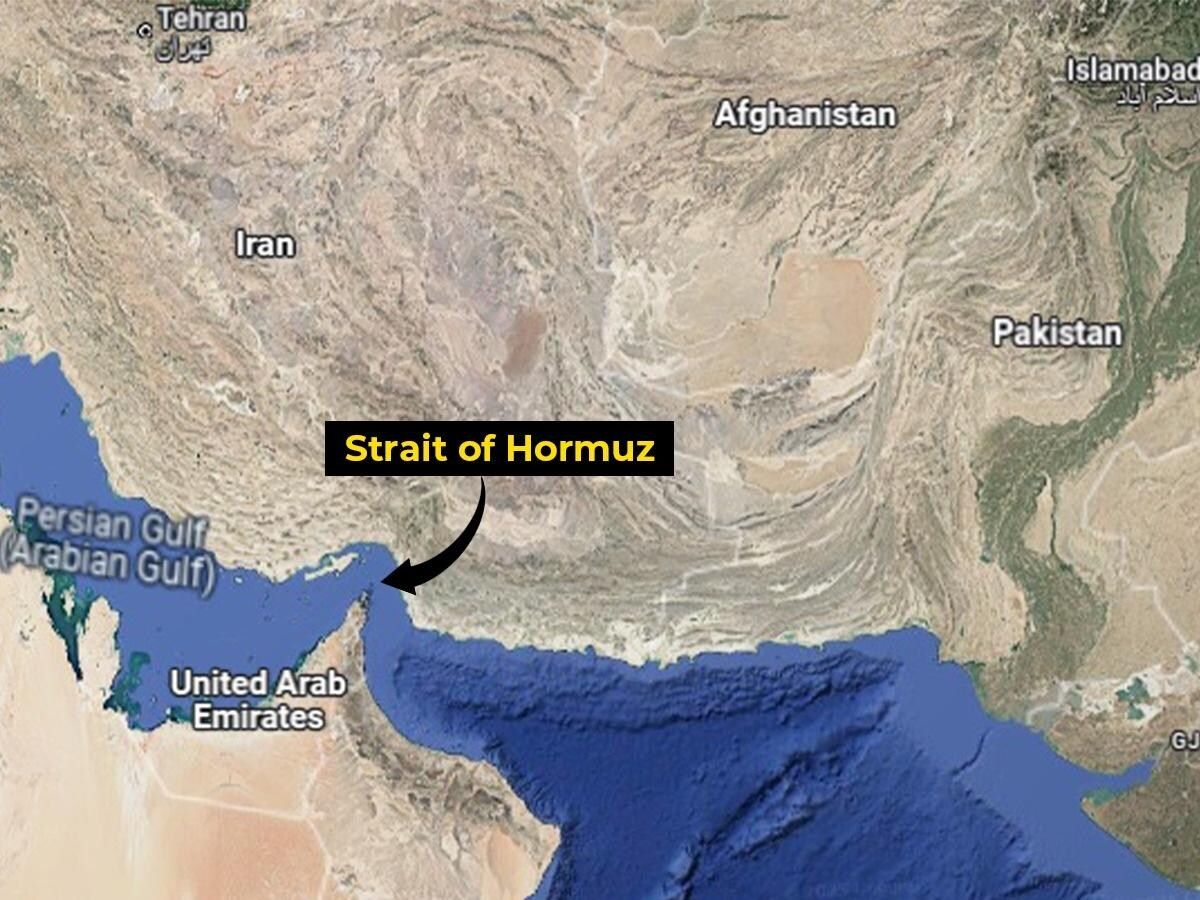
The Strait of Hormuz is one of the most strategically vital waterways on Earth. Just 20 miles wide at its narrowest point, with shipping lanes only a few miles across in each direction, this narrow channel connects the Persian Gulf to the Gulf of Oman and the Arabian Sea. Through it flows roughly one-fifth of the world’s petroleum supply, along with vast quantities of liquefied natural gas, particularly from Qatar. For global markets, the Strait is more than geography, it is a pressure point. Any disruption, even the threat of one, can send oil prices surging and rattle financial markets worldwide. A History Shaped by Empire and Energy For centuries, the Strait served as a maritime corridor linking Mesopotamia, Persia, India, and East Africa. Control over it shifted between regional powers, colonial empires, and eventually modern nation-states. In the 16th century, the Portuguese seized nearby islands to dominate regional trade routes. Later, British naval power asserted influence during the height of imperial shipping dominance. In the 20th century, however, the Strait’s importance expanded dramatically with the rise of oil exports from Gulf states. After the 1979 Iranian Revolution, tensions surrounding the Strait intensified. During the Iran-Iraq War in the 1980s, particularly the so-called “Tanker War” phase, commercial vessels were targeted, highlighting how vulnerable global energy supplies could be. Since then, periodic confrontations between Iran, the United States, and regional powers have kept the Strait at the centre of geopolitical risk. Why It Is So Important Today 1. Energy Security Major oil producers including Saudi Arabia, Iraq, the UAE, Kuwait, and Qatar rely heavily on this route. Even short-term closures could disrupt millions of barrels per day in global supply. 2. Global Economic Stability Because oil is globally traded and priced, disruptions in the Strait impact fuel costs, inflation, shipping, and consumer prices worldwide — including in North America and Europe. 3. Military Strategy The Strait is bordered primarily by Iran to the north and Oman to the south. Iran has periodically threatened to close the passage in response to sanctions or military pressure. The U.S. Navy and allied forces maintain a consistent presence to ensure freedom of navigation. 4. Modern Geopolitical Flashpoint Recent decades have seen drone seizures, tanker detentions, and naval standoffs. Each incident reinforces how fragile global energy logistics can be when concentrated in a single corridor. The Strait as a Symbol of Interdependence The Strait of Hormuz underscores a central truth of globalization: the world’s economies are deeply interconnected and geographically vulnerable. A narrow stretch of water in the Middle East can influence gasoline prices in Ontario, manufacturing costs in Germany, and energy security debates in Asia. It is both a trade artery and a geopolitical lever — a reminder that geography still shapes global power. Expert Angles for Media An expert in geopolitics, energy economics, or maritime security could explore: How vulnerable is the global economy to a prolonged closure? Can alternative pipelines realistically replace Hormuz traffic? What role do regional alliances play in deterring conflict? How does the Strait shape Iran’s negotiating power? What would insurance and shipping markets do in a crisis? The Strait of Hormuz is not simply a map feature — it is one of the world’s most consequential strategic chokepoints. Its stability underpins global energy flows, economic predictability, and international security. If tensions rise there, the world feels it. Our experts can help! Connect with more experts here: www.expertfile.com

Kamran Kardel, Ph.D., associate professor of manufacturing engineering in the Allen E. Paulson College of Engineering and Computing, is leading a multidisciplinary research team to help regional logistics companies increase efficiency. Funded through the college’s Remotely Operated Warehouse Services (ROWS) Laboratory, with seed money from Crider Foods Inc., the team is composed of Kardel, Ryan Florin, Ph.D, assistant professor of computer science and students. Kardel and his team are using the software to build simulations, known as “digital twins,” that replicate warehouse operations like picking, packing and shipping. The ROWS Laboratory will serve as a development site, allowing the simulations to be thoroughly tested and validated before being presented to third parties. The ultimate goal is to provide industry partners with simulation capabilities using AnyLogic Software and Internet of Things (IoT) integration. The IoT refers to a network of physical devices located within and around the warehouse, such as mobile robots, sensors and cameras, that collect and share real-time data over the internet. That ensures optimal accuracy and responsiveness. The ultimate goal is to provide industry partners with simulation capabilities using AnyLogic Software and Internet of Things (IoT) integration. This industry collaboration also provides important professional development for the students working on the project. “I have a few students, both undergraduate and graduate, who are going to be involved in this project from beginning to end,” said Kardel. “Several of them have mentioned to me that this is their first time with direct access to the industry and potential employers.” Continuing the theme of collaboration, the project could result in shared postdoctoral positions with Ireland’s South East Technological University in its Lean Industry 4.0 Lab. While still in its early stages, Kardel hopes this partnership will give this research an even larger scope. “The Lean Industry 4.0 Lab has a lot of experience in IoT,” Kardel explained. “By joining Ph.D. programs, hopefully we can work together and improve logistics here in our region and in Ireland.” Ultimately, Kardel says this research can give companies a leg up in an increasingly digitized world. “As far as automation, for companies in southeast Georgia and South Carolina, I would say it’s becoming more common,” he said. “It’s still a mixed bag, though some warehouses are fully automated, some are not. The work we are doing can help companies remain competitive.” Looking to know more about Georgia Southern University or connect with Kamran Kardel? Simply contact Georgia Southern's Director of Communications Jennifer Wise at jwise@georgiasouthern.edu to arrange an interview today.


Why Greenland Matters: The History and Strategic Importance of the World’s Largest Island
Often viewed as remote and sparsely populated, Greenland has long played an outsized role in global strategy. Settled by Inuit peoples for thousands of years, Greenland later became part of the Danish realm in the 18th century and today exists as an autonomous territory within the Kingdom of Denmark. Its location—bridging North America and Europe—has consistently drawn the attention of major powers, especially during moments of geopolitical tension. That attention intensified during the Cold War, when Greenland became a critical asset in Arctic defense. The United States established military installations on the island, most notably what is now known as Pituffik Space Base, to support missile warning systems and transatlantic defense. Greenland’s position along the shortest air and missile routes between North America and Russia made it indispensable to early-warning networks—and that strategic logic has not faded with time. Today, Greenland’s importance is growing rather than shrinking. Climate change is reshaping the Arctic, opening new shipping routes and increasing access to natural resources such as rare earth minerals, hydrocarbons, and freshwater reserves locked in ice. These developments have renewed global interest in Greenland from NATO allies and rival powers alike, as control over Arctic infrastructure, data, and mobility becomes central to economic and security planning. At the same time, Greenland’s own political future—balancing autonomy, Indigenous priorities, and external pressure—adds another layer of complexity. Greenland’s story is ultimately one of geography shaping history. What once made the island strategically valuable for defense now places it at the center of debates about climate, security, energy, and sovereignty in the 21st century. As Arctic competition accelerates, Greenland is no longer a peripheral actor—it is a focal point where global interests converge. Journalists covering geopolitics, Arctic security, climate change, Indigenous governance, or global resource competition are encouraged to connect with experts who study Greenland’s past and its evolving strategic role. Expert insight can help explain why this vast island continues to matter—and why it is likely to play an even larger role in the years ahead. Our experts can help! Connect with more experts here: www.expertfile.com

12 Days of Holiday Experts - Goizueta Business School Sources for the Season
It's that time of the year again! And as Americans get ready for another journey into the festive season, there are always opportunities for stories to be told about shopping, travelling, buying, returning, and making sure you don't get ripped off or scammed during all the hustle and bustle, Here's a stocking full of topics and expert sources who are here to help with your coverage this holiday! Gifts, Giving, and all the Costs That Come With It Economics of the Holiday Season A successful Q4 makes the difference between annual profitability and loss for many businesses. Professor Tom Smith is available to discuss seasonal hiring, retail expectations, the impact of tariffs, and the importance of the holiday season to retailers. View his profile here Black Friday & Using AI to find the Perfect Gift Professor Doug Bowman expects to see more Shoppers (esp. Gen Z) experimenting with GenAI for personalization, inspiration, product discovery, summarizing reviews, generating lists, and finding deals. Results may be mixed, depending on the data the AI was trained on. He also expects more purposeful and complex shopping, with fewer impulse purchases and more searching (both online and in brick-and-mortar stores), due to lower inventory levels/assortments at some retailers. View his profile here Food and Travel Pricing Professor Saloni Firasta Vastani can discuss the cost of this year’s holiday dinners. What’s gone up and what’s gone down? She can also discuss the cost of travel this holiday season and offer tips on how consumers can secure a better deal. View her profile here Avoiding Holiday Overspend Professor Usha Rackliffe can discuss how holiday shopping can expose consumers to credit products, such as store credit cards, that offer various incentives and often result in overspending. She can discuss the pros and cons of the buy now, pay later offers and how interest rates will play into this year’s holiday shopping and spending. View her profile here Gift Giving Professor Ira Bedzow says there are three ways gift-giving can promote both personal growth and professional development. View his profile here Gifts Express Relationship, Not Reciprocity. Contracts and transactions are about keeping score—I give, you give back. Gifts are about connection. A thoughtful gift doesn’t close a deal; it opens a door. Personally, it reframes love and friendship as ongoing commitments rather than conditional exchanges. Professionally, treating interactions as opportunities to build trust creates loyalty, sparks creativity, and builds a culture no contract can guarantee. The Art of Perspective-Taking in Choosing Gifts: The best gifts come from stepping outside yourself and asking: What would this person really want? This act of empathy is a skill worth practicing. Personally, it pulls us beyond ego; professionally, it sharpens our ability to anticipate needs, see through others’ eyes, and make decisions aligned with their values—a foundation for real leadership. Gifts as Lessons in Friendship and Human Connection: True friendship isn’t built on ideology, convenience, or self-interest. It’s rooted in caring for someone simply for who they are. Gift-giving is a rehearsal for that kind of connection. Personally, it reminds us that what we truly want typically comes through relationships, not rivalry. Professionally, it shows that lasting success rests less on shared advantage and more on genuine respect and human connection. Shopping for Sustainability Consumers are increasingly seeking eco-friendly products, and brands that emphasize sustainability are likely to see higher sales. Nearly 69% of shoppers prefer to buy from companies committed to ethical practices, such as those that use carbon-neutral shipping and offer recyclable packaging. Professor Dionne Nickerson focuses on how companies can integrate sustainability in their products and why it matters to consumers. View her profile here Pressure Purchasing As the days inch closer to the holidays, shoppers feel the pressure to find a gift. Professor Max Gaerth can discuss how stress, scarcity, and time pressure shape purchasing decisions. View his profile here Online Shopping and Influencing AI Changing How We Shop Professor David Schweidel examines how new AI tools are transforming the shopping experience and the ways brands utilize AI to engage with prospective customers and personalize product recommendations. He can also discuss OpenAI’s Atlas and how it puts ChatGPT directly into your browser. View his profile here Influencers Influencing Our Purchases How are creators impacting the economy, and are influencers impacting our purchasing decisions? Professor Marina Cooley looks at the creator economy and how TikTok and Instagram are impacting our holiday wish lists, and what it takes for a product to go from unknown to trending. She can also discuss TikTok Shop (something Instagram has struggled to execute). View her profile here How to Attract Customers to the Store this Holiday: Shopping looks different, and it is up to retailers to stand out not just in the brick-and-mortar world but also online. The success of a business can balance on the customer experience. Professor Reshma Shah can discuss the policies that brick-and-mortar retailers need to have in place to successfully merge online shopping and the in-person shopping experience. View her profile here Holiday Scams Tis The Season for Scams Bad actors are using AI to scam consumers. From phone calls to emails, Professor Tucker Balch can tell us how to spot a scam and what we can do to protect ourselves. View his profile here Holiday Returns Product Returns Professor Doug Bowman can discuss the retail strategy and the impact of holiday gift returns, comparing online returns to those in brick-and-mortar stores. View his profile here He can also weigh in on: Why are returns so expensive for retailers? Online returns vs. brick and mortar returns Predicting online returns - helping retailers understand how likely it is that a product will be returned. As well: Are retailers still offering free returns? What’s this costing them? Is this likely to continue? What will they do differently? If you’re a journalist covering the holiday season, our experts can help shape your story. Use the “Connect” button on any expert’s profile to send an inquiry — all inquiries are monitored by our media team to ensure a quick, timely response.


Tariffs fuel global sourcing shakeup for fashion in the U.S.
Be prepared to see more Made in Vietnam or Made in Bangladesh labels on clothing in the coming years. That’s because U.S. fashion companies are rethinking their global sourcing strategies and operations in response to the Trump administration’s trade policies and tariffs, according to new research by the University of Delaware's Sheng Lu. Lu, professor and graduate director in the Department of Fashion and Apparel Studies, partners with the United States Fashion Industry Association (USFIA), on an annual survey of executives at the top 25 U.S. fashion brands, retailers, importers and wholesalers doing business globally. Members include well-known names like Levi’s, Macy’s, Ralph Lauren and Under Armour, among others. The report covers business challenges and outlook, sourcing practices and views on trade policy. “We wear more than just clothes; we wear the global economy, the supply chain and the public policies that jointly make fashion and affordable clothing available to American families,” Lu said. “We want to know where these companies source their products and what factors matter to them the most. It’s a classic question and it evolves each year.” This year’s report, released on July 31, shows tariffs and protectionist policies are the top business challenge for companies, with nearly half reporting declining sales and more than 20% saying they have had to lay off employees. This was followed closely by uncertainty around inflation and the economy, increasing sourcing and production costs, and changes in trade policies from other countries. In response, more than 80% of companies said they will diversify the countries from which they source their products, focusing on vendors in Asian countries such as Vietnam, Bangladesh, Cambodia and Indonesia. Despite the push for “Made in USA” garments, only 17% of respondents plan to increase sourcing from the U.S. Lu shared his findings in the following Q&A: What surprised you about the survey results? Two things surprised me. First, contrary to common perception, the results do not indicate that the tariff policy so far has effectively supported or encouraged more textile and apparel production in the U.S. This actually makes sense. U.S. mills are as uncertain about the tariff rates as our trading partners are. A U.S. company may manufacture the clothes here, but use yarns, fabrics and zippers from other countries. When tariffs drive up the cost of these raw materials, it reduces the price competitiveness of apparel “Made in the USA.” Many domestic factories are in a “wait and see” mode, holding back on making critical investments to expand production due to the lack of a clear policy signal. Second, I was struck by the wide-ranging impact of the tariffs, which has gone far beyond what I originally imagined. Tariffs have not only increased U.S. fashion companies’ sourcing costs but have also affected their product development, shipping and overall supply chain management. Nearly 70% of the survey respondents said they have delayed or canceled some sourcing orders due to tariff hikes. Should consumers be prepared for less variety in clothing or shortages? Later this year, we may see fewer clothing items from our favorite brands on store shelves — especially during the holiday shopping season — and many of those items may come with a higher price tag. That said, fashion companies are doing what they can to avoid passing on tariff costs across the board, as they recognize that consumers are price sensitive. Many surveyed U.S. fashion companies say they intend to strengthen relationships with key vendors as a strategic move, and there is a growing public call for U.S. companies to provide more support and resources to their suppliers in developing countries. Sustainability is a huge issue in the fashion industry, as millions of tons of textiles end up in landfills every year. Companies say they are spending less on sustainability efforts. What would you tell companies about their sustainability efforts? Our survey suggests that sustainability can open up new business opportunities for U.S. fashion companies. Respondents said that when sourcing clothing made from sustainable fibers — like recycled, organic, biodegradable and regenerative materials — they are more likely to rely on a U.S. sourcing base or suppliers in the Western Hemisphere. In other words, even if apparel “Made in the USA” or nearby cannot always compete on price with lower-cost Asian suppliers, there is a better chance to compete on sustainability. Based on what I’ve learned from our Gen Z students — who expect better quality and more sustainable products if they have to pay more, and are critical consumers for many brands and retailers — it is unwise to hold back on investments in sustainability. What do you see as the biggest takeaway from the survey? One key takeaway is that the $4 trillion fashion and apparel business today is truly “made anywhere in the world and sold anywhere in the world.” In such a highly global and interconnected industry, everyone is a stakeholder — meaning there are no real winners in a tariff war. The study is also a powerful reminder that fashion is far more than just creating stylish clothing. Today’s fashion industry is deeply intertwined with sustainability, international relations, trade policy and technology. I hope the findings will be timely, informative and useful to fashion companies, policymakers, suppliers and fellow researchers. I plan to incorporate the insights, as well as the valuable industry connections developed through my long term partnership with USFIA, in my classroom, giving UD students fresh, real-world perspectives on the often “unfashionable” but essential side of the industry. Reporters interested in speaking with Lu can contact him directly by visiting his profile and clicking on the contact button. UD's media relations team can be reached via email.


DARPA awards VCU $4.875 million for development of modular drug manufacturing platform
The Defense Advanced Research Projects Agency (DARPA) is funding a $13M grant for a Rutgers University and Virginia Commonwealth University (VCU) partnership through the EQUIP-A-Pharma program, with $4.175 million to James Ferri, Ph.D., professor in the Department of Chemical and Life Science Engineering at VCU, to develop a modular manufacturing platform for sterile liquid drug products. The 24-month grant supports Ferri’s project, “Modular Manufacturing of Sterile Liquid Drug Products,” which develops a continuous manufacturing platform capable of producing highly potent drug substances such as albuterol sulfate and bupivacaine hydrochloride. These drug substances are for use in sterile liquid products, where compliance with purity of the active pharmaceutical ingredient (API) and impurity profiles are characterized and controlled in real time throughout the manufacturing process. “This work enables agile continuous manufacturing of drug substance and end-to-end drug product manufacturing of several highly potent drug substances with real time quality control,” Ferri said. “The combination of dynamic modular operation and real-time quality control will increase the supply of critical medicines in the United States.” Drug shortages continue to receive national attention, with albuterol sulfate and bupivacaine hydrochloride both appearing on the U.S. Food and Drug Administration drug shortage list within the past year. The project develops technologies that enable distributed manufacturing approaches to essential medicines currently in shortage in the United States. The platform incorporates several innovative features including continuous flow synthesis for improved process performance, online spectroscopy for real-time quality control, and modular unit operations that can be rapidly configured for different drug products. Key technologies include heterogeneous catalytic flow reactors, in-line purification systems and advanced process analytical technologies. The continuous manufacturing approach offers significant advantages over traditional batch manufacturing, including improved process control, reduced waste and the ability to produce medicines closer to the point of care. The modular design enables rapid deployment and flexible manufacturing of multiple drug products using the same platform. Ferri is collaborating with researchers from Rutgers University on the project, which began in August 2024. The platform is designed to fit within a standard shipping container, enabling distributed manufacturing capabilities. The research directly addresses national security concerns about pharmaceutical supply chain vulnerabilities while advancing the field of continuous pharmaceutical manufacturing. Students involved in the project gain experience in cutting-edge manufacturing technologies that are increasingly important in addressing global health challenges.


ExpertSpotlight: History of Yemen and the Houthi Rebels
The history of Yemen and the rise of the Houthi rebels is essential to understanding one of the world’s most complex humanitarian and geopolitical crises. Once considered a crossroads of ancient trade, Yemen has in recent decades become a focal point of conflict, regional power struggles, and human rights challenges. The conflict involving the Houthi movement has had global ramifications—from maritime security and oil trade routes to civilian displacement and famine. This topic matters to the public because it highlights the intersection of war, diplomacy, and humanitarian need, while prompting critical questions about international responsibility, peace-building, and regional stability. Key story angles that may interest a broad audience include: The roots and rise of the Houthi movement: Tracing the group’s origins, ideology, and evolution into a key political and military force in Yemen. Regional power dynamics: Analyzing the involvement of Saudi Arabia, Iran, and other actors in fueling or resolving the conflict. The humanitarian crisis in Yemen: Investigating the scale of famine, disease outbreaks, displaced populations, and access to aid. The role of the international community: Exploring arms sales, ceasefire negotiations, and accountability in the context of international law. Maritime security and global trade: Understanding how conflict in Yemen affects Red Sea shipping routes and international energy markets. The future of peace and governance: Examining potential pathways to a political resolution and the reconstruction of a stable Yemeni state. Connect with an expert about Yemen and the Houthi rebels: To search our full list of experts visit www.expertfile.com