
Experts Matter. Find Yours.
Connect for media, speaking, professional opportunities & more.

Jacqueline Ortiz Honored for Increasing Patient Access to Interpreter Services
Fifty-eight years ago, a young man from Argentina wound up in surgery at a California hospital after stomach pains turned out to be peritonitis, a potentially life-threatening inflammation of the membrane lining the abdominal wall. He was discharged to his wife’s care, with one problem — neither the man nor his wife had any idea how to care for the open wound in his abdomen. Jacqueline Ortiz The couple did not understand the lengthy instructions delivered in English, and there was no interpreter to explain to them in their native Spanish what to expect. So, when the man tried to take a bath and discovered the gauze was stuck to his wound, he didn’t know what to do. Fear and uncertainty compounded an already stressful time. Jacqueline Ortiz wasn’t yet born when her father’s health care emergency took place, but growing up she heard the story over and over. It was more than family lore for Ortiz — it was a lesson. Ortiz said she wanted her mother, pictured with her at the DVTA event, to see the growing number of people working as interpreters to ensure people get the information they need in the language they understand. Ortiz, now the vice president for Health Equity and Cultural Competence at ChristianaCare, saw firsthand how the experience left her parents terrified of the medical environment. Removing barriers to good health Years later, Ortiz is a leader in advocating for patients to have access to qualified, culturally responsive medical interpreting services to remove communication barriers with providers and ensure the best possible care and outcomes. “Language access is what fills my heart and soul,” Ortiz said. Her pioneering efforts and enthusiasm for promoting the use of trained interpreters in health care earned Ortiz the inaugural Making an Impact Award from the Delaware Valley Translators Association (DVTA) during an event Sept. 9 at Widener University. In her role at ChristianaCare, she builds the organization’s capacity to reduce the incidence of disease and improve health outcomes, advance equitable health care services, and reduce health disparities for identified conditions and target populations through culturally competent care, including providing health care in patients’ native languages. She has over 20 years of experience researching, teaching and working in cultural competence and health equity, social networks, and economic sociology. “Language access is what fills my heart and soul,” Ortiz said. A vision for serving everyone Eliane Sfeir-Markus, CHI, president of the DVTA, said the award recognizes the efforts of those working to make interpreting and translation more available to people with limited English proficiency, and those who are deaf or hard of hearing. Ortiz’s pioneering work to expand language services for patients and implement comprehensive cultural competence training at ChristianaCare have set a standard for caring for patients in their native languages. “Jaki’s vision for a health care system that truly serves everyone, regardless of their cultural or linguistic background, is inspiring,” Sfeir-Markus said. “We as patients deserve someone who knows our culture to take care of us.” ChristianaCare has more than 20 health care interpreters and over 100 caregivers who have undergone additional training to provide interpreting services when needed. ChristianaCare has more than 20 health care interpreters — who wear eggplant-colored uniforms — and over 100 bilingual caregivers who have undergone special training to serve as interpreters in some settings. “Jaki is a well-known name in the field of interpreting and translation because she has advocated for education and professionalization of interpreters in health care,” said Claudia Reyes-Hull, MArch, CMI, CHI, manager of Cultural and Linguistic Programs at ChristianaCare. “Thanks to her advocacy, more health care systems are recognizing the need to have trained interpreters for their patients.” In accepting the award, Ortiz said interpreters play a critical role in health care by making it possible for patients — and their families — to take an active role in their own care and decrease the anxiety over visiting a health care provider. She credited the success of ChristianaCare’s interpreting and translations services and its continued growth to the collaborative spirit and camaraderie among its team of caregivers, particularly Reyes-Hull. Ortiz said her family’s personal experience with a lack of interpreting services during a hospital stay made them anxious about health care for years. “Probably all of us in this room have walked into a courtroom or a lawyer’s office or a hospital room or a clinic and introduced ourselves and seen that immediate response and relaxation in the person we were speaking with,” Ortiz said to the translators at the DVTA event. “You make those interactions within our legal, educational and health care systems so much better.”



Back to School: Expert Tips for a Smooth Transition in the New Academic Year
With the start of school now upon us, Gary Henry, dean of the University of Delaware’s College of Education and Human Development and professor in the School of Education and the Joseph R. Biden, Jr. School of Public Policy & Administration, is here to answer some common questions educators and parents may have. What are your three biggest concerns about K-12 education going into this academic year? I think the overarching concern for many K-12 teachers and administrators is creating a sense of continuity as children and young adults go back to school. The three big concerns that contribute to this issue are teacher turnover, school leader turnover and the number of long-term substitutes who are not fully prepared to teach in classrooms. These trends were already in place before the pandemic, but the pandemic heightened this crisis. For the last 20 years, we’ve seen a crisis in the enrollment in traditional teacher preparation programs. Between 2010 and 2018, we saw about a 35% reduction in the number of undergraduates who enroll in education majors across the U.S., but in Delaware, that reduction was 60%. Teacher shortages are affecting every state around the country right now. What is the best way to address these chronic teacher shortages? Chronic teacher shortages are a systemic problem, which means it’s largely a result of the system in which we educate and support teachers. We know, for example, that many alternative teacher preparation programs — where students come in with a bachelor’s degree outside of the field of education and take only a few courses in preparation for teaching — actually contribute to teacher shortages. So part of the answer is investing in traditional teacher preparation programs and in financial aid. Our team at CEHD’s Center for Excellence and Equity in Teacher Preparation is working directly with Delaware students from motivation to pursue teaching, through recruitment into UD teacher preparation programs, through graduation from those degree programs and into schools within Delaware, whenever possible. For example, our Teachers of Tomorrow program introduces underrepresented high schoolers to the field of education through an immersive, two-week summer institute at UD where they can learn about our programs, meet current students and talk with educators. In partnership with high-needs Delaware school districts and the Delaware Department of Education, our Teacher Residency program allows early childhood education, elementary teacher education and secondary STEM education students to pursue yearlong, paid teaching placements in Delaware schools. Overall, we find that 80% of the students we recruit from Delaware stay in our schools to teach. What recommendations do you have for school leaders who are struggling with turnover challenges? The first thing to do is to have a human resources professional conduct exit interviews with teachers who are leaving and for building leaders to pay attention to their responses so they can really understand the key causes of turnover in their school. In my research, I have analyzed exit interview data and I’ve found that teachers are often very straightforward about why they are leaving. The second step is to act on those reasons. And the third step is to constantly check in with the teachers. Ask, “how are things going? What can we do to help you address your instructional needs?” Developing relationships around instructional issues and the teachers’ work with students is fundamental to diagnosing and addressing issues before they lead to teacher turnover. What advice would you give a brand-new teacher about to start their first year in charge of a classroom? I believe that all educators should view students and their families for their assets and recognize that a student’s culture at home is an asset. A relationship with parents and students that recognizes and values the family’s culture allows you to unite with the family, unite with the student and give the student the confidence to take risks, to work hard and to want to come to school because that’s where they feel welcomed and honored. If parents are interested in supporting their child's education, how can they do so? I think the key ingredient for parents is working with teachers and principals to articulate the outcomes that they’re seeking for their children. It’s much easier to get everyone on the same page if you start from a position of common ground. I would also encourage parents to seek the person in the school system that’s closest to the issue. So if your child is struggling in math, reach out to your child’s math teacher first. If the teacher identifies other resources that may be helpful, then seek out additional support from the school principal. Gary T. Henry has much more to talk about as the school year gets underway. He is available for interviews. Click the "View Profile" button to get in touch with him.


Back to School: Experts Available to talk ChatGPT, Food Insecurity and Education Leadership
With the school year starting very soon, the University of Delaware media team have rounded up some education stories, experts and research to consider for feature/publication. Experts: Gary Henry is dean of the University of Delaware’s College of Education and Human Development and professor in the School of Education and the Joseph R. Biden, Jr. School of Public Policy & Administration. He specializes in education policy, educational evaluation, educator labor markets, and quantitative research methods. Gary can lend context and steps to take to reverse/adapt to this new educational landscape. Allison Karpyn is an associate professor who can speak to topics related to hunger, obesity, school food, supermarket access, food insecurity, healthy corner stores and strategies to develop and maintain farmer’s markets in low-income areas. She has spoken extensively about food in schools and can offer context to those subjects. Joshua Wilson is an associate professor and has been featured in WaPo for his AI/ChatGPT knowledge in the past. His research broadly focuses on ways to improve the teaching and learning of writing and specifically focuses on ways that automated writing evaluation systems can facilitate those improvements. Stories: UD professor partners with Sesame Workshop to create Stories with Clever Hedgehog Among the casualties of the Ukraine war are 2 million-plus children. In an effort to restore some sense of normalcy to their education years, University of Delaware professor Roberta Golinkoff—a nationally recognized expert in childhood literacy—has partnered with Sesame Workshop and others to develop Stories with Clever Hedgehog, a website with free interactive e-books, games and other resources. Books are available in both Ukrainian and English, prompting a global experience for readers of any background. There are photos and video ready for this coverage. Golinkoff and Sesame Workshop leadership are open for interviews. Research: Study finds teachers’ anxiety in mathematics and science was associated with the mathematics and science anxiety of their low-SES students To reach out to specific experts, please click on their "View Profile" button.



MEDIA RELEASE: CAA Announces Provincial School Safety Award, Winners
Two students who calmly helped rescue their peers and a supervisor who has ensured the safety of her patrollers for three decades are being recognized for their efforts. Isabelle Wallace, 12, and Chase Rodgers, 12, received the 2022-2023 CAA School Safety Patroller of the Year award in recognition of their quick response when the school bus they were travelling on slid into a ditch in March. Ashley Hopkins, the vice principal of Primrose Elementary School in Mulmur, Ontario nominated the pair, “they jumped right into action, making sure all students were okay and reassuring them that they were safe,” she said. Using the skills they learned through the CAA School Safety Patrol program, the two helped the bus driver evacuate the bus and escorted their fellow classmates to safety while they waited for help, said Hopkins. Stephanie Pennesi, who is winding down her 31-year teaching career at June Avenue Public School in Guelph, received the CAA School Safety Patrol Supervisor of the Year award for her passion and dedication to the role of patrol supervisor, one she has held for 29 years. Constable Sherry Pettapiece with the Guelph Police and fellow patrol supervisor Dianne Chadder nominated her. Pennesi has been recognized for her dedication before, winning the City of Guelph’s Patrol Supervisor of the Year in 2008 and 2016. “Patrol Supervisors are an integral piece of the program, and Stephanie has been an amazing role model. The kids adore her, and I know I could always count on her professionalism and amazing depth of knowledge to help administer the program at June Avenue Public School,” says Constable Pettapiece. Pennesi has been recognized for her dedication before, winning the City of Guelph’s Patrol Supervisor of the year in 2008 and 2016. “The CAA School Safety Patrol program has kept students safe in school zones since the 1920s by helping students at school crossings and on school buses,” said Teresa Di Felice, assistant vice president, CAA South Central Ontario. “Thank you to all our patrollers, teachers, schools, police, and busing consortiums partners who help make this important safety program a success,” she added. About 20,000 dedicated student volunteers participate in the CAA School Safety Patrol Program and give their time to help keep their peers safe at school crossings and on school buses in more than 900 schools across Ontario.



(WILMINGTON, Del. – June 22, 2023) For a fourth year in a row, Modern Healthcare has recognized ChristianaCare President and CEO Janice E. Nevin, M.D., MPH, as one of the nation’s 50 Most Influential Clinical Executives. The publication praised her and ChristianaCare for the innovative work being done to extend the reach of the health system via new offerings, including Hospital Care at Home, ChristianaCare Business Health Solutions and Virtual Primary Care. “Dr. Nevin has a bold, courageous and clear-eyed vision for the future of health care regionally and nationally,” said Nicholas Marsini, chair of the Board of Directors of ChristianaCare. “In service of our system’s vision of creating health together so that every person can flourish, she has committed ChristianaCare to transforming care delivery by aspiring to keep people healthy at home, radically simplify access and much more.” Dr. Nevin has led ChristianaCare since 2014. Under her leadership the health system has experienced substantial growth and maintained a high level of quality and safe care. In addition to numerous other accolades, Healthgrades has continually recognized ChristianaCare as one of America’s Top 50 Hospitals, and Forbes has repeatedly called ChristianaCare one of the country’s best health systems to work for. Modern Healthcare’s annual list of the most influential clinical executives honors currently or previously licensed clinicians in executive roles who are deemed by their peers and the senior editors of Modern Healthcare to be paving the way to better health through their executive responsibility, leadership qualities, innovation, community service and achievements inside and outside of their respective organizations. “These executives are broadening access to care through expansion and embracing digital tools to make their operations more efficient and their patients more connected,” said Mary Ellen Podmolik, editor-in-chief of Modern Healthcare. “They also are tackling workforce challenges by developing strategies to attract newcomers to the field. The complete list is included Modern Healthcare’s June 19 issue with awardee profiles available at www.modernhealthcare.com/50mostinfluential. About ChristianaCare Headquartered in Wilmington, Delaware, ChristianaCare is one of the country’s most dynamic health care organizations, centered on improving health outcomes, making high-quality care more accessible and lowering health care costs. ChristianaCare includes an extensive network of primary care and outpatient services, home health care, urgent care centers, three hospitals (1,299 beds), a freestanding emergency department, a Level I trauma center and a Level III neonatal intensive care unit, a comprehensive stroke center and regional centers of excellence in heart and vascular care, cancer care and women’s health. It also includes the pioneering Gene Editing Institute. ChristianaCare is nationally recognized as a great place to work, rated by Forbes as the 5th best health system to work for in the United States and by IDG Computerworld as one of the nation’s Best Places to Work in IT. ChristianaCare is rated by HealthGrades as one of America’s 50 Best Hospitals and continually ranked among the nation’s best by U.S. News & World Report, Newsweek and other national quality ratings. ChristianaCare is a nonprofit teaching health system with more than 260 residents and fellows. With its groundbreaking Center for Virtual Health and a focus on population health and value-based care, ChristianaCare is shaping the future of health care. About Modern Healthcare Modern Healthcare is the most trusted business news and information brand in the healthcare industry. Modern Healthcare empowers healthcare leaders and influencers to make timely and informed business decisions. To learn more or subscribe, go to www.modernhealthcare.com/subscriptions.
Expert comment on new NHS childhood obesity clinics
Dr Duane Mellor, Senior Teaching Fellow, Centre for Health & Society Aston Medical School and Associate Dean Public Engagement is available for comment on new NHS childhood obesity clinics "It would be about supporting the whole person living with obesity alongside their family. It is important that higher body weight is not a choice, but the result of biology and our modern environment. Families and young people need support to make healthier lifestyle choices easier. We need to focus on kind and effective ways to improve health, weight change is just a product when health behaviours change and should not be seen as the only or main aim." For more details contact Nicola Jones Press and Communications Manager 07825 342091 or n.jones6@aston.ac.uk


Georgia Southern professor earns Fulbright US Scholar Award for 2023-2024
A noted Georgia Southern University public health professor has earned a Fulbright U.S. Scholar Program award in All Disciplines to Latvia for the 2023-2024 academic year from the U.S. Department of State and the Fulbright Foreign Scholarship Board. Yelena N. Tarasenko, DrPH, is a professor in the Department of Biostatistics, Epidemiology and Environmental Health Sciences at Georgia Southern’s Jiann-Ping Hsu College of Public Health. Her Fulbright project is titled “Strengthening research and teaching capacity in cancer prevention globally.” She will collaborate with personnel and students at the Faculty of Medicine and Institute of Clinical and Preventive Medicine at the University of Latvia, as well as colleagues at the International Agency for Research on Cancer to help improve cancer care coordination and screening in Latvia and 14 European countries participating in the “Towards gastric cancer screening implementation in the European Union” project. Given Tarasenko’s expertise in legal and cancer epidemiology, she will engage in (i) implementation research focused on cancer screening and patient navigation, and (ii) teaching activities focused on fostering research productivity (e.g., guest lecturing, curriculum development, advising, and mentoring). Tarasenko is among more than 800 U.S. citizens who will teach or conduct research abroad for the 2023-2024 academic year through the Fulbright U.S. Scholar Program. Fulbright scholars engage in cutting-edge research and expand their professional networks, often continuing research collaborations started abroad and laying the groundwork for forging future partnerships between institutions. Upon returning to their home countries, institutions, labs and classrooms, they share their stories and often become active supporters of international exchange, inviting foreign scholars to campus and encouraging colleagues and students to go abroad. As Fulbright Scholar alumni, their careers are enriched by joining a network of thousands of esteemed scholars, many of whom are leaders in their fields. Notable Fulbright alumni include 62 Nobel Prize laureates, 89 Pulitzer Prize recipients, 78 MacArthur Fellows and 41 who have served as a head of state or government. Since 1946, the Fulbright Program has provided more than 400,000 participants from over 160 countries – chosen for their academic merit and leadership potential – with the opportunity to exchange ideas and contribute to finding solutions to challenges facing our communities and our world. “This is a wonderful validation of Dr. Tarasenko’s scholarship and expertise, and another example of Georgia’s Southern’s expanding reputation for public-impact research,” said Carl Reiber, Ph.D., Georgia Southern University provost and vice president for academic affairs. “Fulbright scholars are among the world’s most talented academicians, and we congratulate Dr. Tarasenko for this achievement.” More than 800 U.S. scholars — faculty members, artists, and professionals from all backgrounds — teach or conduct research overseas through the Fulbright U.S. Scholar Program annually. In addition, over 2,000 U.S. students, artists, and early career professionals from all backgrounds in more than 100 different fields of study receive Fulbright U.S. Student Program awards annually to study, teach English, and conduct research overseas. “I’m excited to help expand our expertise on global health and develop a relationship with the only classical university in Latvia,” Tarasenko said. “This proposed project meets the university’s strategic pillars, as its leadership looks for ways to create and encourages opportunities for the exchange of teaching, research, scholarship, and professional development. It also meets the Jiann-Ping Hsu College of Public Health’s values and goals in terms of thinking globally and acting locally.” The Fulbright Program is the U.S. government’s flagship international educational exchange program and is supported by the people of the United States and partner countries around the world. The Fulbright Program is funded through an annual appropriation made by the U.S. Congress to the U.S. Department of State’s Bureau of Educational and Cultural Affairs. Participating governments and host institutions, corporations, and foundations around the world also provide direct and indirect support to the Program. In the United States, the Institute of International Education supports the implementation of the Fulbright U.S. Student and Scholar Programs on behalf of the U.S. Department of State, including conducting an annual competition for the scholarships. For more information about the Fulbright Program, visit https://fulbrightprogram.org. To connect with Yelena N. Tarasenko — simply reach out to Georgia Southern's Director of Communications Jennifer Wise at jwise@georgiasouthern.edu to arrange an interview today.


Health Professions Academic Building on the Armstrong Campus in Savannah Georgia’s only public medical school has received funding approval to open a new four-year campus in Savannah, an expansion that will provide greater access to education and training for medical students and ease the state’s ongoing shortage of physicians. The new campus of Augusta University’s Medical College of Georgia (MCG) is expected to enroll its first students on the Armstrong Campus of Georgia Southern University by Fall 2024, pending approval by the Liaison Committee on Medical Education, the accrediting body for medical schools in the U.S. and Canada. The campus will be located in the existing Armstrong Center and the Health Professions Academic Building of Georgia Southern’s Waters College of Health Professions. Located down the street from Savannah’s St. Joseph’s Hospital, it would be MCG’s third four-year campus in Georgia. The MCG educational experience is anchored at its main campus in Augusta, with another four-year campus located in Athens in partnership with the University of Georgia. “Georgia ranks 40th in the nation for both the number of active physicians and the number of primary care doctors,” Georgia House Speaker Jon Burns said. “Georgians experience this reality every day. Increasing opportunities within the University System of Georgia allows Augusta University’s Medical College of Georgia to educate and train more students and meets a clear need to make sure our communities receive better health care. Georgia needs more doctors, and I’m proud we are making this investment in our future.” The Board of Regents of the University System of Georgia (USG) on Tuesday approved $1.7 million for renovations at Georgia Southern’s Armstrong Campus to help make the new campus a reality. The money was included in the fiscal year 2024 state budget passed earlier this year by the Georgia General Assembly and signed by Gov. Brian Kemp on May 5. “We’re grateful to Governor Kemp, Speaker Burns, Lt. Gov. Jones and the General Assembly for their support in helping MCG and the university system expand one of the best public medical colleges in the nation and help get more doctors into our local communities,” USG Chancellor Sonny Perdue said. Four-year campuses provide the full spectrum of medical education, from basic sciences to clinical experiences. “This campus expansion is a momentous milestone for Augusta University and the Medical College of Georgia, standing as a testament to the unwavering support we have received from Speaker Burns, state Rep. Butch Parrish, Governor Kemp, the entire General Assembly and Chancellor Perdue,” said Augusta University President Brooks A. Keel, PhD. “Through this collaboration, we are forging a brighter future for health care in Georgia and fulfilling our shared commitment to producing more doctors for our state. I extend my deepest gratitude to all those who have championed this vision, including St. Joseph’s/Candler Health System, whose exceptional partnership has provided invaluable clinical experiences for our students. Together, we are bolstering the state’s medical community and strengthening Southeast Georgia’s access to quality health care.” MCG’s statewide educational model also has students learning at two-year, clinically focused regional campuses in every corner of the state, including the Southeast Campus, established in 2011 and based at St. Joseph’s/Candler in Savannah, and Southeast Georgia Health System in Brunswick. Other regional campuses include the Southwest Campus based in Albany and the Northwest Campus based in Rome. “This partnership with Augusta University and the Medical College of Georgia is another example of how together, the governor, our legislators, the University System of Georgia and Georgia Southern University are collaborating to meet the growing needs of Southeast Georgia,” added Georgia Southern University President Kyle Marrero. “These programs on our Savannah campus further Armstrong’s history of being a leader in training health care professionals and complement our efforts to expand nursing education and develop our future physician assistant program.” Through this partnership, Georgia Southern is providing approximately 23,000 square feet of instructional and lab space in its Armstrong Center and the Waters College of Health Professions’ Health Professions Academic Building. This includes 10,000 square feet of dedicated student group workspace and faculty and staff offices and 13,000 square feet of shared anatomy lab and large classroom space. The renovations include the creation of a new anatomy lab within the Health Professions Building, as well as minor renovations and new furniture, fixtures and equipment for the student group workspace and faculty and staff offices. The new campus would allow MCG to accept 40 more students per year, increasing its class size, already one of the nation’s largest, to 304 students per class. “As the state’s only public medical school, it is both our responsibility and commitment to produce more doctors for Georgia, and this growth in our class size is one way we can fulfill what I consider to be our most critical mission” said MCG Dean David Hess, MD. “This expansion would not be possible without the support of Governor Kemp, the Georgia Legislature, the University System of Georgia, Augusta University President Brooks Keel, and our colleagues at Georgia Southern University. I am also thankful for the unwavering support of St. Joseph’s/Candler Health System, including its CEO Paul Hinchey and chief medical officer Dr. Julia Mikell, a 1976 MCG graduate. Physicians and staff at St. Joseph’s/Candler have been exceptional educational partners, serving as a home base for our Southeast Campus, and providing rich clinical experiences for our third- and fourth-year students, for well over a decade. I know that commitment will extend to students at this new four-year campus.” “This is a sentinel event not only for the future of health care in Georgia, but also for Savannah and the region,” added Paul P. Hinchey, president and CEO of St. Joseph’s/Candler. “We have had a great relationship with MCG for more than a decade and our physicians have been instrumental as faculty in teaching third- and fourth-year students in Savannah. SJ/C has also served as a longstanding clinical site for nursing students from Georgia Southern and from the Armstrong campus. Creating a four-year medical school campus in Savannah will strengthen the medical community in Savannah and throughout Southeast Georgia. I want to thank Speaker Burns, Dr. Hess and the University System of Georgia for making this great vision a reality.” “I am excited to help build a campus that will continue MCG’s mission of educating the next generation of physicians,” said Elizabeth Gray, MD, associate dean at MCG’s Southeast Campus, based in Savannah and Brunswick. “I am confident that Georgia Southern will be an exceptional educational partner, and am excited to continue working with the leadership, physicians and staff at our longtime partners St. Joseph’s/Candler to help increase the number of physicians in this area of the state and beyond.” Interested in learning more? For more information about this exciting new development — simply reach out to Georgia Southern's Director of Communications Jennifer Wise at jwise@georgiasouthern.edu to arrange an interview today.
Aston University accounting students recognised by software developers
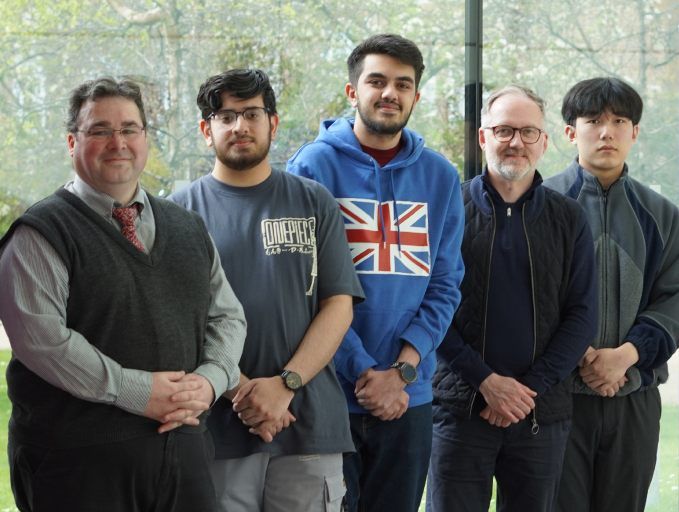
Students received a certificate and micro-credential from Tim O’Reilly Tim has pioneered the creation of the first auto-marked digital cloud financial skills (DCFS) 50 students voluntarily did the online course and took the final test. Accounting students at Aston University have received prizes from the leader in cloud accounting and financial management software. Tim O’Reilly, accountants partnership manager at Sage, visited the Accounting Department on Tuesday 25 April to meet with them. Tim has pioneered the creation of the first auto-marked digital cloud financial skills (DCFS) course supported jointly by Sage and the Association of Chartered Certified Accountants (ACCA). It gives successful students a certificate and micro-credential. Aston University accounting students used it for the first time in 2022/23 guided by senior teaching fellow, Jonathan Mills. 50 students voluntarily did the online course and took the final test. Professor Andy Lymer, head of the Accounting department at Aston University, said: “Tim was really impressed with the set of results and gave prizes to the three students that performed best overall in the DCFS course and the Accounting in Practice module. “I am really pleased with the success of the first run of this digital skills course and I look forward to inviting Sage representatives to return in the summer to strategise on expanding our work together to enhance employability and digital skills.”

Aston University appoints new Deputy Vice-Chancellor Academic
Professor Osama Khan has nearly 20 years’ experience as an academic leader and innovator He will lead academic strategy, new educational model and student experience strategy in line with Aston 2030 Strategy Osama will join Aston University in October 2023. Aston University has appointed Professor Osama Khan as its new Deputy Vice-Chancellor Academic. With a successful career in higher education for nearly 20 years, Professor Khan will be joining Aston University from the University of Surrey where he is currently Pro-Vice-Chancellor Academic, leading on education strategy, teaching excellence and student learning experience. In his new role, he will play a central part in the development of Aston University’s academic strategy in line with the University 2030 Strategy. Responsibilities will include leading the University's academic portfolio incorporating education, curriculum, digital offerings, careers and placements, library and information services, student experience and services. Educated at Independent University, Bangladesh, University of Surrey and University of Cambridge, Osama began his academic career as a lecturer (and then senior teaching fellow) at University of Surrey in 2004. He moved to Solent University in 2012, where he held a variety of roles including director of learning and teaching at Solent Learning and Teaching Institute. He was appointed the first Pro Vice-Chancellor, Students and Teaching at Solent University leading on curriculum, digital services, learning space transformation. He was appointed as Vice-Provost, Education at University of Surrey in 2019. Subsequently his remit extended to form the Pro Vice-Chancellor, Academic portfolio with responsibility for education, curriculum, student services, digital transformation, and learning spaces. He has 25 years of teaching experience in corporate finance at various renowned universities. Professor Aleks Subic, Vice-Chancellor and Chief Executive of Aston University, said: “I am delighted to welcome Osama to Aston University and the executive team at a crucial time when we are shaping our bold strategy for 2030 and beyond. “Osama is a proven academic leader and innovator, who has who has achieved sector leading outcomes in student experience and educational quality. His strong commitment to values-based leadership is aligned well with our approach to working with our people and the diverse communities we serve. “I look forward to working with Osama to position Aston University as the leading university in the United Kingdom for student experience, employability and social mobility.” Professor Osama Khan said: “Aston University's unwavering commitment to academic excellence, coupled with its dedication to equality, diversity and inclusion, resonates deeply with me. Moreover, I commend Aston University's efforts in narrowing the awarding gaps, striving for equity in education and promoting fairness in the academic journey, for it is through education that we empower generations and create lasting impact. “I am honoured to join this creative institution as its next Deputy Vice-Chancellor Academic, where we will prioritise inclusive education and foster an environment where every individual can thrive and succeed. “I eagerly look forward to working with our exceptional faculty, dedicated staff, and talented students to shape the next chapter of excellence through the new Aston University 2030 strategy. Together, we will transform lives, foster innovation and forge a path towards a brighter tomorrow." Professor Khan will be taking up his post in October 2023.