
Experts Matter. Find Yours.
Connect for media, speaking, professional opportunities & more.

NASA Grant Funds Research Exploring Methods of Training Vision-Based Autonomous Systems
Conducting research at 5:30 a.m. may not be everybody’s first choice. But for Siddhartha Bhattacharyya and Ph.D. students Mohammed Abdul, Hafeez Khan and Parth Ganeriwala, it’s an essential part of the process for their latest endeavor. Bhattacharyya and his students are developing a more efficient framework for creating and evaluating image-based machine learning classification models for autonomous systems, such as those guiding cars and aircraft. That process involves creating new datasets with taxiway and runway images for vision-based autonomous aircraft. Just as humans need textbooks to fuel their learning, some machines are taught using thousands of photographs and images of the environment where their autonomous pupil will eventually operate. To help ensure their trained models can identify the correct course to take in a hyper-specific environment – with indicators such as centerline markings and side stripes on a runway at dawn – Bhattacharyya and his Ph.D. students chose a December morning to rise with the sun, board one of Florida Tech’s Piper Archer aircraft and photograph the views from above. Bhattacharyya, an associate professor of computer science and software engineering, is exploring the boundaries of operation of efficient and effective machine-learning approaches for vision-based classification in autonomous systems. In this case, these machine learning systems are trained on video or image data collected from environments including runways, taxiways or roadways. With this kind of model, it can take more than 100,000 images to help the algorithm learn and adapt to an environment. Today’s technology demands a pronounced human effort to manually label and classify each image. This can be an overwhelming process. To combat that, Bhattacharyya was awarded funding from NASA Langley Research Center to advance existing machine learning/computer vision-based systems, such as his lab’s “Advanced Line Identification and Notation Algorithm” (ALINA), by exploring automated labeling that would enable the model to learn and classify data itself – with humans intervening only as necessary. This measure would ease the overwhelming human demand, he said. ALINA is an annotation framework that Hafeez and Parth developed under Bhattacharyya’s guidance to detect and label data for algorithms, such as taxiway line markings for autonomous aircraft. Bhattacharyya will use NASA’s funding to explore transfer learning-based approaches, led by Parth, and few-shot learning (FSL) approaches, led by Hafeez. The researchers are collecting images via GoPro of runways and taxiways at airports in Melbourne and Grant-Valkaria with help from Florida Tech’s College of Aeronautics. Bhattacharyya’s students will take the data they collect from the airports and train their models to, in theory, drive an aircraft autonomously. They are working to collect diverse images of the runways – those of different angles and weather and lighting conditions – so that the model learns to identify patterns that determine the most accurate course regardless of environment or conditions. That includes the daybreak images captured on that December flight. “We went at sunrise, where there is glare on the camera. Now we need to see if it’s able to identify the lines at night because that’s when there are lights embedded on the taxiways,” Bhattacharyya said. “We want to collect diverse datasets and see what methods work, what methods fail and what else do we need to do to build that reliable software.” Transfer learning is a machine learning technique in which a model trained to do one task can generalize information and reuse it to complete another task. For example, a model trained to drive autonomous cars could transfer its intelligence to drive autonomous aircraft. This transfer helps explore generalization of knowledge. It also improves efficiency by eliminating the need for new models that complete different but related tasks. For example, a car trained to operate autonomously in California could retain generalized knowledge when learning how to drive in Florida, despite different landscapes. “This model already knows lines and lanes, and we are going to train it on certain other types of lines hoping it generalizes and keeps the previous knowledge,” Bhattacharyya explained. “That model could do both tasks, as humans do.” FSL is a technique that teaches a model to generalize information with just a few data samples instead of the massive datasets used in transfer learning. With this type of training, a model should be able to identify an environment based on just four or five images. “That would help us reduce the time and cost of data collection as well as time spent labeling the data that we typically go through for several thousands of datasets,” Bhattacharyya said. Learning when results may or may not be reliable is a key part of this research. Bhattacharyya said identifying degradation in the autonomous system’s performance will help guide the development of online monitors that can catch errors and alert human operators to take corrective action. Ultimately, he hopes that this research can help create a future where we utilize the benefits of machine learning without fear of it failing before notifying the operator, driver or user. “That’s the end goal,” Bhattacharyya said. “It motivates me to learn how the context relates to assumptions associated with these images, that helps in understanding when the autonomous system is not confident in its decision, thus sending an alert to the user. This could apply to a future generation of autonomous systems where we don’t need to fear the unknown – when the system could fail.” Siddhartha (Sid) Bhattacharyya’s primary area of research expertise/interest is in model based engineering, formal methods, machine learning engineering, and explainable AI applied to intelligent autonomous systems, cyber security, human factors, healthcare, explainable AI, and avionics. His research lab ASSIST (Assured Safety, Security, and Intent with Systematic Tactics) focuses on the research in the design of innovative formal methods to assure performance of intelligent systems, machine learning engineering to characterize intelligent systems for safety and model based engineering to analyze system behavior. Siddhartha Bhattacharyya is available to speak with media. Contact Adam Lowenstein, Director of Media Communications at Florida Institute of Technology at adam@fit.edu to arrange an interview today.


Protect yourself: Scammed by a QR Code? It didn’t have to happen
QR codes are used everywhere nowadays – to pay for metered parking, to read menus at restaurants, to win a free cup of coffee. Cybercriminals are using them, too – redirecting users to harmful websites that harvest their data. The practice is known as “quishing,” derived from QR code phishing, and it is a fast-growing cybercrime. But it doesn’t have to be. University of Rochester engineers Gaurav Sharma and Irving Barron have devised a new form of QR code – called a self-authenticating dual-modulated QR (SDMQR) – that protects smartphone users from quishing attacks by signaling when users are being directed to a safe link or a potential scam. Gaurav is a professor of electrical and computer engineering, computer science, and biostatistics and computational biology. Barron is an assistant professor of instruction in electrical computer engineering. Their creation involves allowing companies to register their websites and embed a cryptographic signature in a QR code. When the code is scanned, the user is notified that the code is from an official source and safe. Gaurav and Barron recently wrote about their technology in the journal IEEE Security and Privacy, and spoke about their work on the National Science Foundation's Discovery Files podcast. They can be reached by email at gaurav.sharma@rochester.edu and ibarron@ur.rochester.edu.


Off-channel communications (OCC) occur when employees use unapproved and inadequately protected devices – such as personal cellphones – or applications to communicate with co-workers, counterparties and / or clients. Many financial services firms are required to maintain copies of all communications regarding their business, supervise the same, and produce them in response to regulatory requests. Firms cannot meet those compliance obligations when employees resort to unauthorized OCC for business-related matters. In charging 15 broker-dealers and one affiliated investment advisor in September 2022 with record-keeping violations, the SEC noted that its investigation uncovered employees at all levels of these firms who routinely used text messaging apps on their personal devices to discuss business matters between January 2018 and September 2021 [1]. The firms settled the charges and agreed to pay penalties totaling more than $1.1 billion. Just as important, the firms also agreed to engage independent compliance consultants to ensure the use of OCC meets regulatory standards as part of the settlements. In a related move [2], the Commodity Futures Trading Commission (CFTC) ordered 11 financial institutions to pay more than $710 million for recordkeeping and supervision failures for widespread use of unapproved communication methods such as personal texts, WhatsApp, and Signal. Additionally, the Financial Industry Regulatory Authority (FINRA) has also taken action when it comes to OCC. Antonio Rega, digital forensics, data governance, privacy, security, emerging technology, and discovery expert with J.S. Held, observes, “While the current administration has loosened certain regulatory enforcement near-term, we continue to observe requests from clients in supporting management of “off-channel” communications, with a particular focus on 3rd party chat messaging platforms on mobile devices, such as Whatsapp. These inquiries include supporting corporate stakeholders with internal auditing of their organizational platforms, policies and procedures.” By implementing effective processes and utilizing software and outside experts to monitor and detect OCC, broker-dealers, investment advisers, and other financial institutions can reduce the risk of regulatory enforcement and penalties and ensure that they remain in compliance with regulations. Steve Strombelline, regulatory and enterprise risk management expert with J.S. Held adds, “Although concerns typically impact broker-dealers, firms outside of financial sectors are looking closely at their messaging processes as well, which is advisable." In addition to guaranteeing that these communications are properly documented and retained, the regulations are set up to prevent the use of OCC to manipulate securities transactions or commit fraud and to ensure that it is not used to violate any other securities laws. Firms’ supervisory procedures must be reasonably designed to detect for OCC when they monitor for such activity. The following article discusses the risks that OCC pose for financial services firms, especially as the SEC, FINRA, and the CFTC have made it clear that they are now targeting firms throughout the industry about their OCC to see if they are recording and preserving business information according to regulations. The piece also explains how firms, including broker-dealers of all sizes, should manage their OCC to ensure that they and their employees comply with federal securities laws and regulations. Finally, the authors address the complexity related to the collection of OCC in response to regulatory enforcement investigative requests. As the fines and settlements between those firms and the SEC exemplify, financial services firms of all sizes need to take this regulatory focus seriously and take the proactive step of engaging an independent third-party with expertise and experience in both digital forensics and compliance issues. To read the full article and learn more about the risk of off-channel communications and how companies should manage their OCC to remain compliant, click on the button below: To connect with Antonio Rega simply click on his icon now. To arrange a conversation with Steve Strombelline or any other media inquiries - contact : Kristi L. Stathis, J.S. Held +1 786 833 4864 Kristi.Stathis@JSHeld.com References [1] https://www.sec.gov/news/press-release/2022-174 [2] https://www.cftc.gov/PressRoom/PressReleases/8599-22


Can we separate our work and home memories, 'Severance' style?
The hit Apple TV show 'Severance' offers a tempting alternative to balancing work and home life by using neural implants to entirely split the memories. But according to Carnegie Mellon University neuroscientist Dr. Alison Barth, this work-life separation is somewhat possible even without an implant. In an interview, Dr. Barth explains: "We all experience some compartmentalization between our private and our work lives. Having a different location where you work and play makes that easier, but the cues for 'life' and 'work' can be as simple as time of day, or what your computer screen looks like." In addition, she says humans can "easily move in and out" of our work and personal worlds, and that there are many examples of people whose work and private lives are completely 'severed'. CMU neuroscientist Alison Barth shares her thoughts on the TV thriller Severance As far as the feasibility of technology to control our memories for us, Dr. Barth says: "I don't think that it is possible to program people so that they simply cannot access memories outside of a particular space and time." And she further warns of the dangers of such a separation: "The potential for abuse and lack of accountability are horrifying. In Severance, the office workers have little notion of what their work is. It would be hard to hold them accountable in a court of law. Severance is perfectly suited to corporate malfeasance," she explained. Watch Alison Barth's CMU Experts video below to learn more about her research seeking to understand how experience transforms the properties of neurons to encode memory.


Nurse Scientist Susan Smith Birkhoff Makes Two Research ‘Firsts’ in Delaware
Susan Smith Birkhoff, Ph.D., RN, is making nursing history in the First State through the Delaware IDeA Network of Biomedical Research Excellence (INBRE). She is the first nurse scientist to be named an INBRE site principal investigator and she is the first nurse to receive the Seema S. Sonnad Mentor of the Year Award from INBRE’s Junior Investigator Network. INBRE is a collaborative network of Delaware academic, health care and research institutions, composed of ChristianaCare, Delaware State University, Delaware Technical Community College Nemours Children’s Health and University of Delaware. First nurse scientist to lead INBRE site As the INBRE site principal investigator at ChristianaCare, Smith Birkhoff will expand on the research network’s success at a large academic health center. In collaboration with the INBRE partners and the program manager, Kellie Patterson, BSN, RN, CCRP, she will leverage centers of excellence across ChristianaCare to host an exceptional student program, increase the health system's contributions to the pilot program pool and grow the visibility of INBRE across the enterprise. “Susan brings a terrific combination of skills to this role,” said Omar Khan, M.D., MHS, FAAFP, chief scientific officer for ChristianaCare and institutional representative on the INBRE steering committee. “She is a mentor, scientist and teacher, and her experience with INBRE and the state’s other premier research programs will ensure that we deliver the highest value for the Delaware community.” Smith Birkhoff leads and supports interprofessional research education, systemwide technology evaluation, and grantsmanship. She spearheads a diverse research program, encompassing areas such as robotics in health care, virtual reality in medicine and burnout in the nursing workforce. As program director of Technology Research & Education at ChristianaCare, she collaborates across the health system’s academic research enterprise to achieve both clinician- and patient-oriented research outcomes. “Susan is a wonderful colleague and she is a true researcher-educator,” said Neil Jasani, M.D., MBA, FACEP, chief academic officer for ChristianaCare. “She is a great fit for the work of Delaware INBRE as we advance ChristianaCare’s contribution to this essential research network.” She co-leads an innovative program to study the one of the first deployments of increasingly autonomous robots in a U.S. health care setting and directs the first Nursing Research Fellowship in Robotics and Innovation, housed at ChristianaCare. First nurse named Mentor of the Year Smith Birkhoff received the 2025 Seema S. Sonnad Mentor of the Year Award from INBRE’s Junior Investigator Network, nominated for her exceptional mentorship by ChristianaCare colleagues whom she mentored. Her nominators were: Kaci Rainey, MSN, RN, CEN, TCRN, an evidence-based practice specialist at ChristianaCare, and Briana Abernathy, BSN, RN, CEN, a nurse in utilization management at ChristianaCare and an inaugral nurse fellow in the Nursing Research Fellowship in Robotics and Innovation. “They say that if you are not at the table, you are on the menu. We are profoundly grateful that Dr. Smith Birkhoff selflessly provided us with a seat at the table and an overflowing feast of knowledge,” said Abernathy in presenting the award. “This knowledge has quenched our thirst for change and fueled our hunger for research and innovation, setting the stage for the rest of our careers.”



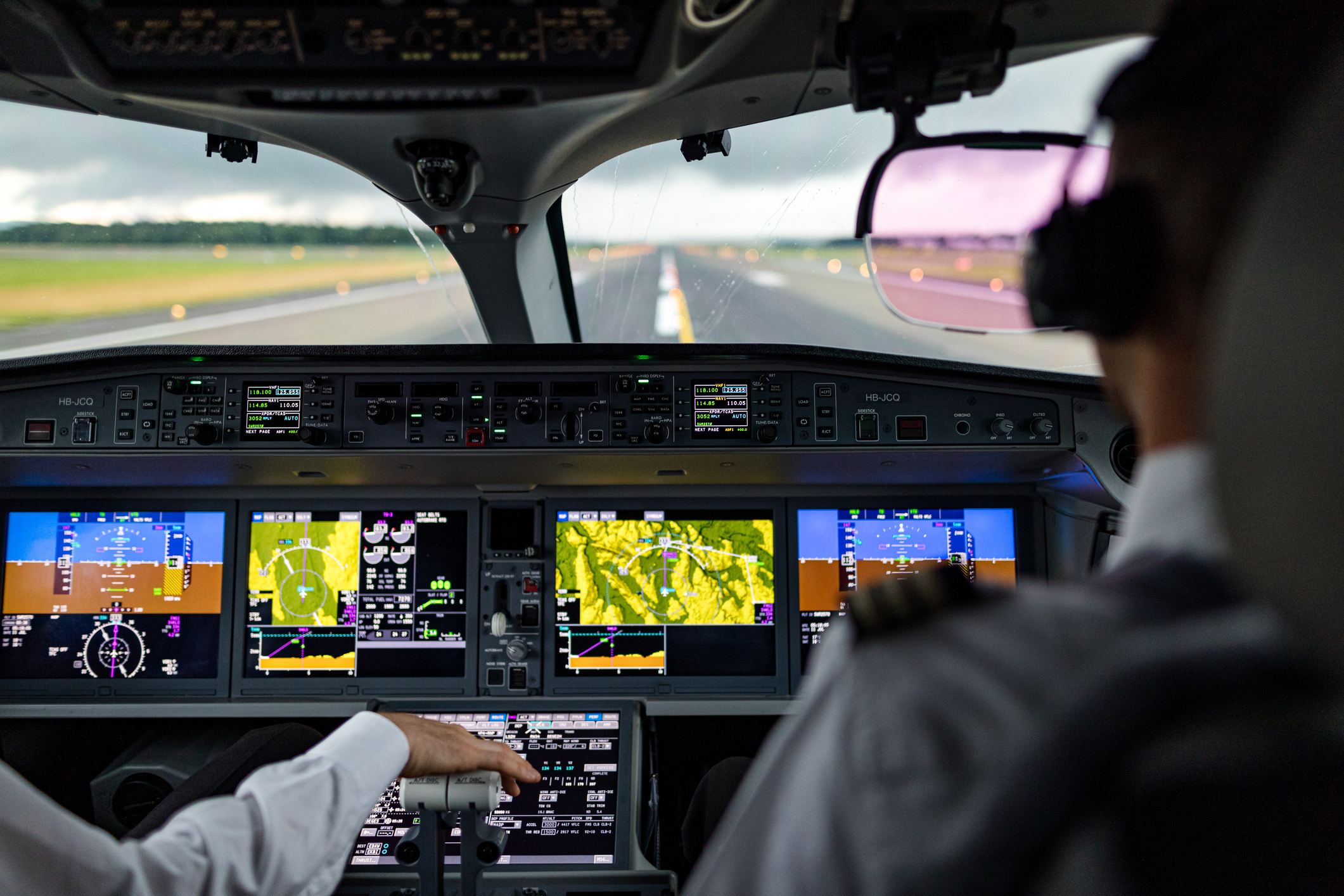
With aviation in the news, Florida Tech's Shem Malmquist offers insight and clarity
Recent news on the safety of airlines in America has detailed tragic fatalities, airplanes flipping over and some crashing into prominent city streets, which has shone a less than flattering light on what is supposed to be a safe industry. Given recent events, Florida Tech College of Aeronautics visiting assistant professor Shem Malmquist has appeared in high-profile interviews on both current and historic aviation incidents. Recently, he spoke with the Boston Globe, Rolling Stone and the news platform FedScoop to lend his insight and expertise as a pilot. Officials have repeatedly warned about a shortage of air traffic controllers. Pilots have made up for that gap by accepting visual approaches and separation from other airplanes to relieve some of the workloads off controllers, said Shem Malmquist, a pilot and visiting instructor at the Florida Institute of Technology, who teaches courses on aviation safety. He noted that was “part of the problem” with the D.C. collision. Still, flying remains safe because “pilots are overcoming the challenges in the system to prevent accidents,” Malmquist said. “Random distribution can create clusters like this. ... That doesn’t mean there’s more risk.” February 21 - Boston Globe One former pilot told FedScoop that the system can be overpopulated with notices, only some of which might be important for a pilot to understand before taking off. Still, there’s generally no automated way of sorting through these notices, which means they can be incredibly long and difficult to completely process before flights. The notices themselves are densely written and use terminology that is often not immediately discernible. An example provided by the FAA shows the notices’ unique format. Textual data can also limit the ability to modernize the NOTAM system, an FAA statement of objectives from 2023 noted. Shem Malmquist, a working pilot who also teaches at Florida Tech’s College of Aeronautics, said the entire NOTAM system “migrated from color pipe machines,” which locked in “certain abbreviations and codes” beyond their point of usefulness. “It’s really great for computers, which is kind of funny because it was created before computers,” Malmquist added. “But it’s … not really very user friendly for the way humans think.” February 21 -FedScoop Recently, Malmquist was featured on National Geographic's TV series, "Air Crash Investigation." There, he spoke about the China Eastern Airlines Flight 583 crash investigation from 1993. Looking to connect with Shem Malmquist regarding the airline industry? He's available. Click on his icon to arrange an interview today.


Transforming Work Meetings: Strategies for More Effective and Engaging Collaboration
I’m sure you’ve heard it before—maybe from colleagues, leaders, friends or even yourself: “I am dreading my upcoming meeting.” Work meetings often have a bad reputation. People commonly complain about their frequency, the lack of purpose or how tedious they can feel. Memes and phrases like “this meeting should have been an email” have become cultural staples. Yet, over 55 million meetings take place daily in the United States. The average employee spends nearly 10 hours each week in meetings, and for executives, this number jumps to nearly half their working time. If meetings are as unproductive as people claim, consider how much of a CEO’s salary is wasted on ineffective discussions! Rather than seeing this as a hopeless situation, I view it as an opportunity. My research focuses on making work meetings more effective, engaging and satisfying, ultimately leading to better outcomes for individuals, teams and organizations. I call myself a “meeting scientist,” studying and sharing best practices for every stage of a meeting—before, during and after. BEFORE THE MEETING Meeting success starts with preparation. Research suggests having a clear and purposeful agenda shared in advance is a crucial factor in making meetings more effective. Be intentional about your attendee list—over-inviting can reduce inclusion and participation. Focus on who absolutely needs to be there, and consider listing others as optional participants. Aim to keep meetings as short as possible while still achieving your objectives. Avoid defaulting to the hourlong meeting just because it’s standard practice. Designing a meeting requires intention—every element should have a purpose. “My research focuses on making work meetings more effective, engaging and satisfying, ultimately leading to better outcomes for individuals, teams and organizations.” DURING THE MEETING Whether you’re facilitating or participating, engagement is key. Actively involve attendees, ask and answer questions and ensure quieter voices are included. Consider using round-robin discussions to ensure everyone has a chance to speak, incorporating interactive elements, like polls or brainstorming sessions, and creating a safe environment where participants feel comfortable sharing their thoughts. AFTER THE MEETING The meeting isn’t over until next steps are clearly defined. Take five minutes to recap key points, decisions and action items. Assign responsibilities and deadlines to specific individuals—Joe should leave knowing his next task, and Kate should understand when her deliverables are due. All participants should walk away feeling that something was accomplished, they have a clear path forward and their time was well spent. While these best practices might seem obvious, they’re surprisingly rare—75% of managers report never being trained on how to design or lead a meeting, even though they spend a significant portion of their roles in meetings. This lack of training is a missed opportunity to foster more productive and engaging collaboration. Looking to know more? We can help. Dr. Liana M. Kreamer is an Assistant Professor in the Industrial Organizational Psychology program at Florida Institute of Technology. She is available to speak with media. Contact Adam Lowenstein, Director of Media Communications at Florida Institute of Technology at adam@fit.edu to arrange an interview today.

Expert Opinion: Maneuvering friendships in the age of half-truths can be challenging
I recently shared an op-ed written by my colleague and friend, Ted Petersen, on a few social media sites. His thoughtful piece advocated for media literacy education. Later that day I received an alert that someone had commented on my post. The comment, made by a dear friend, alluded to disinformation about U.S.A.I.D.’s use of funds ― a false assertion that the federal agency supported the news outlet Politico for partisan gain. The comment was a perfect example of why media literacy education is important ― not just for school children. It gives people the tools to navigate a borderless media environment in which news and opinion, verified facts and unsubstantiated statements, and information and entertainment coexist. My dilemma after reading the comment was multi-faceted. What should I do? Do I respond? If so, how do I tell my friend that he is misinformed? If I don’t respond, am I shirking my responsibility as a friend, a citizen, an educator? How do I now live in a world in which my friends and family consume and trust media that actively promote disinformation? And, most importantly, how do I live in a world in which people I love are listening to a barrage of messages telling them that I am evil? That I cannot be trusted? That I should be hated? Because underlying his deceptively simple comment is the possibility that, like many, my friend trusts certain media and messages while castigating all those that don’t always align with their world view. These messages are coming through media channels that give voice to leaders and media personalities who gain traction with their audiences by demonizing those they deem their enemies. They use half-truths and outright lies to gain sway with their followers. Anyone who thinks, looks, believes differently cannot be trusted. As a media scholar I have studied media effects, persuasion, and audiences. I’ve analyzed the meaning audiences give messages and how different approaches affect audience perceptions. I’ve written about the importance of narrative and message framing. I have advocated for the ethical use of these powerful tools. As a human being, I’m saddened as I witness blatant disregard for ethical principles in those leaders and media personalities who wield communication like a weapon to undermine trust. The results are impenetrable walls separating us from those who should be our allies. After spending most of my life believing I was part of a community, able to agree or disagree, discuss and argue, to teach and to learn in conversation with others, I find myself the “other.” Dismissed. Demonized. Hated. Not by faceless strangers, but by those dear to me. I suspect I’m not alone in this feeling ― regardless of ideological preferences. Discord is painful. My heart hurts. Yet, I am stubbornly hopeful. When I see my students from different backgrounds, cultures, and generations, discussing ideas for solutions to social issues, I am hopeful. When I hear my pastor fearlessly speaking to the congregation about loving each other even in disagreement, I am hopeful. When I speak to community groups and listen to their concerns and insights, I am hopeful. When I have a long-overdue conversation with my friend instead of relying on mediated social platforms, I am hopeful. I recently spoke to a Rotary Club and borrowed their four-way test to suggest a healthier relationship with media and communication generally. Of the things we produce, consume, or share, we should ask ourselves: Is it the truth? Is it fair to all concerned? Will it build goodwill and better friendships? Will it be beneficial to all concerned? If the answer to any of those questions is no, we should change the channel, seek another source for context, delete the post, block the sender, or adjust our message so we can answer yes And if you are asking yourself why you should be fair, or build goodwill, or benefit anyone from “the other side” ―perhaps scroll through your photos or look at the pictures on your desk or mantel. We are not adversaries. We’re on the same side. It’s time to stop listening to those who tell us otherwise. Heidi Hatfield Edwards is associate dean in Florida Tech’s College of Psychology and Liberal Arts and head of the School of Arts and Communication where she is a professor of communication. She began her career as a media professional and worked nearly a decade gaining experience across multiple media platforms and in strategic communication. She teaches courses in mass communication, theory, and science communication. Heidi is available to speak with media. Contact Adam Lowenstein, Director of Media Communications at Florida Institute of Technology at adam@fit.edu to arrange an interview today.

Expert Insight: Keeping the power on!
With extreme weather becoming more commonplace than a phenomenon, America's reliance on power and electricity has been in the spotlight. Unfortunately, it's not for its resilience and reliability, but for the vulnerability of millions of Americans with each passing weather event. Florida Tech's Ken Cummins contributed to a recent study published in PLOS Climate that examined how various extreme weather events threaten the power grid in the United States. Multiple studies have shown that power outages alone can increase threats to human health—from spoiled food to failing medical equipment to a loss of heat in winter. These threats become more dire when paired with severe weather. This kind of information could be useful to utility companies, which must allocate finite resources for maintenance and repair and make plans for a range of scenarios, said Ken Cummins, a researcher at the Florida Institute of Technology with experience in grid reliability who wasn’t involved in the research. (Cummins is a former science adviser to Eos.) But he cautioned that the specific infrastructure used by local electric utilities, which can vary significantly, is also an important factor. “One thing that would be a problem in St. Louis might not be a problem in Denver or Omaha and would certainly be a different problem in New York City or Long Island,” he said. February 21 - EOS The same research got a lot of coverage across America and internationally. United Nations Office for Disaster Risk Reduction: ZME Science: This is a vital topic given the weight climate change and extreme weather are now placing on America's energy sector. If you're a journalist looking to cover this topic, let us help. Dr. Ken Cummins is a part-time Research Professor in the Department of Aerospace, Physics, and Space Sciences at Florida Institute of Technology. He is formally trained in statistical signal processing, modeling, and instrumentation. Ken is available to speak with media. Contact Adam Lowenstein, Director of Media Communications at Florida Institute of Technology at adam@fit.edu to arrange an interview today.

Trade Wars: Economic Strategy or Risky Gamble for the U.S.?
As global markets become increasingly interconnected, trade wars have emerged as a high-stakes economic strategy with far-reaching consequences. A potential trade conflict between the U.S., Canada, and Mexico—key partners in the North American supply chain—raises critical questions about economic growth, job security, and consumer prices. While proponents argue that tariffs and trade restrictions protect domestic industries, critics warn of rising costs, retaliatory measures, and disruptions to vital industries such as agriculture, manufacturing, and technology. Understanding the impact of trade wars is essential to assessing the future of North American economic relations, with key areas of interest including: The economic implications of tariffs on American businesses, workers, and consumers How a trade war with Canada and Mexico could impact the USMCA agreement and cross-border trade The industries most vulnerable to supply chain disruptions and retaliatory tariffs The historical impact of past trade wars on economic growth and stability The role of globalization and shifting alliances in modern trade policies Potential winners and losers: Which sectors stand to benefit, and which face economic hardship? This issue presents a timely and complex discussion about economic policy, international relations, and the future of North American trade. Connect with an expert about trade and trade wars: To search our full list of experts visit www.expertfile.com
