
Experts Matter. Find Yours.
Connect for media, speaking, professional opportunities & more.

ExpertSpotlight: The History of American Football
American football holds a special place in the cultural fabric of the United States, evolving into one of the most popular and celebrated sports in the country. Its history, marked by innovation, athleticism, and deep-rooted rivalries, reflects broader societal changes such as commercialization, media influence, and evolving notions of teamwork and competition. As one of the most-watched sports globally, its impact on American culture, from college football Saturdays to Super Bowl Sundays, goes beyond the field. This story matters because it highlights the connection between sports, community identity, and the evolution of American pastimes. Key story angles of interest include: The origins and early development of American football The impact of college football rivalries on American sports culture The rise of the NFL and its influence on modern sports entertainment The role of football in fostering a sense of community and national identity The effects of media and technology on the commercialization of football Health concerns and how they’ve shaped the future of the sport, particularly in relation to player safety and concussions Connect with an expert about the The History of American Football: To search our full list of experts visit www.expertfile.com


NarrA.I.tive empowers storytellers by merging AI and traditional artistic crafts
Irvine, Calif., Aug. 26, 2024 — Beall Applied Innovation at the University of California, Irvine has announced the launch of NarrA.I.tive, a groundbreaking initiative that blends the university’s academic strengths with the global entertainment industry and the innovative spirit of Orange County to harness artificial intelligence as a force for good across creative industries. “As AI’s influence expands, the opportunity and responsibility to steer it in positive directions is crucial,” said Errol Arkilic, UC Irvine’s chief innovation officer. “Through NarrA.I.tive, we redirect doom-and-gloom scripts to scripts of inspiration, education and enthusiastic support for creators as artificial intelligence increasingly influences the industry.” NarrA.I.tive’s action plan includes establishing UC Irvine and Orange County as global leaders in reshaping the artistic and technological ecosystem surrounding storytelling, attracting partners and collaborators to support the state-of-the-art initiative, creating revenue-generating content and tools, unifying academic excellence with emerging content production methods, and developing a structure for efficient project execution and student involvement. Supporting NarrA.I.tive’s impact, Beall Applied Innovation has established a strategic collaboration with Apples and Oranges Arts, an Orange County-based nonprofit entertainment and education studio co-founded by UC Irvine alumnus Tim Kashani ’86, MBA ’88, and his wife, actress Pamela Winslow Kashani. Started in 2008, Apples and Oranges Arts empowers storytellers to become creative entrepreneurs by combining educational platforms, technological integration, and a thriving community of new and existing voices. “Through NarrA.I.tive, we blend the magic of storytelling with the power of technologies such as artificial intelligence and extended reality, creating narratives that touch hearts and minds in ways previously unimaginable,” Tim Kashani said. “This collaboration marks a new era of creativity and technology alignment that requires ethical stewardship placing the human front and center.” In July, Apples and Oranges Arts and Beall Applied Innovation finalized plans for the NarrA.I.tive Story Studio, to be located at the Cove@UCI in the campus’s Research Park. Apples and Oranges Arts will lead the studio’s charge through training in new technologies that drive the entertainment industry’s future and through collaboration with UC Irvine schools, involving students and faculty in tool development and content production. “We invite storytellers, technologists, philanthropists, investors and the global community to join us in reshaping the future of storytelling,” said Stuart Mathews, director of industry alliances at Beall Applied Innovation. “Together, we will explore the expanding possibilities that AI and technology bring to the narrative arts, redefining how stories inspire, entertain and elevate the human experience.” About the University of California, Irvine: Founded in 1965, UC Irvine is a member of the prestigious Association of American Universities and is ranked among the nation’s top 10 public universities by U.S. News & World Report. The campus has produced five Nobel laureates and is known for its academic achievement, premier research, innovation and anteater mascot. Led by Chancellor Howard Gillman, UC Irvine has more than 36,000 students and offers 224 degree programs. It’s located in one of the world’s safest and most economically vibrant communities and is Orange County’s second-largest employer, contributing $7 billion annually to the local economy and $8 billion statewide. For more on UC Irvine, visit www.uci.edu. Media access: Radio programs/stations may, for a fee, use an on-campus studio with a Comrex IP audio codec to interview UC Irvine faculty and experts, subject to availability and university approval. For more UC Irvine news, visit news.uci.edu. Additional resources for journalists may be found at https://news.uci.edu/media-resources.


If You Hate University Rankings Here’s One You Might Like
If your university cares about fostering research and innovation and you haven’t heard of the PitchBook Startup Index, you might want to pay closer attention to this data. While it doesn't look like the PitchBook folks are aiming to be a big player in the world of academic rankings, their detailed tracking activity of startup investments, which includes deal size, school affiliation, and employees, gives us a window into how each institution is performing on startup activity. Why This Is a University Ranking We Can Trust It's Objective: These rankings are based on detailed startup data that PitchBook dutifully tracks as part of many paid services it provides for clients that include VC's, Private Equity Funds and government agencies. The investors who pay for access to the underlying data expect accuracy and there is a considerable amount of meta information available for tracking as startups raise money and hire employees. It's Simple: The PitchBook rankings are free of the typical complexity found in other rankings such as the US News & World Report. They simply use a few key metrics including the number of startup founders affiliated with new ventures created at each institution and how much investment capital they have raised. It's Revealing: Ranking this data as a Top 100 Index gives us a good comparative view of which Universities are doing a good job of creating an entrepreneurial environment that stimulates learning and research while attracting investment capital and creating high-value jobs. Universities Need to Tell the Story Behind this Data to Build Support for Their Research & Startups This data is followed closely by University Research and Tech Transfer Offices. However, it should also be actively used by other departments, such as University Marketing and Communications, Government Affairs, Enrolment and Fundraising/Development which need to build support with legislators, policymakers, funding agencies, donors, and corporate partners - and yes, new student prospects. The relevance and accuracy of these rankings make this an important opportunity for you to tell your story and engage these audiences. "Promoting stories about your startups provides the perfect opportunity to demonstrate the relevance of your programs and narrow the gap between "town and gown." It's an opportunity to show how your faculty experts and researchers are nurturing innovation through startups to improve the lives of people in your local community and beyond." Did Your University Make the List? If the answer is yes, congrats! We would be remiss if I didn't recognize our clients who made the Top 100. Take a bow University of Florida, Vanderbilt University, University of Massachusetts, Michigan State University, University of California, Irvine and Rensselaer Polytechnic. Now it's time to get to work. As someone who has worked closely with startups and Universities over the past two decades, I see the immense value they create. That's why I'm surprised whenever I see university marketing teams missing valuable opportunities for promoting their faculty and research through the lens of startup activities. The Benefits of Celebrating Startups Research on startups (Shenkoya, 2023) shows that key factors such as access to research funds, dedicated faculty, size of dedicated staff (academic and non-academic), access to practical entrepreneurship courses, and non-regular curriculum startup activities are key factors responsible for success of University startups. However, proper funding for these programs in a challenging environment requires that Universities more effectively communicate the value they are delivering. Here's where you can shine: Media: This is an obvious opportunity, especially with local outlets. It provides the perfect opportunity to demonstrate the relevance of your programs and narrow the gap between "town and gown." Show how these startups are looking to improve the lives of people in the community. Corporate Partners: Startups are a natural focal point for conversations with industry partners, especially when you can speak to key market sectors and breakthrough research that faculty are focused on. Speak to how you are giving them more direct access to a pool of talented graduates. Also, don't forget to speak to programs you may be running in the areas of internships, mentorship programs, sponsored research, and curriculum development. Don't forget that engaging in educational partnerships helps companies improve their CSR profile, which can enhance their public image and brand. Also, explore how partners can financially support needed infrastructure improvements on the campus with funding for new facilities or new equipment. Students: Giving startups an opportunity to tell their stories and celebrate their achievements is one of the best ways to demonstrate how you are aligning your educational and entrepreneurship programs with industry needs. And don't forget to include your corporate partners. As employers, they are in the best position to show how you are preparing students for next-generation jobs. Show students how they will get direct exposure to the industry through programs you may be running, such as co-op terms, internships, and mentorships, and startup events such as boot camps and pitch competitions. Government: The data clearly shows that startups create high-value jobs and contribute to GDP growth. But governments today need constant reassurance that the funds they put into education and research are generating impact. You have to show the relevance of your startups by outlining how they are solving big societal problems that matter to voters. How are your startups leading socio-economic transformation for local communities and competing effectively on a global stage? Tips for Telling Your Startup Stories Focus on People Humanize your story by speaking directly to how founders and their teams are approaching key market and societal challenges. Focus on important "origin story" elements such as their personal challenges or insights that led them to their first discovery. Focus on notable collaborations they formed. How were faculty members or alumni involved in helping with research and market development or industry relationships? Create a story arc. Give your audience an appreciation for how hard startups are and the amount of uncertainty and risk they face in developing new innovations. Startups are not an overnight success. People are even more inspired by non-linear journeys that show the grit and determination that founders need to bring to their startups. Focus on Programs Always be thinking about how founders and their stories can help boost student enrolment by connecting their origin stories to specific experiences they had on the campus. Ask them how specific courses and programs prepared them for their entrepreneurial journey. Also ask them what other experiences such as campus mentorship programs, hackathons or pitch competitions helped them achieve specific breakthroughs and milestones. Focus on Photos & Videos Startups provide a great opportunity to engage your audience visually. Go beyond boring headshots, monolithic campus buildings, and staged stock images. Instead, use imagery that shows people creating new and exciting things together. This is not a time to be shy about asking founders, faculty, and funders to get in the shot and be recognized for their contributions. While you may think photo ops are overly promotional, they often help your partners communicate back to their constituency the importance of supporting your work. Walk the campus to get behind the scenes and show lab facilities, technology prototypes, and in-field work. Partners Profile notable investors, faculty, foundations, government agencies, alumni and corporate partners who may have invested time, money and other resources that help validate the quality of the startups you are helping build. Remember, startups are like a barn-raising, that involves a larger community. Give these partners an opportunity to be visible part of the story and they will celebrate with you and amplify your message to reach a bigger, more engaged audience. Proof Show evidence that the startups you are supporting are making a difference. Use your startups as an opportunity to speak to the bigger picture of why your institution matters. Speak to how they are tackling bigger challenges in areas such as environment, healthcare, social justice, the economy, physical infrastructure, security, election integrity and social innovation. Also make sure to demonstrate measurable impact in key areas such as: Total Addressable Market Job creation Investment activities Industry Awards Partnerships Patents Customer /Revenue Milestones It's Your Time to Shine In an era where impact is increasingly measured by the ability to translate research into real-world applications, universities have a unique opportunity to show the value of their startup ecosystems. But you need to get the stories out beyond the campus. Use your momentum to build a compelling narrative that makes your startups the heroes of your institution's story.

Industry and researchers call for action to tackle climate impact of organic, carbon-based chemicals
Call led by members of Supergen Bioenergy Hub, based at Aston University They highlight that carbon-based chemicals cannot be decarbonised but can be defossilised They want a transition to renewable carbon sources such as biomass, recycled carbon, and carbon dioxide. Director of Supergen Bioenergy Hub, Professor Patricia Thornley Industry experts and university researchers have joined together to ask the government to address the climate impact of organic, carbon-based chemicals. While demand for fossil fuels as energy is expected to fall in the coming decades, the petrochemicals sector is set to grow significantly according to experts and is set out in a 2018 report by the International Energy Agency. Members of the Supergen Bioenergy Hub which is based at Aston University and the Biomass Biorefinery Network believe the issue has yet to receive proper attention and is calling for a strategy that addresses this key component of our greenhouse gas emissions. They want a move to a more circular economy, managing supply and demand levels and transitioning away from fossil feedstocks which are raw materials required for some industrial processes. In their paper Carbon for chemicals How can biomass contribute to the defossilisation of the chemicals sector? they highlight that carbon-based chemicals cannot be decarbonised but can be defossilised through a transition to renewable carbon sources such as biomass, recycled carbon and carbon dioxide. Many products in modern society contain carbon such as pharmaceuticals, plastics, textiles, food additives, cosmetics, and cleaning products. These chemicals are derived from fossil feedstocks, so they are classed as petrochemicals. As a result, they contribute to global greenhouse gas emissions and climate change. Carbon is embedded in organic chemical products and released when they break down at end-of-life, for example through incineration. To address the emissions from carbon in chemicals and accelerate the development of bio-based chemicals, the group want a cross-party consensus to support a sustainable chemical system. Director of Supergen Bioenergy Hub, Professor Patricia Thornley, said: “We need to consider the UK’s future feedstock and chemicals production and use, and how it relates to net zero, agriculture, environment, economy, trade, and just transition policy objectives. There are opportunities here for the UK to lead the way on sustainable chemical production, but we need to carefully plan a roadmap for the transition, that delivers opportunities around jobs and the economy as well as sustainable greenhouse gas reductions. “There is a definite role for biomass here. But it is essential that any future use of biomass in the chemicals sector is underpinned by rigorous, trusted, and enforceable sustainability governance to build confidence, deliver sustainability benefits, and minimise negative impacts. That requires improvements in sustainability governance and regulation. “We think there are real economic and trade opportunities by the UK accelerating sustainable chemicals. At the moment bio-based chemicals, and chemicals derived from other renewable carbon sources, are not being expanded in the UK because there are no explicit incentives that prioritise them over fossil-based production.” The group argues that the UK has significant academic and industrial research expertise to underpin the development of sustainable bio-based products and could be a global leader in bio-based products and sustainability governance. They believe that to date little of this has manifested as UK-based scale-up and manufacturing, whilst there are numerous examples of UK-led research being scaled up elsewhere. The paper was delivered at a webinar on 7 August. Notes to Editors Carbon for chemicals How can biomass contribute to the defossilisation of the chemicals sector? https://www.supergen-bioenergy.net/output/carbon-for-chemicals-how-can-biomass-contribute-to-the-defossilisation-of-the-chemicals-sector-policy-briefing/ Author: Joanna Sparks (formerly Aston University) With contributions from: Cristiane Scaldaferri (formerly Aston University), Andrew Welfle (University of Manchester), Patricia Thornley (Aston University), Ashley Victoria (University of Leeds), Caspar Donnison (Lawrence Livermore National Laboratory), Jason Hallett (Imperial College London), Nilay Shah (Imperial College London), Mirjam Rӧder (Aston University), Paul Mines (Biome Bioplastics), David Bott (Society of Chemical Industry), Adrian Higson (NNFCC), Neil Bruce (University of York) 2018 International Energy Agency report https://www.iea.org/reports/the-future-of-petrochemicals https://www.supergen-bioenergy.net/ The Supergen Bioenergy Hub works with academia, industry, government, and societal stakeholders to develop sustainable bioenergy systems that support the UK’s transition to an affordable, resilient, low-carbon energy future. The Hub is funded jointly by the Engineering and Physical Sciences Research Council (EPSRC) and the Biotechnology and Biological Sciences Research Council (BBSRC) under grant EP/Y016300/1 and is part of the wider Supergen Programme. www.bbnet-nibb.co.uk The Biomass Biorefinery Network (BBNet), a phase II Network in Industrial Biotechnology & Bioenergy funded by the Biotechnology and Biological Sciences Research Council (BBSRC-NIBB) under grant BB/S009779/1. The aim of the Biomass Biorefinery Network is to act as a focal point to build and sustain a dynamic community of industrial and academic practitioners who work together to develop new and improved processes for the conversion of non-food biomass into sustainable fuels, chemicals and materials. About Aston University For over a century, Aston University’s enduring purpose has been to make our world a better place through education, research and innovation, by enabling our students to succeed in work and life, and by supporting our communities to thrive economically, socially and culturally. Aston University’s history has been intertwined with the history of Birmingham, a remarkable city that once was the heartland of the Industrial Revolution and the manufacturing powerhouse of the world. Born out of the First Industrial Revolution, Aston University has a proud and distinct heritage dating back to our formation as the School of Metallurgy in 1875, the first UK College of Technology in 1951, gaining university status by Royal Charter in 1966, and becoming the Guardian University of the Year in 2020. Building on our outstanding past, we are now defining our place and role in the Fourth Industrial Revolution (and beyond) within a rapidly changing world. For media inquiries in relation to this release, contact Nicola Jones, Press and Communications Manager, on (+44) 7825 342091 or email: n.jones6@aston.ac.uk



Sustainable mining: Can we satisfy green energy demands without destroying ecosystems?
Minerals are essential for sustainable energy technologies like solar, wind, and geothermal power, yet their importance has led to geopolitical tensions, as seen in the Russia-Ukraine conflict. These resources are geographically constrained—South Africa's platinum is vital for hydrogen fuel cells, and China leads in mineral refining. Efforts to diversify sources often spark local disputes, as demonstrated by recent opposition in Minnesota to a green-transition minerals project due to environmental and social concerns. University of Delaware expert and Environmental peacemaker Saleem Ali, has a proposed solution: a "mineral trust," or a global mechanism to manage mineral distribution more effectively. As he outlines in a recent TED Talk, this trust would operate like an asset protection trust, with both mineral-producing and technology-demanding countries involved as trustees. It aims to stabilize commodity prices, prevent politicization of resources and enhance management efficiency. Ali has appointments in UD's Department of Geography and Spatial Sciences, Biden School of Public Policy and Administration, Data Science Institute, the Center for Energy and Environmental Policy and Delaware Environmental Institute. He has written for and been quoted in multiple outlets, including Forbes. To speak with him further, click his profile.


West Sanctions Russian Aviation, But Moscow Decides to Keep Planes Flying Despite Risks When the U.S. and its allies slapped sanctions on Russia for its full-scale invasion of Ukraine, severing aviation links was at the top of the list. Direct flights vanished and Russian airlines lost access to spare parts for their foreign airplanes. In retaliation, Vladimir Putin’s regime impounded foreign aircraft and shut off the world’s largest air space to countries imposing sanctions. Not since the early 1980s—when the U.S. suspended routes to the USSR over the Soviet invasion of Afghanistan, repression in Poland and downing of a Korean Air Lines plane—have aviation ties between the two countries dipped so low. Aviation sanctions today are having an impact but come with a major risk. If the fatal crash of a jetliner killing hundreds is linked to the lack of spare parts, Putin will blame sanctions and the West. The stakes are high as Russia seeks to use any issue from cluster bombs to soccer to widen cracks in Western unity over Ukraine. To get ahead of this, U.S. policymakers and their allies need to better explain the effects of sanctions, why they’re worth the risk and why the Russian state, not the West, is ultimately responsible for any fatal crash. U.S. government assessments place Russian aviation among sectors negatively impacted by sanctions. A closer look shows widening success in degrading this increasingly weak link in Russia’s political economy. By late 2021, foreign aircraft comprised 70% of Russia’s fleet of 801 passenger airplanes, which included 298 Airbuses, 236 Boeings, and 23 other foreign aircraft such as Embraers. In addition, 95% of Russian airline flights were on foreign-made aircraft. Consequently, sanctions aimed at depriving spare parts for foreign airplanes have caused many disruptions such as fare increases to cover higher costs of repairs. Some of Russia’s 53 airlines have periodically suspended or stopped flying some of their foreign planes. Reports of Russian airlines’ cannibalization of foreign aircraft similarly underscore a dire situation. Less well known is how sanctions hurt Russian manufacturing since Western technology is critical to aircraft such as the Sukhoi Superjet 100, which uses a French-Russian engine (though Russians are working on a substitution). Production of the Yakovlev design bureau’s MC-21 passenger airplane faces significant delays due to sanctions that force substitution of its Western-made parts. Sanctions even helped push Russia out of a joint venture with China to produce the CR929 widebody aircraft. While China is happy to help Russia thwart sanctions, this plane needs Western systems that sanctions complicate. In response, Russia has adapted to and thwarted some aviation sanctions, which I predicted would happen because Putin’s regime is reproducing a state-centered aviation sector rooted in the Soviet past. The war has accelerated the state’s growing control over this vital economic sector, which began before Russia’s 2014 invasion of Ukraine. Examples include the state’s 51% ownership of Aeroflot since 1994, the merger of two smaller, state-run airlines in 2003 and the consolidation of aircraft manufacturing in the state-owned United Aircraft Corporation (UAC), which was created in 2006. More recently, the Russian state has helped the country’s airlines weather sanctions by facilitating the illegal confiscation of foreign aircraft. Russian airlines have also proven resourceful by purchasing spare parts through brokers in the United Arab Emirates and Turkey. Better known for supplying Russia with drones, Iran also agreed to provide Russian airlines with spare parts and has been fixing an Aeroflot Airbus for months. Many foreign airlines continue to fly to Russia, and Putin’s regime rewards friendly countries with overflight rights. But the longer sanctions remain, the harder it’s getting for Russia. To regain profitable foreign routes, its airlines are receiving government assistance to legitimately purchase the Western aircraft they illegally seized, although recent holdups in allocating such funds are causing doubts. In a throwback to the Soviet era, Putin’s regime boasts that Russia doesn’t need the West’s airplanes anyway since its one manufacturer, the UAC, will pick up the slack. Such import substitution is unlikely to succeed, as multiple delays suggest. More likely, Russia’s aviation sector will grow more reliant on the state, if not actually part of it like the UAC. This will make Russian aviation less efficient, less innovative and more expensive. Iranian airlines, which have long suffered under foreign sanctions despite some success circumventing them, present their Russian counterparts with a grim vision of the future such as being shut out of lucrative air travel markets and falling behind in emerging aviation technology. How does this shape safety in Russia’s skies? The short answer is that it’s not as bad as headlines suggest and the impact of sanctions is ambiguous at best. Click bait stories paint a dire picture but often conflate commercial, military and general aviation into alarming numbers that do not accurately capture what ordinary passengers face. Some accounts, such as one claiming 120 accidents occurred in 2023, provide few details or sources. Annual safety reports from Russia’s Interstate Aviation Committee (IAC) allow for comparison over time but often obscure Russia’s situation by combining data from each post-Soviet state it monitors. Its 2019 report is mysteriously missing and its decision not to investigate the fatal crash of Yevgeny Prigozhin’s Embraer Legacy 600 plane suggests meddling from above. That said, the IAC source base is the most systematic we have. Keeping in mind the potential for the politicization of its conclusions, what does a critical reading of its data alongside other sources suggest? First, fatal crashes in commercial and general aviation actually decreased in Russia from 18 in 2021 to 13 in 2022, and related deaths decreased from 70 to 24. Data for the first half of 2023 points in the same direction, with six fatal crashes and nine deaths. This trend was likely helped by the 14% decline in traffic after February 2022. While so many fatal crashes sound substantial, all but three in 2021 and all but one in 2022 involved small aircraft under 5,700 kilograms, not the jetliners we associate with most commercial flying. Absolute figures on crashes and deaths capture headlines but they don’t say much about safety without considering their relation to passengers flown or departures. According to the IAC, the rate of aviation accidents and the rate of fatal crashes per one million departures both increased from 2020 to 2021 but then decreased in 2022. The IAC does not single out Russia from other post-Soviet states for this metric. But since Russia has the largest aviation sector among those countries, these data suggest that its aviation safety has not dramatically worsened since early 2022. Indeed, even critics who argue that Russian airlines are less safe partly because of sanctions conclude that “2022 and 2023 were also good years for airline safety [in Russia] compared to 2021.” Comparisons with the U.S. similarly suggest that passenger aviation is not as disastrous as some headlines suggest. The IAC data indicates that Russia and other post-Soviet states are usually but not always behind the U.S. in passenger aviation safety. In 2018, for example, IAC countries reported a 0.8 rate of fatal crashes per 1 million departures of passenger aircraft above 5,700 kilograms. Comparable statistics from the National Transportation Safety Board showed a 0.11 rate for that year for scheduled U.S. carrier flights. In 2019, the rates were 2.3 (IAC) and 0.10 (U.S.), but in 2020, both IAC countries and the U.S. enjoyed a 0.0 rate of fatal crashes. The following year, however, IAC countries reported a 1.9 rate of fatal crashes, whereas the NTSB reported a 0.0 rate.1 Against this background of Russian airline safety, let’s now turn to the impact of sanctions. While some commentators emphasize that no fatal crashes have been tied to sanctions, others claim they make Russian airlines unsafe and that it’s only a matter of time before such a fatal crash happens. Some even argue that life-threatening dangers prove aviation sanctions are effective and could help turn Russians against Putin. To reassure the public, Russian aviation officials insist the country’s airlines are safe despite sanctions, as do Russian business media and aviation journalists. This plays to Putin’s claims to legitimacy based in part on withstanding anything the West throws at him. In sharp contrast, Ukrainian media tells Russians their airlines are a disaster waiting to happen precisely because of sanctions. Independent Russian journalists banished by Putin concur, raising alarms about efforts to cover up the impact of sanctions and about the many ways Russian airlines cut corners on safety. In short, an information war exists around the morbid question of whether a Russian jetliner will crash and the role sanctions could play. Fears of a fatal crash were validated by the emergency landing of a Ural Airlines A320 in September, apparently caused by malfunctioning hydraulics tied to sanctions. But a closer examination by a Russian aviation journalist suggests the pilots played a more important role by pressing on to an airport for which there wasn’t enough fuel. Recent Russian state assessments of aviation safety similarly point to pilot error and poor training as the chief causes of aviation incidents. More generally, airplane disasters are usually caused by a convergence of factors—bad weather, a manageable mechanical failure and pilot error—not just one problem. In public discussions, however, pinpointing sanctions’ role tracks more with the politics of the war than technical expertise. At the end of the day, Russian airlines and aviation authorities are solely responsible for putting planes in the sky and Russians’ lives at risk. They continue to claim that everything is fine. But if a fatal crash of a Boeing or Airbus flown by a Russian airline kills hundreds, I predict this narrative will quickly change. Putin will blame the West as he does for everything else affecting his legitimacy, from Russia’s economic problems and his diplomatic failures to protests against his regime and even the war he started in Ukraine. Such a scenario will be a serious test for policymakers who argue that punishing Russia with sanctions is still worth it. To prepare for this, they need to take a page from the Biden administration’s release of intelligence on Russia’s military buildup before the full-scale invasion: publicize as much intelligence as possible on sanctions and their impact, as well as Russia’s aviation sector and what it does or doesn’t do to ensure safety. As Putin’s regime falls back on Soviet-era secrecy about airline safety, sharing such intelligence will be a powerful tool. This will also contribute to broader Western efforts at combatting Russia’s better known disinformation campaigns such as those denying its human rights abuses in Ukraine.


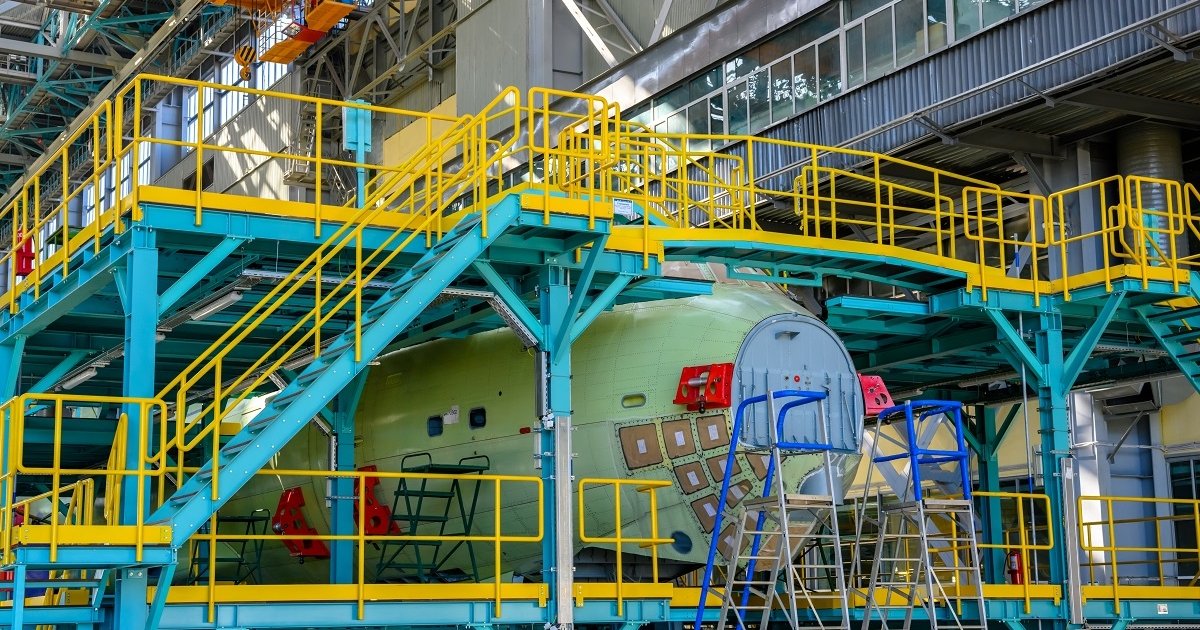
Expert Perspective: UMW's Steven E. Harris lends his opinion to The Russia File
The following piece was written by Steven E. Harris published by the Wilson Center in April 2024 Sanctions Are Spoiling Russia’s Plans to Make Its Own Airplanes Putin’s regime is feeling confident these days. Advances on the battlefield in Ukraine, expansions in armaments production, and the dithering of Republicans in the U.S. Congress show the war has turned in Russia’s favor. A well-orchestrated presidential election and some real public support buoy the regime. Political opponents are either dead, in prison, or in exile. Putin’s regime has also declared victory in blunting Western sanctions and now plans to permanently thwart them with programs of import substitution. Nowhere is this better seen than in aviation, where the state proclaims it will produce over a thousand new airplanes to replace the foreign aircraft its airlines have long flown. But this bold vision for aviation autarky has little chance of succeeding. Russia’s Short-Term Success in Blunting Aviation Sanctions Thus far, Putin’s regime has weathered aviation sanctions through a two-pronged strategy. First, Russian airlines illegally kept about 400 foreign airplanes—primarily Airbuses and Boeings—owned by foreign leasing companies. Second, the state bankrolled settlement claims in order to purchase some of these airplanes so that airlines could fly them abroad without risk of repossession and reduce their foreign debt. To date, approximately 170 foreign airplanes have been legally acquired in this fashion, and the Ministry of Transportation recently asked for more cash to continue settling claims on the remaining 230 foreign planes. The next question is how long Russian airlines, from the state-owned flag carrier Aeroflot to private companies such as S7 and Ural Air Lines, can continue flying their foreign planes. As I wrote in late October, safety has been degraded far less than predicted. But in the absence of spare parts, software updates, and thorough maintenance by foreign providers, Russian airlines have about two years before they will have to ground Boeings and Airbuses for major repairs performed using third-party spare parts. Anticipating the eventual retirement of foreign planes, Putin’s regime has embarked on a massive program to make all-Russian airplanes. This program promises independence from Western technology and leasing companies but reveals the success of sanctions and fundamental weaknesses in state capacity. The 2030 Aviation Manufacturing Plan Announced in June 2022, the program calls for the state-owned industrial conglomerate Rostec to manufacture 1,036 airplanes with only Russian parts by 2030. In January 2024, the state allocated 283 billion rubles (U.S. $3.1 billion) to help finance the production of 609 airplanes and prioritize medium-haul aircraft in the overall manufacturing plan. Before sanctions, Russian manufacturers produced a small number of narrow body, medium-haul airplanes such as the MC-21 and the Superjet-100 (SSJ-100) with Western components. Twelve SSJ-100s were manufactured in 2021 and ten the following year. Among the aircraft slated to replace Boeings and Airbuses, the plan called for production in 2023 of three medium-haul Tupolev-214 (Tu-214) airplanes and two Superjet-NEW planes (Superjet-100s with all-Russian parts). None of these were built. In fact, the state-owned United Aircraft Corporation (UAC) failed to manufacture a single passenger airplane in 2023. More recently, the UAC conceded further delays of up to two years for rollout of the MC-21, SSJ-NEW, and Tu-214, as well as of smaller, short-haul aircraft such as the Ilyushin-114 (Il-114) and the “Baikal.” The transition to total import substitution is proving difficult, making it impossible to fulfill early targets of the manufacturing plan. By withdrawing access to Western technology critical for manufacturing, sanctions have successfully shut down production. Russian manufacturers will produce at best inferior aircraft that fly shorter routes using more fuel. At its current rate, the UAC is unlikely to manufacture more than a dozen or so showcase narrow body airplanes before 2030. The manufacturer may have better luck producing simpler planes, such as the Baikal, but the state’s injection of 283 billion rubles doesn’t target its production or that of two other short-haul airplanes. Since the UAC will likely not meet the plan’s annual targets any time soon, Russia’s airlines will have to make do with their aging foreign airplanes and acquire spare parts from third parties. Putin admitted as much at his call-in event in December 2023, during which he praised the import-substitution plan but added that the government would continue to purchase illegally held foreign planes. What Will Russia’s Aviation Manufacturing Plan Actually Produce? Rather than produce new aircraft, the immediate purpose of the state’s manufacturing plan is political theater. The infusion of 283 billion rubles was meant to show the public, before the presidential elections, that Putin’s regime is serious about securing commercial aviation and to generate a sense of normalcy in the midst of war. In the long run, the manufacturing plan is more likely to produce further distortions in Russia’s political economy. These include corruption, secrecy, technologically backward aircraft, and even more state control over commercial aviation. The 283 billion rubles will help Rostec keep state-run subsidiaries such as the United Engine Corporation operating with soft budget constraints and favorable contracts that now lack any competition from Western firms. Executives will siphon off their share of the funds, while Putin’s regime will turn a blind eye as long as everyone remains loyal. If the manufacturing plan continues to falter, state-owned manufacturers will have more incentive to keep their failures secret. In 2023, for example, the Ural Civil Aviation Factory kept hidden cost overruns for the Baikal. When news of a 48 percent increase was finally publicized, Putin’s point man for the Far East region, Yuri Trutnev, was incensed and proclaimed, “Our people are like that: they don’t like to share information.” For now, Putin’s regime allows the Russian business media to report fairly openly about the country’s aviation industry on issues such as spare parts and safety, state subsidies, and shortfalls in production. But if commercial flying becomes more precarious and the manufacturing plan remains unfulfilled, the government will likely limit what the public knows about its airlines and long-term plans to maintain them. As the economic historian Mark Harrison shows in his recent book, Secret Leviathan, secrecy in the Soviet era significantly degraded state capacity in many areas, including production. Post-Soviet autocrats face a similar “secrecy/capacity tradeoff,” while newer techniques of disinformation further erode capacity. In attempting to revive the Soviet Union’s autarkic aviation industry, Putin’s regime will find it hard to avoid similar reductions in capacity. Insofar as Russia’s commercial aviation industry is concerned, the lesson for the West is that it pays to play the long game. Russia has effective tools for blunting sanctions in the short run, but in the long run it faces structural obstacles and the absence of Western technology, both of which will degrade this economic sector. The main question remains whether the United States and its allies can keep up the pressure by enforcing sanctions.

ChristianaCare Nurses Inducted as American Academy of Nursing Fellows
In recognition of their extraordinary impact on the nursing profession, two ChristianaCare nurses have been named as Fellows of the American Academy of Nursing (AAN). This prestigious recognition highlights their significant contributions to nursing leadership, innovation and health care policy. Michelle Collins, DNP, APRN, CNS, ACNS-BC, NPD-BC, NEA-BC, LSSBB, currently serves as vice president of Nursing Professional Excellence at ChristianaCare. Throughout her accomplished 30-year career, Collins has played a crucial role in improving how nurses practice and learn. Her leadership was significant in achieving ChristianaCare’s third Magnet® designation, highlighting her commitment to excellence. Collins’ initiatives, including pioneering a Virtual Acute Care Nursing model and securing a $1.5 million grant for nursing technology integration, have set new standards in health care innovation. Danielle Sarik, Ph.D., APRN, CPNP-PC, is a nurse scientist consultant at ChristianaCare. Her research contributions have been integral in shaping policies that improve health care outcomes for children and families. Sarik is renowned for developing and implementing the Baby Steps model, recognized by the AAN as an Edge Runner designee. This pioneering transition of care approach addresses health equity for neonatal patients and families following discharge from the neonatal intensive care unit. “Induction into the Academy represents the highest honor in nursing,” said AAN President Linda Scott. “Earning the Fellow of the American Academy of Nursing (FAAN) credential is a significant recognition of one’s accomplishments and signifies the future impact they will make in collaboration with their colleagues in the Academy.”



Florida Tech, Kennedy Space Center to Study Waste Treatment in Space
Associate professor of chemical engineering Toufiq Reza has spent years researching sustainable waste conversion techniques on Earth. When Florida Tech offered him a sabbatical, he took the chance to learn what that conversion process looks like in outer space while further strengthening the university’s already deep ties to NASA. In Fall 2023, Reza became the first professor to leverage school funding to spend a semester at NASA’s Kennedy Space Center. He worked with Annie Meier, who leads a team developing ways to convert astronaut-generated trash into fuel during missions, known as in-situ resource utilization (ISRU). “I wanted to do something different that I haven’t done. I have been doing research in my field; I know who the players are,” Reza said.” I could have easily gone to a research lab at another university and continued my research. But I wanted to learn something new.” His sabbatical prompted a new partnership between NASA Kennedy and Florida Tech. This summer, they signed an annex to their existing Space Act Agreement which will allow Kennedy Space Center (KSC) and the university to conduct joint research regarding logistical waste treatment and ISRU. “At NASA, we want researchers who are doing something that could help us, that could be synergistic, and to not reinvent the wheel,” said Jose Nuñez, university partnerships and small sat capabilities manager at NASA Kennedy. “The goal is to find professors who can benefit the agency in an area that needs more research.” As part of the agreement, KSC will share raw materials, waste simulant samples and information such as gas composition data with Florida Tech. In return, the university will analyze and share findings, such as what useful products can be taken from trash-to-gas waste for use as plant nutrients, and evaluate value-added applications. “I will encourage students to work on some of their technologies, test them in our lab and vice versa. This is a massive thing,” Reza said. “We can learn from each other to help each other.” Already, Reza’s students have visited Meier’s lab, and Meier and her KSC team came to Florida Tech to present her research and visit the university’s research facilities. Meier’s goals are similar to Reza’s: Both researchers want to find sustainable ways to convert trash and waste into energy, materials and chemicals. However, the methods aren’t completely transferrable between the two different environments of Earth and space. On Earth, Reza explained, waste can be burned or stored in a landfill. Neither of those options are viable in space. “You cannot dig up the moon soil and start burying. There is no oxygen or air to actually burn it…there is no water,” Reza explained. Currently, astronaut waste, such as food packaging, clothing, hygiene items and uneaten food, is launched back towards Earth and incinerates on the way there. However, Meier is working to advance waste mitigation technology, which Reza got to see up close. One of her projects, the Orbital Syngas/Commodity Augmentation Reactor (OSCAR), mixes oxygen, heat and trash in a reactor, which burns the trash and collects the gas it creates. Over the course of the semester, Reza assisted in KSC’s Applied Chemistry Lab, where Meier’s research took place. He offered both expertise and extra hands, from helping measure samples to reading through literature. He also took note of innovative technology for potential new research ideas, such as potentially developing a way of protecting metal coatings in space using the tools he learned. Meier’s waste conversion technology is built for a space environment, but Reza said it is unlikely that her complete systems could be used for waste conversion on Earth. Just as water and oxygen are limited resources in space but are plentiful on Earth, vacuums are plentiful resources in space but are expensive to create back home. However, that doesn’t stop the researchers from seeking inspiration through the new partnership. “We can learn from them and then take a part of their technology and integrate it with ours to make our technology more sustainable and vice versa,” Reza said. “They can improve their technology by utilizing part of our technology as well. As Meier said, “I wanted to learn on the terrestrial side how we can infuse some of our technology, and he wanted to learn from us to grow into the space sector, so it was a really cool match.”


For the fifth consecutive year, ChristianaCare’s Center for Heart & Vascular Health has earned the premier recognition from The American College of Cardiology (ACC) – the HeartCARE Center National Distinction of Excellence award – for its commitment to comprehensive, high quality cardiovascular care. ChristianaCare was the first hospital system in Delaware and one of only a handful in the U.S. to attain this recognition when it was first awarded in 2020 from the ACC, a nonprofit medical association representing more than 50,000 cardiovascular specialists. “We are proud to be a regional leader for cardiovascular care with the most advanced medical, surgical and minimally invasive specialty care, technology and research,” said Kirk Garratt, M.D., medical director of ChristianaCare’s Center for Heart & Vascular Health. “Congratulations to our entire team and all who collaborate seamlessly to deliver care 24/7. As a result, those living in Delaware and neighboring states can receive the highest quality cardiovascular care from the Center for Heart & Vascular Health.” Hospitals that have earned an ACC HeartCARE Center designation have met a set of criteria, including participating in at least two ACC accreditation services programs, national cardiovascular data registries and targeted quality improvement campaigns designed to close gaps in guideline-based care. In addition to being a current recipient of the HeartCARE Center designation, ChristianaCare participates in the ACC’s chest pain MI with PCI (heart attack with angioplasty) and resuscitation accreditation, cath lab accreditation and the Society of Thoracic Surgeon database. “ChristianaCare has demonstrated its commitment to providing the community with excellent heart care,” said Deepak L. Bhatt, M.D., MPH, FACC, chair of the ACC accreditation management board. “ACC accreditation services is proud to award the Center for Heart & Vascular Health with the HeartCARE Center designation.” Hospitals receiving the HeartCARE Center designation have demonstrated their commitment to consistent, high-quality cardiovascular care through comprehensive process improvement, disease and procedure-specific accreditation, professional excellence and community engagement. ChristianaCare has proven to be a forward-thinking institution with goals to advance the cause of sustainable quality improvement. The Center for Heart & Vascular Health is among the largest, most capable regional heart centers on the East Coast. It is among the few centers in the region that integrates cardiac surgery, vascular surgery, vascular interventional radiology, cardiology and interventional nephrology in a single location. Its expert clinical staff performed nearly 200,000 patient procedures last year.
