
Experts Matter. Find Yours.
Connect for media, speaking, professional opportunities & more.

Social media interaction and well-being during a public health crisis
Yvette Wohn, assistant professor at New Jersey Institute of Technology, examines how social media and mobile technologies are used for social support, which includes emotional, informational and financial support — managing both personal and professional relationships. Wohn‘s research area is in human-computer interaction (HCI) and computer-mediated communication. She studies the role of algorithms and social interactions in livestreaming, esports and social media and how they influence well-being. Wohn is conducting research on how physical and social space influences the well-being and productivity of people living or working in enclosed spaces. Some of her experiments look at the effects of simulated nature via digital windows. As Wohn notes, "Seeing nature is important to maintain well-being. In a nutshell, seeing nature on a big screen, even if you know it is fake, can help elevate mood." Wohn is also the principal investigator of two NSF-funded projects examining the role of content moderators on social media, whose role is to keep online spaces positive and factual. Wohn is available to speak with media on topics related to how people use different technologies and social media to connect during these times. To request an interview, click on the button below.


As weather disasters mount, how prepared are we for the next hurricane?
With billion-dollar weather disasters mounting in the U.S., experts like Rima Taher at NJIT are reexamining how buildings are engineered and fortified to withstand damage, particularly from the high winds of hurricanes. Indeed, the frequency and magnitude of such disasters demand new engineering approaches and stronger safeguards. Between 1980 and 2021, the National Centers for Environmental Information recorded more than 300 weather and climate disasters that caused at least $1 billion in damage — an average of more than seven a year. The numbers peaked in 2019, when 22 such disasters cumulatively caused more than $100 billion in damage. Across the whole period, the top two types of disasters were severe storms (141) and tropical cyclones (56). Source: U.S. Billion-Dollar Disaster Events Taher, a licensed professional engineer who specializes in structural technology, structure stability, architectural cognizance and engineering standards, can answer a range of questions related to severe storm preparedness, including: What measures have been taken to mitigate mass flooding? Are buildings now better prepared? Have new building codes been implemented and are they effective? What areas, places or structures are still vulnerable to the fierce winds and massive amounts of water a Category 2 or 3 storm brings? To interview Taher, the author of “Building Design for Wind Forces,” simply click on the button below.


The demands of fast fulfillment
Consumers now expect packages to arrive in hours, perhaps days but not weeks. Amazon fueled this demand with the promise of speedy delivery of nearly everything you can buy online. Indeed, your doorstep now rivals the loading dock as the main destination for goods. Supply chains are the key to such quick turnarounds: in short, how items move from manufacturers to distributors to consumers. Any hiccups along the way exasperates our increasingly demanding consumers. In short, they want fulfillment to be as easy as clicking to buy something online. Through years of research and experience, NJIT’s Sanchoy Das has become an expert on fast fulfillment, even writing a book on it. It continues to evolve, however, with the prospect of drone deliveries on the horizon. He’s versed on that as well, making him an ideal source for stories that explain how goods and services are delivered in our on-demand economy. Specifically, Sanchoy can explain Logistics Breakdowns in supply chains Industrial engineering Business operations management Data-driven technology To interview him, simply click on the button below.


Enabling the disabled through technology
Technology represents new hope for people disabled by everything from cerebral palsy to injuries sustained in combat or car accidents, and NJIT’s Saikat Pal investigates the possibilities. At the university’s Life Sciences Motion Capture Lab, Pal fits disabled veterans with the latest exoskeletons, which get them upright again and moving across the room. All the while, Pal measures their range of motion to determine the strengths and weaknesses of the latest tech. Similarly, the biomedical engineer uses monitoring and recording equipment to measure the gaits of children with cerebral palsy. In short, he’s an expert on the limits of human movement, and how tech can extend those limits. And his experience is varied, having also worked as a research associate at Stanford University and biomedical engineering at the U.S. Department of Veterans Affairs. To interview Saikat, just click on the button below.


Dissecting market failures: from root to fallout
From mining coal to mining Bitcoin, a market is always prone to collapse, triggering all types of questions, including: What were the warning signs? How will you know when it has hit bottom? At what point will investors look to capitalize? Is a subsequent upswing temporary or sustainable long-term? NJIT’s Michael Ehrlich speaks authoritatively on market failures, as director of the university’s Henry J. and Erna D. Leir Research Institute for Business, Technology and Society. He also brings real-world expertise, having run his own business and managed units of Salomon Brothers and Bear Stearns. Moreover, Ehrlich excels at explaining the most complex financial issues in plain English. To interview him, simply click on the button below.

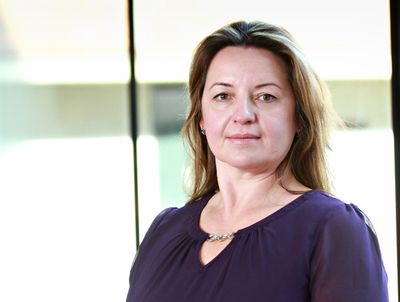
Aston University cyber expert to appear at FinTech event in Birmingham
'FinTech Secured – Next Generation' will showcase the work of leading stakeholders in the research and development of financial technology (FinTech) and security Professor Vladlena Benson will offer insight on illicit money flows and trends in Financial Security Registrations are now open for the event on 7 June 2022 at The Compound, Birmingham. The director of the Cyber Security Innovation (CSI) Centre at Aston University is set to appear at a networking event around financial technology (FinTech). Following the success of their first flagship event of 2022 ‘Secure by Design, Advanced Manufacturing’, Midlands Cyber will launch 'FinTech Secured – Next Generation' on the 7 June 2022. The event will be the first face to face event after the pandemic in Birmingham, bringing together thought leaders and service applications specialists for an evening of industry networking. Professor Vladlena Benson, who also serves on the EU’s Agency for Cybersecurity (ENISA) task force defining the Cybersecurity Skills Framework at the European level, will be joined by contacts from within the cryptocurrency sector and offer insight on illicit money flows and trends in financial security. The event will also showcase the work of leading stakeholders in the research and development of FinTech and financial security. FinTech’s academic innovators, CEOs and company founders, entrepreneurs, contractors, investors and policymakers are encouraged to register now to discuss, participate, network and put their questions to our panel of industry experts. Professor Vladlena Benson, an industry-recognised expert in cybersecurity risk management and director of CSI Centre at Aston Business School, said: “Financial services are core to the UK economy and continue to be a common target for cyber criminals. Challenges to the insurance sector and cyber crime prosecution when crypto assets are involved are emerging and at the CSI we are working to provide forensic and data integrity solutions which help secure the FinTech sector.” User of contactless Europay, Mastercard, and Visa (EMV) may be interested in the insights of Tom Chothia, reader in cyber security at the University of Birmingham, on how the vulnerabilities of Apple Pay and Visa could enable hackers to ’Take £1000 from a locked iPhone’. Registrations are now open to join the cluster at 18:00 hrs on the 7 June 2022 at The Compound, Birmingham.


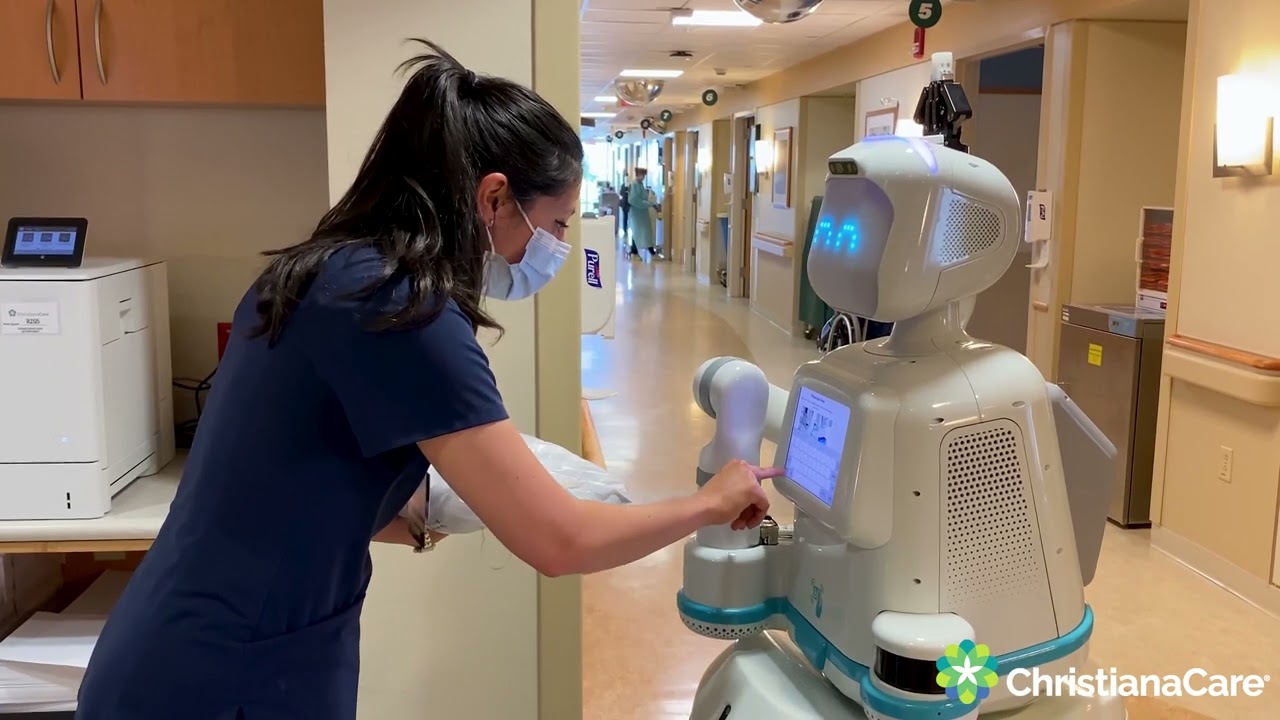
ChristianaCare is the first health system in the Philadelphia region piloting an innovative tool called Moxi, a collaborative robot — or “cobot”— that can assist in the hospital by making deliveries and performing other non-clinical tasks so that nurses and other clinical staff can spend more time focused on what they do best—caring for patients. With a landmark $1.5 million grant from the American Nurses Foundation, ChristianaCare will deploy a total of five Moxi cobots at Christiana Hospital. It is the largest single grant in the history of Nursing at ChristianaCare. Research published in the Journal of Nursing Management shows that nurses spend a significant amount of time — up to 33% of their shifts — on time-consuming but simple tasks such as dropping off lab specimens, collecting supplies or picking up medications from the pharmacy. By taking over these time-consuming but simple tasks, Moxi enables nurses to focus on patient care, where their skills are most needed. “Nurses need the time and space to deliver care and patient education at the top of their license,” said Ric Cuming, Ed.D., MSN, RN, NEA-BC, FAAN, chief nurse executive and president, ChristianaCare HomeHealth. “Moxi will be doing those hunting and gathering tasks such as getting equipment and supplies, which nurses are doing today but don’t need to be doing.” Cobots are designed to share workspace and interact directly with people. In ChristianaCare’s initiative, the Moxi cobots will be integrated with the Cerner Corporation electronic health record (EHR) platform and use artificial intelligence to proactively identify when nurses will need equipment, supplies, medications and lab tests. The Moxi cobots will be deployed to 11 inpatient units, partnering with more than 400 nurses. The American Nurses Foundation grant will enable ChristianaCare to evaluate the impact of cobots on nursing practice with the goal of scaling the technology if successful. “Moxi is not a replacement for a nurse or nursing position — or any position,” Cuming said. “It is an additional resource for nurses and their teams. “With robotic technology, we are using resources wisely and effectively, creating more efficient workflows, reducing repetitive tasks and freeing up nurses’ time for the complex clinical work that they excel at doing.” Reimagining Nursing ChristianaCare is one of 10 grant recipients from the American Nurses Foundation Reimagining Nursing (RN) Initiative. “We are proud that the American Nurses Foundation has the confidence in bold nurse-led ideas that will lead to large-scale, replicable change,” said Katherine Collard, MS, RN-BC, chief nursing informatics officer at ChristianaCare. “This grant will support nurses at ChristianaCare and our nursing colleagues across the nation in realizing their full potential, giving them the tools, resources and power to improve health care now and in the future.” With the American Nurses Foundation grant, ChristianaCare will conduct research on driving nursing outcomes through robotics. “We have a transformative opportunity to generate new knowledge and to move the science forward around robotics in nursing and in health care,” said Susan Birkhoff, Ph.D., RN, nurse scientist at ChristianaCare. “Through research, we will study Moxi’s impact to nursing caregivers that will have broad implications for nursing practice, workforce and education,” she said. ChristianaCare began exploring the potential of robotics to support Nursing with two Moxi cobots acquired in February, funded through the generosity of donors including Good Samaritan, Inc. and E.J. “Woody” Rice. With the grant, said Birkhoff, ChristianaCare will take Moxi to the next “bold frontier,” adding three more cobots with the goal of automating and optimizing nurses’ workflow without interrupting care. With five total cobots, ChristianaCare will be home to the largest number of Moxi robots in health care. The Little Bot That Can Before Moxi can become fully part of the care team, it must learn to navigate the hospital and respond to the nurses’ needs. Using artificial intelligence, Moxi is mapping out Christiana Hospital through sensors and other machine-learning technology so that the cobots can ultimately navigate and work autonomously. “When the Moxi cobots are fully integrated, we anticipate that they will complete up to 200 delivery tasks a day,” Collard said. “By making point-to-point deliveries, Moxi can save nurses hours of time and thousands of steps.” Designed to be compatible with the busy environments of hospitals, Moxi’s features include: Social intelligence: Moxi won’t bump into people or objects in hallways, waves when it sees someone new and happily poses for selfies. Mobile manipulation: Moxi can learn to use its robotic arm to operate existing automatic doors and elevator panels. Human-guided learning: The more Moxi is used, the more Moxi learns and adapts to the environment and specific ways of doing things. Friendly and safe design: With heart-shaped eyes and a friendly appearance, Moxi is designed to navigate safely and get the job done so nurses can focus on patient care. “What Moxi is doing in health systems like ChristianaCare is really transforming the way we think about health care and allowing staff to focus on the people in the hospital as opposed to the tasks,” said Dr. Andrea Thomaz, CEO and co-founder of Diligent Robotics, which created Moxi. “Robots are not something way in the future. Our robots work side-by-side with humans to ease the stress and workload of one of the most demanding jobs in society, nursing. The partnership between Diligent and ChristianaCare shows that the future is now.” Hospital Helper Directly from the Cerner EHR, Moxi will be able to anticipate clinician and patient needs and perform tasks without human involvement. Examples could include: Delivering items to patients based on nurses’ order requests. Making rounds across units to deliver lab samples on collections completed in the electronic health record. Making just-in-time deliveries of pharmaceuticals not stocked on the floor. Prioritizing tasks based on the nursing workload in a unit, so that the busiest nurses will get help first. “Connecting Moxi to the existing technology that clinicians use on a daily basis is key to making it easier to anticipate needs so clinicians can spend more time on patient care,” says Eva Karp, DHA, MBA, RN-BC, senior vice president, chief clinical and patient safety, Cerner. “Moxi could make a real difference in a nurse’s day — alleviating burnout and staffing shortages, which have become especially prevalent since the pandemic.” Incorporating the electronic health record into Moxi is part of the study funded by the American Nurses Foundation. “It’s absolutely in the best interest of our patients that Moxi can work alongside nurses so we can spend more time working directly with our patients to do what we do best,” said Pam Owen, MSN, RN-BC, nurse manager on 7E, one of the pilot units. “And Moxi brings a smile to people’s faces.” Fast Facts About Moxi Works in 22-hour shifts. Needs only two hours of charging time. Weighs about 300 pounds. Can carry a total weight of 70 pounds. Gender-neutral. Pronouns are “it” for a single Moxi cobot and “they” for more than one. Named one of America’s Greatest Disruptors in 2021 by Newsweek and one of the Best Inventions of 2019 by Time Magazine. About ChristianaCare Headquartered in Wilmington, Delaware, ChristianaCare is one of the country’s most dynamic health care organizations, centered on improving health outcomes, making high-quality care more accessible and lowering health care costs. ChristianaCare includes an extensive network of primary care and outpatient services, home health care, urgent care centers, three hospitals (1,299 beds), a freestanding emergency department, a Level I trauma center and a Level III neonatal intensive care unit, a comprehensive stroke center and regional centers of excellence in heart and vascular care, cancer care and women’s health. It also includes the pioneering Gene Editing Institute. ChristianaCare is nationally recognized as a great place to work, rated by Forbes as the 2nd best health system for diversity and inclusion, and the 29th best health system to work for in the United States, and by IDG Computerworld as one of the nation’s Best Places to Work in IT. ChristianaCare is rated by Healthgrades as one of America’s 50 Best Hospitals and continually ranked among the nation’s best by U.S. News & World Report, Newsweek and other national quality ratings. ChristianaCare is a nonprofit teaching health system with more than 260 residents and fellows. With its groundbreaking Center for Virtual Health and a focus on population health and value-based care, ChristianaCare is shaping the future of health care.



Last month, workers at an Amazon warehouse in Staten Island voted to unionize. In the decision's wake, employees across other firms—backed by national labor organizations—are following suit. Villanova University economics professor Cheryl Carleton, PhD, explains that the successful warehouse unionization in New York (a grassroots initiative) is changing the way we view labor unions. "It prevents employees from thinking about unions as just the large existing unions," notes Dr. Carleton. "Workers themselves can coalesce and maintain a unified front to negotiate for what they need from firms." And if unions succeed, firms without unions must compete to entice employees to their operations. As a counterweight to growing unionization efforts, companies have increasingly engaged in the use of intimidation tactics. We see this in the ways firms retaliate against union organizers. "Many large firms that have lots of money and have fostered strong relationships with political powers do not want to let workers have a stronger voice in negotiation of wages, benefits and work rules. They will try to have these unions nullified or intimidate workers not to join them," says Dr. Carleton. "There has been considerable consolidation in industries in the United States, which gives firms a lot more power." And according to economics professor Mary Kelly, PhD, "firms will argue that if they compensate existing [union-represented] workers with higher pay, better benefits and improved working conditions, those higher costs will limit the number of new workers hired, encourage the replacement of some labor with capital/technology if possible and/or 'force' prices higher to consumers." But even if unionization fails, there are still costs to the company. "We see this now with companies increasing the benefits they provide and spending more money to prevent more unionization efforts. The 'spillover' effects of the presence or threat of unions increases cost to firms," says Dr. Carleton. But we still don't know the final economic impact of unionization. "Companies, the stock market and shareholders always respond to change and uncertainty, so when a company unionizes it is a period of uncertainty," says Dr. Carleton. "If the company does unionize, does it create more stability and more profitability? Or does it end up being more costly for the firm? Time will tell!" Despite all the uncertainty, "the idea of unions and the need for unions is still present, and the current labor market situation has given workers the impetus they need," Dr. Carleton says. "Unions are necessary to stand up to industries. Each worker has little power, but combined workers have a stronger voice."


School to provide increased access to preventative health services for young students so they can learn, grow and thrive To address health issues at the earliest and most preventable stages, provide whole child health, and advance health equity in the community, ChristianaCare opened a new school-based health center at Kuumba Academy Charter School in Wilmington on Friday, May 6th. The creation of the center, made possible through ChristianaCare’s partnership with the Community Education Building (CEB), which houses Kuumba Academy, means that students at the kindergarten-through-8th grade school will have increased access to an array of health services. “At ChristianaCare, we recognize the comprehensive health needs of adolescents in our community and are committed to partnering and using our resources wisely and effectively to expand our school-based health centers,” said Bettina Tweardy Riveros, J.D., chief health equity officer and senior vice president of Government Affairs and Community Engagement at ChristianaCare. “We know that childhood trauma adversely affects the ability of children to learn and build healthy relationships and it increases their risk of mental health issues and lifelong chronic disease. The opening of our school-based health center at Kuumba Academy means that ChristianaCare can support medical and behavioral health services and wraparound social care our children need, so we can positively influence their health, their education and their futures.” With the latest opening, ChristianaCare now operates 21 school-based health centers throughout the First State, in partnership with the Delaware Department of Health & Social Services, the Delaware Division of Public Health and several school districts. Kuumba Academy students, who spoke at an event Friday to celebrate the grand opening, will have access through its school-based health center to the following: Comprehensive behavioral health services. Crisis intervention and suicide prevention. Substance use disorder treatment. Tobacco cessation. Nutrition and weight management. Physical examinations. Health screenings. Treatment for minor illnesses and injuries. Reproductive health. In addition, Kuumba Academy students also will have access to resources that help their families surmount obstacles such as transportation, challenging appointment times, and worries about cost and confidentiality. “Kuumba Academy remains committed to meeting the needs of the whole child and family,” said Sally Maldonado, head of school at Kuumba Academy, the mission of which is to provide an innovative learning environment for the whole child from kindergarten through eighth grade. “The opening of this school-based health center means that our students and families will have daily access to the high-quality behavior and health services that they deserve, and we are grateful to ChristianaCare and CEB for their partnership. We are beginning to see ourselves on the other side of this pandemic and we are energized to emerge with these newfound partnerships focused on health and wellness for our village.” ChristianaCare has partnered with CEB and Kuumba Academy on community-focused health initiatives in the past. In February 2021, ChristianaCare provided more than 800 vaccinations to community members and staff at CEB. On February 7th of this year, ChristianaCare vaccinated 38 people, including 19 children, against COVID-19. This added to the more than 6,000 vaccinations that ChristianaCare Community Health has administered since 2021. “At CEB, we understand the importance that health plays on a child’s ability to learn and succeed,” said Linda Jennings, CEO at CEB. “We are beyond excited to partner with Kuumba and ChristianaCare to launch the Kuumba Academy School-Based Health Center at CEB and add to the list of holistic and integrated support we provide to students and their families.” Today’s event coincides with Better World Day, an annual, national event on the first Friday in May. During Better World Day, students showcase their learning about initiatives that they believe will have a positive impact on their community and the world. Through collaboration and acts of service, students learn the power of their voice to make change. About ChristianaCare Headquartered in Wilmington, Delaware, ChristianaCare is one of the country’s most dynamic health care organizations, centered on improving health outcomes, making high-quality care more accessible and lowering health care costs. ChristianaCare includes an extensive network of primary care and outpatient services, home health care, urgent care centers, three hospitals (1,299 beds), a freestanding emergency department, a Level I trauma center and a Level III neonatal intensive care unit, a comprehensive stroke center and regional centers of excellence in heart and vascular care, cancer care and women’s health. It also includes the pioneering Gene Editing Institute. ChristianaCare is nationally recognized as a great place to work, rated by Forbes as the 2nd best health system for diversity and inclusion, and the 29th best health system to work for in the United States, and by IDG Computerworld as one of the nation’s Best Places to Work in IT. ChristianaCare is rated by Healthgrades as one of America’s 50 Best Hospitals and continually ranked among the nation’s best by U.S. News & World Report, Newsweek and other national quality ratings. ChristianaCare is a nonprofit teaching health system with more than 260 residents and fellows. With its groundbreaking Center for Virtual Health and a focus on population health and value-based care, ChristianaCare is shaping the future of health care. About Kuumba Academy Charter School Kuumba Academy Charter School’s mission is to provide an innovative learning environment for the whole child from kindergarten through eighth grade. Our directors, staff, and families share the core belief that parents are children’s primary educators. KACS parents, in partnership with teachers and administrators, believe that every child can maximize his or her learning potential given the opportunity to do so. In response to the outcry from Wilmington parents looking for a high-quality public education and increased access to arts education for their children, Christina Cultural Arts Center leaders, parents, and community supporters took action and were granted a Department of Education charter to create Kuumba Academy Charter School (KACS) in 2001. KACS was the first school model in the state that partnered a public charter school with a nonprofit community organization. Christina Cultural Arts Center (CCAC) and KACS form a unique nonprofit/public school partnership committed to educational excellence. Through the innovative union of academics, arts, technology, and family engagement, each KACS student’s individual learning style is nurtured—resulting in creative learners who are agents of positive change in the community. The CCAC/KACS model is regarded by many as the single most significant achievement in Wilmington’s post public school desegregation history. About the Community Education Building (CEB) CEB was established in 2012 after Bank of America donated the former MBNA Bracebridge IV building to The Longwood Foundation. Living up to its commitment of increasing access to education, the Longwood Foundation created CEB as an independent entity, and transformed the space into an ecosystem to support the social, emotional, physical, and academic development of Wilmington’s youth. CEB is an innovative co-location and shared services model. Focused on supporting the entire family, CEB offers vibrant programs and support systems that provide a sound foundation for each student. It serves as a hub for families by offering services such as healthy meals, life coaches, and mental health services. This model leads to deeper family engagement in their child’s learning and allows schools to focus on teaching and learning, not operations and overhead. CEB is an educational ecosystem that holistically integrates programs and resources for students and their families, ensuring that every student has an equitable opportunity to succeed.


As data breaches soar, how will security evolve?
Awareness of data breaches is growing but not nearly at the pace of the problem itself. Indeed, the total number of data compromises jumped 68% in 2021 to an all-time high, impacting more than 293 million people, according to the Identity Theft Resource Center. Also, as more people work from home and embrace Internet of Things devices, individuals can be as vulnerable to hacks and phishing as big corporations and governments, perhaps more so, given that the top three breached data attributes in 2021 were name, social security number and date of birth, the center reported. Bringing a multifaceted perspective to data security challenges is NJIT’s Kurt Rohloff, an academic researcher and entrepreneur who conducts research for the federal government. Rohloff, director of NJIT’s Cybersecurity Research Center, is co-founder and chief technology officer of Duality Technologies, a startup offering data security through homomorphic encryption. His government work includes projects for the Defense Advanced Research Projects Agency of the U.S. Department of Defense and the National Security Agency. Questions that Rohloff can answer include: How has data security evolved? Which tactics fail and why? What’s the economic impact of data breaches? What’s the future of data security? To reach Kurt, simply click on the button below.
