Experts Matter. Find Yours.
Connect for media, speaking, professional opportunities & more.

Hitting all the right notes - Georgia Southern music industry degree ready to launch
Georgia Southern University’s Department of Music earned national accreditation for a new music industry degree, the final step for an innovative program that combines music, technology and entrepreneurship. Launching in the fall of 2021, the new music industry program will prepare musicians for evolving careers in music. The program curriculum combines a traditional degree with 21st-century technology and performance opportunities. Accreditation from the National Association of Schools of Music (NASM) allows the new program, Bachelor of Arts in Music with a concentration in music industry, to be offered at the Armstrong Campus in Savannah. Students will have the option of declaring an emphasis area in music technology or music business. “We could not be more excited about this program,” said Steven A. Harper, Ph.D., chair of the Department of Music. “For many years, the music program has been itching to expand its reach and regional impact. Savannah is perfectly suited for a degree of this type and we couldn’t be more pleased to have this degree come to fruition.” The music industry program includes courses in music management, live sound, recording studio techniques, digital audio workstations and music entrepreneurship. “The numerous music industries in Savannah include music manufacturers, performing organizations/venues and major music festivals. These industries can provide ample internship possibilities for hands-on experience in a chosen area,” Harper said. “We are able to reach a student body we’ve never been able to serve before. We can prepare students for a whole different set of in-demand careers and we can create ties with the music industry in Savannah in a way that’s never been possible for us until now. It’s going to be a huge boon for the department, the college, the university and the Armstrong Campus.” One professor key to the program will be Stephen Primatic, DMA, who teaches percussion, theory, jazz and music technology. His versatility is evidenced by the books he has written: two on percussion pedagogy and another on instrument maintenance and repair. “This program will be beneficial to our students, the University and the community of Savannah, offering education and training for music careers in the 21st century,” said Primatic. If you are a journalist looking to know more about the Bachelor of Arts in Music with a concentration in music industry or would like to interview Steven A. Harper, Ph.D., chair of the Department of Music or Professor Stephen Primatic -- simply reach out to Georgia Southern Director of Communications Jennifer Wise at jwise@georgiasouthern.edu to set and time and date.

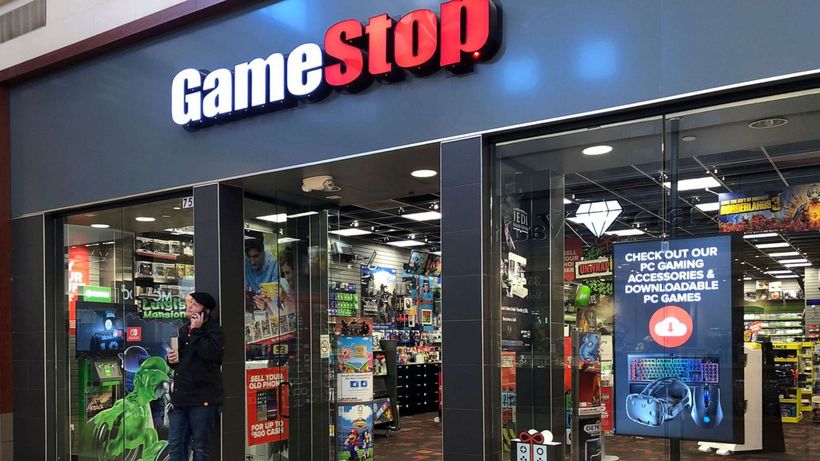
IU Kelley School finance expert available to discuss GameStop, Robinhood
Charles Trzcinka, the James and Virginia Cozad Chair of Finance at the Indiana University Kelley School of Business and an expert on financial markets and investments, is closely following developments involving individual investors and Game Stop and available to talk with reporters. He can discuss the impact of retail investors using the popular Robinhood brokerage and Reddit’s “Wall Street Bets” page on the stock of low priced companies like Gamestop, AMC and stocks such as BlackBerry, Bed Bath and Beyond and Nokia. Several brokerages halt buying of those and other stocks on Thursday. Trzcinka teaches behavioral finance and is familiar with Robinhood's model is to use game technology to trade stock and how it makes money by selling the right to trade against the orders to hedge funds and high frequency traders. In order to schedule an interview, contact George Vlahakis, associate director of communications and media relations at the Kelley School, at vlahakis@iu.edu or 812-855-0846.

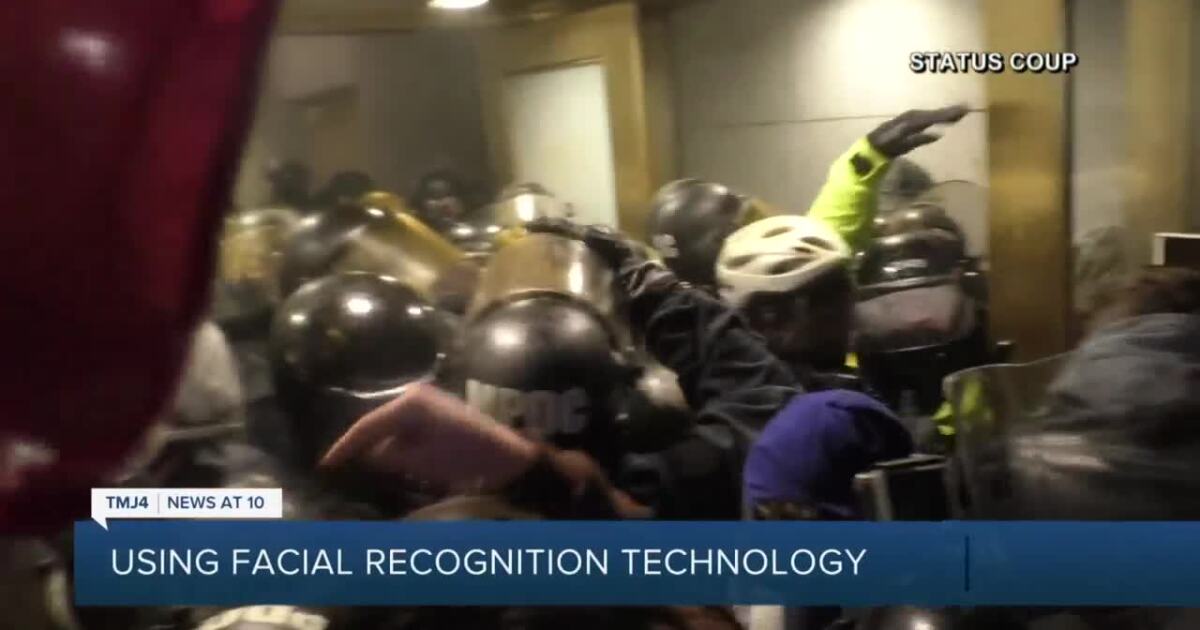
On January 06, America watched with shock as a mob of protesters stormed the gates in Washington, D.C. and invaded the Capitol buildings. For hours, the rioters looted and occupied America’s halls of power and though some were apprehended, many found a way to get out and get back home avoiding arrest. However, media coverage was substantial and some of the protesters were even bold enough to be caught posing for social media. Slowly, authorities are tracking them down, and Dr. Derek Riley, an expert at Milwaukee School of Engineering (MSOE) in the areas of computer science and deep learning, has been explaining how artificial intelligence (AI) technology that’s taught at MSOE is capable of enabling law enforcement's efforts to identify individuals from pictures. "With these AI systems, we’ll show it example photos and we’ll say, 'OK, this is a nose, this is an ear, this is Billy, this is Susie,'" Riley said. "And over lots and lots of examples and a kind of understanding if they guess right or wrong, the algorithm actually tunes itself to get better and better at recognizing certain things." Dr. Riley says this takes huge amounts of data and often needs a supercomputer—like MSOE's "Rosie"— to process it. To get a computer or software to recognize a specific person takes more fine-tuning, Riley says. He says your smartphone may already do this. "If you have a fingerprint scan or facial recognition to open up your phone, that’s exactly what’s happening," Riley said. "So, they’ve already trained a really large model to do all the basic recognition, and then you provide a device with a fingerprint scanning or pictures of your face at the end to be able to fine-tune that model to recognize exactly who you are." Riley says this technology isn't foolproof—he says human intelligence is needed at every step. He added we might be contributing to the data sources some of the technology needs by posting our pictures to social media. "Folks are uploading their own images constantly and that often is the source of the data that is used to train these really, really large systems," Riley said. January 14 – WTMJ, Ch. 4, NBC News The concept of facial recognition and the use of this technology in law enforcement (and several other applications) is an emerging topic – and if you are a reporter looking to cover this topic or speak with an expert, then let us help. Dr. Derek Riley is an expert in big data, artificial intelligence, computer modeling and simulation, and mobile computing/programming. He’s available to speak with media about facial recognition technology and its many uses. Simply click on his icon now to arrange an interview today.



Trump, the Capitol, and Social Media – Let our expert answer the questions everyone is asking
Social media played a significant role in the storming of the U.S. Capitol, and its influence in shaping American politics is unlikely to wane, says UConn's Marie Shanahan. And that’s why UConn recently published a piece where Professor Shanahan took on a lot of the trickier questions people are asking in the wake of the storming of the U.S. Capitol on January 6. In a piece just published – she addresses these key questions: While obscure social media platforms like Parler, Gab, and Telegram have gotten a lot of attention recently as gathering places for the kinds of far-right activists who were instrumental in what happened at the Capitol, most of the planning for that event seems to have taken place in the open, on sites like Facebook and Twitter. To what extent was this event a product of social media? It’s hard to talk about Donald Trump’s presidency without talking about social media. What might change now that he seems to have been permanently banned from the most popular platforms? Speaking of that deplatforming, even though Facebook and Twitter can ban any user who violates their terms of service, is there some validity to the argument that in doing so they’re restricting free speech? What kinds of things can be done to address some of these problems in how the public discourse is shaped? Is repealing Section 230 actually a good idea? The piece is attached and it is an insightful must-read for anyone following these developments. Professor Shanahan is an expert in the intersection of journalism and digital communication technology, online news, and digital discourse. If you are a journalist looking to cover this topic and would like to arrange an interview with Professor Shanahan – simply click on her icon now to arrange a time to talk today.


As Flexible Voting Options Scrutinized, Expert Says Online Voting Not a Safe Alternative
The popularity of — and controversies surrounding — early voting and mail-in ballots demonstrates a demand for more flexible voting options. But online voting shouldn’t be up for consideration, according to James Hendler, the head of the Institute for Data Exploration and Applications at Rensselaer Polytechnic Institute. Hendler also chairs the U.S. Technology Policy Committee of the Association for Computing Machinery, the world’s largest and oldest society of individuals involved in all aspects of computing. In public statements expressing his own opinion and on behalf of the ACM, Hendler has discussed the vulnerabilities of online voting and the organization’s effort to press against its adoption. Hendler argues that online voting is not, and cannot be made to be, secure against malware and denial of service attacks — and that no app or underlying technology, including blockchain, holds potential to overcome those challenges. "The current state of mobile voting is that we are not ready to deploy it at scale, that it has significant technical and socio-technical aspects, particularly cybersecurity, that we need to worry about, and that there are alternatives,” Hendler said. “The ACM has worked hard as an organization to explain our evidence-based reasoning, and to express the hope that online-voting won’t be used now and in the foreseeable future.” In explaining why online voting is more complicated than online banking, shopping and other common internet activities, Hendler said, “The main reason that online voting is more complex is that it must maintain anonymity, no one is allowed to know how you voted. Securing online voting without providing access to identity is extremely difficult. There are other reasons as well including the staggering cost and the lack of a centralized US authority, but identity management remains the number one.” Under his leadership, the ACM’s U.S. Technology Policy Committee, along with leading organizations and experts in cybersecurity and computing, sent a letter to all governors, secretaries of state and other state election directors urging them not to allow the use of internet or voting app systems. Hendler has extensive experience in policy and advisory positions that consider aspects of artificial intelligence, cybersecurity and internet and web technologies as they impact issues such as online voting and the regulation of social media and powerful technologies including facial recognition and artificial intelligence. In light of ongoing political unrest, Hendler is available to speak to diverse aspects of information technology as related to the election, AI in applications like policing, and the politics related to social media.


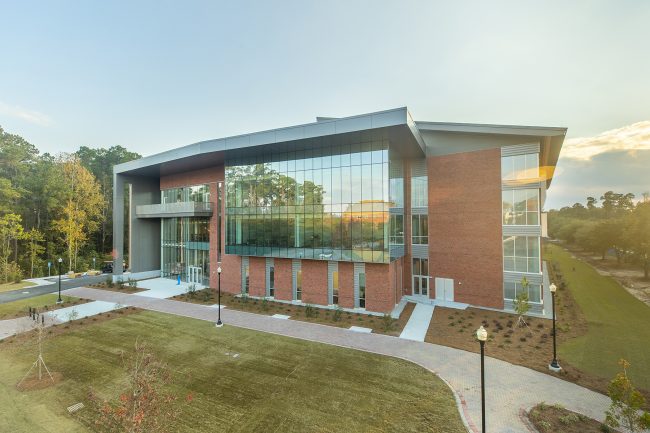
Last Friday, Georgia Southern officially opened its new Engineering and Research Building for students and researchers, a facility that will serve as the epicenter for engineering excellence and innovation in southeast Georgia. The building is designed to facilitate academic and institutional partnerships, inspire creative engineering and accelerate academic success for students in the College of Engineering and Computing. Through the instructional research labs and academic spaces that bridge theory and practice, students will be prepared to solve today’s challenges and to make tomorrow’s discoveries. “Today marks the culmination of years of forethought and investment from a number of state leaders, industry leaders and local advocates, who paved the way for us to be here,” said Georgia Southern President Kyle Marrero. “Leaders who, dating back to the 90s, could see the future of a growing industry, a state on the precipice of being a national leader in technology and innovation, and a critical need to develop talent in applied engineering across south Georgia.” The Engineering and Research Building’s sleek, contemporary environment defined by glass and natural light, soaring high-bay ceilings and modern, industrial feel is strengthened by new, industry-relevant equipment, instrumentation and technology that encourage active learning and sustainability. The highly efficient facility includes sustainable features that complements existing spaces on campus. The three-story building houses applied research spaces with a strong focus on manufacturing engineering, civil engineering, electrical and computer engineering, and mechanical engineering. The workspaces can be easily reconfigured for various uses, projects and applications and provide students with access to industry-grade equipment as well as expanded opportunities for undergraduate research. “The investment of the Engineering and Research Building solidifies Georgia Southern University’s commitment to students in providing a world-class education in the engineering field, while providing the space and resources necessary to facilitate such,” said student Kristifer Bell. “I am enthusiastic to continue my research work and look forward to the interdepartmental collaboration that will be encouraged through the housing of new student and faculty labs under one roof.” The full media release about this historic occasion is attached – and if you are a journalist looking to know more about this facility or Southern Georgia University -- simply reach out to Georgia Southern Director of Communications Jennifer Wise at jwise@georgiasouthern.edu to set and time and date.

The Alexa Effect: How the internet of things (IoT) is increasing retail sales
Imagine this scenario. You’re out of coffee but with the click of a button or a simple voice command, you reorder a two months’ supply that will arrive the same day. And that almond milk you like? Well, imagine your fridge already knew you were running low on supplies and independently sent the order to restock before you ran out. The stuff of science-fiction until only recently, internet of things (IoT) technology is beginning to change the way we live and work. Simply put, IoT is a system of interrelated devices—things that can include gadgets, digital objects, or machines, wearables and so on—which have the capacity to send and receive data over a network without human agency or human interaction. As a technology, IoT is novel, and it’s poised to reconfigure a range of sectors and industries—among them, the world of retail. Amazon is a leader in the consumer-facing space with an ecosystem of apps like Alexa, Fire TV, and the now-defunct Dash Button. Meanwhile, tech-savvy retailers are using IoT to facilitate operations. Smart shelves in stores can detect the status of perishable goods or inventory requirements; radio frequency identification (RFID) sensors can actively track the progress of produce through the supply chain. Retailers can even use IoT to send customers personalized digital coupons when they walk into the store. As IoT continues to gain traction around the globe, the potential for efficiency-boosting innovation in retail is clear. Less clear, however, is its actual impact on consumer choices and behaviors. Sure, IoT can save time and mental effort, but how does that translate into real-world business outcomes? This is the question that underscores new research by Vilma Todri and Panagiotis Adamopoulos, both assistant professors of information systems and operations management at Emory’s Goizueta Business School. They were keen to understand whether consumer behavior is significantly changed under the regime of this new technology as it continues its roll out across the world. Specifically, they wanted to know if IoT technology actually increases demand for products. And it turns out that it does. “IoT technology in retail is really in its infancy, so understanding its impact on users and business is key,” Adamopoulos said. “We wanted to shed light on these dynamics at this early point to spark interest and generate more debate around how retailers can leverage this technology.” Together with Stern’s Anindya Ghose, he and Todri put together a large data-set with information about sales of certain products in countries with existing IoT retail markets and in others where the technology has not yet been introduced. “We needed to take into account these sorts of variables to really understand the effect,” Todri said. “So, we had our control group of non-IoT retail markets, and we were able to compare sales data for the same products in countries where the technology has been adopted.” The researchers also controlled for time trends, looking at the impact on sale prior to and post IoT adoption. “Looking at the data over time and pinpointing the exact moment when a product has been made available for sale via IoT sales channels across different countries and at different moments, we were able to infer the effect of the technology on product sales,” Todri said. In total, they looked at sales for the same or similar products in six countries between 2015 and 2017. They also compared sales across different retailers. “By analyzing the same sales information for different products in different markets using different channels across the world, we can see differences in the data that can only be attributable to this new technological feature,” Adamopoulos said. And the differences are significant. The concept is fascinating, and if you are interested in learning more, a complete article about this topic is attached: If you are a journalist or looking to learn more about IoT, our experts can help. Vilma Todri and Panagiotis Adamopoulos, both assistant professors of information systems and operations management at Emory’s Goizueta Business School. Both experts are available to speak with media; simply click on either expert's icon to arrange an interview today.




Top Germicidal UV Lighting Questions Answered
Amid the COVID-19 pandemic, germicidal lighting has been eyed for indoor disinfection. Bob Karlicek, the director of the Lighting Enabled Systems and Applications (LESA) Center at Rensselaer Polytechnic Institute led a team of engineers who designed and built a UVC system to disinfect masks for reuse. In addition, he has been answering some of the biggest questions people have surrounding this potential tool in the current global public health crisis. These are a few examples: 1. Can UVC radiation kill SARS CoV 2? Yes, several groups have demonstrated that UVC radiation can quickly deactivate the SARS CoV 2 virus that causes COVID-19. To be effective, however, the delivery dose needs to be high enough and the required dose depends on several environmental factors (surface or airborne, relative humidity, and other environmental factors) that impact the delivery of UVC radiation to the virus’ RNA. The higher the dose, the faster the process, and the greater the percentage of virus deactivated. 2. Can UVC LEDs be used for germicidal applications? Absolutely, and there is considerable published evidence for the effectiveness of UVC LEDs in germicidal applications including SARS CoV 2. Also, the output power, reliability and cost-effectiveness of UVC LED solutions are continually improving with continuing research on the design and manufacturing of UVC LEDs. Note that both UVC mercury lamps (254 nm) and UVC LEDs have lifetimes that are considerably shorter than LEDs used in solid-state lighting, so that should be factored into the design of GUV systems using either technology. 3. How can UVC sources be used safely around people? So long as humans are not in the direct line for exposure to the UVC radiation there should be no issues. Ordinarily, UVC systems are used only when people are not present or in disinfecting air (either inside of ductwork of HVAC systems or with specially designed optics to irradiate the upper portions of room-air) with little or no radiation to the people below. Some UVC lamps come with presence detection systems that turn off when persons approach, but these systems will have to have very low false-negative error rates (turning on when the system falsely thinks that people are not present). You can read more questions and answers here. If you'd like to interview Robert Karlicek, please click on his ExpertFile profile.


Savannah is drenched in history, but many of the city’s stories often go untold. Four Georgia Southern University history students aim to shed light on these untold stories as a part of their project, Savannah History Remix. The project, developed by graduate students Lauren Della Piazza Hartke, R. Dalton Bryant, Noah Prince, and Dalton Blackmon, is a series of walking tours featuring lesser-known stories of Savannah’s history. “The walking tours seemed like the safest bet and a good opportunity to learn some digital skills,” said Assistant Professor of history Alena Pirok, Ph.D., who is overseeing the project. “The tours intend to bring new and useful historical information to the city, its residents and the historical tourism industry.” When the project began, the students identified subjects not found on commercial tours of Savannah, including modern immigration, laborers, common people of Savannah and the LGBTQ community. Hartke created the tour, “A Seat at the Table: A Social History of Savannah’s Foodways,” which revolves around the culinary history of the city. “My goal for this project was to show how Savannah’s food scene today is the product of many years of input and contribution from many different subgroups of peoples,” she said. “I want people to understand how our notion of southern food is the product of English, West African and Native American foodways, combined with regional practices unique to Savannah’s economy and ecology.” Pirok said the Savannah History Remix tours have more freedom than commercial tours. “A non-profit tour like ours does not have to worry about losing customers and money,” she said. “This gives us the freedom to take more risks and to offer new, but academically sound, historical narratives that people do not find familiar or ones that might challenge their vision of the world.” Despite COVID-19, students at Georgia Southern University are combining innovation, technology and creativity to see the projects they want to fulfill come to fruition. If you’re a journalist looking to know more about the Savannah History Remix or similar projects, simply reach out to Georgia Southern Director of Communications Jennifer Wise at jwise@georgiasouthern.edu to arrange an interview today.

This is a business imperative, not a tech issue, says Brunswick’s Cybersecurity and Privacy team Cyber threats are generating some scary statistics: $400 billion a year in losses from attacks, with some larger businesses experiencing more than 12,000 attacks each year. But there is also good news. Companies are recognizing that cybersecurity is not a technology concern but rather a critical business issue and one they are preparing to deal with. To address the significant business and reputational risks involved, companies are using a cross-functional, top-to-bottom approach, one that treats cybersecurity as a business imperative. Many companies are beginning to strengthen their “human firewall,” creating a business culture where every employee sees cybersecurity as their responsibility. People, not software, are often the weakest link in a security system and that is a problem no software patch will solve. Regulation is growing increasingly complex and governments’ expectations differ from those of companies and consumers. The rules are murky and lag far behind the technology – and the threat. To deal with competing and at times conflicting requirements, some companies are moving beyond the minimum demanded of them, and aiming for a higher standard. To be effective, a company’s cybersecurity program needs to weave these threads into its underlying business plan. Cybersecurity is more than just a strong defense, more than compliance. It must be a part of corporate culture. It represents an opportunity to differentiate yourself from your competitors, increase the efficiency of your operations and earn a greater level of trust from customers, shareholders and the community.