
Experts Matter. Find Yours.
Connect for media, speaking, professional opportunities & more.

Guinness World Record Holder Jon Bruney To Speak at Biohacker Summit in Toronto
(Toronto) Renowned Strongman and Fitness Expert to speak at Spark Biohacker Summit at Metro Toronto Convention Center on October 15th, 2018 Jon Bruney, creator of the “Pressing the Limits” motivational strength program, will appear in Toronto at the Spark Biohacker Conference. A devoted researcher in the pursuit of finding the edge in performance, Jon will speak about his experience using transcranial and intranasal light therapy. Jon, one of a number of elite athletes, has been working with Technology developed by Dr. Lew Lim, NMD, MBA and Founder & CEO of Vielight in Toronto. Dr. Lim will be on hand to answer questions about the broad base of international research behind photobiomodulation and what we know so far about it's mechanism. "With photobiomodulation, you can tap into the secrets of the nervous system, helping your body to push farther, to push harder, to push longer than you ever believed you could." Jon Bruney using Vielight photobiomodulation device at his Performance Training Center in Indiana Jon Bruney and Dr. Lew Lim, Founder and CEO of Vielight, will be available for questions at the Vielight exhibition booth held alongside the Biohackers Summit. For one-to-one interviews, please contact Edward D'Mello on 647-865-2803. Session Details Monday Oct. 15, 2018 1230PM - 130PM Metro Toronto Convention Centre South Building (Hall G) 222 Bremner Boulevard Toronto, Ontario M5V 3L9 About John Bruney John's work with competitive athletes includes Olympians and NFL players. He has been featured in Ripley’s Believe it or Not, The Guinness Book of World Records, shown nationwide on NBC’s America’s Got Talent, The Today Show, ABC’s To Tell the Truth, and TruTv’s Guinness World Records unleashed. A true renaissance man in the realm of strength-development, Jon Bruney is a best-selling author, world-class trainer, coach and motivational speaker. He is the author of the best-seller Neuro-Mass: The Ultimate System for Spectacular Strength and The Neuro-Grip Challenge: A Radical Program For Building Strength and Power in Your Upper Body. He also writes a training series called “Foundations”, featured in MILO, widely considered the world’s most prestigious strength training journal. Jon has been responsible for the design of numerous pieces of cutting-edge training equipment now in use around the world. Jon is a veteran of multiple trainer certification courses and was the first to achieve the grueling Battling Ropes Level 2 Certified status. He is also the co-owner of Submit Strength equipment. About the The Biohacker Summit The Biohacker Summit is the largest biohacking event in the world that connects well-being companies with medical professionals, technology experts, investors, entrepreneurs, health and nutrition enthusiasts, and other pioneers. Biohacking - better living through science, technology and nature - is a fast growing international trend. The aim of the conference is to make the world healthier and happier place, prevent disease, and extend human capabilities and lifespan. Media Contact Edward D'Mello M: 647-865-2803 E: edward@vielight.com #photobiomodulation #light #therapy #Toronto #Canada #Ontario #wellness #health #mentalhealth #quantifiedself #biohack #biohacker #mental #brain #body #sport #performance

MEDIA RELEASE: CAA rolling out new predictive technology
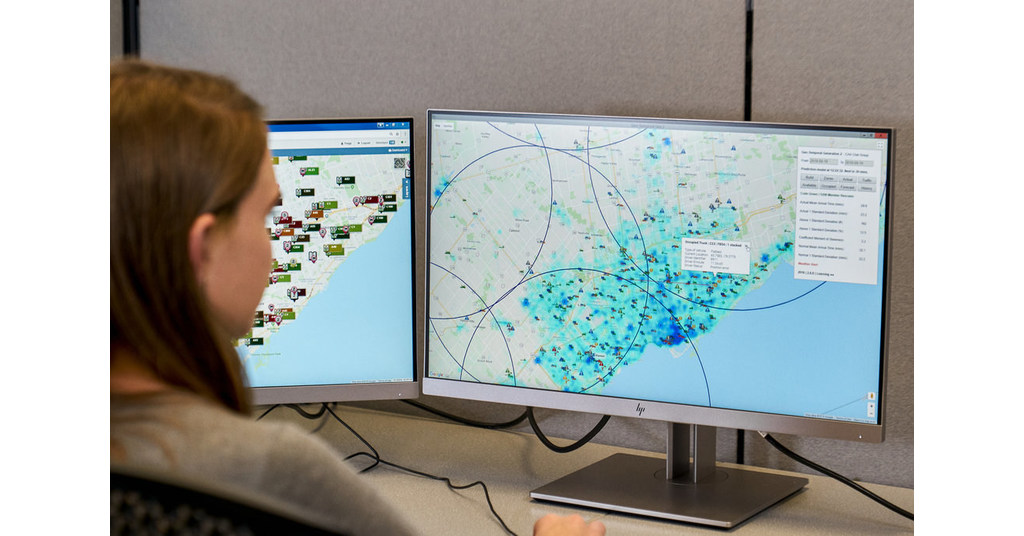
New predictive technology, created in-house at CAA South Central Ontario (CAA SCO) can now predict the likelihood of a roadside event occurring in a specific geographic area, and send a truck to that area before a breakdown occurs. CAA's new Gen 2 predictive technology gets the right truck, to the right place, at the right time. Gen 2 is a proprietary machine-learning algorithm that leverages data from 115 years of roadside assistance service. It layers on weather and humidity indicators, along with real-time traffic and GPS information to predict roadside needs. Gen 2 was developed in-house by CAA in late 2017 and piloted in the London area in January 2018. Initial results during the pilot period showed a promising reduction in the average time of arrival for roadside service vehicles. CAA SCO was able to rescue members an average of 11 minutes faster during the summer of 2018, when compared to the summer months of 2017. The service improvement is directly tied to the roll out of CAA's new predictive technology. The system learns over time, so CAA SCO expects average wait times will continue to improve. The technology has already garnered interest from roadside assistance clubs from around the world. CAA Gen 2 is currently being operationalized across CAA SCO's territory. Source:



3 measures to improve election security
As hacking attempts to undermine our elections have become the new normal, state governments are rushing to secure their voting systems with a $380-million fund from Congress before the midterms. The big question is, where should they invest that money to protect U.S. elections? “Almost every state today is using a different electronic election system,” said Alexander Schwarzmann, former director of the Center for Voting Technology Research at the University of Connecticut and current dean of the School of Computer and Cyber Sciences at Augusta University. “While diversity of systems somewhat increases our election security, states can strengthen it by investing in three areas: They should adopt a voter-verified paper ballot system, increase their technological capability to detect and address security vulnerabilities and implement auditing of election results to build public’s confidence in the outcomes.” Schwarzmann, who provided technological expertise to the State of Connecticut in cybersecurity and integrity of electronic election systems and led state-wide technological audits of voting systems, is available to discuss: • How he helped the State of Connecticut become a leader in voting technology cybersecurity • How state governments can improve confidence in their voting systems by investing in three areas: voter-verified paper ballots, technology to detect and counter security vulnerabilities and statistical and technological election audits Schwarzmann is a nationally-recognized expert in voting technology cybersecurity, and distributed systems. His own research programs have been supported by numerous grants totaling over $8.5 million from the National Science Foundation, including NSF Career Award, Air Force Office of Sponsored Research, State of Connecticut, NSF-NATO, and U.S. Election Assistance Commission and other agencies. He has authored three books and more than 150 research articles and has edited a number of scholarly volumes on computer science research. He served on several editorial boards, including IEEE Transactions on Computers and Information & Computation, two of the most venerable and prestigious journals in computer science. Contact us to schedule an interview with Alexander Schwarzmann or learn more about his expertise. Source:


The link between corporate alliances and returns
Strategic alliances are agreements between two or more firms to pursue a set of agreed upon objectives while remaining independent organizations. Alliances are formed for a number of reasons, including licensing, marketing or distribution, development or research, technology transfer or systems integration, or some combination of the above. Tarun Chordia, R. Howard Dobbs professor of finance, and coauthors Jie Cao (Chinese U of Hong Kong) and Chen Lin (U Hong Kong) find evidence of return predictability across alliance partners. If the alliance partner or partners have high (or low) returns this month, then the firm has high (or low) returns over the next two months. Using a sample of alliances over the period 1985 to 2012, the authors find that a long-short portfolio sorted on lagged one-month returns of strategic alliance partners provides a return of over 85 basis points per month. This long-short portfolio return is robust to a number of specifications, including different adjustments for risk, controlling for different proxies for cross-autocorrelations, and excluding partnerships with customer-supplier relationships, as well as controls for industry returns. They theorize, “If investors are fully aware of the impact of strategic alliances on returns and pay attention to the firm-partner links, then the stock price of a firm should quickly adjust to price changes of its partners’ stocks.” The evidence suggests that investor inattention may be the source of a firm’s underreaction to its partners’ returns. Source:



The role of behavior in managing mergers
Despite corporate interest in M&As as a growth strategy, research indicates that financial returns on such deals often fall short of expectations. Corporate leaders spend considerable time looking at the financial and quantitative aspects of mergers and acquisitions; however, Sandy Jap, Sarah Beth Brown Professor of Marketing; A. Noel Gould (Texas State U); and Annie H. Liu (Texas State U) argue that factoring in people should also be a major consideration when it comes to a proposed deal. Their research indicates that better employee and customer management is especially critical to an organization’s M&A strategy and implementation success. The trio analyzed ANZ New Zealand’s horizontal merger with the National Bank of New Zealand to better understand the impact of employee and customer behavior on the deal. They contend that this brand and technology merger succeeded due to ANZ’s commitment to ensuring customer satisfaction and addressing employee concerns about the merger. ANZ New Zealand also focused on business efficiencies and rebranding efforts. Jap, Gould, and Liu note that collaboration became a big key to the success of the merger with ANZ’s financial, IT, marketing, and communications personnel working closely together to retain customers. Source:


Ban on Cryptocurrency Ads Not Good for Consumers
Starting in June, Google will no longer allow any advertising about cryptocurrency-related content. It’s a hard move, but the online giant is following in the footsteps of Facebook who initiated similar measures at the start of 2018. While a potentially lucrative and growing marketplace, there’s still a lot of hesitation and concern about potential scams. Google's director of sustainable ads, Scott Spencer recently said in an interview with CNBC: "We don't have a crystal ball to know where the future is going to go with cryptocurrencies, but we've seen enough consumer harm or potential for consumer harm that it's an area that we want to approach with extreme caution.” So, is banning ads promoting cryptocurrencies the right thing to do? "Google's ability to censor these ads is exactly why decentralization and censor-proof media and currency is so important," says David Noble, director of the Peter J. Werth Institute for Entrepreneurship and Innovation. "Do people want Google to make the decision as to what they can and can not see? Where do they draw the line," Noble asks. Noble focuses on technology entrepreneurship in the digital economy. He is often sought out by media for his perspective and insight regrading cryptocurrencies and technology. David is available to speak with media, simply click on his icon to arrange an interview. Source:


Just how many glass ceilings do women need to shatter in America?
These days, women are finally making their mark in elected houses and legislatures around the country. It’s seen as a serious advancement since the days of old white men in differing grey suits as the only variety on a ballot. A recent article in Yahoo news quoted University of Mary Washington’s Rosalyn Cooperman observations about how far women have come, but also how much further there is to go. “The attention has been on the record numbers who are running and to the message being sent by those sheer numbers,” says Rosalyn Cooperman, associate professor of political science at the University of Mary Washington in Fredericksburg, Va. “But what kind of change this brings depends not only on who runs and who wins, but how they navigate the rigid political institutions” they are being elected to. But now that women are inching closer to equal on the ballot – it’s once they achieve electoral victory that a whole other gender gap reveals itself. Cooperman recently observed the Virginia House of Delegates where 12 were women were elected to the first time. “More than half of the incoming freshmen were relegated to the science and technology committee, a committee with a light workload and limited jurisdiction,” Cooperman wrote in an article for the website Gender Watch 2018. “The lone Republican woman freshman was assigned to House finance. “Democratic women (and men) delegates,” she continued, “also saw most of their sponsored bills killed in Republican-dominated committees.” For instance, Danica Roem, who broke barriers by being the first transgender candidate delegate in the assembly, saw all 11 of her proposed bills die before leaving committee or even subcommittee. Of all the bills filed by the 16 freshman Democrats, 85 percent never made it to a floor vote. So, is this just a matter of newcomers that need to learn the fine art of politics and horse-trading or is there a deeper issue? Is politics still a ‘man’s game’ and if so what will it take to change it? That’s where our experts can help. Dr. Rosalyn Cooperman's expertise focuses on women in politics. She is available to speak with media regarding this issue in America. Simply click on Rosalyn’s icon to arrange an interview. Source:



As Canadian consumers continue their Connected Life journey – one in which they have seen technology transition from the front office to our homes, from our homes to our fingertips and in our pockets - we are now at stage where tech is now on our bodies and soon will become omni present in our life. Canadian consumers have to decide how deep they want dive into the waters of the next wave of Connected Smart Home products. Join IDC Canada's Research Analyst of Consumer and Mobility Research, Manish Nargas as he explores the current status of the Smart home market, the consumer connected life and today's key players, platforms, technologies and early success stories. This dynamic and interesting session is being held on April 26. If you want to attend this this event as part of the press or for other media inquiries - simply click the analyst's icon to connect with us. To learn more about IDC Directions, please click the image below. Source:


Will an accident investigation sideline Tesla and ground its autopilot technology?
A fatal accident has left one person dead and Tesla in a bit of a freefall. Share prices are dropping, and people are talking about the future of the once untouchable Elon Musk and Tesla. It has been a tough month, especially since days earlier a fatal accident involved Uber Technologies Inc., and this has now raised questions about the self-driving features Tesla has become famous for. So, what will be the future of autonomous driving vehicles? And can a company like Tesla recover not only its reputation but its value? There are a lot of questions and that's where Kevin McFall, assistant professor of mechatronics engineering at Kennesaw State University, can help. His current research involves artificial intelligence and self-driving vehicles. Kevin is available to speak with media regarding this topic -- simply click on his icon to arrange an interview. Source:

Microsoft Working to Close the STEM Gap
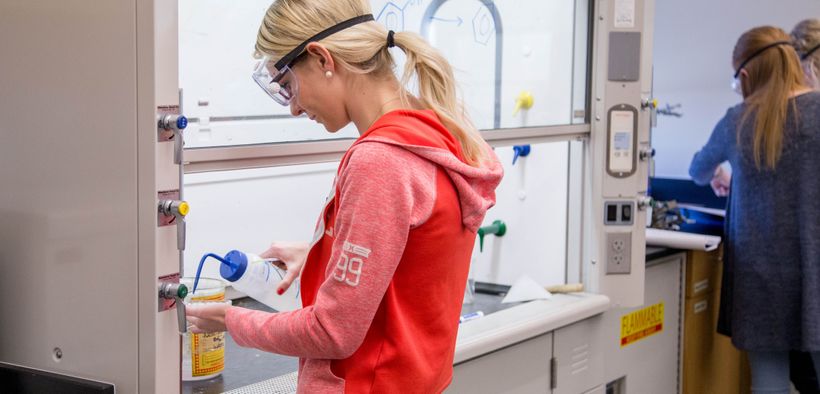
Even with a higher priority placed on science, technology, engineering, and math (STEM) throughout education in the US, only a fraction of girls are likely to pursue a STEM career. According to the National Center for Education Statistics, while more than 57 percent of college undergraduates are women, only 18 percent progress into STEM careers. With a clear gap, Microsoft set out to better understand what causes girls and women to lose interest in STEM subjects and careers, as well as what strategies have the greatest potential to reverse the trend. According to Microsoft, the goal of the study “was to inform our work in this area and to share learnings with schools, government leaders, nonprofits, employers and others. What we learned is that conditions and context can make a significant difference to girls, young women and their interest in STEM. And the solution doesn’t necessarily require a curricula overhaul.” Dr. Shalini Kesar, Associate Professor of Information Systems at Southern Utah University and advocate for women in technology, has known for years that girls and young women are a critical missing part of STEM studies and careers. “The stubborn gender disparity in STEM fields has sparked important debates on the underlying reasons,” said Kesar. “Some attribute the gender disparity to social and infrastructural factors, lack of mentors and role models, and lack of awareness about what these fields offer in terms of educational and career opportunities. Others point to studies that indicate traditional mindsets of computing as ‘boring’ and ‘only for boys’ as a major reason why girls and young women do not consider a degree or career in this field.” The study found that “we may be able to make significant strides just by showing girls and young women how STEM knowledge is applicable outside of the classroom, and how it can power their aspirations to make the world a better place.” “Recently, I was invited to collaborate with Microsoft on research which quantifies many of my observations from over 20 years of working to reduce the gender gap in STEM and computing,” said Kesar. “This work is an essential step forward in helping us learn more about how girls and young women currently perceive STEM.” Dr. Kesar was recently recognized by the Women Tech Council, receiving the Education Excellence Award at the 2016 Women Tech Awards. She is familiar with the media and available for an interview. Simply visit her profile.

