Experts Matter. Find Yours.
Connect for media, speaking, professional opportunities & more.
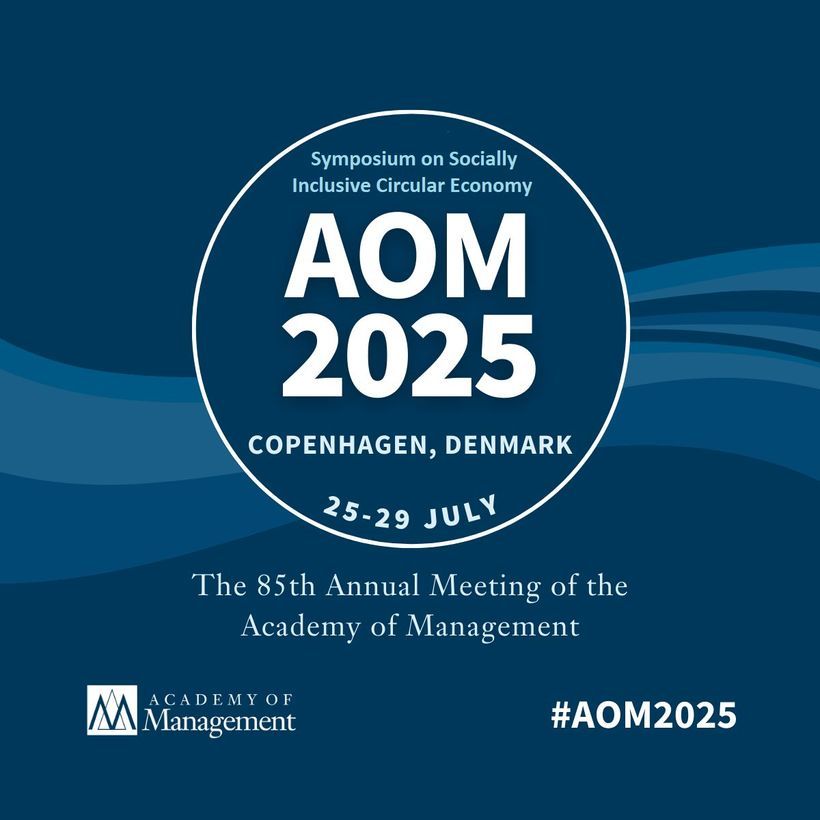
When it comes to transforming how organisations produce, consume, and reuse resources, Dr Luciano Batista, professor of operations management at Aston University, is a global pioneer. His research sits at the crossroads of innovation, digital transformation, and sustainability, tackling one of humanity’s most pressing challenges: our overconsumption of the planet’s resources. Reimagining the economy around renewal Dr Batista’s work focuses on circular supply chains —a model he helped establish at a time when 'closed-loop' systems dominated sustainability thinking. His early research laid the foundation for how businesses could move beyond recycling and linear take-make-dispose models, instead designing systems that reuse, restore, and regenerate. View his profile here From theoretical frameworks to real-world applications, his studies—such as comparative analyses of circular systems implemented by Tetra Pak in China and Brazil—demonstrate the measurable economic and environmental benefits of circularity in action. His 2022 Emerald Literati Award-winning paper introduced a methodology for mapping sustainable alternatives in food supply chains, earning international recognition for its real-world impact. A global voice for industrial symbiosis and circular innovation The influence of Dr Batista’s work reaches far beyond academia. He has advised the European Commission’s Circular Cities and Regions Initiative (CCRI) and contributed insights to policymakers through the UK All-Party Parliamentary Manufacturing Group. His expertise continues to inform national and regional strategies for sustainable production and industrial symbiosis —where one company’s waste becomes another’s resource. Today, he extends that impact globally as a visiting professor at the Massachusetts Institute of Technology (MIT), conducting research at the MIT Center for Transportation & Logistics on circular supply chain innovations, supported by Aston University’s study-leave programme. He also mentors future leaders in sustainability as part of Cambridge University’s Institute for Sustainability Leadership (CISL). Driving the next wave of sustainable transformation Looking ahead, Dr Batista is spearheading collaborations through Aston’s Centre for Circular Economy & Advanced Sustainability (CEAS), working with the Energy & Bioproducts Research Institute (EBRI) and West Midlands Combined Authority (WMCA) on projects developing biochar-based clean energy systems for urban districts. He is also advancing the social dimension of the circular economy—ensuring that the move toward sustainable production is inclusive and equitable. His Symposium on the Socially Inclusive Circular Economy, held at the 2025 Academy of Management Conference, has sparked new international research partnerships with Monash University (Australia) and the Vienna University of Economics and Business. A vision for a regenerative future At the heart of Dr Batista’s work is a simple but urgent truth: humanity is consuming resources at a rate our planet cannot sustain. Through his research and global collaborations, he is helping organisations, policymakers, and communities move toward a future where growth and sustainability coexist. “The transition to a circular economy is not optional—it is essential,” says Dr Batista. “Our goal must be to redesign systems that allow people, businesses, and ecosystems to thrive together.”



Worked Through Thanksgiving? That’s a Burnout Red Flag, Not a Badge of Honor
If your Thanksgiving weekend included answering work emails from a guest room, sneaking Slack replies between courses, or “just finishing one thing” while your family watched a movie, you’re not alone. But Craig Selinger, an executive function coach who works with high achievers, says it’s a warning sign, not proof of commitment. “More and more of my clients tell me they ‘took time off’ - but then admit they were checking in on everything from their phones,” Selinger says. “They come back to work exhausted, frustrated with their families, and confused about why they don’t feel refreshed.” He doesn’t see this as a time-management failure. He sees it as a boundary failure fueled by an always-on culture. “Old technology stayed in one place,” he explains. “A desktop in a home office was easy to walk away from. Now, work follows you onto the couch, into your in-laws’ living room, and onto the plane ride home. Unless you deliberately decide when you’re not available, the default is ‘always working, never actually off.’” After holidays like Thanksgiving, Selinger helps clients reflect on a few key questions: Did you actually have any fully work-free hours or days? Did your phone stay with you during meals and family time - and did you feel pulled to check it? Do you feel like you rested, or like you just changed locations while staying on call? “If the honest answers are uncomfortable, that’s valuable data,” he says. “It means your relationship with availability needs attention.” Instead of telling high performers to “just unplug,” Selinger works with them to redesign their availability ahead of the next holiday crunch: Setting clear out-of-office messages that specify when they’ll be offline and when they’ll check in. Agreeing with their team on what counts as a true emergency and which channel should be used for it. Creating short, non-negotiable deep-rest windows - for example, no work apps from 5-9 p.m. on certain days, or one weekend day that’s completely work-free. “When people see that they can set smart boundaries and still be respected and effective, that’s usually the turning point,” Selinger says. “They stop confusing constant responsiveness with real value.” With December’s year-end push approaching, he believes now is the time for high performers to recalibrate. “Treat this past Thanksgiving as a test run,” he suggests. “If you didn’t get the rest you needed, don’t just shrug it off. Use it as the moment you decide to draw a clearer line before the next holiday - for your performance and for the people who actually sat across the table from you.” About the Expert Craig Selinger is an executive function coach who works with founders, executives, families, and high-achieving students. He specializes in digital distraction, productivity, and helping people build realistic boundaries in an always-on work culture. Craig is part of the Executive Function Coaching Community at Offline.now

U.S. News: AI Can’t Replace Therapists – But It Can Help Them
For a young adult who is lonely or just needs someone to talk to, an artificial intelligence chatbot can feel like a nonjudgmental best friend, offering encouragement before an interview or consolation after a breakup. AI’s advice seems sincere, thoughtful and even empathic – in short, very human. But when a vulnerable person alludes to thoughts of suicide, AI is not the answer. Not by itself, at least. Recent stories have documented the heartbreak of people dying by suicide after seeking help from chatbots rather than fellow humans. In this way, the ethos of the digital world – sometimes characterized as “move fast and break things” – clashes with the health practitioners’ oath to “first, do no harm.” When humans are being harmed, things must change. As a researcher and licensed therapist with a background in computer science, I am interested in the intersection between technology and mental health, and I understand the technological foundations of AI. When I directed a counseling clinic, I sat with people in their most vulnerable moments. These experiences prompt me to consider the rise of therapy chatbots through both a technical and clinical lens. AI, no matter how advanced, lacks the morality, responsibility and duty of care that humans carry. When someone has suicidal thoughts, they need human professionals to help. With years of training before we are licensed, we have specific ethical protocols to follow when a person reveals thoughts of suicide. Read the full article here:



Expanding Comprehensive Cancer Services to Middletown, Delaware
ChristianaCare’s Helen F. Graham Cancer Center & Research Institute is expanding access to high-quality, comprehensive cancer care for residents in Middletown and nearby communities. These services will be offered at the new Middletown Health Center, now under construction and expected to open in May 2027. “Our vision is to expand and grow our services throughout the region so that more patients can access high-quality cancer care close to home,” said Thomas Schwaab, M.D., Ph.D., Bank of America Endowed Medical Director of the Helen F. Graham Cancer Center & Research Institute. “By bringing our full cancer-care team and advanced technology to Middletown, we can provide highly precise, coordinated treatment while maintaining the same high standard of care our patients expect.” The cancer care services offered at the Middletown Health Center will reflect the same high-quality, comprehensive care provided at ChristianaCare’s Helen F. Graham Cancer Center & Research Institute in Newark. Patients will have access to specialists across all major cancer types, supported by the Graham Cancer Center’s participation in the National Cancer Institute Community Oncology Research Program (NCORP), which brings advanced treatments and clinical trials directly to the community. In Middletown, this means coordinated multidisciplinary treatment planning, advanced radiation therapy, infusion services, consultations with oncologists and surgeons, nurse navigation, supportive care, clinical trial participation and both in-person and virtual visit options. Advanced Technology Enhances Precision and Comfort When services open in Middletown, patients will have access to advanced radiation therapy using the Varian TrueBeam linear accelerator, one of the most sophisticated radiation therapy systems available. TrueBeam delivers highly precise, image-guided treatments for a wide range of cancers, allowing physicians to target tumors more accurately while minimizing radiation to healthy tissue. “The TrueBeam system represents a major step forward in how we deliver radiation therapy,” said Adam Raben, M.D., chair of Radiation Oncology at ChristianaCare. “Treatments that once took 30 minutes can now be completed in just a few minutes, with real-time imaging ensuring precision. This means better tumor control, fewer side effects and a more comfortable experience for patients.” A Growing Community with Expanding Health Care Needs Middletown is one of Delaware’s fastest-growing communities, with its population projected to rise 8% by 2029, nearly twice the statewide rate, according to the US Census Bureau. Since 1990, the town’s population has grown more than 550%, and the number of residents age 65 and older has increased 24% since 2020, driving demand for accessible, high-quality health care. With continued growth and an aging population, cancer service demand in Middletown is expected to increase by 11% over the next decade, according to health care forecasts from Sg2, a Vizient company, underscoring the need for expanded local care options. Expanding Access to Meet Future Cancer Care Demand By expanding services in Middletown, ChristianaCare is responding to both the region’s population growth and the increasing need for cancer care. The new site will help patients receive timely diagnosis and treatment while reducing travel time and improving coordination with the full Graham Cancer Center team. “As our community grows, so too does the need for locally accessible, state-of-the-art cancer services,” said Schwaab. “This expansion represents a pivotal investment in the health of the Middletown—Odessa—Townsend corridor and beyond.” $92 Million Investment in Middletown’s Health The $92.3 million Middletown Health Center reflects a deep investment in the health and vitality of the state. It is part of ChristianaCare’s larger plan, announced in July 2025, to invest more than $865 million in Delaware over the next three years. In addition to cancer care, the Middletown Health Center will offer a full range of services, including primary and specialty care, women’s health, behavioral health, cardiovascular care, pediatrics, neurology, imaging, diagnostics and lab testing. The center’s healing environment will also include walking trails and abundant natural light, making high-quality, convenient and coordinated care more accessible and welcoming for patients and families. The 87,000-square-foot Health Center will be located at 621 Middletown Odessa Road, next to ChristianaCare’s existing freestanding emergency department.


Detecting Fraud Using Emerging Technology: Innovating Beyond Traditional Controls
Fraud and financial crime are evolving at a pace that challenges even the most established detection systems. From cyber-enabled schemes and complex financial misappropriations to subtle internal manipulations, traditional audit and compliance methods are often too slow or too narrow to keep up. In a world where billions of data points can hide a single irregularity, the investigative advantage now lies in speed, intelligence, and technological adaptability. J.S. Held’s Ken Feinstein recently authored an article exploring how artificial intelligence, machine learning, and advanced data analytics tools are transforming how organizations uncover and prevent fraud. In his piece, “Detecting Fraud Using Emerging Technology: Don’t Be Afraid to Innovate,” Feinstein illustrates how the integration of digital investigation techniques — from automation to predictive analytics — is reshaping the fraud-detection landscape, helping companies not just react to wrongdoing but anticipate and deter it. Ken Feinstein specializes in investigative data analytics and has over 25 years of experience. He provides data analytics solutions spanning multiple sectors, including retail and consumer products, life sciences, technology, financial services, and industrial products. His clients include law firms and Fortune 500 legal and compliance teams for whom he delivers large-scale, complex investigations, regulatory response matters, proactive anti‐fraud efforts, and compliance programs. View his profile here Why This Matters As fraudsters exploit digital tools and globalized networks, detection efforts must evolve in kind. Regulators expect faster, data-driven investigations, and boards demand real-time risk visibility. Those who innovate with AI-enabled detection and forensic analytics are better positioned to protect assets, reputation, and shareholder trust. Looking to know more? Connect with Ken Feinstein today by clicking on his icon below.


Black Friday 2025: Earlier, Bigger and More Digital Than Ever
Black Friday is no longer just a day – it’s becoming an entire season. In 2025, shoppers are starting earlier, spending more and relying heavily on technology to find the best deals. With online shopping now the dominant force, an estimated 71% of consumers plan to browse and buy from their screens rather than stand in long lines. Baylor University consumer behavior expert James A. Roberts, Ph.D., said this year’s sales stretch well beyond Thanksgiving weekend. Top 5 Black Friday Trends from Dr. James A. Roberts Retailers have pushed promotions into early November – and in some cases, late October – creating what many now call “Black November.” And for the true procrastinators, “Desperate in December” is the new reality, with next-day delivery extending holiday shopping right up to the last minute. Even as shoppers plan to spend up to 10% more, they’re extremely price sensitive, Roberts said. Inflation, rising living costs and ongoing economic uncertainty – including concerns over tariffs – are prompting consumers to hunt for deeper discounts and compare prices more closely than ever. That caution is also fueling another trend: increased use of buy-now-pay-later plans. While convenient, Roberts urges shoppers to approach them carefully to avoid overspending. Technology also is accelerating the shift. AI tools and retail chatbots are helping customers track deals and make purchases, while influencers and social media ads continue to shape buying habits. Cost-conscious platforms like Temu and Shein are poised for another strong season. Clothing, electronics and home goods remain top categories, Roberts said, with gift cards still the go-to for last-minute buyers. Walmart, Target and Kohl’s are expected to be the most popular in-store destinations, while Amazon – unsurprisingly – continues to dominate Cyber Monday. Overall spending remains robust. Shoppers are expected to spend roughly $20 billion across online and in-store purchases, split almost evenly between the two. The best bargains will be toys discounted about 25 percent, phones and computers discounted around 30 percent and TVs discounted an average of 23 percent. The typical shopper will spend about $650 this holiday weekend. How to navigate the shopping frenzy Roberts offers some simple advice for navigating the frenzy: Set a budget, stick to it, choose thoughtful gifts and keep the season in perspective. After all, the most meaningful gifts are the ones that show how well you know the people you love. ABOUT JAMES A. ROBERTS, PH.D. James A. Roberts, Ph.D., is The Ben H. Williams Professor of Marketing at Baylor University’s Hankamer School of Business. A noted consumer behavior expert, he is among the Top 2% Most-Cited Researchers in a database compiled by Stanford University. In addition to journal citations, Roberts has often been called upon by national media outlets for his consumer expertise and latest research. He has appeared on the CBS Early Show, ABC World News Tonight, ABC Good Morning America, NBC’s TODAY Show and NPR’s Morning Edition, as well as in articles in The New York Times, USA TODAY, The Wall Street Journal, TIME and many others. Roberts’ research has focused on how individual consumer attitudes and behavior impact personal and collective well-being, including investigating the factors that drive ecologically and socially conscious consumer behavior, the impact of materialism and compulsive buying on well-being and the effect of smartphone and social media use on personal well-being. He is the author of “Shiny Objects: Why We Spend Money We Don’t Have in Search of Happiness We Can’t Buy” and “Too Much of a Good Thing: Are You Addicted to Your Smartphone?”


ChristianaCare Launches Organoid Core to Personalize Cancer Treatment
ChristianaCare’s Cawley Center for Translational Cancer Research has unveiled a first-of-its-kind organoid core in a community cancer center program. The new laboratory facility within the Helen F. Graham Cancer Center & Research Institute grows and tests living, patient-derived tumor models, giving doctors and researchers a faster, more precise way to identify the therapies most likely to work for each patient. This innovation could change how cancer is treated in Delaware and serve as a model for community centers nationwide. There are only a handful of organoid core centers, or “tumor-on-a-chip” programs, in the United States, and ChristianaCare’s is the first within a community cancer center setting. What the Organoid Core Does Tumor organoids are tiny, three-dimensional cultures grown from a patient’s tumor tissue. They preserve the genetic and molecular traits of the original tumor, making them far more accurate than traditional cell lines. “These mini-tumors enable researchers to screen drugs faster, identify new biomarkers and discover which treatments are most likely to work for each patient,” said Thomas Schwaab, M.D., Ph.D., Bank of America Endowed Medical Director of ChristianaCare’s Helen F. Graham Cancer Center and Research Institute. “This core is a bridge between the lab and the clinic. By growing living tumor models from cells of individual patients, we can test real-world drug responses and tailor treatments for them in ways that were not possible before.” How It Advances Patient Care The organoid core strengthens the Cawley Center's research capabilities by enabling drug screening and biomarker discovery. It will bank organoids representing the wide variety of tumors seen in the community, giving scientists a realistic system for testing therapies. ChristianaCare treats more than 70 percent of cancer patients in Delaware, giving researchers unique access to treatment-naïve samples. These are tumor tissues that have not yet been exposed to chemotherapy or other therapies. Studying them provides a more accurate picture of how cancer behaves naturally and how it might respond to new treatments. Bringing a new cancer drug to patients is expensive and risky. Estimates show it can cost $1.3 to $2.8 billion, with up to a third spent on preclinical development, and only about one in 10 compounds ever reach human trials. Traditional mouse models often fail to fully mimic human tumors, making early testing less reliable. By using organoid screening, the Cawley Center can test therapies more accurately, reduce costs and failure rates and move promising treatments into clinical trials faster. Combined with existing tissue collection programs, clinical trial infrastructure and community partnerships, these resources create a direct pathway to bring lab discoveries to patients faster. Turning Point in Translational Research “Our goal is to shorten the distance between discovery and treatment,” said Nicholas J. Petrelli, M.D., director of the Cawley Center. “Too many promising drugs fail because early models do not capture the complexity of real tumors. The organoid core helps solve that problem. We can now test therapies in models that reflect the patients we actually serve.” “This is a turning point for translational research in community health,” said Jennifer Sims Mourtada, Ph.D., associate director at the Cawley Center. “Organoid technology lets us study cancer in a way that feels personal. We are not just looking at data points. We are studying living models of a patient’s tumor, which can reveal how that person’s cancer might behave or respond to treatment. This approach brings science closer to the people it is meant to help.” Looking Ahead In the coming months, the organoid core will focus on building a diverse biobank of tumors common in Delaware. Plans include collaborations with academic institutions, shared access for external researchers, and development of immune-tumor co-culture models. By combining advanced technology, strong community partnerships and direct patient access, ChristianaCare and the Cawley Center are showing how translational cancer research can thrive in a community setting, making breakthroughs not only in the lab but also in patients’ lives.

RPI Hosts Launch Event for New Center for Smart Convergent Manufacturing Systems
Rensselaer Polytechnic Institute (RPI) officially cut the ribbon on its new Center for Smart Convergent Manufacturing Systems (CSCMS) during an all-day launch event on October 23, 2025. A New York State Center for Advanced Technology, CSCMS will redefine the very nature of manufacturing by combining robotics, artificial intelligence, advanced processing, and human ingenuity to create systems that think, adapt, and evolve alongside human operators. “Today we mark the official opening of a center with a bold vision: a future where manufacturing systems are not simply automated, but truly intelligent,” said RPI President Martin A. Schmidt ’81 during the ribbon cutting. CSCMS will bring a wealth of opportunities not only to RPI, but across New York State. The new center will serve as a catalyst for economic growth, empowering innovators, driving new technologies, and strengthening the competitiveness of manufacturers. At RPI, students will gain hands-on experience in labs, real-world projects, and entrepreneurial pathways. Faculty and industry partners will gain the resources to translate cutting-edge research into commercial solutions. “Through simulation, prototyping, and translational research, our faculty and students will work side by side with industry and government to accelerate the development and deployment of smart manufacturing solutions,” said President Schmidt. “This is the RPI model at its very best: turning ideas into impact.” The launch event for CSCMS took place on RPI’s campus and featured keynote remarks, a ribbon cutting, industry panel, poster sessions, lab tours, and demonstrations of robotic manufacturing, human-machine collaboration, smart manufacturing testbeds, intelligent production systems, and data visualization spaces. Industry panel speakers included executives from FuzeHub, Ross Precision Manufacturing, GE Aerospace Research, and The Boeing Company. Interactive student poster sessions covered topics such as robotics, AI, advanced manufacturing, and New York’s future at the convergence of these topics. “The launch of CSCMS comes at a pivotal time for manufacturing,” said Johnson Samuel, Ph.D., director of CSCMS. “Across industries, we are seeing the convergence of AI, robotics, and data-driven design transforming how products are made. RPI’s long-standing strengths in engineering, computing, and innovation make it the perfect home for this next-generation center.” “The energy and collaboration we saw during this event are a reflection of the momentum behind the entire CSCMS initiative,” said Sandipan Mishra, Ph.D., associate director of CSCMS. “This launch is the start of a sustained effort to shape the future of intelligent manufacturing in New York and beyond.” "It's exciting that as students, we get to work with these cutting-edge technologies up close and be a part of something that’s pushing manufacturing forward,” said RPI graduate student Ammar Barbee ‘25, who recently completed his bachelor’s degree in mechanical engineering at RPI. “Perusing this kind of research and having access to such advanced equipment enables unique experiences that will really help accelerate our careers.” With the launch of CSCMS, RPI continues to advance its legacy of innovation and partnership, bringing together academia, industry, and government to drive progress in intelligent manufacturing and strengthen New York’s position as a hub for technological excellence.


In a major step forward for cancer care, researchers at ChristianaCare’s Gene Editing Institute have shown that disabling the NRF2 gene with CRISPR technology can reverse chemotherapy resistance in lung cancer. The approach restores drug sensitivity and slows tumor growth. The findings were published Nov. 13, 2025 in the online edition of Molecular Therapy Oncology. This breakthrough stems from more than a decade of research by the Gene Editing Institute into the NRF2 gene, a known driver of treatment resistance. The results were consistent across multiple in vitro studies using human lung cancer cell lines and in vivo animal models. “We’ve seen compelling evidence at every stage of research,” said Kelly Banas, Ph.D., lead author of the study and associate director of research at the Gene Editing Institute. “It’s a strong foundation for taking the next step toward clinical trials.” Potential Beyond Lung Cancer The study focused on lung squamous cell carcinoma, an aggressive and common form of non-small cell lung cancer (NSCLC) that accounts for 20% to 30% of all lung cancer cases, according to the American Cancer Society. It’s estimated that over 190,000 people in the U.S. will be diagnosed in 2025. While the research centered on this cancer type, the implications are broader. Overactive NRF2 contributes to chemotherapy resistance in several solid tumors, including liver, esophageal and head and neck cancers. The results suggest a CRISPR-based strategy targeting NRF2 could help resensitize a wide range of treatment-resistant tumors to standard chemotherapy. “This is a significant step toward overcoming one of the biggest challenges in cancer therapy — drug resistance,” Banas said. “By targeting a key transcription factor that drives resistance, we’ve shown that gene editing can re-sensitize tumors to standard treatment. We’re hopeful that in clinical trials and beyond, this is what will allow chemotherapy to improve outcomes for patients and could enable them to remain healthier during the entirety of their treatment regimen.” Targeting a Master Switch for Resistance The research zeroed in on a tumor-specific mutation, R34G, in the NRF2 gene, which acts as a master regulator of cellular stress responses. When overactive, NRF2 helps cancer cells withstand chemotherapy. Using CRISPR/Cas9, the team engineered lung cancer cells with the R34G mutation and successfully knocked out NRF2. This restored sensitivity to chemotherapy drugs such as carboplatin and paclitaxel. In animal models, tumors directly treated with CRISPR to knockout NRF2 grew more slowly and responded better to treatment. “This work brings transformational change to how we think about treating resistant cancers,” said Eric Kmiec, Ph.D., senior author of the study and executive director of the Gene Editing Institute. “Instead of developing entirely new drugs, we are using gene editing to make existing ones effective again.” Editing Reaches Threshold Levels One of the most promising discoveries was that disrupting NRF2 in just 20% to 40% of tumor cells, was enough to improve the response to chemotherapy and shrink tumors. This insight is particularly relevant for clinical use, where editing every cancer cell may not be feasible. To test therapy in mice, the researchers used lipid nanoparticles (LNPs), a non-viral method with high efficiency and low risk of unintended, off-target effects. Sequencing confirmed that the edits were highly specific to the mutated NRF2 gene, with minimal unintended changes elsewhere in the genome. “The power of this CRISPR therapy lies in its precision. It’s like an arrow that hits only the bullseye,” said Banas. “This level of specificity with minimal unanticipated genomic side effects offers real hope for the cancer patients who could one day receive this treatment.”


Do the math: We’re awake roughly 16 hours a day. We spend 10 of those hours staring at screens – phones, tablets, computers, TV, gaming devices. That’s 63% of our waking life. The first platform dedicated entirely to digital balance launching today reveals something even more startling: It's not that we lack willpower to change our behavior. It's that we lack confidence. New proprietary research from Offline.now shows that 8 in 10 people are ready to change their relationship with technology, but more than half are so overwhelmed with their digital habits, they don’t know where to start. “If you don’t learn how to manage the screens in your life, they will manage you,” says Eli Singer, Founder of Offline.now and author of Offline.now: A Practical Guide to Healthy Digital Balance. “When people tell us they feel overwhelmed, it’s not laziness. It’s a crisis of confidence. And confidence is something that can be built.” Digital Wellness Experts Address the Struggles No One Else Will These insights come from digital wellness experts in the Offline.now Digital Wellness Directory – a growing community of licensed professionals across North America specializing in ADHD, relationships, family dynamics, high-achievers, and sustainable behavior change. They’re not offering generic advice. They’re addressing specific digital struggles that define contemporary life. Psychotherapist Harshi Sritharan, who specializes in modern anxiety and ADHD, explains: “The biggest mistake people make is reaching for their phone or turning on their computer first thing in the morning. It injects your dopamine full of uncertainty. You’ve essentially told your brain the most important thing you have to do today is put out fires. I tell clients to delay that first scroll as long as possible and never hit ‘snooze’. You’re fragmenting your REM sleep and making yourself more exhausted. These aren’t willpower issues; they’re about understanding how blue light disrupts your circadian rhythm, especially for those with ADHD who already struggle with sleep regulation.” According to Sritharan, the breakthrough happens when people understand the dopamine cycles driving their dependence and “reframe how they connect with all their screens, whether it’s their phone, gaming console, or streaming TV.” High Achievers Can’t Unplug. The ‘Always-On’ Trap is Killing Productivity, Not Boosting It “A lot of high performers think they need better time management,” says Executive Function Coach, Craig Selinger. “But what they actually need are boundaries. They’ve built empires by being available 24/7, and their phones have become permission slips to say yes to everything.” The difference between old and new technology matters,” he explains. “Back in the day with TV, there was a clear demarcation of beginning and end, right? The episode ends and you move on. Now it’s like Minecraft or TikTok – there’s no ending. And mobility makes it sticky, because you’re physically carrying the drug with you, versus a TV that stayed in one room.” The breakthrough happens when they realize being unavailable on purpose isn’t a weakness. “Things like turning off notifications during deep work, or setting ‘do not disturb’ windows? Those aren’t luxuries. They’re the competitive advantages they’ve been missing.” Digital Dependency as a Third Party in a Relationship Licensed Marriage and Family Therapist Gaea Woods says digital devices are killing interpersonal relationships, not because tech is evil, but because “we use it unconsciously at the moments when connection matters most. When you’re scrolling at dinner, you’re telling your partner ‘my phone is more interesting and important than you’.” The breakthrough happens when couples set explicit agreements: response times, when devices go off-limits – and even what’s it’s OK with AI companions. “We’ve exited the era of meaningful communication without realizing it, and now we must deliberately rebuild it. Nature isn’t ‘Nice to Have’. It’s the Antidote to Screen Fatigue No One is Talking About After running a tech-free camp for 25 years, Personal Development Coach Mark Diamond says he’s seen what happens when kids get genuine face-to-face time interaction outdoors. “Their brains reset. The beauty and physical activity provide perspective that screens can never replicate. Digital dependency has eroded our ability to develop real human connections across all ages, not just teenagers. Screens should not replace the moments that define our wellbeing.” Why This Matters Now The stakes extend beyond personal frustration. Unchecked screen dependency is linked to rising rates of anxiety, deteriorating sleep quality, relationship breakdown, and what mental health experts call “continuous partial attention”, a state where we’re always connected, but never fully present. The Data Reveals When Change is Possible Beyond the confidence divide, Offline.now’s research uncovers the precise moments when users are most open to shifting their digital habits: Evenings from 6 pm-11:59 pm emerge as the “Go Time” window. 40% of self-assessment responders peak readiness to act. Sunday is “Reset Day, when 43% want to set boundaries for the week ahead. Saturdays offer natural opportunities for self-compassion and rest. Afternoons become the “Overwhelm Window”, with 57% feeling consumed by their screens. Critically, Fridays – despite having the highest overwhelm factor – are the worst time for interventions. Users are depleted and change rarely sticks. The Framework That Powers the Platform At the platform’s core is the Offline.now Matrix, a behavioral framework that maps the confidence and motivation levels of users to reveal their starting point: Overwhelmed, Ready, Stuck, or Unconcerned. Based on Singer’s book, Offline.now: A Practical Guide to Healthy Digital Balance, the approach replaces willpower-based advice with microlearning strategies – each taking 20 minutes or less – that track emotional triggers rather than just screen time totals. It offers 100 real-world alternatives to scrolling, from reorganizing a drawer to visiting a thrift shop, and reframes slip-ups as data, not disasters. “The books shows that lasting change doesn’t require deleting Instagram or TikTok tomorrow,” says Singer. “You need to win one personal victory today, and then another tomorrow. That’s how confidence rebuilds.” Propelled by University of Toronto’s Innovation Ecosystem Offline.now is a University of Toronto-affiliated startup, leveraging one of the world’s most powerful innovation networks. U of T is ranked among the top five university-managed business incubators globally and has helped create more than 1,500 venture-backed companies and secured more than CAD$14 billion in investment over the past decade. How Offline.now Works For individuals and families: Take the free self-assessment quiz using the Offline.now Matrix to map your motivation and confidence levels in under three minutes. Receive instant access to practical strategies, curated resources, and a searchable directory of digital wellness experts organized by specialty, location, and insurance coverage. For digital wellness professionals: Join a growing community of licensed mental health practitioners, certified behaviorial coaches, and registered social workers by creating your profile at Offline.now. The platform provides new client leads, professional development opportunities, and visibility in a rapidly expanding market. About Offline.now Offline.now is the first global platform dedicated entirely to achieving digital balance. Founder and author Eli Singer built one of North America’s first social media agencies before seeing technology shift from community-building to attention-harvesting. As a parent, he experienced firsthand the struggle to maintain digital balance. The platform combines proprietary behavioral research, expert guidance and counselling from licensed professionals, and science-backed strategies to help individuals and families build healthier relationships with their screens. Visit Offline.now at https://offline.now Expert Interview Availability Offline.now can arrange interviews with: Eli Singer, Founder – Vision for digital wellness; behavioral data insights Harshi Sritharan, Psychotherapist – Dopamine cycles, ADHD, anxiety and intentional tech use Craig Selinger, Executive Function Coach – Digital distraction in high achievers, family dynamics, ADHD Mark Diamond, Personal Development Coach – Outdoor wellness, sustainable behavior change, happiness, connection Gaea Woods, Licensed Marriage and Family Therapist – Communication, digital third-party relationships, phubbing Additional Resources Free self-assessment quiz - The Offline.now Matrix: https://offline.now/quiz Expert directory and booking: https://offline.now/experts/ Join the directory: https://offline.now/join/ Order Offline.now: A Practical Guide to Healthy Digital Balance: https://offline.now/book/