
Experts Matter. Find Yours.
Connect for media, speaking, professional opportunities & more.

School to provide increased access to preventative health services for young students so they can learn, grow and thrive To address health issues at the earliest and most preventable stages, provide whole child health, and advance health equity in the community, ChristianaCare opened a new school-based health center at Kuumba Academy Charter School in Wilmington on Friday, May 6th. The creation of the center, made possible through ChristianaCare’s partnership with the Community Education Building (CEB), which houses Kuumba Academy, means that students at the kindergarten-through-8th grade school will have increased access to an array of health services. “At ChristianaCare, we recognize the comprehensive health needs of adolescents in our community and are committed to partnering and using our resources wisely and effectively to expand our school-based health centers,” said Bettina Tweardy Riveros, J.D., chief health equity officer and senior vice president of Government Affairs and Community Engagement at ChristianaCare. “We know that childhood trauma adversely affects the ability of children to learn and build healthy relationships and it increases their risk of mental health issues and lifelong chronic disease. The opening of our school-based health center at Kuumba Academy means that ChristianaCare can support medical and behavioral health services and wraparound social care our children need, so we can positively influence their health, their education and their futures.” With the latest opening, ChristianaCare now operates 21 school-based health centers throughout the First State, in partnership with the Delaware Department of Health & Social Services, the Delaware Division of Public Health and several school districts. Kuumba Academy students, who spoke at an event Friday to celebrate the grand opening, will have access through its school-based health center to the following: Comprehensive behavioral health services. Crisis intervention and suicide prevention. Substance use disorder treatment. Tobacco cessation. Nutrition and weight management. Physical examinations. Health screenings. Treatment for minor illnesses and injuries. Reproductive health. In addition, Kuumba Academy students also will have access to resources that help their families surmount obstacles such as transportation, challenging appointment times, and worries about cost and confidentiality. “Kuumba Academy remains committed to meeting the needs of the whole child and family,” said Sally Maldonado, head of school at Kuumba Academy, the mission of which is to provide an innovative learning environment for the whole child from kindergarten through eighth grade. “The opening of this school-based health center means that our students and families will have daily access to the high-quality behavior and health services that they deserve, and we are grateful to ChristianaCare and CEB for their partnership. We are beginning to see ourselves on the other side of this pandemic and we are energized to emerge with these newfound partnerships focused on health and wellness for our village.” ChristianaCare has partnered with CEB and Kuumba Academy on community-focused health initiatives in the past. In February 2021, ChristianaCare provided more than 800 vaccinations to community members and staff at CEB. On February 7th of this year, ChristianaCare vaccinated 38 people, including 19 children, against COVID-19. This added to the more than 6,000 vaccinations that ChristianaCare Community Health has administered since 2021. “At CEB, we understand the importance that health plays on a child’s ability to learn and succeed,” said Linda Jennings, CEO at CEB. “We are beyond excited to partner with Kuumba and ChristianaCare to launch the Kuumba Academy School-Based Health Center at CEB and add to the list of holistic and integrated support we provide to students and their families.” Today’s event coincides with Better World Day, an annual, national event on the first Friday in May. During Better World Day, students showcase their learning about initiatives that they believe will have a positive impact on their community and the world. Through collaboration and acts of service, students learn the power of their voice to make change. About ChristianaCare Headquartered in Wilmington, Delaware, ChristianaCare is one of the country’s most dynamic health care organizations, centered on improving health outcomes, making high-quality care more accessible and lowering health care costs. ChristianaCare includes an extensive network of primary care and outpatient services, home health care, urgent care centers, three hospitals (1,299 beds), a freestanding emergency department, a Level I trauma center and a Level III neonatal intensive care unit, a comprehensive stroke center and regional centers of excellence in heart and vascular care, cancer care and women’s health. It also includes the pioneering Gene Editing Institute. ChristianaCare is nationally recognized as a great place to work, rated by Forbes as the 2nd best health system for diversity and inclusion, and the 29th best health system to work for in the United States, and by IDG Computerworld as one of the nation’s Best Places to Work in IT. ChristianaCare is rated by Healthgrades as one of America’s 50 Best Hospitals and continually ranked among the nation’s best by U.S. News & World Report, Newsweek and other national quality ratings. ChristianaCare is a nonprofit teaching health system with more than 260 residents and fellows. With its groundbreaking Center for Virtual Health and a focus on population health and value-based care, ChristianaCare is shaping the future of health care. About Kuumba Academy Charter School Kuumba Academy Charter School’s mission is to provide an innovative learning environment for the whole child from kindergarten through eighth grade. Our directors, staff, and families share the core belief that parents are children’s primary educators. KACS parents, in partnership with teachers and administrators, believe that every child can maximize his or her learning potential given the opportunity to do so. In response to the outcry from Wilmington parents looking for a high-quality public education and increased access to arts education for their children, Christina Cultural Arts Center leaders, parents, and community supporters took action and were granted a Department of Education charter to create Kuumba Academy Charter School (KACS) in 2001. KACS was the first school model in the state that partnered a public charter school with a nonprofit community organization. Christina Cultural Arts Center (CCAC) and KACS form a unique nonprofit/public school partnership committed to educational excellence. Through the innovative union of academics, arts, technology, and family engagement, each KACS student’s individual learning style is nurtured—resulting in creative learners who are agents of positive change in the community. The CCAC/KACS model is regarded by many as the single most significant achievement in Wilmington’s post public school desegregation history. About the Community Education Building (CEB) CEB was established in 2012 after Bank of America donated the former MBNA Bracebridge IV building to The Longwood Foundation. Living up to its commitment of increasing access to education, the Longwood Foundation created CEB as an independent entity, and transformed the space into an ecosystem to support the social, emotional, physical, and academic development of Wilmington’s youth. CEB is an innovative co-location and shared services model. Focused on supporting the entire family, CEB offers vibrant programs and support systems that provide a sound foundation for each student. It serves as a hub for families by offering services such as healthy meals, life coaches, and mental health services. This model leads to deeper family engagement in their child’s learning and allows schools to focus on teaching and learning, not operations and overhead. CEB is an educational ecosystem that holistically integrates programs and resources for students and their families, ensuring that every student has an equitable opportunity to succeed.



VANCOUVER IMAGING TO IMPLEMENT REALTIME MEDICAL AI
ORIGINALLY PUBLISHED IN CHT MAGAZINE VANCOUVER – Vancouver Imaging, a group of over 70 radiologists, has signed on to use RealTime Medical’s smart workload-balancing, physician skills development and error-avoidance platform. Vancouver Imaging, which provides reading services for hospital and out-of-hospital imaging centres, will implement the system in the first half of 2020 at its non-hospital clinics. Vancouver Imaging offers a wide variety of sub-specialty readings across all disciplines, including specialized expertise in emergency trauma radiology. The organization is the only group of radiologists in Canada offering around-the-clock, on-site, sub-specialty emergency reading services. “Emergency radiology is itself a sub-specialty and requires a unique set of skills,” said Dr. Savvas Nicolaou (pictured), the CEO of Vancouver Imaging and director of Emergency & Trauma Imaging at Vancouver General Hospital. “It’s unpredictable, with frequent interruptions. You often have to work with a limited amount of information from clinicians, and it can include everything from head-to-toe, including mass casualty situations that require proactive decision-making.” He added, “You’re always on, and never off.” The Emergency & Trauma sub-specialty requires “appropriate, patient-centered judgement in a matter of seconds.” Vancouver Imaging will deploy RealTime Medical’s AICloudWorks and AICloudQA platforms within their clinics. Collectively, the offerings encompass several AI applications, including high throughput workload balancing. RealTime Medical holds the U.S. and Canadian patents for its workload balancing algorithms and is one of only two patent holders for diagnostic workload balancing, along with the U.S. company, Virtual Radiologic. The cases are assigned to the appropriate radiologists based on sub-specialty, current workload and other parameters, creating an intelligent, diagnostic operations platform that is “context-aware,” a term originally coined by RealTime Medical to describe the capabilities of the platform. For example, radiologists with expertise in neurology will be the first to receive neuro cases, while thoracic or pediatric experts will be the first to receive cases of that type. The system also “balances” the work, to ensure that radiologists are receiving equal caseloads, subject to the case-specific service levels and business parameters established by the group. “The AI additions to this proven platform make it even more advantageous for us as a group as we pursue the delivery of Emergency Radiology services globally,” said Dr. Nicolaou, a world-renowned expert in Emergency & Trauma radiology, often referred to as the Founder and Pioneer of Emergency/Trauma Radiology in Canada. Dr. Nicolaou noted that AICloudWorks is vendor-neutral and can work with any HL7 and DICOM-based HIS, RIS and PACS solutions. “PACS integration can be very problematic,” said Dr. Nicolaou. “Being vendor-neutral is important to our flexibility as a group.” Vendor neutrality is important to Vancouver Imaging as their current environment includes workflows across multiple PACS solutions. Download CHT Reprint of Full Article


Earlier this month, Georgia Southern University's Regina Rahimi, Ed.D., chatted with a journalist from Insight into Diversity to discuss the importance of trauma-informed education and how it is becoming a popular treatment for those dealing with the stress of COVID 19 and other sources of anxiety. "In recent years, a growing number of schools of education have begun focusing on trauma-informed teaching practices to help educators holistically address negative academic and social outcomes for students. Now, amid the COVID-19 pandemic, widespread racial injustice, and a host of other major stressors for U.S. youth, these concepts have become more popular, and important, than ever. “When the pandemic came, people really became concerned and interested in new traumas that were [affecting] students,” explains Regina Rahimi, Ed.D, a professor of education at Georgia Southern University. “Not only were students isolated, but if they were in an abusive household or they lived in a community where violence was prevalent, these things all became more pervasive in their lives, so that trauma was just further exacerbated.” March 16 - Insight into Diversity The full article is attached below. If you are a journalist looking to know more about trauma-informed education then let us help with your stories. Regina Rahimi is a professor in the Department of Middle Grades and Secondary Education at Georgia Southern University where her research is focused on issues of gender and sexuality in education and middle and high school drop-outs. She is available to speak with media about this important topic - simply click on her icon now to arrange an interview today.


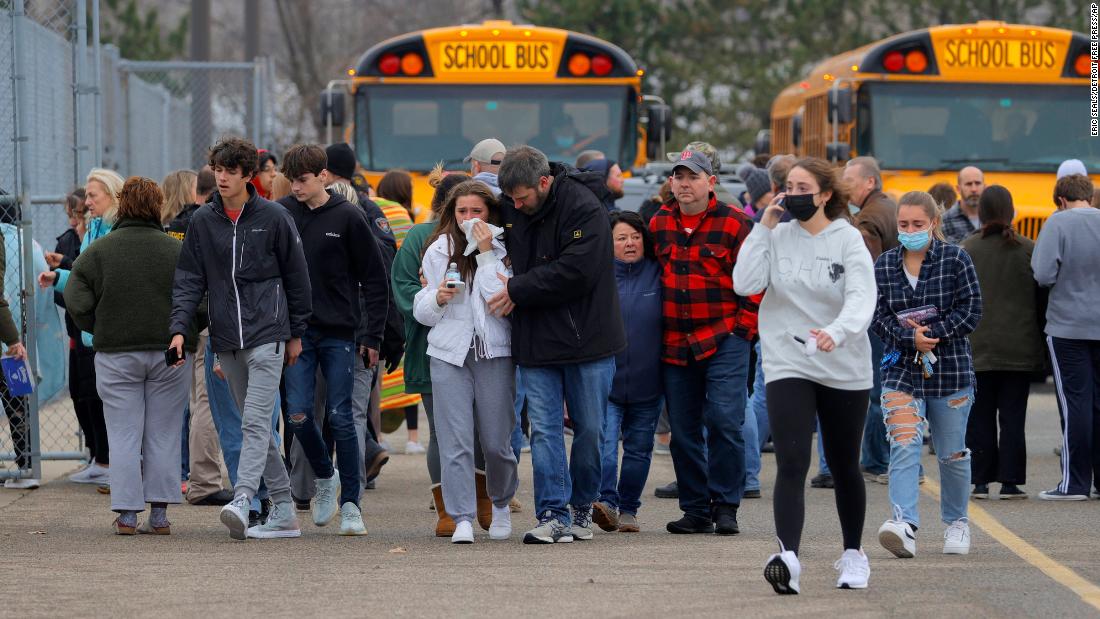
It was a tragic day in America this week as a 15-year-old is in custody after allegedly opening fire on a school in Oxford, Michigan, which left three teenagers dead and at least eight more wounded by the gunfire. Three students were killed in the attack at the school some 40 miles north of downtown Detroit -- Madisyn Baldwin, 17; Tate Myre, 16; and Hana St. Juliana, 14, authorities said. Myre died in a patrol car while a deputy was taking him to a hospital, Bouchard said. Eight others -- seven students and a teacher -- were shot, Bouchard said. Two were in critical condition Wednesday morning, he said. Among the wounded were a 14-year-old girl who was on a ventilator following surgery, Bouchard said Tuesday night. A 14-year-old boy also had a gunshot wound to the jaw and head, while the teacher who was shot had been discharged. The attack was the deadliest US school shooting since eight students and two teachers were slain in May 2018 at Texas' Santa Fe High School, according to Education Week. There have been 28 school shootings this year -- 20 since August 1 -- by its tally. December 01 - CNN Many are wondering how students, teachers, first responders and families grapple with incidents with this level of trauma and horror. If you are a reporter looking to cover the issues survivors of mass-shooting events might face, then let us help. Dr. Laura Wilson is a clinical psychologist whose expertise focuses on post-trauma functioning, particularly in survivors of sexual violence or mass trauma (e.g., terrorism, mass shootings, combat). Her research interests extend to predictors of violence and aggression, including psychophysiological and personality factors, as well as indicators of PTSD following mass trauma, long-term functioning among first responders, outcomes among survivors of sexual violence and the influence of media on mental illness stigma. Dr. Wilson is available to speak with media, simply click on her icon to arrange an interview today.



ChristianaCare Named a “Most Wired” Health Care Technology Leader for 6th Consecutive Year
ChristianaCare Recognized as one of the Nation’s Best in Both Ambulatory and Hospital Care (WILMINGTON, Del. – Oct. 29, 2021) For the sixth consecutive year, ChristianaCare has earned the “Most Wired” designation from the College of Healthcare Information Management Executives (CHIME), which assesses how effectively health care organizations apply core and advanced technologies to improve health and care in their communities. ChristianaCare was recognized with a Performance Excellence Award for Most Wired’s acute and ambulatory categories. That level is reserved only for organizations that are considered leaders in health care technology who “actively push the industry forward.” The recognition affirms that not only has ChristianaCare implemented advanced technologies, but it leverages those technologies in innovative ways. And it also has encouraged deep adoption of these technologies across the entire health system. “Throughout the COVID-19 pandemic, patients and providers have experienced the power of virtual care and the ability for data and technology to improve the health care experience,” said ChristianaCare President and CEO Janice E. Nevin, M.D., MPH. “At ChristianaCare, we believe now is the moment to transform our health care system to a new model of care that doesn’t stop between appointments—it’s continuous, data-driven and technology-enabled. We’re proud to be recognized as a leader in health care innovation, as we work to achieve better health at lower costs.” “We are driving digital into the core of our existing operations and simultaneously creating new digital product offerings,” said Randy Gaboriault, MS, MBA, chief digital and information officer at ChristianaCare. “The concept of the visit as the primary point of interaction between patient and doctor is obsolete. Our unique care foundation is continuous, digital and in the home, driving care with data and producing engagement actions between the visits. Our goal is for the care team, supported by artificial intelligence within the workflow, to determine the next best action for each patient.” The recognition is the latest accolade that highlights ChristianaCare’s success in creating exceptional experiences for its patients and consumers through personalized, proactive communication, which enables people to use the channels that they prefer in order to easily access care. This success was recently illustrated through ChristianaCare’s integration of clinical data with its new customer relationship management (CRM) system, which enabled ChristianaCare to scale and automate outreach to patients due for important preventive health checks. Through this effort and the new capabilities, ChristianaCare initiated patient and consumer outreach to address two common gaps in care – annual wellness checkups and breast cancer screenings. Continuous and automatic, the outreach within weeks resolved 11% of the gaps in annual wellness checkups, and 8% of the gaps in breast cancer screenings. “Success here stems from our commitment to continuously look for opportunities to innovate, from which we can more quickly and effectively partner with each individual on their path toward optimal health, even as we explore new ways to push the boundaries of how technology can further improve the health of our community,” said Lynne McCone, vice president of IT Application Services at ChristianaCare. The 2021 Digital Health Most Wired program assessed the adoption, integration and impact of technologies in health care organizations at all stages of development, from early development to industry-leading. Each participating organization received a customized benchmarking report, an overall score and scores for individual levels in eight segments: infrastructure; security; business/disaster recovery; administrative/supply chain; analytics/data management; interoperability/population health; patient engagement; and clinical quality/safety. Participants can use the report and scores to identify strengths and opportunities for improvement. Participants also received certification based on their overall performance. “Digital transformation in healthcare has accelerated to an unprecedented level since 2020, and the next few years will bring a wave of innovation that empowers healthcare consumers and will astound the industry,” said CHIME President and CEO Russell P. Branzell. “The Digital Health Most Wired program recognizes the outstanding digital leaders who have paved the way for this imminent revolution in healthcare. Their trailblazing commitment to rapid transformation has set an example for the entire industry in how to pursue a leadership vision with determination, brilliant planning and courage to overcome all challenges.” About ChristianaCare Headquartered in Wilmington, Delaware, ChristianaCare is one of the country’s most dynamic health care organizations, centered on improving health outcomes, making high-quality care more accessible and lowering health care costs. ChristianaCare includes an extensive network of primary care and outpatient services, home health care, urgent care centers, three hospitals (1,299 beds), a freestanding emergency department, a Level I trauma center and a Level III neonatal intensive care unit, a comprehensive stroke center and regional centers of excellence in heart and vascular care, cancer care and women’s health. It also includes the pioneering Gene Editing Institute. ChristianaCare is nationally recognized as a great place to work, rated by Forbes as the 5th best health system to work for in the United States and by IDG Computerworld as one of the nation’s Best Places to Work in IT. ChristianaCare is rated by HealthGrades as one of America’s 50 Best Hospitals and continually ranked among the nation’s best by Newsweek and other national quality ratings. ChristianaCare is a nonprofit teaching health system with more than 260 residents and fellows. With its groundbreaking Center for Virtual Health and a focus on population health and value-based care, ChristianaCare is shaping the future of health care.

ChristianaCare recognized by American Medical Association with 2021 Joy in Medicine distinction
ChristianaCare one of only 44 nationwide to receive the distinction; one of only five to receive the highest level – Gold Recognition (WILMINGTON, Del. – Oct. 7, 2021) ChristianaCare has been named a recipient of the American Medical Association’s Joy in MedicineTM Health System Recognition Program. The distinction recognizes health systems that demonstrate a commitment to preserving the wellbeing of health care team members by engaging in proven efforts to combat work-related stress and burnout. The American Medical Association awarded ChristianaCare a “Gold Recognition” – the highest level within the program. Only 44 health systems nationwide received the Joy in Medicine distinction, with only four other health systems along with ChristianaCare achieving the Gold Recognition. “When caregivers feel supported and fulfilled in their work, the quality of both their experience and their patient’s experience improves,” said Heather Farley, M.D., MHCDS, chief wellness officer and head of ChristianaCare’s Center for WorkLife Wellbeing. “That’s why, when the COVID-19 pandemic struck, we deepened our investment of resources to support our caregivers. While there’s still a long way to go, we are grateful to receive this recognition as it affirms our commitment to helping our caregivers foster meaning, connection and joy in work and in life.” ChristianaCare received the “Gold Recognition” for achieving six criteria: An organization-wide commitment to improving physician wellbeing. An assessment of the costs of physician burnout. Evidence-based interventions to reduce and eliminate burnout. Leadership commitment to address areas for improvement. Interventions to improve teamwork. Structured programs that actively engage doctors to cultivate community at work. These criteria align with ChristianaCare’s commitment to support its caregivers in alignment with the organization’s core values of love and excellence. ChristianaCare has implemented structured ways of working that encourages leaders to create environments where their workers feel safe asking questions and feel empowered to identify and solve problems. ChristianaCare also uses numerous surveys and assessments to track progress in improving the wellbeing and experience of caregivers. ChristianaCare’s Unique Center for WorkLife Wellbeing ChristianaCare established the Center for WorkLife Wellbeing in 2016 to develop support systems to enable clinicians to reconnect with the joy and meaning in medicine. “We recognized the growing problem of stress and burnout in health care, and we made a decision to tackle it head-on,” said Janice E. Nevin, M.D., MPH, ChristianaCare president and CEO. “The work of our psychologists, researchers, clinicians and peer supporters in the Center for WorkLife Wellbeing is built on the understanding that when we care for ourselves, we are better able to care for others, resulting in decreased medical errors and a better experience of care for everyone involved.” The Center soon expanded its mission to support all of ChristianaCare’s caregivers, including those who don’t work in clinical roles. The Center also has received national recognition for its expertise and leadership in the field of workplace wellbeing. Throughout the pandemic, the Center for WorkLife Wellbeing has proactively shared a variety of resources to support caregivers as they work to provide safe, effective care and reduce the spread of COVID-19. This includes: The Care for the Caregiver program, which provides confidential individual peer support and group support to caregivers when they experience stress related to patient care or the workplace. Peer supporters and organizational leaders receive training so they can provide psychological first aid to caregivers whom they recognize are struggling as well as connect them to helpful resources if needed. Emotional support through mindfulness resources and regular rounds where the Center’s experts can check on staff wellbeing. OASIS Rooms, which are quiet sanctuaries inside the hospital where caregivers can go to take a break, de-stress, meditate or enjoy a chair massage. 24/7 mental health services and programs to help caregivers maintain healthy habits including proper exercise, sleep and nutrition. Fitness centers that are free for all caregivers to use and provide easy access to exercise and fitness programs. “I always use the analogy, you can’t take the canary out of the coal mine and teach it to be more resilient and then put it back in the same coal mine and expect it to survive,” Dr. Farley said. “You actually have to change the coal mine – the environment surrounding our caregivers and clinicians. That’s what we’re doing in the Center for WorkLife Wellbeing.” Solutions to a National Problem A national study examining the experiences of physicians and other health care workers who worked in health systems during the COVID-19 pandemic found that 38% self-reported experiencing anxiety or depression, while 43% suffered from work overload and 49% had burnout. “The COVID-19 pandemic has placed extraordinary stress on physicians and other health care professionals,” said American Medical Association President Gerald E. Harmon, M.D. “While it is always important for health systems to focus on the wellbeing of care teams, the imperative is greater than ever as acute stress from combatting the COVID-19 pandemic has contributed to higher rates of work overload, anxiety and depression. The health systems we recognize today are true leaders in promoting an organizational response that makes a difference in the lives of the health care workforce.” Launched in 2019, the Joy in Medicine Health System Recognition Program is a component of the American Medical Association’s practice transformation efforts, an ambitious initiative to advance evidence-based solutions to address the physician burnout crisis. Candidates for the program were evaluated according to their documented efforts to reduce work-related burnout through system-level drivers. Scoring criteria were based on demonstrated competencies in commitment, assessment, leadership, efficiency of practice environment, teamwork and support. About ChristianaCare Headquartered in Wilmington, Delaware, ChristianaCare is one of the country’s most dynamic health care organizations, centered on improving health outcomes, making high-quality care more accessible and lowering health care costs. ChristianaCare includes an extensive network of primary care and outpatient services, home health care, urgent care centers, three hospitals (1,299 beds), a freestanding emergency department, a Level I trauma center and a Level III neonatal intensive care unit, a comprehensive stroke center and regional centers of excellence in heart and vascular care, cancer care and women’s health. It also includes the pioneering Gene Editing Institute. ChristianaCare is nationally recognized as a great place to work, rated by Forbes as the 5th best health system to work for in the United States and by IDG Computerworld as one of the nation’s Best Places to Work in IT. ChristianaCare is rated by HealthGrades as one of America’s 50 Best Hospitals and continually ranked among the nation’s best by Newsweek and other national quality ratings. ChristianaCare is a nonprofit teaching health system with more than 260 residents and fellows. With its groundbreaking Center for Virtual Health and a focus on population health and value-based care, ChristianaCare is shaping the future of health care. #####

It’s a topic that gets a lot of attention, people getting out of prison and returning to normal life. It’s a hard story to tell as there are so many challenges, obstacles to overcome and stigmas to break as those who have served their time and are looking to fit back into the life they used to know. Recently, Georgia Southern’s Maxine Bryant, Ph.D., was interviewed by the Savannah Morning News for "When is the debt paid? Formerly incarcerated individuals face challenges with re-entry." Here’s an excerpt: According to Rehabilitation Enables Dreams, or RED, a nonprofit restorative justice program based in Atlanta, Georgia, two out of three people released from prison in Georgia are rearrested within three years. Landing employment is only one of the issues formerly incarcerated people face in efforts to reintegrate into society. Finding shelter and earning an education are, in many cases, equally difficult, said Maxine Bryant, Ph.D., assistant professor in Georgia Southern University's Department of Criminal Justice and Criminology. “What I think is missing is addressing the trauma that many people find themselves behind bars have been subject to before going to prison,” Bryant said." October 04 - Savannah Morning News If you are a journalist and would like to learn more about this program or this topic – then let our experts help. Maxine Bryant’s research interests focus on factors contributing to the successful community reintegration of released prisons. Specifically, she has written and presented on transitional jobs for newly released prisoners, the role of the Black church in successful offender reintegration, the impact of unaddressed childhood trauma and barriers to successful offender reintegration. She is available to speak with media any time – simply click on her icon to arrange an interview today.

Media, gender and celebrity culture expert on Britney Spears news developments
Claire Sisco King, associate professor of communication studies, is available for commentary on the recent resurgence in media interest in Britney Spears's personal life, including the #FreeBritney movement and the pop star's recent engagement. Sisco King teaches about Spears in a celebrity culture class, as part of a discussion on gender and trauma as they relate to fame. She can discuss: Spears and the public’s emotional investments in the lives of celebrities The misogyny that often typifies celebrity culture Our culture’s general fascination with trauma



UCI scholars discuss how 9/11 changed America
In recognition of the 20th anniversary of the Sept. 11, 2001, terrorist attacks in the U.S., we asked UCI scholars a single question: How did 9/11 change America? They responded according to their expertise – which ranges from collective trauma, media, air travel, foreign relations, false narratives, political divisiveness, and the war on terror. Contact Tom Vasich at 949-285-6455, tmvasich@uci.edu, to arrange interviews. Roxane Cohen Silver, Distinguished Professor of psychological science, public health and medicine E. Alison Holman, professor of nursing Topic: Media and collective trauma Quote: “The Sept. 11 terrorist attacks – which hijacked our television screens that Tuesday morning as people who sought to do us harm hijacked four airplanes – captured people’s attention throughout the days and weeks that followed. It also ushered in 24/7 media attention to what has become known as a “collective trauma,” transmitting the horrible events of that day throughout the country and, indeed, throughout the world in a matter of seconds. …The 9/11 attacks were tragic for American residents, but they also taught us that the media can broadcast distress alongside the news it’s covering.” Jan K. Brueckner, Distinguished Professor of economics Topic: Air travel Quote: “In response to the revenue shock of 9/11 and to new competition from low-cost carriers, the major airlines behaved conservatively in adding back capacity as traffic returned, so that the carriers eventually offered fewer seats to an ultimately larger number of passengers, leading to fuller flights and today’s less comfortable flying experience. Even though 9/11 is long past, the airline industry continues to operate in a climate of fear of terrorism from the air.” Erin Lockwood, assistant professor of political science Topic: U.S. foreign policy Quote: “The attacks – and the U.S. response – set in motion decades of war, anti-Arab and anti-Islamic bias and violence, and a willingness to sacrifice military and civilian lives and civil liberties for the perception of security. As we mark the withdrawal of U.S. forces from Afghanistan this month, it’s all too apparent that many of those trends continue to reverberate today.” David Kaye, clinical professor of law Topic: National security Quote: “Despite my hopes for something better that might emerge, the attacks reinforced a cult of national security that the United States transformed into the torture of terrorism suspects, drone warfare, the invasion of Iraq, Guantanamo Bay’s indefinite detentions, anti-Muslim discrimination at home and the emergence of the contemporary surveillance state. … The predominance of national security as an ideology and apologia remains among the most significant legacies of that day, a feature of American political life that continues to constrain creativity and a return to normalcy in American law and policy.” Matthew Beckmann, associate professor of political science Topic: War on terror Quote: “To understand the legacy of 9/11 is to define the legacy of George W. Bush. For after the deadliest terrorist attacks on U.S. soil in our nation’s history, American citizens and lawmakers gave President Bush broad support and broader authority to wage the “war on terror” as he saw fit. … Twenty years after the attacks, having seen those lofty aspirations dashed in Afghanistan and Iraq, disregarded in Guantanamo Bay and black site prisons, and discounted even by our staunchest allies, the biggest legacy of Sept. 11 for the United States is that the “shining city on a hill” has less luster and a shorter reach.” David Theo Goldberg, professor of comparative literature Topic: Rise of false narratives Quote: “The events of 9/11 lent themselves to make-believe. The smoke hadn’t yet cleared when conspiracies began to abound, from “weapons of mass destruction” to “the deep state.” That the Trump administration adopted this as its own playbook while insisting on “draining the swamp” required cooking the rules. … Fabrication had become the rule book of the game. Invention and inventedness, disruption and innovation fueled the movement. The “truth” was, well, oh so yesterday.”


Covering Cosby? Connect with UMW psychological trauma expert Laura Wilson
It’s news that has everyone shocked. Bill Cosby is getting out of jail and will be a free man. Pennsylvania's Supreme Court vacated the sexual assault conviction of Bill Cosby on Wednesday and ordered his release from prison after finding that he was denied protection against self-incrimination. The court said that a prosecutor's decision not to charge Cosby, 83, opened the door for him to speak freely in a lawsuit against him — and that testimony was key in his conviction years later by another prosecutor. Cosby was convicted in 2018 of drugging and sexually assaulting a woman in 2004, and was serving a three- to 10-year sentence. He has served two years of the sentence. The state Supreme Court said Cosby cannot be retried on the same charges. June 30 – NBC News This is a story that will be dominating the news cycle for some time – and if you are a reporter covering this story, then let our expert help. University of Mary Washington Associate Professor of Psychological Science Laura C. Wilson has provided sought-after commentary to The Washington Post, NPR, Reuters, Huffington Post, NBC, The Atlantic and more on the psychological trauma experienced by survivors of rape and sexual assault, as well as mass shootings. Dr. Wilson is available to speak with media, simply click on her icon to arrange an interview today.