Experts Matter. Find Yours.
Connect for media, speaking, professional opportunities & more.

Adults need vaccines too? You bet. Find out why.
Back to school for kids also means time to get those immunizations up to date. But did you know that most adults, age 50 and older, may also need a few important vaccines as well? August is National Immunization Awareness Month, and what better time to check with your physician to see what vaccines may be appropriate for your age. “One of the most important immunizations for adults to have each year is the Influenza vaccine,” said Dr. Jose Vazquez, Chief of Infectious Diseases at Augusta University and AU Medical Center. “In elderly or older adults, in particular, the flu can turn deadly very quickly.” There was a was a high severity of the H3N2 influenza strain with record-breaking levels of influenza-like illness and hospitalization rates, according to the Centers for Disease Control and Prevention. “We hope to save more lives through appropriate and timely flu vaccinations,” Vazquez said. Furthermore, vaccines are necessary throughout our lives. Adults should keep their vaccinations up to date because immunity from childhood vaccines may wear off over the years. Other factors that can influence the need for different vaccines in adults include the individual’s underlying health conditions, career, lifestyle, and travel habits. Other important adult vaccines include Tdap (tetanus, diphtheria, and pertussis), pneumococcal (pneumonia prevention), and shingles. “Immunizations have proven to be very safe, and they are widely available. I recommend asking your primary care doctor about what vaccines you need to promote better health and prevent communicable diseases,” Vazquez said. To schedule an interview with Dr. Jose Vazquez, click on his expert profile. Source:



Mission to Mars – Pack Light on Materials and Heavy on Innovation
On Tuesday May 09, the Humans to Mars Summit kicks off in Washington D.C. This will be a meeting of some of the most powerful, brilliant, creative, scientific and corporate minds on earth. Together they are working on a way that someday soon we will visit Mars. Since 2010 this expanding group is realizing that exploring the red planet is within their grasp and possible during our lifetime. To get there, it will take innovations in science, technology and engineering like we have not seen in generations. Virginia Commonwealth University’s School of Engineering is part of a team that is making this trip a reality. The NASA-sponsored multidisciplinary Space Technology Research Institute (STRI) is working on new a composite material that makes use of engineered carbon nanotubes and will be much lighter—but much stronger—than what is currently available. Space craft need to exit and re-enter atmospheres. To do so, they need to be strong or the results are disastrous. Space travel and the concept of exploring other planets is high science and not easy for most earthly mortals to comprehend. That’s where the experts at VCU’s School of Engineering can help. Ibrahim Guven, Ph.D., assistant professor in the VCU School of Engineering Department of Mechanical and Nuclear Engineering, is an expert on peridynamics, a branch of mechanics that looks at the effect of deformities and fractures. Peridynamics is essential to planning for space travel and to understanding what it takes to get from Earth to Mars. He can explain these concepts in a simple manner and is available to speak with media. Simply click on his profile to arrange an interview. Source:



Grounded: Impact of Delta Glitch
Goizueta professor Ram Chellappa has extensive research on the airline industry paired with an expertise in all things digital -- including cybersecurity and networks. While the Delta problem is a "glitch" it can spell big trouble for one of the world's largest airlines. Source:


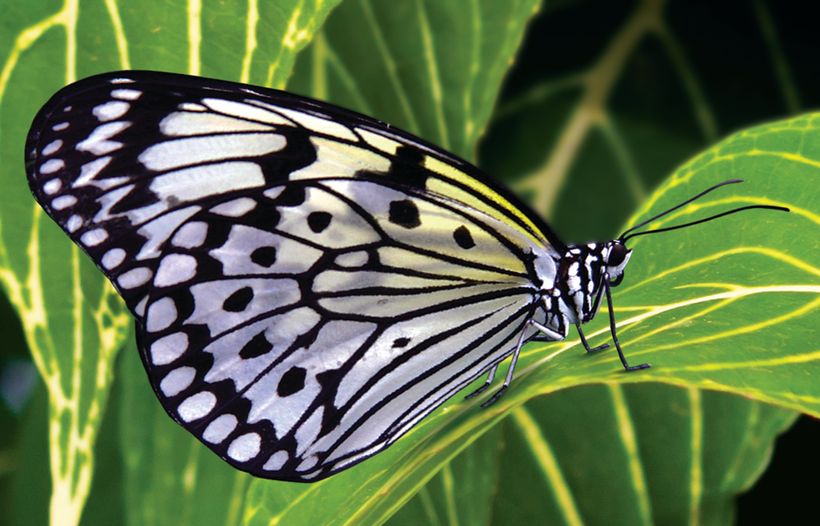
Visit the Tropics without a Flight - Largest Temporary Butterfly Exhibit a Sign of Spring
We all look for signs of spring that herald the changing of seasons – buds bursting on trees, plants pushing out of the ground, and migratory birds returning. But there is another sure sign of spring, and it takes place annually at Frederik Meijer Gardens & Sculpture Park in Grand Rapids, Michigan – Fred & Dorothy Fichter Butterflies Are Blooming (March 1-April 30). The largest temporary tropical butterfly exhibition in the United States, Butterflies Are Blooming welcomes visitors into the 80-degree, five-story, 15,000-square-foot Lena Meijer Tropical Conservatory that is a paradise for thousands of butterflies flying freely all around. More than 7,000 chrysalides representing over 60 species travel to Frederik Meijer Gardens & Sculpture Park throughout the exhibit's duration from tropical countries including Belize, Brazil, Costa Rica, Ecuador, Kenya, Malaysia, and the Philippines. Wendy Overbeck Dunham is Director of Horticulture at Frederik Meijer Gardens & Sculpture Park in Grand Rapids, Michigan. She leads the team that oversees the care and presentation of its living collections - from tropical conservatories and outdoor gardens to seasonal displays - connecting guests to art, design, and the natural environment. View her profile “Stepping into Michigan’s largest glasshouse and being bathed in warmth while thousands of butterflies swirl in vibrant color and motion is a feeling you can’t get anywhere else,” says Wendy Overbeck Dunham, Director of Horticulture. “After months of winter, that first breath of tropical air and the close-up encounters with butterflies are pure joy.” Click on the link below: Thousands of butterflies emerge at Frederik Meijer Gardens, WOOD-TV8 (NBC Grand Rapids) The exhibition also offers guests up-close experiences at butterfly feeding stations, where tropical fruit slices and nectar-rich plants attract the butterflies, and at the Observation Station, where 1,250 chrysalides arrive at Meijer Gardens each week and transform into butterflies and moths. Additionally, the exhibition features vibrant floral displays, including arches of foliage and blooms in varied hues; unique nectar plant varieties; and colorful arrangements of air plants, bromeliads, and orchids. “Most people don’t know that butterflies taste with their tiny feet,” Dunham explains. “Our feeding stations create fantastic photo ops and bring butterflies close enough to admire their intricate wing patterns and how their straw-like proboscis uncoils to feed.” Guests also can visit the butterfly release stations to watch newly emerged butterflies make their debut and take their first flight as the stars of the show. “It’s an immersive experience,” Dunham adds. “The conservatory is full of energy! As you wander, take time to pause and watch the butterflies flit, flutter and feed. Those quiet moments are what make our butterflies unforgettable.” If you are looking to cover spring-related garden stories, including about Butterflies are Blooming, connect with Wendy below.