
Experts Matter. Find Yours.
Connect for media, speaking, professional opportunities & more.
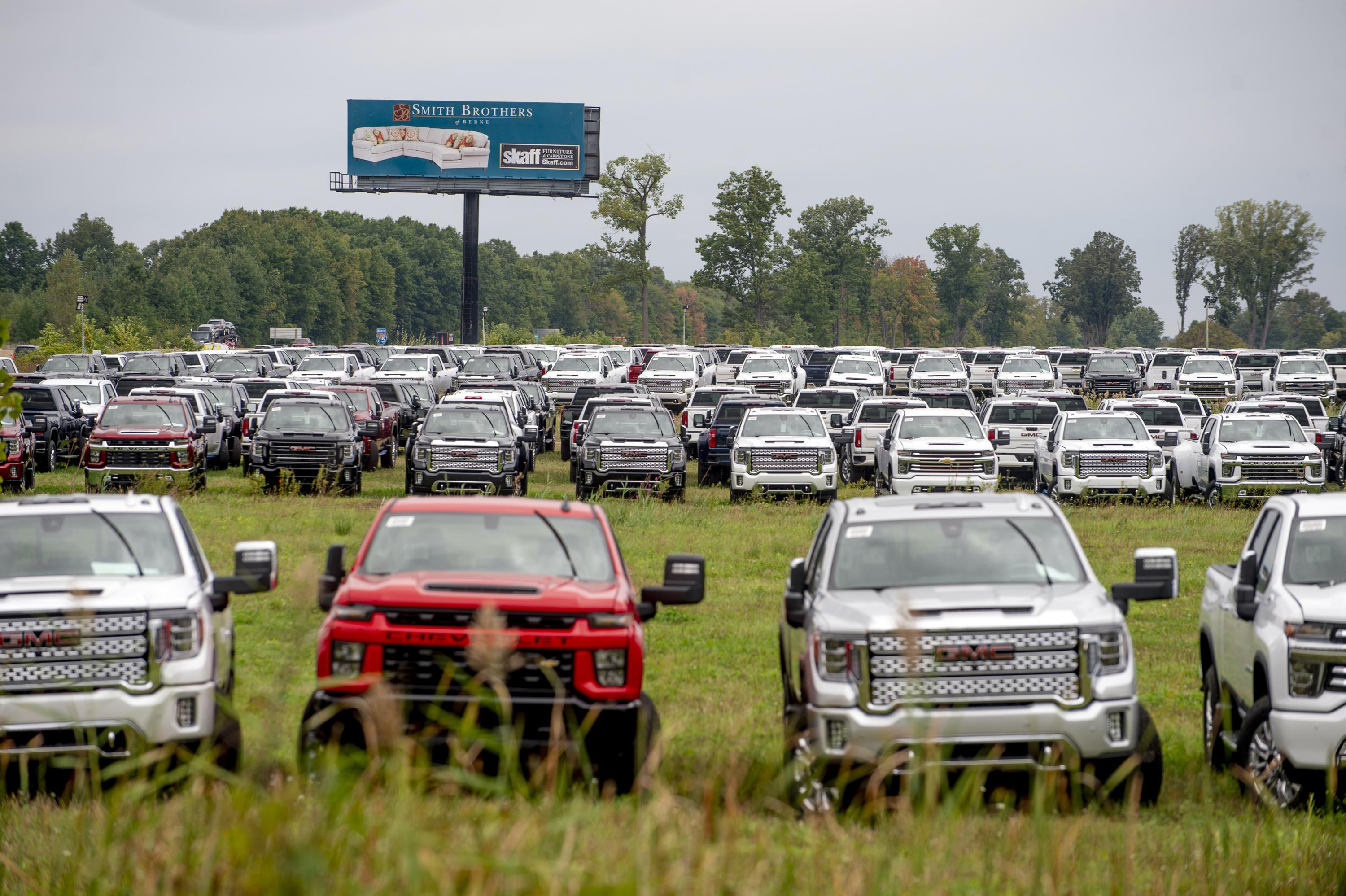
What can America expect as supply chain issues leave the auto industry stuck in park?
America’s auto industry is slowing down – and this time the main source is not a matter of labor issues or a lack of customers. This time this crisis, like those plaguing so many other industries lies in the tangled web of supply chain issues that is challenging manufacturing, industries and economies across America and the continent. In the United States, the auto industry has been hit particularly hard. The nation’s largest automaker and the rest of the global auto industry have been sporadically shutting down plants since late last year due to the semiconductor shortage, which has cut supplies on dealer lots and driven new vehicle prices to record levels. To be sure, production still isn’t back to normal because some of the factories will only run on one shift per day. Phil Amsrud, senior principal analyst for IHS Markit who studies the chip market, said GM’s move is a good sign, but doesn’t signal the end of the chip shortage. “It’s just not a sign that the patient is through all the rough spots and it’s a matter of weeks before they’re released from the hospital,” he said. October 22 - Associated Press There has been a lot of coverage, and a lot of questions asked as to how this happened and what it will take to untangle the mess. And that’s where experts from Augusta can help with coverage. "There are several factors but the main themes are suppliers inability to react to the increased demand, and governmental policies and responses,” explains Dr. Mark Thompson an economist and expert regarding the industrial issues facing America. “When COVID initially hit, demand dropped considerably. As it relates to the shortage of computer chips, what do you think consumers were demanding during the early phase of COVID...computers, laptops, handheld devices, etc. Technology companies responded and chip manufacturers switch to produce these items. Now, as consumers demand for new cars pick up, there is a shortage of the chips necessary for new cars. As it relates to government intervention, the stimulus has also increased demand for various goods and services furthering the shortage." As for how long will it take for America to see the supply chain replenished? "Good guess,” says Thompson. "I would say that we should expect to continue to see these shortages through the rest of 2021 and part of the way in 2022." If you’re a journalist covering the ongoing supply-chain issues – then let our experts help with your stories. Dr. Mark Thompson is an economist with highly accomplished work in business conditions, risk analysis, energy and the healthcare industry. Dr. Thompson is available to speak with media regarding the economic and industrial issues facing America during this supply chain crisis - simply click on his icon now to arrange an interview today.


Prices are going up, shipments are being delayed and there are shortages of good and essential parts and pieces hindering almost every aspect of industry and manufacturing across America. The topic is getting attention from media outlets across the country as retailers and shoppers adapt to the problem. Hasbro Inc (HAS.O) said on Tuesday global supply chain disruptions cost it about $100 million in lost toy orders in the third quarter, and the company warned of a further hit to sales during the crucial holiday shopping season. While demand has surged over the last year, factory shutdowns, a lack of container ships and long port delays have fueled fears of a shortage of toys to put under Christmas trees during the holiday season. October 26 - Reuters Amazon on Monday reassured shoppers and industry watchers that it’s well-prepared to avoid supply-chain challenges during the holiday season. In a blog post, Amazon said a combination of planes, trucks, ships and delivery vans, along with staffed-up warehouses, has put it in a good position to “get customers what they want, when they want it, wherever they are this holiday season.” Retailers are entering what’s poised to be a particularly challenging holiday shopping period, due to existing supply-chain woes, inflationary pressures and labor shortages. Several factors are behind the issues, including skyrocketing shipping container costs and container shortages, Covid-19 outbreaks at shipping ports, as well as a shortage of workers needed to unload containers and handle goods at warehouses. October 25 - CNBC The United States is facing a supply chain crisis that it has never seen before. Some are blaming COVID, trade deals and shipping. The issue is causing serious trouble for America’s already fragile economy. If you’re a journalist covering this important topic let our experts help with your questions and stories. Georgia Southern University's Jerry Burke, Ph.D., is a professor in the Department of Logistics and Supply Chain Management. Burke researches manufacturing and service operations. He is available to speak with media regarding this important issue - simply click on his icon now to arrange an interview.


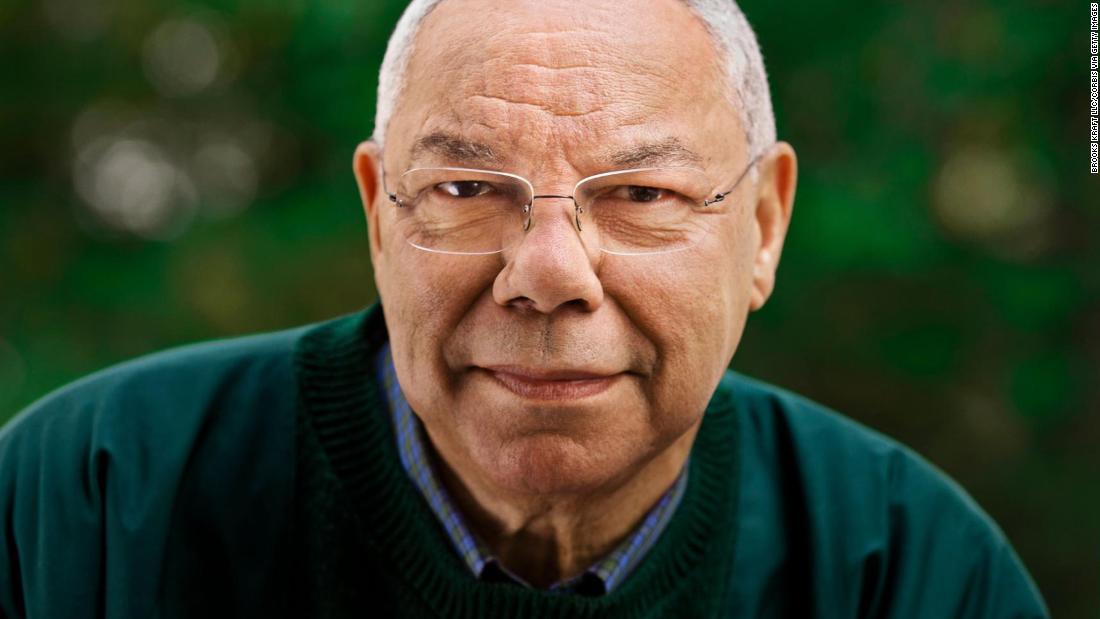
Covering the death of Colin Powell? UMW's foreign policy expert can help
Colin Powell, the first Black US secretary of state whose leadership in several Republican administrations helped shape American foreign policy in the last years of the 20th century and the early years of the 21st, has died from complications from Covid-19, his family said on Facebook. He was 84. "General Colin L. Powell, former U.S. Secretary of State and Chairman of the Joint Chiefs of Staff, passed away this morning due to complications from Covid 19," the Powell family wrote on Facebook, noting he was fully vaccinated. A source familiar with the matter said Powell had multiple myeloma, a cancer of plasma cells that suppresses the body's immune response. Even if fully vaccinated against Covid-19, those who are immunocompromised are at greater risk from the virus. "We have lost a remarkable and loving husband, father, grandfather and a great American," the family said. October 18 - CNN If you are covering the life and legacy of Colin Powell - then let our experts help with your questions and coverage. University of Mary Washington Political Science and International Affairs Professor Jason Davidson is an expert in American foreign and security policy, and international security. He is also the author of the commissioned study, "The Costs of War to United States Allies Since 9/11," which focuses extensively on the human and monetary sacrifices made by America's allies in these conflicts. Davidson, and the document, made waves this spring, landing in the likes of Forbes, The Guardian and The Daily Mail. If you’re looking to arrange an interview with Dr. Davidson, simply click on his icon.



Friends or enemies? Is there any solving the ancient secret that is Chinese diplomacy?
When it comes to trade, investment and trillions of dollars of opportunity for American companies – it would appear that China and the United States should be close-knit allies. However when it comes to military escalation, an emerging global bull and national security – China is also a country that the U.S. government is very concerned about. NPR recently got in touch with UMW Professor of Political Science and International Affairs Elizabeth Larus to lend her expertise when it comes to the politics of China. Elizabeth Larus, who teaches Chinese studies at the University of Mary Washington in Virginia, says any economic "de-coupling" between the U.S. and China will be very difficult. "You can't just say you're going to pick up your factory and move all your resources and have a consistent, reliable energy source and the shipping port to get your stuff out at a decent price, and the logistics. China has nailed that down," said Larus, the author of Politics and Society in Contemporary China. China's President Xi Jinping uses this as leverage, she noted. "One of the goals of this Xi Jinping regime is to make the world really reliant on China for its supply chain, but not to have China reliant on the rest of the world," she added. "So that makes it difficult for the businesses." Is there a way out of this downward spiral? "I do not see a de-escalation anytime soon," she said. October 08 - NPR There will be no easy or immediate solution to the hot-and-cold relationship between the United States and China. But if you are covering this ongoing story – then let our experts help with your questions and coverage. Dr. Elizabeth Larus is an expert in the politics of China. She is available to speak to media, simply click on her icon to arrange an interview today.


Japan House: Fifty Years Ago Today
Joshua W. Walker, Ph.D., President and CEO, Japan Society This September we're celebrating the 50th anniversary of Japan House, Japan Society's landmarked headquarters building. Let's jump in our time machine and go back to 1971, when Japan Society was only 64 years old. At that time, U.S.-Japan relations were deeply embroiled in trade frictions while the ending of the U.S. embargo of China had just begun to impact East Asia. 1971 snapshots In the United States: Richard M. Nixon is President; Apollo 14 lands on the moon; massive protests are held throughout America against the Vietnam War; Walt Disney World opens in Orlando, Florida; Joe Frazier defeats Muhammad Ali in 15 rounds at Madison Square Garden; the first Starbucks opens in Pike Place Market, Seattle. In Japan: Eisaku Sato is Prime Minister; the U.S. and Japan sign an accord to return Okinawa to Japan; NHK TV implements colorization of all programs; Kamen Rider TV series begins broadcasting; the 48th reigning Sumo champion Yokozuna Taihō announces his retirement; McDonald's opens its first store in Ginza, Tokyo; Nissin creates the first "cup noodle." Japan House Meanwhile in New York City, Japan Society had occupied eight different locations since its founding in 1907, and by the mid-1960s, a dedicated building had become necessary to house the Society's rapidly expanding initiatives. Japan Society President John D. Rockefeller 3rd made a very generous pledge by donating the land for the building site and Japanese modernist architect Junzo Yoshimura was confirmed to design the building. On September 16, 1969, John D. Rockefeller 3rd and Japanese Foreign Minister Kiichi Aichi broke ground at a formal ceremony. Construction proceeded on schedule and staff moved in during the spring of 1971, with Executive Director Douglas Overton noting, "Each day we have found some new and delightful feature which has come off the drawing board as an unexpectedly brilliant success. Japan House will be a national important building worthy of its high purposes." Opening Week—five star-studded days of celebratory events—began on September 13, 1971 with Their Imperial Highnesses Prince and Princess Hitachi at the ceremonies. The Prince brought Japan's best wishes to the Society "for a new chapter, both rich in content and wide in scope." The Gallery opened its first exhibition, Rimpa: Masterworks of the Japanese Decorative School and the Tokyo String Quartet performed in the new auditorium. Junzo Yoshimura wrote about Japan House, "People the world over used to build their houses with local and traditional materials. Today, however, contemporary buildings all over the world use the same basic materials—concrete, steel and glass—yet different characters and nationalities can still be perceived among them. In designing Japan House I have tried to express in contemporary architecture the spirit of Japan." With the formal opening of the Society's headquarters a new era had begun. Their Imperial Highnesses Prince and Princess Hitachi and Japan Society chairman John D. Rockefeller 3rd view the first Japan Society Gallery exhibition Rimpa: Masterworks of the Japanese Decorative School. Photo © Thomas Haar. The next 50 years Fifty years later, we are at another inflection point. The novel coronavirus pandemic has taught us just how interconnected we are as a global community while placing new importance on our homes and transforming the nature of work. This unprecedented global crisis has also illuminated the strengths and weaknesses of our organization, providing new opportunities for envisioning the future. Just as the opening of Japan House shaped the Society's last 50 years, today we are reimagining how we use our space, from the physical to the digital, forging broader connections or kizuna for U.S.-Japan and for the world. We embrace our mission for the years to come, reaching out far beyond our building, to our city, country, and world as we seek to connect American and Japanese people, cultures, and societies through a global lens. Like a hike up Mt. Fuji, Japan Society’s nearly 115-year-long journey itself defines us far more than our current destination. Beginning in 1907, the first iteration of Japan Society focused on business relations between the U.S. and Japan. For its 1952 post-Occupation reconstitution under the leadership of John D. Rockefeller 3rd, the Society dedicated itself to arts, culture, and education, with an emphasis on supporting Japanese students in New York as well as spreading the word about Japan through significant cultural milestones such as partnerships with The Metropolitan Museum of Art and Lincoln Center, with traveling exhibitions and outreach on both sides of the Pacific. With the opening of Japan House in 1971, politics was reintroduced into the mix, the business and policy communities energized, and Japanese popular culture landed large—nearly 50,000 people came to the Grand Sumo Tournament at Madison Square Garden co-sponsored by Japan Society and the Asia Society in 1985! Today at Japan House we present Japan and U.S.-Japan as a way to engage with history and tradition, on the one hand, and innovation and the future on the other. As in 1971, the time to act is now and our opportunities are as great as the challenges of 2021. It's up to us to work together on new, critical connections to take us through the next 50 years. I'll be there with you. Joshua Walker (@drjwalk) is president and CEO of Japan Society. Follow Japan Society on Twitter, Instagram, Facebook, and LinkedIn. The views expressed in this article are the writer's own.



ChristianaCare recognized by American Medical Association with 2021 Joy in Medicine distinction
ChristianaCare one of only 44 nationwide to receive the distinction; one of only five to receive the highest level – Gold Recognition (WILMINGTON, Del. – Oct. 7, 2021) ChristianaCare has been named a recipient of the American Medical Association’s Joy in MedicineTM Health System Recognition Program. The distinction recognizes health systems that demonstrate a commitment to preserving the wellbeing of health care team members by engaging in proven efforts to combat work-related stress and burnout. The American Medical Association awarded ChristianaCare a “Gold Recognition” – the highest level within the program. Only 44 health systems nationwide received the Joy in Medicine distinction, with only four other health systems along with ChristianaCare achieving the Gold Recognition. “When caregivers feel supported and fulfilled in their work, the quality of both their experience and their patient’s experience improves,” said Heather Farley, M.D., MHCDS, chief wellness officer and head of ChristianaCare’s Center for WorkLife Wellbeing. “That’s why, when the COVID-19 pandemic struck, we deepened our investment of resources to support our caregivers. While there’s still a long way to go, we are grateful to receive this recognition as it affirms our commitment to helping our caregivers foster meaning, connection and joy in work and in life.” ChristianaCare received the “Gold Recognition” for achieving six criteria: An organization-wide commitment to improving physician wellbeing. An assessment of the costs of physician burnout. Evidence-based interventions to reduce and eliminate burnout. Leadership commitment to address areas for improvement. Interventions to improve teamwork. Structured programs that actively engage doctors to cultivate community at work. These criteria align with ChristianaCare’s commitment to support its caregivers in alignment with the organization’s core values of love and excellence. ChristianaCare has implemented structured ways of working that encourages leaders to create environments where their workers feel safe asking questions and feel empowered to identify and solve problems. ChristianaCare also uses numerous surveys and assessments to track progress in improving the wellbeing and experience of caregivers. ChristianaCare’s Unique Center for WorkLife Wellbeing ChristianaCare established the Center for WorkLife Wellbeing in 2016 to develop support systems to enable clinicians to reconnect with the joy and meaning in medicine. “We recognized the growing problem of stress and burnout in health care, and we made a decision to tackle it head-on,” said Janice E. Nevin, M.D., MPH, ChristianaCare president and CEO. “The work of our psychologists, researchers, clinicians and peer supporters in the Center for WorkLife Wellbeing is built on the understanding that when we care for ourselves, we are better able to care for others, resulting in decreased medical errors and a better experience of care for everyone involved.” The Center soon expanded its mission to support all of ChristianaCare’s caregivers, including those who don’t work in clinical roles. The Center also has received national recognition for its expertise and leadership in the field of workplace wellbeing. Throughout the pandemic, the Center for WorkLife Wellbeing has proactively shared a variety of resources to support caregivers as they work to provide safe, effective care and reduce the spread of COVID-19. This includes: The Care for the Caregiver program, which provides confidential individual peer support and group support to caregivers when they experience stress related to patient care or the workplace. Peer supporters and organizational leaders receive training so they can provide psychological first aid to caregivers whom they recognize are struggling as well as connect them to helpful resources if needed. Emotional support through mindfulness resources and regular rounds where the Center’s experts can check on staff wellbeing. OASIS Rooms, which are quiet sanctuaries inside the hospital where caregivers can go to take a break, de-stress, meditate or enjoy a chair massage. 24/7 mental health services and programs to help caregivers maintain healthy habits including proper exercise, sleep and nutrition. Fitness centers that are free for all caregivers to use and provide easy access to exercise and fitness programs. “I always use the analogy, you can’t take the canary out of the coal mine and teach it to be more resilient and then put it back in the same coal mine and expect it to survive,” Dr. Farley said. “You actually have to change the coal mine – the environment surrounding our caregivers and clinicians. That’s what we’re doing in the Center for WorkLife Wellbeing.” Solutions to a National Problem A national study examining the experiences of physicians and other health care workers who worked in health systems during the COVID-19 pandemic found that 38% self-reported experiencing anxiety or depression, while 43% suffered from work overload and 49% had burnout. “The COVID-19 pandemic has placed extraordinary stress on physicians and other health care professionals,” said American Medical Association President Gerald E. Harmon, M.D. “While it is always important for health systems to focus on the wellbeing of care teams, the imperative is greater than ever as acute stress from combatting the COVID-19 pandemic has contributed to higher rates of work overload, anxiety and depression. The health systems we recognize today are true leaders in promoting an organizational response that makes a difference in the lives of the health care workforce.” Launched in 2019, the Joy in Medicine Health System Recognition Program is a component of the American Medical Association’s practice transformation efforts, an ambitious initiative to advance evidence-based solutions to address the physician burnout crisis. Candidates for the program were evaluated according to their documented efforts to reduce work-related burnout through system-level drivers. Scoring criteria were based on demonstrated competencies in commitment, assessment, leadership, efficiency of practice environment, teamwork and support. About ChristianaCare Headquartered in Wilmington, Delaware, ChristianaCare is one of the country’s most dynamic health care organizations, centered on improving health outcomes, making high-quality care more accessible and lowering health care costs. ChristianaCare includes an extensive network of primary care and outpatient services, home health care, urgent care centers, three hospitals (1,299 beds), a freestanding emergency department, a Level I trauma center and a Level III neonatal intensive care unit, a comprehensive stroke center and regional centers of excellence in heart and vascular care, cancer care and women’s health. It also includes the pioneering Gene Editing Institute. ChristianaCare is nationally recognized as a great place to work, rated by Forbes as the 5th best health system to work for in the United States and by IDG Computerworld as one of the nation’s Best Places to Work in IT. ChristianaCare is rated by HealthGrades as one of America’s 50 Best Hospitals and continually ranked among the nation’s best by Newsweek and other national quality ratings. ChristianaCare is a nonprofit teaching health system with more than 260 residents and fellows. With its groundbreaking Center for Virtual Health and a focus on population health and value-based care, ChristianaCare is shaping the future of health care. #####


History was made at Arlington – and UConn’s expert was recruited to help with national news coverage
For the first time in the 84 years that soldiers have stood watch over the Tomb of the Unknowns at Arlington National Cemetery, the duty was carried out by three women. UConn's Micki McElya, a professor in the Department of History and the author of The Politics of Mourning: Death and Honor in Arlington National Cemetery, offered her perspective and insight into the significance of the moment: The images of the three female soldiers were a “visual marker” of the often unrecognized sacrifices that women and other marginalized people in the United States have made for the military, Professor McElya said. “Women have served either officially or unofficially in every single war this country has ever waged, but they have never been drafted,” she said. “So if we want to talk about sacrifice and honor, women have done that because they wanted to.” The changing of the guard was also an important moment in military history, one that showed that women are serving in “the most revered positions,” said Kara Dixon Vuic, a professor of war, conflict and society in 20th-century America at Texas Christian University in Fort Worth. “These are the rituals that the nation holds dear,” she said. “Some might call it militaristic and some might say it represents the best of us. But to have women at the heart of it, whatever your perspective is, is important because it shows that women are at the heart of these debates now.” If you are a journalist covering the historic aspects of this occasion or other events taking place, then let our experts help with your stories. Professor McElya is an expert in the histories of women, gender, sexuality, and race in the U.S., with a focus on politics and memory. She’s available to speak with media regarding these topics – simply click on her icon now to arrange an interview today.


/cloudfront-us-east-2.images.arcpublishing.com/reuters/WJ3MYTYJN5NGFFYJGDLINZBZ6I.jpg)
Political chess: Has the ‘debt ceiling’ become an annual game of chance in Washington?
Just about every year, no matter who is in charge, Congress ends up in a down-to-the-wire debate about raising America’s debt ceiling. Last year, President Donald Trump needed the debt ceiling increased, with Democrats eventually approving. This year, President Joe Biden is facing down Republicans who are looking to block any increase in the staggering $28.4 trillion that has American books in the red. In a high-stakes standoff over parliamentary maneuvers, Senate Minority Leader Mitch McConnell for months has been saying that Democrats should use a process called "budget reconciliation" to get around the Senate's filibuster rule, which requires 60 of 100 members to agree to pass most legislation. Senate Majority Leader Chuck Schumer, a Democrat, has rejected that approach and Biden on Monday pleaded not to use the filibuster to block action. "Just get out of the way," Biden told Republicans. "If you don't want to help save the country, get out of the way so you don't destroy it." Late last month the U.S. House of Representatives passed and sent to the Senate a bill to suspend the limit on Treasury borrowing through the end of 2022. Schumer was expected to hold a vote on that measure this week. Treasury Secretary Janet Yellen last week warned lawmakers that the United States government was close to exhausting its federal borrowing capabilities by about Oct. 18. Oct.11 – Reuters There’s a lot to understand if you’re a journalist covering the tug of war between Republicans and Democrats. And as the Oct. 18 deadline looms, the public needs to know what the consequences may be for the American people and the economy. Dr. William Hatcher is a professor of political science and interim chair of Augusta University’s Department of Social Sciences. He is an expert in the areas of public administration and social, economic and political institutions. Hatcher is available to speak with media regarding the debt ceiling, what it means if increased and what it means if not raised. To arrange an interview today, simply click on his icon now.


Covering Breast Cancer Awareness Month? Our experts are ready for your questions and coverage
October is Breast Cancer Awareness Month. Did you know that on average, every 2 minutes a woman is diagnosed with breast cancer in the United States. And according to the National Breast Cancer Foundation: In 2021, an estimated 281,550 new cases of invasive breast cancer will be diagnosed in women in the U.S. as well as 49,290 new cases of non-invasive (in situ) breast cancer. 63% of breast cancer cases are diagnosed at a localized stage (there is no sign that the cancer has spread outside of the breast), for which the 5-year survival rate is 99%. This year, an estimated 43,600 women will die from breast cancer in the U.S. Although rare, men get breast cancer too. In 2021, an estimated 2,650 men will be diagnosed with breast cancer this year in the U.S. and approximately 530 will die. 1 in 8 women in the United States will be diagnosed with breast cancer in her lifetime Breast cancer is the most common cancer in American women, except for skin cancers. It is estimated that in 2021, approximately 30% of all new women cancer diagnoses will be breast cancer. There are over 3.8 million breast cancer survivors in the United States. This year's theme is It's Time to Rise and the National Breast Cancer Foundation has a host of materials to watch and read for anyone looking to test themselves, find support or learn how they can help. If you're a journalist looking to know more about this topic or if you are covering Breast Cancer Awareness month - then let our experts help with your stories. Dr. Alicia Vinyard is a Board-Certified General Surgeon and Fellowship Trained Breast Surgical Oncologist at the Georgia Cancer Center and Medical College of Georgia at Augusta University. Dr. Vinyard is also an expert in breast cancer, cancer surgery and cancer survivorship. She is available to speak to media about Breast Cancer Awareness Month – simply click on her icon to now arrange an interview today.


International security scholar's thoughts on Biden, military decision-making in Afghanistan
Baylor University's Peter Campbell, Ph.D., associate professor of political science, penned a column for City Journal, in which he discusses who deserves scrutiny following the U.S. withdrawal from Afghanistan. Getty Images In a column published Sept. 23 in City Journal, international security scholar Peter Campbell, Ph.D., associate professor of political science at Baylor University, explained the civilian-military dynamic in the United States and argued that President Biden -- not the U.S. military -- should shoulder the blame for what Campbell described as the president's "ill-conceived plan for withdrawing U.S. troops." During the withdrawal in August, many dozens of people were killed in a terrorist bombing, including 13 U.S. soldiers. Also, more than 100,000 people were airlifted from the country. Right now, we can only speculate about precisely what advice Biden’s military advisors shared with him, but it’s unlikely that American military leaders would have sanctioned on their own the accelerated withdrawal that the president demanded. My years of studying military history and military doctrine have taught me that fighting withdrawals are among the most difficult military operations to undertake, even for a highly disciplined and well-trained military force. Moreover, the Afghanistan withdrawal was to take place during the active fighting season, when favorable weather tends to increase the tempo of Taliban operations. The Afghan government requested that Biden delay the withdrawal until the winter, when conditions reduce the mobility of forces in the region. Wedded to his timeline, the president refused. In the column, Campbell wrote that America and the international community should not be left to speculate as to what advice the president received prior to his decision. He called for U.S. Congressional committees to investigate. "Americans deserve to know exactly what the military and the intelligence community told the president," he wrote. ABOUT PETER CAMPBELL, Ph.D. Peter Campbell, Ph.D., associate professor of political science at Baylor University, is a scholar on international security, civil-military relations, insurgency and counterinsurgency, the just war tradition, and cyber warfare. He is the author of Military Realism: The Logic and Limits of Force and Innovation in the U.S. Army, published by University of Missouri Press.

