
Experts Matter. Find Yours.
Connect for media, speaking, professional opportunities & more.

Bridge-Building as a Career Path
Yusuhara Wooden Bridge Museum / Kengo Kuma & Associates. © Takumi Ota For my entire life I’ve imagined myself as a bridge between the U.S. and Japan. I grew up in Japan from ages one to eighteen — my parents are Southern Baptist missionaries who have lived in our heartland now for over 40 years. As an American growing up in Hokkaido, I often found myself in the position of explaining to Japanese why Americans do certain things and act certain ways, and then trying to tell Americans why Japanese or people outside of the U.S. saw the country in a particular way. This dialogue became an extension of who I am. Of course, like many children growing up, I wanted to be like my dad, who is a gifted pastor and long-term missionary. But, along the way, I realized that the role of a missionary is actually very much like that of being an ambassador or bridge-builder who represents their country, alliances, and traditions. As reinforced recently by Prime Minister Suga’s visit to the White House, the first of any international visitor for the Biden administration, the alliance with Japan is our single most strategic international relationship. Walter Russel Meade laid this out eloquently in the Wall Street Journal, “For the foreseeable future, the U.S.-Japan alliance is likely to remain the cornerstone of American foreign policy. Building the social and cultural ties that can support that relationship is an urgent task for both countries.” In my lifetime, and perhaps never before, has there been a moment like the present where the U.S. and Japan are mutually reliant to such a degree. Therefore, my personal commitment to being a bridge-builder, and our mission at Japan Society, have never been more critical. Finding my path After college I went to Turkey as a Fulbright Scholar, where I worked with the State Department through the Ambassador’s Office and the Embassy, enriching my understanding of foreign diplomacy. As I explored my interests in other parts of the world, I didn’t intend to pursue a career in U.S.-Japan relations. However, all that changed on March 11, 2011, when the Great East Japan Earthquake, tsunami, and nuclear disaster devastated the Tohoku region of northeastern Japan. At that moment, I felt a deep personal mission to help bring people from around the world together and realized that I was uniquely situated to build bridges with Japan. I had the opportunity to serve three different times in the State Department along with the Defense Department and on various Commerce Department advisory boards as I completed my academic degrees culminating with a PhD from Princeton. My time in academia and government service taught me the important skill of storytelling. When I left the State Department, I joined the strategic communications company APCO Worldwide, where I helped establish their Japan office and became immersed in Japanese public relations. Next, I had the privilege of running the USA Pavilion at the World Expo in Kazakhstan in 2017, telling America’s story from the ground up. That led me to Eurasia Group, the foremost geopolitical risk consultancy group, where I led the largest geopolitical risk summit in Japan, the GZero Summit, taking my academic, government, and public relations experience and putting it into a practical context. Embracing my ikigai Today I’m the President and CEO of Japan Society, working to take the Society’s mission into its second century, to be the deep connection, or kizuna, that brings the United States and Japan together through its peoples, culture, businesses, and societies. One of the greatest things that I see these days is concepts from Japan that have been adapted into the English lexicon — like ikigai, the idea of life’s purpose, which has become a catchphrase in our pandemic world’s search for meaning. Ikigai resonates deeply with me, because it is about finding your reason for being, your passion and calling. For me, this means being dedicated to promoting global understanding and helping make the world a better place. I don’t think I would have told you two years ago that I would be the President and CEO of Japan Society. It is an opportunity that caught me by surprise in some ways. But in other ways, now that I am here, it feels like the most natural job I’ve ever done, and I cannot think of a better place I would rather be or a better way to live out my ikigai. At Japan Society’s founding luncheon on May 19, 1907, the guest of honor, General Baron Kuroki “wished the new organization a long and successful health.” As The New York Times reported, “The object of the new organization will be the promotion of friendly relations between the United States and Japan.” Now in its second century, our work of bridge-building continues today. Joshua Walker (@drjwalk) is president and CEO of Japan Society. Follow @japansociety. The views expressed in this article are the writer’s own.


With “Herd Immunity” Unlikely, Antivirals To Play Key Role in COVID-19 Management
According to The New York Times, the prospects for reaching “herd immunity” in the fight against COVID-19 are increasingly dim. Subsequently, the virus “will most likely become a manageable threat that will continue to circulate in the United States for years to come.” Therefore, long-term management of the SARS-CoV-2 virus, which causes COVID-19, will be increasingly important. As with influenza, and mosquito-borne viruses, like Zika, developing better antivirals for such perennial threats will have to be a part of the plan. Rensselaer Polytechnic Institute researchers Jonathan Dordick, a chemical engineer, and Robert Linhardt, a biochemist are developing one promising antiviral approach that uses a decoy to trap the virus before it can infect a cell. This decoy strategy has shown promise in combating a number of viruses, including SARS-CoV-2, dengue, Zika, and influenza A. Dordick and Linhardt, who is internationally recognized for his creation of synthetic heparin, focus on viruses that use glycoproteins to latch onto human cells, a trait common to many viruses, including coronaviruses. They study how viruses gain entry into human cells at the molecular level and identify safe, effective compounds to offer as a decoy. In their most recent test of this viral decoy strategy on mammalian cells, Dordick and Linhardt demonstrated that a compound derived from edible seaweeds substantially outperforms remdesivir, the current standard antiviral used to combat COVID-19. Heparin, a common blood thinner, and a heparin variant stripped of its anticoagulant properties, performed on par with remdesivir in inhibiting SARS-CoV-2 infection in mammalian cells. Both compounds bind tightly to the spike protein on the surface of SARS-CoV-2, the same strategy the team employed in their previous viral work. Dordick and Linhardt are available to speak on the viral decoy strategy and the need for more effective antivirals in future pandemic control.


New CBS Sitcom "United States of Al" Taps Experience of Social Work Student and Veteran
On April 1, 2021, CBS premiered United States of Al - a new comedy from producer Chuck Lorre (Two and a Half Men, Big Bang Theory) about a Marine combat veteran struggling to readjust to civilian life and the interpreter who served with his unit in Afghanistan and has just arrived to start a new life in America. The show explores the relationship between these two men and how they help each other adjust to their new lives. So, what does a CBS sitcom have to do with the USC Suzanne Dworak-Peck School of Social Work? Enter Master of Social Work (MSW) student Josh Emerson, who landed in the right place at the right time through his field internship at No One Left Behind. No One Left Behind (NOLB) is an all-volunteer, national nonprofit organization that supports recipients of the Special Immigrant Visa (SIVs), and those pursuing an SIV. The founders of No One Left Behind believe the U.S. has a moral obligation to protect these interpreters, and their families, who served side-by-side with American soldiers. Emerson, a veteran of the U.S. Army who deployed to Iraq and Afghanistan, is very familiar with Iraqi and Afghan interpreters. “I went on missions with these interpreters, got to know them, built relationships with them,” he said. “I was so very happy to be able to work with them in this capacity. In addition to providing resources for SIV ambassadors living in the United States, NOLB advocates on behalf of the SIV population to the executive and legislative branches of government provides subject matter expertise to the media, and partners with U.S. businesses to provide opportunities for what they call “this next generation of Americans.” Alea Nadeem, MSW ’15, is a board member of NOLB and reached out to USC with a field internship opportunity for social workers to do macro-level clinical work in a nonprofit setting. Nadeem became Emerson’s field instructor. “What Josh has brought to No One Left Behind has never been brought to the board before,” Nadeem said. “They now see the value in social work.” Bringing the issue to a larger audience Chase Millsap, a consultant and writer on United States of Al, is a former board member of No One Left Behind. “I am still very supportive, impressed and proud of all the work the NOLB team does on a daily basis,” he said. A veteran of the U.S. Marine Corps and U.S. Army Special Forces, he holds a master’s degree from USC Sol Price School of Public Policy. "USC helped me to learn the tools about how to connect entertainment and policy,” Millsap said. “United States of Al is a perfect example of those two worlds coming together in a powerful (and funny) way.” Millsap’s idea was to bring the issues around SIVs into America's living rooms, in a way that would make them relatable. Emerson’s experience as a veteran, his clinical and project management skills obtained through his social work studies and his stellar ability to work one-on-one with SIV recipients and applicants allowed him to inform the show’s stories with a wide breadth of knowledge. Emerson joined James Miervaldis, chairman of the NOLB board, in helping the writers and actors on the show understand the SIV issues, the ways in which NOLB provides assistance and advocacy, and sharing funny stories of cultural differences between Afghans and Americans. Emerson and Miervaldis have also been able to include some of NOLB’s SIV ambassadors in the process, those with an SIV who have already established themselves in the U.S. and are contracted by NOLB to help others assimilate. “They’re talking to the exact people they're portraying,” Emerson said. Nadeem sees Emerson’s contribution to the show as another platform through which to educate. “There are a lot of different tentacles to social work, and it may not seem like the most obvious place in TV and film, but it is,” she said. The show itself touches on everything social workers value ― service, challenging social injustice, dignity and worth of a person, the importance of human relationships and integrity. “This just makes so much sense that a social worker would be involved in this show because that's what we're always trying to communicate to a larger audience,” Nadeem said. “Through this show, you can make a greater impact for these folks to sort of assimilate them to be American citizens, and then also have the whole world appreciate their culture and appreciate what they've done for our nation to keep U.S. service members safe.” A valued member of the team Emerson, a father of five who resides in New Hampshire, knew he wanted to work with veterans after leaving military service. He felt that an MSW was the most versatile degree for this and chose the USC Suzanne Dworak-Peck School of Social Work because of its military social work track. “I think to be a good social worker you need to have experience in life,” Emerson said. “To have seen some things, or been through some things, to understand the population you're dealing with and what they're going through.” When Emerson began his internship at NOLB in 2020, Miervaldis immediately began working with him to focus on SIVs who recently had come to the United States. The first case Miervaldis assigned to Emerson was an SIV family with two young children who needed emergency surgery at a specialty hospital in Washington D.C. “This SIV packed up his family, his pregnant wife and the two kids, used up all his money to take them by bus from Texas to D.C. in the middle of a pandemic and ended up in a bad part of town,” Miervaldis said. As the SIV’s assigned caseworker, Emerson established a relationship and trust with the SIV, helped him obtain safe housing and a job interview, and coordinated details for the children’s surgery with the hospital. “He’s gone and done everything,” Miervaldis said. “We are very proud of Josh’s initiative and empathy for a family in such need. No One Left Behind is the safety net for our allies.” Last year, NOLB helped over 600 families with visas and resettlement. “Josh has exceeded all our expectations and done so while communicating with clients who speak in broken English, Dari and Pashtu, struggling during a pandemic,” Miervaldis said. “His professionalism and empathy are great credits to USC. We would not be where we are today without him. That is not hyperbole.” Miervaldis hopes NOLB will have more social work interns from USC to continue Emerson’s work. For him, Emerson’s project management skills have been the greatest asset, creating a new process for how NOLB provides help for SIV families. “We told Josh, you're a pathfinder, you're a pioneer,” Miervaldis said. “We need to figure out very quickly what works, what doesn't work, and he took it and said, ‘okay, point me in the right direction.’ He’s very much valued as a member of the team.” From advocacy to TV No One Left Behind gets about 20 messages every day from Iraqi or Afghan interpreters who served with U.S. forces in their countries, and who now receive daily death threats from the Taliban. “They're not allowed to live in their homes or their neighborhoods anymore because they helped the U.S.,” Emerson said. “Now the U.S. is withdrawing from all these countries, and the Taliban and terrorist activities in general are picking up, and these people are getting pressured and killed. NOLB has over 300 cases of SIVs who have been killed waiting for their visas.” Emerson hopes that the added exposure from United States of Al will bring awareness particularly to service members about what these interpreters are experiencing and how they can help. One of the requirements for an SIV is a letter of recommendation from the U.S. service member with whom they served, and those have been the most difficult items for SIV applicants to secure. “I have been able to provide some input to what should be addressed in the show,” Emerson said. “It's interesting to see how advocacy on an issue can turn into something this large scale.” See more news from USC Suzanne Dworak-Peck here.


COVID-19 Pandemic Increasing Substance Use Among Veterans with PTSD
Nine months into the pandemic, everyone has been affected by COVID-19 in some way. However, one group that needs special attention and support is U.S. veterans who were already struggling with symptoms of posttraumatic stress disorder (PTSD). A recently conducted survey by Jordan Davis, assistant professor at the USC Suzanne Dworak-Peck School of Social Work, and Eric Pedersen, associate professor at Keck School of Medicine of USC, found evidence that veterans with PTSD prior to the pandemic were now managing their symptoms with more frequent alcohol and cannabis use. “The pandemic has not been easy on folks, especially for those that have PTSD or an alcohol use disorder (AUD),” said Davis, who also is associate director of the USC Center for Artificial Intelligence in Society (CAIS). “Some of the stories I’ve heard [from study participants] have been heart-wrenching.” An extraordinary resource of veterans not affiliated with VA services Davis and Pedersen lead several efforts examining substance use among veterans. They have assembled a survey group of about 1,200 military veterans, a percentage of whom struggle with PTSD symptoms but have not yet sought professional help via the Department of Veterans Affairs (VA) to improve their wellbeing. “We’ve decided to focus on the population of veterans who, for one reason or another, say they don’t need mental health care,” Davis said. Attitudes about care, transportation barriers or perceived stigma from others may deter them from seeking care for PTSD symptoms, and some self-medicate with alcohol, cannabis, cigarettes, or more rarely, methamphetamine or cocaine. Davis cited larger studies 1,2 that found only about half of the veterans who need some sort of mental health care receive it. Many studies of veterans recruit subjects from the VA who are likely already receiving care. The unique sample group that Davis and Pedersen have created may offer fresh insights into how to motivate these veterans outside the VA system to seek care and how best to deliver it. Tracking pandemic effects on mental health It all began with a one-time survey of young adult veterans to measure drinking habits and willingness to seek help. Pedersen and others had developed a brief intervention that had yielded some success reducing drinking in the short-term, but he knew that sustaining those reductions would be difficult unless the veterans agreed to more formal care. The one-off survey, conducted in February 2020, would set a baseline that could be used to inform the brief intervention content. Then COVID-19 cases began multiplying. Affected cities and states began to impose restrictions on public gatherings and more. Pedersen and Davis soon obtained additional funding from the Keck School of Medicine of USC COVID-19 Funding Program and the National Institute of Alcohol and Abuse to follow up with their sample group and see how these veterans were coping with the unprecedented health crisis. “The result is that we can follow up with these veterans from a pre-COVID-19 time period for the next several years, tracking their depression, anxiety and PTSD symptoms and substance use,” Pedersen said. The researchers aim to understand how the veterans are sleeping, what their stress levels are like, and how things have changed as the pandemic wears on. They hope to gain new insights about what motivates some to seek care and how that can be replicated. So far, the results point to some unfortunate, but not unexpected, news. “We’re finding that those veterans who were struggling with PTSD prior to the pandemic are actually doing worse in terms of their substance use behaviors, drinking and cannabis use, as well as their stressful reactions to the pandemic,” Pedersen said. Pedersen and Davis will continue to follow up with these veterans through at least February 2022, surveying them every three months to see how they are progressing. In addition to the survey, they also conduct in-depth qualitative interviews with a subset of the group to enrich their understanding of what their lives are like now and how things have changed for them. The interviews last about an hour, sometimes more. “We talk about the positive and negative things that have happened and what their expectations are for the future,” Davis said. The details are confidential, of course, but it is clear that the pandemic has upended people’s lives and livelihoods across the United States. The toll on those who were already experiencing mental health issues and addiction has been heavy, but Davis and Pedersen are hopeful that their insights and findings will lead to better treatment and outreach in the future. Reducing barriers to care One bright spot over the past nine months has been the quick embrace of telehealth. The VA was already leading the way to telehealth as a way to improve access to its services, and following the stay-at-home orders of the pandemic, telehealth has grown in acceptance and use. Now, online counseling sessions, Alcoholics Anonymous meetings, and medical visits are commonplace. Pedersen and Davis don’t see that changing even when face-to-face gatherings become the norm once again. It has been a promising start to the research, and Pedersen and Davis are even more excited about what the future may hold. They plan on submitting for more grants to continue to track the mental health and substance use of this group of hundreds of veterans with the goal of understanding what factors lead individuals to seek care. Down the road, they hope to use this longitudinal data to help identify profiles of people more or less likely to seek care. “Then we can tailor interventions to increase their willingness to seek care for a problem like a substance use disorder or PTSD,” Davis said. Recognizing patterns in substance use and when to seek care is very important in helping that part of the veteran population that is trying to deal with symptoms of depression, anxiety, PTSD, or substance abuse on their own. “We know that things are bad now and we can expect that there will be lingering effects for years to come,” said Pedersen. “What we hope is that these findings and our future work will help the VA and others create more effective programs and outreach to address the unique needs of veterans.” 1 Veterans Health Administration Office of Patient Care Services, Analysis of VA Health Care Utilization Among Operation Enduring Freedom, Operation Iraqi Freedom, and Operation New Dawn Veterans. Washington, DC: U.S. Department of Veterans Affairs, 2017. www.publichealth.va.gov/epidemiology/reports/oefoifond/health-care-utilization/. 2 Tanielian, Terri and Lisa H. Jaycox, eds., Invisible Wounds of War: Psychological and Cognitive Injuries, Their Consequences, and Services to Assist Recovery. Santa Monica, CA: RAND Corporation, 2008. www.rand.org/pubs/monographs/MG720.html.

Assessing Biden's "Green Infrastructure" Plan From a Climate Perspective
In a virtual climate summit attended by leaders from all over the globe, President Joseph Biden announced plans for the United States to cut carbon emissions by as much as 52% by the year 2030. This commitment was outlined in what the Biden administration is calling a "green infrastructure" bill, one that has echoes of the Obama-era Green New Deal. Samantha Chapman, PhD, a biology professor at Villanova University and co-director of the Center for Biodiversity and Ecosystem Stewardship, recently broke down the pros and cons of the bill with KYW Newsradio's Matt Leon. According to Dr. Chapman, the bill addresses what she identifies as the two major strategies for mitigating the negative effects of our warming planet: "preventing more climate change and adapting to climate change." Dr. Chapman considers that the strength of the bill lies in what she and Matt Leon refer to as "base hits" rather than the "home run" structure of the Green New Deal, meaning that Biden's plan relies on smaller, easily achievable goals—like incentivizing a switch to a more sustainable type of cement for building bridges—rather than sweeping reform in an effort to get the bill passed. Dr. Chapman calls the improvement of the power grid, which would support the manufacturing of electric cars and ease our nation's reliance on fossil fuels, "one of the biggest things in the bill." The professor also notes that she is hopeful about the installation of broadband in remote areas allowing for wider internet access and investment in energy-efficient affordable housing and job training to support communities that rely on the fossil fuel industries. "You can't just shut these people's livelihoods down and say 'okay, good luck' or just give them a payout. People want to have jobs that fulfill them," says Dr. Chapman. This direction, focusing on infrastructure with climate and equity at the center of the conversation, is in line with the Biden campaign's slogan to "build back better." Dr. Chapman points out that this bill creates an opportunity to focus on the word "better" by reevaluating the definition of infrastructure itself. "What is infrastructure?" she asks. "Is clean air infrastructure? Is clean water infrastructure? We know that natural infrastructures [feedback systems like our waterways and forests]—and we still have a lot of them in the U.S., thankfully—give us a buffer against climate change." As a climate scientist specializing in coastal ecosystems, Dr. Chapman told Leon she hopes to see an emphasis on these types of natural infrastructures. "I think that salt marshes and mangroves are really important in buffering our coast against big storms, so I want to see explicitly that we are going restore these places. It would be good for biodiversity; it would be good for people hanging out and kayaking; and it would help us protect against these big storms that are coming whether or not we cap our emissions. I think I would like to see more of these green barriers along our coast rather than big seawalls, and I haven't seen that exactly yet, but again the fine print's not there," she points out. "The bill's not done." Finally, Dr. Chapman spoke to how this infrastructure bill could have an impact on the future of the country if it is passed and observed. "I think there's still work to do on things like forests and biodiversity; there's always more work to do. I think it would be a massive step in the right direction. And then we'd have to go to the rest of the world and start doing some work there."


ChristianaCare also ranks as No. 1 overall employer for diversity and inclusion in Delaware, No. 14 among U.S. health systems (WILMINGTON, Del. – April 23) magazine ranked ChristianaCare as one of the best employers for diversity and inclusion in the United States in its list of Best Employers for Diversity 2021. ChristianaCare also ranked as the No. 1 employer for diversity in Delaware and the No. 14 health system for diversity in the nation. ChristianaCare ranked 121st out of the 500 employers that were recognized. “At ChristianaCare, our mission is simple, but profound – we take care of people,” said Janice Nevin, M.D., MPH, president and CEO of ChristianaCare, which is Delaware’s largest private employer. “And caring for people means that we work together, guided by our values of love and excellence, to bring equity and inclusion to everyone we serve, including our own caregivers. We are committed to building a workforce that reflects the diverse communities we serve, as we aspire to deliver high-quality, accessible care and achieve health equity.” ChristianaCare has committed to being an anti-racism organization and works to ensure that commitment is reflected through the organization’s policies, programs, and practices. (Read more about ChristianaCare’s anti-racism commitment here.) ChristianaCare’s inclusion efforts also include the launch of 10 employee resource groups, which connect caregivers who have a common interest or bond with one another. Formed by employees across all demographics – such as disability, gender, race, military status, national origin, sexual orientation, etc. – these voluntary grassroots groups work to improve inclusion and diversity at ChristianaCare. More than 750 caregivers at ChristianaCare participate in employee resource groups. ChristianaCare also recently launched LeadershipDNA, a new leadership development program that is specifically targeted to underrepresented, diverse populations and is designed to foster professional and career development. “We are grateful for this recognition, which affirms that our organization is committed to taking on the meaningful work to help our caregivers be exceptional today and even better tomorrow,” said Pamela Ridgeway, chief diversity officer and vice president of Inclusion and Diversity at ChristianaCare. “The fact that our caregivers can see the value and feel the impact of our inclusion and diversity efforts illustrates the importance for us to continue to push onward.” Forbes’ Best Employers for Diversity were identified from an independent survey of more than 50,000 U.S. employees working for companies employing at least 1,000 people in their U.S. operations. The employees were asked to give their opinion on a series of statements surrounding the topic of age, gender equality, ethnicity, disability, LGBTQ+, and general diversity concerning their own employer. The survey also gave survey participants the chance to evaluate other employers in their respective industries that stand out with regard to diversity. Only the recommendations of minority groups were considered. Also factored in was diversity engagement amongst managers and diversity among leadership. About ChristianaCare Headquartered in Wilmington, Delaware, ChristianaCare is one of the country’s most dynamic health care organizations, centered on improving health outcomes, making high-quality care more accessible and lowering health care costs. ChristianaCare includes an extensive network of primary care and outpatient services, home health care, urgent care centers, three hospitals (1,299 beds), a freestanding emergency department, a Level I trauma center and a Level III neonatal intensive care unit, a comprehensive stroke center and regional centers of excellence in heart and vascular care, cancer care and women’s health. It also includes the pioneering Gene Editing Institute. ChristianaCare is nationally recognized as a great place to work, rated by Forbes as the 5th best health system to work for in the United States and by IDG Computerworld as one of the nation’s Best Places to Work in IT. ChristianaCare is rated by HealthGrades as one of America’s 50 Best Hospitals and continually ranked among the nation’s best by U.S. News & World Report, Newsweek and other national quality ratings. ChristianaCare is a nonprofit teaching health system with more than 260 residents and fellows. With the unique CareVio™ data-powered care coordination service and a focus on population health and value-based care, ChristianaCare is shaping the future of health care. ####


With billions of cicadas set to emerge from the ground this spring, etymologist and professor of biology Dr. Vikram Iyengar is looking forward to what he calls “this rare opportunity” for scientists and onlookers alike. Scientists are referring to this massive group of cicadas resurging in North America as “Brood X,” since they are the tenth group to emerge since 1898, when scientists began tracking the cycle. “Some cicadas are annual (the ones we hear every summer), but the largest broods come out every 13 or 17 years,” Dr. Iyengar explains. “Some have guessed that, since most cicada predators (small rodents, etc.) have 4-year cycles, having 13- or 17-year cycles offsets that, making it hard for these predators to “predict” when the cicadas will reappear.” Dr. Iyengar reinforces that these clever bugs are nothing to be too concerned about. “There isn’t much you can ‘do’ about them…they will just be ubiquitous for a couple weeks, so we should all just take it in and try to enjoy this.” In the Philadelphia area, Dr. Iyengar expects there to be “thousands of cicadas [near Villanova’s campus alone].” He continues, “They are really just going to fly around and call loudly.” As the Northeastern United States prepares to enter the third summer of an infestation of spotted lanternflies, Dr. Iyengar “unfortunately” doesn’t think that it will do much long-term damage to the invasive lanternfly populations, “given that [the cicadas] are only around for a short period.” There might be an upside, however. “cicadas also feed on plant juices (like the lanternflies), so there should be a brief period where the cicadas outcompete the lanternflies.” Though it’s difficult to predict when exactly Brood X will make their appearance, Dr. Iyengar says that for those living in the region, “it could make for a very memorable event!” To speak with Dr. Iyengar, email mediaexperts@villanova.edu

Spring 2021 begins a season of resiliency. After a long and particularly snowy winter in New York, I look forward to welcoming my favorite cherry blossoms. It’s been a year now since the COVID shutdowns took hold and the pandemic pause has required enormous energy from all of us at Japan Society, from remote work with constant online meetings, to safeguarding our 50-year-old building, to pivoting to online programming and finding new ways to bring in revenue. It’s not really been a “pause” in the traditional sense, it’s been a race for organizational transformation, adaptation to new ways of communicating with our colleagues and our members, and now — a reopening! This spring, we are delighted to celebrate our reopening with When Practice Becomes Form: Carpentry Tools from Japan, a special exhibition that explores the extraordinary, centuries-long tradition of Japanese architecture and woodworking artistry, and features a range of hand tools and models that reflect techniques used for hundreds of years to build and restore Japan’s wooden architectural masterpieces — temples, shrines, and bridges. Philosophy of Japanese woodworking The philosophy that undergirds Japanese woodworking is deeply engrained in Japan Society’s own history. As master woodworker George Nakashima wrote in his book, The Soul of a Tree, “We can walk in step with a tree to release the joy in her grains, to join with her to realize her potentials, to enhance the environments of man.” Fifty years ago, Junzo Yoshimura, the architect of Japan Society’s now-landmarked building, asked that Japanese hinoki cedar be used for the coffered ceilings in the Society’s lobby and selected with his own hands stones to be shipped from Japan for the foyer garden. He also specified furniture to be crafted by Nakashima in his New Hope, Pennsylvania workshop, furniture that has stood the test of time and is still in use today. Precision is a hallmark of the Japanese experience. One of the many ways to view this is through the concept of kodawari — a unique Japanese notion that is difficult to translate — referring to the uncompromising, relentless devotion to one’s art, pursuit, profession, or activity. In a world turned upside down by a pandemic, there has never been a more welcome time to explore this relentless pursuit of precision and quality in one’s work at all levels of kodawari — in the form of Japanese woodworking. Tools of leadership, alliance & innovation The resilient spirit of Japanese craftsmanship resonates, especially in these unusual times. The presence of tools in our galleries and an exploration of their longstanding heritage for a broad audience highlights the persistent strength of U.S.-Japan relations and human ingenuity. As a leader, I take my own inspiration from Nakashima, using the strength of the oak tree in the West and flexibility of bamboo in the East to bring out the strength, resiliency, and innovation of the U.S.-Japan alliance through my own set of tools. These are the tools of leadership, which require the knowledge and precision of a master carpenter, building for the present while planning for the future. As Nakashima writes, “Each cut requires judgments and decisions on what the log should become.” In kigumi — traditional Japanese wooden joinery — each part plays a crucial role since the joints are fitted together without any nails or fasteners. To have structural integrity, the work — whether furniture or architecture — needs to be weight bearing, and with its direct connections, the whole will ultimately be stronger than its separate elements. In an ongoing cycle of repair and renewal, old joints are replaced by new ones, allowing traditional Japanese buildings to stand for hundreds of years. I find a parallel in the U.S.-Japan alliance, where our direct connection is the strength of our relationship — a collective strength where each nation can accomplish more together. Fifty years ago, as Japan Society’s new building was preparing to open to the public, Deputy Executive Director Daniel J. Meloy wrote to George Nakashima: “Your first shipment to us arrived safely today with all pieces in good shape. We have unwrapped them, dusted them, carried them to their respective rooms, and we love them.” This spring, I invite you to visit When Practice Becomes Form, and help us celebrate our reopening. Let’s work together, using the tools of tradition and innovation, to build the next 50 years of our alliance. Given the challenges the world has faced this past year, the U.S.-Japan alliance has never been more necessary — as acknowledged by the fact that the first world leader to visit President Biden’s White House will be Japanese Prime Minister Yoshihide Suga. The personification of the importance of this relationship through this visit, along with the elevation of the “Quad” meeting between the leaders of Australia, India, Japan, and the United States, indicates a new emphasis in American foreign policy. In addition to the geopolitical challenges confronting our nations, Americans have been struggling domestically with the rise in anti-Asian hate crimes and harassment — a powerful reminder of critical battles still to be fought at home. The Japanese American experience, including forced relocation to internment camps during World War II and the 1980s discrimination triggered by economic tensions with Japan, are only two examples of the long history of anti-Asian racism we continue to confront as a country and community. Now, more than ever, we must bring our collective strength to bear to fight hate and bigotry — and build a stronger and more resilient society. Joshua Walker (@drjwalk) is president and CEO of Japan Society. Follow @japansociety. The views expressed in this article are the writer’s own.
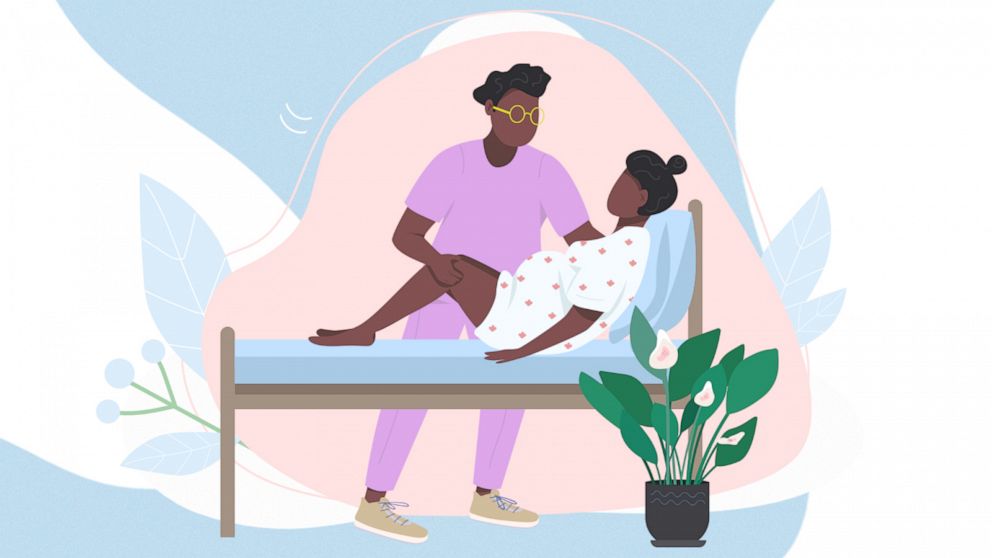
Earlier this week, President Joe Biden proclaimed that April 11 thru 17 would be Black Maternal Health Week in America. In Georgia, the state has consistently been ranked as one of the most dangerous places in this country to be a new mother. Approximately 26 Georgia women die from pregnancy complications for every 100,000 live births, compared to the national average of about 17 women. But even more devastating is the fact that about 60% of the state’s maternal deaths between 2012 and 2016 were found to be preventable, according to the Georgia Department of Public Health. And the mortality rates are much more tragic for Black women in Georgia. African American women are almost three times more likely to die from a pregnancy-related cause than white women in Georgia. Black mothers in rural areas of Georgia are at an even higher risk. “Maternal and infant mortality are really significant indicators of the quality of health in any area, so my colleagues around Georgia really felt challenged to do something that we hadn’t done in a long time in our state, which was to get the data,” says Dr. Chad Ray. “Because you can’t really fix something unless you know who and why. And then you assemble the stakeholders to formulate a plan to make a dent and to move the needle on something that is just so important.” This is an important topic that impacts mothers in Georgia and across the entire United States. And if you are a journalist looking to cover this topic – then let us help. Dr. Chad Ray is the Interim Section Chief of the Department of Obstetrics and Gynecology at the Augusta University Medical Center. He is an expert in the areas of maternal mortality & global women's health initiatives. Dr. Ray is available to speak with media about Black Maternal Health Week - simply click on his icon now to arrange an interview today.


Wastewater Hazards in Southwest Florida Spark Environmental Concerns Across the State and Beyond
Over the last week hundreds of millions of gallons of wastewater have spewed from a former fertilizer plant in Piney Point, Florida, which was abandoned in 2001 and taken over in 2006 by the Florida Department of Environmental Protection. The location is adjacent to Tampa Bay, a 400-square-mile body of water that separates Tampa, Clearwater and St. Petersburg and is full of fish, crabs, seagrass, dolphins, manatees and seabirds of every kind. The state plans to close Piney Point, scientists are trying to forecast what comes next and environmentalists fear algal blooms and fish kills (also known as fish die-offs). “There are hundreds if not thousands of these waste storage ponds in the United States and each one is a ticking time bomb,” says Villanova University’s Metin Duran, PhD, an expert on the biological processes of environmental engineering, including public health microbiology and biological processes for waste management. “The last major disaster was in December 2008, when a 40-acre pond used by Tennessee Valley Authority for the coal-burning Kingston Fossil Plant collapsed. The aftermath included damage to the area’s ecosystem and lawsuits.” Regulations regarding waste storage ponds are at the state level, and they aren’t very strict, says Dr. Duran. “Though there are strict design and groundwater monitoring requirements to ensure waste does not cause groundwater pollution, these waste impoundments are prone to have issues under extreme weather events, such as heavy rains. With the increased frequency of such events recently, there is a risk that more of such may fail.” Dr. Duran adds that it can be difficult to predict short- and long-term effects of the Florida case, but the reported low-level radioactive contamination could cause major damage to aquatic life and properties—and that phosphorous and nitrogen would cause eutrophication in Tampa Bay as well.
