
Experts Matter. Find Yours.
Connect for media, speaking, professional opportunities & more.

Can America’s Infrastructure Withstand The Digital Economy?
When a city like New York is facing a continuous delivery stream of more than 1.5 million packages a day, something has to give. The growing number of sales by Amazon and other online retailers, combined with rapid delivery options, is choking streets within major metropolitan cities. This issue was recently featured in The New York Times — and when the journalists needed an expert perspective, they contacted Rensselaer Polytechnic Institute. Here's an excerpt: The average number of daily deliveries to households in New York City tripled to more than 1.1 million shipments from 2009 to 2017, the latest year for which data was available, according to the Rensselaer Polytechnic Institute Center of Excellence for Sustainable Urban Freight Systems. “It is impossible to triple the amount,” said José Holguín-Veras, the center’s director and an engineering professor at Rensselaer, “without paying consequences.” Households now receive more shipments than businesses, pushing trucks into neighborhoods where they had rarely ventured. And it could be just the beginning. Just 10 percent of all retail transactions in the United States during the first quarter of 2019 were made online, up from 4 percent a decade ago, according to the Census Bureau. — The New York Times, October 28, 2019 If you are a reporter covering this or a similar topic, let our experts help! Professor José Holguín-Veras is the Director of the Center for Infrastructure, Transportation, and the Environment (CITE) at Rensselaer. He is a leading authority in freight transportation and humanitarian logistics. Professor Holguín-Veras is available to speak with media regarding the ongoing difficulties cities are facing as shopping moves online and to the streets. Simply click on his icon to arrange an interview.


In the latest round of legal decisions on the enforcement of international privacy laws between the EU and the U.S., Peter Swire, professor of Law and Ethics at the Georgia Tech Scheller College of Business, and associate director for Policy of the Georgia Tech Institute for Information Security and Privacy looks at how the EU may examine foreign intelligence surveillance in his article “Foreign Intelligence and Other Issues in the Initial Opinion in Schrems II” in Lawfare. The Schrems II case is the subject of the recent opinion from Advocate General (AG) Henrik Saugmandsgaard Øe before the Court of Justice of the European Union (CJEU). In the case, Austrian lawyer Max Schrems challenged Facebook’s ability to transfer personal data from the EU to the United States using the standard contractual clauses, which exist where a company such as Facebook follows EU-level privacy standards when private data is transferred outside of Europe. Schrems’s specific claim is that he cannot access any files that the National Security Agency (NSA) may have collected about him and lacks legal redress for any violation of his rights under EU law. Swire writes that the case examines the transfer of an individual’s personal data from the European Union to the United States using the standard contractual clauses and the Privacy Shield, which was negotiated in 2016 by the U.S. and the EU for privacy data transfers to the United States specifically. Facebook’s headquarters are in Ireland, and the Irish High Court ruled in favor of Schrems and certified 11 broad questions to the CJEU. The AG opinion published this week concerns this appeal in Schrems II from the Irish High Court. If Schrems wins this appeal, then many flows of personal data from the EU to the U.S. may become illegal. Swire’s expertise in U.S. privacy laws is extensive. He is a sought after privacy expert and he has been highlighted in Bloomberg Law, Le Monde, LawFare and numerous scholarly publications. He has appointments by courtesy with the College of Computing and School of Public Policy and is Senior Counsel with Alston & Bird, LLP. If you are a reporter covering this topic and would like to speak with Professor Swire – simply click on his icon to arrange an interview or email media@scheller.gatech.edu.

A President is Impeached – Now What?
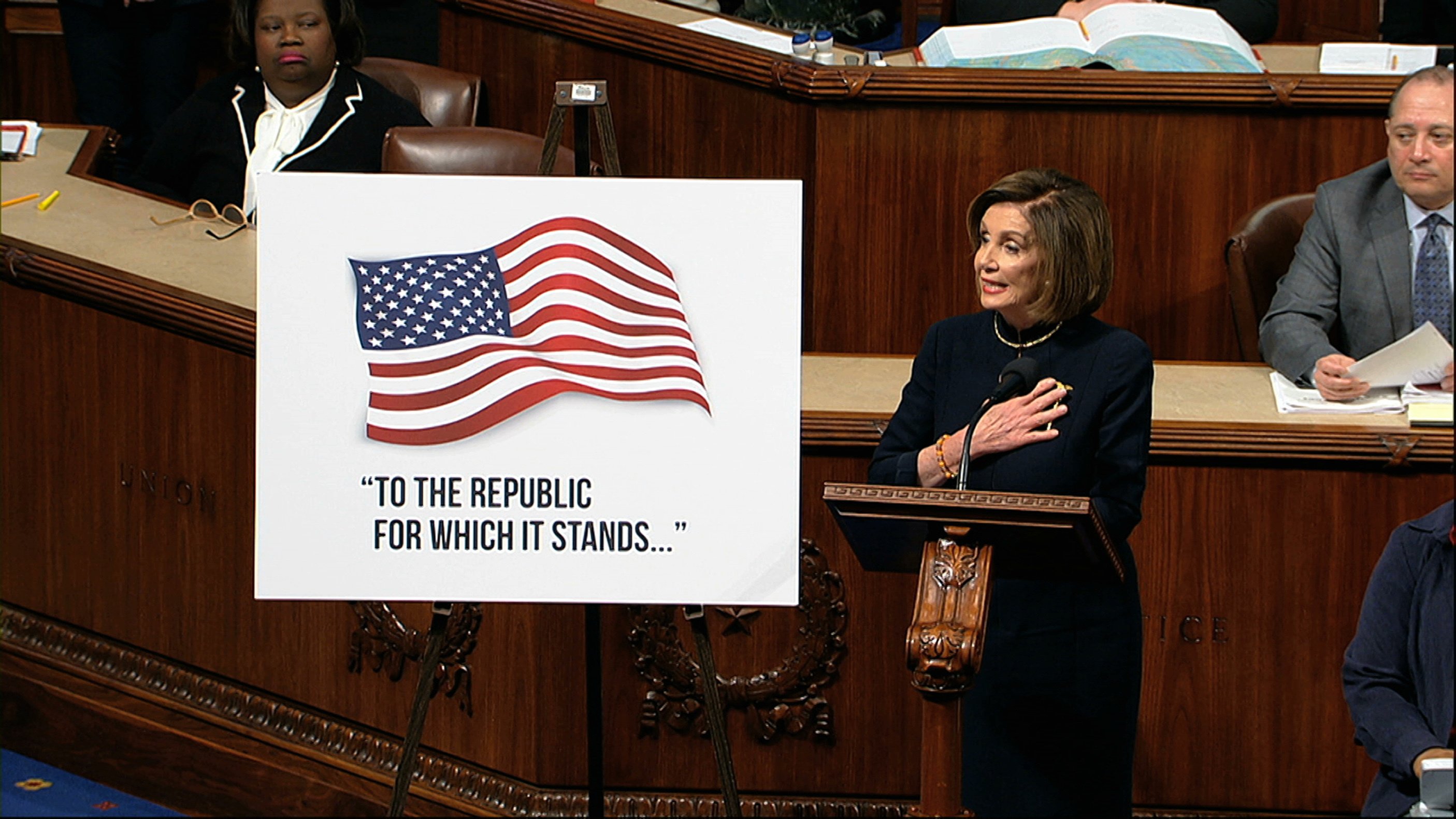
The numbers are in and for the third time in history – a sitting United States President has been impeached. But now what? There will be rhetoric, threats and predictions – but what is the process and what are the actual potential outcomes? This is a serious issue, and not just for either political party, but for the government and country as well. So, if you are covering – let one of the leading political experts in the country help with your stories. Dr. Stephen Farnsworth is a sought-after political commentator on subjects ranging from presidential politics to the local Virginia congressional races. He has been widely featured in national media, including The Washington Post, Reuters, The Chicago Tribune and MSNBC. He is author or co-author of six books on presidential communication. His latest work, "Presidential Communication and Character: White House News Management from Clinton and Cable to Twitter and Trump," examines how the last four U.S. presidents sell themselves and their policies in an ever-expanding and sometimes precarious media environment. Dr. Farnsworth is available to speak with media – simply click on his icon to arrange an interview today.



Villanova Experts Reflect on the 2010s
The iPad. Hurricane Sandy. Affordable Care Act. #MeToo. Brexit. Streaming services. Since 2010, there have been so many memorable and historic events that have shifted culture and society into unfamiliar territory around the world. Two Villanova experts have put together thoughts on a few of the decade's top stories that will continue to be relevant for the next ten years—and beyond. Stephen Strader, assistant professor of geography and the environment Over the last decade we have seen the issue of anthropogenic or human-induced climate change shift from something discussed between select, interested scientists to the front page of the news on a daily basis. This dramatic change in the importance and coverage of climate change makes complete sense given six of the last ten years globally have been in the top ten warmest on record. Actually, it's very likely, if not certain, that the last five years will be the hottest globally on record. The odds of that happening naturally are very close to zero. Nowhere have the effects of a changing climate been realized more so than in the western United States, where wildfires have wreaked havoc year after year in the 2010s. States such as California, Colorado, Kansas, Oklahoma, New Mexico and Washington all experienced record-breaking wildfires over the last decade. Specifically, the Camp Fire in 2018 became the deadliest and most destructive wildfire in California history, destroying 18,000-plus homes and killing 85 people in the town of Paradise. Additionally: Hurricanes Dorian, Irma, Harvey, Maria, etc. damaged entire countries (Puerto Rico and Bahamas) so much that there is question whether they will ever recover from the effects. The deadliest tornado season on record occurred in 2011, including the devastating April 27, 2011, tornado outbreak and the deadliest U.S. tornado in modern history, which struck Joplin, Missouri (158 fatalities). Between 2011 and 2017, drought and water shortages impacted the western U.S., with California seeing its worst drought in history (or worst in 1,200 years). The drought killed 100-plus million trees and resulted in water shortages that affected crops and caused municipalities to limit water use. Record-setting rainfall and floods occurred in locations such as Colorado, New York, Oklahoma, Texas, etc., resulting in hundreds dead and millions of dollars in crop losses. If the last 10 years have taught scientists, climatologists, policy makers and the general public anything, it's that we have our work cut out for us if we are to reverse this trend of increasing disasters around the world. The atmosphere continues to warm, and all model projections point to a progressively warmer future Earth if action is not taken. And this action can't be tomorrow or by 2025, 2050 or some other arbitrary year; it has to happen now if we want to reduce future economic and societal losses. Yes, it's easy to be afraid and fearful of the future when all we see as scientists and citizens are rising temperatures, deadlier disasters and a lack of drastic climate action. However, we can't let this fear result in crippling inaction; we have to let it motivate us to fight, not for just our futures but our children's, grandchildren's and great-grandchildren's futures. Let's give them a chance to see the world the way we used to: beautiful. Jerusha Conner, associate professor of education and counseling The latter half of this decade witnessed a resurgence of student activism, sparked by Black Lives Matter protests and the dramatic events at the University of Missouri in the fall of 2015. Highlighting 2015 as a pivotal year for student activism, the authors of the American Freshman National Norms survey deemed the 2015 freshman class "the most ambitious" group in 49 years of the survey's administration in terms of their expectations for participating in protests, connecting to their communities and influencing the political structure; and the numbers of freshmen who report having participated in demonstrations as high school seniors has ticked up every year since. In my own research with college student activists in 2016, I found three striking trends: Nearly half came to college already seeing themselves as activists; only 10% consider themselves single-issue activists (with more than half identifying seven or more issues their activism addressed); and a significant share were not protesting their own institution's policies or practices, but instead concerning themselves with broader social and political issues. They are what I call "outward-facing activists," who use their campuses to stage and mobilize campaigns, rather than as the targets of their change efforts. In the last couple of years, we have seen activism among high school students take off, as students have staged walkouts and school strikes to protest inaction on climate change and gun violence. Although these movements may appear narrowly focused on a single issue, the students involved have intentionally advanced an intersectional perspective, which draws attention to the racialized, economic and gendered dimensions of the multifaceted problems they are seeking to address. Digital natives, these young people have deployed the affordances of social media not only to mobilize their peers in large-scale collective action, but also to attract and sustain the attention of the media, pressure business leaders and politicians and shape public understanding of the issues. One interesting shift with this generation of student activists is that, rather than turning their backs on the system or seeking to upend it, they are focused on enhancing voter registration and turnout, especially among young people. And their efforts appear to be working. Youth turnout in the 2018 midterms was double that of 2014, and record numbers of youth are continuing to register to vote. As the decade comes to a close and the 2020 campaign season revs up, the engagement of student activists in electoral politics will be important to continue to track.


Media Training Can You Afford NOT to Be Prepared When Reporters Come Calling?
Want to see someone in a respected position of power throw away a career in all of about two minutes? Stephen Duckett was an expert in his field. Respected globally. Until this… Watch this exchange Duckett wasn’t prepared to deal with media. He paid a serious professional price and left a lesson for us all to learn from. In fact, his exchange is used by a lot of media trainers on exactly what not to do in a crisis situation. As a former news producer, I remember scrambling to find an expert opinion or perspective when news was breaking. If a story required explanation and when it was beyond the grasp of even the brightest of reporters we needed the help of supporting sources. They were critical in helping explain, validate, and ideally, break down just what was going on to our audiences at home. When an outbreak struck, we needed an epidemiologist. When a rare earthquake shook the region, the search for a seismologist was on. Finding the expert wasn’t usually the problem. We had local universities, colleges, and health care facilities within arm’s reach. However, finding an expert who could effectively speak on camera often was. Our goal was to keep people from turning the channel – so boring, highly technical speaking experts simply wouldn’t do it for us. When I worked in TV, we needed someone who could explain a complex subject, in layman’s terms, and in sound bites of about 15 seconds. It may not seem like much, but it is a lot to ask. Explaining high level content is not easy, but the reality is that your audience needs complex subjects explained in the simplest of ways. To do this right, it requires understanding the roles and goals of media and media training. Anyone who will be representing an organization, institution, or corporation needs some form of coaching. It’s a must-have requirement for most CEOs and politicians. Turn on your news at just about any hour of the day, and you can easily tell who has been properly prepared and trained and who hasn’t. It doesn’t happen organically. It takes work. It takes expert coaching. Media-friendly speakers bolster credibility and get noticed. In times of a crisis, a trained speaker may be the missing piece that can make or break a situation a reputation. Those who are not trained stick out—in a very bad way. They stammer, evade questions, ramble and are usually incoherent. If the task is mainly to describe a current situation, an untrained expert may ramble or speak hundreds of feet over the head of the average person. If there’s a crisis at hand—a tragedy, a scandal, a lawsuit or worse—an untrained speaker risks making a bad situation worse. Take a look back to July of 2013—an out-of-control train carrying crude oil exploded, destroying the downtown section of Lac Megantic, in Quebec, Canada. Thirty buildings were leveled, killing 47 people. In this small town, everybody knew somebody who was killed. Edward Burkhardt, president of Montreal, Maine & Atlantic Railway Inc. arrived shortly after the explosion. He was the near-perfect storm—an untrained, and likely uncoachable leader. He was clearly in distress, rattled, arrogant, and unprepared. He fixed blame at the worst possible time, blaming the train’s engineer and the local fire department. A journalist asked how much he was worth. A town is destroyed, the world is watching, close to four dozen people are dead, and his reply was, “I’m worth a lot less now than I was last week.” Proper media training and coaching would not have prevented the horrible tragedy, but knowing how to speak during such a high-stress situation and knowing what questions to expect might have mitigated the visceral reaction of residents, industry and government officials. As it stands, Edward Burkhardt and the company, no matter how successful either had been in the past, are now forever associated with that interview. Conway Fraser worked for the Canadian Broadcasting Corporation for almost 20 years. He’s a Gemini award-winning journalist who worked as a national reporter and investigative journalist. These days, he specializes in strategic and crisis communications as well as media coaching. Conway’s worked with some of Canada’s top corporate executives, academic leaders, and politicians. In both journalism and in PR, he has seen executives who have spent decades building a reputation only to have it destroyed in moments because they weren’t prepared to deal with the media. They’ve either never received media coaching or, Conway says, have taken mandatory training but were never further invested in. In other words, he says, they thought they didn’t need media training and were only taking it to appease the Board or ownership. “Proper media coaching isn’t just about knowing how to spew a main message, use effective body language or bridge away from challenging questions,” Conway says, “In my sessions I also teach my clients about the media, what their job is like, what a day is like for a reporter, what they need from you and how to respect their role. If anyone doubts the value of that, they’re playing with fire. Ask Stephen Duckett.” Natalie Duddridge is a reporter for NY1. I worked with Natalie years ago in Canada at the start of her career. Natalie’s talent as a journalist has taken her to Ottawa (Canada’s capital), Toronto, and most recently, New York. New York sits at the top (sorry L.A.) of media markets in the United States. It has a huge audience of about 10 million people and it is hands down the most competitive media game on the continent. Reporters in these markets never get to rest. They’re either chasing stories, or when they are covering a story they had better have an angle, source, or expert that the others do not. And when you are in a race with at least six other news outlets, standing out isn’t easy. Finding experts and having them ‘camera’ or ‘microphone’ ready is a must. As Natalie explained to me, getting an expert for a story is absolutely crucial. In a market as diverse as New York City, those experts can range from police to politicians, to health and education officials, to scientists and artists. Natalie also lent some great perspective on just how a reporter puts together a story and how your expert needs to know that news is also about storytelling and not just details. “Last week I did a story about the heroin epidemic plaguing the Borough of Staten Island,” Natalie explained. “We like to begin our stories with a human element, in this case a recovering drug addict. In addition to his personal opinions and insight about how to prevent and slow the opioid crisis in the region, we also reached out to the local Drug Rehabilitation Center and interviewed a doctor as well as a therapist. We also interviewed the Staten Island District Attorney about the work he’s doing with New York State Governor to get more dollars for a drug task force to do everything from put more money into preventative education, build rehab centers, add police, fund additional assistant district attorneys to process criminal cases.” If you were counting, you can see she spoke with three key experts on the subject of the story. Each was essential in the reporting process. “For this story we featured several different experts on varying opinions on how this current drug crisis should be dealt with. All of the facts, stats and data for this story were based on the officials and experts we contacted.” Being prepared and knowing what the reporter wants are also ideal elements in conveying the right message. For TV, short, smart, and to-the-point responses work best. “We need a 10 to 15 second sound bite that is ideally informative and clear, and in some cases entertaining,” Duddridge told me. “When I am making calls to experts, I essentially do a pre-interview over the phone to hear how clearly they can explain a topic. If they are great at breaking down studies and terms into focused ideas that are concise and fit into a two-minute story, our job as reporters is so much easier.” A win/win scenario. Your message is delivered, your institution and experts are promoted and the reporter files a great story. It all seems simple. But it’s not. It takes training and preparation. If you are going to offer up your experts for an interview, they need to be ready. Media training takes time, it costs money – but it’s an investment in your staff and your institution. As we learned from the example above, not knowing how to answer, interact, and respond to media can be devastating. Performing under pressure only succeeds with practice and training. If your experts are media trained the reward will always outweigh the risk. Here are a few tips: Get media trained – Use a professional media coach. It costs money, but the professional development, readiness, comfort, and ability to deliver will pay off ten-fold. Media-friendly experts get noticed – When your expert is on the news, people see them. They are representing your institution, so think about what this means for your credibility and recruiting potential. You never get a second chance at a first impression – An old, clichéd saying, but it’s true. A weak speaker who comes across poorly imprints a negative impression on viewers, peers and your institution as a whole. It’s amateur hour, and it doesn’t need to be. Friends for life – Once you prove yourself as a worthy and media-friendly source, the media will keep coming back. Experts who can provide journalists with the information, perspective, and sound bites they need are not only appreciated but noticed and remembered by all media. Once you have established yourself as a reliable source, expect the reporters to come calling time and time again. Dividends – Every story where your expert looks good is positive earned media. Getting on NBC, CBS, FOX or any other nightly newscast is a huge win for your Communications Department. It’s exposure, promotion, and advertising—and it’s free.



November has been a busy month for Cedarville University’s Mark Caleb Smith. As the Director of the Center for Political Studies at Cedarville, Smith has found himself doing double duty as both professor and the go-to person and pundit for local, state and national political coverage In November Smith was interviewed by TV, radio and print for issues pertaining to impeachment, Michael Bloomberg entering the presidential race and the DNC debates. Mark Caleb Smith averages approximately 160 media interviews a year – and for good reason. He teaches courses in American Politics, Constitutional Law, and Research Methodology/Data Analysis and has fast become a media-ready expert who provides accurate, objective and laser-cut insight to reporters and journalists covering politics. If you’re a journalist covering politics – let Mark Caleb Smith help with your stories. He’s available, simply click on his icon to arrange an interview today.


Climate Change: A Direct Threat to Older Adults
Climate change will impact the health of all populations, but older adults are uniquely vulnerable because of the physiological changes of aging. More than half of older adults in the United States live in areas that disproportionately experience the effects of heat waves, forest fires, hurricanes and coastal flooding. Pennsylvania, New York, California, Florida and Texas account for the top five states where older adults are concentrated. Older adults who live in urban areas are vulnerable to heat island effect—the concentration and retention of heat in urban areas compared to rural areas—which places older residents in cities at increased risk of heat related illnesses and death. “Gerontological nurses need to be prepared to address the specific issues of older adults,” says Ruth McDermott-Levy, PhD, director of the Center for Global Health at Villanova University’s M. Louise Fitzpatrick College of Nursing. “We want to help nurses understand climate change and the need for specific interventions to support climate adaptation for the older adult population.” Climate change impacts require modifications in health plans for older adults. Prolonged heat will require greater needs for hydration, but the patient’s other conditions need to be considered as well. Elders with heart disease and renal failure will require astute nursing assessments to monitor the balance of hydration and electrolytes while not leading to fluid overload or electrolyte imbalances in the presence of extreme heat. With their research, practice and influence over policy, gerontological nurses are in an important position to be changemakers by measuring and documenting the harm and impact of climate change on older adults. They can advocate for measures that support older adults in disasters or extreme weather events. Nurse researchers can collaborate with climate scientists and policy makers to develop initiatives and programs that rely on climate and health evidence to support climate mitigation and adaptation for the older adult. “It is everyone’s responsibility to learn about climate change and to participate in slowing the trajectory of climate change,” Dr. McDermott-Levy says.


A Lego-Like Approach to Improve Nature’s Own Ability to Kill Dangerous Bacteria
The Centers for Disease Control and Prevention considers antibiotic resistance one of the most urgent public health threats, one that affects communities worldwide. The ramifications of bacteria’s ability to become resistant to antibiotics can be seen in hospitals, public places, our food supply, and our water. In their search for solutions, researchers at Rensselaer Polytechnic Institute have been looking to nature. In a paper recently published in Biomacromolecules, the team demonstrated how it could improve upon the ability of nature’s exquisitely selective collection of antimicrobial enzymes to attack bacteria in a way that’s much less likely to cause bacterial resistance. “The idea is that we could take nature’s approach and just make it better,” said Jonathan Dordick, a chaired professor of chemical and biological engineering and a member of the Center for Biotechnology and Interdisciplinary Studies (CBIS). In order for bacteria to grow and live, they naturally produce autolysin enzymes that can break down their own cell walls, allowing those cells to divide and multiply. In attacking one another, bacteria take advantage of a similar process, using an antibacterial protein known as a bacteriocin to kill a bacterium. Bacteria can also be attacked by bacteriophages, which are viruses that infect bacteria. They produce phage endolysin enzymes, which attack the bacterial cell from the inside. All three types of enzymes are broadly known as cell lytic enzymes, as they catalyze the breakdown of the bacterial cell wall. “It’s very difficult for bacteria to become resistant to the action of these enzymes,” Dordick said. “For example, if they became resistant to an autolysin, they wouldn’t divide.” Like building blocks, most cell lytic enzymes are modular. They’re made up of one binding domain which attaches to the cell wall, and a catalytic domain that breaks holes in the cell wall — effectively destroying the targeted bacteria. “The idea was: Could we use a Lego-like approach here? Could we take a binding domain from one enzyme and can we mix it with a binding domain or catalytic domain of another one?” Dordick said. The issue of antibiotic resistant bacteria and disease is a serious one and of great concern to the medical community. If you’re a journalist covering this topic or are looking to know more about the ongoing research into this field – let our experts help. Jonathan S. Dordick is the Howard P. Isermann Professor of Chemical and Biological Engineering at Rensselaer Polytechnic Institute where he is also the Senior Advisor to the President for Strategic Initiatives. Dr. Dordick is available to speak with media regarding this topic - simply click on his icon to arrange an interview.


Why are the wolves of Wall Street so worried about Elizabeth Warren?
Elizabeth Warren started her campaign for the presidency far from being the front-runner. She trailed the likes of Joe Biden and Bernie Sanders dramatically, often in third place or worse and usually in single digits. But her resolve stood, she provided plans and policy planks. And … she found a target and took aim at the wealthy. All of her ideas that include costly policies about health care and education come with billion- and even trillion-dollar price tags. Usually these concepts are laughed off the debate stage – but Warren carefully and strategically costed them out. And those covering the costs of her ideas are the banks along with the rich and wealthy. Her ideas caught fire with supporters and now Warren is seen as a legitimate contender for the White House. It has some nervous and many taking notice. It’s a role that Ms. Warren unabashedly embraces, as an increasing number of voters, as well as a few veterans of the finance industry, see her as the policymaker who can address the growing wealth gap in the United States and take on the corruption and excess in the business world. Ms. Warren has made battling corporate greed and corruption a central theme of her fiercely populist campaign, mixing anti-elitist oratory with policy plans calling for sweeping new regulations. On Friday morning she released an ambitious proposal to pay for her “Medicare for all” program, with provisions directly affecting Wall Street: aggressive new taxes on billionaires, an additional tax on financial transactions like stock trades and annual investment gains taxes for the wealthiest households. Just hours later she told an audience in Iowa: “Our democracy has been hijacked by the rich and the powerful.” Interviews with more than two dozen hedge-fund managers, private-equity and bank officials, analysts and lobbyists made clear that Ms. Warren has stirred more alarm than any other Democratic candidate. (Senator Bernie Sanders, who describes himself as a socialist, is also feared, but is considered less likely to capture the nomination.) November 04 – New York Times Are you a journalist covering the race for the Whitehouse? Then let our experts help. Dr. Stephen Farnsworth is professor of political science and international affairs at the University of Mary Washington. A published author and a media ‘go-to’ on U.S. politics, he is available to speak with media regarding this topic. Simply click on his icon to arrange an interview.

U.S. economy continues to expand, but at a slower pace, reaching about 2 percent growth in 2020
INDIANAPOLIS -- The U.S. economy will continue to expand for a 12th consecutive year in 2020, but by only about 2 percent and struggling to remain at that level by year's end. Indiana's economic output will be more anemic, growing at a rate of about 1.25 percent, according to a forecast released today by the Indiana University Kelley School of Business. Over the past year, political dysfunction and international trade friction have disrupted supply chains and eroded both consumer and business confidence. U.S. employment has grown during 2019 but will decelerate throughout 2020, well short of 150,000 jobs per month and possibly to about 100,000 by year's end. A tight labor market will continue to be an issue for many companies. "The total number of job openings in the economy peaked in late 2018," said Bill Witte, associate professor emeritus of economics at IU. "Average hours worked have been flat over the past year, and auto sales have been flat for nearly two years. Given the reliance of the U.S. economy on consumer spending, these are disturbing signs. But they are vague signs, and not enough to convince us that the end of the expansion is in sight. "We expect that growth will be weaker than in the past two years, and this outlook is likely a best-case outcome," he added. "There is massive uncertainty in the current situation." The Kelley School presented its forecast this morning to Indianapolis community and business leaders at IUPUI. The Business Outlook Tour panel also will present national, state and local economic forecasts in seven other cities across the state through Nov. 20. Indiana's more meager economic growth expected in 2020 can largely be attributed to the outsized presence of manufacturing and particularly tight labor markets, said Ryan Brewer, associate professor of finance at Indiana University-Purdue University Columbus and author of the panel's Indiana forecast. Manufacturing contracts more rapidly versus other areas of the economy, and tight labor markets limit employers' capacity to grow, he said. Expectations about business investment have fallen short, and corporations have been buying back stock instead of making capital investments. The trade war with China and slowing global expansion have also affected state manufacturers. The world is about to record its slowest economic growth since the financial crisis of 2009. Next year, global growth is projected at 3.4 percent, with downside risks continuing to build. China and the European Union each face structural issues amid tariffs imposed by the United States. Brexit remains unresolved. Recent data from the Institute for Supply Management showed that manufacturing activity has slowed to its lowest rate since the beginning of the Great Recession. Indiana has sought to diversify its economy in recent decades, but manufacturing output represents nearly 28 percent of gross state product. Indiana continues to lead the nation in manufacturing employment, with more than 17 percent of its jobs in that sector. "Constrained by a historically tight labor market, Indiana is expected to experience slow growth in jobs and gross output, along with the possibility for continued rising wages," Brewer said. "With fewer and fewer available people to hire, tightness of the Indiana labor markets will serve as a drag to output and employment growth." The outlook for the Indianapolis-Carmel-Anderson metropolitan statistical area is slightly better, with expected growth between 1.5 and 2 percent. "Indianapolis continues to draw in talent and investment that should help it exceed the overall state level of growth," said Kyle Anderson, clinical assistant professor of business economics. "However, there is risk that weakness in the broader economy, and especially weakness in manufacturing, could make this forecast too optimistic." Other highlights from the forecast: The national and state unemployment rates will hold steady. The nation's rate could be below 4 percent by year's end, and the state will stay at or below full employment through 2020. Inflation will rise and end 2020 close to the Federal Reserve's 2 percent target. The stock market will struggle to get average returns with headwinds from trade, supply chain disruption and policy uncertainty. Earnings continue to exceed expectations, yet lack of definitive trade consensus continues to drive headwinds. Interest rates will remain low. The 10-year Treasury rate should stay below 2 percent and mortgages below 4 percent. Speculative grade bond yields have been rising, indicating increased risk of insolvency for marginal firms. Entry-level wage growth could cause costs to rise, earnings to fall and growth to stagnate for firms heading into 2020. Energy prices will be relatively stable, with average prices similar to those in 2019. Business investment will remain weak, although a little improved from this year. Housing will achieve a meager increase, ending two years of negative growth. Government spending will grow, but much more slowly than the past year, as the impact of the 2018 budget deal ends. The starting point for the forecast is an econometric model of the United States, developed by IU's Center for Econometric Model Research, which analyzes numerous statistics to develop a national forecast for the coming year. A similar econometric model of Indiana provides a corresponding forecast for the state economy based on the national forecast plus data specific to Indiana. A select panel of Kelley faculty members, led by Indiana Business Research Center co-director Timothy Slaper, then adjusts the forecast to reflect additional insights it has on the economic situation. A detailed report on the outlook for 2020 will be published in the winter issue of the Indiana Business Review, available online in December. In addition to predictions about the nation, state and Indianapolis, it also will include forecasts for other Indiana cities and key economic sectors. Presenting the forecast at the Indianapolis Business Outlook Tour event were Phil T. Powell, associate dean of Kelley academic programs at Indianapolis and clinical associate professor of business economics and public policy; Cathy Bonser-Neal, associate professor of finance; and Anderson.
