
Experts Matter. Find Yours.
Connect for media, speaking, professional opportunities & more.

Experts in the Media: How to keep loyal customers in post-pandemic world
The COVID-19 pandemic forced many firms to revisit how they look after loyal customers. Enforced border restrictions impacting many countries meant millions of people have been unable to redeem points or enjoy the privileges associated with customer loyalty programs. But with the world opening back up two years later - how those loyalty programs need to adapt has become a hot topic for journalists covering business and travel. Recently, the work of Hyunju Shin, Ph.D., associate professor of marketing at Georgia Southern University, was featured in Mirage, an article that detailed how big players like Singapore Airlines and Marriot managed to keep key customers still incentivized and loyal even though they were stuck at home. If you're a reporter looking to know more - then let us help. Hyunju Shin, Ph.D, is available to speak with media - simply reach out to Georgia Southern Director of Communications Jennifer Wise at jwise@georgiasouthern.edu to arrange an interview today.


There's a lot more to bats than their spooky reputation
By Emma Richards More than 50,000 students call the University of Florida home, and while that is a lot of Gators, the campus is home to even more bats. Hundreds of thousands of the misunderstood mammals live across from Lake Alice, where they dwell in the world’s largest occupied bat houses. The colony of bats was initially discovered at the UF track and tennis stadiums in 1991. In the spots where fans were cheering, bats were roosting – causing a mess and a notable stench. That same year, the UF Athletics Association built a house to rehome the bats from the stadiums. But the night after they were transported to their new home, all the bats left, and did not return for three years. Now, the houses are primarily occupied by around 400,000 to 500,000 Brazilian free-tailed bats that remain at UF year-round and do not hibernate or migrate. “They do all these great things for us and then we turn around and we're scared of them,” Mathis said. Verity Mathis, the mammal collections manager at the Florida Museum of Natural History says bats are the only mammals that can fly, and the Brazilian free-tailed species found at UF are tremendous at it. “They’ve actually been documented to go as fast as 100 miles an hour in like short bursts, which is just amazing to think about,” she said in an episode of the From Florida podcast. “This one species is just capable of so much.” Along with their fast flight, Brazilian free-tailed bats can go as high as 9,000 to 10,000 feet in the air and venture over 30 miles a night forging for insects like mosquitos, moths, beetles and flies. Despite being associated with blood-sucking vampires in popular culture, only three out of 1,400 bat species drink blood and they aren’t located in North America. Bats do not want to attack humans; in fact, they avoid people using their vision and echolocation skills. Bats can live for many decades and are more closely related to humans than they are to rodents. They also provide critical environmental services such as pest control, fertilization and pollination. Mathis says bats are misunderstood. “They do all these great things for us and then we turn around and we're scared of them,” she said. “We want to be respectful of them and of their lifestyle and we don't want to encroach upon them and bother them.” Mathis says if people do encounter an injured bat, they should not touch it with their bare hands because bats can carry rabies. It is best to put on thick gloves, place the bat into a container and call a local wildlife rehabilitation center. There are 13 bat species in Florida, and two of them are endangered. The Florida Wildlife Commission is actively monitoring those populations. In Alachua County, people and businesses, including Swamp House Brewery and Lubee Bat Conservancy, have bat houses on their properties. Mathis advises those interested in putting a bat house in their yard to do research to ensure that the right kind of house is purchased and that it is placed in the proper location to align with Florida’s specific requirements, which can be found here on the UF/IFAS website. For Mathis, these are all steps toward accepting a widely misunderstood mammal. “I think as long as we continue these conversations about telling people how cool bats are then maybe eventually pop culture will catch up to that,” she said. To hear more about bats, listen to the episode on From Florida at this link. Listen to other episodes in the From Florida podcast here. Watch a recent video featuring Verity Mathis here: https://youtu.be/vbFZfVwGwYE



Future You scholarships are open to UK postgraduate students starting in September 2022 Up to 100 scholarships on offer worth £2,200 each Scholarships celebrate Aston University’s status as an Official University of the 2022 Birmingham Commonwealth Games. Aston University has launched a new scholarship scheme to celebrate its status as an Official University of the Birmingham 2022 Commonwealth Games. The Future You scholarships are open to UK postgraduate students starting their course at Aston University in September 2022. Up to 100 scholarships worth £2,200 each are available. To be eligible to apply, students must hold an offer for one of Aston University’s full-time, on campus MA or MSc programmes. Applicants are required to provide a 500-word personal statement to explain how they will benefit from the opportunities provided by Aston University and the city of Birmingham during their period of study. Louise Foster-Agg, director of admissions at Aston University, said: “The Birmingham 2022 Commonwealth Games will create unprecedented opportunities for our city and region, as the eyes of the world turn to Birmingham. They will transform the city and leave a lasting legacy for years to come. “Aston University is proud to be an Official University of the Games and we are delighted to be able to offer these scholarships as part of that legacy.” The deadline for applications is 8 August.


Looking for a 'real' expert to explain the latest advances in virtual reality? We're here to help!
Virtual reality is quickly becoming an actual necessity in all facets of technology, education, entertainment and the workplace. It's a popular topic, and Augusta University's Lynsey Steinberg sat down to answer a few questions about how far VR has come and where it's going. VR is changing everyday life for many. What are the biggest advances you've seen in VR use? Virtual reality is rapidly evolving and expanding. It wasn’t too long ago we were excited for the idea of a wireless head set. Now there are companies such as Virtuix creating 360-degree treadmills to interact with your experience in VR and Hypnos VR (a product which releases scents in the air based on the experience in VR). There have been advances of adaptive and stress response simulations based on pupillometry measurements or even integration of physiological sensors for behavioral research. The biggest advancements are solutions that have been unimaginable before that are now entirely possible. It seems the medical field has been a big benefactor of VR. Is this giving students a better way to "learn" about anatomy and other aspects of the field? I believe all experience is valuable to learning. VR is unique in allowing an individual to view as if from their own perspective for virtual experiential learning. We often hear the phrase, “If you could imagine walking a mile in someone else’s shoes,” and now we can provide perspective, allowing another person to view the world as someone with a particular disease or simulate training in a low-risk environment. One example, Fire in the OR, is a VR simulation allowing medical professionals to train safely on how to remove fire danger in the operating room. I believe simulations like these are remarkable examples of how valuable VR can be in education, to remove elements of danger in everyday life. Their research showed 250% improvement rate on fire safety in the OR. A huge industry leader in surgical simulations is Osso VR, creating surgical training procedures for surgeons and hiring some of our Augusta University medical illustration graduates. How is this being applied at Augusta University? The Center for Instructional Innovation created modules with the Medical College of Georgia on handwashing hygiene health and end-of-life care scenarios with the College of Nursing. We encourage faculty to develop multiple methods of interactive modules for the benefit of all learning styles. VR certainly provides engaging and enriching materials for a low-risk environment in instruction. The Center for Instructional Innovation is currently working with the Academic Student Success Center to implement Oculus Quest head sets for anatomy and physiology students to benefit from application use in VR. Augusta University student Henry Oh and his 3D printed pottery from VR sculpture. How else has VR and its use changed the way we go about our daily lives? VR head sets are known in robotics, manufacturing, therapeutic modalities, gaming capabilities, technology in research and education. Any scene you can film in 360 degrees you can now watch in a headset and be fully immersed in the scene (ie: a theater production, a museum tour, an art exhibit, a temple historically preserved, etc). We have gone from telling a story to being immersed in a story. We have been able to utilize VR technology integration and innovation on campus to create enriching learning experiences. We collaborated with our Ceramics department (with Brian McGrath and Raoul Pachecho) to support students in virtual clay sculpting with Adobe Medium. Students 3D printed their works of art after exporting the files from the VR simulation. Where do you see the future of VR? The future developments for integrating systems for haptic feedback will be remarkable integrations. The continued development of behavioral research and integration of gamification is an exciting opportunity in VR as well as the continued development for protocols and appropriate safety procedures. The cross-platform and cross-disciplinary possibilities will allow for creativity to blossom in new world solutions. It is clear, the ongoing need for technical workforce required to create and support more VR and other high-impact technology is rapidly growing. VR is a fascinating topic and if you're a journalist looking to know more by speaking with Steinberg, then let us help. Steinberg is one of the 300 board-certified medical illustrators with experience in hands-on surgery in the operating room, utilizing development in virtual reality, 3D printing, animation, gamification and graphic design while working directly with students, faculty and physicians. Steinberg is available to speak with media -- simply click on her icon now to arrange an interview today.


Lecturer Carol Jordan, left, and student Anna Bryan assist with a vitamin D assay as part of a study on racial disparities and cardiovascular health. Researchers in the Waters College of Health Professions (WCHP) at Georgia Southern University are studying why Black adults in America are 30% more likely to die from cardiovascular disease (CVD) than white adults through a study on racial disparities and cardiovascular health. Faculty and graduate students in the University’s Biodynamics and Human Performance Center and Medical Laboratory Sciences program have teamed up to examine the biological basis for these racial differences to aid in the development of effective prevention and treatment strategies. “More than half of this racial disparity may be attributed to substantially greater rates of high blood pressure and vascular dysfunction in Black adults,” said Greg Grosicki, Ph.D., principal investigator on the study and assistant professor in WCHP). The team is examining the difference in skin pigmentation, which can influence cardio preventive vitamin D levels. Through the use of an enzyme-linked immunosorbent assay (ELISA), a biochemical test to measure antibodies, antigens, proteins and glycoproteins in biological samples, the team is able to measure vitamin D levels in plasma samples. By pairing vitamin D values with measures of skin pigmentation and the team’s comprehensive assessments of cardiovascular health, they are able to determine whether low vitamin D levels may be contributing to higher blood pressure and vascular dysfunction in Black adults, which will help inform future interventions and therapeutic strategies seeking to alleviate racial disparities in CVD. The ELISAs were purchased using a Graduate Student Organization grant awarded to Josiah Frederic, a graduate student studying sports medicine. The research team consists of both faculty and students from the Department of Health Sciences and Kinesiology as well as the Department of Diagnostic and Therapeutic Sciences. Team members include the following: Brett Cross, graduate sports medicine student Joe Vondrasek, graduate sports medicine student Josiah Frederic, graduate sports medicine student Zoe Lincoln, undergraduate health science student Peter Gaither, graduate sports medicine student Wesley Blumenburg, graduate sports medicine student Andrew Flatt, Ph.D., assistant professor Greg Grosicki, Ph.D., principal investigator and assistant professor Amy Frazier, lecturer Carol Jordan, clinical coordinator and senior lecturer Anna Bryan, undergraduate medical laboratory sciences student If you're a reporter looking to know more about this important research - then let us help. Greg Grosicki, Ph.D., is available to speak with media - simply reach out to Georgia Southern Director of Communications Jennifer Wise at jwise@georgiasouthern.edu to arrange an interview today.

Georgia Southern student recognized for registering 300 bone marrow donors
Brianne Dollar (pictured center-right) receives the Steve Bochco Award at the Gift of Life gala in Los Angeles. She received the honor thanks to her being responsible for more than 30 fundraising drives and registering over 300 bone marrow donors. A Georgia Southern University student is saving lives, and is now receiving national recognition for her work. In May 2022, Dollar attended a gala in Los Angeles for Gift of Life, an organization supporting bone marrow transplants. Dollar has been an ambassador for the organization for years and is responsible for organizing events in the group’s name. While there, she was surprised with the Steve Bochco Award, named after the late television writer and producer, who had leukemia. The accomplishment is the culmination of hard work and passion for the cause. For Dollar, the journey was far from an easy one. Brianne Dollar's story is attached below - it's a great story and a must read: If you're a reporter looking to know more about Brianne or if you're looking to speak with her directly - then let us help. Simply reach out to Georgia Southern Director of Communications Jennifer Wise at jwise@georgiasouthern.edu to arrange an interview today.

For two years during the COVID-19 pandemic, U.S. public schools have been able to provide free meals for all students, including to-go meals in the summer. But on June 30, 2022, the federal waivers that expanded the school lunch program will expire. In a recent Q&A published by The Conversation, Marlene Schwartz, a professor of Human Development and Family Sciences at the University of Connecticut and the director of the Rudd Center for Food Policy & Health, discusses how these changes will affect children and families and how food pantries can help: What are the effects of making school meals free for all students? The findings are pretty clear that when students have universal free meals, participation in school meals programs goes up, so more children eat them. And research shows that the meals that are provided through the school meal program are of higher nutritional quality than the meals that children bring from home or get from other places. Some studies have found that when you provide universal free meals, you have improvements in academic performance, particularly for students who are at higher risk. There is also evidence in some studies that universal free school meals help improve family food insecurity rates. When a family knows that their child can get breakfast and lunch every day at school, it really allows them to save their food budget to purchase other foods for the house. And that helps them be more food-secure. What is the role of food banks and pantries in shaping the diet and health of vulnerable children and families? Within the charitable food system, there’s been a real shift in thinking that has been a change from giving away as many pounds of food as possible to really looking at the nutritional quality of those pounds. That’s thanks in part to Feeding America, which is a national network of food banks, and Partnership for a Healthier America, which is part of Michelle Obama’s Let’s Move initiative. Both of them are working with food banks around the country to really help them track the nutritional quality of their food and set goals for themselves in terms of maximizing the most nutritious foods they are able to distribute. Dr. Schwartz is an expert on school wellness and nutrition programs and food insecurity. She's available to speak with media - simply click on her icon now to arrange a time today.


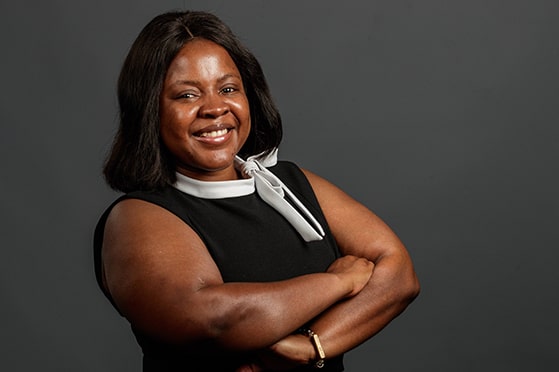
‘Rising star’ graduate: Sylvia Ofori’s journey from Ghana to Georgia Southern to Harvard
On her first flight from Ghana to the United States, Sylvia Ofori arrived in Atlanta, Georgia, at 1 a.m. By 4 o’clock the next afternoon, Ofori was in her first American classroom in Georgia Southern University’s Jiann-Ping Hsu College of Public Health on the Statesboro Campus. Jet-lagged and attempting to absorb a foreign campus and classroom procedures, Ofori was out of sorts when her professor, Isaac Chun-Hai Fung, Ph.D., encouraged her to apply for a student research position following class introductions. Within days, she’d interviewed and earned the spot, supported by funding from the Centers for Disease Control and Prevention. In their first meeting, Fung challenged Ofori to publish 10 papers by the end of her public health doctoral program. “I wasn’t familiar with publications, but he threw that challenge at me from the beginning,” Ofori remembered. “Wow. His plan was for me to start working on dissertation-related projects immediately.” Ofori’s first project was a scoping review on the use of digital technology to improve and monitor handwashing in children. Following a presentation of her review at the University’s 2019 Research Symposium, her work was published in an academic journal, and many more followed as co-author with Fung and another mentor, Kamalich Muniz-Rodriguez, DrPH. By the end of her doctoral training, Sylvia had published 11 papers with Fung, and three more manuscripts will be submitted. On May 13, Ofori earned a DrPH in public health with a concentration in epidemiology as she crossed the stage in one of two Savannah commencement ceremonies. In June, she’ll begin as a Postdoctoral Fellow in the Department of Epidemiology at Harvard University to continue global public health research she began at Georgia Southern. There's a full article detailing Sylvia's amazing story - and her success to date. It's attached here: If you're a reporter looking to know more about Sylvia's story, or how Georgia Southern has students from around 100 countries across the world currently studying on both the Statesboro Campus and the Armstrong Campus in Savannah. Simply reach out to Georgia Southern Director of Communications Jennifer Wise at jwise@georgiasouthern.edu to arrange an interview today.

Georgia Southern launches Asian Studies Digital collection
Georgia Southern University Libraries and Nalanda Roy, Ph.D., recently launched a digital collection, “An Integral History: Asian Studies Digital Archive.” The archive provides a curated collection of multidisciplinary resources in support of the Asian American and Pacific Islander community in the United States. Contributions are curated from Digital Commons, the University’s open-access institutional repository, and highlight Georgia Southern’s scholarly and cultural assets related to the Asian Studies minor. The collection represents faculty and student research, books, videos, community resources and campus events. “The Asian Studies Digital Archive is an important addition to Georgia Southern’s collections because developing an understanding of other cultures will create a cultural awareness,” said Roy, an associate professor of international studies and Asian politics and coordinator of the University’s Asian Studies program. “It will also teach us to have more meaningful interactions with others around us, and celebrate our differences and similarities.” Each May, Asian American and Pacific Islander Heritage Month is observed to recognize the Asian Americans and Pacific Islanders who have contributed to American history, society and culture. The Asian Studies Digital Archive will carry that legacy forward, and continue to grow, as faculty are encouraged to participate in the initiative. “As the coordinator of the Asian Studies program at Georgia Southern University, creating the Digital Archive has been a dream project,” said Roy, who is a Certified Diversity Executive and a former Inclusive Excellence Faculty Fellow at Georgia Southern. “I am very happy to work with the Georgia Southern Libraries to create a resource that will be helpful to both the Georgia Southern and local communities.” For more information on the Asian Studies Digital Archive, visit: Facts about Asian American and Pacific Islander Heritage Month *U.S. Census Bureau 1978 — Congress passed a resolution creating Asian/Pacific American Heritage Week. 1992 — The observance expanded to a month (May), timed to coincide with two important milestones in Asian/Pacific American history: arrival of the first Japanese immigrants in the United States (May 7, 1843) and completion of the transcontinental railroad on May 10, 1869 (the majority of workers who laid the tracks were Chinese immigrants). 2020 — Total Asian population in the U.S. is roughly 6% or 20 million. 5.1 million — The estimated number of the Asian population of Chinese, except Taiwanese, descent in the U.S. in 2020. The Chinese (except Taiwanese) population was the largest Asian group in the U.S. 690,000 — The estimated number of total Native Hawaiian and Other Pacific Islander population in the U.S. 607,010 — Native Hawaiian residents make the largest NHPI group in the U.S If you're a reporter looking to know more about "An Integral History: Asian Studies Digital Archive" - then let us help with your coverage and stories. Nalanda Roy, Ph.D., is available to answer your questions - simply reach out to Georgia Southern Director of Communications Jennifer Wise at jwise@georgiasouthern.edu to arrange an interview today.

Georgia Southern students expand communication disorder awareness amidst Deaf Culture Renaissance
At Georgia Southern, a group of students is taking courses to grow the number of interpreters in their communities and their fields. Each student comes to class with their own motivations to learn ASL. “Most of the deaf people, myself included, feel kind of depressed,” signed Angellia Burnett, a volunteer assistant in Georgia Southern University’s American Sign Language (ASL) course. “We miss a lot of things in life, because it has always been a struggle with communication.” Burnett grew up deaf, and is the only person in her family who is deaf. Members of her family speak ASL, but she said many in the Deaf community continue to be left out of family conversations because not everyone will sign all of the time. This leaves Deaf family members feeling isolated even within their own homes. “Not everyone accepts my deafness,” Burnett signed. “They need to know Deaf culture. They need to accept that.” One of the most effective ways of accepting someone is by understanding the challenges they face. Over the past few years, the world has experienced a Deaf culture renaissance, where the inclusion of people who are deaf becomes more mainstream. Recently, the film “CODA,” which stands for “children of deaf adults,” won the 2022 Academy Award for Best Picture. This brought Deaf culture further into the spotlight, opening many eyes into the lives of those with hearing impairments. “What that means is it embraces the entire community,” said Dana Taylor, Ph.D., Georgia Southern adjunct professor and sign language interpreter. “It’s not isolating one group as being different. Individuals get to see the struggles and challenges and the triumphs that people experience.” At Georgia Southern, a group of students is taking courses to grow the number of interpreters in their communities and their fields. Each student comes to class with their own motivations to learn ASL. Some are learning sign language because they have people in their lives with hearing impairments or other communication disorders where sign can be advantageous. Others are there to develop their Sign skills as a professional tool. “If I had a client who spoke ASL, I’d be able to communicate with them better or make them feel more comfortable,” said Ricki Botsford, speech pathology student. “I’ve learned a lot about how broad communication can be, because there are so many ways to communicate outside of the verbal option.” When the students were asked if they had tried learning other languages like Spanish or French, every hand was raised. When asked if they stuck to learning them, all but a few went down. So what makes Sign different? “It’s a lot easier to integrate into every day,” said Adia Greer who’s studying to be an athletic trainer for Deaf athletes. “I can speak it verbally, but I can also sign it. I’ve picked up signing to my cat a lot. She doesn’t understand it, but it allows me to practice.” While the students practice Sign with their pets and favorite TV shows, Burnett continues to come to class to help show her students the world they share, but not the one they see. Georgia Southern has a network of Student Accessibility Resource Centers on the Statesboro and Savannah campuses providing interpreters for students who want to attend classes and interact with their environment, as well as many other resources for students who are hard of hearing. “The whole world needs to learn Sign,” Burnett signed. “I want to see people motivated to learn. I see a lot of Hearing people who are motivated to learn, and a lot of Deaf people that want to help make them successful. I’m really proud that I can help in that.” If you're a reporter looking to know more about this important topic - then let us help with your coverage and stories. Dana Taylor, Ph.D., is available to answer your questions - simply reach out to Georgia Southern Director of Communications Jennifer Wise at jwise@georgiasouthern.edu to arrange an interview today.