
Experts Matter. Find Yours.
Connect for media, speaking, professional opportunities & more.

Covering the music beat? Then tune in and get in touch with our resident hip-hop expert
Augusta University Professor Adam Diehl is an expert in hip-hop culture, lyrical analysis, rap as a form of literature and specifically, the works of Kendrick Lamar. Diehl gives an update on what's new in hip-hop and of course, answers questions about Lamar and his highly anticipated new album. How has the hip-hop music scene changed over the last 5 years? The hip-hop music scene has changed faster than any other genre the last five years. Whereas country still uses radio play and music videos to gauge success (along with album sales and streaming numbers) and rock uses touring to supplement and offset recording costs, pop and hip-hop have a great advantage in that they can raise people to stardom almost overnight. In fact, several of the biggest pop stars like Billie Eilish and Post Malone made their rapid ascents through the same channel many of the top hip-hop stars did: Soundcloud. Because this platform allowed new artists the chance to put their music alongside heavyweights, it democratized the listening process. What sent Soundcloud soaring? To put it succinctly, Soundcloud was the great reset of the hip-hop world. But when COVID hit and musicians couldn't tour for upwards of two years, the hip-hop community soared past country and rock (which they were already outselling pre-pandemic) because they didn't base their profit model on touring. Even pop stars were at a disadvantage, because the TV appearances and interviews they used to promote their new releases were few and far between for at least a year, and virtual events just couldn't replicate award show appearances and performances. Hip-hop, meanwhile, continued to be "Black America's CNN" and reported on the protests and outrage following the high-profile deaths of George Floyd and Breonna Taylor. The resurgence of Black Lives Matter brought mainstream media and cultural attention to the Black community, and as such the importance of hip-hop grew, just as it did in the wake of the Rodney King verdict and the deaths of Trayvon Martin, Michael Brown and Eric Garner. How has the economy of music changed? Most people under 20 don't own any CDs. What money these kids don't spend on music can now go to a modern cultural institution: the music festival. Increasingly, cities are hosting these previously camping-required concerts, which has been a particular advantage for hip-hop artists, who don't need roadies or sometimes even other people on stage. All they need is a setlist with six to 10 catchy songs, an entrancing light show, a DJ/engineer and a strong stage presence, and they can captivate the audience as easily as some of the all-time greats of any genre. Going forward, the music industry is going to be about return on investment. Instead of developing artists over a five-year period and then letting them blossom for two to three decades, they are looking for someone to explode in popularity instantly, stay in the spotlight and public consciousness consistently for three to five years, and then maybe stick around. TikTok is, in many ways, analogous to this career arc: the videos are short, the makers are -- to some extent -- largely forgettable, and the popularity relies heavily on a "hook." It's no surprise that hip-hop has been the most adopted genre by TikTokers: the genre has been more effective than any other in terms of codifying "catch phrases." And that's what TikTok is going for: something to hook viewers into watching more. Did the Super Bowl appearance by hip-hop artists take the genre to a whole new level as far as mainstream music? If the Super Bowl halftime show in 2022 did anything, it showed that rap and hip-hop are now as household friendly as rock, country and pop. Perhaps because so many best-selling rock acts had already played the halftime show, and perhaps because the pop acts of recent years had failed to maintain the public's attention, the 2022 halftime show featured one of hip-hop's founding fathers: Dr. Dre. His menagerie of artists' careers stretched over 30 years, and the time constraints of the show made hip-hop the ideal soundtrack. In a 13-minute set, six performers all got their moment in the California sun, and the mega-mix model so often used in clubs was perfect to segue from artist to artist. What 30 to 35 years ago was "Parental Advisory" is now the music that parents listen to. The target demo of the Super Bowl would've thought someone like Simon & Garfunkel or The Eagles much more risky picks than Dr. Dre & Co., even if their music was more family-friendly. Many casual music fans thought Kendrick Lamar was the head-scratcher because of his shorter tenure in the spotlight, but the younger generations watching were much more interested in what Kendrick did than "old heads" like Snoop Dogg and Mary J. Blige. Was this new album by Kendrick Lamar overdue? The new Kendrick Lamar album comes right on time: it is the definitive COVID album. If he had released in spring/summer 2020 when he originally intended (i.e. if the early March 2020 pgLang rollout was foreshadowing his record release), this would be a substantially different work of art. Instead, the project voices what so many people have endured in the pandemic: domestic turmoil. The tracks cover a vast array of topics -- from vaccinations to transgenderism to cancel culture -- but the unifying theme is therapy. As much emphasis as physical health got over the past two years, the pandemic was arguably just as bad if not worse for people's mental health. Accordingly, this album goes into dark valleys in Kendrick's and his family's trials and traumas: child abuse, sex addiction, separation/divorce, deaths, etc. In the two years that society has been persevering through the pandemic, countless marriages and millions of lives have been shaken to their cores. Listening to this double-album adds another tremor to our already-jostled souls. Tracks like "We Cry Together" capture the rapid-fire romantic arguments that can quickly escalate from disappointment to suicidal ideation, and "United in Grief" recreates the sense of a panic attack with its intensifying lyric delivery and drumbeats. Anxiety and depression are the recurring moods of this album, and the track list ranges in sonic textures -- from Lamar's tried-and-true vintage gangsta rap beats to the utterly unpredictable piano flourishes that come straight from a spoken word poetry reading -- to reflect the all-too-familiar combination of monotony and chaos that the world has undergone for the last two years. It is unforgettable -- just like COVID-19 -- but also, perhaps, something we'd rather not relive. Why do some consider Lamar the most influential rapper of our generation? Kendrick Lamar only has two real rivals for most influential rapper of the generation: Kanye West and Drake. Although Kanye is 10 years older, his career overlaps to a large degree with Kendrick's. Kanye's influence certainly comes more in the production of songs than in lyrical delivery, but his subject matter has been very contagious. Kendrick's mentioning of a Birkin bag in "N95" would never have happened if not for Kanye's lyrical (and career) forays into high fashion. Drake, on the other hand, is probably the rapper most influenced by Kanye...who went on to influence the most artists. Without Drake, many rappers wouldn't have had the blueprint for being singers as well as MCs. What Kendrick brings to the conversation is, in a way, more elusive; however, he without a doubt has raised the bar for lyrical delivery and flow, such that rappers have a better chance at success if they are comically basic than if they are merely competent. It's as if Kendrick took Eminem's velocity and used it to speak on bigger picture issues. Kendrick has also proven to be a fashion-forward rapper, collaborating with Reebok, Nike and Converse over the last few years. His influence might be most prominent in the "realness" of his lyrics: without Kendrick's "everyday life music," the emergence and popularization of "Soundcloud rap" might have been significantly limited. Instead, he uses Kodak Black -- one of the most successful of all Soundcloud-era rappers -- on Mr. Morale & the Big Steppers. If Kendrick isn't the most influential rapper of his generation, it's because his ambition and execution have placed him with the all-time greats, and oftentimes that puts artists at odds with their contemporaries. In 100 years, people won't remember some big acts because popularity wears off, but they will still celebrate Kendrick because his work is excellent. Looking to know more? Hit up Adam Diehl today -- simply click on his icon now to arrange an interview.


Up to four scholarships are being offered to students who have sought refuge in the UK The donor, Matthew Crummack, is CEO of Domestic & General, former CEO of GoCompare and lastminute.com and an alumnus of Aston University The Scholarships are named after the donor’s grandfather, Ernest Edward, who left school at 12 to work in a coal mine. Aston University is launching a new sanctuary scholarship scheme for students who have sought refuge in the UK. Up to four sanctuary scholarships are on offer, due to a generous donation by prominent businessperson Matthew Crummack, currently chief executive of Domestic & General. They will be known as The Ernest Edward Scholarships in memory of the donor’s grandfather, Ernest Edward Crummack, who left school aged 12 to work in a coal mine. Matthew graduated with a BSc in International Business and French at Aston University in 1993. His career to date has taken him into well-known companies such as GoCompare, lastminute.com, Expedia, Nestlé and Procter & Gamble. He was awarded an honorary doctorate by Aston University in 2016, in recognition of his professional achievements and service to the University. Ernest Edward Scholars will receive a full tuition fee waiver and up to £25,000 throughout their course to help with living costs. Language assistance will also be offered if required, as well as support from Aston University Students’ Union and professional mentoring support. To be eligible for an Ernest Edward Scholarship, applicants must be an asylum seeker, the partner or dependant of an asylum seeker or an asylum seeker/refugee/partner/dependant who has been granted Discretionary Leave to Remain (DLR) or some other form of temporary status. Applicants need to apply for an eligible Aston University course - any three-year undergraduate or one-year postgraduate programme - before applying for a scholarship. Applications will close on 12 June for the 2022 round. Speaking about his motivation for funding the scholarships, Matthew said: “My grandfather, whom I sadly never met, had little choice but to leave school at 12 to work in a coal mine. “100 years on, so many young people and especially young refugees, still find themselves challenged to grow and fulfil their potential. I hope that these scholarships will create that opportunity and pave the way for some of tomorrow’s leaders. “I strongly value my Aston University education and believe that business and individuals can take a leadership role in giving back to those facing challenge.” Saskia Loer Hansen, Interim Vice-Chancellor of Aston University, said: “Young people seeking asylum in the UK are likely to have experienced trauma and will have lost much which cannot be replaced. The Ernest Edward Scholarship can contribute to a brighter future, made possible by education. It offers hope and an opportunity for respite. “On behalf of Aston University, I would like to express my deep gratitude to Matthew for his generous and compassionate support in helping to make Aston University a safe haven. It is an act of kindness which will have a profound effect on those young lives.” More information about The Ernest Edward Scholarships is available here.


Battleground Georgia: All eyes on the Peach State with midterms in sight
The US midterm elections are quickly approaching, and with key Senate seats and the governor's mansion up for grabs in Georgia, the Peach State will be low hanging fruit for anyone looking to see where the balance of power rests in the country. With reporters across America covering the latest developments, we asked Augusta University's Mary-Kate Lizotte to answer a few questions that are top of mind for reporters and political junkies alike. The strength of endorsements? Q: What kind of an impact could Mike Pence backing Gov. Brian Kemp have going forward? It could have an influence on the willingness of Republicans who are not former President Trump supporters to contribute to the Kemp campaign and be sure to show up to vote for Kemp. But, it will likely not have much of an influence. Research does not find a huge, lasting impact of endorsements. Ultimately, Trump supporters are unlikely to stay home and not vote for Kemp given that they likely are very against Stacey Abrams becoming governor. For Abrams supporters, she has already begun to use Indiana as a comparison with Georgia to say that Indiana under Pence was more moderate, including Medicaid expansion in comparison with Georgia under Kemp. I doubt this will influence Republican voters who like Pence to vote for Abrams, but it could influence some Independents/moderates to vote for Abrams. It is important to note, however, that most Independents/moderates tend to consistently vote for one party's candidates and thus may not be influenced by this either. A fractured right? Q: Could Pence's support also divide the Republican party somewhat after former President Trump backed David Perdue? Yes, but will likely not have a substantial impact on the election. It is unlikely that Trump supporters and/or Perdue voters will stay home on election day. They will likely vote for Kemp as their most preferred candidate who is running. Goal line stand? Q: Herschel Walker won the Republican primary by a large margin. How does he stack up against Sen. Raphael Warnock in the general election? Polling is currently showing a close race within the margin of error. Warnock has not been running against Walker up until now because Walker had not won the primary, but Walker and conservative groups have been able to run against Warnock because there was no reason to believe that he would not win his primary. In terms of experience, Warnock is the incumbent and thus has more experience. Walker is a complicated and controversial public figure but also is loved among University of Georgia football fans. Warnock has focused on putting out positive campaign advertisements up to this point. But, since there are already attack ads against Warnock, the Warnock campaign or groups supporting the Warnock campaign need to begin airing attack ads against Walker to improve the Warnock standing in the polls. The research indicates that it is best to go negative once you have been attacked. Follow the money? Q: Are we likely to see a record amount of cash flow for candidates in Georgia over the next several months knowing it will be a key swing state? Definitely. People from out of state who will be watching these elections closely will likely contribute. We saw that when Abrams and Kemp ran against one another in 2018 and in the special election that elected Warnock in 2020. If you are a journalist covering this topic, then let our experts help. Dr. Mary-Kate Lizotte is an expert in political and voter behavior. She is available to talk about the upcoming midterm and gubernatorial elections in Georgia. Click on her name to schedule an interview.


Enabling the disabled through technology
Technology represents new hope for people disabled by everything from cerebral palsy to injuries sustained in combat or car accidents, and NJIT’s Saikat Pal investigates the possibilities. At the university’s Life Sciences Motion Capture Lab, Pal fits disabled veterans with the latest exoskeletons, which get them upright again and moving across the room. All the while, Pal measures their range of motion to determine the strengths and weaknesses of the latest tech. Similarly, the biomedical engineer uses monitoring and recording equipment to measure the gaits of children with cerebral palsy. In short, he’s an expert on the limits of human movement, and how tech can extend those limits. And his experience is varied, having also worked as a research associate at Stanford University and biomedical engineering at the U.S. Department of Veterans Affairs. To interview Saikat, just click on the button below.


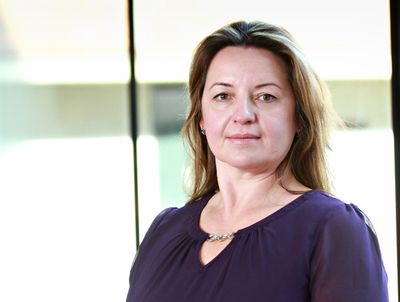
Aston University cyber expert to appear at FinTech event in Birmingham
'FinTech Secured – Next Generation' will showcase the work of leading stakeholders in the research and development of financial technology (FinTech) and security Professor Vladlena Benson will offer insight on illicit money flows and trends in Financial Security Registrations are now open for the event on 7 June 2022 at The Compound, Birmingham. The director of the Cyber Security Innovation (CSI) Centre at Aston University is set to appear at a networking event around financial technology (FinTech). Following the success of their first flagship event of 2022 ‘Secure by Design, Advanced Manufacturing’, Midlands Cyber will launch 'FinTech Secured – Next Generation' on the 7 June 2022. The event will be the first face to face event after the pandemic in Birmingham, bringing together thought leaders and service applications specialists for an evening of industry networking. Professor Vladlena Benson, who also serves on the EU’s Agency for Cybersecurity (ENISA) task force defining the Cybersecurity Skills Framework at the European level, will be joined by contacts from within the cryptocurrency sector and offer insight on illicit money flows and trends in financial security. The event will also showcase the work of leading stakeholders in the research and development of FinTech and financial security. FinTech’s academic innovators, CEOs and company founders, entrepreneurs, contractors, investors and policymakers are encouraged to register now to discuss, participate, network and put their questions to our panel of industry experts. Professor Vladlena Benson, an industry-recognised expert in cybersecurity risk management and director of CSI Centre at Aston Business School, said: “Financial services are core to the UK economy and continue to be a common target for cyber criminals. Challenges to the insurance sector and cyber crime prosecution when crypto assets are involved are emerging and at the CSI we are working to provide forensic and data integrity solutions which help secure the FinTech sector.” User of contactless Europay, Mastercard, and Visa (EMV) may be interested in the insights of Tom Chothia, reader in cyber security at the University of Birmingham, on how the vulnerabilities of Apple Pay and Visa could enable hackers to ’Take £1000 from a locked iPhone’. Registrations are now open to join the cluster at 18:00 hrs on the 7 June 2022 at The Compound, Birmingham.


Studying glaciers . . . from Florida
By Emma Richards On the surface, the University of Florida seems an unlikely place to find cutting-edge research on ice sheets. But Emma “Mickey” MacKie says this is the perfect place for her work — thanks in large part to HiPerGator, one of the fastest supercomputers in higher education. MacKie, an assistant professor of geological sciences and glaciologist, joined UF in August 2021 and said her decision hinged largely on access to HiPerGator and the university’s focus on machine learning and artificial intelligence technologies. MacKie uses machine learning methods to study subsurface conditions of glaciers in polar regions and access to a powerful supercomputer is crucial given the large data sets her research generates. “I'm very happy to be in a place with lots of people who are working on different types of problems and are interested in developing these different tools,” MacKie said. “There are a number of members of my department in geology who are studying glacial geology through different lenses. And so, there's all of this complementary geological and machine learning knowledge at UF that I'm very excited to bring together.” MacKie has set up the Gator Glaciology Lab, where she and a team of seven undergraduate students from the fields of geology, computer science, physics, math and data science are using AI to analyze what lies beneath glaciers and how they are moving and melting. “Our work is part of a bigger effort in the glaciology community to start working on quantifying our uncertainty in future sea-level rise projections so that we can give policy makers this information.” It’s a very difficult challenge, MacKie said, because of limited access to polar regions and the miles-thick ice covering the ground. Then there is the scale of ice sheets; Antarctica, for example, is the size of U.S. and Mexico combined. Measurements of the topography below such glaciers are gathered using radars mounted on airplanes to “see” through ice. Her team then uses HiPerGator to simulate realistic looking topography in places where there are gaps or blank spots in the measurements. They generate hundreds of maps to represent different possible ice sheet conditions, which could be used to determine numerous possible sea level rise scenarios. “Our work is part of a bigger effort in the glaciology community to start working on quantifying our uncertainty in future sea-level rise projections so that we can give policy makers this information,” she said. Earlier this spring, MacKie swapped out her flip-flops for snow boots to study subsurface glacial conditions in Svalbard, which is next to northeastern Greenland. Visiting Svalbard will help her test and develop data collection and analysis techniques that could be applied to Antarctica or Greenland, which both contain large ice sheets that could have serious environmental impacts if they experience significant melting. In Svalbard, MacKie and Norwegian researchers from the University of Bergen and the University Centre in Svalbard took seismic and radar measurements of glaciers that will be used to make estimates about conditions beneath the ice. Among glaciers of concern is the Thwaites “Doomsday Glacier,” which is losing the most ice of any glacier in Antarctica. There are signs showing Thwaites’ ice shelf could start to break in the next few years. MacKie said it will likely be a few hundred years before the glacier could undergo significant collapse and jeopardize the West Antarctica Ice Sheet, leading to several meters of sea level rise. The effects of Thwaites and other ice sheet melts in Antarctica and Greenland will become apparent in decades to come, with the potential for a meter of sea level rise by the end of the century, which MacKie and other researchers hope to predict more accurately. “The state of Florida has the most to lose when sea level rises,” she said in an episode of the From Florida podcast. “And so, I think we have a lot of skin in the game and it’s really important to be studying this question here in Florida.” To hear more about MacKie’s work, listen to From Florida at this link.


Meet the astrobiologist and her students who are searching for life on Mars
By Emma Richards, University of Florida From a young age, Amy Williams wondered if life existed beyond Earth amidst the dark abyss of space, stars and planets — a curiosity that years later landed her a career researching and exploring Mars. Williams, an assistant professor of geology and an astrobiologist at the University of Florida, works as a participating scientist on the Perseverance and Curiosity Rover Science Teams and previously served as a postdoctoral research associate at NASA’s Goddard Space Flight Center. As an astrobiologist and geobiologist, she uses techniques from geology, microbiology and chemistry to search for life beyond Earth. “Even as a little kid watching meteor showers with my family, I wondered if there was someone out there in the stars looking back at Earth.” “Even as a little kid watching meteor showers with my family, I wondered if there was someone out there in the stars looking back at Earth,” she said in an episode of the From Florida podcast. “It’s been a passion of mine my whole career and now it’s the most amazing opportunity to serve on both of the active Mars rover missions.” Williams’ journey to Mars began as a graduate student when a research professor gave her the opportunity to work on the NASA Curiosity mission. From there, Williams built her way up and is now a participating scientist working on day-to-day rover operations. Williams also is opening doors for graduate students at UF to work on Mars research, helping upcoming generation of scientists follow her path. She is specifically interested in involving women and underrepresented groups in her work. Based on her research, Williams said life on Mars, if found, will likely look less like Marvin the Martian and more like microbial life similar to bacteria on Earth. Curiosity landed on Mars in 2012 and Perseverance landed in 2021. The rovers are searching for potential life on Mars by going to habitable environments and searching for evidence of water and essential elements that could supported such life forms. Curiosity has spent nearly its entire mission exploring a large five-kilometer-tall mountain in Gale Crater known as Mount Sharp. The scientists can see Mars’ history and climate based on changes in the chemistry and sediments of the mountain. As for Perseverance, the rover is exploring Jezero Crater, with emphasis on its delta, a geologic deposit that is formed when water from a river flows into a lake. Perseverance will help collect rock and sediment samples from Mars that will be the first brought back to Earth. NASA is also working on a program to eventually send humans to Mars, which will likely take many decades; the first stage in the project will be returning humans to the Moon. “But in the meanwhile, these robots, these rovers that we send to the red planet, they are our proxy,” Williams said. “And looking through the robot rover’s eyes, the images that are returned to us, I recognize this is the closest I will ever be to standing on Mars and looking up at these beautiful geological units, looking up at an alien world that’s so familiar because the tenets of geology apply on Mars, the same as they do on Earth.” To hear more about the Amy Williams' Mars research, listen to the episode on From Florida at this link. Listen to other episodes in the "From Florida" series at this link. To learn more about her work, watch this video featuring Professor Williams:


Aston University helps celebrate Apprenticeship Levy Transfer scheme success
• Celebration to recognise 2,500 apprentices who started work across the region • Aston University worked with the WMCA to increase the number of apprenticeships that SMEs can offer by using levy transfer to help fund apprentices • Levy scheme benefitted nearly 800 local SMEs who have been able to take on apprentices thanks to the funding. Staff from the Aston University degree apprenticeship team attended a celebratory event hosted by West Midlands Combined Authority on 11 May to recognise how a pioneering funding scheme has helped nearly 2,500 apprentices start work within businesses across the region. The Apprenticeship Levy Transfer Scheme, which was set up by the WMCA three years ago, covers small and medium-sized enterprises’ (SMEs) training and assessment costs of taking on an apprentice. It uses money pledged by big business from their own unspent Apprenticeship Levy – a Government charge on all employers with a payroll of over £3 million to pay for apprenticeship training. This unspent money would normally go back to Government but under the initiative it is transferred via partnership with the WMCA to fund apprenticeships at smaller local firms. At the event, which was hosted at The Eastside Rooms in Birmingham and attended by levy transfer employer partners, apprentices and businesses from across the West Midlands, attendees had the chance to hear from SME employers and apprentices about how they have benefited from levy transfer. Over the past three years, the levy scheme has funded apprenticeship training for close to 800 local SMEs and nearly 2500 learners, keeping levy money within the region to help local businesses grow and upskill their staff. Degree apprenticeship development manager, Sheila Rattu, from Aston University, said: “Aston University has always supported its SME community and this has been another great way for us to celebrate our non-levy employers and champion a more diverse set of learners whether through Aston University pledging its own surplus funds or utilising the scheme for our own apprentices.” Aston University has worked with the WMCA to increase the number of apprenticeships that SMEs can offer by using levy transfer to help fund apprentices. This has resulted in securing £381,355 for local businesses. The impact from Aston University’s £200,000 levy pledge has also led to: • 23 apprentices having their training and assessments costs covered • 11 local businesses benefitting from our apprenticeship levy donation • increased job opportunities and a boost in skills and productivity across the region. The WMCA set up the Apprenticeship Levy Transfer Scheme to cover 100% of the training and assessment costs of apprentices at SMEs in the West Midlands, using the unspent levy pledged by big employers. During the celebration event David Gaughan, head of employer services at WMCA, shared the current economic situation in the West Midlands highlighting that employment rates are up to a record high, and unemployment rates have returned to pre-pandemic levels. Mayor of West Midlands, Andy Street, also attended the event to celebrate and highlight the commitment for Levy Transfer investment within the West Midlands. Qualification level in West Midlands remains below national average, however apprenticeships actively act as a bridge to support residents with skills and generate a skilled workforce ready for growth. Andy Street, Mayor of the West Midlands and chair of the WMCA, said: “The Apprenticeship Levy Transfer Scheme has been a resounding success for our region – improving skills, providing jobs, and changing lives. I’m pleased therefore we have been able to take a moment to celebrate what we have achieved around apprenticeships in the West Midlands. “Linking up our local talent with the plentiful opportunities on offer in industry is central to my 100k jobs plan as we bounce back from Covid. We must provide routes into high-quality well-paid employment so that the young people in our region have prospects ahead to excite them and keep them and their families here in the years ahead.” The transfer deal agreed with the Government in 2018 was the first of its kind in the country helping to boost skills, job opportunities and productivity by supporting more young people and adults of all ages into work. For more information about degree apprenticeships at Aston University please visit our webpages. For media inquiries, contact Rebecca Hume, Press and Communications Manager: r.hume@aston.ac.uk

Villa Vision receives £20K from Wesleyan to measure impact of child eye health project
Villa Vision programmes provide access to eye health care for children from deprived areas of Birmingham. 5,500 children have been reached so far. The Wesleyan Foundation and Aston University’s five-year partnership is valued at over £250K The findings of the evaluation will be shared with the Villa Vision team and all partners including participating schools, parents and children. Villa Vision, a project that delivers eye health care to children from deprived areas of Birmingham, has received £20,000 from the Wesleyan Foundation. The money will help evaluate the impact of the project to date which has reached approximately 5,500 children across the West Midlands. Villa Vision programmes are designed to increase access to eye health education, eye screening, eye examinations and to dispense glasses to children who need them with the aim of providing them with the visual foundation to succeed. The Villa Vision project is a collaboration between the Aston Villa Foundation, Aston University and optical lens supplier Essilor Vision For Life. The money donated by Birmingham based Wesleyan, alongside the Aston University funding of almost £15,000, will pay for research assistants to evaluate the first three years of the project. The objectives of the impact evaluation are to: • Review how many children have been screened, detail the coverage of the programme and its reach within the city • Analyse Villa Vision’s data recording children’s eye screening tests and eye examinations • Examine the potential impact on student’s performance on tasks that require attention to detail after being given glasses • Work with children to explore their experience of the Villa Vision programme to help develop the educational part of the programme • Work with teachers to examine the potential impact of corrected vision on children’s classroom behaviour (their integration into class, their reading at distance and close-up, their English and maths) • Work with parents to understand the impact of Villa Vision on their eye health knowledge and the quality of life of the children involved in the programme and the family more generally. The findings of the evaluation will be shared with the Villa Vision team and all collaborating partners as well as participating schools, teachers, parents and children. The findings will also be published in peer-reviewed journals, online and in newsletters to reach interested audiences. Dr Rachel Shaw, a health psychologist in Aston Institute for Health & Neurodevelopment, and project lead, said: “Villa Vision is an inspirational project offering children eye care in their schools. Not only that, Nik Sonpal and Zak El Khalifi from the Villa Vision team, have created an educational, entertaining, and imaginative workshop helping children to understand the importance of eye health, bringing it to life with the help of Aston Villa and a footballing theme.” Leon Davies, professor of optometry and physiological optics in the School of Optometry at Aston University and Vice President of the College of Optometrists said: “The team led by Dr Rachel Shaw with support from Dr Laura Shapiro, Esra Yeter, Sidratul Kazi and myself will provide robust evidence to demonstrate the impact and value of Villa Vision on children’s eye health and education in Birmingham, which we believe will help secure Villa Vision’s long-term future.” Nathan Wallis, Chief of Staff at Wesleyan said: “We are proud to be supporting Villa Vision and its research, they are making a huge difference to the lives of so many primary school children across the West Midlands. It is vital for all children to be given access to good eye care, not just to improve engagement in the classroom but for their overall quality of life and self-confidence. “As a financial service mutual for teachers and doctors it is important to us that we support the things that matter most to our customers and supporting Villa Vision is a great example of this.” Nikhil Sonpal, Villa Vision Project Manager and optometrist at Aston Villa Foundation, said: “Villa Vision and the Aston Villa Foundation are incredibly excited to have the support of both the Wesleyan Foundation and Aston University in helping to establish a deeper understanding of our eye health project. "Not only will this evaluation help unearth the level of impact our intervention is having within the community, but it will also allow us to discover ways to develop our provision further and strengthen our reach when trying to address local inequalities in eye care.”


Aston University Pathway to Healthcare programmes shortlisted in Student Social Mobility Awards
Pathway to Healthcare programmes shortlisted for University Access Initiative in the 2022 Student Social Mobility Awards University Access Initiative of the Year Award judged by student vote and panel Aston University Pathway to Healthcare programmes were shortlisted from more than 250 nominations. The Aston University Pathway to Healthcare programmes have been shortlisted for the University Access Initiative of the Year Award in the 2022 Student Social Mobility Awards. The Pathway to Healthcare programmes which launched in 2016 are designed to raise students’ aspirations, support their attainment, improve progression and provide experiences to enhance UCAS applications when applying for medical and other healthcare courses. During the 18-month programme, students are given the opportunity to take part in healthcare subject taster days, work experience in various healthcare settings and A level revision boot camps. Following the success of the first pathway programme for Year 12/13, the Keith Bradshaw Introduction to Healthcare programme was launched in 2019 to work with key stage three to key stage four students across the West Midlands. The University Access Initiative of the Year Award will be decided by a combination of the Judging Panel’s scores (50%) and the Student Vote (50%). The Aston University Pathway to Healthcare programmes were shortlisted from more than 250 nominations. Sarah Fullwood, pathways manager at Aston University, said: “We are delighted we have been shortlisted for this prestigious award. “Our pathway programmes are going from strength to strength, despite a sector-wide dip in engagement for widening participation programmes during the pandemic, which is why we were so thrilled to experience an increase in attendance at our pathway events.” “By breaking down barriers for access for disadvantaged students, the programmes play a vital role in building a future workforce that is representative of the community it serves.” The Student Social Mobility Awards are organised by upReach to showcase the achievements of undergraduates from lower socio-economic backgrounds from across the UK. The awards seek to recognise students who have excelled in their studies and beyond and shown great potential to excel as they launch their careers. The focus of the awards is on students who have demonstrated great resilience, determination or initiative, or boosted their employability in innovative ways. They are also a chance to showcase up-and-coming talent and identify rising stars. Award winners and nominees overcome significant socioeconomic barriers and mitigating circumstances, serving as inspiring role models for those from similar backgrounds. The ceremony is due to take place on 21 July at the House of Lords, where the winners will be announced. For more information about the Pathway to Healthcare programmes at Aston University please visit our webpages.