
Experts Matter. Find Yours.
Connect for media, speaking, professional opportunities & more.
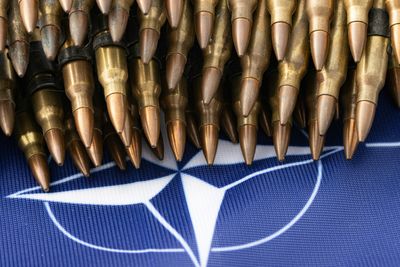
NATO Turning 75 | Media Advisory
The 75th anniversary of the North Atlantic Treaty Organization (NATO) holds immense significance for the public as it marks three-quarters of a century of collective defense, cooperation, and peacekeeping among member nations. This event matters as it symbolizes NATO's enduring commitment to safeguarding the freedom and security of its member states in an ever-changing global landscape. As the world faces new security challenges, NATO's role in promoting stability, democracy, and international cooperation remains vital to ensuring peace and prosperity for generations to come. Story angles of interest to a broad audience may include: The historical context and founding principles of NATO NATO's contributions to peacekeeping and crisis management operations Evolving security threats and NATO's adaptation to meet modern challenges NATO's partnerships with non-member states and international organizations The role of NATO in addressing emerging security threats such as cyber warfare and terrorism The future of NATO and the importance of transatlantic cooperation in an increasingly uncertain world. Connect with an Expert about NATO For journalists with questions or looking to cover the history, purpose and role the North Atlantic Treaty Organization plays on the global stage, here is a select list of experts. To search our full list of experts visit www.expertfile.com David R. Dorondo Professor · Western Carolina University Frank Costigliola, D.Phil. Distinguished Professor, Department of History · University of Connecticut Craig Albert, PhD Professor of Political Science and Graduate Director of the Master of Arts in Intelligence and Security Studies · Augusta University Randall Stone Professor of Political Science and Director of the Skalny Center for Polish & Central European Studies · University of Rochester Glen Duerr, Ph.D. Professor of International Studies · Cedarville University Photo Credit: Marek Studzinski


International Fact Checking Day | Media Advisory
In today's digital age where information spreads rapidly and misinformation can have profound consequences, International Fact Checking Day stands as a beacon of truth and accountability. This day matters to the public because it highlights the critical importance of discerning fact from fiction in an era where misinformation can sway public opinion, influence elections, and even endanger lives. The event emphasizes the role of media literacy and critical thinking in combating the spread of fake news, fostering a more informed society, and preserving the integrity of democratic discourse. Story angles of interest to a broad audience may include: The rise of misinformation in the digital age and its impact on society Case studies of successful fact-checking initiatives and their effectiveness The psychology behind why people believe and share misinformation The role of social media platforms in amplifying false information and efforts to combat it The challenges faced by journalists and fact-checkers in verifying information in real-time Strategies for individuals to identify and avoid falling victim to fake news and misinformation campaigns. Connect with an Expert about International Fact Checking Day For journalists with questions or looking to cover International Fact Checking Day, misinformation and the importance of the truth, here is a select list of experts. To search our full list of experts visit www.expertfile.com Gretchen Chapman Professor and Department Head · Carnegie Mellon University Jennifer Manegold, Ph.D. Expert in organizational behavior · Florida Gulf Coast University David Barrett, PhD Professor of Political Science | College of Liberal Arts and Sciences · Villanova University Michael Prietula Professor of Information Systems & Operations Management · Emory University, Goizueta Business School Nina Amir Chief Inpiration Officer · Pure Spirit Creations Photo Credit: Hartono

Oh, Ozempic … Is THIN Back In?
After decades of what seemed like progress away from the obsession for “wellies” and “thigh gaps” the thin-is-in mentality seems to be creeping back into the spotlight to weigh on women’s minds – especially on social media. Channeling the renewed fascination with and focus on slimness, University of Mary Washington Assistant Professor of Communication Emily Crosby, and Associate Professors of Communication Adria Goldman and Elizabeth Johnson-Young, presented a talk titled "Social Media and the Changing Current of Health Messaging and Debates." Crosby's presentation, "Ozempic is Cheating!: Articulating a Digital Turn in Diet Culture," looks at the discourse surrounding Ozempic on social media. Employing feminist rhetorical criticism, Crosby analyzes posts and commentary to identify themes and conventions of analog and digital diet culture. This research articulates the digital turn in the "cult of thinness," to expose how medical injectable weight loss drugs undermine the body positive movement by invoking clinical technology as ethos. Goldman's presentation, "#SocialSupport: Examining the Informative and Emotional Functions of Bariatric Surgery Support Groups on Facebook," investigates the functions of digital support groups in assisting with mental well-being and emotional regulation for people considering, undergoing or recuperating from weight loss surgery. This research examines Facebook’s ability to function as both an informative and emotional resource for the bariatric surgery community. Johnson-Young's presentation, "Sugar, Snacks and Weight: An Examination of Posts and Parent Reactions to the Challenges of Nutritional Health Norms on the Growing Intuitive Eaters Instagram," examined posts and comments on an influencer's account. The research is rooted in both health behavior theory and non-evaluative and trust-based communication around food and nutrition. Preliminary findings show a variety of themes regarding reactions to the influencer's posts, from anger and resistance to relief and excitement. Weight loss, wellness and the enormous amount of attention this topic is getting has journalists looking for answers. And if you're covering or are looking to know more - we can help. All three University of Mary Washington experts are available to speak with media - simply click on an icon now to arrange an interview today.




Stress Awareness Month | Media Advisory
In today's fast-paced world, stress has become a ubiquitous companion, impacting individuals across all walks of life. Stress Awareness Month serves as a crucial reminder of the importance of mental well-being and the need to address stress-related issues in our society. This event matters to the public as it sheds light on the prevalence of stress, its detrimental effects on health and productivity, and the strategies available to cope with it effectively. Key story angles that may interest a broad audience include: The science behind stress: Exploring the physiological and psychological mechanisms of stress and its effects on the body and mind. Coping strategies and resilience: Highlighting various techniques individuals can employ to manage stress, including mindfulness, exercise, and seeking social support. Stress in the workplace: Investigating the impact of work-related stress on employee well-being and productivity, along with initiatives by companies to create healthier work environments. Stress among different demographics: Examining how stress manifests differently across age groups, genders, socioeconomic backgrounds, and cultures. Innovations in stress management: Covering emerging technologies and therapies aimed at reducing stress levels and improving mental health outcomes. Policy and advocacy: Discussing the role of governments and organizations in implementing policies and programs to alleviate stress and promote mental wellness. Connect with an Expert on Stress For journalists with questions or looking to cover Stress, its causes and how it impacts people, here is a select list of experts on stress. To search our full list of experts visit www.expertfile.com Claire Wheeler Instructor · Portland State University David Creswell Professor · Carnegie Mellon University Julian Ford, Ph.D. Professor, Department of Psychiatry · University of Connecticut Annie T. Ginty, Ph.D. Assistant Professor, Psychology & Neuroscience · Baylor University Rosalie Moscoe Owner, Spleaker, Registered Nutritional Consultant · Health in Harmony Photo Credit: Luis Villasmil

Opening up supply chain blockages in the wake of the Baltimore bridge collapse
The impact of the Baltimore bridge collapse on supply chains is as massive as it is obvious. Finding the solutions to repairing the damage is not so simple, according to Bintong Chen, professor of operations management at the University of Delaware. Pain points include the loss of a major access point to a busy port and international car and truck shipping; a significant dent in commercial trucking (especially hazardous material transportation); and a strain on civilian commuting. Chen offers two solutions: Clear the water way first and quickly so that shipping will resume normally. This is the first priority and should not take long. Develop a plan to re-route traffic, as it will take four to five years to build a bridge to replace the Francis Scott Key Bridge. He proposes the following traffic changes: Divert all commercial trucking flow to William Preston Lane Jr. Memorial Bay Bridge. Reduce or remove the toll for night trucking in order to spread the truck flow and reduce the congestion. Reduce or remove the toll for the Baltimore tunnel at night for civilian commuting for the same purpose. To schedule an interview with Chen, visit his profile and click on the contact button or reach out to the UD Media Relations team.


National Vietnam Veterans Day | Media Advisory
Tomorrow is National Vietnam Veterans Day commemorates the sacrifices of Vietnam veterans and their families, reflecting on the complex legacy of the Vietnam War. This observance not only serves as a reminder of the past but also fosters dialogue on veterans' affairs, mental health, and the evolving understanding of war's impact on society. Delving into this topic provides an opportunity to explore: The historical context and legacy of the Vietnam War Mental health support for veterans The evolution of veterans' benefits over time Public perceptions of the Vietnam War and its veterans The role of education in preserving the history of the Vietnam War Connect with an Expert about National Vietnam Veterans Day For journalists seeking research or insights for their coverage about the Vietnam War and Veterans in America, here is a select list of experts from our database. To search our full list of experts visit www.expertfile.com Christian Appy Professor of History and Director of the Ellsberg Initiative for Peace and Democracy – University of Massachusetts Amherst Kara Dixon Vuic LCpl. Benjamin W. Schmidt Professor of War, Conflict, and Society in 20th-Century America – Texas Christian University Neil Maher Professor – New Jersey Institute of Technology Thomas Schwartz Distinguished Professor of History – Vanderbilt University Lawrence A. Tritle Professor Emeritus of History – Loyola Marymount University Photo Credit: Caleb Fisher

Aston University research centre to focus on using AI to improve lives
• New centre specifically focuses on using AI to improve society • Current research is designed to improve transport, health and industry • “There have been a lot of reports focusing on the negative use of AI...this is why the centre is so important now.” Aston University researchers have marked the opening of a new centre which focuses on harnessing artificial intelligence (AI) to improve people’s lives. The Aston Centre for Artificial Intelligence Research and Application (ACAIRA) has been set up to become a West Midlands hub for the use of AI to benefit of society. Following its official opening, the academics leading it are looking to work with organisations and the public. Director Professor Anikó Ekárt said: “There have been a lot of reports focusing on the negative use of AI and subsequent fear of AI. This is why the centre is so important now, as we aim to achieve trustworthy, ethical and sustainable AI solutions for the future, by co-designing them with stakeholders.” Deputy director Dr Ulysses Bernardet added: “We work with local, national and international institutions from academia, industry, and the public sector, expanding Aston University’s external reach in AI research and application. “ACAIRA will benefit our students enormously by training them to become the next generation of AI practitioners and researchers equipped for future challenges.” The centre is already involved in various projects that use AI to solve some of society’s challenges. A collaboration with Legrand Care aims to extend and improve independent living conditions for older people by using AI to analyse data collected through home sensors which detect decline in wellbeing. This allows care professionals to change and improve individuals’ support plans whenever needed. A project with engineering firm Lanemark aims to reduce the carbon footprint of industrial gas burners by exploring new, more sustainable fuel mixes. Other projects include work with asbestos consultancy Thames Laboratories which will lead to reduced costs, emissions, enhanced productivity and improved resident satisfaction in social housing repairs and a partnership with transport safety consultancy Agilysis to produce an air quality prediction tool which uses live data to improve transport planning decisions. The centre is part of the University’s College of Engineering and Physical Sciences and its official launch took place on the University campus on 29 February. The event included a talk by the chair of West Midlands AI and Future Tech Forum, Dr Chris Meah. He introduced the vision for AI within the West Midlands and the importance of bringing together academics, industry and the public. Current research in sectors such as traffic management, social robotics, bioinformatics, health, and virtual humans was highlighted, followed by industry talks from companies Smart Transport Hub, Majestic, DRPG and Proximity Data Centres. The centre’s academics work closely with West Midlands AI and Future Tech Forum and host the regular BrumAI Meetup. About Aston University For over a century, Aston University’s enduring purpose has been to make our world a better place through education, research and innovation, by enabling our students to succeed in work and life, and by supporting our communities to thrive economically, socially and culturally. Aston University’s history has been intertwined with the history of Birmingham, a remarkable city that once was the heartland of the Industrial Revolution and the manufacturing powerhouse of the world. Born out of the First Industrial Revolution, Aston University has a proud and distinct heritage dating back to our formation as the School of Metallurgy in 1875, the first UK College of Technology in 1951, gaining university status by Royal Charter in 1966, and becoming The Guardian University of the Year in 2020. Building on our outstanding past, we are now defining our place and role in the Fourth Industrial Revolution (and beyond) within a rapidly changing world. For media inquiries in relation to this release, contact Nicola Jones, Press and Communications Manager, on (+44) 7825 342091 or email: n.jones6@aston.ac.uk


Batter Up! Major League Baseball Season Begins Tomorrow! | Media Advisory
The start of the Major League Baseball season is more than just America's favorite pastime returning; it's a cultural event that ties into themes of community, nostalgia, and the ever-evolving narrative of sports in society. Like every big league, the start of the season speaks to the unity and division that sports can create, the economics of professional leagues, and the role of athletes in social movements. Possible story angles include: The economic impact of MLB on local communities Innovations in sports technology and data analytics The role of sports in bridging cultural divides MLB's response to social justice issues Health and safety protocols in professional sports Gambling, is it a growing problem for athletes? Connect with an Expert about Major League Baseball For journalists seeking research or insights for their coverage about the MLB and the economics behind professional baseball, here is a select list of experts from our database. To search our full list of experts visit www.expertfile.com Curt Smith Senior Lecturer – University of Rochester Christina Gipson Assistant Professor of Sport Management – Georgia Southern University Greg Stewart, MD W. Kennon McWilliams Professor of Sports Medicine – Tulane University Photo Credit: Michael Lewis Professor of Marketing; Faculty Director, Emory Marketing Analytics Center · Emory University, Goizueta Business School Lisa Pike Masteralexis Senior Associate Dean and Professor of Sport Management – University of Massachusetts Amherst Photo Credit: Joshua Peacock

The Implications of the Collapse of Baltimore's Key Bridge: Insights from a Civil Engineer
The early morning collapse of Baltimore's Francis Scott Key Bridge is leaving experts and area residents alike in disbelief. Michael Chajes, a professor in the civil and environmental engineering department at the University of Delaware, is the go to person to speak on what happened and what this means for the future of this bridge. Chajes's expertise includes forensic engineering, specifically unearthing the root causes of engineering failures, such as bridge collapses. He has participated in the evaluation and testing of numerous major bridges and structures including the Brooklyn-Queens Expressway, Ben Franklin Bridge, Chesapeake City Bridge, Lock Gates on the Erie Canal and several historic trusses and polymer composite bridges. He is also the former Delaware Engineer of the Year. He is a civil engineer and has been speaking to the likes of CNN today about this bridge collapse. He is available and ready to chat if you'd like to connect with him. Chajes has been speaking with networks like CNN about the bridge collapse and is available for comment. He can be reached by clicking his "View Profile" button.


What Happened to Haiti to Make it a Perpetual Failed State? | Media Advisory
Haiti's prolonged struggle with political instability, economic hardship, and natural disasters raises critical questions about international aid, governance, and the path to sustainable development. This topic is not just newsworthy for its historical complexity but also for its implications on human rights, regional stability, and global efforts to address poverty and inequality. Haiti's story prompts a deeper examination of: The impact of foreign intervention and aid Political corruption and its effects on governance Economic policies and their role in sustainable development Social movements and the fight for democracy Environmental degradation and resilience Connect with an Expert about What Happened to Haiti to Make it a Perpetual Failed State? For journalists seeking research or insights for their coverage about the ongoing crisis in Haiti, here is a select list of experts from our database. To search our full list of experts, visit www.expertfile.com Ken Keen Associate Professor in the Practice of Organization & Management; Associate Dean for Leadership; Lieutenant General, USA (Retired) – Emory University, Goizueta Business Robert Fuller, M.D., FACEP UConn Health Chairman of Emergency Medicine – University of Connecticut Benjamin Hebblethwaite Associate Professor in the Department of Languages, Literatures and Cultures – University of Florida Paul Kramer Associate Professor of History – Vanderbilt University Photo credit: Heather Suggitt