
Experts Matter. Find Yours.
Connect for media, speaking, professional opportunities & more.

Sept. 25 is National Daughters Day, celebrating adult daughters often overlooked for their role in relationship with parents National Daughters Day is Sept. 25, an oft-overlooked holiday that has been around since 1932. But much like the holiday, adult daughters are often unnoticed for the important role they play in the lives of their parents. Allison M. Alford, Ph.D., clinical associate professor of business communication at Baylor University and co-host of the weekly podcast, “Hello Mother, Hello Daughter,” researches adult daughters and their “invisible labor” in maintaining the unity of a family. Adult daughters find themselves providing support, nurturing and much more in a socially and communicatively constructed, shaped and molded role that includes navigating, responding to and negotiating cultural and familial discourses. These behaviors occur throughout a daughter’s life and represent significant resources funneled toward her parents to maintain and nurture a relationship. Alford’s research on “daughtering” – the active way that daughters relate to and care for parents – is how she describes the work and effort that daughters provide their parents. “It’s that purposeful work that helps relationships flourish but often goes uncredited as work, even by daughters themselves, in part because the efforts are wrapped in misleading language and society hasn’t adopted a lexicon specifically for daughtering,” said Alford, who edited the book, “Constructing Motherhood and Daughterhood Across the Lifespan,” with research partner Michelle Miller-Day, Ph.D., of Chapman University in Orange County, California. Daughtering involves such “invisible labor” as planning and organizing family events, resolving conflicts, acting as a buffer with other family members, preparing for the future and more—with the intent of supporting important family relationships, Alford said. With dashes of “mental load” and “adulting,” thrown in the mix, adult children are engaging in effortful and intense relationship-building, from which they usually benefit in the form of familial support and love. Embracing National Daughters Day In recent years, social media has embraced National Daughters Day with parents posting loving tributes and sharing stories about their daughters, recognition that Alford encourages. “Adult daughters put a lot of effort into their families and recognizing their hard work with praise and affirmation shows that what they do matters. Every daughter would love to hear compliments on her daughtering,” Alford said, recommending that parents take time on Sept. 25 to acknowledge and thank their adult daughters for the care and time they give to the family. A few simple ways parents can acknowledge adult daughters: Call your daughter on the phone and tell her how much her efforts have meant to you, Create a social media tribute and share a picture of yourselves together over the years, Order takeout delivered to her house for dinner, or Call the grandkids and tell them a sweet story about their mom. Also on Sept. 25, Alford and Miller-Day will launch Season 2 of their weekly podcast, “Hello Mother, Hello Daughter,” which continues to explore what it means to be an adult daughter and how daughtering and mothering work together to create a harmonious family. This season, the hosts interview experts on adult mother-daughter relationship topics and share helpful resources that can enable positive family interactions. The podcast will be available everywhere you listen to podcasts. “Hello Mother, Hello Daughter” also is on social media on Instagram and Facebook.


A 'super' economic boost for the big game, courtesy of Taylor Swift
Could NFL executives have imagined a better scenario for this year’s Super Bowl? Only in their wildest dreams, according to UD sports marketing experts who study the big game every year. The league has a built-in audience draw and revenue generator named Taylor Swift, who will be in attendance Sunday to root on boyfriend Travis Kelce and his Kansas City Chiefs. The world’s biggest pop star can easily fill any blank space – and then some – caused by a lack of bad blood between the Chiefs and San Francisco 49ers or advertisements that don’t exude enough style. And the NFL didn’t have to spend a dime or lift a finger to make it happen. Timothy DeSchriver and John Allgood, who teach and study sports marketing at the University of Delaware’s Alfred Lerner College of Business and Economics, see a number of ways that Swift can move the needle economically for a league that seemingly needs no extra publicity. The female audience is already growing for the NFL, but Allgood said that Swift delivers “a fresher audience” as witnessed by record viewership for the Chiefs-Ravens AFC Championship Game. “There are people tuning in just to see her in a suite for five seconds,” Allgood said. Gamblers wagering on Taylor Swift “prop bets” will keep tuning in even if it’s a blowout, DeSchriver noted. DeSchriver pointed to new advertiser interest from makers of beauty products, potentially to reach the new audience. The NFL will get its cut from products as well, Allgood said, thanks to an NFL licensing deal with a clothing designer after Swift wore one of her puffer coats and the continued rise in sales of Kelce jerseys. DeSchriver and Allgood, who can also discuss ticket pricing in the playoffs, and are available for interviews. To set one up, visit DeSchriver's profile and click on the "contact" button.



The annual Healthy Georgia Report has been released by Augusta University’s Institute of Public and Preventive Health and it gives a snapshot of how Georgians stack up against not only neighboring states, but the country when it comes to a variety of health topics. This year’s report has added information on adult dental health, poor mental health, skin cancer and overdose deaths. Information on HIV risk behaviors, breast cancer screenings and colon cancer screenings have also returned. The report has been delivered to lawmakers, community leaders and researchers in Georgia to provide them with tangible figures on how Georgia is faring in numerous topics. The goal is to stimulate conversations about public health needs and, in turn, promote action, such as policy changes, greater community engagement and the appraisal of funds. Biplab Datta, PhD, assistant professor in the IPPH and the Department of Health Management, Economics and Policy, has collaborated with other IPPH faculty and staff to update the report. Datta has seen the impact this can have with state leaders. “They have a good appetite for data driven policy changes. I think this report actually helps them in that direction,” said Datta. “We tried to present data in a way that policy makers may find helpful in deciding on appropriate policy choices.” Overdose deaths is one of the new categories this year and is a hot topic nationwide. The report shows Georgia has the sixth lowest rate of overdose deaths in the country. Datta said that’s good, but the number is trending upwards and now should be the time to take steps to prevent it from getting worse. “We cannot be satisfied. We are doing a good job but need to be on our toes to prevent it from further ascending,” Datta said. Another category that Georgia is trending in a good direction is cigarette smoking. But the opposite is true for the obesity rate in the Peach State. The data shows Georgia has the 14th highest rate of obesity in all of the U.S. and the number is on the rise. The data also shows it’s related to household income and education. Adults who are below the federal poverty line and without a college degree are significantly more likely to be obese. Also, those in the 18-to-49 age group have a high rate of obesity compared to the national and regional average. “That is problematic because if someone is developing some cardiometabolic conditions in this age group, they will be at high risk for adverse cardiovascular events at an older age. So we need to focus on food habits, physical exercise, and other health promoting behaviors to prevent and control obesity,” Datta said. Another interesting topic is those in Georgia who have health insurance coverage. While coverage in adults is second lowest in the nation, there is a slight uptick in the number of people who have coverage from the past few years. The number is much better for children with health insurance. He points out that many state programs like PeachCare for Kids may account for the differences. Datta said one topic that definitely needs to be investigated more is cancer rates. He said we observe a low prevalence rate, despite the common perception and other data sources suggest a relatively higher incidence rate of cancer in Georgia. He believes we may be seeing lower survival rates that are not included in the survey. “I think we need more investigation into this particular issue,” said Datta. “Why are we seeing so low numbers of cancer prevalence when we know that cancer incidence rates are very high in Georgia?” The Healthy Georgia Report is the only report of its kind in the state Looking to know more or connect with Biplab Dhatta? Then let us help. Biplab is available to speak with media regarding this important topic. Simply click on his icon now to arrange an interview today.



Exploring the Depths: How AI is Revolutionizing Seafloor Research
In recent years, there has been a significant shift in the way seafloor research is conducted, all thanks to the groundbreaking advancements in artificial intelligence (AI) technology. The depths of our oceans have always been a mystery, but with the use of AI, scientists and researchers are now able to explore and uncover the hidden secrets that lie beneath the surface. With funding from the Department of Defense, University of Delaware oceanographer Art Trembanis and others are are using artificial intelligence and machine learning to analyze seafloor data from the Mid-Atlantic Ocean. The goal is to develop robust machine-learning methods that can accurately and reliably detect objects in seafloor data. “You can fire up your phone and type dog, boat or bow tie into a search engine, and it's going to search for and find all those things. Why? Because there are huge datasets of annotated images for that,” he said. “You don't have that same repository for things like subway car, mine, unexploded ordnance, pipeline, shipwreck, seafloor ripples, and we are working to develop just such a repository for seabed intelligence.” Trembanis is able to talk about this research and the impact it could have on our day to day lives. He can be contacted by clicking his profile. “You have commercial companies that are trying to track pipelines, thinking about where power cables will go or offshore wind farms, or figuring out where to find sand to put on our beaches,” said Trembanis. “All of this requires knowledge about the seafloor. Leveraging deep learning and AI and making it ubiquitous in its applications can serve many industries, audiences and agencies with the same methodology to help us go from complex data to actionable intelligence.” He has appeared in The Economic Times, Technical.ly and Gizmodo.


Questions are flying around about airplane safety
The Boeing Corporation is the recognized pioneer in aviation and aircraft manufacturing, but now significant quality control concerns are mounting in light of recent near disasters associated with Boeing's planes. David Primo, professor of political science and business administration at the University of Rochester, is available to tackle some of the regulatory, crisis management and reputational questions related to Boeing's recent safety problems, including: 1) This is just the latest in a string of black eyes for Boeing on safety. How badly will the company’s bottom line suffer as a result? 2) Has the company learned from how it handled the initial crisis with its MAX planes resulting from the fatal Lion Air and Ethiopian Airlines crashes? 3) What does the company need to do to prevent further damage to its reputation? 4) How will this change the nature of the relationship between Boeing and its main US regulator, the FAA?


Research: Add space salad to the risks astronauts face
University of Delaware researchers grew lettuce under conditions that imitated the weightless environment aboard the International Space Station and found those plants were actually more prone to infections from Salmonella. It’s been more than three years since the National Aeronautics and Space Administration made space-grown lettuce an item on the menu for astronauts aboard the International Space Station. Alongside their space diet staples of flour tortillas and powdered coffee, astronauts can munch on a salad, grown from control chambers aboard the ISS that account for the ideal temperature, amount of water and light that plants need to mature. But as the UD researchers discovered, there is a problem. The International Space Station has a lot of pathogenic bacteria and fungi. Many of these disease-causing microbes at the ISS are very aggressive and can easily colonize the tissue of lettuce and other plants. Once people eat lettuce that’s been overrun by E. coli or Salmonella, they can get sick. With billions of dollars poured into space exploration each year by NASA and private companies like SpaceX, some researchers are concerned that a foodborne illness outbreak aboard the International Space Station could derail a mission. In the new study by UD's team, published in Scientific Reports and in npj Microgravity, researchers grew lettuce in a weightless environment similar to that found at the International Space Station. Plants are masters of sensing gravity, and they use roots to find it. The plants grown at UD were exposed to simulated microgravity by rotation. The researchers found those plants under the manufactured microgravity were actually more prone to infections from Salmonella, a human pathogen. Stomata, the tiny pores in leaves and stems that plants use to breathe, normally close to defend a plant when it senses a stressor, like bacteria, nearby, said Noah Totsline, an alumnus of UD’s Department of Plant and Soil Sciences who finished his graduate program in December. When the researchers added bacteria to lettuce under their microgravity simulation, they found the leafy greens opened their stomata wide instead of closing them. “The fact that they were remaining open when we were presenting them with what would appear to be a stress was really unexpected,” Totsline said. Totsline, the lead author of both papers, worked with plant biology professor Harsh Bais as well as microbial food safety professor Kali Kniel and Chandran Sabanayagam of the Delaware Biotechnology Institute. The research team used a device called a clinostat to rotate plants at the speed of a rotisserie chicken on a spinner. “In effect, the plant would not know which way was up or down,” Totsline said. “We were kind of confusing their response to gravity.” Additionally, Bais and other UD researchers have shown the usage of a helper bacteria called B. subtilis UD1022 in promoting plant growth and fitness against pathogens or other stressors such as drought. They added the UD1022 to the microgravity simulation that on Earth can protect plants against Salmonella, thinking it might help the plants fend off Salmonella in microgravity. Instead, they found the bacterium actually failed to protect plants in space-like conditions, which could stem from the bacteria’s inability to trigger a biochemical response that would force a plant to close its stomata. “The failure of UD1022 to close stomata under simulated microgravity is both surprising and interesting and opens another can of worms,” Bais said. “I suspect the ability of UD1022 to negate the stomata closure under microgravity simulation may overwhelm the plant and make the plant and UD1022 unable to communicate with each other, helping Salmonella invade a plant.” To contact researchers from the team, visit the profiles for Bais or Kniel and click on the contact button.


Expert Help: Augusta University faculty offers financial advice for college students
The world of finances isn't always an easy one for students to navigate. Wendy Habegger, PhD, senior lecturer in the Hull College of Business, suggests several ways college students can improve their financial literacy, even after their collegiate career. Habegger said most don’t have a good grasp of what that is, despite being one of the most foundational building blocks to help students start off on the right foot. “They should know their credit scores just as quickly as their GPA and they should protect it just as vigorously,” Habegger said. She also suggests students have a credit card but with the caveat they use it wisely and be sure to pay their bills in a timely fashion. While they might like using cash, having a credit card will start to build a good credit history that they’ll likely need down the road. “The sooner they get started, the better they are of having good credit when they leave (college),” she added. When looking at their student loans, there are ways they can be better prepared when they start having to pay them back. During that deferral period, she suggests students really consider what a job may pay. Also, when selecting a payment plan for college loans, make sure it’s something they can make monthly payments on without any problems. She also said people need to think about public service jobs that may offer loan forgiveness or asking a potential employer about any loan forgiveness programs. “Some employers out there will offer some sort of that. The military is a good career and they are happy to be help pay off your student loans. Other businesses may offer that as well. It can be a good perk on both sides of the table, for the company and student looking for a first time job.” This is great advice and an important topic, so if you’re a reporter looking to know more, then let us help. Wendy Habegger is a respected finance expert available to offer advice on making the right money moves during volatile times. To arrange an interview, simply click on her icon now.


The Power of Teacher Noticing: A Key to Understanding Engagement in Secondary Mathematics Lessons
Math can be a tough subject for students in K-12, particularly as the years go by. Educators at University of Delaware are working to see how to both identify this trend and potentially find solutions. Amanda Jansen, professor in the School of Education at UD, recently published a paper detailing teacher noticing –– how teachers observe, recognize, and make sense of what's happening in their classrooms. Jansen and others investigated what high school mathematics teachers and their students noticed about students’ mathematical engagement to develop a framework for teachers’ and students’ noticing of mathematical engagement. "We conjecture that researchers can use this framework as an analytic tool to support the field's understanding of student engagement and teachers’ efforts to engage students," the paper notes. Jansen is available for interviews on this topic. She has been quoted in publications like Education Week and recently celebrated as a 2023 Excellence in Scholarly Community Engagement Award recipient. Click the "View Profile" page to contact her.


Aston University AI project aims to make international health data sharing easier
Project to improve sharing data while complying with general data protection regulation (GDPR) guidelines Aston Institute of Photonic Technologies awarded almost £300k to work on European-wide project Will develop secure data sharing system to allow access to large sets of multi-source health data via tailor-made AI tools. Aston University is to explore the use of AI to improve sharing health data internationally. Dr Sergei Sokolovski of the University’s Aston Institute of Photonic Technologies has been awarded €317,500 to work on a European-wide project. Called BETTER (Better real-world health data distributed analytics research platform) the spans16 academic, medical and industrial partners. Although data-driven medicine is currently used to improve diagnosis, treatment and medical research ethical, legal and privacy issues can prevent sharing and centralising data for analysis. The research at Aston University’s involvement in the BETTER project aims to overcome these challenges so health data can be shared across national borders while fully complying with the general data protection regulation (GDPR) guidelines. Dr Sergei Sokolovski will lead the development of a secure data sharing system which will allow access to large sets of multi-source health data via tailor-made AI tools. Scientists and healthcare professionals will be able to compare, integrate and analyse data securely at a lower cost than current methods to improve people’s health. The BETTER project will focus on three health conditions; childhood learning disabilities, inherited degenerative retina diseases and autism, involving seven medical centres across the European Union and beyond. Dr Sergei Sokolovski said: “Data protection regulations prohibit data centralisation for analysis purposes because of privacy risks like the accidental disclosure of personal data to third parties. “Therefore, to enable health data sharing across national borders and to fully comply with GDPR guidelines this project proposes a robust decentralised infrastructure which will empower researchers, innovators and healthcare professionals to exploit the full potential of larger sets of multi-source health data. “As healthcare continues to evolve in an increasingly data-driven world projects like BETTER offer promising solutions to the challenges of health data sharing, research collaboration, and ultimately, improving the well-being of citizens worldwide. “The collaboration between multiple stakeholders, including medical centres, researchers, and innovators, highlights the importance of interdisciplinary efforts in addressing these complex issues.” The research will last 42 months. ENDS Better Real-World Health-Data Distributed Analytics Research Platform, Grant agreement 101136262 https://www.better-health-project.eu/ Research Universities taking part are: Aston University, Klinikum der Universitaet zu Koeln, Universiteit Maastricht, Universitat Politecnica de Valencia, Universitetet i Tromsoe, About Aston University Founded in 1895 and a university since 1966, Aston University is a long-established university led by its three main beneficiary groups – students, business and the professions, and the West Midlands region and wider society. Located in Birmingham at the heart of a vibrant city, the campus houses all the University’s academic, social and accommodation facilities for our students. Professor Aleks Subic is the Vice-Chancellor & Chief Executive. In 2022 Aston University was ranked in the top 25 of the Guardian University Guide, based on measures including entry standards, student satisfaction, research quality and graduate prospects. The Aston Business School MBA programme was ranked in the top 100 in the world in the Economist MBA 2021 ranking. For media inquiries in relation to this release, contact Nicola Jones, Press and Communications Manager, on (+44) 7825 342091 or email: n.jones6@aston.ac.uk

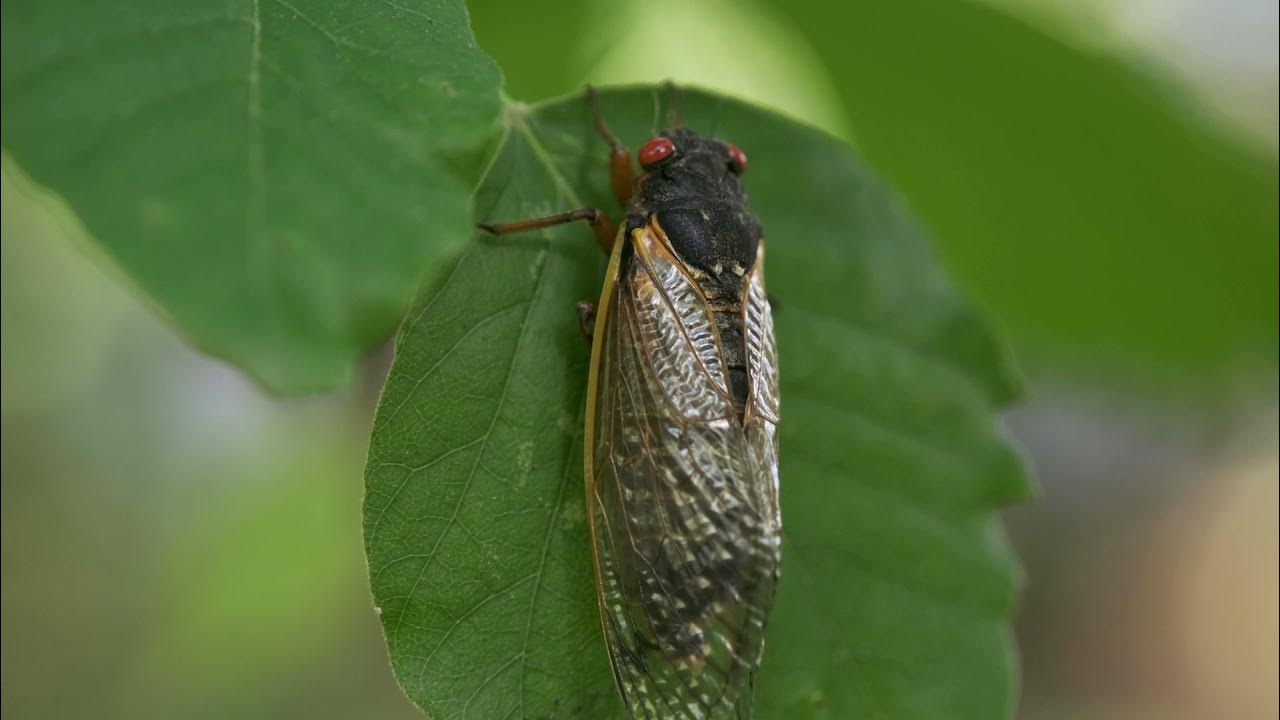
It's coming this summer -- and it'll be twice as big! Two broods of cicadas are set to emerge this year, an event that last occurred more than 200 years ago and now has scientists, bug watchers, and fans of the loud and noisy (yet harmless) insects buzzing with anticipation. Media coverage of this popular event put on by nature is also starting, and John R. Cooley, a cicada expert at UConn, offered his expertise on the impending emergence to MassLive: This summer, some will get a chance to witness a phenomenon rarer — and probably louder — than Halley’s comet. For the first time in more than two centuries, two big groups of cicadas in the United States will emerge simultaneously from the ground. Cicadas, often called “heat bugs,” make their presence known throughout the country every summer by “singing” their loud song. But some of these large, flying insects only emerge from underground every so often, depending on their group, or brood. These “periodical” cicadas bury themselves in soil, where they spend most of their lives. This summer, millions of cicadas from broods XIX (emerging every 13 years) and XIII (every 17 years) will both crawl out from underground and fly across the south and Midwest looking for a mate, according to Cicadamania, a website dedicated to tracking the insects. The last time these two broods popped out of the ground at the same time was in 1803, Cicadamania reported – when the U.S. bought the Louisiana Territory from France. “You cannot possibly be unaware that periodical cicadas are out, because they’re out by the millions and millions, and they’re noisy, charismatic, active insects that are just everywhere,” John R. Cooley, an entomologist who studies cicadas at the University of Connecticut, told MassLive. “When you got them, you know it. And that’s what you can expect to see. That’s what any normal emergence looks like,” he continued. What folks will see are a whole lot of bugs that all look the same, as the ones that come out every decade-plus look the same as the ones that come out every year, Cooley said. Researchers are still exploring why some cicadas emerge periodically. One common theory is that their infrequent appearance helps them avoid predators and prevents enemies from synchronizing on their life cycle. But, Cooley said this theory is flawed since all cicadas have predators, but fewer than 10 species are periodical. Some of the cicada’s natural enemies include birds, moles and Cicada killer wasps, according to the University of California Integrated Pest Management Program. Another theory suggests the last ice age forced cicadas to evolve to have longer periodical life cycles. But, that theory is limited as many cicadas live near glacial areas – few of which are periodical, according to nature.com. “Science isn’t all about having the explanations,” Cooley said. “We just test hypotheses and there are a lot of hypotheses as to why these cicadas are the way they are, but none really stand up so far.” The emerging of cicadas is always a popular and trending topic, and if you have questions or are looking to cover, then let us help. John R. Cooley is an Associate Professor in Residence at the University of Connecticut. He is an entomologist, author, and leading authority when it comes to cicadas. Simply click on his icon now to arrange a time to talk today.

