
Experts Matter. Find Yours.
Connect for media, speaking, professional opportunities & more.

Solar geoengineering - it’s a topic that has caused an ethical lightening storm in the science community. The concept is complex. Should the world take on the crisis of climate change by attempting to artificially attempting to cool the earth? It’s an idea that has the National Academies of Sciences, Engineering and Medicine seeking a billion dollars in the next five years to investigate the theory. It’s a topic that is somewhat controversial, and journalists are looking to leading experts from across America for expert insight, opinion and perspective. Prakash Kashwan, a political scientist at the University of Connecticut, said he felt the report could have better emphasized the seriousness of some concerns over others. Uncertainties about the impacts of solar geoengineering on global weather patterns have the potential to affect some regions of the world more severely than others, he pointed out. Some experts have raised concerns about potential effects of geoengineering on monsoon rainfall in parts of Asia and Africa, he said. More than 2 billion people around the world rely on these rainfall patterns to support their water and agricultural needs. These kinds of issues should be given special weight, Kashwan suggested. "Some uncertainties are much more highly consequential for the global society, and especially for the poor and vulnerable," he told E&E News. Kashwan also reiterated concerns about potential political effects. While the report makes clear that geoengineering is not a substitute for climate mitigation, he suggests that this doesn't necessarily prevent policymakers from using it in that way. "The problem is the extent to which researchers are really helpless in deciding how research is used in the political system," he said. "That part has yet to be fully appreciated." Kashwan suggests that more dialogue might be warranted before funding a national research program, with greater input from both the international community and political experts who can weigh in on the ways that geoengineering research might affect political decisions. March 26, Scientific American It's a captivating idea – but it could have political, social and ethical consequences. Dr. Kashwan has also been interviewed by The New York Times. If you are a journalist looking to learn more about solar geoengineering, its possibilities and the reasons some scientists are worried – then let us help with your coverage. Prakash Kashwan is an Associate Professor of Political Science at UConn and an expert in the areas of environmental and climate justice, planetary justice, global commons, climate governance, and climate geoengineering governance. Dr. Kashwan is available to speak with media regarding this topic – simply click on his icon now to arrange an interview today.

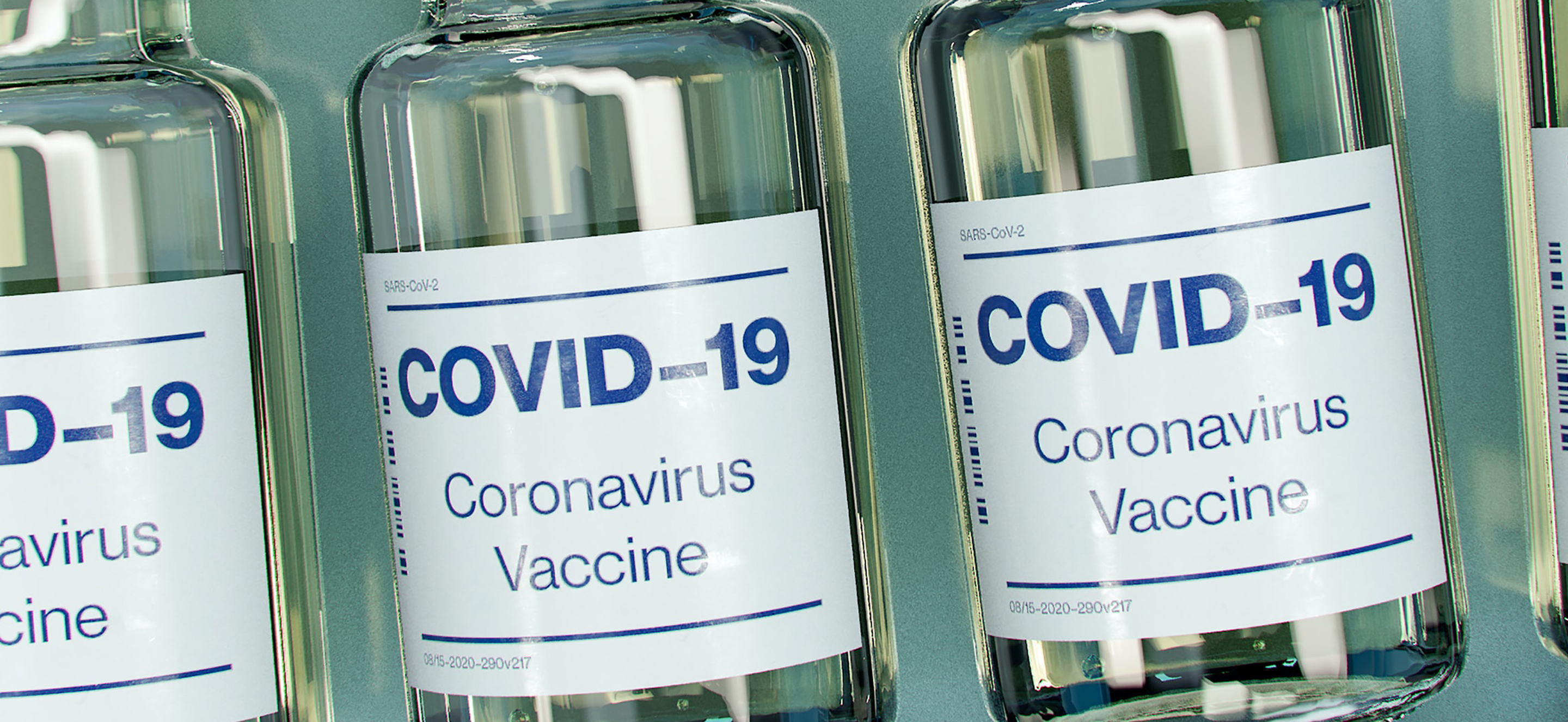
Ask the Expert: Vaccine myths and scientific facts
Now that there are authorized and recommended COVID-19 vaccines, it is critical people receive accurate information. Peter Gulick, professor of medicine at the Michigan State University College of Osteopathic Medicine and infectious disease expert, reviews some myths about the vaccine and counters these with scientific facts. Myth: The COVID-19 vaccines were developed in a rush, so their effectiveness and safety can’t be trusted. Fact: Studies found that the Pfizer/BioNTech and Moderna are both about 95% effective compared to the influenza vaccine, which ranges from being 50% to 60% effective each year. The Johnson & Johnson vaccine is 85% effective at curbing serious or moderate illness. The most important statistic is that all three were 100% effective in stopping hospitalizations and death. As of March 9, 2021, the Centers for Disease Control and Prevention reports that 93.7 million people have been vaccinated and all safety data collected from these doses show no red flags. There have been about 5 cases of anaphylaxis, an allergic reaction, per 1 million but this is no different than allergic reactions from other vaccines. There are many reasons why the COVID-19 vaccines could be developed so quickly and here are a few: The COVID-19 vaccines from Pfizer/BioNTech and Moderna were created with a messenger RNA technology that has been in development for years, so the companies could start the vaccine development process early in the pandemic. China isolated and shared genetic information about COVID-19 promptly so scientists could start working on vaccines. The vaccine developers didn’t skip any testing steps but conducted some of the steps on an overlapping schedule to gather data faster. The Pfizer/BioNTech and Moderna vaccines were created using messenger RNA, or mRNA, which allows a faster approach than the traditional way that vaccines are made. Because COVID-19 is so contagious and widespread, it did not take long to see if the vaccine worked for the vaccinated study volunteers. Companies began making vaccines early in the process — even before FDA authorization — so some supplies were ready when authorization occurred. They develop COVID-19 vaccines so quickly also due to years of previous research on the SARS COV-1, a related virus. Myth: The messenger RNA technology used to make the Pfizer/BioNTech and Moderna COVID-19 vaccine is brand new. Fact: The messenger RNA technology behind these two vaccines has been studied and in development for almost two decades. Interest has grown in these vaccines because they can be developed in a laboratory using readily available materials, making vaccine development faster. mRNA vaccines have been studied before for flu, Zika and rabies. Myth: You only need one dose of J&J vaccine so it’s more effective. Fact: Johnson & Johnson’s vaccine uses a different strategy — a weakened cold virus that is reprogrammed to include the code for the spike protein. Once inside the body, the viral genes trigger a similar response against the virus. All three vaccines are considered overall effective and 100% effective in preventing hospitalizations and death. Myth: Vaccine efficacy and effectiveness mean the same thing. Fact: Efficacy and effectiveness do not mean the same thing. “Efficacy” refers to the results for how well a drug or vaccine works based on testing while “effectiveness” refers to how well these products work in the real world, in a much larger group of people. Most people, however, use them interchangeably even though they have different scientific meanings. Myth: The vaccines aren’t effective against new strains of the virus. Fact: Currently, we know both the U.K. strain as well as the South African variant have increased transmissibility of 30% to 50% over the natural strain. As far as an increase in causing more serious disease, it is not known yet. We have over 600 U.K. variants in Michigan and one case of the South African variant, and I just heard of 47 cases of the U.K. variant in Grand Ledge. We (Michigan) are second in the nation in variants, but that's likely because we test for them more. The most important information is that the vaccines, in general, are 100% effective in prevention of hospitalization and death. So, it is felt they all offer some protection against variants to prevent serious disease. As far as the Johnson & Johnson, it was used with variants and has efficacy overall of 72% in U.S., 66% in Latin America and 57% in South Africa (where the main strain is the South African variant). All companies are looking at modifying (their products) (the mRNA) to cover variants and either give a booster or a multivalent vaccine to cover all variants. Myth: There are severe side effects of the COVID-19 vaccines. Fact: The COVID-19 vaccine can have side effects, but the vast majority go away quickly and aren’t serious. The vaccine developers report that some people experience pain where they were injected; body aches; headaches or fever, lasting for a day or two. This is good and are signs that the vaccine is working to stimulate your immune system. If symptoms persist beyond two days, you should call your doctor. Myth: Getting the COVID-19 vaccine gives you COVID-19. Fact: The vaccine for COVID-19 cannot and will not give you COVID-19. The two authorized mRNA vaccines instruct your cells to reproduce a protein that is part of the SARS-CoV-2 coronavirus, which helps your body recognize and fight the virus, if it comes along. The COVID-19 vaccine does not contain the SARS-Co-2 virus, so you cannot get COVID-19 from the vaccine. The Johnson & Johnson vaccine was developed using adenovirus vector technology and also will not give you COVID-19. It shows your immune system a weakened, common cold virus “disguised” as the coronavirus instead. Adenovirus vaccines have been around for about two decades, the same as mRNA vaccines. Johnson & Johnson developed a vaccine for Ebola using this technology. Myth: The vaccines are ineffective against the virus variants. Fact: More time is needed to study the vaccines’ effectiveness against the variants. Studies are now being conducted to determine if a booster dose is needed to protect against the variants or if modifications to the vaccines are needed. Myth: I already had COVID-19 and I have recovered, so I don't need to get the vaccine. Fact: There is not enough information currently available to say if or for how long after getting COVID-19 someone is protected from getting it again. This is called natural immunity. Early evidence suggests natural immunity from COVID-19 may not last very long, but more studies are needed to better understand this. The CDC recommends getting the COVID-19 vaccine, even if you’ve had COVID-19 previously. However, those that had COVID-19 should delay getting the vaccination until about 90 days from diagnosis. People should not get vaccinated if in quarantine after exposure or if they have COVID-19 symptoms. Myth: I won't need to wear a mask after I get the vaccine. Fact: It may take time for everyone who wants a COVID-19 vaccination to get one. Also, while the vaccine may prevent you from getting sick, more research is needed, but early indications show that while the vaccine is effective in reducing transmission, it is possible for a vaccinated person to spread the virus. Until more is understood about how well the vaccine works, continuing with precautions such as mask-wearing and physical distancing will be important. Myth: COVID-19 vaccines will alter my DNA. Fact: The COVID-19 vaccines will not alter any human genome and cannot make any changes to your DNA. The vaccines contain all the instructions necessary to teach your cells to make SARS-CoV-2's signature spike protein, release it out into the body, and your immune system gets a practice round at fighting off COVID-19. Myth: The COVID-19 vaccine can affect women’s fertility Fact: There is currently no evidence that antibodies formed from COVID-19 vaccination cause any problems with pregnancy, including the development of the placenta. In addition, there is no evidence suggesting that fertility problems are a side effect of any vaccine. People who are trying to become pregnant now or who plan to try in the future may receive the COVID-19 vaccine when it becomes available to them but it’s always prudent to consult with your doctor. Myth: The COVID-19 vaccine was developed to control the general population either through microchip tracking or "nanotransducers" in our brains. Fact: There is no vaccine microchip, and the vaccine cannot track people or gather personal information into a database. Myth: The vaccines were developed and produced using fetal tissue. Fact: The vaccines do not contain fetal cells nor were fetal cells used in the production the Pfizer and Moderna vaccines. Johnson & Johnson used human cell lines or also known as cell cultures to grow the harmless adenovirus but did not use fetal tissue. These same cell lines have been used for other vaccines including hepatitis, chickenpox and rabies and have been around for years. Peter Gulick is an associate professor of medicine at Michigan State University, College of Osteopathic Medicine, and serves as adjunct faculty in the College of Human Medicine and the College of Nursing. Dr. Gulick is available to speak with media - simply click on his icon now to arrange an interview today. Peter Gulick is an associate professor of medicine at Michigan State University, College of Osteopathic Medicine, and serves as adjunct faculty in the College of Human Medicine and the College of Nursing. Dr. Gulick is available to speak with media - simply click on his icon now to arrange an interview today.


COVID-9 is changing. With variants from places like Britain, Brazil, and South Africa surfacing and presenting in patients around the globe, the virus that scientists are trying to trap seems to be finding ways to wiggle free. The topic has many in the scientific and health care communities concerned, and recently, the New York Times featured leading experts to help explain what is happening and what American’s need to know to stay safe and healthy. Now, Dr. Denison and Sandra Weller, a virologist at the University of Connecticut School of Medicine, are investigating whether this insight could treat people with Covid. Certain antiviral drugs such as remdesivir fight infections by serving as RNA decoys that gum up the viral replication process. But these medications don’t work as well as some had hoped for coronaviruses. One theory is that the nsp14-ExoN enzyme chucks out the errors caused by these drugs, thereby rescuing the virus. Dr. Denison and Dr. Weller, among others, are looking for drugs that would block the activity of nsp14-ExoN, allowing remdesivir and other antivirals to work more effectively. Dr. Weller likens this approach to the cocktail therapies for H.I.V., which combine molecules that act on different aspects of the virus’s replication. “We need combination therapy for coronaviruses,” she said. Dr. Weller notes that nsp14-ExoN is shared across coronaviruses, so a drug that successfully suppresses it could act against more than just SARS-CoV-2. She and Dr. Denison are still at the early stages of drug discovery, testing different molecules in cells. February 05 – New York Times The ongoing COVID-19 pandemic is seeing many different twists in turns as scientists are learning more about the virus and how we can contain its spread – and if you are a journalist looking to speak with an expert on the topic, then let us help. Sandra K. Weller is Professor and Chair in the Department of Molecular Biology and Biophysics at the University of Connecticut and is a world-renowned expert in the spread of viruses. Dr. Weller is available to speak with media – simply click on her icon now to arrange an interview today.


Featuring: B. Frank Gupton, Ph.D. A former process development executive in the pharmaceutical industry, B. Frank Gupton, Ph.D., was coaxed out of retirement to teach in the Department of Chemical and Life Science Engineering at Virginia Commonwealth University. Gupton, whose research focuses on improving health care by making pharmaceutical production cleaner and more cost-effective, is founder and CEO of the Medicines for All Institute (M4ALL), based in the VCU College of Engineering. The institute began with a simple idea: expand global access to lifesaving medications by producing them more efficiently. The institute’s team of chemical engineers and chemists demonstrated compelling results with its first target, the anti-HIV/AIDS drug nevirapine. As the researchers continue to work on additional therapies for HIV/AIDS treatment and other diseases, M4ALL is now working with a manufacturer in South Africa and partnering with the government of Ivory Coast to bring their advances to the places they are most needed. VCU Engineering’s experts are available to speak about how M4ALL is transforming pharmaceutical engineering and improving access to medicines around the world. Gupton is the Floyd D. Gottwald Junior Chair in Pharmaceutical Engineering, professor and chair of the Department of Chemical and Life Science Engineering. An award-winning researcher and National Academy of Inventors Fellow with multiple patents, he is an expert in his field. Simply click on his icon to arrange an interview.



Scapegoating During Pandemics Has Always "Plagued" Humanity
Though it was widely known that the first known cases of coronavirus could be traced back to Wuhan in China, many Americans were shocked and saddened to hear President Donald Trump repeatedly calling the illness the "Chinese virus" during a news conference in March. Though President Trump has insisted it's "not racist at all," Asian-Americans have reported incidents of slurs and physical abuse over the perception that China caused COVID-19. Rev. Joseph Ryan, OSA, PhD, teaches a course on the history of disease, with a focus on the bubonic plague, and notes that this type of xenophobic hysteria is not new when it comes to pandemics. “A theme that we can see with these epidemics is hysteria and the scapegoating of people who are liminal and have no defenders,” says Fr. Ryan. “We also see nativism and xenophobia evident in people's response to epidemic illness. Pandemics test the humanity of human populations and sometimes we are inhumane in the face of the fear of death from such diseases.” Here are a few examples from history of how humanity shifts blame during times of great pandemic-related stress: 1348: The Bubonic Plague A third of Europe's population was eliminated by this epidemic, which spread along trade routes. The event caused different expressions of hysteria among Europeans, including the persecution of the Jewish community. 1832: Cholera Like the bubonic plague, cholera traveled along trade routes. In the United States, Irish immigrants were scapegoated. 1918: Spanish Influenza It gained its name because the first journalists to talk about the disease were from Spain. Influenza came from Kansas and spread through the transport of American soldiers to Europe to fight in the First World War. Later, it traveled to British colonies in India and Africa via the transport of British troops, and the result was the rise of independence movements in these countries. 1980s: HIV/AIDS The HIV/AIDS crisis caused hysteria surrounding gay men. 2014: Ebola Another event that sparked hysteria was the recent outbreak of Ebola in West Africa. The governors of New York and New Jersey threatened to close their airports, though there was little chance of the virus breaking out in the United States. (To the best of Fr. Ryan's knowledge, only two Americans developed the disease.)


While a huge focus is on health and mortality during the coronavirus outbreak, not to be forgotten are those who are grappling with death from natural causes, diseases, accidents and crime. Funerals and visitations are the customary means of support friends and loved ones — but restricted travel and social distancing poses challenges. Here are suggestions about grieving from Candi Cann, Ph.D., associate professor in the Baylor Interdisciplinary Core of the Honors College and author of “Virtual Afterlives: Grieving the Dead in the Twenty-first Century”; and Bill Hoy, clinical professor of medical humanities and author of “Do Funerals Matter: The Purposes and Practices of Death Rituals in Global Perspective.” Q: Funerals and visitations are such a time of hugs, hand-holding, prayers, closeness — simply being there. How might travel restrictions, social distancing and concerns for personal health interfere — and how can family and friends be supportive? CANN: I think live-streaming of funerals is a great option and allows people to be present from a distance. Most companies also offer virtual guestbooks where one can leave a teddy bear or flowers, light candles, etc., online in honor of the person. Many cemeteries are also moving online so that each gravestone will have a corresponding virtual memorial, filled with the deceased person's playlist, videos, pictures and memories. Of course, as with all technology, the capability of funeral homes varies from business to business, but my guess is that from an industry perspective, we are going to see a jump in virtual and online offerings as the funeral industry tries to stay relevant and contemporaneous. Also, if presence is important, one can choose disposal options that allow for the return of the deceased into the home, such as being cremated into cremains, or made into a diamond that one wears, or a record that one plays. You can insert cremains into the vinyl and make a record, or a glass sculpture with the cremains mixed into the glass. So, you don't have to be separated from the dead. HOY: I agree that live-streaming may have to suffice, but our experience shows it is a poor second choice. From time immemorial, we have seen that physical presence is vital, and I think that is what is so alarming to me about some of the current discussion in our culture. I was taking care of AIDS patients in Los Angeles in the 1980s when we saw some of the same disenfranchisement of grief, requiring direct cremation of the body and in some cases, forbidding the gathering of people in funeral rituals. It did not turn out to be a psychosocially sound practice and is creating a high level of concern on the part of my clinical colleagues. Q: Have there been times in history when this has been an issue as well when it comes to contagious disease? Have people taken safeguards before? HOY: Two notable examples were the 1918-19 Influenza Epidemic — unfortunately misnamed Spanish Flu — and the 2014-15 Ebola crisis in West Africa. In both cases, high numbers of dead coupled with high levels of contagion caused health authorities to create quarantines and eliminate gatherings such as funerals. Recent research out of the Ebola epidemic indicates that at least in some cases, these measures were counterproductive in that “secret” burials took place and those who had money were able to bribe officials to look the other way. I think we want to be especially vigilant to make sure we are being economically and socially just in the policies we put in place. Fortunately, we do have media to help bridge those gaps now that were not available in those other events, so that will almost certainly help. I am going to stop far short, however, of suggesting that media even approaches a point of providing the same psycho-social-spiritual benefit that sharing a space, rubbing shoulders and sharing tears do. CANN: The most recent epidemic in the United States was the AIDS epidemic in the 1980s and 1990s. By October of 1995, there were over half a million cases of people with AIDS, and many people did not know how to treat or interact with those who were infected. And just this month, a second person was cured of HIV with a stem cell transplant. I have lots of faith in our scientists and that they will be able to create an effective vaccination or cure for COVID-19. Q: Besides finding new or different ways to express support and love to others, what about oneself? We hear about self-isolation – what about self-comfort and self-care in other ways? HOY: This is a great time for self-reflection. What I am doing for myself are the things I recommend to others. Besides being vigilant about what I eat and getting out in the fresh air, I am taking care of myself by limiting my exposure to media. I have not been a big user of social media anyway, but I recommend to folks to be very careful about that because the COVID-19 misinformation is rampant. Instead, I check the National Institutes of Health website once each day for scientific updates, and I have taken all the news update alerts off my phone. Instead, I am trying to give more time to talking with family and friends by phone and video conferencing, journaling and reading. Of course, like other professors, I am spending time talking with students and getting ready to take my classes online next week. In my personal Bible study time, I decided I would spend some time looking at Scripture passages that address fear and have particularly enjoyed hearing God’s perspective on this. CANN: I think one of the hardest things about death is that life goes on without the dead. The birds keep chirping, the flowers keep blooming, people keep being worried about the most mundane matters — and that's difficult when a part of our world has stopped. But this is also what is beautiful about death. It forces us to see life all around us — its fragility, its constancy and its beauty. So, for me, self-care in grief is talking about death, talking with others about the one we lost and living again — in honor of the person who died who doesn't get to be here living anymore. As we embrace life, I strongly recommend that people reach out to friends and family. Social distancing does not need to mean social isolation. I'm also going on regular walks and spending time outside. We need to stay healthy and in shape during this time. Some people are finding it fun to do group-gaming and discovering new ways to spend time with family and friends either virtually in games or via video. Catholic churches are offering drive-through Eucharist and confession, Protestant churches are live-streaming their services and youth groups, Islamic mosques are live-streaming prayers and Buddhist temples are live-streaming meditation sessions. ABOUT BAYLOR UNIVERSITY Baylor University is a private Christian University and a nationally ranked research institution. The University provides a vibrant campus community for more than 17,000 students by blending interdisciplinary research with an international reputation for educational excellence and a faculty commitment to teaching and scholarship. Chartered in 1845 by the Republic of Texas through efforts of Baptist pioneers, Baylor is the oldest continually operating University in Texas. Located in Waco, Baylor welcomes students from all 50 states and more than 90 countries to study a broad range of degrees among its 12 nationally recognized academic divisions.


United Nations’ Sustainable Development Goals fall behind initial hopes, lacks needed funding
In 2000, United Nations member states adopted eight Millennium Development Goals (MDGs), which featured a number of ambitious global initiatives, such as eradicating extreme poverty and hunger, and achieving universal primary education in all countries around the world. As these goals were extremely aspirational, most were far from met by the target date. However, by 2015 significant progress was made in a few areas, such as increased official development assistance (foreign aid), reduced trade barriers for developing country exports, and new debt-reduction strategies for some of the heaviest indebted countries. By the target date of the MDGs, the most notable outcome was the number of people living in extreme poverty around the world had been reduced by 50% since 1990. To keep the sustainable development agenda moving forward, at the end of 2015, the United Nations member states adopted 17 new Sustainable Development Goals (SDGs) to be met by 2030. Since the adoption of the SDGs in 2015, some progress has been on two of the SDGs: eliminating preventable deaths among newborns and children under the age of 5, and getting children into primary schools. These are both important initiatives and progress should be celebrated, says Matt Bluem, assistant dean of graduate programs and MBA director of Saint Mary's University of Minnesota's School of Business and Technology. Unfortunately, progress on the other 15 goals has not kept pace. With just 10 years until the target date for meeting all 17 SDGs, it is becoming increasingly clear that most of these goals will not be met. According to the UN, the biggest challenge in meeting the SDGs is funding. An additional $2-3 trillion is needed to help meet funding requirements. A recent report by the Brookings Institution states that sub-Saharan Africa alone would need hundreds of billions of dollars in additional financial support every year in order to meet the SDGs by the target date of 2030, Bluem says. U.N. Secretary-General António Guterres has argued that public investment by governments is not enough, insisting that private industry is going to need to get involved. To meet the aggressive SDGs, the private and public sectors will need to work together to bring about the investment and policy change. In order to encourage governments and the private sector to put the resources and effort necessary into meeting the SDGs, it is imperative to let world leaders know that goals such as the SDGs are important to the international citizenry, Bluem says. Are you a journalist covering this topic and interested in an interview? That’s where we can help. Matt Bluem, Ph.D., assistant dean of graduate programs and MBA director, has taught business and marketing courses at Saint Mary’s University of Minnesota since 2008. Prior to Saint Mary’s, he worked in both the banking and the nonprofit sectors, most recently with a non-governmental organization (NGO) with operations in more than a dozen countries. Bluem is an expert in political and economic development and is available to speak with media. To arrange an interview with him, simply click below to access his contact information.

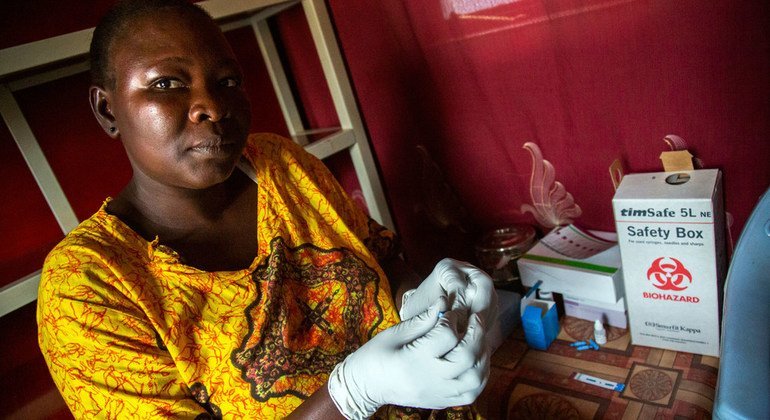
It’s all eyes on Africa as the UN looks to find ways to ensure universal health care for all
It was a historic moment earlier this month as the United Nations and African Union pledged to pursue bolds goals that will strengthen global health and provide health care to all across Africa. “The Memorandum of Understanding we have signed today is an important step towards formalizing the cooperation between WHO and the African Union and to implementing the Addis Ababa Call to Action,” said the WHO chief. “The Addis Ababa Call to Action is a powerful commitment from African Union leaders to increase domestic financing for health, and to hold themselves accountable for that commitment”, he added. Following a political declaration on universal health coverage, which was approved in September by all UN Member States, the General Assembly adopted a global resolution to translate that commitment into reality by legislators in 140 countries. November 18 - UN News It’s indeed a bold declaration and one that will require prevention, infection control and affordable delivery of care. Key UN-AU collaboration specifics Provide technical expertise to the African Medicines Agency and create an environment to foster local production of medicines. Strengthen collaboration between WHO and the Africa Centers for Disease Control and Prevention – with a particular focus on emergency preparedness, to build defenses against epidemics and other health emergencies. Support the implementation of the Addis Ababa Call to Action on universal health coverage and the AU Declaration on Domestic Financing. The prospects are positive, but delivery will be a challenge, and if you are a journalist covering this topic and need an expert source for insight and perspective – let us help. Dr. Saad Bhamla is an Assistant Professor of Chemical & Biomolecular Engineering at the Georgia Tech College of Engineering where he also runs the Bhamla Lab that develops low cost tools for science education and global health. Saad is available to speak to media regarding this topic, simply click on his icon to arrange an interview.



Lake Victoria, the largest lake on the African continent and the largest tropical lake in the world, has the potential to dry up more quickly than researchers previously realized, and the White Nile tributary (the only outlet for Lake Victoria) could disappear within a decade, according to a new study published in Earth and Planetary Science Letters. The drying up of these bodies of water, which the project’s researchers say is driven by climate change, could be devastating to large swaths of East Africa and millions of people, according to the study, “Rapid Pleistocene desiccation and the future of Africa's Lake Victoria.” Baylor University faculty members Daniel J. Peppe, Ph.D., associate professor of geosciences, and Joseph D. White, Ph.D., professor of biology in Baylor University’s College of Arts & Sciences, were part of a team of researchers led by Emily Beverly, Ph.D., assistant professor of sedimentary geology at the University of Houston. Beverly earned her doctoral degree in geology at Baylor in 2015. The research team developed a model for Lake Victoria to help understand how changes in rainfall and temperature, due to climate change, would affect the future of the lake. They discovered that relatively small changes in climate could cause lake levels to drop rapidly. “Using future climate projections, our model also predicts that at current rates of temperature change and previous rates of lake level fall, Lake Victoria could have no outlet to the White Nile within 10 years, and Kenya could lose access to the lake in less than 400 years, which would significantly affect the economic resources supplied by Lake Victoria to the East African community,” the researchers wrote. Water Budget Model Peppe said he and his colleagues developed a water budget model for Lake Victoria in Kenya that examines how changes in rainfall and temperature cause changes in water levels in the lake. “Modeling indicates Lake Victoria can transition back and forth between modern lake levels and being completely dried up in centuries to a few millennia,” Peppe said. The water budget model used information related to: The lake’s size The catchment area, which drains into the lake How much water enters the lake The flow out of the lake Modern climate to estimate lake evaporation Discharge out of the lake and the size of lake The model showed the desiccation and refilling of Lake Victoria can happen over short periods and is directly tied to the mean annual precipitation levels and associated runoff. The research team was also able to use the model to predict the effects of future climate change on Lake Victoria. “We input different climate parameters in the model based on past reconstructions and future projections to see what happened to lake levels in the past and what will happen in the future,” Peppe said. Combined observations from this new modeling and estimates of ancient precipitation indicate that Lake Victoria was likely dried up between 36,000 to 100,000 years ago, Peppe said. “As Lake Victoria dried up, this affected the dispersal patterns of early modern humans and other mammals as grasslands expanded with the retreat of the lake,” he said. Repercussions of Disappearance Peppe said the disappearance of the White Nile could have broad repercussions, including depriving Uganda of its primary source of electricity via hydropower and the water that sustains the Nile during non-flood stages. “In addition, every major port city around Lake Victoria could become landlocked in as little as 100 years. In 400 years, Kenya would have no access to the lake while Uganda and Tanzania would gain huge areas of potential farmland setting up a potentially dangerous dynamic between countries that currently fight over the lucrative fishing rights to the lake,” Peppe said. The researchers wrote that additional regional climate modeling is urgently needed to understand the effects of climate change on the region. ABOUT THE STUDY The new study, “Rapid Pleistocene desiccation and the future of Africa's Lake Victoria,” is published in the journal Earth and Planetary Science Letters. The research team was led by Emily J. Beverly, Ph.D., assistant professor of sedimentary geology at the University of Houston; Joseph D. White, Ph.D., professor of biology in Baylor University’s College of Arts & Sciences; Daniel J. Peppe, Ph.D., associate professor of geosciences in Baylor University’s College of Arts & Sciences; J. Tyler Faith, Ph.D., assistant professor of anthropology, at University of Utah; Nick Blegen, Ph.D., Royal Society Eric Shooter International Fellow, Department of Geography, University of Cambridge; and Christian A. Tryon, Ph.D., professor of anthropology, University of Connecticut. ABOUT BAYLOR UNIVERSITY Baylor University is a private Christian University and a nationally ranked research institution. The University provides a vibrant campus community for more than 17,000 students by blending interdisciplinary research with an international reputation for educational excellence and a faculty commitment to teaching and scholarship. Chartered in 1845 by the Republic of Texas through the efforts of Baptist pioneers, Baylor is the oldest continually operating University in Texas. Located in Waco, Baylor welcomes students from all 50 states and more than 90 countries to study a broad range of degrees among its 12 nationally recognized academic divisions. ABOUT THE COLLEGE OF ARTS & SCIENCES AT BAYLOR UNIVERSITY The College of Arts & Sciences is Baylor University’s oldest and largest academic division, consisting of 25 academic departments and seven academic centers and institutes. The more than 5,000 courses taught in the College span topics from art and theatre to religion, philosophy, sociology and the natural sciences. Faculty conduct research around the world, and research on the undergraduate and graduate level is prevalent throughout all disciplines. Visit www.baylor.edu/artsandsciences.

Did you know? 18.8 million women and girls are living with HIV AIDS-related illnesses are the leading cause of death among females between the age of 15 and 49 1.8 million children are born with HIV, contracted from their mothers In sub-Saharan Africa, 3 in 4 new HIV infections in teenagers are among girls There are 5,000 new HIV infections per day Women continue to be disproportionally affected by HIV around the world, but particularly in sub-Saharan Africa, where three in four new HIV infections are among young girls. For women seeking care in developing countries, preventing and managing HIV is an expensive proposition. Truvada, the pre-exposure HIV treatment drug commonly known as PrEP, costs about $1,500 a month and must be taken daily for continual HIV protection. Likewise, the antiretroviral therapies that attempt to control HIV infection are costly at nearly $20,000 a year. These oral medications as therapy are a non-starter in developing nations like Africa, where nearly 30 million people are infected with HIV. But Phil Santangelo, biomedical engineering professor at Georgia Tech, has another approach in mind. He’s working on an aerosolized RNA-based HIV preventative that eventually could protect women against the disease. It’s applied vaginally and, currently, the aerosol has been tested in pre-clinical trials. The early results are promising; it’s been shown to create HIV antibodies that ward off the infection. It also has the potential to protect against genital herpes and other pathogens, depending on what protein the RNA encodes for. “A single administration of this aerosol is showing expression of antibodies against HIV for up to three months in pre-clinical trials,” said Santangelo. “Our hope is that this will be more affordable, granting easier access to women in developing countries, especially. With women’s health at the forefront of many conversations today, this has the potential to revolutionize disease prevention.” Eventually, Santangelo says RNA could be used for contraception as well – the RNA would express antibodies that inhibit sperm. Again, if birth control can’t be accessed in developing countries, a self-administered, inexpensive aerosol could change the lives of many women. Are you a journalist covering this very important topic? If you have questions or would like to know more about the research being conducted at the Georgia Tech College of Engineering – then let our experts help. Dr. Philip J. Santangelo is an Assistant Professor in the Wallace H. Coulter Department of Biomedical Engineering. Dr. Santangelo is an expert in the areas of therapeutics and vaccines and HIV/SIV and hRSV. He is available to speak with media regarding this emerging discovery - simply click on his icon to arrange an interview.
