Experts Matter. Find Yours.
Connect for media, speaking, professional opportunities & more.

Why Insomnia May Hold the Key to Treating Depression, According to MCG Research
William Vaughn McCall, MD, professor emeritus in the Department of Psychiatry and Health Behavior at the Medical College of Georgia at Augusta University, is leading a new multi-year clinical trial aimed at addressing insomnia and depression together — two conditions that frequently occur side by side. The Assessing Improvements in Mood and Sleep (AIMS) Trial, funded by the National Institutes of Health, is exploring whether treating sleep problems through psychotherapy can also reduce lingering symptoms of depression, particularly in older adults. McCall has served as professor and Case Distinguished Chairman of the Department of Psychiatry and Health Behavior at Augusta University since 2012. His research interests include depression, electroconvulsive therapy, quality of life, insomnia, and suicide. His research has been continuously funded by the National Institute of Mental Health since 1995, and he is the author of more than 400 publications, including more than 180 peer-reviewed journal articles. View his profile McCall’s work builds on decades of research examining how disrupted sleep contributes to mood disorders. While previous studies often focused on medication-based approaches, this trial takes a different direction by testing non-pharmacological therapies that target insomnia itself. The research team, which includes collaborators from multiple universities, is evaluating whether improving sleep quality can meaningfully lower depression symptoms for patients who remain symptomatic despite antidepressant treatment. “Ultimately, the hope is to find other avenues to reduce the risk for depression and depression symptoms,” McCall says. The trial is currently recruiting adults aged 55 and older who are experiencing both insomnia and depression, with options for both in-person and remote participation. For journalists covering mental health, aging, sleep science, or emerging clinical research, McCall is a key expert offering informed perspective on how sleep-focused interventions could reshape the future of depression treatment. The full article 'New MCG trial targets insomnia and depression symptoms' is available below: And if you're interested in talking with William Vaughn McCall, MD, simply click on his icon now to arrange a time for an interview today.



Holiday Phones, Real Kids: “Don’t Give a 10-Year-Old a 24/7 Device Without a Plan”
Smartphones and tablets are among the hottest holiday gifts for tweens and teens. They’re also one of the biggest sources of parental anxiety. “We’re giving 9, 10, 11-year-olds a pocket device with the power to nuke their sleep, social life and self-esteem — and we’re doing it with almost no training,” says Eli Singer, founder and CEO of Offline.now. “The question isn’t ‘Should kids have phones?’ It’s ‘What’s the plan for this incredibly powerful tool?’” Singer, a coach and parent who lives with ADHD himself, takes a non-judgmental, shame-free approach with families. He’s blunt about the risks — social comparison, late-night scrolling, drama at school that now comes home in their pocket — but equally blunt that guilt doesn’t help. “Parents are overwhelmed and scared. They’ve seen the headlines linking social media to anxiety and depression, and they feel like they’re already behind,” he says. “My job isn’t to scare them; it’s to help them write the first draft of a family agreement they can actually live with.” Singer recommends three simple starting points over the holidays: Bedrooms are sacred. Phones charge overnight outside kids’ rooms and ideally outside parents’ rooms, too. Meals are for humans, not phones. A bowl or basket at the table becomes the visual reminder: we’re here together. Model what you ask. If parents scroll through dinner or answer work emails at fireworks, kids get the message long before any rule is written. Offline.now’s Digital Wellness Directory includes professionals who specialize in families, ADHD, and youth mental health; Singer positions Offline.now as the bridge between overwhelmed parents and the right expert help. Why now Late December is “first phone” season. January brings the real-world consequences: blown bedtimes, drama in group chats, school exhaustion. Singer can give reporters a nuanced, practical angle on holiday devices — beyond “phones are bad” vs. “phones are fine” — and concrete questions families can ask before they unwrap the box. Available for interviews Eli Singer - CEO of Offline.now; author of Offline.now: A Practical Guide to Healthy Digital Balance. I speak about practical behavior change, non-judgmental family agreements, and confidence-based starting points - and I can direct people to licensed professionals via the Offline.now Directory when needs go beyond coaching.


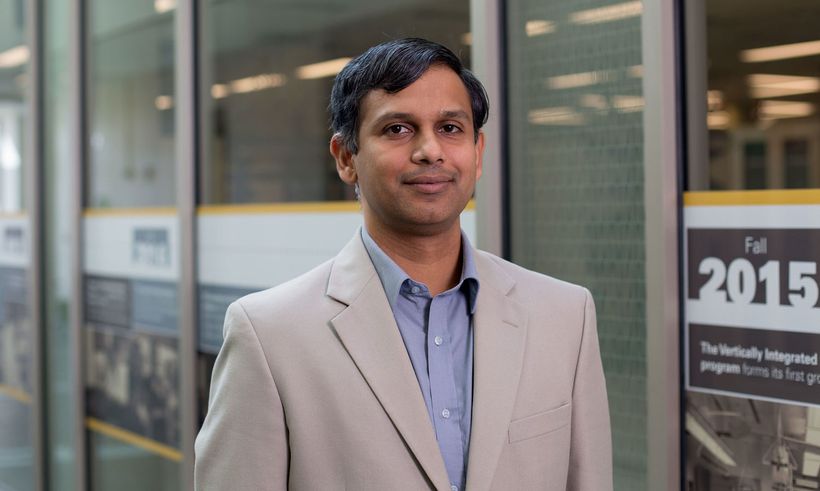
Artificial intelligence is a resource-intensive technology. A paper recently published in Nano Letters by collaborators at the Virginia Commonwealth University (VCU) College of Engineering and Georgetown University hopes to improve AI’s ability to parse the vast amounts of information it creates by applying magneto-ionics to the established concept of physical reservoir computing (PRC). “Demonstrating we can make solid-state devices with magneto-ionic materials is an important step into further energy-efficient computing research, and this Nano Letters publication reinforces that,” said Muhammad (Md.) Mahadi Rajib, Ph.D., a postdoc with Jayasimha Atulasimha, Ph.D., Engineering Foundation Professor in the Department of Mechanical & Nuclear Engineering. What makes a decision? Our brains make countless complex decisions everyday. Input comes in, we weigh options and decide what to do. Within that simple path are countless identical loops of input, consideration and output as neurons fire in a chain that takes you from cause to effect. For artificial intelligence, nodes within a neural network receive inputs and provide output, much like the neurons in our brains. These outputs can be sent to other nodes for continued processing, but those outputs need weight to have value. For AI, weight signifies one input or connection is more important than another. Traditional neural networks have multiple layers consisting of countless nodes like this. Each node requires training in order to weigh things properly. Training consumes processing power, and processing power takes time and energy. Making tasks like analysis and prediction more efficient is how to continuously improve AI technology. Less training, more efficiency. Physical reservoir computing reduces the number of nodes an AI needs to train. Only the final output layer needs training in PRC, using a simple method for classification or prediction tasks. A physical “black box” replaces neural network nodes and synapses, like the ones used for AI inference, in PRC and processes inputs by implementing a nonlinear mathematical function with temporal memory. To explain the inner workings of the black box, imagine two stones thrown into still water. One stone is thrown with high force and the other with low force, creating big and small ripples respectively. If the stones are thrown so the second stone lands before the previous ripples have dissipated, the new ripple is affected by the earlier one. This illustrates the concept of temporal memory. In this analogy, if multiple stones are thrown one after another into still water according to some complex trend, observing the ripples over time allows you to understand the trend and train a simple set of weights to predict the force of the next stone throw from the ripple pattern. Repeatedly performing this cycle of input, interaction and observation is PRC. It reveals patterns over time that can predict chaotic systems, like market trends or the weather, using techniques like linear regression modeling to plot each output as a single point. The magneto-ionic approach. Using this same example above, the “water” in a magneto-ionic PRC is represented by a positive and negative electrode with solid-state electrolyte between them through which ions move when voltage is applied. The application of voltage is equivalent to throwing a stone and the ripple effect is comparable to the movement of oxygen ions in the system. “In addition to its energy efficiency, a useful feature of the magnetoionic system is that time scales for ion diffusion can be controlled from microseconds to minutes,” Atulasimha said. “This leads to simple experimental demonstration, as no megahertz and gigahertz measurements are needed. One can work at the natural time scales of the target application in practical systems and remove the need for complex frequency conversion, which takes both energy and space due to complex electronics.” Atulasimha imagines these energy-efficient reservoir systems have applications in edge computing devices like drones, automated vehicles and surveillance cameras. Tasks such as household energy load forecasting, weather prediction or processing hourly readings from wearable devices, which operate on hour-scale data, can also be performed using magneto-ionic PRC without additional preprocessing. “We showed that the magneto-ionic physical reservoir has both memory and nonlinear behavior, two important properties necessary for using it as a reservoir block,” Rajib said. “Our system stands out because voltage-controlled ion migration is a highly energy efficient method of manipulating magnetization. We demonstrated the required reservoir properties in a physical system and did so using a very energy efficient approach.” Two labs came together in order to pursue this research. Virginia Commonwealth University collaborators included Atulasimha, Rajib, and VCU Ph.D. students Fahim Chowdhury and Shouvik Sarker. The Georgetown University team included Kai Liu, Ph.D., Professor and McDevitt Chair in Physics, Dhritiman Bhattacharya, Ph.D., Christopher Jensen, Ph.D. and Gong Chen, Ph.D. Atulasimha’s group illustrated physical reservoir computing using numerical models of spintronic devices and sought a material system to experimentally demonstrate PRC. Liu’s team worked with magneto-ionic materials and was intrigued by the possibility of using them for computing applications.



Australia’s Under-16 Social Media Ban Isn’t a Finish Line - It’s a Reality Check
Australia’s move to restrict social media accounts for kids under 16 has become a global lightning rod - and it’s forcing the right conversation: what do we do when a technology is too powerful for a developing brain? But here’s what I think journalists should focus on next: “A ban is a speed bump, not a seatbelt. It might slow kids down - but it won’t teach them how to drive their attention.” That’s the part that gets lost in the headlines. Because even if you can reduce access, you still have to deal with the why behind the behavior: boredom, social pressure, loneliness, stress, sleep debt. “The headlines make it sound like the problem is solved. But the real question is: what happens in the living room on day three?” Offline.now’s early data shows something important: most people genuinely want to change their screen habits, but many feel overwhelmed and don’t know where to start. That’s why we begin with a quick self-assessment and map people into four Types - Overwhelmed, Ready, Stuck, Unconcerned - so the advice matches the person. “We keep treating social media like a self-control test. It’s not. It’s a confidence problem - people don’t know where to start, so they start with shame.” What I’d tell policymakers considering similar bans 1. Pair friction with skills. “If the only plan is ‘block the app,’ you’re betting against the internet. Workarounds aren’t a bug - they’re the default.” 2. Don’t outsource responsibility entirely to families. “If policy turns parents into full-time bouncers and kids into part-time hackers, we’ve built a system that’s guaranteed to fail.” 3. Ask what gets protected, not just what gets restricted. “The real target isn’t ‘screen time.’ It’s the moments screens replace.” What parents need to know that headlines aren't telling them This is a process, not a switch. The best “first phone / first social” plans are adjustable. Modeling beats monitoring. The rules collapse if adults don’t follow them too. Have a handoff plan. If a child’s mood, sleep, school performance, or withdrawal is deteriorating, it may be bigger than habits. Why this is a late December / January story “The holidays are the perfect storm: more free time, more family friction, more devices, less sleep. January is when the bill comes due.” Journalist angles Bans vs. behavior change: what policy can’t solve The workarounds economy: age gates, bypass culture, privacy tension The four Types: why one-size fits all screen-time advice fails families New Year resets for families: simple, shame-free agreements that stick Available for interviews Eli Singer - CEO of Offline.now; author of Offline.now: A Practical Guide to Healthy Digital Balance. I speak about practical behavior change, non-judgmental family agreements, and confidence-based starting points - and I can direct people to licensed professionals via the Offline.now Directory when needs go beyond coaching.

Staying Sober and on the Path to Recovery During the Holidays
The holidays can be a joyous time full of celebrations and they also can be a time of intense stress. Individuals with substance and alcohol use disorders can experience additional stress during the holidays, which can interfere with their recovery, and they may need additional support to abstain from substance use. What can people in recovery do to both abstain and enjoy the holidays? And what can loved ones do to support them? “Holidays can be difficult for anyone, but those with substance use and mental health disorders may have a more difficult time coping with those difficulties,” said Baylor University substance use disorder treatment expert Sara Dolan, Ph.D., professor of psychology and neuroscience. “The holidays can be – on one hand – a time rife with loneliness, and on the other hand, a time where family conflict might be more present,” Dolan said. “Both of these situations are hard for many of us to cope with, but we may want to be more sensitive to those who struggle more with these situations.” Dolan is a nationally known researcher on how neuropsychological dysfunction, including problems with memory and executive functions, affects how people cope with alcohol and substance use disorders and how these issues affect the treatment process and outcome. Dolan offers the following suggestions for individuals in recovery to help them get through the holidays and how family and friends can offer support. Stay active in recovery If the individual already has a recovery plan in place such as a 12-step program or Celebrate Recovery, make sure to continue attending meetings and appointments during the holiday season. “There are numerous virtual and in-person resources for people who are struggling, including mutual aid support groups like Alcoholics Anonymous, Narcotics Anonymous and Smart Recovery,” Dolan said. “People can also call the SAMHSA national helpline at 1-800-662-HELP.” Even when traveling, it is a good idea to know local meeting schedules, use virtual resources and consider attending extra meetings to stay on top of your recovery. Have a coping plan “It is important for people to have a solid coping plan before they go into potentially distressing situations,” Dolan said. Are there places or events to just stay away from? Dolan said it is “okay to keep yourself safe by leaving or even avoiding places that may be unsafe.” By having a plan to handle stressors ahead of time, you can manage it better in the moment. Preparation is key to feeling safe and enjoying the holidays. Avoid triggers and stressors Understanding personal triggers, which can be different for different people, can help us avoid them ahead of time. “For some people, it’s family conflict, for some, it’s loneliness, and for some it’s feelings of anxiety or depression,” Dolan said. “It’s important to know your own stress points before you go into situations that may trigger them.” Once you know what leads to urges to use alcohol or other substances, you can determine how to counteract those circumstances or avoid them if necessary. Reach out for support Reach out to family and friends who will most likely offer positive support. Letting your loved one know what you need – and how to support you in your recovery – can help you abstain from substance use during stressful situations. In fact, Dolan said you may even want to let them know ahead of time that you may need extra support. How to support someone with a substance use disorder Be as open, direct and caring as you can be. Dolan suggests talking to your loved one directly about what may – or may not be helpful – during the holidays. “Some people in recovery may feel more comfortable in alcohol-free environments,” she said, “but some may not want their loved ones altering their behavior. “Ask – don’t assume – and let your loved one tell you what might work best for them,” Dolan added. Using these suggestions can help both individuals with substance and alcohol use disorders and their families have a healthy and happy holiday season.

LSU Experts Break Down Artificial Intelligence Boom Behind Holiday Shopping Trends
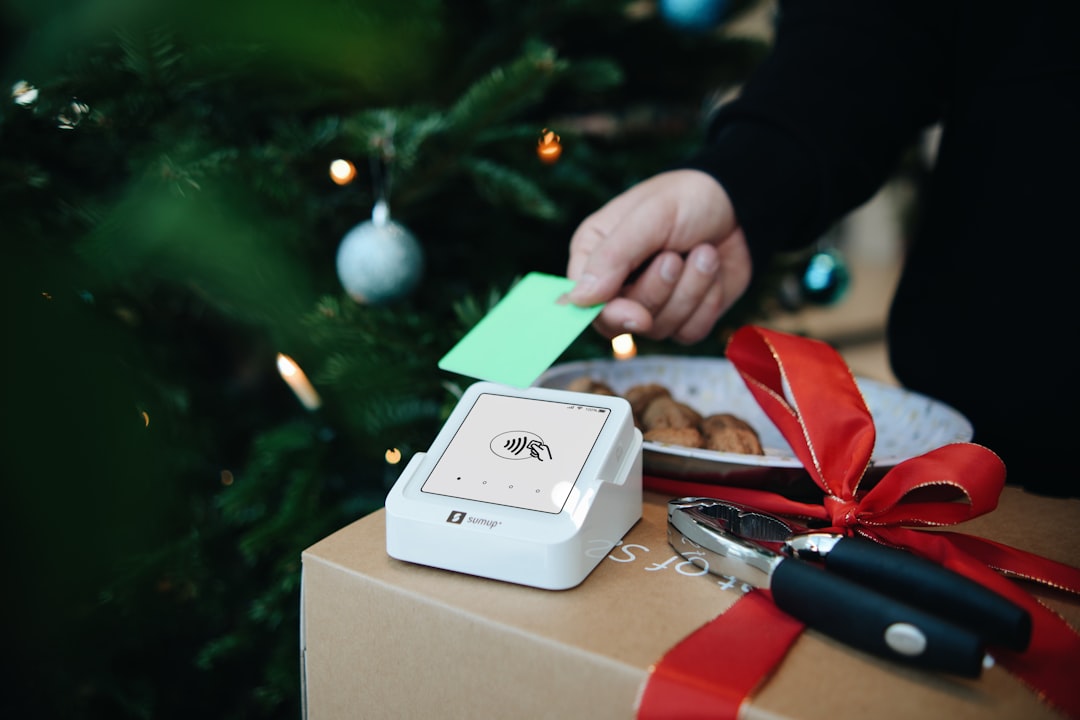
Consumers are increasingly turning to artificial intelligence tools for holiday shopping—especially Gen Z shoppers, who are using platforms like ChatGPT and social media not only for gift inspiration but also to find the best prices. Andrew Schwarz, professor in the LSU Stephenson Department of Entrepreneurship & Information Systems, and Dan Rice, associate professor and Director of the E. J. Ourso College of Business Behavioral Research Lab, share their insights on this emerging trend. AI is the new front door for search: Schwarz: We’re seeing a fundamental change in how consumers find information. Instead of browsing multiple pages of results, users—especially Gen Z—are skipping to conversational AI for curated answers. That dramatically shortens the shopping journey. For years, companies optimized for SEO to appear on the first page of Google; now they’ll have to think about how their products surface in AI-generated recommendations. This may lead to a new form of “AIO”—AI Information Optimization—where retailers tailor product descriptions, metadata, and partnerships specifically for AI visibility. The companies that adapt early will have a distinct advantage in capturing consumer attention. Rice: This issue of people being satisfied with the AI results (like a summary at the top of the Google results) and then not clicking on any of the paid or organic links leads to a huge increase in what we call “zero click search” (for obvious reasons). For some providers, this is leading to significant drops in web traffic from search results, which can be disconcerting due to the potential loss of leads. However, to Andrew’s point of shortening the journey, it means that the consumers who do come through are much more likely to buy (quickly) because they are “better” leads. This translates to seemingly paradoxical situations for providers: they see drops in click-through rates and visitors/leads, yet revenue increases because the visitors are “better.” There is a rise in personalized shopping journeys: Schwarz: AI essentially acts as a personal shopper—one that can instantly analyze preferences, budget, personality traits, or past behavior to produce tailored gift lists. This shifts power toward “delegated decision-making,” in which consumers allow AI to narrow their choices. Younger consumers are already comfortable outsourcing this cognitive load. However, as ads enter the picture, these personalized journeys could be shaped by incentives that aren’t always transparent. That creates a new responsibility for platforms to disclose when suggestions are sponsored and for users to develop a more critical lens when interacting with AI-driven recommendations. Rice: This is also a great point. The “tools” marketers use to attract customers are constantly evolving, but this seems in many ways to be the next iteration of the Amazon.com suggestions that you find at the bottom of the product page for something you click on when searching Amazon (“buy all x for $” or “consumers also looked at…,” etc.), based on past histories of search and purchase, etc. One of the main differences is that you can now create virtually limitless ways to compare products, making comparisons less taxing (reducing cognitive load and stress), which may, in some cases, increase the likelihood of purchase. These idiosyncratic comparisons and prompts lead to the truly unique journeys Andrew is discussing. You no longer have to be beholden to a retailer-specified price range. You could choose your own, or instead ask an AI to list the products representing the best “value” based on consumer reviews, perhaps by asking to list the top ten products by cost per star rating, etc. Advertising is becoming more subtle and conversational: Schwarz: With ads woven directly into AI responses, the traditional boundary between content and advertising blurs. Instead of banner ads, pop-ups, or clearly labeled sponsored posts, recommendations in a conversational thread may feel more like advice than marketing. This has enormous implications for consumer trust. Retailers will likely see higher engagement through these context-aware ad placements, but regulatory scrutiny may also increase as policymakers evaluate how clearly sponsored content is identified. The risk is that advertising becomes invisible—something both platform designers and regulators will need to monitor carefully. Rice: This is definitely true. I was recently exploring an AI-based tool for choosing downhill skis, but the tool was subtly provided by a single ski brand. I’m not sure the distribution of ski brands covered was truly delivering the “best overall fit” for a potential buyer, rather than the best possible ski in that brand. At least in that case, it was somewhat disclosed. It does, however, become an issue if consumers feel misled, but they’d have to notice it first. Still, the advantages are big for retailers, and the numbers don't lie. According to some preliminary Black Friday data, shoppers using an AI assistant were 60% more likely to make a purchase. Schwarz: This shift is going to reshape multiple layers of the retail ecosystem: Retailers will need to rethink how they show up in AI-driven environments. Traditional SEO, ad bids, and social media strategies won’t be enough. Partnerships with AI platforms may become as important as being carried by major retailers today. Because AI tools can instantly compare prices across dozens of retailers, consumers will become more price-sensitive. Retailers may face increasing pressure to offer competitive pricing or unique value propositions, as AI reduces friction in comparison shopping. Retailers who integrate AI into their own websites—chat-based shopping assistants, personalized gift advisors, automated bundling—will gain an edge. Consumers are increasingly expecting conversational interfaces, and companies that delay will quickly feel outdated. As AI tools influence purchasing decisions, consumers and regulators alike will demand clarity around how recommendations are generated. Retailers will need to navigate this carefully to maintain What I think we are going to see accelerate as we move forward: AI-powered concierge shopping will become mainstream. Within a couple of years, using AI to generate shopping lists, compare prices, and find deals will be as common as using Amazon today. Retailers will create AI-specific marketing strategies. Instead of optimizing for keywords, they’ll optimize for prompts: how consumers might ask for products and how an AI system interprets those requests. More platforms will introduce advertising into AI models. ChatGPT is simply the first mover. Once the revenue potential becomes clear, others will follow with their own ad integrations. Greater scrutiny from policymakers. As conversational advertising grows, transparency rules and labeling requirements will almost certainly. A new era of “conversational commerce.” Buying directly through AI—“ChatGPT, order this for me”—will become increasingly common, merging search, recommendation, and transaction into a single seamless experience. I can speak to this on a personal level. My college-aged son is interested in college football, and I wanted to get him a streaming subscription to watch the games. However, the football landscape is fragmented across multiple, expensive platforms. I asked ChatGPT to generate a series of options. Hulu is $100/month for Live TV, but ChatGPT recommended a combination of ESPN+, Peacock, and Paramount+ for $400/year and identified which conferences would not be covered. What would have taken me hours only took me a few minutes! Rice: On the other hand, AI isn’t infallible, and it can lead to sub-optimal results, hallucinations, and questionable recommendations. From my recent ski shopping experience, I encountered several pitfalls. First, for very specific questions about a specific model, I sometimes received answers for a different ski model in the same brand, or for a different ski altogether, which was not particularly helpful, or specs I knew were just plain wrong. Secondly, regarding Andrew’s point about the conversational tone, I asked questions intended to push the limits of what could be considered reliable. For example, I asked the AI to describe the difference in “feel” of the ski for the skier among several models and brands. While the AI gave very detailed and plausible comparisons that were very much like an in-store discussion with a salesperson or area expert, I’m not sure I fully trust when an AI tells me that you can really feel the power of a ski push you out of a turn, this ski has great edge hold, etc. It sounds great, but where is the AI sourcing this information? I’m not convinced it’s fully accurate. It also seems we’re starting to see Google shift toward a more AI-centric approach (e.g., AI summaries and full AI Mode). At the same time, we’re also starting to see AI migrate closer to Google as people use it for product-related chats, and companies like Amazon and Walmart have developed their own AI that is specifically focused on the consumer experience. I can’t imagine it will be long before companies like OpenAI and their competitors start “selling influence” in AI discussions to monetize the influence their engines will have.




Why 48 Hours Outdoors Does More Than a Week of Scrolling Breaks
When people feel burned out from their phones, the default solution is often a “digital detox”: delete the apps for a week, set a screen-time limit, maybe move social icons off the home screen. Then work, group chats and FOMO pull them right back in. Personal Development Coach Mark Diamond, an expert in the Offline.now directory who ran a tech-free summer camp for 25 years, says the real reset button isn’t a slightly less frantic version of the same life. It’s 48 hours of real-world experience outdoors. “I’ve watched kids and adults go from wired and anxious to relaxed and connected in a matter of days — not because we lectured them about screens, but because they were hiking, cooking over a fire, laughing with friends, actually living,” Diamond says. “Nature gives your nervous system something it can’t get from a feed.” The science backs up what he sees at camp. A large meta-analysis of nature exposure in adults found that as little as 10 minutes in natural settings improves markers of mental health — including mood and stress — with larger benefits for longer doses of time outside. A broad review on nature and health reports that regular contact with green and blue spaces is associated with: Better mental health and reduced stress Improved cognitive function and attention Higher levels of physical activity Better sleep quality Experimental work using brain imaging has also shown that short visits to green spaces can boost positive affect and change patterns of brain activation in ways consistent with reduced rumination and improved emotional regulation, the opposite of what many people experience after long periods of doomscrolling. Diamond’s camp experience maps directly onto these findings: after even a weekend of tech-free outdoor time, he sees kids and adults become more patient, more playful and more able to tolerate “boredom”: a key ingredient for real focus and creativity. Offline.now integrates this into its digital balance approach by treating offline, outdoor experiences as a core intervention, not a reward you earn after perfect screen behavior. Instead of asking, “How can I use my phone less?” the question becomes, “What can I do offline that naturally displaces my screen time?” “You don’t have to move to the woods,” Diamond says. “Two days of walks, parks, backyard projects, or local trails can do more for your brain than seven days of white-knuckling your way through a ‘detox’ while you stay indoors thinking about your phone.” For journalists covering digital wellness, mental health, or lifestyle resets, this story connects the dots between nature research, digital fatigue, and why a simple 48-hour outdoor reset might be more realistic and more powerful than yet another all-or-nothing break from apps. Featured Expert Mark Diamond – Personal Development Coach and longtime director of a tech-free outdoor camp. He specializes in outdoor wellness, sustainable behavior change, and helping families and individuals swap abstract “detox” goals for concrete, nature-based experiences that restore mood, focus and connection. Expert interviews can be arranged through the Offline.now media team.


Playing "Ketchup": Kraft Heinz, Food Industry Work to Meet Evolving Consumer Trends
In September, the Kraft Heinz Company revealed its intention to split into two smaller entities—one focused on in-demand products, like shelf-stable meals, spreads and sauces, and the other on slower-growth businesses, such as the Oscar Mayer, Kraft Singles and Lunchables brands. The move is among the latest in a series of breakups and spinoffs announced by major "Big Food" conglomerates, including Kellogg's, Keurig Dr Pepper Inc. and Unilever, and experts speculate more divvying and downsizing are bound to follow. Beth Vallen, PhD, a professor in the Villanova School of Business who studies consumer behavior and food marketing, contends these demergers and restructurings are the direct result of a recent yet significant shift in shoppers' spending habits. "It is certainly a possibility that we are moving away from 'Big Food,'" says Dr. Vallen. "The companies are likely to be more agile as smaller entities, and the more targeted businesses will allow them to focus on their different market segments as we face increasingly complex consumer and macro trends in the food industry." Among the more noteworthy factors the professor cites are changes in how shoppers evaluate products and how often they make purchases, particularly amid rising costs, economic pressures and increased competition in the marketplace. When it comes to groceries, a LendingTree survey from earlier this year found that nearly nine in 10 Americans are reassessing what items they cart to the checkout lane. "Inflation and uncertainty have driven consumers to look for more value when they shop," says Dr. Vallen. "This might result in behaviors like switching to lower-cost alternatives, and along these lines, consumers are seeking out retailers with high-quality store brand offerings that might replace their typical, branded items. "Consumers are also shopping less frequently. This could be due to reliance on technology, like online grocery purchases, which requires more planning, as well as a desire to make groceries stretch between purchases to save money." Another development affecting the industry is a broader drive across the population toward health-conscious options and low-calorie meals, heightened to a degree by the rise of GLP-1 drugs like Ozempic. A recent KFF Health Tracking Poll evidences that these medications, which have been shown to promote weight loss, are taken by roughly one in eight American adults; and households with users are expected to account for more than a third of food and beverage sales by 2030. According to Rebecca Shenkman, MPH, RDN, LDN, the director of the MacDonald Center for Nutrition Education and Research at Villanova's M. Louise Fitzpatrick College of Nursing, the impact of these drugs' usage on consumers' eating habits should not be underestimated. "GLP-1 receptor agonists reduce appetite and food intake through multiple mechanisms, and evidence suggests both a reduction in snacking frequency and a shift toward healthier choices among users," shares Shenkman. "They report fewer cravings for sweet, salty and fatty snacks, particularly during the first 12 to 24 weeks of treatment. In addition, consumer surveys and clinical trials indicate increased intake of fruits, vegetables and water, and decreased consumption of processed foods and sugary beverages. "With millions of users and average daily reductions of 700 to 900 calories, demand for calorie-dense snacks could decline significantly." Among the brands and businesses at greatest risk, in Dr. Vallen and Shenkman's respective estimations, are "packaged and processed foods" as well as "sugary beverages and high-fat treats." In turn, with shoppers increasingly moving away from these "unhealthy" options and expressing an openness to dispensing with long-term staples, companies in the sector will need to emphasize adaptability in the coming years, making a conscious effort to understand customers' distinct preferences and needs. "Altogether, there are numerous trends that are seemingly pulling consumers in different directions—between health, taste, value and convenience," concludes Dr. Vallen. "Looking ahead, it will be important for firms to understand how these trends impact different consumers—and in different categories. Health likely means something different to Gen X and Gen Z and may vary further based on whether we are talking about a family dinner or a late-night treat. Taking efforts to understand consumer motivations will be crucial for companies to appropriately respond to current trends."



As holiday shopping season nears, UF experts warn retail theft is growing more sophisticated
With the busiest shopping season of the year approaching, new findings from the National Retail Federation’s Impact of Retail Theft and Violence 2025 report — developed by the University of Florida’s SaferPlaces Lab and the Loss Prevention Research Council — show retailers are facing increasingly complex and technology-driven threats. UF researchers say early preparation, better data and stronger collaboration will be essential as stores brace for heavier foot traffic and heightened safety risks. Despite public reports that retail theft is decreasing, Read Hayes, Ph.D., a UF research scientist and director of the LPRC at UF Innovate, said retailer surveys tell a different story: Incidents of shoplifting, organized retail crime, online fraud and other external theft continue to rise, even as some law enforcement statistics appear flat or declining. The gap, he said, reflects how much crime goes unreported or unrecorded. “Retailers have always had a difficult time reporting much of their crime, and if you look only at police data, like calls for service or arrests, it can look like retail crime is flat or even slightly down,” he said. “But when we survey retailers, who are the actual crime victims, they consistently report year-over-year increases in theft and violence.” Criminal groups are also becoming more sophisticated. Hayes said offenders are increasingly using technology to defeat protective systems, disrupt cameras and identify vulnerable stores. They also rely heavily on social media platforms such as TikTok and Reddit to coordinate attacks and share tactics. “It’s a little disconcerting how much criminals rely on social media now to scout stores, map out easy targets, learn from each other or just plain brag about how they did it,” he said. LPRC scientists monitor social media signals to help retailers and law enforcement understand emerging threats — not in real time, Hayes said, but to help build best practices organizations can use to defend themselves. Criminals continue to focus on high-demand items such as branded apparel and footwear, prompting retailers to rethink how those products are displayed and secured. Hayes said many companies are testing new approaches to better protect vulnerable merchandise without driving customers away. One example is automated self-service systems for locked items, where customers can retrieve a product by having a code sent to their phone without waiting for a store employee. Safety remains retailers’ top concern, Hayes said. LPRC’s latest report, developed in collaboration with the security technology company Verkada, found that frontline retail workers report feeling less safe than ever, a trend that typically intensifies during the holiday rush. Rising incidents of in-store violence, limited law enforcement support in some areas and increased guest-related confrontations are pushing retailers to reassess how they protect both employees and customers. “Nothing is more important than protecting the frontline retail associates who keep this industry running,” Hayes said. “This report helps reinforce what retailers need to do to ensure those workers feel safe.” LPRC teams are also studying ways to improve safety beyond store walls, testing parking lot technologies, including license plate readers and flashing deterrent systems designed to discourage potential offenders and reassure law-abiding shoppers. At the federal level, Hayes said he and partners across the country are urging Congress to pass a bill to address organized retail crime and establish a centralized platform for reporting retail theft threats. As the holiday season approaches, Hayes said the need for evidence-based solutions has never been clearer. “Retailers are under pressure to keep their stores safe, welcoming and competitive,” Hayes said. “The more we can understand offender behavior, customer expectations and emerging technologies, the better we can help retailers, communities and law enforcement reduce harm.” The LPRC, headquartered at UF Innovate, brings together more than 200 major retailers, technology companies and public safety agencies to conduct research that strengthens store safety, reduces loss and enhances the customer experience.


School’s Out, Screens Are In: Why Your Kids Copy Your Phone Habits on Winter Break
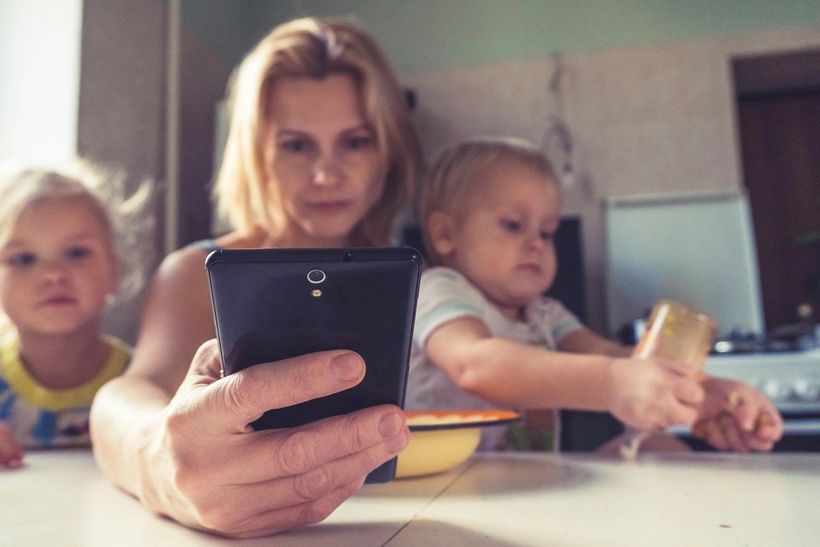
When the bell rings for winter break, most parents worry their kids will “disappear into their phones.” What often goes unmentioned? The adults usually disappear into theirs first. New behavioral data from Offline.now, the digital wellness platform founded by author Eli Singer, shows we now spend about 10 of our 16 waking hours on screens, roughly 63% of our day. Kids off school are simply mirroring the digital norms they see at home. Executive Function Coach and child development specialist Craig Selinger says winter break is less a test of kids’ willpower and more a test of family norms: “If you want behavior change in kids, start with the parent model. A 12-year-old will not put their phone away at dinner if their parents won’t.” Selinger points to what he calls the “mobility problem”: what used to be a TV in the living room is now a device in your child’s pocket. “Mobility makes tech sticky - there’s no natural ‘show’s over’ when Minecraft and TikTok never end.” Offline.now’s experts note that high, especially late screen use is tied to disrupted sleep and next-day behavior in children and teens, exactly when parents say, “They’re monsters over break.” Selinger’s work with families suggests the answer isn’t banning devices outright, but changing what kids see adults do with theirs. When parents put phones in a basket at meals, leave devices out of bedrooms, and actually join “old school” activities: cooking, board games, hands-on hobbies, kids’ attention and confidence start to rebound: “Micro-independence beats micromanagement. If you engineer small wins off-screen - a 20-minute task kids can complete without their phone - you rebuild their real-world confidence one brick at a time.” Key message for journalists: Over winter break, the real story isn’t just “kids are on their phones all day.” It’s that adult behavior quietly sets the ceiling on what’s realistic for children. The most effective “screen-time rule” is the one parents are willing to follow themselves. Featured Expert Craig Selinger, M.S., CCC-SLP - Executive Function Coach and child development specialist (Brooklyn Letters), focused on how kids actually learn and how digital dependency affects attention, writing, family systems, and school success. Expert interview availability can be arranged through Offline.now’s media team.