
Experts Matter. Find Yours.
Connect for media, speaking, professional opportunities & more.

Supply chain disruptions cost organizations an estimated $184 billion annually, according to Swiss Re. A recent survey of 2,000 European shipping customers by logistics giant Maersk revealed that 76% experienced supply chain disruptions that delayed their business operations in the past year, with 22% reporting more than 20 disruptive incidents in the same period. These figures underscore the growing businesses’ growing vulnerabilities, as detailed in the 2025 J.S. Held Global Risk Report, which outlines how companies worldwide must adapt to an increasingly complex and volatile supply chain landscape. As highlighted in the 2025 Global Risk Report, modern supply chain disruptions stem from a range of factors, including climate change, natural disasters, cyberattacks, fraud, and geopolitical instability. Conflicts such as the Russia-Ukraine war and tensions in the Middle East continue to exacerbate these challenges. Gone are the days when companies could shift blame to suppliers without accountability. The globalization of supply chains has made them increasingly susceptible to cyber incidents, material shortages, and regulatory scrutiny. Consumers and governments alike are demanding greater transparency, pushing companies to disclose where products come from, how they are sourced, and whether their manufacturing processes harm people or the environment. The 2025 Global Risk Report notes that in response, governments worldwide have introduced stricter regulations, particularly in the European Union, where new and existing legislation is enforcing greater oversight and compliance. “As consumers, governments, and corporations acknowledge the effects of supply chain risks, transparency and due diligence will become more critical to the internal compliance structure of global businesses,” said Vice President of Sustainability Andrea Korney. “The enactment and greater enforcement of laws focused on sustainability issues have increased the obligations on companies to examine the sources and actions of their suppliers and how it all impacts the entire value chain.” In the 2025 J.S. Held Global Risk Report, multidimensional experts who combine scientific, technical, financial, and risk management expertise identify and explore key business risks shaping the future of supply chain resilience, including: Geopolitical instability Natural disasters and climate science Maritime route disruptions Regulatory fragmentation Cybersecurity threats Trade and tariff threats Critical minerals dependency Financial risks and fraud J.S. Held environmental risk and compliance expert John Peiserich, Esq., observes, “These risks are no longer hypothetical—they are actively reshaping the business landscape. Organizations that fail to anticipate and mitigate these challenges risk operational disruptions, financial losses, and reputational damage.” For businesses seeking to build resilient supply chains, the 2025 J.S. Held Global Risk Report serves as an important guide, providing expert insights and data-driven analysis to help companies navigate the evolving risk landscape. J.S. Held experts serve as trusted advisors to global clients on these and other risks, crafting business strategies, leveraging technology seeking to mitigate risk, and optimizing business opportunities to build resilience in an era of uncertainty. Supply chain risk is just one of the five key areas analyzed in the J.S. Held 2025 Global Risk Report. Other topics include sustainability, the rise of crypto and digital assets, AI and data regulations, and managing cyber risk. If you have any questions or would like to further discuss the risks and opportunities outlined in the report, please email GlobalRiskReport@jsheld.com. To connect with Andrea Korney or John Peiserich simply click on either expert's icon now. For any other media inquiries - simply contact : Kristi L. Stathis, J.S. Held +1 786 833 4864 Kristi.Stathis@JSHeld.com


Return to Office Mandates: Top 3 Challenges for Employers and Employees
Full time return-to-office (RTO) mandates – most recently from JPMorgan Chase, Amazon and now the U.S. federal government – have made headlines across the country and caused consternation among remote and hybrid employees. Whether one is – or is not – a supporter of remote and hybrid work, the challenges that arise with RTO and with remote/hybrid arrangements are important to consider from both sides – employers and employees. Baylor University management expert Sara Jansen Perry, Ph.D., who studies employee stress and well-being, including the role of remote/hybrid work and leadership, said working from home has existed in some form for decades, and research suggests it will continue to be an option for many workers and organizations. "We know many employees value remote work so much as a benefit that they will choose jobs based on whether it is an option,” Perry said. “Fortunately, we have seen many benefits of remote work as well, including employee productivity, cost savings, enhanced work-life balance and well-being, to name a few. Even if employees return to the office a few days a week, these benefits can still be realized, including longer term organizational benefits in terms of retention and applicant attraction. However, if an organization is set on returning to office full time, there are some challenges they should consider and proactively address.” Perry highlights 3 key challenges about Return to Office mandates from the perspectives of both employers and employees, applying foundational topics in organizational psychology, among them leadership, trust, culture, performance management and retention. Those three key challenges are a must read and part of the entire article attached below: Are you a journalist looking to know more? The let us help. Sara Jansen Perry, Ph.D., The Ben Williams Professor of Management in the Hankamer School of Business at Baylor University, is a nationally recognized researcher on employee stress and well-being, including the role of remote/hybrid work and leadership. Sara is available to speak with media about the recent Return to Work announcement for the federal bureaucracy. Simply click on her icon now to arrange an interview today.



Peer-To-Peer Borrowing Surged During Pandemic, Research Finds
New research by Florida Tech assistant professor of business Alina Malkova, Ph.D explores how small businesses sought financing amid the COVID-19 pandemic’s unstable economic environment. Her paper, “Beyond banks: Navigating the shift to peer-to-peer lending for small enterprises,” published in the journal Research in Economics, developed a model to find whether the COVID-19 pandemic affected small-business owners’ demand for peer-to-peer (P2P) lending. Malkova found that more small business owners turned to P2P platforms during this time, primarily because they were more accessible and flexible than traditional banks. Borrowers could access P2P platforms online for convenient use, and the platforms’ advanced algorithms gave lenders more information about borrowers, such as neighborhood demographics, leading to a better understanding of their financial situation. “If you are an owner or borrower and you have short-term financial problems, it may help you,” Malkova says. “It helps you signal your situation.” Ultimately, Malkova says P2P platforms played critical role in overcoming financial barriers that inhibited small businesses in times of limited access to traditional funding. If you're interested in learning more or a reporter looking to speak with Alina Malkova - simply contact Adam Lowenstein, Director of Media Communications at Florida Institute of Technology at adam@fit.edu to arrange an interview today.

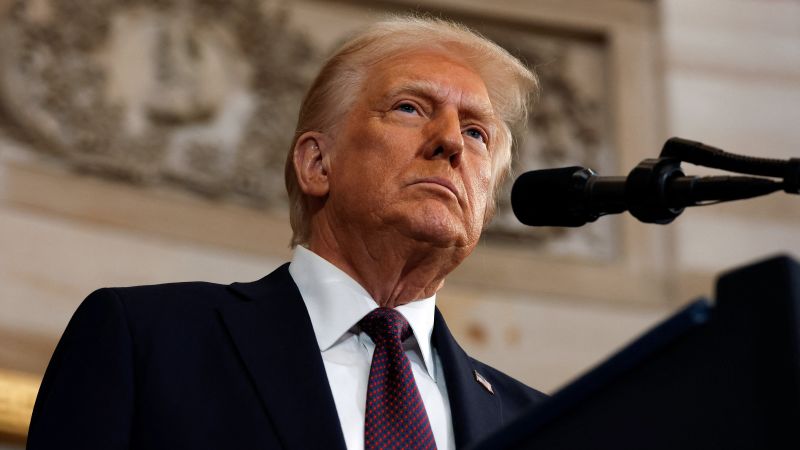
Trump, Trade and Tariffs What to Expect, Will They Work and Who Benefits?
The threat of 25 % tariffs on Canada and Mexico had newsrooms buzzing, politicians scrambling and economists calculating who wins and who loses when trade wars break out among usually amicable neighbors. Factor in Greenland and China - and the story went global. It was a topic that headlined the news as many have watched and waited since the election for President Trump's first days in office to see what the country can expect with incoming policy changes. President Donald Trump said in an Oval Office signing ceremony Monday evening that his administration will impose 25% tariffs on Mexico and Canada on February 1, an extraordinary change in North American trade policy that could raise prices for American consumers. Trump still outlined his broader trade policy for his second term in an executive action Monday. But that action — described by sources as a “placeholder” — doesn’t institute new global tariffs that Trump promised on Day One. As a candidate, Trump proposed sweeping and across-the-board tariffs: up to 20% on imports from all countries, with a 25% tax on goods from Mexico and Canada, plus a punishing 60% levy on goods from China. He also pledged to use tariffs as a negotiating tool on other countries, including, for example, Denmark — putting pressure on the European nation to give control of Greenland to the United States. Asked Monday at an Oval Office signing ceremony about tariffs on China, Trump noted extensive tariffs he imposed during his first administration were still in effect after former President Joe Biden largely left them in place. And on universal tariffs, Trump punted, saying, “We may, but we’re not ready for that just yet.” The executive action signed Monday directed the secretaries of Commerce and Treasury and the United States Trade Representative to investigate the causes of America’s trade deficits with foreign nations, to determine how to build an “External Revenue Service” to collect tariffs, to identify unfair trade practices and to review existing trade agreements for potential improvements. It also directs the government agencies to analyze how the US-Mexico-Canada trade agreement (the USMCA) signed by Trump in his first term is affecting American workers and businesses — and whether America should remain in the free trade agreement. January 21 - CNN As business and political leaders in many countries, especially North America wait for what's ahead, there are questions to be asked: What industries will be targeted? Will tariffs cause higher prices for consumers and increased inflation? Who wins if an all-out trade war happens? How will interwoven sectors like the auto industry and agriculture be impacted? If you're a journalist covering this ongoing story - then let us help. William J. Luther, Ph.D., is an associate professor of economics at Florida Atlantic University, director of the American Institute for Economic Research’s Sound Money Project, and an adjunct scholar with the Cato Institute’s Center for Monetary and Financial Alternatives William is available to speak with media. Simply click on his icon now to arrange an interview today.


J.S. Held Releases 2025 Global Risk Report Addressing Critical Risks Amid Uncertainty
On the first day of the new presidential administration in the United States, global consulting firm J.S. Held unveils its annual report focused on critical areas impacting industries and economies worldwide. Explore the 2025 J.S. Held Global Risk Report here: In an increasingly uncertain and volatile global landscape, businesses, governments, and investors face a growing array of challenges that demand immediate attention and innovative solutions. The 2025 J.S. Held Global Risk Report explores five interconnected topics that organizations must consider in managing risk and opportunity in the year ahead. These include: 1. Sustainability Investments & Headwinds: With various ESG regulations across jurisdictions and increasing scrutiny over corporate environmental and social practices, experts explore how organizations can align with evolving frameworks while driving innovation. 2. Global Supply Chain Challenges: From geopolitical conflicts to climate disruptions, the report analyzes how companies can build more resilient and sustainable supply chains. 3. Crypto & Digital Asset Intensification: As the crypto landscape transitions through regulatory shifts and technological advancements, the report highlights both the risks and opportunities for businesses and investors. 4. Artificial Intelligence, Data & Digital Regulatory Response: With Artificial Intelligence (AI) systems reshaping industries, experts examine the regulatory, ethical, and operational challenges, as well as the competitive advantages for organizations that harness this transformative technology responsibly. 5. Cybersecurity Complexities: From AI-powered cyberattacks to evolving data protection laws, the report provides insights into how organizations can safeguard operations and maintain customer trust in a rapidly shifting digital environment. The 2025 J.S. Held Global Risk Report includes an analysis of these categories of risk and actionable opportunities for companies to gain a competitive edge while addressing critical vulnerabilities. “The 25 technical, scientific, financial, and strategic advisory experts who contributed to the J.S. Held Global Risk Report have collaboratively parsed not only each risk independently but also at their unique points of intersection to create a framework to support business decision-making,” noted Greg Esslinger, Executive Vice President and Global Investigations Practice Leader. “Our experts’ deep understanding of the external factors related to the topics that keep CEOs, CFOs, COOs, CLOs, and Boards of Directors up at night drives the curated insights shared in the report and helps clients navigate risks and capitalize on emerging opportunities in the year ahead,” adds John Peiserich, Esq., Executive Vice President and Environmental, Health, & Safety Practice Leader. The depth and breadth of J.S. Held’s work in the insurance market provides a strong foundation in risk assessment, data analysis, global awareness, regulatory compliance, technological adaptability, and risk mitigation. Collectively, these skills better equip the firm’s experts to assess business risk across diverse geographies, geopolitical landscapes, compliance frameworks, and digital advancements. "In a world where uncertainty is the only constant, there is a need for something solid you can hold onto," observes J.S. Held Chief Executive Officer Jonathon Held. "Our name is our promise," he adds. "Our role as strategic advisor is emblematic of this promise, even in the face of the most daunting risks, clients have the expertise and guidance to act with confidence" "Agile, collaborative, and creative client-centric teams provide solution-forward advisory to our clients across the globe, no matter the scope or complexity of a project; the J.S. Held Global Risk Report is reflective of the trusted advisor role we have earned over the last 50 years," noted J.S. Held President and Chief Operating Officer Lee Spirer. J.S. Held's expertise in strategic advisory is built upon five decades of experience in the most rigorous venues – state, federal, and international courts – and spans more than 150 different industry segments. If you have any questions or would like to further discuss the risks and opportunities outlined in the report, please email GlobalRiskReport@jsheld.com. To connect with John Peiserich simply click on the expert's icon now. For any other media inquiries - simply contact : Kristi L. Stathis, J.S. Held +1 786 833 4864 Kristi.Stathis@JSHeld.com

Are Trump's Economic Reforms Obsolete After Biden Administration
President-elect Donald Trump campaigns were filled with promises of economic reform including strict import tariffs, strict immigration curbs, and deregulation. However, reports reveal the current economic state of the US may not be needing the president's aggressive reform. Trends reflect a strong economy with low unemployment rate; prompting concerns that Trumps policies could disrupt the economic growth. Trump will be taking office next week with a much different economic circumstances compared to his first term in 2017. Does the economic changes since Trump's first term make his reforms obsolete or even dangerous? Economics expert, Dr. Jared Pincin weighs in on the discussion of the economy during the Biden administration in a recent interview. There has been an increase of individuals getting second jobs or "side hustles" especially in the Gen Z generation. As the need for an extra income source increased the unemployment rate has decreased. Are the lowered unemployment rates just a reflection of an economy that won't allow citizens to live on one paycheck? Although the economy that Trump will be inheriting show positive changes since his first term in 2017, there are concerns that can not be ignored. Trumps expansionary policies can incite inflation if the economy is not calling for his aggressive reforms. How will Trump's administration reap the benefits of the Biden administration while preventing an economic crisis? The economy appears to be performing well, especially over the past year. These reports come in during Trump's promises of reform. Are these reforms going to strengthen the economy or are they proof of Trumps disconnect with the current economic health? If you are covering the the U.S. economy during the Trump administration and need to know more, let us help with your questions and stories. Dr. Jared Pincin is an expert on economics and is available to speak to media regarding the Trump administration and the economy – simply click on his icon or email mweinstein@cedarville.edu to arrange an interview. Jeff Haymond, Ph.D. is Dean, Robert W. Plaster School of Business Administration and a Professor of Economics at Cedarville and is an expert in finance and trade. Dr. Haymond is available to speak with media regarding this topic – simply click on his icon to arrange an interview.


Expert comment available - the Government's announcement for the AI Opportunities Action Plan
Expert comment is available on the the Government's announcement for the AI Opportunities Action Plan in which it is aims to roll out AI across the UK. In a speech setting out the government's plans to use AI across the UK to boost growth and deliver services more efficiently, the Prime Minister said the government had a responsibility to make AI "work for working people". The government claims that the AI Opportunities Action Plan is backed by leading tech firms, some of which have committed £14bn towards various projects, creating 13,250 jobs. It includes plans for growth zones where development will be focused, and the technology will be used to help tackle issues such as potholes. Expert comment: "The plan is a necessary step in the right direction with appropriate investment. It should be coupled with a major training programme at business and public levels to bridge the skill gap and develop essential capabilities. "It is important to specify the role that the higher education sector will play in the delivery of such a plan particularly with regards to innovation and knowledge transfer partnerships. "The government used stated that the technology will be used to help tackle issues such as potholes, however AI should be used not only in the detection of potholes, but also in their prediction. Using predictive analytics would significantly reduce the number of cameras that must be deployed to monitor road surface conditions up and down the country." Professor Abdul Hamid Sadka, Professor of Visual Media Technologies, Director, The Sir Peter Rigby Digital Futures Institute, Aston University For further details contact Nicola Jones, Head of Press & Communications (interim) on (+44) 7825 342091 or email: n.jones6@aston.ac.uk


Georgia Southern welcomes Georgia state leaders on Wexford Campus in Ireland
Georgia Southern University’s Wexford Campus in Ireland has been invigorating educational, civic, business and trade opportunities between Ireland’s southeast region and the state of Georgia since its establishment in 2022. The bicultural partnership has drawn the attention of state leaders in Georgia, prompting a recent visit to the international campus where Georgia Southern and its Irish partners welcomed the delegation. “We hosted legislators and leaders of industrial development and enterprise organizations,” said Howard Keeley, Ph.D., director of Georgia Southern’s Center for Irish Research and Teaching (CIRT). “These Georgia stakeholders believe that what Georgia Southern is doing in Ireland is important. One of the major concepts behind the Wexford Campus is that it’s a true campus, not just a study-abroad venue. So we’re pursuing several streams of activity. One is teaching and another is research. Another one is economic development, which includes internships and community engagement. We want to be in the community; therefore, to have leading constituents from a variety of industries in Georgia was very gratifying.” Among the attendees were U.S. Congressman Earl L. “Buddy” Carter; Georgia Department of Economic Development Commissioner Pat Wilson and five members of his senior staff, as well senior officials from electrical utilities, including Georgia Power; Trip Tollison, CEO of Savannah Economic Development Authority; Teresa MacCartney, chief operating officer for the University System of Georgia; and Georgia Rep. James Burchett (‘04), along with 10 additional members of the Georgia House of Representatives. “The main thing we wanted to do is show them what the student experience is like,” said Keeley. “We care about our students, and, using philanthropic funds, we’ve invested in a beautiful set of buildings, including one, built in 1886, that will house 50 students at a time. Each year, our goal is full capacity over six minimesters for a total of 300 Georgia Southern students. Historically a religious convent, that structure should open in spring 2026, after extensive remodeling. Many Georgia Southern students, including construction management and interior design majors, are gaining valuable professional skills by contributing to the endeavor.” The Wexford Campus already features the Learning Center, a historic administrative complex constructed in 1812 that has been transformed into a contemporary, high-tech educational space where students learn from local and international experts. They also present their research to peers and visiting Georgia Southern alumni while participating in high-impact experiential learning within the region. Visiting delegates were pleased to learn about the Honors College Global Scholars Program, which hosts 24 Honors College students who, taking an interdisciplinary approach, explore two themes for six weeks each spring in Ireland. This year, a prominent topic of study was sustainability in agriculture. One of Georgia Southern’s European research partners, South East Technological University Ireland, helped guide the students as they compared sustainability challenges along the coasts of Georgia and southeastern Ireland. The students drew on various research efforts, including important knowledge generated by Georgia Southern’s Institute for Water and Health. Similar integrated concepts also inform the summer and fall offerings. In 2024, they included two undergraduate global business courses, as well as the first Europe-based course from the MBA program at Georgia Southern’s Parker College of Business. One focus for the MBA students was Rosslare Europort, just south of Georgia Southern’s Wexford Campus, which has become Ireland’s fastest-growing port as multiple new direct routes to continental Europe have opened in response to Brexit. At a workshop facilitated by a top Rosslare Europort official, the MBA students explored international trade, logistics and supply chain management and the European regulatory environment. Spanning undergraduate, graduate and doctoral levels, the Wexford Campus has also provided courses in accounting, philosophy, sociology, geography, environmental biology, tourism and public health, among other disciplines. Shadowing Irish experts, population health science students from the Waters College of Health Professions focused on designing and delivering preventative-health programs, a critical matter in both Ireland and Georgia. “One of the metrics we use to measure success in Ireland is asking what makes it worthwhile for students to complete the course in Ireland as opposed to staying in the United States,” posed Keeley. “The bottom line is that we’re trying to provide a range of courses that look like Georgia Southern and that meet the degree needs, but also the employment needs in the state of Georgia. We’re always looking at how we can make our students more competitive, deepen their knowledge and give them as much hands-on experience as possible. This is really one of the things that we hope is a differentiator for us.” Notably, annual scholarships are available for the Honors College Global Scholars Program, Department of Political Science and International Studies students and Irish Studies students thanks to generous donations from alumni. In addition, philanthropic support has provided $1,000 to each participating student to offset the cost of transatlantic air travel. “The Wexford Campus’ directives exemplify Georgia Southern’s mission of providing holistic educational opportunities for our students to excel and grow,” said Annalee Ashley, Ed.D., Georgia Southern Vice President for External Affairs, Communications, and Strategic Initiatives, who participated in the trip. “Employers value global consciousness and intercultural skills when hiring, and our students who study abroad can enhance their skills, intellect and hireability in the marketplace. We are proud to serve Georgia and the entire southeastern region in this unique way, and to be supported by the state of Georgia as the University moves toward an R1 designation.” Beyond the campus, the group explored Johnstown Castle, an environmental and agricultural research center and heritage venue, as well as the Dunbrody Emigration Experience Center, whose newest permanent exhibition, Savannah Landing, is based on research by Georgia Southern students. The work highlights more than 170 years of historical ties that connect Savannah and Wexford, where hundreds boarded ships and crossed the Atlantic Ocean to arrive in Georgia’s coastal city in the mid-19th century. The centerpiece project, which was celebrated by the Irish prime minister at a ribbon-cutting in August, was made possible by $832,000 in research-grant funding, secured by the Dunbrody Center and Georgia Southern’s Center for Irish Research and Teaching. “Our guests got to experience history and understand the unique story that connects County Wexford to Savannah and, by extension, the state of Georgia,” noted Keeley. “Furthermore, they were able to see more than three-quarters of a million dollars of investment in Georgia Southern student work. That was super exciting.” The legislative group also met with Georgia Southern’s Irish partners, who shared what this relationship means to the people of Wexford and its hinterland, Southeast Ireland. “We invited all the players onto the field to strategically advance themes of education, economic development, and civic and cultural engagement,” said Keeley. “I believe they concluded that Ireland is a fit. It boasts a thriving economy that is modern, global and innovative. It’s the youngest economy in Europe in terms of workforce, and Ireland is one of the biggest investors in the U.S. economy.” Georgia Southern leadership and local Irish legislators, including four members of the Irish House of Representatives, Senator Malcolm Byrne and members of Wexford County Council, hosted Georgia’s VIPs with open arms. “They wanted to rally around us in the way that a family will rally around you,” said Keeley. “They couldn’t have done more. They totally rolled up their sleeves. It was a complete partnership hosting, and we were able to demonstrate that our network is so solid.” Wexford County Council leader Pip Breen shared opportunities for deeper connections with the Georgia delegation through the Irish nonprofit TradeBridge. Established in 2018, the entity facilitates trade and investment between the southeastern regions of Ireland and Georgia by developing new export markets and job creation opportunities. The trade corridor opens doors for southeastern Irish companies to establish a supportive base in southeastern Georgia, while also creating similar coordinates for companies based in southeastern Georgia to enter the European Union marketplace. Keeley, who was awarded the Presidential Distinguished Service Award for the Irish Abroad from the Government of Ireland in 2023, is a board member. “Georgia Southern’s footprint in southeastern Ireland is an important one for students and for the state of Georgia,” said Ga. Rep. Burchett. “The strides they are making not only allow students to participate in research in engineering, coastal sustainability, history and other important areas of study, but they also directly drive trade and investment opportunities between the southeastern regions of Georgia and Ireland. This was an amazing visit and we value our friendships within the Irish community.” Following the event, Burchett returned the hospitality with an invitation for Wexford County Council members to be recognized in person on the floor of the Georgia General Assembly in March 2025. “They very enthusiastically accepted the invitation,” Keeley shared. “I think when you’re involved in education, when you’re doing business and when you’re building out opportunities, the most important single thing is friendship and like-mindedness. You cannot achieve anything otherwise. There has to be this human-to-human connection. There has to be genuine mutual respect and mutual affection, and that was just in spades.” Georgia Southern’s Wexford Campus was featured on the national Irish TV program, “Nationwide.” You can see it here: Looking to know more, then let us help. Howard Keeley, director of Georgia Southern’s Center for Irish Research and Teaching, is available to speak with media. Simply click on his icon now to arrange an interview today.


As President-elect Donald Trump prepares to take office in January, many business owners are preparing for his proposed economic plan to install tariffs on all imported goods. He has also spoken of a plan to add additional tariffs on imports from countries such as China. There is concern that imposing such tariffs would raise the cost of everyday goods in the United States. Looking forward, what are the potential risks and benefits of Trump's tariff plan? Economics expert, Dr. Jared Pincin, recently weighed in on this discussion. Here are three key details from his latest interview: A tariff is a tax on imports. Trump has stated that on his first day in office, he will put a 25% tax on all products coming in from Canada and Mexico. Will this effectively raise revenue without impacting consumers? If these tariffs are actually put into place, Pincin states that they do have the potential to put upward pressure on prices. How would this affect not only consumers, but also business owners? And what can business owners do to prepare for this possibility? Trump has proposed that tariffs will deter the flow of illegal drugs into the United States, with tariffs putting pressure on countries like Mexico and China. What is the chance that these countries react with their own retaliatory tariffs? If you are covering the the U.S. economy during the Trump administration and need to know more, let us help with your questions and stories. Dr. Jared Pincin is an expert on economics and is available to speak to media regarding the Trump administration and the economy – simply click on his icon or email mweinstein@cedarville.edu to arrange an interview.

ChristianaCare Will Establish New Health Care Campus in Aston, Delaware County, Pennsylvania
ChristianaCare has announced that Aston, PA will be the location for its next health care campus that will feature a neighborhood hospital and a health center. This is one of two facilities that ChristianaCare plans to open in Delaware County, as announced in February 2024. The hospital will be built in partnership with Emerus Holdings, Inc., the nation’s leading developer of neighborhood hospitals. The ChristianaCare Aston Campus, located at 700 Turner Industrial Way, is expected to open in the second half of 2026. The site was chosen based on a market assessment of historical and projected demographic data and health care service availability as well as a consumer survey, community input and feedback from elected officials and business leaders. The study identified gaps in health care accessibility, concluding that Aston would be an ideal location for a health campus. “We are thrilled to be bringing high quality health care services to our neighbors in Aston in Delaware County,” said Jennifer Schwartz, chief strategy officer at ChristianaCare. “Our goal is to make access to health care easy, convenient and close to home in a way that is sustainable and right-sized to meet the needs of the local community.” The neighborhood hospital will operate 24/7 with approximately 10 inpatient beds and an emergency department. The emergency department will treat common emergency care needs such as falls, injuries, heart attacks and strokes. The hospital will also provide diagnostic capabilities, including ultrasound, computed tomography (CT), X-ray and laboratory services. In addition to on-site staff, the hospital will benefit from access to virtual consults — such as neurology and cardiology — to support safe and effective care. ChristianaCare will add a health center on the second floor of the hospital offering outpatient services. These services will be developed based on community needs and are expected to include primary and specialty care practices plus an array of other clinical services. The announcement comes as construction is already under way on ChristianaCare’s first Pennsylvania neighborhood hospital, in West Grove, nearby in southern Chester County, which is projected to open mid-2025. Together, these three new campuses represent a new layer of care coming to southeastern Pennsylvania. ChristianaCare has been providing health care services to the residents of southeastern Pennsylvania for many years. Today, ChristianaCare offers primary care in three Chester County practices that are located in Jennersville, West Grove and Kennett Square. In addition, Concord Health Center in Chadds Ford, Delaware County, provides a wide array of services, including primary care, women’s health, sports medicine, behavioral health and more. Combined, ChristianaCare is now the medical home for 25,000 residents in these communities.
