
Experts Matter. Find Yours.
Connect for media, speaking, professional opportunities & more.

How does the job market look for the Class of 2021 ? The answer: much better, says IU expert
As the class of 2021 graduates this weekend to embark on new challenges and careers, Rebecca Cook, executive director of undergraduate career services at the Indiana University Kelley School of Business, reflects on the current job market and offers insights into what summer internships may be like for current students. “The summer of 2020 was a mess for student internships and full-time roles, with pretty much all either going virtual or, in the case of many internships, being cancelled altogether as companies tried to figure out business during the pandemic. Luckily, the job outlook for both full-time roles and internships in May 2021 looks a lot different – and a lot better. “The job market is hopping right now with a significant number of internship and full-time opportunities, as companies open up and business grows. Industries such as professional services, technology, health care, manufacturing and financial services are all seeing significant upticks in job postings. Even companies hard-hit by the pandemic, such as retail and hospitality, are picking up their hiring. “While hiring is back to pre-pandemic levels in many industries, the level of competition for those roles has increased significantly. In a normal year, the majority of job seekers are that year’s graduates. However, this year we have 2021 grads plus some 2020 grads who still are seeking plus those who went to graduate school to put off job hunting during the pandemic and are now graduating. This all leads to a much more competitive job market and one where a student needs to work to stand out from the crowd, particularly through networking and reaching out to potential connections at their companies of interest. “We recommend that students spend a lot more time networking than they may have in the past, creating a focused list of companies they are interested in and then spending the time to connect and speak with employees at those companies. Leverage any ‘warm’ connections possible, such as friends, family members, fellow Kelley alumni, faculty and staff recommendations. “An important point to remember is that roughly 75 percent of jobs are never advertised publicly, so the only way to find out about them is through networking. Many new jobs, as well as internships, may start out virtual “It’s important to note that many roles that students are entering will still be virtual, at least for the time being, as companies are very mixed as to if they are back in the office already, not returning to the office until early fall, or staying remote entirely. Internships in particular are likely going to be virtual, while full-time jobs are looking to be mixed, with many starting out virtual but then likely moving in-person when offices open up. While being virtual once again is probably disappointing, students should remember that they can be just as successful with a virtual full-time role or internship as an in-person one. “The key is staying connected with their supervisor and co-workers on a regular basis. They should also network with as many people in their full-time or internship company as possible, taking the initiative to set up Zoom (or whatever video conferencing tool that the company uses) meetings regularly in order to learn as much about the company and role as possible, as well as to build their network for future opportunities. “Overall, there are a lot of available opportunities out there for students – they just need to put in the time to network and get their name and brand known.” To schedule an interview with Cook, contact George Vlahakis at vlahakis@iu.edu.

Kelley School expert who studies causes and effects of recalls available to discuss Peloton
Peloton Interactive Inc. on May 5 announced that it is recalling its treadmills in a statement from CEO John Foley who also apologized for the company’s initial refusal to comply with federal safety regulators’ prior request for this action. George Ball, assistant professor of operations and decision technologies and Weimer Faculty Fellow at the Indiana University Kelley School of Business, studies the causes and effects of product recalls. Below are comments from Ball. He can be reached at gpball@indiana.edu. “Recall decisions like this are very difficult for managers to make, especially the ones that are high profile and associated with consumer injury. Managers have to balance the firm financial health with consumer safety. Thus, this is a rich area of research. The research that my colleagues and I undertake in this field deal both with the regulator and the firm. My comments will attempt to address both perspectives. “I will start with the regulator. I am currently involved in a research project with two colleagues that is specifically critiquing the Consumer Product Safety Commission for situations very similar to this Peloton recall. There are three main regulators in the US that oversee product quality and in particular recalls: the FDA, NHTSA and the CPSC. “Of those, CPSC is the least proactive and in my view, least successful in properly managing product recalls and their timeliness. This is because there are two main ways in which a firm can push firms to recall; they can force them to, or they can work with the firm management to help encourage them, or nudge them, to recall. The FDA is very good at influencing firms while NHTSA is quite good at mandating recalls. CPSC does neither well. “In particular, the FDA frequently chooses to use their relationships with senior quality executives at firms to nudge them to recall when FDA feels it may be necessary and the firm has not yet acted upon the quality problem. Conversely, NHTSA mandates approximately 20 to 30 percent of auto recalls, such that they choose to force instead of nudge. However, in both cases, while neither industry (medical products and autos) are perfect when it comes to recall timeliness, and both have suffered unfortunate well-known examples of firms dragging their feet in the recall decision, both have a well-developed approach. “CPSC mandates practically no recalls and they do not, from my research, have strong relationships with firm executives that can help them nudge firms to make the quick recall decision. Thus, this Peloton example is one of many in which consumer product firms may take too long to recall. “From the firm perspective. There are several potential red flags that may indicate the firm took too long. The longer a consumer product industry CEO has been in their role, the slower they are to make recall decisions. This is because the longer a CEO is in the role, the less open they are to taking responsibility for such high-profile mistakes. Interestingly, a new CEO, such as one who has been in their role for two to three years, is much more likely to recall a faulty product. “The CEO of Peloton definitely falls into the category of a fairly long-tenured CEO who has his reputation tied closely to the firm’s success. Secondly, the more stock a CEO owns in their firm, the slower they are to make the recall decision, because they are trying to protect their financial welfare. The CEO of Peloton appears to have a significant fortune at stake in Peloton stock, which would be consistent with our research. The more stock a CEO owns, the slower the firm take to recall defective products.”

Expert available to discuss Facebook Oversight Board's decision on Trump's account
Reporters: Girish Mallapragada, a social media marketing expert at the Indiana University Kelley School of Business, is available Wednesday (May 5) to discuss the Facebook Oversight Board's decision to uphold Facebook's ban on former President Donald Trump. In advance of the announcement, Mallapragada, an associate professor of marketing and Weimer Faculty Fellow, said he questioned whether the board’s decision will have much of an impact on Trump’s outreach to his followers. He noted that Trump’s rise in popularity primarly came through his use of another social media platform, Twitter, and not as much through Facebook. “He was more adept at short form communication than long contextual messages. Twitter is ideal for the former, Facebook for the latter,” Mallapragada said. “Twitter is closest online to a live large audience, where he thrives.” “If Facebook allows him to comeback, it might make people unhappy and others happy, but I don’t think it would be impactful to make a big difference.” George Vlahakis, associate director of communications and media relations at Kelley, can help arrange for interviews with Mallapragada, and can be reached at vlahakis@iu.edu.

STORY: CAA is Canada’s most trusted brand for the second year running.
The Canadian Automobile Association (CAA) has been named the most trusted brand in Canada for the second year in a row in the annual Gustavson Brand Trust Index, released today. Since being named in the Index five years ago, CAA has been one of the top two trusted brands, beating out several hundred other prominent international and Canadian brands. CAA has received the top trusted spot, four years consecutively in the insurance category. In addition, CAA leads the pack this year on the following trust attributes: good customer treatment and honest communications. Conducted by the Peter B. Gustavson School of Business at the University of Victoria, the sixth annual Gustavson Brand Trust Index asked more than 7,800 consumers to score 342 prominent Canadian companies and brands, across 27 industry sectors, on a range of brand value measures. Consumers are asked to assess their perception of the reliability, consistency, honesty, societal responsibility and integrity of the brands surveyed. CAA Clubs are active in communities across Canada. At the start of the pandemic, the clubs quickly pivoted to offer community services, including deliveries of food and medical supplies, free roadside assistance to medical workers, and calls to housebound seniors. Full report 2021 Gustavson Brand Trust Index


COVID expert: Prof Lawrence Young, UK
Professor Lawrence Young of the University of Warwick is one of the go-to experts in the UK on COVID-19. A Professor of Molecular Oncology at Warwick Medical School, he can comment on many aspects of the pandemic -- from the nature of the virus itself and its effects in patients, to its impacts on hospitals and wider society. He regularly features on TV, radio, and newspapers in the UK and worldwide, including: If you would like to book an interview with Prof. Young, contact press@warwick.ac.uk or L.Walton.1@warwick.ac.uk


Kelley expert available to discuss Bernard Madoff's legacy, long-term effect of his scheme
Bernard “Bernie” Madoff, convicted architect of an infamous and epic securities Ponzi scheme with thousands of investors, died behind bars on April 14 at the age of 82. Noah Stoffman, an associate professor of finance and Weimer Faculty Fellow at the Indiana Kelley School of Business, has researched the effect of such fraud beyond the direct investments that were lost by victims. His 2018 paper, “Trust Busting: The Effect of Fraud on Investor Behavior,” co-authored with professors at Cornell University and the University of Texas-Dallas, showed that the collapse of the Madoff Ponzi scheme had an effect not only on his many direct victims, but also on the general level of trust in financial services. “People who live in the same areas as victims of the fraud withdrew assets from investment advisers and increased their deposits in banks. Financial advisers in these areas were also more likely to close. Our analysis shows that advisers who provided services that can build trust—such as financial planning advice—saw lower levels of withdrawals. Our evidence suggests that this decline in trust shock was transmitted through social networks,” Stoffman said. Stoffman’s research focuses on the investment decisions of professional money managers and individual investors, and on the effect of technological innovation on asset prices. Much of his work highlights the importance of social interaction in the spread of information in financial markets. Stoffman teaches courses on analysis of financial data to undergraduates, MBAs, and doctoral students at the Kelley School. He can be reached at 812-955-1758 (m) or nstoffma@indiana.edu.

Product Returns Represent Billion-Dollar Strategic Blind Spot for Major Retailers
“Product returns have never, to our knowledge, been explicitly included as a stage in a major customer journey model,” the authors note in their paper. “This exclusion represents a strategic blind-spot for marketers.” In December 2020, Linne Fulcher, vice president, customer strategy, science and journeys at Walmart U.S., published a blog post that outlined Walmart’s new return policy. Dubbed “Carrier Pickup by FedEx,” the service was just in time for the holidays, free, and “here to stay,” Fulcher wrote. She described the policy as “an incredibly convenient way to make that unwanted gift ‘magically’ disappear,” whether customers bought items in a store, online, or from a third party vendor. “We want the returns experience to be easy, safe and seamless,” she added. Returns are big business. According to the National Retail Federation (NRF), U.S. consumers returned an estimated $428 billion worth of merchandise last year—approximately 10.6 percent of total U.S. retail sales. The numbers for ecommerce are even more startling: online shopping accounted for roughly $565 billion of 2020 retail sales, of which $102 billion in merchandise—about 18 percent—was returned. However, retail advisory firm Optoro noted in 2019 that of 117 top retailers, not even a third of them quantify the full cost of returns. Even before the pandemic hit, Sandy Jap, Sarah Beth Brown professor in marketing, Ryan Hamilton, associate professor of marketing, and former Goizueta Business School dean, Tom Robertson, were perplexed at how little academic research existed regarding returns. “Instead of viewing returns as a nuisance and an added cost, they are an opportunity to engage with customers and build brand loyalty,” explains Robertson. “Returns are part and parcel of the new retail landscape. This has been exacerbated by the strong uptick in online.” To help retailers identify opportunities, Jap, Hamilton, and Robertson wrote “Many (Un)happy Returns? The Changing Nature of Retail Product Returns and Future Research Directions,” published in Journal of Retailing last year. The article is essentially a researcher’s road map for exploring this “strategically important area,” says Jap. Some retailers, such as Warby Parker and Stitch Fix, have built returns into their business models. Others, like Zappos and Nordstrom, have made consumer-generated returns easy, assuming that doing so engenders brand loyalty and repeat business. Yet most retailers seem “to lack a coherent philosophy” on returns and “appear not to have built return rates into their business models at all,” the trio state in their paper. “There are so many interesting and important questions to be answered around product returns,” says Hamilton. “Important as returns are, the academic marketing research has barely scratched the surface.” “Many (Un)happy Returns” highlights five specific areas where advancements in theory and practice would provide opportunity for greater understanding: 1. How product returns transform the customer journey 2. The “dark side” of returns—exploring the gray area between justified returns and outright fraud 3. The effects of returns on traditional retailer supply chains 4. Customer response to easy product returns and practices 5. The effect of retailers’ product return practices on their reputation “These questions represent a range of important directions for assembling a body of work on retailer-initiated and customer-initiated return behaviors and processes,” they write. “Ultimately, these might serve to improve the performance of return forecasting models, illuminate optimal go-to-market strategies and distribution processes in the evolving, technology-oriented marketplace that characterizes retailing today.” Each of the five points above are detailed in a piece recently published by Emory University. That article is attached here: If you are a journalist looking to cover this topic or if you are simply interested in learning more, then let us help. Ryan Hamilton, associate professor of marketing at Emory’s Goizueta Business School. Sandy Jap holds the Sarah Beth Brown Endowed Professorship of Marketing Chair at Emory’s Goizueta Business School. Both are available to speak with media, simply click on eithr expert's icon now – to book an interview today.




Villanova University Professor Breaks Down Wage Gaps as Equal Pay Day Approaches
March 24 marks Equal Pay Day, dedicated to public awareness of the difference in average earnings between men and women. This will be the 25th Equal Pay Day since it was created by the National Committee on Pay Equity. David Anderson, PhD, is an associate professor of analytics at the Villanova School of Business, whose academic research focuses on how companies can measure and address gender pay gaps. (Along with his doctoral advisor, Dr. Anderson also started PayAnalytics, which helps companies measure and close gender and racial pay gaps. They've worked with companies that have from 40 to 100,000 employees to help them close pay gaps.) He explains that there are two key numbers to consider regarding pay gaps: "The 'raw' or 'unadjusted' pay gap is the number when we say, 'women earn 77 cents on the dollar compared to men,'" said Dr. Anderson. "The second is the 'adjusted' pay gap, which is typically smaller, in the single digits of percentages. This is what equal pay for equal work laws usually target." Anderson notes that these divides are calculated differently: "The unadjusted pay gap is a society issue in terms of who has access to education and opportunity, who gets promoted and which types of work are paid more or less money. The adjusted pay gap is calculated within companies and measures how much less women are paid on average compared to men with similar qualifications doing similar work. These are driven by such things as access to overtime, but also this is where bias comes into play—both individual bias and systemic bias." The intersection of gender and sexuality poses additional influence on pay gaps (as well as other workplace discrepancies), and progress on addressing wage gaps is also changing due to our current world. "I think with COVID and the impact it has taken on women's careers, particularly on mothers, it is quite likely we are moving backwards right now," said Dr. Anderson. So how do we combat these gaps? Dr. Anderson believes one step is instituting company regulations. "There's a ton of work on the adjusted pay gap, but very little on the raw pay gap. This is understandable—no one company can fix the unadjusted pay gap by itself, but they can be expected to meet equal pay for equal work requirements. The adjusted pay gap is a company-level responsibility, so it is a really nice target for regulations, while the unadjusted pay gap requires broader social changes, e.g., more flexible parental leave and more access to managerial positions." For the future, Dr. Anderson predicts changes due to COVID: "I think on the domestic front the effects of COVID will definitely make things worse in the short-term. But I think equal pay is on the Biden administration's agenda, so there's probably going to be forward movement on that front on a national level as well as in states, such as California, Massachusetts and New York, that are passing and enforcing stricter laws which will start to have an impact as well," said Dr. Anderson.

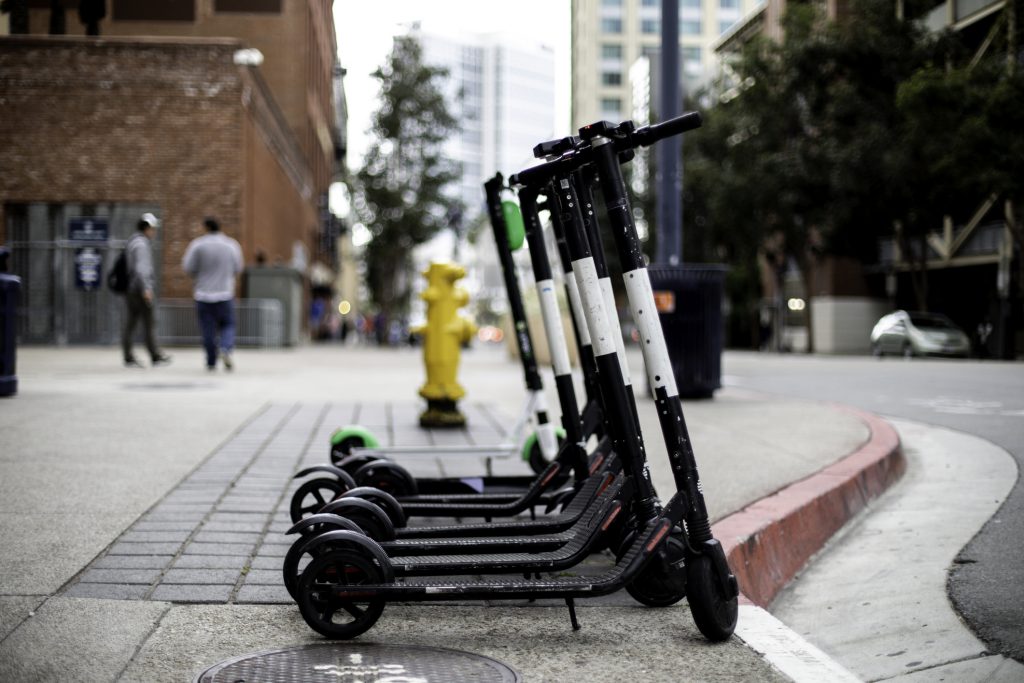
New research examining the economic impact of micromobility on local economies found shared e-scooter systems created an estimated $13.8 million in additional sales across 370 food and beverage companies in four cities over six months in 2019, as compared to four similar cities over the same time period without e-scooter programs. The study compared consumer purchase patterns in four cities that allowed operation of shared e-scooter systems – Atlanta, Austin, San Francisco, and Washington, D.C. – to similar cities that did not at the time – Boston, Houston, Phoenix, and Seattle. The study used extensive econometric methods to uncover purchasing that was caused by e-scooter rides, which would not have occurred otherwise. “The post-COVID economic recovery remains slow, but this research shows we shouldn’t ignore the positive impact of micromobility on small businesses,” said Dan McCarthy, senior author of the study and assistant professor of marketing at Emory University’s Goizueta Business School. “This is especially relevant for the food and beverage sector, a significant source of jobs, which is suffering sales declines larger than most other sectors of the economy.” The study uncovered e-scooter usage generated significant positive economic spillovers for the food and beverage industry purchasing in a similar way that consumers make impulse purchases at grocery stores – its effects are larger for businesses where the consumption happens more quickly, and businesses selling at lower prices. Across the cities studied with e-scooter programs, total sales in the food and beverage category increased by an estimated 0.6 percent on average, or approximately $921 in incremental spending per available e-scooter for the food and beverage companies over the six-month period studied in the analysis. “Since these companies represent approximately 15 percent of the overall food and beverage market in these cities, the actual impact could be much larger,” said McCarthy. “If, for instance, subsequent research confirmed a similar level of uptick across all food and beverage companies in these markets driven by micromobility, the overall full-year economic impact could be close to $200 million.” If you're interested in learning more - there's a full article published by Emory Business attached. And, if you're a journalist looking to cover this exciting and emerging topic - then let us help. Dan McCarthy is an Assistant Professor of Marketing at Emory University's Goizueta School of Business. His research specialty is the application of leading-edge statistical methodology to contemporary empirical marketing problems. Dan is available to speak with media - simply click on his icon now to arrange an intwrview today.

What’s it all mean as ‘Big-Tech’ pivots to privacy? Let our Experts help explain if you are covering
The business of the internet as we know it, is about to change. As companies in the past have thrived, boomed, and found serious cash and success harvesting your data – that model may soon be coming to an end. With companies like Google and Apple leading the way, odds are a serious transformation is about to come and the know that notice has been served, it is getting a lot of attention. The decision, coming from the world’s biggest digital advertising company, could help push the industry away from the use of such individualized tracking, which has come under increasing criticism from privacy advocates and faces scrutiny from regulators. Google’s heft means the change could reshape the digital ad business, where many companies rely on tracking individuals to target their ads, measure the ads’ effectiveness, and stop fraud. Google accounted for 52% of last year’s global digital ad spending of $292 billion, according to Jounce Media, a digital ad consultancy. About 40% of the money that flows from advertisers to publishers on the open internet—meaning digital advertising outside of closed systems such as Google Search, YouTube, or Facebook—goes through Google’s ad buying tools, according to Jounce. March 03 – The Wall Street Journal. But what will this mean for powerhouses like Facebook or the multitude of apps and carriers who rely on data, and the money that comes with it to succeed? What lies ahead will be interesting, and if you are a journalist looking to cover this topic – then let our experts help. Vilma Todri is an Assistant Professor of Information Systems & Operations Management at Emory University’s Goizueta Business School. Previously, she worked for Google where she was developing integrated cross-platform advertising strategies for large business clients that partnered with Google and recently wrote a comprehensive paper on this very topic. Vilma is available to speak with media about this subject – simply click on her icon now to arrange an interview today.
