Experts Matter. Find Yours.
Connect for media, speaking, professional opportunities & more.

Milwaukee-Based Experts Available During 2024 Republican National Convention
Journalists attending the Republican National Convention (RNC) are invited to engage with leading Milwaukee School of Engineering (MSOE) experts in a range of fields, including artificial intelligence (AI), machine learning, cybersecurity, urban studies, biotechnology, population health, water resources, and higher education. MSOE media relations are available to identify key experts and assist in setting up interviews (See contact details below). As the RNC brings national attention to Milwaukee, discussions are expected to cover pivotal topics such as national security, technological innovation, urban development, and higher education. MSOE's experts are well-positioned to provide research and insights, as well as local context for your coverage. Artificial Intelligence, Machine Learning, Cybersecurity Dr. Jeremy Kedziora Associate Professor, PieperPower Endowed Chair in Artificial Intelligence Expertise: AI, machine learning, ChatGPT, ethics of AI, global technology revolution, using these tools to solve business problems or advance business objectives, political science. View Profile Dr. Derek Riley Professor, B.S. in Computer Science Program Director Expertise: AI, machine learning, facial recognition, deep learning, high performance computing, mobile computing, artificial intelligence View Profile Dr. Walter Schilling Professor Expertise: Cybersecurity and the latest technological advancements in automobiles and home automation systems; how individuals can protect their business operations and personal networks. View Profile Milwaukee and Wisconsin: Culture, Architecture & Urban Planning, Design Dr. Michael Carriere Professor, Honors Program Director Expertise: an urban historian, with expertise in American history, urban studies and sustainability; growth of Milwaukee's neighborhoods, the challenges many of them are facing, and some of the solutions that are being implemented. Dr. Carriere is an expert in Milwaukee and Wisconsin history and politics, urban agriculture, creative placemaking, and the Milwaukee music scene. View Profile Kurt Zimmerman Assistant Professor Expertise: Architectural history of Milwaukee, architecture, urban planning and sustainable design. View Profile Biotechnology Dr. Wujie Zhang Professor, Chemical and Biomolecular Engineering Expertise: Biomaterials; Regenerative Medicine and Tissue Engineering; Micro/Nano-technology; Drug Delivery; Stem Cell Research; Cancer Treatment; Cryobiology; Food Science and Engineering (Fluent in Chinese and English) View Profile Dr. Jung Lee Professor, Chemical and Biomolecular Engineering Expertise: Bioinformatics, drug design and molecular modeling. View Profile Population Health Robin Gates Assistant Professor, Nursing Expertise: Population health expert: understanding and addressing the diverse factors that influence health outcomes across different populations. View Profile Water Resources Dr. William Gonwa Professor, Civil Engineering Expertise: Water Resources, Sewers, Storm Water, Civil Engineering education View Profile Higher Education Dr. Eric Baumgartner Executive Vice President of Academics Expertise: Thought leadership on higher education, relevancy and value of higher ed, role of A.I. in future degrees and workforce development. View Profile Dr. Candela Marini Assistant Professor Expertise: Latin American Studies and Visual Culture View Profile Dr. John Walz President Expertise: Thought leadership on higher education, relevancy and value of higher ed View Profile Media Relations Contact To schedule an interview or for more information, please contact: JoEllen Burdue Senior Director of Communications and Media Relations Phone: (414) 839-0906 Email: burdue@msoe.edu About Milwaukee School of Engineering (MSOE) Milwaukee School of Engineering is the university of choice for those seeking an inclusive community of experiential learners driven to solve the complex challenges of today and tomorrow. The independent, non-profit university has about 2,800 students and was founded in 1903. MSOE offers bachelor's and master's degrees in engineering, business and nursing. Faculty are student-focused experts who bring real-world experience into the classroom. This approach to learning makes students ready now as well as prepared for the future. Longstanding partnerships with business and industry leaders enable students to learn alongside professional mentors, and challenge them to go beyond what's possible. MSOE graduates are leaders of character, responsible professionals, passionate learners and value creators.


Small Changes Can Save Lives: How a Police Officer’s First Words Can Transform Communities
Britt Nestor knew something needed to change. Nestor is a police officer in North Carolina. Unlike many in her field, who recite interview-ready responses about wanting to be a police officer since childhood, Nestor admits that her arrival to the field of law enforcement was a serendipitous one. Told by teachers to start rehearsing the line “do you want fries with that?” while in high school, Nestor went to college to prove them wrong—and even graduated with a 3.9 GPA solely to prove those same people wrong—but she had absolutely no idea what to do next. When a local police department offered to put her through the police academy, her first thought was, “absolutely not.” “And here I am,” says Nestor, 12 years into her career, working in Special Victims Investigations as an Internet Crimes Against Children detective. A Calling to Serve Community Brittany Nestor, New Blue Co-Founder and President Though she’d initially joined on a whim, Nestor stuck around and endured many growing pains, tasting some of the problematic elements of police culture firsthand. As a woman, there was particular pressure to prove herself; she resisted calling for back-up on dangerous calls for fear of being regarded as weak, and tried out for and joined the SWAT team to demonstrate her mettle. "It took time to realize I didn’t need to make the most arrests or get the most drugs and guns to be a good cop. What was important was recognizing that I was uniquely positioned and given opportunities every single shift to make a difference in people’s lives—that is what I wanted to focus on." Britt Nestor Nestor found she took great pleasure in interacting with different kinds of people all day. She’s deeply fond of her community, where she is also a youth basketball coach. One of her greatest joys is being on call or working an event and hearing someone hail her from the crowd by yelling, “hey, coach!” When she landed in the Juvenile Investigations Unit, Nestor truly felt she’d found her calling. Still, what she’d witnessed in her profession and in the news weighed on her. And she’s not alone; while there is continued debate on the urgency and extent of changes needed, 89% percent of people are in favor of police reform, according to a CBS/YouGov poll. A few weeks after George Floyd’s murder in 2020, Nestor’s colleague Andy Saunders called her and told her they had to do something. It felt like the tipping point. “I knew he was right. I needed to stop wishing and hoping police would do better and start making it happen.” Andy Saunders, New Blue Co-Founder and CEO That conversation was the spark that grew into New Blue. Founded in 2020, New Blue strives to reform the U.S. Criminal Justice system by uniting reform-minded police officers and community allies. The organization focuses on incubating crowd-sourced solutions from officers themselves, encouraging those in the field to speak up about what they think could improve relations between officers and the communities they serve. “Over the years I’ve had so many ideas—often addressing problems brought to light by community members—that could have made us better. But my voice was lost. I didn’t have much support from the police force standing behind me. This is where New Blue makes the difference; it’s the network of fellows, alumni, partners, mentors, and instructors I’d needed in the past.” Nestor and Saunders had valuable pieces of the puzzle as experienced law enforcement professionals, yet they knew they needed additional tools. What are the ethical guidelines around experimenting with new policing tactics? What does success look like, and how could they measure it? The Research Lens Over 400 miles away, another spark found kindling; like Nestor, Assistant Professor of Organization & Management Andrea Dittmann’s passion for making the world a better place is palpable. Also, like Nestor, it was an avid conversation with a colleague—Kyle Dobson—that helped bring a profound interest in police reform into focus. Dittmann, whose academic career began in psychology and statistics, came to this field by way of a burgeoning interest in the need for research-informed policy. Much of her research explores the ways in which socioeconomic disparities play out in the work environment, and—more broadly—how discrepancies of power shape dynamics in organizations of all kinds. When people imagine research in the business sector, law enforcement is unlikely to crop up in their mind. Indeed, Dittmann cites the fields of criminal justice and social work as being the traditional patrons of police research, both of which are more likely to examine the police force from the top down. Andrea Dittmann Dittmann, however, is a micro-oriented researcher, which means she assesses organizations from the bottom up; she examines the small, lesser-studied everyday habits that come to represent an organization’s values. “We have a social psychology bent; we tend to focus on individual processes, or interpersonal interactions,” says Dittmann. She regards her work and that of her colleagues as a complementary perspective to help build upon the literature already available. Where Dittmann has eyes on the infantry level experience of the battleground, other researchers are observing from a bird’s eye view. Together, these angles can help complete the picture. And while the “office” of a police officer may look very different from what most of us see every day, the police force is—at the end of the day—an organization: “Like all organizations, they have a unique culture and specific goals or tasks that their employees need to engage in on a day-to-day basis to be effective at their jobs,” says Dittmann. Theory Meets Practice Kyle Dobson, Postdoctoral Researcher at The University of Texas at Austin What Dittmann and Dobson needed next was a police department willing to work with them, a feat easier said than done. Enter Britt Nestor and New Blue. "Kyle and I could instantly tell we had met people with the same goals and approach to reforming policing from within." Andrea Dittmann Dittmann was not surprised by the time it took to get permission to work with active officers. “Initially, many officers were distrustful of researchers. Often what they’re seeing in the news are researchers coming in, telling them all the problems that they have, and leaving. We had to reassure them that we weren’t going to leave them high and dry. If we find a problem, we’re going to tell you about it, and we’ll work on building a solution with you. And of course, we don’t assume that we have all the answers, which is why we emphasize developing research ideas through embedding ourselves in police organizations through ride-alongs and interviews.” After observing the same officers over years, they’re able to build rapport in ways that permit open conversations. Dittmann and Dobson now have research running in many pockets across the country, including Atlanta, Baltimore, Chicago, Washington, D.C. and parts of Texas. The Rise of Community-Oriented Policing For many police departments across the nation, there is a strong push to build closer and better relationships with the communities they serve. This often translates to police officers being encouraged to engage with citizens informally and outside the context of enforcing the law. If police spent more time chatting with people at a public park or at a café, they’d have a better chance to build rapport and foster a collective sense of community caretaking—or so the thinking goes. Such work is often assigned to a particular unit within the police force. This is the fundamental principle behind community-oriented policing: a cop is part of the community, not outside or above it. This approach is not without controversy, as many would argue that the public is better served by police officers interacting with citizens less, not more. In light of the many high-profile instances of police brutality leaving names like Breonna Taylor and George Floyd echoing in the public’s ears, their reticence to support increased police-to-citizen interaction is understandable. “Sometimes when I discuss this research, people say, ‘I just don’t think that officers should approach community members at all, because that’s how things escalate.’ Kyle and I acknowledge that’s a very important debate and has its merits.” As micro-oriented researchers, however, Dittmann and Dobson forgo advocating for or dismissing broad policy. They begin with the environment handed to them and work backward. “The present and immediate reality is that there are officers on the street, and they’re having these interactions every day. So what can we do now to make those interactions go more smoothly? What constitutes a positive interaction with a police officer, and what does it look like in the field?” Good Intentions Gone Awry To find out, they pulled data through a variety of experiments, including live interactions, video studies and online experiments, relying heavily on observation of such police-to-citizen interactions. "What we wanted to do is observe the heterogeneity of police interactions and see if there’s anything that officers are already doing that seems to be working out in the field, and if we can ‘bottle that up’ and turn that into a scalable finding." Andrea Dittmann Dittmann and her colleagues quickly discovered a significant discrepancy between some police officers’ perceived outcome of their interactions with citizens and what those citizens reported to researchers post-interaction. “An officer would come back to us and they’d say it went great. Like, ‘I did what I was supposed to do, I made that really positive connection.’ And then we’d go to the community members, and we’d hear a very different story: ‘Why the heck did that officer just come up to me, I’m just trying to have a picnic in the park with my family, did I do something wrong?’” Community members reported feeling confused, harassed, or—at the worst end of the spectrum—threatened. The vast majority—around 75% of citizens—reported being anxious from the very beginning of the interaction. It’s not hard to imagine how an officer approaching you apropos of nothing may stir anxious thoughts: have I done something wrong? Is there trouble in the area? The situation put the cognitive burden on the citizen to figure out why they were being approached. The Transformational Potential of the “Transparency Statement” And yet, they also observed officers (“super star” police officers, as Dittmann refers to them) who seemed to be especially gifted at cultivating better responses from community members. What made the difference? “They would explain themselves right from the start and say something like, ‘Hey, I’m officer so-and-so. The reason I’m out here today is because I’m part of this new community policing unit. We’re trying to get to know the community and to better understand the issues that you’re facing.’ And that was the lightbulb moment for me and Kyle: the difference here is that some of these officers are explaining themselves very clearly, making their benevolent intention for the interaction known right from the start of the conversation.” Dittmann and her colleagues have coined this phenomenon the “transparency statement.” Using a tool called the Linguistic Inquiry & Word Count software and natural language processing tools, the research team was able to analyze transcripts of the conversations and tease out subconscious cues about the civilians’ emotional state, in addition to collecting surveys from them after the encounter. Some results jumped out quickly, like the fact that those people whose conversation with an officer began with a transparency statement had significantly longer conversations with them. The team also employed ambulatory physiological sensors, or sensors worn on the wrist that measure skin conductivity and, by proxy, sympathetic nervous system arousal. From this data, a pattern quickly emerged: citizens’ skin conductance levels piqued early after a transparency statement (while this can be a sign of stress, in this context researchers determined it to reflect “active engagement” in the conversation) and then recovered to baseline levels faster than in the control group, a pattern indicative of positive social interaction. Timing, too, is of the essence: according to the study, “many patrol officers typically made transparency statements only after trust had been compromised.” Stated simply, the interest police officers showed in them was “perceived as harassment” if context wasn’t provided first. Overall, the effect was profound: citizens who were greeted with the transparency statement were “less than half as likely to report threatened emotions.” In fact, according to the study, “twice as many community members reported feeling inspired by the end of the interaction.” What’s more, they found that civilians of color and those from lower socioeconomic backgrounds —who may reasonably be expected to have a lower baseline level of trust of law enforcement—“may profit more from greater transparency.” Talk, it turns out, is not so cheap after all. Corporate Offices, Clinics, and Classrooms The implications of this research may also extend beyond the particulars of the police force. The sticky dynamics that form between power discrepancies are replicated in many environments: the classroom, between teachers and students; the office, between managers and employees; even the clinic, between medical doctors and patients. In any of these cases, a person with authority—perceived or enforceable—may try to build relationships and ask well-meaning questions that make people anxious if misunderstood. Is my boss checking in on me because she’s disappointed in my performance? Is the doctor being nice because they’re preparing me for bad news? “We believe that, with calibration to the specific dynamics of different work environments, transparency statements could have the potential to ease tense conversations across power disparities in contexts beyond policing,” says Dittmann. More Research, Action, and Optimism What could this mean for policing down the road? Imagine a future where most of the community has a positive relationship with law enforcement and there is mutual trust. "I often heard from family and friends that they’d trust the police more ‘if they were all like you.’ I can hear myself saying, ‘There are lots of police just like me!’ and I truly believe that. I believe that so many officers love people and want to serve their communities—and I believe a lot of them struggle with the same things I do. They want to see our profession do better!" Britt Nestor “When I get a new case and I meet the survivor, and they’re old enough to talk with me, I always explain to them, ‘I work for you. How cool is that?’ And I truly believe this: I work for these kids and their families.” The implications run deep; a citizen may be more likely to reach out to police officers about issues in their community before they become larger problems. An officer who is not on edge may be less likely to react with force. Dittmann is quick to acknowledge that while the results of the transparency statement are very promising, they are just one piece of a very large story with a long and loaded history. Too many communities are under supported and overpoliced; it would be denying the gravity and complexity of the issue to suggest that there is any silver bullet solution, especially one so simple. More must be done to prevent the dynamics that lead to police violence to begin with. “There’s a common narrative in the media these days that it’s too late, there’s nothing that officers can do,” says Dittmann. Yet Dittmann places value on continued research, action and optimism. When a simple act on the intervention side of affairs has such profound implications, and is not expensive or difficult to implement, one can’t help but see potential. “Our next step now is to develop training on transparency statements, potentially for entire agencies,” says Dittmann. “If all the officers in the agency are interacting with transparency statements, then we see this bottom-up approach, with strong potential to scale. If every interaction you have with an officer in your community starts out with that transparency statement, and then goes smoothly, now we’re kind of getting to a place where we can hopefully talk about better relations, more trust in the community, at a higher, more holistic, level.” While the road ahead is long and uncertain, Dittmann’s optimism is boosted by one aspect of her findings: those community members who reported feeling inspired after speaking with police officers who made their benevolent intentions clear. "That was really powerful for me and Kyle. That’s what gets me out of bed in the morning. It’s worth trying to move the needle, even just a little bit." Andrea Dittmann Looking to know more? Andrea Dittman is available to speak with media about this important research. Simply click on her icon now to arrange an interview today.


AI Art: What Should Fair Compensation Look Like?
New research from Goizueta’s David Schweidel looks at questions of compensation to human artists when images based on their work are generated via artificial intelligence. Artificial intelligence is making art. That is to say, compelling artistic creations based on thousands of years of art production may now be just a few text prompts away. And it’s all thanks to generative AI trained on internet images. You don’t need Picasso’s skillset to create something in his style. You just need an AI-powered image generator like DALL-E 3 (created by OpenAI), Midjourney, or Stable Diffusion. If you haven’t tried one of these programs yet, you really should (free or beta versions make this a low-risk proposal). For example, you might use your phone to snap a photo of your child’s latest masterpiece from school. Then, you might ask DALL-E to render it in the swirling style of Vincent Van Gogh. A color printout of that might jazz up your refrigerator door for the better. Intellectual Property in the Age of AI Now, what if you wanted to sell your AI-generated art on a t-shirt or poster? Or what if you wanted to create a surefire logo for your business? What are the intellectual property (IP) implications at work? Take the case of a 35-year-old Polish artist named Greg Rutkowski. Rutkowski has reportedly been included in more AI-image prompts than Pablo Picasso, Leonardo da Vinci, or Van Gogh. As a professional digital artist, Rutkowski makes his living creating striking images of dragons and battles in his signature fantasy style. That is, unless they are generated by AI, in which case he doesn’t. “They say imitation is the sincerest form of flattery. But what about the case of a working artist? What if someone is potentially not receiving payment because people can easily copy his style with generative AI?” That’s the question David Schweidel, Rebecca Cheney McGreevy Endowed Chair and professor of marketing at Goizueta Business School is asking. Flattery won’t pay the bills. “We realized early on that IP is a huge issue when it comes to all forms of generative AI,” Schweidel says. “We have to resolve such issues to unlock AI’s potential.” Schweidel’s latest working paper is titled “Generative AI and Artists: Consumer Preferences for Style and Fair Compensation.” It is coauthored with professors Jason Bell, Jeff Dotson, and Wen Wang (of University of Oxford, Brigham Young University, and University of Maryland, respectively). In this paper, the four researchers analyze a series of experiments with consumers’ prompts and preferences using Midjourney and Stable Diffusion. The results lead to some practical advice and insights that could benefit artists and AI’s business users alike. Real Compensation for AI Work? In their research, to see if compensating artists for AI creations was a viable option, the coauthors wanted to see if three basic conditions were met: – Are artists’ names frequently used in generative AI prompts? – Do consumers prefer the results of prompts that cite artists’ names? – Are consumers willing to pay more for an AI-generated product that was created citing some artists’ names? Crunching the data, they found the same answer to all three questions: yes. More specifically, the coauthors turned to a dataset that contains millions of “text-to-image” prompts from Stable Diffusion. In this large dataset, the researchers found that living and deceased artists were frequently mentioned by name. (For the curious, the top three mentioned in this database were: Rutkowski, artgerm [another contemporary artist, born in Hong Kong, residing in Singapore] and Alphonse Mucha [a popular Czech Art Nouveau artist who died in 1939].) Given that AI users are likely to use artists’ names in their text prompts, the team also conducted experiments to gauge how the results were perceived. Using deep learning models, they found that including an artist’s name in a prompt systematically improves the output’s aesthetic quality and likeability. The Impact of Artist Compensation on Perceived Worth Next, the researchers studied consumers’ willingness to pay in various circumstances. The researchers used Midjourney with the following dynamic prompt: “Create a picture of ⟨subject⟩ in the style of ⟨artist⟩”. The subjects chosen were the advertising creation known as the Most Interesting Man in the World, the fictional candy tycoon Willy Wonka, and the deceased TV painting instructor Bob Ross (Why not?). The artists cited were Ansel Adams, Frida Kahlo, Alphonse Mucha and Sinichiro Wantabe. The team repeated the experiment with and without artists in various configurations of subjects and styles to find statistically significant patterns. In some, consumers were asked to consider buying t-shirts or wall art. In short, the series of experiments revealed that consumers saw more value in an image when they understood that the artist associated with it would be compensated. Here’s a sample of imagery AI generated using three subjects names “in the style of Alphonse Mucha.” Source: Midjourney cited in http://dx.doi.org/10.2139/ssrn.4428509 “I was honestly a bit surprised that people were willing to pay more for a product if they knew the artist would get compensated,” Schweidel explains. “In short, the pay-per-use model really resonates with consumers.” In fact, consumers preferred pay-per-use over a model in which artists received a flat fee in return for being included in AI training data. That is to say, royalties seem like a fairer way to reward the most popular artists in AI. Of course, there’s still much more work to be done to figure out the right amount to pay in each possible case. What Can We Draw From This? We’re still in the early days of generative AI, and IP issues abound. Notably, the New York Times announced in December that it is suing OpenAI (the creator of ChatGPT) and Microsoft for copyright infringement. Millions of New York Times articles have been used to train generative AI to inform and improve it. “The lawsuit by the New York Times could feasibly result in a ruling that these models were built on tainted data. Where would that leave us?” asks Schweidel. "One thing is clear: we must work to resolve compensation and IP issues. Our research shows that consumers respond positively to fair compensation models. That’s a path for companies to legally leverage these technologies while benefiting creators." David Schweidel To adopt generative AI responsibly in the future, businesses should consider three things. First, they should communicate to consumers when artists’ styles are used. Second, they should compensate contributing artists. And third, they should convey these practices to consumers. “And our research indicates that consumers will feel better about that: it’s ethical.” AI is quickly becoming a topic of regulators, lawmakers and journalists and if you're looking to know more - let us help. David A. Schweidel, Professor of Marketing, Goizueta Business School at Emory University To connect with David to arrange an interview - simply click his icon now.

The Fast Food Wars are on! Let our experts explain the history behind the industry
In the contemporary culinary landscape, fast food stands as a pervasive and influential force, shaping not only our eating habits but also broader societal trends. This topic is newsworthy due to its significant impact on public health, economic structures, and cultural dynamics. The history of fast food offers a rich narrative that intersects with various pressing issues such as nutrition, labor practices, and globalization. Furthermore, the evolution of fast food reflects changes in consumer behavior, technological advancements in food production, and shifts in marketing strategies. Key areas for exploration include: The Rise of Fast Food Chains: Examining the origins and growth of iconic fast food brands and their role in transforming the food industry. Health Implications and Nutritional Debates: Analyzing the impact of fast food on public health, including discussions around obesity, dietary choices, and nutritional content. Economic Influence and Labor Practices: Investigating the economic contributions of the fast food industry, its employment practices, and the ongoing debates around wages and working conditions. Cultural Impact and Globalization: Exploring how fast food has influenced cultural identities, consumer behaviors, and the spread of Western food culture globally. Technological Innovations in Food Production: Looking at advancements in food technology that have enabled the mass production and distribution of fast food, from kitchen automation to supply chain logistics. Marketing and Consumer Psychology: Assessing the strategies used by fast food companies to attract and retain customers, including advertising techniques and menu innovations. The history of fast food offers journalists a multifaceted topic with numerous angles to explore, each revealing important insights into how this ubiquitous industry has shaped—and continues to shape—various aspects of modern life. Connect with an Expert about the history of Fast Food: Aidin Namin, Ph.D. Associate Professor of Marketing Analytics, College of Business Administration · Loyola Marymount University Melissa Melough Assistant Professor, Department of Health Behavior and Nutrition Sciences · University of Delaware Matthew McGranaghan Assistant Professor, Marketing · University of Delaware Anna McAlister Assistant Professor of Advertising and Public Relations · Michigan State University David Julian McClements Distinguished Professor of Food Science · University of Massachusetts Amherst To search our full list of experts visit www.expertfile.com Photo credit: Jonathan Borba


Expert Research: Hurricanes and Natural Disasters Linked to “Grocery Tax” for Lower-Income Americans
Research from Goizueta’s William Schmidt uncovers the disproportionate impact of natural disasters on low-income families’ access to essentials. Global warming is accelerating severe weather with cataclysmic outcomes for communities all over the world. In 2023, the hottest year on record, no fewer than 23 weather-related disasters struck the United States. These natural disasters claimed hundreds of lives and caused $57 billion in damage. Recently, the federal government has come under scrutiny for uneven aid response to communities affected by hurricanes, fires, and flooding in America. William Schmidt But might there be other factors at play that see disadvantaged groups more vulnerable to the impact of severe weather events? Weighing into this is award-winning research by Goizueta Business School’s William Schmidt, associate professor of Information Systems and Operations Management. He and Xabier Barriola from INSEAD Business School look at the effect of three major hurricanes in the U.S. in the last 20 years. They find evidence of higher paid prices for basic groceries in the aftermath of each storm that disproportionately impact lower-income communities in affected states. In fact, says Schmidt, when severe weather hits communities, these families end up paying anywhere between one and five percent more relative to high income households for essential food and goods. This puts a major strain on already-strained resources in times of massive disruption. "We see a spike in the prices paid for household groceries of up to five percent hitting low-income groups immediately after a major storm hits." William Schmidt “Then you have to factor in the reality that poorer households spend around eight times more of their disposable income on basic groceries than high-income households,” says Schmidt. “It becomes clear that the aftermath of severe weather is harder for them to bear. And in our research, this is an effect that lasts for months, not weeks or days.” Exposing Hidden Costs on Those Hit Hardest To get to these findings, Schmidt and Barriola worked from a hunch. They figured that in low-income areas, a lack of infrastructure, lower-quality construction, and fewer grocery store outlets could translate into supply shortages in emergencies. Ensuing stockouts might then lead to knock-on price inflation for customers. These are low-income families for whom inflation has serious and significant consequences, Schmidt says. "We know that inflation hurts poorer communities. High-income families have the option of switching between high and low-priced goods according to needs or preference. But families with lower incomes are already purchasing low-priced groceries." William Schmidt “When there are disaster-induced stockouts to their preferred products, those families are forced to substitute to higher priced groceries,” Schmidt continues. Then there’s retailer behavior. Following large environmental disasters, store managers may be unable to keep necessities in stock. Under those circumstances, it is difficult to justify running promotions or implementing planned price decreases. To test these ideas, Schmidt and his colleagues looked at data from the weeks and months following Hurricanes Katarina (2005), Ike (2008), and Sandy (2012). They decided to pinpoint those locations immediately impacted at the county level. To do so, they used major disaster declarations issued by the federal government at the time. Then they integrated this with detailed grocery store sales data provided by Information Resources Inc (IRI) with zip code-level household income and demographic data from the U.S. Census Bureau. With each hurricane, the researchers looked at IRI data covering 30 different product categories and around 200 million transactions over a 12-week period. Schmidt and his colleagues then ran a set of analyses comparing prices paid by communities before and after each hurricane. They also contrasted price increases paid by low-income and high-income households as well as communities outside of the areas affected by the storms. Crunching the Numbers “Doing this triple-difference regression analysis, we find that lower-income communities pay an average 2.9 percent more for their groceries. That’s in the eight weeks following each of these disasters,” says Schmidt. "The effect varies. But it is roughly commensurate with the overall economic damage wrought by each hurricane, with Katrina being the worst. Here low-income families were seeing a 5.1 percent increase in the cost of food and basic goods, relative to richer households." William Schmidt The study points to a variety of mechanisms driving these effects. As Schmidt and his co-authors hypothesize, there is evidence that the same disruptions lead to fewer price promotions. They also see more frequent stockouts of low-priced goods. At the same time, there’s a shift in household purchasing from low to higher-priced products. These effects are long-lasting, says Schmidt. According to the study, post-hurricane inflation in the prices paid by consumers continues to affect poorer families for eight or more weeks. This amounts to months of economic hardship for those least resilient to its effects. Schmidt calls this “permanent inflation.” Pursuing Equity in Crisis Operations managers and policymakers should factor these findings into emergency relief efforts, say Schmidt and his colleague. The goal should be to service communities more equitably. So, there should be more thought to the provision of essential food and household goods. Also, there should be a particular focus on those most vulnerable to natural disasters and their effects. Current disaster nutrition relief programs are typically short. Authorities might do better by vulnerable communities by also extending things like cash and voucher programs, says Schmidt. And they should prioritize the ordering, shipment, and warehousing of essential goods. “Our research shows that hurricanes cost certain groups of Americans more than others in the longer run. The permanent inflation on food stuff and household necessities that we find constitutes an additional burden on part of our national fabric. These are people who are least positioned to afford it.” Hurricanes and the economy are both sought-after topics - and if you're covering, we can help. William Schmidt is an associate professor of Information Systems & Operations Management at Emory University’s Goizueta Business School. His research focuses on understanding and mitigating operational disruptions, and applications of machine learning in operational decision making. To connect with William to arrange an interview - simply click his icon now.


Is Florida becoming more affordable for renters?
Between high interest rates, an influx of newcomers eager for housing and inflation taking a toll on the cost of almost everything - it's been an expensive year for anyone living in Florida. But it appears the tide might be finally turning on high costs and the price to rent a place in the Sunshine State might be going down. It's a trend that has media looking for answers and experts like Florida Atlantic's Ken Johnson getting calls to provide his insight, opinion and expertise on the topic. Florida Atlantic University recently released a new study showing that the state’s rental markets might be stabilizing. In the release, FAU officials announced that rents in areas like Palm Bay and Jacksonville have recently gone below their long-term pricing trends. Meanwhile, the data indicates that other major cities in the state — such as Cape Coral, Orlando and Deltona — saw only slight increases in rent prices, with price increases gradually slowing down. As such, it could be a sign that many renters statewide could soon see lower prices. “While these measures are small, they are a positive sign of where the rental market could be heading in the future,” said Dr. Ken Johnson, a real estate economist with FAU’s College of Business. “These Florida cities are renting at a discount compared to their historical averages, and others appear to be heading in that direction, suggesting that rental markets around the state are stabilizing.” June 06 - Click Orlando.com Florida may be an interesting case study on what lies ahead. Will these rental trends in Florida start to appear nationally? Who will best benefit from lower rents and what will it mean for the economy? Will lower rents attract more people to Florida and could that reverse this trend? There's a lot to know and understand about the rental market. And if you're a journalist covering the topic or looking to know more - then let us help. Ken H. Johnson, Ph.D., an economist and associate dean in FAU’s College of Business, is available to speak to the media. Simply click on his icon to arrange an interview and time.


Georgia Southern University’s Business Innovation Group wins international recognition from InBIA
Business Innovation Group team members Dominique Halaby, DPA, Suzanne Hallman and D’Erica Evans accept an award at the InBIA awards ceremony. Georgia Southern University’s Business Innovation Group (BIG) returned home from San Antonio, Texas, with high honors from the International Business Innovation Association (InBIA) during its annual awards ceremony, which recognizes excellence in entrepreneur support. In an awards ceremony held during the 38th annual International Conference on Business Incubation, BIG received four awards including two of the organization’s most prestigious accolades, the Dinah Adkins Award for Non-Technology-Based Entrepreneur Support Organization of the Year, and the Randall M. Whaley Award, which is InBIA’s highest honor. The Statesboro BIG location was named the Mixed-Use Entrepreneur Support Organization of the Year, while the Metter Business Incubator location received the Rural Entrepreneurship Support Organization of the Year. “I am honored that the InBIA recognized our efforts at the Georgia Southern University Business Innovation Group with the highest accolades for the support we offer to entrepreneurs,” said Dominique Halaby, DPA, director of the BIG and associate vice president for innovation. “These awards highlight the hard work the BIG teams put into making our business incubators an incredible resource for budding businesses and furthering our mission to advance the economic growth of our region.” BIG works to build an ecosystem throughout the state of Georgia to help entrepreneurs create, incubate and accelerate their for-profit business enterprises. BIG facilitates access to University resources, creates opportunities for student experiential learning and fosters an environment that supports a growth mindset throughout the state. “Through the InBIA awards program, we celebrate exceptional organizations that catalyze entrepreneurship for their communities,” said President and CEO of InBIA Charles Ross. “Congratulations to the Georgia Southern University Business Innovation Group on their well-deserved recognition. Their commitment to high-quality programming, organizational excellence and community impact is truly inspiring.” InBIA is a global nonprofit empowering entrepreneur support organizations in every U.S. state and in over 30 countries. With over 39 years of experience, InBIA has been a guiding force in providing industry best practices, fostering collaboration, mentorship and the exchange of innovative ideas for entrepreneurs worldwide. InBIA is the go-to organization for business incubators, accelerators, coworking spaces and other entrepreneurship centers. Interested in learning more or looking to talk with Dominique Halaby? Simply click on his icon now to arrange an interview today.


Approximately 4,200 degrees conferred during Georgia Southern’s 2024 Spring Commencement ceremonies
In May, approximately 4,200 graduates from Georgia Southern University’s Statesboro, Armstrong and Liberty campuses received associate, baccalaureate, masters, specialist and doctoral degrees in five Spring 2024 Commencement ceremonies. Georgia Southern President Kyle Marrero welcomed the graduates and their guests to the ceremonies, held at the Allen E. Paulson Stadium in Statesboro on May 7, 8 and 9, and at the EnMarket Arena in Savannah on May 11. “Graduates, I don’t need to tell you about your unique college journey, which has been challenging,” said Marrero to the crowds. “I am very proud of how, together, we have persevered allowing us to have a successful semester and today, our commencement ceremony. This graduation is a momentous occasion for Georgia Southern University, as well as for all of you. Today, you are part of history at Georgia Southern.” Speakers included: Mackenzie Anderson (’07), global director of Corporate Communications at Nike Alton M. Standifer, Ph.D. (’12, ’14), vice provost for Inclusive Excellence and chief of staff to the provost at the University of Georgia (UGA) Kim Greene, chairman, president and chief executive officer of Georgia Power Chris Ahearn (’09), director of research and trade development for the World Trade Center Savannah Candicee Childs, M.D., (’19) an emerging beacon of inspiration in the fields of medicine and literature. At present, she is a resident physician at Massachusetts General Hospital, the largest teaching hospital of Harvard Medical School, with a focus on child and adolescent psychiatry Anderson opened the graduation ceremonies in Statesboro, following a warm introduction from Marrero, who described her leadership role at Nike. “I’m sure you probably expected me to get up here and say something like, ‘Class of 2024, go out into the world and ‘Just Do It,’” Anderson mused. “But here’s the deal. I don’t have to tell you to just do it because you just did it. You did the impossible by making it through the pandemic. “Today you aren’t just graduating with a degree in whatever is written on your diploma. You’re also graduating with a degree in doing hard things. And today we celebrate you.” She continued, saying that earning a degree in “doing hard things” has no doubt been a challenge, but the graduates will soon find out that this is also their superpower. They produced their own playbook, as unique and rare as they are. How they use the playbook moving forward is up to them — to wit, be curious, be wrong while giving yourself permission to make mistakes, be humble and be persistent. “Launch into the world,” Anderson concluded. “And whether you land just across the street, across the country like me or somewhere around the world, remember where you came from. Today you are etching your name alongside a proud Eagle alumni network of more than 147,000 strong. “It is my honor to be the first to say, ‘Georgia Southern University graduating Class of 2024, welcome to the alumni family.'” Standifer shared his own story as a young man, undecided about going to college while he worked as a cashier. A regular customer, Mr. Paul, continuously asked Standifer about whether he’d attend college, until one day Standifer told him he was going to attend Georgia Southern University. With a wide grin, Mr. Paul congratulated him and handed him a $100 bill. Incredulous, Standifer asked why he’d given him such a large tip. Mr. Paul told him it wasn’t a tip. It was an investment, and he’d continue to mentor Standifer in the following years, and remain a profound influence in his life. “I want to encourage you all to think of the Mr. Paul’s in your life,” Standifer said. “Think of the people who have helped you get to today. And then when you leave here, make the conscious effort that you will be Mr. Paul for someone else.” In Savannah, Ahearn shared his journey of discovery in Georgia Southern’s classrooms where he explored Irish film, an introduction to the United Nations, abnormal psychology, Celtic identity and conflict, psychology and law, and gangs, drugs and criminal justice. “There’s a whole menu of choices for you and experiences for you to choose from to really help you discover who you are, where you fit, what drives you, what gets your creative juices flowing, and what options are out there when you graduate from these key interactions,” Ahearn said. Following, he pursued a master’s in international relations in Ireland that gave him a deeper perspective on how the world operates and how interconnected we all are. Ensuing professional roles in higher education, international networking and fundraising, culminated in his current role at World Trade Center, Savannah. From the stage, Ahearn stressed his key takeaways: network, stay in touch with your classmates, be authentic and perhaps, most importantly, travel. “Go outside your comfort zone,” he encouraged. “Try things you’d never try. Expand your horizons. This is your opportunity to learn about different cultures, to embrace the differences and similarities we share with our fellow global citizens and find common ground.” In closing: “Many of you may stay in the region to leave your impact as this community continues to expand,” Ahearn said. “There are plenty of great employment opportunities at your fingertips. Many of you will leave to follow your careers wherever they take you. But please know that you’re part of this institution’s history. You’ll always be an Eagle, and Georgia Southern will always welcome you home." Interested in learning more about Georgia Southern University? Contact Georgia Southern's Director of Communications Jennifer Wise at jwise@georgiasouthern.edu to arrange an interview today.
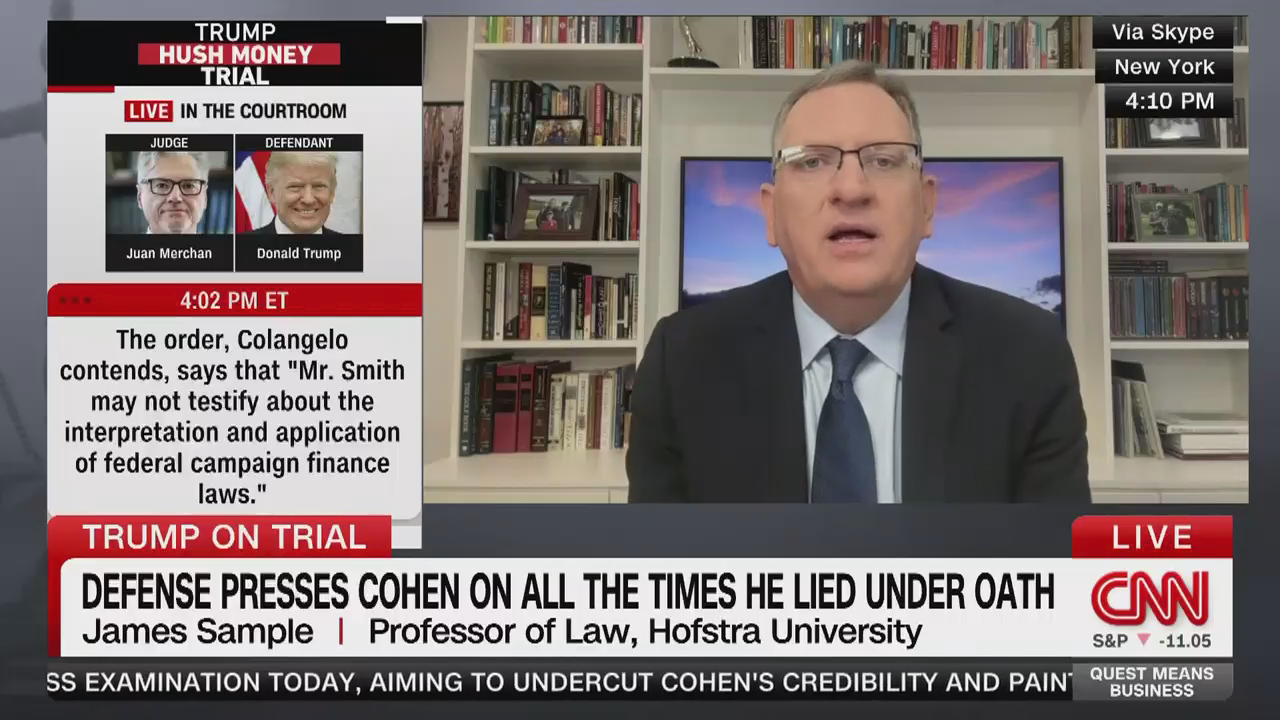
#Experts in the Media: Cohen Testifies in “Hush Money” Trial
The trials of Donald Trump are making headlines across the country and media are looking for key experts to offer opinion, perspective and insight to just about every angle and witness that's playing a part of this legal and political narrative day after day. Professor of Law James Sample was interviewed on CNN International’s Quest Means Business and in The Atlantic about the Michael Cohen’s testimony in former President Trump’s criminal trial in New York. These trials are daily news and if you're a journalist working this story - then let us help. James Sample is a Professor of Law at Hofstra University and previously served as an attorney in the Democracy Program at the Brennan Center for Justice at New York University School of Law. James is available to speak with media - simply click on his icon now to arrange an interview today.


Changes in college football continue to be driven by dollars (and sense?)
The landscape of college sports, and particularly that of college football, has changed significantly in recent years. First, we have seen an almost constant realignment of collegiate athletic conferences, resulting in a few major mega-conferences, such as the SEC and ACC, Big Ten and Big 12, and the disintegration of a former major conference, the Pac 12. Most of the other changes related to the athletes, such as the ease with which student-athletes could transfer from one school to another and the ability for them to be paid for their name, image and likeness. All of these issues were potentially pointing to new business models in college sports, but within the last week, that landscape was shaken even further. Last week, the NCAA and its five major conferences settled multiple lawsuits to pay past and present student-athletes a total of $2.8 billion. The settlement also laid the foundation for the payments of college athletes starting in fall 2025. “The major unresolved questions are who will get paid and how much,” said Rick Franza, PhD, professor in the Hull College of Business at Augusta University. “If we ‘follow the money,’ we see that football and basketball (particularly men’s basketball) generate almost all of the revenues, and most of the revenues comes from major conferences. Therefore, most of the player payments are going to go to football and basketball, and given the size of the relative rosters, football teams will be much more costly.” Franza added that the settlement will further exasperate the revenue and cost differences between major conferences and their smaller conferences as well as between football and the so-called Olympic sports which generate little, if any revenue. It was always clear that from both a revenue and cost perspective, college football is very different from other sports. Revenues are much higher for the major conferences in football, and there is not the same extent of revenue sharing as there is in basketball due to the NCAA Tournament. On the cost side, with the new realignment of the mega conferences and expanded geographic footprints, there is a significant increase in travel costs for the Olympic sports. “While those expanded conferences were mainly driven by football revenues, they are also making all other sports more costly. Therefore, the time has come to separate football from other sports,” said Franza. One solution was first proposed by Chip Kelly, former Oregon and UCLA head football coach and now Ohio State offensive coordinator. He proposed a 64-school football conference in which the members would share all revenues, including television, which would more easily cover the NIL, and player pay costs. In recent months, similar proposals have been made for a college football “Super League,” which would include up to 80 schools. “This makes too much sense not to happen,” Franza said. “It allows the bigger football schools to share the plentiful available revenues while being able to pay the players what they will demand. At the same time, the other college sports would be able to revert to their traditional, geographical conferences and reduce travel costs driven up by the realigned mega- conferences.” He added that two conferences, the SEC and Big Ten, the most successful under the current alignment, could delay the implementation. Franza also predicts that an agreement taking the first steps toward such a structure will be reached sometime in 2024. “While it makes a lot of sense to go in this direction prior to the player settlement, it makes even more dollars and ‘sense’ now given the settlement,” said Franza. “While the SEC and BigTen currently make more money than any other conference, I think they will see the light for what is best for the future of college football.” Covering the business of sports and looking to know more? Then let us help. Richard Franza, PhD, is available to speak with media about trending issues like inflation, small business and the economy – simply click on his icon now to arrange an interview today.