
Experts Matter. Find Yours.
Connect for media, speaking, professional opportunities & more.
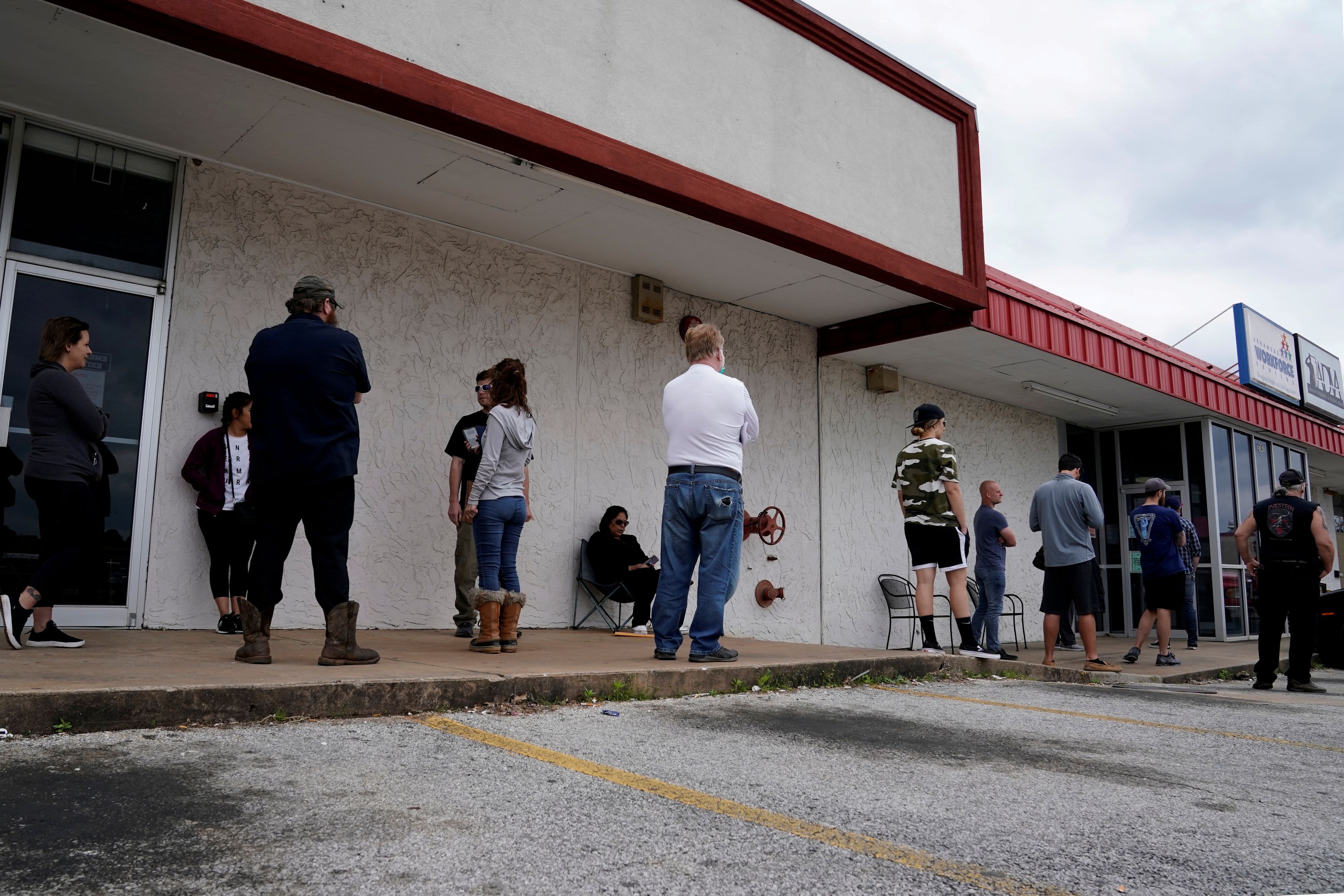
The road back – how long will it take for America’s economy to recover?
With unemployment at a staggering 14 percent, America’s economy looks as if it is in freefall. With COVID-19 forcing factories to shut down, small businesses to shutter and restaurants to close their doors, there is anxiety at every level of government about when the country’s economy will get back in motion. Economists surveyed by Dow Jones had been expecting payrolls to shed 21.5 million and the unemployment rate to go to 16%. April’s unemployment rate topped the post-war record 10.8% but was short of the Great Depression high estimated at 24.9%. The financial crisis peak was 10% in October 2009. The bleak numbers paint a “pretty dismal picture, but April may be it for job losses going forward with the country starting to reopen,” said Chris Rupkey, chief financial economist at MUFG Union Bank. “If there is a silver-lining in today’s dismal jobs report, it is in the realization that the economy cannot possibly get any worse than it is right now.” CNBC – May 08 Bleak indeed, but there are still many questions to be answered. How long will it take until people are back to work? What industries and businesses are impacted or lost forever? Is there a safe way to get back to work? Are there worries of inflation? And who is paying for all this stimulus funding and bailouts. If you are a journalist covering the economy, let one of our experts help. Jeff Haymond, Ph.D. is Dean, School of Business Administration and a Professor of Economics at Cedarville and is an expert in finance and trade. Dr. Haymond is available to speak with media regarding this topic – simply click on his icon to arrange an interview.


As Canadians continue to stay home during this pandemic, many cars are sitting idle for long stretches of time. Maintaining your car is important whether it’s parked for a long time or in regular use. “Dead batteries, rusty brakes and flat tires can be worrisome leaving a car parked for weeks on end,” says Kaitlynn Furse, director, corporate communications, CAA South Central Ontario (CAA SCO). ”Car owners should put measures in place to avoid unexpected mechanical issues, much like a snowbird would, if cars are sitting idle in the driveway for long periods of time.” CAA SCO car maintenance checklist: Gas up. If your vehicle is going to be idle for more than 30 days, fill the tank up to the brim. This will help prevent moisture from building up in the fuel tank. Add a fuel stabilizer to the tank when full (stabilizers have a shelf life of three months and may help keep the fuel lines and engine from corroding). Protect the battery. It will eventually lose its charge if it isn’t driven at least once every few weeks. A trickle charger or battery tender with an automatic shut-off feature will keep the battery in good condition when the vehicle isn’t being driven. Inflate the tires. You can get flat spots on your tires from the vehicle sitting in one position. If your car is going to be parked and not moving add extra 10 PSI to the tire pressure when it is sitting idle. When you are ready to drive it remove that extra 10 PSI. Clean it well. Protect your paint job by removing acidic bird droppings, corrosive salt or dirt off the paint and take it a step further, polish or wax the exterior. Another item to consider is to check your tires to minimize the likelihood of wheel separation. A wheel separation is the unintended release of any active wheel from a moving vehicle. These incidents occur most commonly during the months of May through August after motorists switch from winter to all season tires. “Wheel separation can be very dangerous, causing, property damage, injuries and even fatalities,” says Furse. “If you are changing your tires at home, please make sure you go the extra step to make sure they are installed properly.” If you are unsure about any part of the installation of a wheel on your vehicle, be sure to take the vehicle to a qualified shop for its seasonal tire change. CAA has compiled a list of Approved Auto Repair Service facilities that have been vetted for quality service standards. Please check with your local facility as business hours for AARS locations may vary during the pandemic.



Forecasting demand of any product for industry, manufacturing and even retail is already a difficult task. And now, amid a global pandemic that has seen some industries grind to a halt while others ramp up to keep up - means that measuring expectations about demand is key to corporate survival during these trying times. We have not experienced a global pandemic like the coronavirus in last 100 years. The sheer increase in demand for everyday necessities like toilet paper, sanitary wipes and bottled water is putting undo stress on a lean global supply chain. It is testing the agility of many retailers and consumer packaged goods (CPG) companies as they attempt to ramp up manufacturing facilities and logistical operations while struggling to keep up with consumer demand. Business executives are looking to data, analytics, and technology for answers on how to predict and plan for the surge and, ultimately, the decline in consumer demand. It is significantly easier to shut down facilities than it is to quickly boost production and capacity. The biggest unknown is whether there will be a delayed economic recovery or a prolonged contraction. Regardless of the outcome, retailers and their CPG suppliers will need to think ahead and be prepared to act quickly. March 25 – RIS News There are so many angles and aspects of our daily life that need to be covered during the COVID-19 outbreak – and if you are a journalist looking at how business and industry are adapting during this crisis, the let our experts help. Dr. Karen Sedatole is the Goizueta Advisory Board Term Professor of Accounting. She has conducted extensive research on forecasting and capacity management that can shed light on the challenges of responding to the current uncertain environment. Karen is available to speak with media – simply click on her icon to arrange an interview today.



As the global pandemic touches almost all parts of the United States – it is essential that the public receives only accurate and definitive information from credible and expert sources as news, media and information reaches million of people across the country. An invisible enemy is killing thousands and forcing people worldwide to cower behind closed doors. Unfounded conspiracy theories and miracle “cures” abound on social media. Politicians and pundits send mixed messages about how to protect yourself. Who you gonna call? - Bedford Gazette, April 14 As the coronavirus rampages, the public increasingly is turning to experts in academia and government -- the educated, experienced “elites” that many Americans had tuned out. The Coronavirus 2019 (COVID-19) situation is certainly new to all of us. As guidance from the CDC changes and instructional methods transition, there are experts at Georgia Southern who can help to answer questions such as: How should we best address this pandemic as a nation? How should we best address this pandemic individually? What does it mean to “flatten the curve?" What is the economic impact of COVID-19? How do you best manage employees virtually? Why are grocery stores having trouble keeping inventory on their shelves? Should we prepare for a lapse in groceries and goods? What contributes to the fear and panic in disasters and pandemics? What do educators, parents and students need to know to prepare for online learning in the K-12 and college settings? If you are a reporter covering COVID-19, let the team of experts from Georgia Southern help with your coverage. Public Health: Atin Adhikari, Ph.D. Associate Professor of Environmental Health Sciences, Department of Biostatistics, Epidemiology and Environmental Health Sciences, Jiann-Ping Hsu College of Public Health Dr. Adhikari brings over 15 years of extensive research experience on aerosols, airborne microorganisms, other air pollutants, and related respiratory disorders. His current research areas include environmental air quality, exposure assessment, occupational health and safety, environmental microbiology, and respiratory health. Before joining JPHCOPH, Dr. Adhikari was also involved (Co-I) with two DoD-DTRA and U.S. Office of Naval Research funded projects on inactivation of hazardous microorganisms. Chun Hai (Isaac) Fung, Ph.D. Associate Professor, Department of Biostatistics, Epidemiology and Environmental Health Sciences, Jiann-Ping Hsu College of Public Health Dr. Isaac Chun-Hai Fung is a digital health expert and an infectious disease epidemiologist. He analyses social media data for public health surveillance and health communication and uses digital technologies for public health interventions. He investigates the transmission of communicable diseases with a focus on respiratory infections and environmentally transmitted infections. He applied a variety of methods, from classical statistical methods to machine learning and mathematical modeling, to address public health problems and to provide solutions to policy-makers. He is especially interested in assisting public health agencies in their responses to public health emergencies. He is currently a guest researcher with the Health Economics and Modeling Unit, Division of Preparedness and Emerging Infections, National Center for Emerging and Zoonotic Infectious Diseases, Centers for Disease Control and Prevention (CDC). Examples of his recent projects include: Surveillance of unplanned school closures through social media platforms, Analysis of social media posts pertinent to public health emergencies, such as Ebola, MERS and Zika. Jessica Schwind, Ph.D. Assistant Professor, Department of Biostatistics, Epidemiology, and Environmental Health Sciences, Jiann-Ping Hsu College of Public Health Dr. Jessica Smith Schwind is an epidemiologist and program evaluator. She joined the Department of Biostatistics, Epidemiology and Environmental Health Sciences at JPHCOPH in August 2017. Her current research interests include disease surveillance, capacity building and risk communication for the prevention and/or early recognition of outbreaks with a focus on: best practices for operationalizing the ‘One Health’ approach, understanding and improving capacity building efforts and priorities for increasing health surveillance, and improving early warning systems for disease detection and response by bridging the gap between global digital databases and local health information. Schwind also conducts SoTL research on innovative online/onsite teaching and evaluation with a focus on immersive and service-learning practices. Pandemics, panic and the public: Amy Ballagh, Ed.D. Associate Vice President of Enrollment Management Featured in the Washington Post : Jessica Schwind, Ph.D. Assistant Professor, Department of Biostatistics, Epidemiology, and Environmental Health Sciences, Jiann-Ping Hsu College of Public Health Dr. Jessica Smith Schwind is an epidemiologist and program evaluator. She joined the Department of Biostatistics, Epidemiology and Environmental Health Sciences at JPHCOPH in August 2017. Her current research interests include disease surveillance, capacity building and risk communication for the prevention and/or early recognition of outbreaks with a focus on: best practices for operationalizing the ‘One Health’ approach, understanding and improving capacity building efforts and priorities for increasing health surveillance, and improving early warning systems for disease detection and response by bridging the gap between global digital databases and local health information. Schwind also conducts SoTL research on innovative online/onsite teaching and evaluation with a focus on immersive and service-learning practices. Jodi Caldwell, Ph.D. Executive Director of the Georgia Southern University Counseling Center On a national level, Dr. Caldwell is currently serving her second elected term to the Directorate Board of the Commission for Counseling and Psychological Services of the American College Personnel Association and is a certified Red Cross Disaster Mental Health Responder. COVID-19 and logistics, the economy and the workforce: Alan Mackelprang, Ph.D. Associate Professor, Department of Logistics & Supply Chain Management Currently the director of the Ph.D. in Logistics and Supply Chain Management program, his research interests include examining interdependencies among supply chain partners, JIT/Lean production, manufacturing flexibility as well as supply chain integration. Scott Ellis, Ph.D. Associate Professor, Department of Logistics & Supply Chain Management Scott Ellis’ research interests center on the study of purchasing and supply management processes and functions. He has published in Journal of Operations Management and Journal of Supply Chain Management, among others. Richard McGrath, Ph.D. Professor, Parker College of Business Richard McGrath researches immigration, consumer survey methodology, and applied microeconomics. He is a long time expert on the economy in Savannah and the Coastal Empire. Michael Toma, Ph.D. Fuller E. Callaway Professor of Economics Michael Toma is a professor and lead analyst for the Center for Business Analytics and Economic Research, a student- and faculty-staffed applied research group focused on the Savannah-area economy that works with many local partners on special initiatives, customized applied business research and impact studies. Based on Toma's analytics, the Center publishes the quarterly Coastal Empire Economic Monitor, a closely watched economic report. Toma's community ties are also strong in the area. He serves on the Board of Directors for United Way of the Coastal Empire and on the organization's Executive Committee as chair of the Community Investments Committee. David Sikora, Ph.D. Assistant professor of management David Sikora’s research interests include strategic human resource management and the business impact of employee management practices. He has published his research in such journals as the Journal of Applied Psychology, Leadership Quarterly, Human Resources Management Review, International Journal of Selection and Assessment, and International Journal of Human Resources Development and Management. Prior to his academic career, David had extensive corporate experience in human resources and marketing including serving as human resources vice president at Cigna Corporation and director of human resources product management at Gevity HR, Incorporated. Steven Charlier, Ph.D. Associate Professor, Department of Management Charlier’s research interests are focused on the modern work environment, and include virtual teams, e-learning, leadership in a virtual world, and management education. His work has been published in several leading international academic journals, including The Leadership Quarterly, Human Resource Management, Journal of Organizational Behavior, Academy of Management Learning & Education, and Human Resource Management Review. Online teaching and learning: Charles Hodges, Ph.D. Professor, Department of Leadership, Technology and Human Development Hodges is a tenured professor of instructional technology at Georgia Southern with over 20 years of online teaching experience. As an active researcher in online teaching and learning, Hodges presents regularly at the national and international levels. He currently serves as the editor-in-chief of the journal and he is a long-time member of the Association for Educational Communications and Technologies, a professional organization for Educational Technology scholars and practitioners. Featured in the Inside Higher Ed article (published 3/11/20): Jeffrey Tysinger, Ph.D. and Dawn Tysinger, Ph.D. Professors, Department of Leadership, Technology and Human Development The Tysingers are one of very few individuals who are actively researching in the area of crisis preparedness in K-12 online learning Professors, Department of Leadership, Technology and Human Development The Tysingers are one of very few individuals who are actively researching in the area of crisis preparedness in K-12 online learning: o https://digitalcommons.georgiasouthern.edu/nyar/vol2/iss1/4/ o https://dl.acm.org/doi/10.5555/2811036.2811057 o https://eric.ed.gov/?q=Tysinger&id=EJ1147626 o https://eric.ed.gov/?q=Tysinger&id=ED595756 Dawn Tysinger, NCSP, serves as professor and program director for the nationally-recognized, National Association of School Psychologists-Approved Education Specialist program in school psychology at Georgia Southern University. Tysinger has contributed to her field through active participation in NASP, publications in school psychology journals, and presentations at the local, state, regional, national, and international levels. She currently serves on the NASP program review board for school psychology programs and as a member of the editorial boards of Journal of School Psychology, Psychology in the Schools, Trainers’ Forum: Journal of the Trainers of School Psychologists, National Youth-At-Risk Journal and Journal of Online Learning Research. Jeff Tysinger, NCSP, is a professor of school psychology at Georgia Southern University. He has been the president of the Kansas Association of School Psychologists (KASP), editor of the KASP Newsletter, KASP Futures committee member, KASP NCSP committee member, member of National Association of School Psychologists (NASP) since 1997, Nationally Certified School Psychologist since 1997, NASP Program Reviewer, NCSP Portfolio Reviewer, member of NCATE Board of Examiners, member of Georgia Association of School For parents at home with (k-12) children now distance learning: Chelda Smith Associate Professor, Department of Elementary and Special Education Smith’s master's thesis focused on parents as the first teachers of children and can speak to how parents can be empowered in that role. Her research agenda continues to focus on home and community assets, of which parents/caregivers are the primary influence and factor for positive outcomes. Lastly, as a parent of both a middle schooler and a toddler, Smith is navigating the process of being a primary educator in the home in real-time. Each expert is available to speak with media – simply contact Melanie Simon at 912.313.3245 to arrange an interview today.


What's Next for the Telecom Industry in Canada?
What's Next for the Telecom Industry in Canada? The global COVID-19 pandemic and the necessary containment measures put in place by governments will substantially impact the Canadian telecommunications services market producing negative growth in 2020 before rebounding in 2021. IDC Canada expects that the telecom services market will contract by almost C$2 billion with the overall revenue expected to fall to C$47.9 billion – a negative -0.8 per cent decline from a year earlier. As recently as December 2019, we had projected positive 3.2 per cent annual growth for the sector in 2020. By comparison, IT spending in Canada is expected to decline by -5.0 per cent in 2020, according to IDC Canada's most recent forecast estimate. Canadian Total Telecom Spending Growth for 2020 Revised Down to -0.8% from 3.2% in the Most Probable IDC Canada Forecast Scenario Compared to Canada's IT market, the C$48-billion-dollar telecom services sector has been historically more resilient or “recession-proof,” said Lawrence Surtees , Research Vice-President of Communications at IDC Canada. Even during the 2008-2009 financial crisis, telecom services retained positive annual growth. A decade later, telecom services have become further insulated to crisis as consumers and enterprises are more dependent on these services, especially internet and wireless. However, with new stringent containment and lockdown measures in place across Canada, resulting in a rapidly deteriorating economic outlook, GDP forecasts have recently been revised down sharply for the second and third quarters of 2020. The recent composite quarterly GDP forecasts of the five major banks, which is one input underlying IDC Canada's telecom and IT forecast scenarios, now show a steeper quarterly decline than all other recent economic downturns, including the financial crisis of 2008-09, the 1990-1992 contraction and the 1981-1982 recession. "The impact of the COVID-19 crisis represents the most significant deceleration in ICT spending growth Canada has experienced in modern time" said Lars Goransson, Managing Director at IDC Canada. IDC Canada developed three forecast scenarios (optimistic, probable, and pessimistic). "The probable scenario assumes the coronavirus is broadly contained by June. The optimistic scenario, which appears very unlikely, assumes the virus is more rapidly contained, and business and investments recover quickly and accelerate in Q3” said Tony Olvet , Group Vice-President Research, at IDC Canada. “Finally, a pessimistic scenario that considers a less controlled, longer-lasting, virus 'rebound' effect through Q3 and Q4." Mandatory self-isolation and social distancing has led to double-digit growth in the number of people working from home and restrictions on business travel has made telecom services of even greater strategic importance to all consumers and enterprises. However, we anticipate the COVID-19 pandemic will have a greater negative impact on the Canadian telecom sector than that of the 2008-2009 financial crisis, due to massive layoffs and challenges for small and medium businesses that will lead to projected business failures. Hence, we anticipate telecom revenue to decline into negative growth for both our probable and pessimistic scenarios. In the most probable scenario, IDC projects Canadian telecom spending to decline to -0.8% in constant currency this year, down from our previous forecast of 3.2% growth published at the end of 2019. The greatest adverse impact on telecom spending forecasts is the projected number of business failures. Small business, of which there are almost one million firms in Canada, are the hardest hit. And several vertical segments are worse off, including airline transportation, energy, manufacturing and hospitality. IDC Canada will summarize these specific impacts in our forthcoming annual five-year forecast report. In the current pessimistic scenario, IDC Canada expects telecom spending to record a ‑2.0 per cent decline to C$47.2 billion in 2020. While it is easy to be distracted by the slightly higher forecast growth rate in 2021, it is worth noting that we estimate revenue from the four primary markets—wireline voice, data, internet and wireless – will contract by almost C$2 billion under our probable scenario for 2020, compared to our previous forecast. Although we predict all telecom market segments will show reduced revenue from the previous forecast, some positive factors will moderate the downturn such as the exploding need for conferencing, remote collaboration and increased broadband access. Our new probable outlook predicts the wireline voice and enterprise data communications segments to be the hardest hit: - Wireline voice, which has been a shrinking market, remains the worst-performing segment under all scenarios because of continued wireless and internet substitution. Consumer and enterprise responses to the COVID-19 pandemic may accelerate cost-saving measures such as cord-cutting for some consumers and due to business failures. However, the formerly lackluster in the interim from burgeoning double-digit growth of toll-free long-distance use for conferencing. - Data wide area networking (WAN) services are essential for larger enterprises and are subscribed to on long-term contracts, so this segment is less likely to be affected by temporary events but it’s also most susceptible to business failures. The different growth rates among the three scenarios differ mainly on the number of businesses that are anticipated to fail to recover due to COVID-19 shutdowns. - Internet will be one of the most insulated markets during this pandemic crisis as broadband access has become a greater necessity with many people working from home, students taking online lessons, and families being entertained at home. Network providers are experiencing an unprecedented increase in bandwidth/data consumption since the first day of mandatory work-from-home restrictions. However, higher usage does not translate directly to revenue growth due to elimination or expansion of data caps currently provided as temporary relief by most major Canadian Service Providers (ISPs). To meet increased network capacity needs, Canadian ISPs are upgrading their networks to increase available network bandwidth. The costs for this expansion will need to be recovered in 2021. In fact, some smaller ISPs have already served notice that they will still raise monthly prices later this Spring due to increased telecom wholesale costs to manage increased network load. - Wireless services, which account for almost one-half of telecom revenue in Canada, remain essential especially to customers whose wireless devices are the only means of communication with coworkers, friends and family. However, stringent travel restrictions between Canada and the rest of the world has put an immediate halt to roaming revenue. The loss of roaming revenue will increase as the lock-down persists. The rollout of initial 5G wireless services at the end of this year, however, may help providers to recover some of their costs associated with the pandemic. We expect the telecom market to get back on track in 2021 provided most businesses return to normal, people return to work, and consumer confidence recovers. However, the duration of the pandemic crisis poses the greatest uncertainty and will impact the magnitude of its economic and social affects. As containment measures have not yet halted the spread of COVID-19 and the number of people infected with the virus continues to expand exponentially, the downside risks in forecast models increase almost daily. "In such a rapidly changing environment, it is still too early to assess the overall impact on the Canadian ICT market fully," said Nigel Wallis, Research VP, IoT & Industries at IDC Canada. Recent announcements that senior federal and provincial government officials anticipate that the quarantine efforts such as school closings and bans on group gatherings will continue until late June means that IDC Canada's optimistic scenario is now unlikely. IDC Canada has extended out the probable scenario by a few weeks – and noted a possible second wave of recurring infections through the third quarter of 2020. GDP and affiliated macro-economic markers have had equivalent reductions. "Nevertheless, there are areas in which spending will grow," said Meng Cong, Manager, Market Insights & Analytics, at IDC Canada. "Specific solutions such as videoconferencing, intelligent supply, chatbots, and e-learning platforms, among others, highlight how technology can help businesses and societies address these new challenges." IDC Canada's team will continue to closely monitor the reaction of the ICT markets to the coronavirus crisis through multiple research initiatives: this includes monthly surveys to poll Canadian digital leaders on their organizations' digital investment plans in light of COVID-19 scenarios; and forecast scenario revisions. If you are interested in knowing more about this topic, please register now to watch IDC Canada’s Complimentary Webcast, COVID-19 Impact on the Canadian Technology Market. To learn more about what to expect in the months ahead and what organizations should do in response to this market turmoil, please visit www.idc.com/ca and IDC’s Global COVID-19 resources microsite at: https://www.idc.com/misc/covid19. Contact Information: If you'd like to learn more about how IDC Canada can help you, please feel free to contact us at askidc@idccanada.com or your IDC representative directly with any questions.


As the world still isolates, social distances and stays at home – the concerns about the economy are always top of mind. Jobs, investments and paying bills are a daily topic at home and in the media. The initial spin that there’s nothing to worry about as whatever was lost is bound to bounce back once we’re back to normal is starting to fade. No one knows when that bounce back will start and the idea of back to normal, what it will look like and when is at best a guess for anyone. Public health experts are beginning to make predictions about when coronavirus infection rates will peak. Economists are calculating when the cost of continuing to shutter restaurants, shopping malls and other businesses — a move that has already pushed some 10 million Americans into unemployment, with millions more on the way — will outweigh the savings from further efforts to slow the virus once the infection curve has flattened out. Government officials are setting competing targets. President Trump has pushed his expected date of reopening the economy to the end of April. “We have to get back to work,” he said in a briefing on Saturday. “We have to open our country again. We don’t want to be doing this for months and months and months. We’re going to open our country again. This country wasn’t meant for this.” Some governors have set much more conservative targets, like Ralph Northam of Virginia, who canceled the remainder of the school year and imposed a shelter-at-home order through June 10. Other states, like Florida, only recently agreed to shut activity down but have set more aggressive targets — April 30, in the case of the Sunshine State — to restart it. April 06 – New York Times So when will it be back, what’s lost forever and how long to recover are the million-dollar questions. And if you are a journalist covering America’s economy through the COVID-19 pandemic – then let us help with your stories. Jeff Haymond, Ph.D. is Dean, School of Business Administration and a Professor of Economics at Cedarville and is an expert in finance and trade. Dr. Haymond is available to speak with media regarding this topic – simply click on his icon to arrange an interview.

Drinking alcoholic beverages may be more appealing amid unease about the coronavirus, as people deal with shelter-at-home orders, fears about the economy and boredom, says a Baylor University researcher who studies alcohol use and misuse. But with regulations providing less access to alcohol, this may be a good time for individuals struggling with alcohol use to begin recovery and for others to guard against over-relying on alcohol or other substances. When bars and restaurants began closing — other than for such options as pickup, delivery or drive-through — liquor stores saw a surge in business, according to news reports. But Pennsylvania closed its liquor stores — some people defied stay-at-home orders and drove to liquor stores in neighboring states — and New Hampshire recently closed some of its liquor stores, according to reports. Other states who deemed the businesses “essential” also may take another look at the issue. How to grapple with the risks of substance use and misuse during this stressful time is the subject of this Q&A with Sara Dolan, Ph.D., associate professor of psychology and neuroscience at Baylor University, who has done extensive research on substance use and misuse. Q: There are memes — some of them humorous — going around about heavy alcohol use during quarantine. Why might people be drinking more than usual? DOLAN: People have many different motivations for drinking, and I think self-isolation amplifies some of those. First, people drink to feel good. For some, being out of the normal work routine may feel like a time to let loose. People also drink to feel less bad. It would be normal to feel out of sorts now that we are social distancing. It also would be normal to feel some boredom, and certainly we feel anxiety and uneasiness about our current circumstances. Alcohol may be seen by some as a way to cope with those negative feelings. Q: How might the “new normal” be especially hard for alcoholics? Could this be a time to begin recovery? Some may be social distancing from drinking buddies, although that wouldn’t stop drinking alone. DOLAN: A forced lack of access to alcohol through social distancing and bars being closed can be a great jumping-off point for someone to begin recovery, especially when people are physically distancing from the people they drink or use with. But this can be an especially tough time for people because they may not be able to cope with all the new stressors, especially if they don’t have access to their typical means of coping. For example, for someone who usually relies on friends and family for support, social distancing can cause more stress. And loneliness is especially difficult when it is stacked on top of economic, illness and other anxieties we are experiencing. It is important for us to reach out, from a distance, to family and friends and other resources to help us cope positively so we don’t turn to drinking or other drug use to help us cope. I worry about people who are very heavy drinkers who suddenly stop drinking. Alcohol withdrawal, which can happen when a very heavy drinker stops drinking suddenly, can be very dangerous. Symptoms include anxiety, shakiness, sweatiness, headaches, nausea and even hallucinations – seeing and hearing things others don’t see or hear — and seizures. If someone who usually drinks very heavily and suddenly stops drinking experiences these symptoms, immediate medical attention is necessary. Q: What strategies would you suggest as far as dealing with heavy drinking during this time – both for drinkers and for those who love them? DOLAN: We really all need to be compassionate toward one another, regardless of our individual struggles. This is a difficult time for everyone – it is normal during a crisis like this to feel anxious and even depressed. Support is very important, both for those who are struggling and for those who seem like they are doing fine. This support can take a lot of different forms, from offering an ear to listen to offering specific strategies, such as mutual recovery groups (such as Alcoholics Anonymous, offered online) and other coping resources, like apps. Here is a list of just a few of the apps that may help people cope with stress: Breathe2Relax iChill Personal Zen Self-Help for Anxiety Management T2Mood Tracker The Mindfulness App - meditate Q: What about groups like Alcoholics Anonymous during this time, who because of guidelines against large gatherings may miss in-person support? DOLAN: There are quite a few digital resources to support recovery from alcohol and substance abuse. Here are just a few: Alcoholics Anonymous Narcotics Anonymous Smart Recovery Groups Al-Anon Recovery Groups for loved ones of those struggling with problematic alcohol use Q: Is there anything else you would like to add? DOLAN: We know that during times of crisis, rates of anxiety, depression and suicidal behaviors increase, and those feelings and behaviors can be exacerbated by heavier alcohol or drug use. Let’s do all that we can to care for those around us. ABOUT BAYLOR UNIVERSITY Baylor University is a private Christian University and a nationally ranked research institution. The University provides a vibrant campus community for more than 18,000 students by blending interdisciplinary research with an international reputation for educational excellence and a faculty commitment to teaching and scholarship. Chartered in 1845 by the Republic of Texas through efforts of Baptist pioneers, Baylor is the oldest continually operating University in Texas. Located in Waco, Baylor welcomes students from all 50 states and more than 90 countries to study a broad range of degrees among its 12 nationally recognized academic divisions. ABOUT THE COLLEGE OF ARTS & SCIENCES AT BAYLOR UNIVERSITY The College of Arts & Sciences is Baylor University’s oldest and largest academic division, consisting of 25 academic departments and seven academic centers and institutes. The more than 5,000 courses taught in the College span topics from art and theatre to religion, philosophy, sociology and the natural sciences. Faculty conduct research around the world, and research on the undergraduate and graduate level is prevalent throughout all disciplines. Visit www.baylor.edu/artsandsciences.


Baylor Remote-Work Expert Shares Tips with The New York Times
Sara Perry, Ph.D., assistant professor of management in Baylor University's Hankamer School of Business, is a nationally recognized expert on remote work and working from home. In 2018, Perry led a team of management researchers who examined the relationship between stress and remote work, which resulted in a study published in the European Journal of Work and Organizational Psychology. Dr. Perry was recently a featured expert in The New York Times' piece by Jen A. Miller, "How To Work From Home, If You've Never Done It Before," which was written as millions of people were suddenly faced with launching home offices as a result of COVID-19. Regarding setting boundaries: But being expected to work from home full time while also home-schooling children full time is just not going to be realistic, said Sara Perry, assistant professor of management at Baylor University. “There’s a lot demanding of your time and energy and resources right now,” she said. This may mean having conversations with managers about adjusting their expectations, given the extraordinary circumstances. On the topic of "putting work away": For those who are used to working in an office, the evening commute is often a way to end the work day and begin home life. Dr. Perry said it’s important to continue to make the same transition, even if you’re just moving from one spot on the couch to the other. So put your work materials and your laptop away (or just shut work applications if you want to use your computer for something else). She added that this is crucial right now because “you’re already being challenged in terms of your personal resources,” she said. “You still have to take that recovery time from work.”


Are Home Prices in Peril? FAU Expert Says Coronavirus Stimulus May Hold the Key
The United States housing market faces its biggest threat in more than a decade, and whether home prices can withstand the new coronavirus pandemic largely depends on an effective stimulus package, said Ken H. Johnson, Ph.D., a real estate economist in Florida Atlantic University’s College of Business. U.S. President Donald Trump recently signed a historic $2 trillion stimulus to boost a battered U.S. economy, and getting the aid exactly right is the key to avoiding the first sustained setback to home prices since the end of the housing boom in 2006, according to Johnson. “If the stimulus package ends up being more than we need, this will almost certainly trigger a non-trivial amount of inflation in the economy, which will increase mortgage rates, which, in turn, will place downward pressure on housing prices,” Johnson said. “If the stimulus is not sufficient enough to hold down unemployment and it increases the likelihood of mortgage default, mortgage rates will rise and put downward pressure on housing prices. Only if the stimulus is just right will increasing inflation and higher unemployment be held in check.” Fixed rates for 30-year mortgages rose from 3.29 percent on March 5 to 3.65 percent on March 19, before moving down to 3.5 percent last week as the stimulus gained momentum. The higher rates are an indication that investors are factoring in inflation and the higher likelihood of default, though the recent downward trend suggests that it was the threat of rising default probabilities that was having the bigger impact on mortgage rates, according to Johnson. Since bottoming in March 2012, U.S. home prices rose 61 percent over the next seven and a half years, according to the S&P/Case-Shiller 20-City Composite Home Price Index. The nation’s housing market rebounded from a devastating downturn when investors started renovating and reselling properties after buying them at deep discounts. The market has been robust ever since, but Zillow Group recently suspended its home-buying program as a result of the pandemic and how it may affect the housing market. The move means Zillow is worried that housing prices are at risk, according to Johnson. If mortgage rates were to climb from 3.5 percent to 5 percent, it would result in a 43 percent increase in the interest portion of a housing payment, dramatically reducing the purchasing power for consumers. “Only time will tell here,” Johnson said. “We are in uncharted waters, making it difficult to tell when and if we got the stimulus package right.” If you are a journalist covering how real estate and property values are being impacted by the COVID-19 pandemic – then let our experts help. Ken Johnson is the associate dean and Investments Limited professor in the College of Business at Florida Atlantic University. Ken is available to speak to media about this topic – simply click on his icon to arrange an interview and time.


My Friend Just Lost Her Job. How Do I Respond?
Baylor expert on grief shares ways people can speak with and minister to those who are unemployed due to COVID-19 For the week ending March 21, a record 3.28 million workers applied for unemployment benefits, a result of the sweeping economic consequences of COVID-19, according to a report from the U.S. Department of Labor. In the proverbial “blink of an eye,” many find their neighbors, friends, family – and even themselves – out of jobs that only a few weeks ago seemed safe and secure. The jobless are grieving. What’s our role? How do we help? How do we engage? Helen Harris, Ed.D., associate professor in Baylor University’s Diana R. Garland School of Social Work, is a nationally recognized expert on grief. She says one key to helping others is to imagine changing places with them – putting yourself in their position – and being the person you’d hope they’d be if the tables were turned. “The key to helping is to think about how we feel when we need help and what helps us feel comfortable,” Harris said. “This is a time to ‘do unto others as we would have them do unto us.’” In this Q&A, Harris shares tips that can help us be the neighbors, friends and family we need to be at this time. Q: With the rapid shuttering of businesses including retail stores, movie theaters and restaurants, many of our neighbors have found themselves without jobs. What are some ways we can help them during this time? Harris: This is such a hard time. People who lose their jobs feel even more anxious and vulnerable at a time when everyone is already struggling. Hopefully unemployment and the federal government allocations will make a difference, but those are not immediate. In the meantime, consider what we can do to help directly, through agencies and through our churches. It is important during this time that we reach out to our neighbors who are unemployed, not only with an encouraging word but also with concrete help like meals and supplies or rent and utilities. For families with infants, for example, we provide formula and diapers or the financial help to buy them. We can also contribute to the agencies that provide assistance to families during these hard times. Those of us who are working and earning an income have an opportunity to share with our neighbors. We can also remind them that job loss right now is about this crisis and will not last forever while being careful not to minimize what they are experiencing. This is really hard. Q: When someone is grieving – in this case due to the loss of a job – what should people say? What should they NOT say? Should we even address it at all? Harris: As is true with any loss, it is important to acknowledge it and share how sorry we are that they are going through this hard time. I would avoid minimizing or blaming for the job loss. That just is not helpful. Letting someone know that we care about their painful experience helps with isolation at a time when social distancing is already creating a sense of isolation. We need to stay socially connected even while we keep our physical distance from one another. Acknowledging how hard it is not to have a job to go to matters even as folks apply for other jobs, apply for unemployment and support one another. Q: In terms of actions, should people ask before donating money or groceries or other items? Harris: That’s a hard one. A lot depends on how well we know them and what will make them comfortable. I think when we cook a casserole or pot of beans and cornbread, cooking enough for our friend/neighbor too doesn’t require checking ahead of time. Otherwise, it makes sense to ask how we can help and then do what we can. When we are headed to get groceries or other items, we can check to see if our friend/neighbor needs something and then deliver it with the assurance of the blessing it is for us to be able to help out. There may be ways to do our helping anonymously as well when possible. Q: Is there anything else you’d like to share? Harris: When reaching out to people, it might be appropriate to use a statement like: “I like to believe that when I need help, and we all do sometimes, that someone will be there for me and my family. Right now, I am able to help. Next time, it could be me who needs help. I believe we are best when we are there for each other. So, thanks for letting me help.” It can also be a huge help to let folks know when we are aware of job possibilities and willing to put in a good word for them. Also Read: “Unintended Consequences of COVID-19,” an article by Baylor University’s Helen Harris, Ed.D., associate professor of social work, and Bill Hoy, D.M., clinical professor of medical humanities. ABOUT BAYLOR UNIVERSITY Baylor University is a private Christian University and a nationally ranked research institution. The University provides a vibrant campus community for more than 18,000 students by blending interdisciplinary research with an international reputation for educational excellence and a faculty commitment to teaching and scholarship. Chartered in 1845 by the Republic of Texas through the efforts of Baptist pioneers, Baylor is the oldest continually operating University in Texas. Located in Waco, Baylor welcomes students from all 50 states and more than 90 countries to study a broad range of degrees among its 12 nationally recognized academic divisions. ABOUT THE DIANA R. GARLAND SCHOOL OF SOCIAL WORK AT BAYLOR UNIVERSITY Baylor University’s Diana R. Garland School of Social Work is home to one of the leading graduate social work programs in the nation with a research agenda focused on the integration of faith and practice. Upholding its mission of preparing social workers in a Christian context for worldwide service and leadership, the School offers a baccalaureate degree (B.S.W.); a Master of Social Work (M.S.W.) degree available on the Waco or Houston campuses or online; three joint-degree options, M.S.W./M.B.A., M.S.W./M.Div. and M.S.W./M.T.S., through a partnership with Baylor’s Hankamer School of Business and George W. Truett Theological Seminary; and an online Ph.D. program. Visit www.baylor.edu/social_work to learn more.