
Experts Matter. Find Yours.
Connect for media, speaking, professional opportunities & more.

Expert available to discuss Holmes trial verdict
Elizabeth Holmes, founder of the failed blood testing start-up Theranos, was found guilty Monday of four of 11 charges of fraud, after a closely watched trial that lasted nearly four months. A jury determined that she deliberately misled investors. Todd Haugh, associate professor of business law and ethics and the Arthur M. Weimer Faculty Fellow in Business Law at the Indiana University Kelley School of Business, is available to comment on the verdict and future sentencing. Haugh’s research focuses white collar and corporate crime, business and behavioral ethics, and federal sentencing policy, exploring the decision-making processes of the players most central to the commission and adjudication of economic crime and unethical business conduct. He can discuss: • The size of the potential sentencing and the calculation the judge will make in determining it (the statutory maximum is high -- 20 years; the sentencing guideline will be very high -- maybe life imprisonment; but the actual sentence will be much, much lower); • The impact the acquitted conduct will have on the sentence (none -- the law allows the judge to consider all conduct, even counts she was acquitted of) • The impact of Holmes going to trial versus pleading guilty (significant because she loses cooperation credit, for example); • The larger business ethics and compliance implications of the case, which Haugh believes are significant, given the high profile nature of Theranos and Holmes, the culture of Silicon Valley, and the rarity of a criminal trial in a case like this); Haugh can be reached at thaugh@indiana.edu and 812-855-6539


When investors are deciding whether to put their capital into a company, they typically take a breadth of different factors into account. Earnings, performance, market share—all of these are critical, for sure. But equally important is belief in the talent and capabilities of the organization, and its most visible human face: its CEO. How a CEO comes across at key touchpoints such as earnings calls can significantly shape investors’ perceptions of his or her abilities. We know from research that even subtle things like tone of voice can increase—or diminish—shareholder confidence. So, too, can subliminal emotional or behavioral cues in speech. But what about something arguably more obvious and easier to quantify? What about accent? Until now, remarkably little attention has been given to how much sway a CEO’s accent has on investors’ impressions or attitudes. We simply don’t know whether chief executives with “foreign” accents fare better or worse with shareholders than native US-English speaking counterparts. And this subject matters. It’s estimated that as many as 9% of all companies in the US and more than 11% of Fortune 500 firms are run today by foreign-born chief executives. How investors perceive these CEOs relative to native speakers could have major implications for hundreds of thousands of organizations. Shedding compelling new light on this is new research by Goizueta PhD candidate Leonardo Barcellos, and Schaefer Chaired Professor of Accounting Kathryn Kadous. Together they have produced a study that suggests that accent does matter – though perhaps not in the way that many of us might think. That study and the entire article is attached – and well worth the read. And if you are a journalist looking to learn more about this topic – then let our experts help. Kathryn Kadous is the Schaefer Chaired Professor of Accounting and Director and Associate Dean of PhD Program at Goizueta Business School. She is available to speak with media – simply click on her icon now to arrange an interview.



MEDIA RELEASE: Is your vehicle ready for winter? What you need to do to prepare for the season ahead
Temperatures are getting colder, Ontarians are bundling up, and CAA South Central Ontario (CAA SCO) is recommending that now is the right time to get your vehicle winter ready. “Preparing for unpredictable driving conditions will help ease the frustration and anxiety that comes with colder weather,” says Kaitlynn Furse, director, corporate communications, CAA Club Group. “Before the winter season starts ensure your car is in tip top shape.” If you’re uncertain of when or how to get ready for winter driving, the top three things you can do right now are: packing an emergency roadside kit, installing your winter tires, and checking your car battery. CAA recommends packing a fully stocked emergency roadside kit so in case something does happen while on the road, you have everything to stay safe until help arrives. The kit should include a flashlight and extra batteries, warning devices (e.g., flares, reflective vests/strips), a first aid kit, blankets, jumper cables, non-perishable food and water plus a phone charger. Be sure to also keep an ice scraper, small shovel and snow brush handy in your car at all times. With the temperature consistently hovering around 7° Celsius, it’s important to install four matching winter tires to fully optimize your vehicle’s handling, stability and braking. “Compared to all-season tires, winter tires stay flexible in cold temperatures giving you better traction, whether or not there’s snow on the ground,” says Furse. “This may reduce your stopping distance by a few feet which can be the reason for preventing a collision.” While installing your winter tires, CAA recommends also asking your mechanic to check your car battery. “Even a fully charged battery can lose power when the temperature dips below 0° Celsius,” says Furse. “It’s important to have your car battery tested in the fall to ensure it’s ready for the winter.” Are you unsure if your car battery will make it through the winter months? Watch for the following warning signs that a battery may need to be replaced: Your vehicle cranks slowly when trying to start. It takes 175 to 250 amps of battery power to get a car going. If your car is slow to start, you might be dealing with an insufficient charge. Your headlights dim while idling. When idle, a car may draw more power than the alternator alone can produce, so your battery kicks in. If your headlights dim when you are idling but brighten when you rev the engine, it could mean a drained battery. Your digital systems power down quickly. Electronics like the radio, GPS, dash cams and other accessories, especially in modern cars, use battery power when the engine is off. If they stop functioning properly, it could suggest a weak battery. You hear a grinding, clicking or buzzing noise when you turn on the ignition. It’s important to be able to distinguish the reason your vehicle may be making noises, usually these sounds mean your battery has lost its charge but if you’re still unsure, get your vehicle checked by a professional. Your vehicle has stalled. The stored energy in your car battery is essential for starting the engine, without its juice, you won’t be going far. If your battery is giving you problems or you are unsure if it’s time to replace it, you can call CAA’s Mobile Battery Service at *222 to have a trained CAA SCO Battery Service Representative come test your battery and provide a helping hand.



MEDIA RELEASE: Ten things Ontarians need to know prior to booking travel abroad
CAA South Central Ontario (CAA SCO) has compiled a list of ten things that Ontarians should be aware of if they are considering travelling abroad. “Now that the Canadian government is no longer advising against non-essential travel due to COVID-19, those who are considering booking a trip should make sure they understand the scope of what travel looks like at the moment,” said Kaitlynn Furse, director, corporate communications, CAA Club Group. “The checklist for planning a trip has changed and we want to help people navigate this new environment.” Through consultation with its top travel agents, CAA SCO has identified ten key considerations that potential travellers may not be aware of. Anyone who is considering travel in the current environment should make sure they have looked into the following and remember that travel requirements and regulations are continually changing. 1. Confirm the COVID-19 situation at destination prior to booking. Understand the risk level associated with travel to a particular destination by checking the Government of Canada Travel Advice and Advisories website. While the Global Affairs Canada Level 3 Travel Advisory to avoid all non-essential travel has been lifted, individual travel advisories do remain on a country-by-country basis. It is important that Canadians understand the ongoing uncertainty associated with international travel, whether that be related to the continued community transmission of COVID-19, or state of health care systems in destinations hit hard by the pandemic. 2. Understand the type, timing, cost and accessibility of required COVID testing. Every country has different requirements when it comes to the COVID tests that are needed prior to travel, and every country has different testing capacities once you are there. There are also requirements in order to return to Canada. Make sure you understand the difference between molecular PCR and rapid antigen tests, in what time period tests must be taken, the associated costs and locations where these tests are available. 3. Confirm change and cancellation flexibility with your travel service provider. Many airlines and hotels have been providing more flexibility when it comes to refunds and changes to bookings. Make sure you understand any key dates related to cancellation and changes and whether you are entitled to a refund or a future travel voucher or credit at the time of booking. 4. Buy travel insurance and understand what is covered. Make sure you have $5 million in coverage for emergency medical situations and that illness related to COVID-19 is included. Understand your entitlements for things like denied boarding in the event of a positive test and coverage related to isolation expenses. 5. Prepare required travel documentation and the format it must be presented in, for both Canada and your destination. Canadians returning home should have all required documentation loaded onto the ArriveCAN App or website. Each destination has varying requirements, so make sure you fully understand what information you need to have ready and in what format. Make sure you also take into consideration connections and any requirements in the connecting destination due to lay over or delays. 6. Take note of local public health rules prior to departure. Many destinations have measures in place such as curfews and quarantine requirements. You should also understand what the regulations are if you happen to test positive for COVID-19 in the country you are visiting. 7. Be aware of changes between booking and departure. Make sure you reconfirm all the details that were researched prior to booking, to ensure they are still accurate prior to departure. What was true when a trip was booked may not be the case by the time you are ready to travel. 8. Double check all research with the appropriate embassy or consulate. Travel at this time is complex and many factors can change quickly, so ensuring you have the most up to date and accurate information is essential. 9. Plan for extra time. From disembarkment and customs to retrieving luggage and exiting the airport, most things on the travel journey are taking longer than during pre-COVID travel times. Also note the check-in and baggage drop off deadline for your flight as it may require you to arrive earlier than anticipated. 10. Stay connected. Fully unplugging while travelling is likely a thing of the past. It is important to have access to trusted, up-to-date information while travelling so you can monitor changing conditions and requirements and adapt accordingly. Bookmark the Global Affairs Canada website prior to departure and check it regularly while abroad. It is also a good idea to sign up for Registration of Canadians Abroad and stay in touch with a family or friend that has knowledge of your travel plans.

Aston University’s Dr Ozlem Arikan looked at the impact of the style of corporate information on investor decisions Companies arguably avoid being specific by using ‘boilerplate language’ to avoid negative reactions of the investors Dr Arikan’s research suggests that boilerplate information is not useful for investment decisions and investors lose trust in managers who use boilerplate language New research from Aston University has found boilerplate language used by managers is preventing their non-professional investors from making sound decisions. Dr Ozlem Arikan examined the impact of the style of corporate information on non-professional investor decisions. The term ‘boilerplate’ refers to standardised text, copy, documents, methods or procedures that may be used over again without making major changes to the original. In the context of risk disclosures as studied by Dr Arikan, boilerplate description of risks entails a generic list of risks that are common to all industry, rather than including details relating to risks specific to that entity. Regulators are concerned about generic disclosures which they label as boilerplate; they warn that disclosures which do not have enough details do not help investors to make sound decisions. An example of a boilerplate can be found in Google’s risk disclosure which cites social media companies as its main competitors without specifying Facebook, an obvious competitor to Google in terms of generating online advertising revenues. Dr Arikan found that although some investors are less likely to invest in a company when its disclosure is specific, this only happens when they had some knowledge about the issue disclosed. However, when the disclosed risk materialises, investors rate boilerplate managers as less credible than specific managers and are less likely to invest in these companies. Dr Ozlem Arikan, senior lecturer in accounting at Aston Business School, said: “My research suggests the Financial Reporting Council has been right all along about ‘boilerplate language’ preventing non-professional investors from making sound decisions, and it is not good for companies either. “When companies are evasive about their risks, they neither help themselves nor their investors. “Companies arguably avoid being specific to avoid negative reactions of the investors. For example, Google presumably avoids mentioning Facebook as it does not want to make Facebook’s threat to its business too explicit. However, my research suggests that companies do not necessarily avoid negative reactions by being boilerplate. “Regulators may wish to guide companies in how to make more specific disclosures, which are more useful to investors in their decision-making than their boilerplate counterparts. “Importantly boilerplate language does not give enough warnings to investors as those who read a boilerplate risk warning are more surprised when the risk materialises and they correct their previous decisions to a greater extent than investors who read the specific information” You can read the full paper, The effect of boilerplate language on nonprofessional investors’ judgments, HERE. You can find out more about Dr Arikan’s previous research HERE.


Corporate Social Responsibility Builds Investor Trust
There’s little doubt that corporate social responsibility (CSR) is a good thing for businesses. Whether it’s taking positive action on society, communities, the climate, or the planet, strong corporate citizenship tends to play well with the public, the media, and consumers alike. And that can translate into wins in terms of brand equity and reputation. What is perhaps less clear are the concrete business returns that ethical business practices may or may not generate. Or, whether doing the right thing can create value for firms beyond image, brand, and customer or employee engagement. To shed light on this, Goizueta Assistant Professor of Accounting Suhas A. Sridharan, has taken a rather novel approach. Together with colleagues from the universities of LUISS Guido Carli, Nazarbayev University, and IDC Herzliya, Sridharan has published a new study using measures of disclosure credibility to understand whether CSR builds investor trust and drives tangible benefits for corporations. Corporate Social Responsibility Does Reap Rewards “Disclosure credulity refers to how much your investors trust the information your organization provides – how much faith they have in your company’s ability to accurately convey opportunities for growth, and perhaps more critically, to navigate risk and uncertainty,” says Sridharan. “Because CSR and responsible business practices have a role in addressing a range of risks–from climate change and environmental factors to socio-economic or political uncertainty and the impact on supply chains, talent and so on–we reasoned CSR can impact investor trust and disclosure credibility. And disclosure credibility, in turn, can impact investor decision-making and business outcomes.” To study disclosure credibility, and capture shifts in investor sentiment towards firms, Sridharan and her colleagues decided to use the link between share prices and company earnings announcements–the public statements on profitability that firms are obliged to make over different periods. “Earnings announcements are among the most salient and recurring areas of corporate disclosure, and managers and investors pay very close attention to them,” Sridharan says. “Because of the nature of the information they contain, they have a direct link to security price discovery – the price that firms and investors will agree to buy and sell shares in the company. Simply put, earnings announcements can be used to examine how much investors value a firm.” As reports, earnings announcements are also highly complex and typically time-consuming to process. Because of this, Sridharan and her colleagues opted to look at just how quickly or slowly investors were reading announcements and responding to them – and how quickly or slowly stock prices were adjusting to reflect earnings news within a five-day window after earnings announcements, as well as a longer period to allow for potential overreaction or error. More Disclosure Credibility Equals Faster Results Sridharan explains, “The intuition we brought to the study was that the more investors trust a firm’s disclosures, the more efficient or faster they will be to process its earnings report; in other words, the more they will be likely to take the report on face value and less inclined to dig into the finer minutiae or question its findings.” Adopting this approach, she and her colleagues then compared and contrasted investor response to earnings reports from different firms, with greater or less involvement in CSR activities. In total, they looked at a large-scale sample of more than 19,000 annual earnings announcements from just under 3,000 U.S. firms over a 25-year period, between 1992 and 2017. Using Morgan Stanley Capital International environmental, social, and governance ratings, they were also able to determine the degree of firm-level CSR across their dataset during this period. Crunching the numbers, Sridharan and fellow researchers were able to arrive at a concrete conclusion: CSR measurably increases investor trust and disclosure credibility. “When we estimated our regression models, we found clear evidence that corporate social responsibility does indeed contribute to the average speed of price discovery around earnings announcements; and it does so positively. Our results reveal that CSR increases the speed with which stock prices incorporate earnings news. Breaking it right down, we see that a one unit increase in CSR activities corresponds to 1.96 percent increase in the average timeliness or efficiency of reported earnings.” In other words, investors are reacting more quickly and favorably to performance reports made by organizations with more demonstrated social responsibility. “We know that these types of announcements are lengthy and dense; they take time to process,” Sridharan says. “So, the intuition here is that when your firm plants a flag on responsibility and accountability, investors are more likely to take your disclosures at face value – they’re more likely to trust what you’re saying.” Organizations would do well to take this finding on board, says Sridharan; especially in today’s climate of high volatility and uncertainty. Having investors on board is critical in weathering the bad times along with the good, she adds, and CSR can be a game-changing tool in building that necessary trust. The Wild West of the Regulatory Landscape Sridharan’s paper also informs the regulatory landscape around corporate responsibility which is still in its infancy and which she likens to something of a “Wild West.” “The U.S. Securities and Exchange Commission (SEC) and other regulators are increasingly focused on improving the functioning of capital markets and understanding the role of CSR,” she says. “The SEC has included an examination of climate and ESG-related risks among its 2021 examination priorities which also underscores a growing investor interest in these issues. At the same time, research is showing that CSR can be misused or simply deployed to benefit managers looking to score reputational points with stakeholders–at the expense of shareholders. By demonstrating that investor perceptions of firms are materially shaped by firms’ CSR activities, our study highlights the importance of–and helps build the case for–monitoring and regulating firms’ CSR activities.” Suhas A. Sridharan is an Assistant Professor of Accounting at Emory University's Goizueta Business School. Sridharan studies investors' use of information to assess risk and resolve uncertainty, particularly around issues of political economy. She is available to speak with media about the importantance of CSR - simply click on her icon now to arrange an interview today.

Timpson CEO joins Aston University as visiting professor
• James Timpson OBE has been the chief executive of Timpson since 2011 • He will work within Aston University’s College of Business and Social Sciences to develop connections in personal financial wellbeing and tax • Professor Timpson will engage with students about values in leadership and will deliver a public lecture on corporate kindness. The CEO of retail chain Timpson has joined Aston University as a visiting professor within the College of Business and Social Sciences. James Timpson will work closely with Aston University’s head of accounting to develop connections between Aston Business School and the tax and financial wellbeing industry over the next three years. In his first 12 months he will engage with both first year and pre-University students about University life, running a business and values in leadership and corporate kindness, delivering a public lecture around the latter reflecting Timpson’s work with ex offenders. He will also have the opportunity to talk to Masters students who have interests in corporate cultural development alongside Aston University’s Work and Organizations and Strategy departments and its MBA programme. Professor Timpson will also work with colleagues at Aston Business School to develop connections on his interests related to the University’s research agenda, such as TaxWatch, and connect Timpson with the student placements team to explore possible opportunities for student third year placements on MSc and MBA project work. Professor Timpson said: “I am excited to join Aston University as a visiting professor and to pass on some of the knowledge and connections I have built over the last 27 years in business. “I am looking forward to discussing the mechanisms of business with the business leaders of tomorrow at Aston University and about culture and corporate kindness at the University and its activity and plans in this area. “The Timpson Foundation specialises in the recruitment of marginalised groups within society as well as supporting numerous other socially minded projects. Approximately 10 per cent of our workforce is made up of people who have criminal convictions. We believe in giving people a second chance.” Professor Andy Lymer, head of accounting at Aston Business School, said: “I am really looking forward to working with James. “This well-deserved award recognises the distinguished contribution that he has made and continues to make to the business community. We are privileged to have a business leader of James' stature join our faculty. “As a university that values highly practical experience, his wide and varied track record at boardroom level will provide invaluable stimulus and advice for our students and staff alike.”
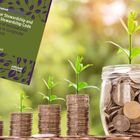
Aston Law School corporate governance experts launch new book on investor stewardship
Dr Daniel Cash and Robert Goddard co-wrote Investor Stewardship and the UK Stewardship Code: The Role of Institutional Investors in Corporate Governance The book will be relevant for an international audience of academics, regulators and policymakers in financial regulation, investment regulation and financial services It coincides with the publishing of the Stewardship Code 2020 signatories as part of a new regulatory code by the Financial Reporting Council (FRC) Two members of Aston Law School have released a new book around investor stewardship to coincide with a major milestone by the Financial Reporting Council (FRC). The FRC published the first main list of Stewardship Code 2020 signatories on 6 September 2021, after a round of reporting earlier this year. This milestone details who is following the Code and allows the regulator to focus on holding signatories to the articulated standards of stewardship and how it is reported. The new book by Dr Daniel Cash and Robert Goddard, Investor Stewardship and the UK Stewardship Code: The Role of Institutional Investors in Corporate Governance, provides a critical assessment of the development of the Stewardship Code 2020, which sets out principles regarding the role of institutional investors in corporate governance. It discusses how the regulatory framework for stewardship evolved before and after the financial crisis, and how that evolution resulted in the 2020 Code. It also critiques the Code from a practical and academic perspective, as well as evaluating the wider regulatory framework; in particular, the position of the FRC merging into the Audit, Reporting and Governance Authority (ARGA). Dr Daniel Cash, senior lecturer in law at Aston Law School, said: “The Stewardship Code is a big deal in British governance, and that is exactly what the book looks at. “It examines the history of the stewardship Codes and regulation in the UK, and uses this to critically examine the new 2020 Code. “That critical analysis leads into projections of how the Code may fare in the modern business environment, aspects that may affect its progression, and puts forward elements that can make the Code’s impact more substantial. “This important regulatory development will play a massive role in aligning the actions of investors with the wider societal needs in the new world being dominated by ESG concerns. “Stewardship Codes modelled on the UK’s original 2010 version have been introduced in numerous markets and, as such, the book will be relevant for an international audience of academics, regulators and policymakers in financial regulation, investment regulation and financial services.” You can buy a copy of Investor Stewardship and the UK Stewardship Code: The Role of Institutional Investors in Corporate Governance here.

A photo speaks louder than words. That’s the proverbial premise behind the Savannah H.O.P.E. Photovoice Project, a visual, community-based research project led by Georgia Southern University researchers that helps identify social, cultural and physical barriers that Black mothers in Chatham County face while breastfeeding. The project won a 2021 Health Innovation Award from Healthy Savannah. As part of a Centers for Disease Control and Prevention’s $3.4 million grant, Healthy Opportunities Powering Equity (H.O.P.E.), the localized project allows those who seldom have the chance to voice their concerns share their experiences with the hope of creating social change. Double Eagle Christina Cook (’16,’19) has assisted Savannah H.O.P.E. Photovoice Project lead Nandi Marshall, DrPH, associate professor in the Jiann-Ping Hsu College of Public Health (JPHCOPH) and associate dean of Academic Affairs, for the last three years. First serving as the JPHCOPH graduate assistant while completing a master’s in public health and now as Marshall’s graduate assistant in the public health doctoral program, Cook has taken pride in helping others amplify their voices. In turn, she found her own. “Personally, what this has done for me is solidify my direction,” said Cook. “As someone who likes to navigate a lot of different paths, and someone who is an intuitive and does-this-feel-right type of person, doing the work has really led me down the path of what I want to do because I am very committed to a sense of justice.” The photovoice method, a groundbreaking visual research methodology that empowers marginalized individuals to document their experiences and communicate their concerns, was utilized, as participants captured images that represent local breastfeeding barriers. Some snapped shots in corporate settings and public areas without access to breastfeeding areas, while others hinted at a lack of family support or pushback based on cultural norms, captured with photos in familial surroundings. “A lot of them are physical barriers,” said Cook. “There is just not a space available. It was really surprising. Even in churches, one of the moms said that whenever she would go to church the only place for her to go was the bathroom. Or someone was ushered into the office to nurse there. “The other ones have been sociocultural like this is something that Black people don’t do or what family members would say. Or going into a public park and people just staring at the moms while they breastfed.” Sessions facilitated by Cook and Marshall allowed participants to talk about the photos, their perspectives and ideas for change with one another to help guide resolutions to overcome barriers for improved local breastfeeding equity. Marshall praised Cook’s integral role in the project. “She is by far an essential team member,” said Marshall. “Her involvement in community-based, participatory research allows her to implement her classroom knowledge while building on skills that will allow her to continue the work of achieving health equity when she graduates. Truly understanding how to engage communities and ensure they not only feel supported but cared for, is a skill that can’t be taught in the classroom. It comes from showing up, by being authentic, being present and keeping the needs of the community in the forefront. Christina continues to show up time and time again. She has proven to be invaluable and a tremendous asset in improving the health outcomes of the communities we work with.” If you are a journalist looking to learn more about the Savannah H.O.P.E. Photovoice Project led by Georgia Southern University and would like to connect with Double Eagle Christina Cook or Nandi Marshal - then let us help. Simply contact Georgia Southern Director of Communications Jennifer Wise at jwise@georgiasouthern.edu to arrange an interview today.


Social class has a significant role to play in career success in the United States. A growing body of research is shedding disquieting light on the extent to which working class Americans face discrimination in recruitment, pay and promotion – despite having a college degree. This demographic is up to four times less likely to get hired, 34% less likely to accede to leadership roles, and earns around 17% less on average than counterparts from middle or upper-class backgrounds. But while research is starting to document how class can impede or accelerate professional success, it remains unclear why these discrepancies exist. What are the mechanisms or dynamics at play that make it so much tougher for working class people to succeed than others? Goizueta Business School Assistant Professor of Organization & Management Andrea Dittmann has an interesting hypothesis. She believes that employees from different backgrounds can bring inherently different strengths and weaknesses to the workplace; advantages and disadvantages that speak to certain norms governing how we think about work and leadership. And it boils down, she says, to the way we work with others. “People from working-class backgrounds—those with blue-collar parents, who might be the first in their family to get a college degree—typically relate a certain way to other people. They are better connected to others, more team-like in their approach, than their middle-class counterparts who see themselves as more independent or unique,” says Dittmann. This team spirit could be working against lower-class employees, she says, in the sense that they see themselves or are perceived by bosses as being less adept at working autonomously or as individuals within organizations; and are therefore viewed by others as less poised to advance into roles of greater responsibility. On the flip side, this very capacity to work well with other people could actually give working class employees an advantage in team-based activities or cultures; an advantage that might translate into concrete benefits for organizations. To put this to the test, Dittmann conducted a series of studies aimed at unpacking how individuals perceive themselves within the context of work, and at the interactions that occur between employees and the workplace. Among these studies were qualitative interviews with MBA students from different social class backgrounds about their experiences navigating white-collar workplaces after graduating from college. She also ran a number of experiments to assess how well working-class people performed in teams and individually, and how environments that prioritize collaborative dynamics or interdependence might produce better experiences and outcomes for employees than environments geared to working individually or independently. A full article detailing Dittmann’s work is attached here and offers very compelling research showing how social class plays out in the workplace. It covers important aspects such as: The Catch-22 of Working Well with Others “It’s a kind of catch-22. Working class kids don’t make it into the gateway settings of school or college as much as middle-class kids in the U.S. They are significantly underrepresented in leading business schools like Goizueta, at roughly 15% of the student population,” she notes. “So, the higher-educational context—the talent pool for corporate America—is very much geared to a different social demographic and dynamic; one that inherently favors independent work ethics and approaches and sees them as the norm. Other ways of working, collaborating, and contributing risk are being undervalued as much as they are underrepresented.” When Considering Diversity, Companies Stand to Benefit “We know that companies that are more diverse perform better than others, and diversity needs to extend to social class. What my research and others are showing is that people from a working-class background tend towards behaviors that are more relational, that they are better at working together. If they fail to make it into the workforce in a more representative fashion, companies are basically missing out on opportunities to form better teams.” Faculty research like Dittmann’s is a critical element in Goizueta Business School’s drive to develop principled leaders who are better prepared to engage in the business of tomorrow. If you are interested in learning more, then let us help. Andrea G. Dittmann is an Assistant Professor of Organization & Management at the Goizueta Business School. She is an expert in the areas of diversity and inequality, particularly employees' social class backgrounds, aiming to promote equity and inclusion at work. Dr. Dittmann is available to speak with media about this research – simply click on her icon now to arrange an interview today.