
Experts Matter. Find Yours.
Connect for media, speaking, professional opportunities & more.

Innovative EEG Brain Monitoring Program Provides Optimal Care for Critically Ill Patients
ChristianaCare has launched an innovative electroencephalogram (EEG) brain monitoring program that represents a significant leap forward in the diagnosis and management of neurological conditions. The easy-to-use EEG program is the first of its kind that can be performed at the bedside to measure the electrical activity of the brain, providing a vital sign for brain function to help diagnose seizures more quickly. ChristianaCare is the first hospital system in Delaware to use the Ceribell point-of-care EEG monitoring system, which can reduce the time it takes to diagnose certain neurological conditions from hours to mere minutes. Using the system, clinicians have immediate access to EEG information so they can triage at-risk patients in just five minutes and monitor patients for treatment optimization. “With this new program, our team of expert clinicians will have the diagnostic information they need to provide high-risk patients with the right care at the right time, ensuring the best outcomes for our patients and their families,” said Kim Gannon, M.D., Ph.D., service line leader for Neurosciences at ChristianaCare. New technology detects ‘silent seizures’ Critically ill patients are at high risk of harmful brain electrical discharges called seizures. Some of these patients experience a type of “silent seizure” with no noticeable symptoms (non-convulsive) that can only be detected using EEG. If prolonged, non-convulsive seizures can lead to permanent brain injury and higher risk of morbidity and mortality. Demonstration of EEG device on patient at ChristianaCare Newark Campus. As a result, guidelines from the Neurocritical Care Society recommend EEG should be initiated within 15-60 minutes when these seizures are suspected. Meeting these guidelines has proven difficult due to the limitations of conventional EEG systems, which were not designed for use in emergency situations. Even top academic centers that have 24/7 EEG capabilities may experience wait times of four hours or more for conventional equipment. When relying on clinical judgement alone while waiting for these conventional EEG systems, diagnostic accuracy has been shown to be only slightly better than chance (65%). The value of this new technology for patients is that it provides accurate results quickly so that the care team can intervene early. “The neuroscience and critical care teams at ChristianaCare believe that ‘time is brain’ not only applies to stroke but also when dealing with seizure,” Gannon said. Gannon is referring to the fact that for every minute that passes when someone is having a stroke, 1.9 million brain cells are lost, increasing the chance of disability or death. That same kind of speed and urgency can now more easily be brought to bear for patients when a seizure is suspected. “This monitoring system is easy to use and can be set up in about five minutes,” said Richard Choi, D.O., medical director of the Neurocritical Care Unit at Christiana Hospital. “It consists of a simple headband, pocket-sized recorder with intuitive software and an on-line portal for remote viewing. Using the system, we can review EEG data, assess response to treatment and optimize care, all in real-time.” Neurosciences at ChristianaCare ChristianaCare’s multidisciplinary neurosciences team provides comprehensive and advanced care for neurologic illnesses across the acute and ambulatory settings. As the largest and most comprehensive neurology practice in Delaware with more than 55,000 patient visits last year, ambulatory subspecialties include stroke, epilepsy, multiple sclerosis, movement disorders, neuromuscular disorders, headaches/migraines, pediatric neurology and Botox specialists. The inpatient team of experts includes neurosurgeons, neurointerventional surgeons, neurocritical care physicians and vascular neurologists. The Newark Campus serves as the only comprehensive stroke center in the state and includes the only Epilepsy Monitoring Unit in Delaware.



Sunday is Cinco de Mayo. Do you know the history behind the day?
Celebrated annually on May 5th, Cinco de Mayo commemorates the Mexican army's victory over French forces at the Battle of Puebla in 1862. While often associated with festive gatherings and cultural celebrations, Cinco de Mayo also holds significant relevance beyond its historical origins, offering various story angles that appeal to a broad audience. Cultural significance and heritage preservation: Explore the historical context of Cinco de Mayo and its importance in Mexican culture, highlighting the traditions, food, music, and art associated with the holiday. Immigration and identity: Examine how Cinco de Mayo is celebrated in different parts of the world, particularly in the United States, and its role in shaping the Mexican-American identity and fostering cross-cultural understanding. Political implications and national pride: Investigate the political undertones of Cinco de Mayo, considering its significance in Mexican nationalism and its portrayal in international relations. Economic impact and tourism: Analyze the economic implications of Cinco de Mayo festivities, including the boost in tourism, sales of Mexican-themed products, and the commercialization of cultural heritage. Education and historical awareness: Discuss the educational value of Cinco de Mayo in schools and communities, examining how it promotes historical awareness, tolerance, and multiculturalism. Social justice and activism: Explore how Cinco de Mayo intersects with social justice movements, addressing issues such as immigration reform, cultural appropriation, and representation in media and politics. By covering these angles, journalists can provide their audiences with a deeper understanding of Cinco de Mayo beyond its surface-level festivities, fostering meaningful dialogue and engagement with the holiday's historical, cultural, and societal significance. Connect with an Expert about Cinco de Mayo: Margarita R. Ochoa Associate Professor and Associate Chair of History · Loyola Marymount University Timothy Matovina Chair, Department of Theology · University of Notre Dame Rodrigo Vargas Professor, Ecosystem Ecology and Environmental Change · University of Delaware Heather Chiero, PhD Associate Professor of History, Anthropology and Philosophy · Augusta University To search our full list of experts visit www.expertfile.com Photo Credit: Daniel Lloyd Blunk-Fernández


The ChristianaCare Hospital Care at Home program, a national leader in providing acute care in a place most familiar to patients – their own homes – has reached a new milestone with more than 1,000 admissions since opening in December 2021. ChristianaCare’s innovative program enables patients with common chronic conditions, such as congestive heart failure and diabetes complications, as well as infections like pneumonia, to receive hospital-level care at home through virtual and in-person care provided by a team of physicians, nurse practitioners, paramedics and others. Technology kits deployed to patient homes ensure round-the-clock access to a health care professional, along with twice daily visits from caregivers, medication deliveries and mobile laboratory services. ‘Absolutely amazing’ for patients Patients are evaluated for the hospital care at home program when they come to Wilmington or Christiana hospital emergency departments. Those who can be treated at home receive a technology kit that connects them to the command center, powered by the ChristianaCare Center for Virtual Health. With a touch of a button, they can access an expert team of ChristianaCare doctors and nurses. But hospital care at home isn’t just virtual care — the technology supports an entire care team that works inside the patient’s home and remotely to provide optimal support at all times — just like in a hospital. Carol Bieber, whose 98-year-old father Bill has been a hospital care at home patient, sees the difference it makes for him to wake up in his own bed, sit in his own living room and still get the care he needs to get better. “The whole hospital care at home experience is really calm and easy and familiar to him,” said Bieber, who lives in Newark, Delaware. “My dad is a people person, so to be able to connect with everybody who comes in to see him or talk to him on the screen is just amazing.” Innovative solutions for in-home care ChristianaCare’s Hospital Care at Home program was developed in 2021 after the Centers for Medicaid & Medicare Services (CMS) began the Acute Hospital Care at Home waiver program to allow Medicare beneficiaries to receive acute-level health care services in their home. U.S. Sen. Tom Carper, who represents Delaware, worked to pass the bipartisan “Hospital Inpatient Services Modernization Act” in 2023 that extended this program. Last month. Sen. Carper introduced the bipartisan “At-Home Observation and Medical Evaluation (HOME) Services Act” that would expand this lifesaving and cost-saving program. “Hospital at Home – which grew out of the COVID pandemic – was an opportunity for us to meet seniors where they are,” Carper said. “It has delivered positive outcomes, higher patient satisfaction, and saves money.” Sarah Schenck, M.D., FACP, executive director of the ChristianaCare Center for Virtual Health, said the hospital care at home program has yielded lower readmission rates than brick-and-mortar hospitals. Patient experience scores are about three times higher than a national average traditional hospital experience. “We’ve been conditioned to believe that care only happens within the four walls of a hospital. For our patients who have loved ones at home or their pets, a favorite chair or favorite food, they’re now able to have all of that as they heal,” Schenck said. “Once our patients have experienced this, what we hear from them is that they are truly grateful.” Promoting healing – at home Helping patients recover in their homes also has been transformational for caregivers who get to see a different side of their patients and better understand what they need to successfully recover. “I can’t express how much I enjoy the patients and their families,” said Heather Orkis, a paramedic with Hospital Care at Home. “To be able to enjoy the family and see these people get better in their own homes, with their families, their grandkids, their dogs, their cats – it’s just a completely different kind of medicine.” For Bill Bieber’s family, hospital care at home is more than health care. “It’s just the best thing ever,” Carol Bieber said.

Anthony Fauci to visit University of Delaware as part of Disaster Research Center's 60th anniversary
Dr. Anthony Fauci will take part in a fireside chat on Friday, May 3 in honor of the 60th anniversary of the University of Delaware's Disaster Research Center. Fauci, former director of the National Institute of Allergy and Infectious Diseases at the National Institutes of Health and former chief health advisor to President Joe Biden, will join Valerie Biden Owens, Chair of UD's Biden Institute, for a chat at 4 p.m. about decision-making during crises as well as lessons for the next generation of leaders. The visit caps off an international workshop held by the Disaster Research Center (DRC) from May 2-4. The workshop will include a pre-workshop for graduate students; a researcher-in-residence day at the DRC where the E.L. Quarantelli Resource Collection (full of rare, disaster-related objects) will be showcased and available for use; and a two-day workshop with a range of presentations, films and activities. Fauci's chat takes place at UD's Clayton Hall and will be livestreamed from 4-5 p.m. NOTE: For future coverage of hurricanes, floods, tornadoes, earthquakes, wildfires and other disasters, visit the profiles of the Disaster Research Center-affiliated experts connected to this post and click "contact."


Climate change research trailblazer elected to prestigious list of AAAS Fellows
University of Delaware professor Rodrigo Vargas has been elected as a fellow of the American Association for the Advancement of Science (AAAS) — one of the largest scientific societies in the world and publisher of the Science family of journals. The new class of AAAS Fellows includes 502 scientists, engineers and innovators across 24 disciplines, who are being honored for their scientifically and socially distinguished achievements. Vargas, professor of ecosystem ecology and environmental change in UD’s College of Agriculture and Natural Resources, is recognized "for distinguished contributions to carbon dynamics across the terrestrial-aquatic interface, development of environmental networks, novel data analysis tools and his leadership in creating a more diverse scientific workforce." Deborah Allen, who retired from UD in 2019 as a professor of biological sciences, was also names as a fellow. She was cited “for transformational contributions to STEM education nationally and internationally, particularly for developments in problem-based learning and faculty development.” Vargas is an ecosystem ecologist who studies how nature-based solutions can help address global environmental change in both terrestrial and coastal ecosystems, Vargas uses a variety of research methods, including data mining, machine learning, remote sensing, measurements of greenhouse gas fluxes and modeling techniques for forecasting applications.

#ExpertSpotlight: 10th anniversary of Flint, MI, water crisis beginning
The 10th anniversary of the Flint, MI water crisis marks a pivotal moment in environmental justice and public health awareness. This event matters deeply to the public as it sheds light on systemic failures in infrastructure management, government accountability, and the disproportionate impacts of environmental hazards on marginalized communities. Here are several sub-topics that could be of interest to a broad audience: Health Impacts and Long-term Consequences: Explore the lingering health effects on residents exposed to lead-contaminated water, including neurological disorders, developmental delays, and mental health challenges. Government Response and Accountability: Investigate the role of local, state, and federal authorities in addressing the crisis, including accountability measures taken against officials responsible for the negligence and mismanagement. Community Resilience and Activism: Highlight the resilience of Flint residents and grassroots organizations in advocating for clean water access, demanding justice, and implementing community-led solutions. Infrastructure Challenges Nationwide: Examine the broader implications of Flint's water crisis on infrastructure investment, maintenance, and regulation across the United States, particularly in aging urban areas. Policy Reforms and Prevention Efforts: Discuss policy reforms enacted post-crisis to prevent similar incidents, such as improvements in water quality testing, infrastructure upgrades, and measures to ensure environmental justice. Legacy of Environmental Injustice: Analyze the broader socio-economic factors contributing to environmental injustices like the Flint water crisis, including racial disparities in access to clean water and the intersectionality of poverty and environmental hazards. This anniversary presents an opportunity for journalists to revisit the ongoing repercussions of the Flint water crisis, amplify the voices of affected communities, and advocate for sustainable solutions to prevent similar tragedies in the future. Connect with an Expert about the Flint, MI water crisis: To search our full list of experts visit www.expertfile.com Gerald Kauffman Project Director, Water Resources Center, Institute for Public Administration; Assistant Professor, Biden School of Public Policy and Administration · University of Delaware Viviane Yargeau Professor, Department of Chemical Engineering · McGill University Jared L. Cohon University Professor · Carnegie Mellon University Joe Brown Assistant Professor, Environmental Engineering · Georgia Tech - COE For journalists with questions or looking to cover the streaming wars, here is a select list of experts. Photo Credit: Bruno Guerrero

Healthy Environment, Healthy People: The Intersection Between Climate and Health
How is climate change influencing our health? Why does climate change have a greater impact on vulnerable populations and low-income people? How does the U.S. health care system affect the climate? How can health care systems improve their impact on the climate and the environment? ChristianaCare’s inaugural Climate and Health Conference addressed these topics and raised possible solutions at the John H. Ammon Medical Education Center on the Newark, Delaware, campus on April 12. At the conference, the common denominator was this: An unhealthy environment can lead to illnesses and deaths from air pollution, high heat, contaminated water and extreme weather events. Health systems, government entities, community organizations and individuals all have a role to play in decreasing these effects. “Climate, the environment and health care systems are intertwined,” said Greg O’Neill, MSN, APRN, AGCNS-BC. “We need to pay close attention to this relationship so we can improve health for everyone.” O’Neill is director of Patient & Family Health Education and co-chair of the Environmental Sustainability Caregiver Committee at ChristianaCare. Climate change and intensifying health conditions Negative health effects are so closely tied to the environments where people live, work and play that The Lancet called climate change “the greatest global health threat facing the world in the 21st century [and] the greatest opportunity to redefine the social and environmental determinants of health.” At the conference, speakers addressed specific areas of concern. Asthma. Air pollutants, while largely invisible, are associated with asthma. What’s more, people who live in urban areas with little green space are more likely to have uncontrolled asthma, said speaker Robert Ries, M.D., an emergency medicine resident at ChristianaCare. And there’s the rub, he said: When people with asthma spend time in green spaces, it may improve their health. “In Canada,” he said, “some doctors prescribe nature – two hours a week for better overall health outcomes. Could we do that here?” Heat-related illness. Temperatures worldwide have been rising, increasing the likelihood of heat-related health incidents. Heat waves may be harmful to children and older adults, particularly those who don’t have access to air conditioning, swimming pools or transportation to the beach, said speaker Alan Greenglass, M.D., a retired primary care physician. Children visit the emergency room 20% more frequently during heat waves. Weather-related illness. Climate change is causing more floods, which may result in respiratory problems due to mold growth; and droughts, which may threaten water safety and contribute to global food insecurity, said speaker Anat Feingold, M.D., MPH, an infectious disease specialist at Cooper Health. Stress and anxiety. Climate change can affect mental health, even leading to “solastalgia,” which is distress about environmental change and its effect on one’s home, said speaker Zachary Radcliff, Ph.D., an adolescent psychologist at Nemours. He encouraged clinicians in the audience to keep this mental health concern in mind when seeing patients as it may become more prevalent. Cardiovascular disease risk. Frequent consumption of red meat increases the risk of cardiovascular disease, the top cause of death in the U.S. It’s also unhealthy for the environment, said speaker Shirley Kalwaney, M.D., an internal medicine specialist at Inova. Livestock uses 80% of available farmland to produce only 17% of calories consumed, creating a high level of greenhouse gas emissions. By comparison, plant-based whole foods decrease the risk of cardiovascular disease and diabetes. They use only 16% of available farmland, producing 82% of calories consumed. This makes reducing red meat in our diets one of the most powerful ways to lower the impact on our environment. Health equity and the environment People in low-income communities are more likely to live in urban areas that experience the greatest impacts of climate change, including exposure to air pollutants and little access to green space, said speaker Abby Nerlinger, M.D., a pediatrician for Nemours. A Harvard study in 2020 demonstrated that air pollution was linked with higher death rates from COVID-19 — likely one of the many reasons the pandemic has disproportionally harmed Black and Latino communities. Similarly, access to safe, affordable housing is essential to a healthy environment, said Sarah Stowens, Ed.D., manager of State Policy and Advocacy for ChristianaCare, who advocated for legislation including the Climate Solutions Act, another bill that increased oversight regarding testing and reporting of lead poisoning and a policy to reduce waste from topical medications. Opportunities for change in health care Reduce emissions from pharmaceuticals and chemicals. These emissions are responsible for 18% of a health system’s greenhouse gas emissions. One way to reduce this number is for clinicians to prescribe a dry-powder inhaler (DPI) instead of a metered-dose inhaler (MDI) when applicable and safe for the patient and to give patients any inhalers that were used in the hospital at discharge if they are going home on the same prescription. Hospitals have opportunities to reduce greenhouse gases while caring for patients, said Deanna Benner, MSN, APRN, WHNP, women’s health nurse practitioner and co-chair of ChristianaCare’s Environmental Sustainability Caregiver Committee. The health care sector is responsible for 8.5% of U.S. greenhouse gas emissions, the highest per person in the world. U.S. greenhouse gas emissions account for 27% of the global health care footprint. One way to significantly reduce the carbon footprint is to use fewer anesthetic gases associated with greater greenhouse gas emissions, Benner said. Limit single-use medical devices. Did you know that one surgical procedure may produce more waste than a family of four produces in a week? Elizabeth Cerceo, M.D., director of climate health at Cooper Health, posed this question during her talk. Sterilizing and reusing medical devices, instead of using single-use medical devices, she said, may meaningfully reduce hospital waste. ChristianaCare’s commitment to healthy environments and healthy people As one of the nation’s leading health systems, ChristianaCare is taking a bold, comprehensive approach to environmental stewardship. ChristianaCare reduced its carbon footprint by 37% in 2023 by purchasing emission-free electricity. ChristianaCare joined the White House Climate Pledge to use 100% renewable energy by 2025, reduce greenhouse gas emissions by 50% by 2030 and achieve zero net emissions by 2050. ChristianaCare has created an Environmental, Social and Governance structure to help advance a five-year strategic plan that delivers health equity and environmental stewardship. Nearly 150 staff members have become Eco-Champions, an opportunity to be environmental change-leaders in the workplace. In 2023, ChristianaCare’s successful environmental stewardship included: Reducing our carbon footprint by 37% by purchasing emission-free electricity. Recycling 96,663 pounds of paper, which preserved 11,485 trees. Reducing air pollution by releasing an estimated 33,000 fewer pounds of nitrogen oxides and sulfur oxides through the use of a cogeneration energy plant on the Newark campus. Donating 34,095 pounds of unused food to the Sunday Breakfast Mission in Wilmington, Delaware. Donating 1,575 pounds of unused medical equipment to Project C.U.R.E., ChristianaCare’s Virtual Education and Simulation Training Center and Delaware Technical Community College. “In quality improvement, they say you improve the things that you measure,” O’Neill said in expressing goals for continued success. In looking ahead, said Benner, “I really hope that this conference is the catalyst for positive change with more people understanding how climate is connected to health, so that we can protect health from environmental harms and promote a healthy environment for all people to thrive.”


Exploring the Link Between Student Engagement and Deeper Learning
When students are engaged in their learning, they are more likely to dive deeper into the material. This is because they are actively participating in the process, asking questions, and seeking out answers. This is a concept that was recently explored by Amanda Jansen, a University of Delaware professor in the College of Education and Human Development. With attention to teachers’ first-person narratives and reflections, her study offers educators a model for understanding student engagement so that they can better facilitate deeper learning in their classrooms. Funded by the National Science Foundation (NSF), it was found that the majority of the teachers in Jansen’s study understood the primary function of student engagement to be deeper learning about a mathematics concept rather than classroom performance. These teachers talked more about engagement in terms of cognitive, affective and social processes, and they often spoke about more than one dimension. Jansen also emphasizes that how educators ask students to be engaged often reveals helpful information about educators’ instructional practices and their own assumptions. It can also send a message to students about their role in the learning process. These more engaged students are more likely to analyze and evaluate information, rather than just passively accepting it. This higher level of thinking leads to a deeper understanding of the material and allows students to apply their knowledge in real-world situations. To speak to Jansen about the study and its impact, click her "View Profile" button.


Covering Earth Day - Our Experts can Help | Media Advisory
As we commemorate Earth Day, the urgency to address environmental challenges and foster sustainable practices has never been more critical. Earth Day serves as a reminder of our collective responsibility to protect and preserve our planet for future generations. This event matters to the public because it highlights the interconnectedness of environmental issues with our daily lives and underscores the importance of taking action. Here are several sub-topics that could be of interest to a broad audience: Climate change mitigation efforts and their impact on local communities Innovative technologies and initiatives for renewable energy sources Conservation efforts to protect endangered species and habitats Sustainable practices in agriculture and food production The role of businesses and corporations in promoting environmental sustainability Government policies and regulations aimed at addressing environmental challenges Connect with an Expert about Earth Day: For journalists with questions or looking to cover the streaming wars, here is a select list of experts. Bryan W. Brooks, Ph.D. Distinguished Professor, Environmental Science and Biomedical Studies; Director of Environmental Health Science · Baylor University Jase Bernhardt Associate Professor of Geology, Environment, and Sustainability · Hofstra University Saleem Ali Professor of Energy and the Environment Geography and Spatial Sciences; Biden School of Public Policy and Administration · University of Delaware Francis Galgano, PhD Associate Professor, Geography and the Environment | College of Liberal Arts and Sciences · Villanova University To search our full list of experts visit www.expertfile.com Photo Credit:Fateme Alaie
Food is Medicine: ‘It’s Not Just About Food–It’s About Friendship
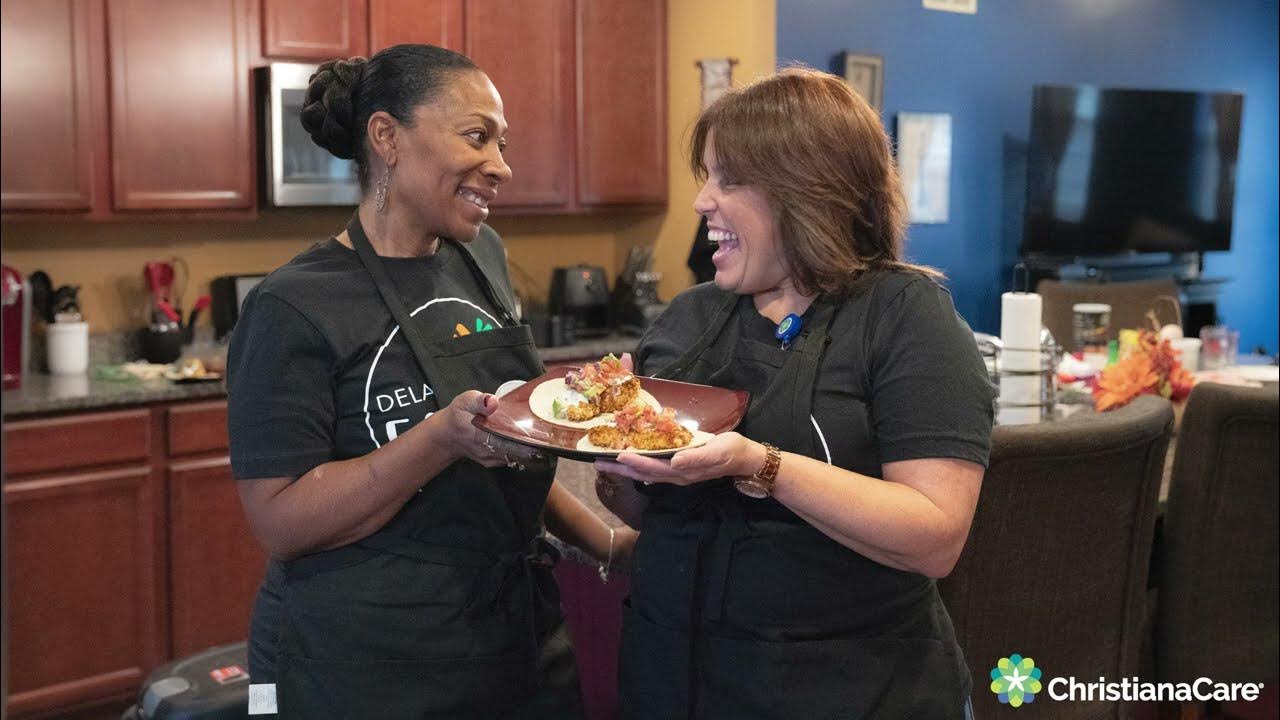
Kim Solomon’s kitchen showed all the signs of a good lunch in the making – chopped veggies on the counter, a few dirty dishes in the sink and two people laughing as they cooked. “Don’t worry, we’re going to clean all this up,” ChristianaCare community health worker Michelle Torres, BBA-HM, said as she sliced tilapia for the heart-healthy fish tacos she was making with Solomon. “I’m not worried about the mess, especially when it tastes this yummy,” Solomon said as she watched Torres place the raw fish – coated with panko crumbs, spices and an egg wash – into the air fryer. A few years earlier, Solomon’s lunch would have been something quick from the pantry after cooking for her sons or helping a neighbor. But after dealing with the life-threatening effects of high blood pressure, she is learning – with Torres’ help – how to prioritize her own nutrition and health. Solomon is one of more than 225 patients enrolled in the Delaware Food Farmacy, a ChristianaCare partnership with Lutheran Community Services that provides weekly deliveries of locally sourced produce, meat and other foods, along with one-on-one support from a community health worker. Delaware Food Farmacy participants report lower A1C blood glucose levels, healthier blood pressure readings and reduced body mass index. Dishing out good health “It took me getting very sick to finally make my own health a priority in my life, and that’s a humbling experience,” said Solomon, who lives in Bear, Delaware. “This is not just about food – it is about friendship, and Michelle’s support really gives me motivation. It keeps me excited to hear her voice and know that she’s there for me.” Kim Solomon (left) finds prioritizing her own nutrition and health can be delicious, as she prepares panko-crusted tilapia for fish tacos with community health worker Michelle Torres. ChristianaCare is expanding efforts to reduce food insecurity among patients in an ongoing commitment to ending disparities and in recognition that access to nutritious food is critical to overall health. In addition to the Delaware Food Farmacy, over 100 Maryland Primary Care Program (MDPCP) patients are participating in Healthy Food, Healthy Hearts, a 12-week program that delivers fresh groceries to under-resourced Medicare patients with complex health needs. “Our focus is empowering people to maintain their health by giving them the resources they need for whole-person care, including healthy food and education related to meal preparation and living with a chronic health condition,” said Erin Booker, LPC, chief biopsychosocial officer for ChristianaCare. “Through our work with our community partners in the Food Farmacy program in Delaware and our Healthy Food, Healthy Hearts program in Maryland, we are acknowledging the intersection of nutrition and health care and the importance of creating a more equitable food system.” Food is Medicine Both programs operate on the Food Is Medicine model, which recognizes that nutritious foods are essential for good health – and they must be accessible in the community, particularly in under-resourced areas. Studies have shown that evidence-based, tailored food interventions can lead to improved health outcomes and better use of health care services among participants while also reducing food insecurity, said Michelle Axe, MS, CHES, program manager of Food and Social Care Initiatives for ChristianaCare. The Centers for Disease Control and Prevention estimated in 2023 that food insecurity results in nearly $77 billion in excess health care spending. Veggie power: Much of the food in the Food Farmacy is sourced locally through a cooperative agreement with Delaware’s Department of Agriculture and the Farm-to-Community Program, which connects local farms with organizations distributing food to the community. Among Food Farmacy graduates, 26% report a decrease in food insecurity and 18% said they experience less anxiety. “With these programs, we’re offering participants an opportunity to make a change in their life, not only for them as individuals, but for the entire family,” Axe said. “This is about more than food.” From farm to table Getting health care professionals to prescribe healthier food options – and then making it possible for the patients to obtain them – helps close the gap between medical nutrition and financial health, said Rob Gurnee, executive director of Lutheran Community Services. “Providing food – that’s our core competency,” Gurnee said. “What really makes this program different and incredibly valuable is that ChristianaCare can funnel the right people into the program and then maintain these relationships to help patients make changes that are sustainable. Together, we utilize the strengths of our organizations with the goal of improving health outcomes.” Each week, Delaware Food Farmacy participants select from a menu of fresh produce, lean meats and fish, whole grains, low-fat dairy, snacks and other healthy items, all of which fall under the Dietary Approach to Stop Hypertension (DASH) diet. Fresh-picked: With Delaware Food Farmacy, patients are getting local produce that is typically picked within 24 to 48 hours. Much of the food distributed through Delaware Food Farmacy is sourced locally through a cooperative agreement with Delaware’s Department of Agriculture and the Farm-to-Community Program, which connects local farms with organizations distributing food to the community. Solomon’s refrigerator is filled with local produce, eggs and lean meats from the Food Farmacy program, but it’s Torres who keeps Solomon on the path to good health with her encouraging personality and a tasty supply of easy-to-make recipes. A recipe for healthy eating: Air Fryer Fish Tacos. Kim Solomon’s review? “Yummy.” “She’s there to support you and help you understand it’s going to be OK,” Solomon said. “She goes above and beyond every time. We need more Michelles in our world.”
