
Experts Matter. Find Yours.
Connect for media, speaking, professional opportunities & more.

What’s next for Myanmar? Our expert can help if you are covering.
The troubled and fledgling democracy that existed in Myanmar has been overtaken by a military coup. The tiny South-Asian country is no stranger to military dictatorships and the uprisings occurring are the third time in recent history that the country has been in disarray. The reason for the interventions, as it’s being spun by the military, is to preserve the concepts of democracy with the promise of new elections on the horizon. “The Burmese military has long considered itself as the principle protector of the Myanmar nation, and they have treated internal critics and democratic reformers as enemies of the nation,” said Dr. Andrew Goss,” chair of the Department of History, Anthropology and Philosophy at Augusta University. “While the partial democratic reforms instigated by the military a decade ago gave many hope that Myanmar was changing, the election last year did not produce the results the military expected.” In his first televised address since the takeover, Min Aung Hlaing, a career military officer who is commander in chief of Myanmar's armed forces, repeated claims of fraud in November's election, and said the military will hold new elections and transfer power to the winner. He did not specify when those elections would take place, though the military had previously declared a year-long state of emergency. The military has imposed numerous restrictions on gatherings and activities in the country's largest cities of Yangon and Mandalay, effective Monday until further notice. Restrictions include an 8 p.m. to 4 a.m. curfew, as well as a ban on motorized processions and gatherings of more than five people. They are effective on a township-by-township basis. In his address, Min Aung Hlaing said an electoral commission did not properly investigate irregularities over voter lists or allow fair campaigning, according to the BBC, which notes that the commission did not find evidence to support claims of widespread fraud. He also promised that a reformed commission would oversee another election, and spoke of achieving a "true and disciplined democracy." But when those elections will happen and who will be able to seek office have yet to be explained. The situation has garnered international attention and condemnation – and if you are a journalist covering these ongoing developments in Myanmar, then let our experts help with your coverage. Dr. Andrew Goss is a renowned expert in Asian history and can speak to reporters covering the events taking place now. To arrange an interview with Dr. Goss, simply click on his name.


Trump’s reaction to defeat further confirms urgency for school focus on social-emotional skills
Sandra Chafouleas, psychologist and behavioral health expert from the University of Connecticut, weighs in: Imagine what would happen if a preschooler didn’t “use their words” when they got upset about sharing, instead stomping around yelling while adults simply observed in silence. Think about what the school climate would feel like if a student punched another during recess while others watched without seeking help. Now consider the actions – and inactions – by Donald Trump on January 6 as the electoral vote counts occurred at the U.S. Capitol. Those behaviors show a desperate need for social emotional learning. According to the Collaborative for Academic, Social, and Emotional Learning (CASEL), social emotional learning involves five core competencies: self-awareness, self-management, social awareness, relationship skills, and responsible decision-making. Trump did not demonstrate these competencies when the election didn’t go the way he wanted. Connecting these school scenarios and Trump’s behaviors is not intended to contribute to the ever-mounting list of recommended consequences that could result from his fueling the insurrection that our nation has just experienced. It does bear noting, however, that if Trump were a Black teenager, he most certainly would have received exclusionary disciplinary action such as suspension and perhaps even expulsion from school. The purpose in connecting the two scenarios is to draw energies toward actions that propel us forward in bridging a divided nation. The responsibility for forward movement falls to future generations, which means it is critical that we pay attention to what happens in schools right now. We need to demand that policies and practice — and necessary resources — are put in place to strengthen school capacity to support students on their path to holding responsibility for democracy. Many excellent resources have quickly appeared to assist educators in teaching about the insurrection. Discussion guides are available to facilitate defining key terms, contrasting events through a social justice lens, and comparing justifications for action using fact checking. Other resources have been released that help adults talk about violence and support emotional safety of kids. What seems to be less prominent, however, is a direct connection to the social, emotional, and behavioral skills that we have just witnessed are missing. Education systems have begun the work of acknowledging their historic roles in contributing to exclusion, inequity, and intolerance of differences. Educators are working hard to turn the tide toward promising alternative approaches. Prominent among those approaches is a focus on social emotional skills. In either classroom scenario above, educators would be jumping into discussion about what supports are needed to address student needs. Social and emotional well-being fulfills us throughout every stage of life – integrating those skills should be in all that we do as adults to model, teach, and give feedback to our children. Of course schools must teach academic content areas and have high expectations, but there is tremendous potential to increase capacity to embed exploration, active practice, and positive feedback about social and emotional skills within each corner of the day. As one example, history professor Kellie Carter Jackson writes about challenges in teaching violence in political history. The author describes the need to question how political violence should be labeled, which could reveal an expression of unmet need by marginalized people. Learning through this analysis offers social and emotional parallels, such as examining biases, recognizing emotions, and examining integrity. As another, Facing History and Ourselves offers a classroom resource specific to the insurrection. Activities reference principles of social and emotional learning, such as steps for educators to practice self-awareness and relationship skills by examining their own emotions and perspectives. Student self-management and social awareness builds through reflection activity that builds civic agency. All of these examples offer incredible opportunity in social and emotional learning that could be advanced with more explicit connection. Entrenching social and emotional learning within the school day beyond this immediate teachable moment also is needed to enable sustained effort. CASEL identifies adults as key to social emotional strategies that will maintain safe, supportive, and equitable learning environments for this moment in history. To do so requires a strong collection of social, emotional, and behavioral education policies and practices. Responsibility for urgently resourcing this collection rests within each of us, right now, to ensure future generations who can and do take part in a resilient democratic nation. Dr. Chafouleas is licensed psychologist and Distinguished Professor, with expertise in school psychology and school mental health at the University of Connecticut’s Neag School of Education. If you’re a reporter looking to speak with Dr. Chafouleas about this topic – let us help. Simply click on her icon to arrange an interview today.


Network Science Offers Key Insights into Polarization, Disinformation, and Minority Power
People tend to think of the arena of politics as being driven by human decision and emotions, and therefore unpredictable. But network scientists like Boleslaw Szymanski, a computer science professor at Rensselaer Polytechnic Institute, have found that the country’s political activity – from American society’s ever-growing partisan divide to its grappling with the spread of misinformation online – can be explained by abstract and elegant models. These models provide insights — and even answers — to a number of pressing questions: Is increasing access to information driving us apart? Can an entrenched minority ultimately prevail? Could structural changes be made that insulate us from misinformation and reduce the polarization that divides us? Szymanski studies the technical underpinnings of our choices, how we influence one another, and the impact of the algorithms we rely upon to navigate a growing ocean of information. His work has yielded fascinating insights, including research on how a committed minority will overcome less determined opposition and the development of a parameter to determine what drives polarization in Congress. Through his research on the influence of minority opinions, Szymanski found that when just 10 percent of the population holds an unshakable belief, it will ultimately be adopted by the majority of the society. “When the number of committed opinion holders is below 10 percent, there is no visible progress in the spread of ideas. It would literally take the amount of time comparable to the age of the universe for this size group to reach the majority,” said Szymanski, a computer science professor at Rensselaer Polytechnic Institute. “Once that number grows above 10 percent, the idea spreads like flame.” In his present work, Szymanski is researching tools for measuring the level of polarization in specific news sites, search engines, and social media services, and developing remedies, like algorithms that offer better data provenance, detect misinformation, and create internal consistency reasoning, background consistency reasoning, and intra-element consistency reasoning tools. “Informed citizens are the foundation of democracy, but the driving interest of big companies that supply information is to sell us a product,” Szymanski said. “The way they do that on the internet is to repeat what we showed interest in. They’re not interested in a reader’s growth — they’re interested in the reader’s continued attention.” With the political environment becoming increasingly bitter and dubious information becoming ever more prevalent, Szymanski is available to discuss his research on polarization, disinformation, and the power of a committed minority.


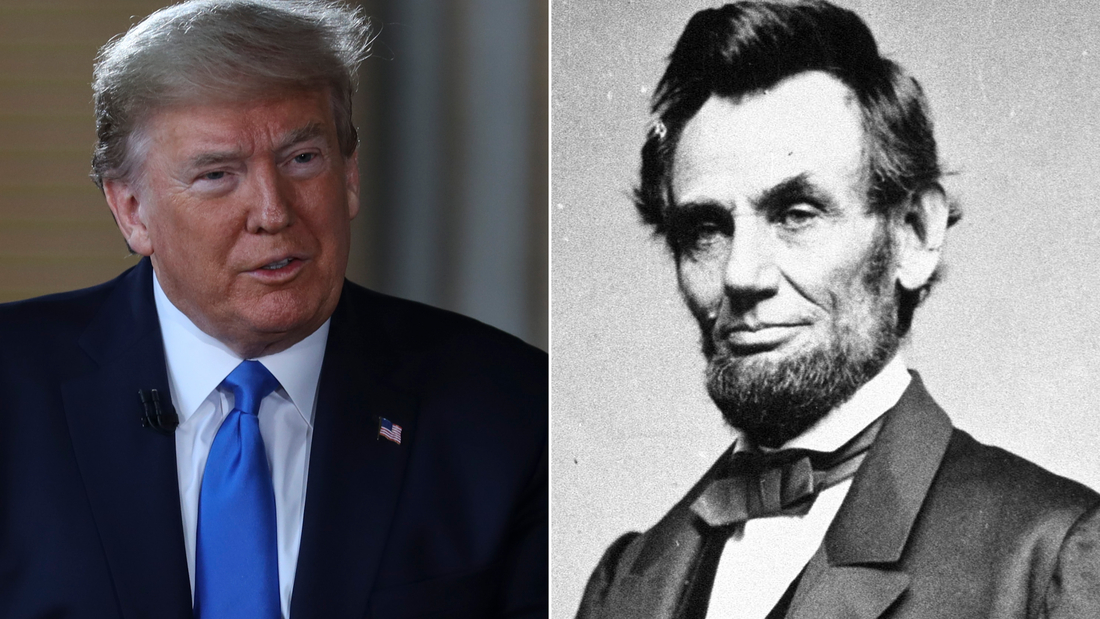
Is this the biggest election since 1860? Let our expert explain why
The upcoming U.S. presidential election is happening in unprecedented times and during what could be the most divisive era in more than a century and a half. This week, one of the University of Connecticut’s historical experts, Manisha Sinha, was featured by CNN to explain her point that America is indeed facing its biggest election in 160 years. “The 2020 presidential election is certainly as consequential as that of 1860. It is, as Biden is fond of saying, a battle for the 'soul of America.' The fate of the American republic once again hangs in the balance. Like the slaveholders of the 1850s, Trump, his followers and enablers are in a position to pose an existential threat to American democracy. Like many slaveholders, Trump refuses to commit to a peaceful transfer of power if he loses. "If history appears first as tragedy, then as farce, the counterparts of southern secessionists and proslavery theorists today are QAnon conspiracy theorists, neo Confederates, and the right-wing Boogaloo boys. Much of the contemporary Republican Party that refuses to repudiate Trump is like those southern Whites who may not have had a direct stake in slavery but went with their states, who ultimately chose slavery before the republic. The choice -- as the Republicans of the Lincoln Project, who have broken with their party, put it -- is between America and Trump.” Dr. Sinha’s full op-ed is available on CNN.com and is a must-read for anyone looking to put this year’s election into historical context. And, if you are a journalist looking to cover this topic, let our experts help with your coverage. Manisha Sinha is the Draper Chair in American History at the University of Connecticut and the author of "The Slave's Cause: A History of Abolition." She is available to speak with media regarding this topic – simply click on her icon now to arrange an interview today.


Paper ballots, risk-limiting audits can help defend elections and democracy, IU study finds
BLOOMINGTON, Ind. -- With just over two months before the 2020 election, three professors at the Indiana University Kelley School of Business offer a comprehensive review of how other nations are seeking to protect their democratic institutions and presents how a multifaceted, targeted approach is needed to achieve that goal in the U.S., where intelligence officials have warned that Russia and other rivals are again attempting to undermine our democracy. But these concerns over election security are not isolated to the United States and extend far beyond safeguarding insecure voting machines and questions about voting by mail. Based on an analysis of election reforms by Australia and European Union nations, they outline steps to address election infrastructure security -- such as requiring paper ballots and risk-limiting audits -- as well as deeper structural interventions to limit the spread of misinformation and combat digital repression. "In the United States, despite post-2016 funding, still more than two-thirds of U.S. counties report insufficient funding to replace outdated, vulnerable paperless voting machines; further help is needed," said Scott Shackelford, associate professor of business law and ethics in the Kelley School, executive director of the Ostrom Workshop and chair of IU's Cybersecurity Program. "No nation, however powerful, or tech firm, regardless of its ambitions, is able to safeguard democracies against the full range of threats they face in 2020 and beyond. Only a multifaceted, polycentric approach that makes necessary changes up and down the stack will be up to the task." For example, Australia -- which has faced threats from China -- has taken a distinct approach to protect its democratic institutions, including reclassifying its political parties as "critical infrastructure." This is a step that the U.S. government has yet to take despite repeated breaches at both the Democratic and Republican national committees. Based on an analysis of election reforms by Australia and European Union nations, they outline steps to address election infrastructure security -- such as requiring paper ballots and risk-limiting audits -- as well as deeper structural interventions to limit the spread of misinformation and combat digital repression. "In the United States, despite post-2016 funding, still more than two-thirds of U.S. counties report insufficient funding to replace outdated, vulnerable paperless voting machines; further help is needed," said Scott Shackelford, associate professor of business law and ethics in the Kelley School, executive director of the Ostrom Workshop and chair of IU's Cybersecurity Program. "No nation, however powerful, or tech firm, regardless of its ambitions, is able to safeguard democracies against the full range of threats they face in 2020 and beyond. Only a multifaceted, polycentric approach that makes necessary changes up and down the stack will be up to the task." For example, Australia -- which has faced threats from China -- has taken a distinct approach to protect its democratic institutions, including reclassifying its political parties as "critical infrastructure." This is a step that the U.S. government has yet to take despite repeated breaches at both the Democratic and Republican national committees. The article, "Defending Democracy: Taking Stock of the Global Fight Against Digital Repression, Disinformation and Election Insecurity," has been accepted by Washington and Lee Law Review. Other authors are Anjanette "Angie" Raymond, associate professor of business law and ethics, and Abbey Stemler, assistant professor of business law and ethics, both at Kelley; and Cyanne Loyle, associate professor of political science at Pennsylvania State University and a global fellow at the Peace Research Institute Oslo. Aside from appropriating sufficient funds to replace outdated voting machines and tabulation systems, the researchers said that Congress should encourage states to refuse to fund voting machines with paperless ballots. The researchers also suggest requiring risk-limiting audits, which use statistical samples of paper ballots to verify official election results. Other suggested steps include: Congress requiring the National Institute of Standards and Technology to update their voting machine standards, which state and county election officials rely on when deciding which machines to purchase. Australia undertook such a measure. Creating a National Cybersecurity Safety Board to investigate cyberattacks on U.S. election infrastructure and issue post-elections reports to ensure that vulnerabilities are addressed. Working with universities to develop training for election officials nationwide to prepare them for an array of possible scenarios, and creating a cybersecurity guidebook for use by newly elected and appointed election officials. "With regards to disinformation in particular, the U.S. government could work with the EU to globalize the self-regulatory Code of Practice on Disinformation for social media firms and thus avoiding thorny First Amendment concerns," Raymond said. "It could also work to create new forums for international information sharing and more effective rapid alert and joint sanctions regimes. "The international community has the tools to act and hold accountable those actors that would threaten democratic institutions," added Stemler, who also is a faculty associate at Harvard University's Berkman Klein Center for Internet and Society. "Failing the political will to act, pressure from consumer groups and civil society will continue to mount on tech firms, in particular Facebook, which may be sufficient for them to voluntarily expand their efforts in the EU globally, the same way that more firms are beginning to comply with its General Data Protection Regulation globally, as opposed to designing new information systems for each jurisdiction."


As China clamps down on Hong Kong – Is Taiwan next?
As protests erupt again across Hong Kong against the recent imposing of new security laws essentially giving Beijing unprecedented powers – it has some worried about what is next as China pursues it’s One-China policy. In Taiwan people are watching, and concern is growing. Professor Elizabeth Freund Larus teaches political science at the University of Mary Washington and is an #expert on China and the field of Asian studies. She has also been interviewed by media such as CNBC, The Diplomat and CBN News regarding this topic. She has noted that the developments in China, especially with regards to Hong Kong and Taiwan are catching global attention and will impact economies and governments across the globe. Beijing has taken an especially hard line towards Taiwan since the 2016 election of President Tsai Ing-wen of the Democratic Progressive Party (DPP), ramping up military, economic and diplomatic pressure. Tsai views Taiwan as a de facto independent nation and not part of "one China". But the pressure campaign has done little to endear China to Taiwan's 23 million people. In January, Tsai won a second term with a historic landslide and polls consistently show a growing distrust of China... Social media is filled with messages of support for Hong Kong's democracy movement. Some back Taiwanese independence, or highlight China's rights abuses in regions such as Tibet and Xinjiang. Wendy Peng, a 26-year-old magazine editor who said she often shared pro-Hong Kong democracy messages on social media, said she would now avoid visiting the city. "The national security law makes me wonder how far would China go. Right now I don't see a bottom line and there's probably none. I think it's possible they will target Taiwan next," she said. July -7 Yahoo! New/AFP If you are a reporter covering this progressing story – then let our experts help. Elizabeth Larus is available to speak to media, simply click on her icon to arrange an interview.



Protests and politics – let our expert explain how one influences the other
The protests that have been occurring across most of America have seen politically charged language, action, and reaction. Calls for change have been made, and promises have followed by those seeking to attain office or remain in office once the dust has settled and America goes to the polls in the fall. In a recent essay, former President Barack Obama touched on how those protesting can translate emotions into action. “Throughout American history, it’s often only been in response to protests and civil disobedience that the political system has even paid attention to marginalized communities,” said Obama. ”Eventually, aspirations have to be translated into specific laws and institutional practices — and in a democracy, that only happens when we elect government officials who are responsive to our demands.” Social movement expert and Augusta University Sociology Professor Dr. Todd Powell-Williams says protest movements have a significant impact on politics. His research shows societal change not only happens as a result of the crowd but also because the protests get people politically activated. “From the Boston Tea Party to the protests of the Civil Rights Movement, protests have had some degree of success in changing the course of history,” said Powell-Williams. “The recent protests against racial injustice are no different and I’m sure it will influence the outcomes of upcoming elections.” If you are a journalist looking to cover this topic, then let our expert help with your questions and coverage today. Dr. Todd Powell-Williams is an expert in social movements, social control, religion, police science and symbolic interactionism. He is available to speak with media regarding this topic — simply click on his name to arrange an interview. Also, check out the Augusta University Expert Center to view a complete list of our experts.


Concerns over the spread of COVID-19 leading companies to move annual meetings online
Amid decisions to cancel or postpone large gatherings and events, many corporations – including Starbucks and Qualcomm -- are choosing to move their annual shareholder meetings online. Public interest advocates fear that this trend could become permanent at companies hoping to avoid scrutiny. Matthew Josefy, an assistant professor of strategic management and entrepreneurship who has studied the issue, said it’s unclear whether virtual meetings should be classified as an emerging habit of well-governed or poorly governed firms. “On the one hand, moving meetings online technically reduces the cost for investors to monitor the company, as they no longer need to travel to attend. Thus, we are investigating whether the presence of far-flung investors is a contributing factor to firms moving online. Further, it is unclear whether meetings even have the same cache as before, given the regular release of information and issuance of management guidance,” he said. “On the other hand, going online severely limits the opportunity for shareholders’ to gain unfiltered access to management. Many have noted that the upcoming democratic debate will be very different without a live audience due to concerns regarding COVID-19,” Josefy said. “Similarly, a shareholder meeting conducted without any live reactions in the meeting room also results in a different ‘feel.’ Accordingly, firms who are subject to greater pressure by activists may also have a greater propensity to move online as they may be able to reduce the likelihood of ‘unscripted’ moment. When there is not a physical location, it may be harder for protesters to find a way to attract the attention of either investors or management, and in turn more difficult to obtain media coverage highlighting their efforts and concerns. “While many retail investors pay little attention to directing their proxy votes on such issues, one could argue that this is an important element of democracy moving forward. As firms have become more engaged on socio-political issues, shareholders can potentially influence the positioning of their firms.”

Unprecedented levels of partisanship vitriol threatens the health of democracy in U.S., globally
Voter-based political parties have played an integral role in American politics since their formation in the 1790s, yet it is difficult to remember any other time in history — other than perhaps the 1850s — when the level of divisiveness was this high and the polarity this profound between Republicans and Democrats. To add more fuel to the fire, the anti-democratic actions against the rule of law by President Donald Trump have become a primary threat to democracy in the U.S., said David Lynch, Ph.D., a professor of History and Social Sciences and Political Science program coordinator at Saint Mary’s University of Minnesota. The same action are also threatening how the government works and delegitimizing and undermining institutions that make and enforce laws,Lynch added. Those institutions include formal ones such as Congress and the political parties themselves, as well as less formal entities, such as the traditional news media. “You have to have free, fair, open media in order to have a democracy. If you do not have a free press, you do not have a democracy,” Dr. Lynch said. “And similarly, you need to have the rule of law where laws are carried out not for political ends, but based on the laws.” The recent impeachment proceedings were an attempt to curtail these actions, but the partisan response to the Senate’s impeachment trial allowed the violation of democratic norms to be rewarded, said Dr. Lynch. Furthermore, politicians who react strongly to anti-democratic actions threaten to further delegitimize the government, such as Trump’s refusal to shake the hand of House Speaker Nancy Pelosi, a Democrat, at his most recent State of the Union address and her subsequent action of tearing up his speech. “That helps both sides reinforce their own position that the other side is less legitimate and that we shouldn't cooperate with somebody like that,” Dr. Lynch said. Dr. Lynch pointed to how the indices that measure the health of democracy both in the U.S. and abroad have all gone down since Trump won the 2016 election. In addition, the most recent Economist Intelligence Unit’s Democracy Index reflected the worst registered global democracy score since its inception in 2006. In that report, the U.S. received a score of “flawed democracy.” Traditionally, the U.S. democratic system has been able to regulate such extreme partisanship before election day by not nominating candidates that violate democratic norms or are far from the ideological center. On election day, overly partisan candidates are vulnerable in swing districts and swing states. That ability for the public to express its collective voice, though, has eroded over the years as the number of swing districts has dwindled. "When people view through a partisan lens, it changes the incentives that elected officials have because they may be rewarded for partisan but anti-democratic actions,” Dr. Lynch said. “It also changes how average people view this whole debate.” To demonstrate the current political scene in the U.S., Dr. Lynch alluded to a 2017 study conducted by a group of political scientists at Yale University in which experimental surveys were sent to Venezuelans to see to what degree they would be willing to accept a less democratic candidate if he or she was a member of the political party they affiliated themselves with. The answer was quite a large degree. “The big message here is you can't necessarily rely on the public just to vote out an anti-democratic candidate because they might get a partisan advantage from that anti-democrat,” Dr. Lynch said. Are you a journalist covering this topic and interested in an interview? That’s where we can help. David Lynch, Ph.D., professor of History and Social Sciences and Political Science program coordinator, has taught political science at Saint Mary’s University of Minnesota since 1996. Dr. Lynch has also written over a dozen chapters on international relations, international political economy, and American foreign policy, including the chapter on trade in the United Nations Association of the USA’s “A Global Agenda” from 1996 to 2005. Dr. Lynch is an expert in political science, political economies, and international relations. He is available to speak with the media. To arrange an interview with him, simply click on his photo below to access his contact information.


If it's an election in America or Asia – Mary Washington’s experts are sought out by media
The election in Taiwan on January 10 saw a strong anti-China sentiment reinforced with the re-election of President Tsai Ing-wen. Elections in America, and even an ocean away can have ripple effects on economies, relations and even national security. As the world tuned in the results in Taiwan – it was the media that contacted the experts from Mary Washington for insight and opinion. Elizabeth Freund Larus, Professor of Political Science and International Affairs, offered commentary January 10 on CNBC Asia’s Capital Connection on the 2020 Taiwan presidential election. Professor Larus indicated that incumbent Taiwan President Tsai Ing-wen benefited from the Hong Kong protests and that she would likely be re-elected. Dr. Larus projected that a second Tsai administration will continue to diversify Taiwan’s economy and distance itself from China, and that Beijing will put more heat on Taipei, bringing the U.S. into play. Capital Connection is a television business news program aired every weekday on various CNBC channels around the world. It is broadcast live from Singapore. See more here: Are you a journalist covering Asian politics? That’s where our experts can help. Professor Elizabeth Freund Larus teaches political science at the University of Mary Washington and is an #expert on China and the field of Asian studies. She is available to speak to media – simply click on her icon to arrange an interview.