
Experts Matter. Find Yours.
Connect for media, speaking, professional opportunities & more.
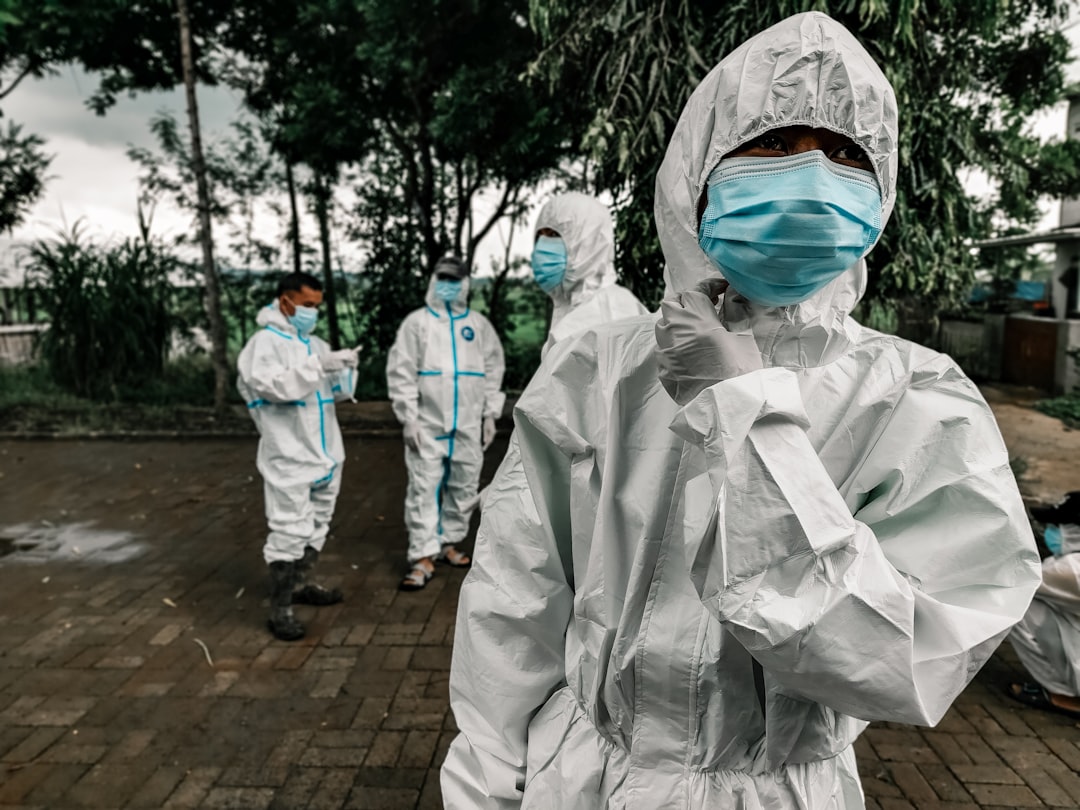
ExpertSpotlight: Ebola: What It Is, How It Spreads, and Whether the Public Should Be Concerned
Few diseases in modern history have generated the level of fear associated with Ebola. With graphic symptoms, high mortality rates, and images of overwhelmed treatment centres etched into public memory, Ebola became synonymous with the dangers of global outbreaks long before COVID-19 reshaped how the world thinks about pandemics. But what exactly is Ebola? Where did it come from? How dangerous is it today? And should the public still be worried? A Deadly Virus with a Modern Legacy Ebola virus disease was first identified in 1976 during simultaneous outbreaks in what is now the Democratic Republic of the Congo and South Sudan. The virus was named after the nearby Ebola River, and from the beginning it proved exceptionally dangerous, capable of causing severe hemorrhagic fever with fatality rates that have ranged from 25 to 90 percent depending on the outbreak and available medical care. For decades, Ebola outbreaks were typically isolated to remote regions of Central and West Africa. That changed dramatically in 2014 when the largest Ebola outbreak in recorded history spread through Guinea, Liberia, and Sierra Leone, infecting more than 28,000 people and killing over 11,000. The crisis exposed major weaknesses in global health preparedness and demonstrated how quickly infectious diseases can overwhelm healthcare systems and destabilize economies and communities. The outbreak also fundamentally changed international public health policy. Governments, hospitals, and health organizations around the world began investing more heavily in infectious disease surveillance, emergency response planning, quarantine procedures, and vaccine development. What Ebola Actually Does to the Body Ebola begins much like many common viral illnesses, which can make early detection difficult. Initial symptoms often include: Sudden fever Severe fatigue Muscle pain Headache Sore throat As the disease progresses, patients may develop: Vomiting and diarrhea Rash Liver and kidney impairment Internal and external bleeding Multi-organ failure The virus attacks the immune system and damages blood vessels and organs, often leading to shock and death in severe cases. Patients who survive can still face long-term complications including joint pain, neurological problems, eye disorders, and ongoing fatigue months or even years later. How Ebola Spreads - And How It Does Not One of the most important public health facts about Ebola is that it does not spread through the air like influenza or COVID-19. Transmission occurs through direct contact with: Blood or bodily fluids of infected individuals Contaminated needles or medical equipment Infected animals Surfaces contaminated with infectious fluids This means Ebola is highly contagious in healthcare settings and among close family caregivers without proper protective equipment, but far less transmissible in casual public settings than many people assume. Funeral practices involving direct contact with deceased individuals have also historically contributed to outbreaks in some regions, making culturally sensitive public health education critically important during containment efforts. Treatments and Vaccines Have Changed the Outlook For years, Ebola was viewed almost as a death sentence. That perception has begun to change. Major advances in medicine and outbreak response have significantly improved survival rates, including: Rapid testing and surveillance systems Specialized isolation units Improved supportive care and hydration Monoclonal antibody treatments Effective vaccines for certain Ebola strains The development of the rVSV-ZEBOV vaccine represented a major breakthrough and has helped contain several recent outbreaks before they expanded into international crises. Global health organizations are now far better equipped to identify and isolate cases quickly compared to the early years of Ebola response. Should the Public Be Worried? Ebola remains a serious and deadly disease, but experts generally emphasize that widespread public panic is not warranted. Most outbreaks remain geographically limited and are aggressively monitored by national governments, the World Health Organization, and international health agencies. Countries with advanced healthcare systems also have far stronger infection prevention and containment capabilities than existed during earlier outbreaks. Still, Ebola continues to command attention because it highlights how interconnected global health has become. International travel, fragile healthcare systems, political instability, climate pressures, and human interaction with wildlife all increase the risk of future outbreaks of emerging infectious diseases. In many ways, Ebola serves as both a warning and a lesson: deadly viruses can emerge unexpectedly, but rapid science, coordinated public health measures, and global cooperation can dramatically reduce their impact. The world’s experience with Ebola helped shape many of the outbreak response systems now used to confront emerging diseases today, and public health experts continue to view it as one of the clearest examples of why pandemic preparedness remains essential. Connect with an expert:


UD experts break down the 2026 World Cup
As the world gears up for the 2026 FIFA World Cup, experts from the University of Delaware are available to provide timely insight on the science, business, and human impact behind the global tournament. Player Safety, Concussions and the Future of the Game Tom Kaminski, professor of kinesiology and applied physiology, is a leading authority on player safety and head injuries. As the sole U.S. representative on FIFA’s Heading Expert Group, Kaminski is helping shape international guidelines around heading in soccer—particularly for youth athletes. He can speak to concussion risks, prevention strategies, and how evolving safety standards are influencing the modern game. Joining him is Tom Buckley, who also specializes in concussion research and athlete health, offering additional perspective on injury trends and recovery in elite competition. The Business of the World Cup: Tourism and Global Impact Matt Robinson from UD’s Lerner College of Business and Economics explores how mega-events like the World Cup drive tourism, economic growth, and global connection. Robinson can discuss how host cities benefit, the long-term economic ripple effects, and how sports act as a powerful unifier across cultures. Youth, Development and the Next Generation of Fans Sara Goldstein brings expertise in adolescent development, offering insight into how traditions with family shape youth identity, social development, and engagement with physical activity. Her perspective is especially relevant for younger audiences experiencing the World Cup through schools and community programs, including UD’s Lab School initiatives. Inside the Game: Sports Analytics in Action With the rise of data-driven performance, UD’s new Sports Performance Analytics major is preparing students to analyze gameplay at the highest level. Martin Heintzelman, department chair, can connect media with program leaders and practitioners including Jack Davis and Christina Rasnake, who are helping students apply real-time analytics to global competitions like the World Cup. The Science Beneath the Game: Playing Surfaces World Cup matches are required to be played on natural grass—a costly and complex requirement, especially for indoor stadiums. Erik Ervin can discuss how turfgrass systems have evolved, the science behind maintaining elite playing surfaces, and the massive investment required to meet international standards. Why Watching Together Matters Amit Kumar studies the psychology of happiness and shared experiences. He can speak to why gathering to watch World Cup matches—whether in stadiums, bars, or living rooms—boosts well-being and strengthens social bonds, making the tournament as meaningful off the field as it is on it. Connect with UD experts to explore every angle of the 2026 World Cup – from the pitch to the people. Email mediarelations@udel.edu to connect with these experts.





Why disaster recovery in the Himalayas needs a rethink
After five weeks of fieldwork across Nepal, Bhutan and Northwest India, Aston University researcher Dr Komal Raj Aryal is calling for a more locally grounded approach to resilience and post-disaster recovery in one of the world’s most hazard-prone regions. What happens after the headlines fade from a disaster? That question sits at the heart of new field research led by Dr Komal Raj Aryal, Lecturer in Crisis and Disaster Management at Aston Business School. After returning from a five-week research visit across Nepal, Bhutan and Northwest India, Dr Aryal says the evidence points to a troubling reality: many communities remain highly vulnerable long after major recovery programmes are supposed to have helped them rebuild. The trip brought together field visits, stakeholder consultations and community observations linked to ongoing UKRI, NERC and ISPF-supported research on earthquake risk, disaster governance, resilience and post-disaster recovery in the Himalayan region. The aim was not only to understand current conditions, but to ask why repeated losses continue despite years of international development assistance, scientific research and investment. Across the region, the research found that resilience is being undermined by a combination of persistent governance challenges, fragmented institutions, weak local preparedness systems, livelihood insecurity and mounting environmental pressures. In other words, recovery is not simply about rebuilding infrastructure; it is about whether communities are genuinely better equipped to cope with the next shock. This challenge is especially striking in places still living with the legacy of the 2015 Nepal earthquakes, where long-term vulnerabilities remain visible despite the scale of international support directed towards recovery and reconstruction. Reflecting on his findings, Dr Aryal said: “One of the most striking observations from the field is that many communities affected by the 2015 Nepal Earthquakes continue to face similar vulnerabilities today, despite significant international support allocated for recovery and reconstruction. This raises important questions about how disaster recovery is planned, implemented, and sustained over time.” The fieldwork also highlighted the growing complexity of future disaster risks in the Himalayas. Large-scale earthquakes do not exist in isolation; they interact with environmental degradation, cascading hazards, climate-related stresses and rapid urbanisation in fragile mountain settings. He added: “The Himalayan region is entering a period of growing uncertainty where environmental change, socio-economic inequality, weak governance systems, and seismic risks are becoming increasingly interconnected. There is an urgent need to rethink conventional development approaches and invest more seriously in locally grounded, community-centred resilience strategies.” For Aston University, this work reflects a broader commitment to international research on disaster risk reduction, resilience governance and humanitarian response across South Asia. Aston researchers are working with government agencies, local authorities, universities, emergency responders and humanitarian organisations to strengthen evidence-based approaches to preparedness and recovery. The findings feed into wider international debates about sustainable development, climate resilience, risk communication and the future of disaster governance in vulnerable mountain regions. They also underline the importance of moving beyond short-term recovery models towards approaches that are participatory, practical and rooted in local knowledge. Dr Aryal’s research emphasises the value of integrating community knowledge, participatory governance, youth engagement and long-term livelihood security into resilience planning. As future collaborations and policy discussions develop, these themes are likely to be central to how the region prepares for the risks ahead. The recent fieldwork is expected to inform future international research partnerships, policy dialogue and resilience-focused initiatives between the UK and South Asian partners.


New report proves earning potential of EVs equipped with vehicle-to-grid technology
The University of Delaware, Exelon Corporation/Delmarva Power and collaborators have released a new report showing that electric vehicles equipped with vehicle-to-grid (V2G) technology can be profitable for private owners and businesses alike, with data from real electricity markets to back up the claims. The report is the outcome of a pilot program announced in 2024 by UD, and completed at the offices of Delmarva Power, which is part of Exelon Corporation, to confirm the value of V2G services to the grid. Among the key findings: the collaborators report that a V2G-enabled passenger electric vehicle (EV) could earn as much as $3,359 per year, based on 2021-2025 market prices, for storing and supplying energy to the electric grid during times of need, otherwise known as providing grid services. Heavier vehicles, such as fleet vehicles, delivery trucks or school buses, could earn over $9,000 per year, per vehicle. That’s a powerful income generator, given that privately owned vehicles are parked 96% of the time, on average, in the United States. Company fleet vehicles — even those operating 40 hours per week — remain stationary 75% of the average work week. The pilot, which included collaborators Ford Motor Company, the region’s electric grid operator PJM Interconnection, and aggregator Nuvve Corp., was tested using a small fleet of Delmarva Power EVs retrofitted with the bidirectional charging technology and a new advanced communications standard. The term “bidirectional charging” means that the V2G technology enables electric vehicle batteries to store extra energy from the electric grid when there is a surplus and to discharge that energy back to the grid when it is needed. In this way, V2G-enabled EVs can help the grid stay balanced, strengthening grid resilience and reliability, especially during peak demand and extreme weather events. New PJM rules allow properly certified EVs to provide this balancing and be paid for it — and the pilot proved they can meet these requirements and be paid for the service. For UD Professor Willett Kempton, who invented the V2G technology with colleagues at the University nearly 30 years ago, it’s a pivotal moment. “Whether it could scale cost-effectively was an open question, and we’ve proven that it can — with the right combination of policies, standards and technology,” said Kempton, professor of marine science and policy. For businesses such as Exelon, the report makes clear that V2G technology can help offset the cost of fleet electric vehicles while supporting the electric grid. This is because when the batteries in the parked fleet vehicles are aggregated together, they can function as a virtual power plant. The result is energy storage and supply that is available to the electric grid significantly faster than other conventional power resources, with virtually no wait times needed to power up or down. Unlocking a parked vehicle’s earning power Since Kempton and colleagues pioneered the innovative V2G technology, UD researchers have kept the charge going, accelerating progress on everything from V2G technology development to new automotive communication standards (called LIN-CP) for electric cars. They have advanced policy innovations at the state and federal level to overcome barriers in widespread adoption by enabling V2G technology to compete in electric markets, too. The recent pilot with Exelon/Delmarva Power and others also revealed that the EV batteries used for V2G remained fully functional after a full year of market operation — with no measured reduction in battery health — all while providing pollution-free power. “Something that might not be obvious to everyone is that these payments are not a subsidy; these EVs are earning money by competing with legacy generators, which is novel in a lot of ways,” said Kempton. “And when you’re participating in the market instead of a fuel-burning generator, you’re also reducing pollution.” This makes the technology both economically smart and functionally sound in a world where the electric grid is expected to include more renewables in the coming years. Kempton explained that most U.S. planned future electricity generation is scheduled to come from wind and solar. This will create greater fluctuation in the electric grid, which means more storage for energy surpluses will be needed. That’s where V2G can help, Kempton said. According to Brian Derr, senior analyst, Exelon Technology and R&D, insights from the pilot will inform future deployments and support the company’s broader strategy to enable the clean energy transition while maintaining reliable service for the communities it serves. “By leveraging existing assets in new ways, Exelon is positioning itself to build a more flexible, resilient and customer-focused energy system,” said Derr. Accelerating progress toward a V2G industry Next steps to expand the V2G industry to support the grid will require mass manufacturing to scale up the number of individual cars or fleets that are participating and earning money, Kempton said. Until now, changes to V2G-enabled vehicles have been done by retrofitting existing EVs to accommodate the V2G technology. Now with lower-cost standards and realistic market revenue values that can be expected, Kempton is looking at how this becomes adopted in many cars and many charging stations. “We’ll need at least a few car companies and charging station companies to mass produce this V2G equipment, and to deploy the technology into vehicles in the factory,” Kempton said. “If it is designed in, and mass produced, it’s incredibly cheap, especially when you compare it to the potential yearly revenue.” At UD, faculty and students continue to play a large role in the work aimed at bringing a fully functioning V2G industry to fruition. Kempton, Rodney McGee and recent graduates John Metz and Catherine Gilman, for example, are focused on policy changes and standards to allow V2G-enabled electric vehicles to provide grid services in more states. Such policies currently exist in Delaware and Maryland. Kempton would like to see this number grow. Meanwhile, UD postdoctoral researcher Garrett Ejzak and alumnus Go Charan Kilaru are focused on other aspects of the work. Ejzak is developing and testing these new EV technologies, and Kilaru is designing cryptography measures to ensure security protocols for V2G communications. Concurrently, UD students Colden Rother, Jude Borden, Lucia Paye-Layleh and Emmie Rossi are examining ways UD could electrify some of its campus fleets, under the advisement of UD’s Kimberly Oremus, associate professor of marine science and policy, economics, and public policy and administration. To arrange an interview with Kempton, visit his profile page below and click on the "contact" button. For interviews with officials from Exelon/Delmarva Power, contact Matt Ford, in Delmarva Power Communications, at 302-429-3060.

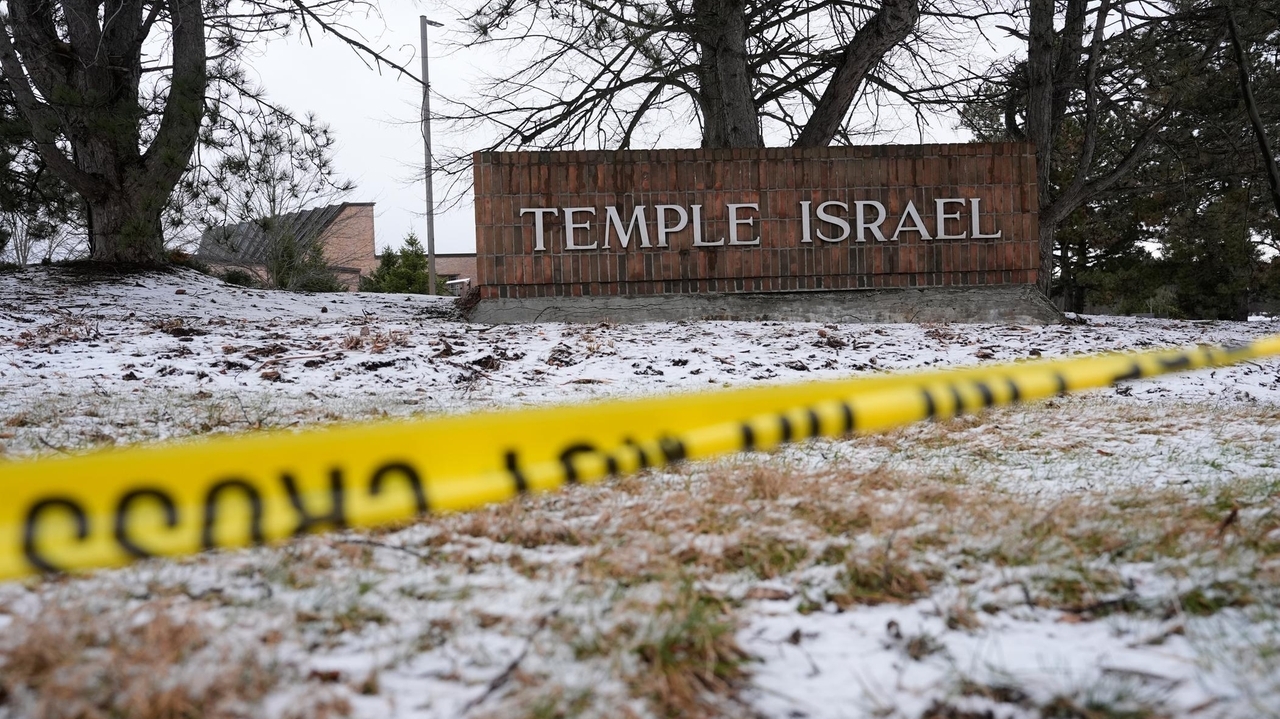
“With Global Antisemitism Rising, ‘Never Again’ Rings Hollow”
Hofstra Professor of Political Science and Director of the European Studies Program Carolyn Dudek wrote a guest essay for Newsday: “With global antisemitism rising, ‘Never Again’ rings hollow.” Dr. Dudek was awarded the 2024 Jean Monnet Chair to expand research, teaching, and course development on the European Union, with a specific focus on EU anti-discrimination policies that address marginalized groups, such as Jews, Muslims, Roma, women, communities of color and the LGBTQ+ community.



University of Delaware biomedical engineer helps develop first immune-capable cervix-on-a-chip
A major breakthrough in biomedical engineering is changing how scientists study sexually transmitted infections (STIs) – and a researcher from the University of Delaware is at the forefront. Published in Science Advances, the study introduces the first immune-capable “cervix-on-a-chip,” a cutting-edge microphysiological system that replicates the human cervical environment. The platform allows researchers to observe how infections, the immune system and the vaginal microbiome interact in real time – something not previously possible with traditional lab models. Co-lead author Jason Gleghorn, associate professor in the College of Engineering, led the development of the model. His work highlights how engineering-driven approaches are advancing critical research in women’s health. By integrating engineering with biology, we can now simulate complex human systems more accurately and make these tools accessible to a wider range of researchers, Gleghorn said. The model recreates key features of the cervix using human cells, immune components and naturally occurring microbiomes within a dynamic system that mimics physiological conditions. When tested with infections such as chlamydia and gonorrhea, the platform revealed how protective bacteria can reduce infection risk – while imbalanced microbiomes can worsen outcomes. These findings could help accelerate the development of new therapies, including probiotics and other preventative strategies aimed at strengthening the body’s natural defenses. The research underscores the growing impact of the College of Engineering, where interdisciplinary collaboration is driving innovation across biomedical engineering and beyond. By combining expertise in engineering, microbiology and immunology, the team has created a powerful new tool that could reshape how STIs – and other complex diseases – are studied. To speak with Gleghorn further about this advancement, email mediarelations@udel.edu.
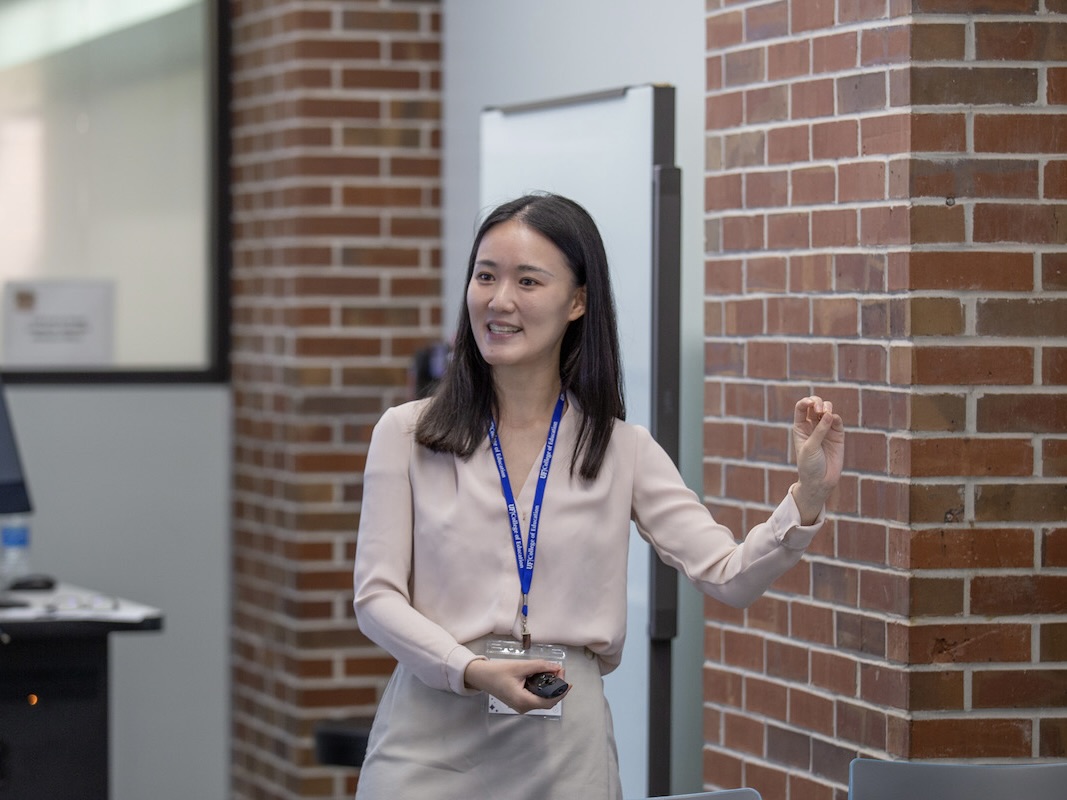
New AI tool matches students with high-impact internships
Finding the right internship can be an important step for students, but it’s not always clear which opportunities will lead to the strongest growth. To help solve that problem, University of Florida researchers have developed an AI-powered tool that helps students identify internships most likely to accelerate their technical and professional development. Unlike traditional recommendation engines, Pro-CaRE not only predicts which opportunities will lead to stronger outcomes, it also explains why each suggestion is a good fit. In testing data collected from the students, Pro-CaRE’s predictions proved highly accurate, accounting for more than 72% of the differences in learning gains among participants. While the pilot is being tested in engineering, the tool could be adopted for other disciplines. “Internships are one of the most critical parts of an engineering education, but students often struggle to know which experiences will actually help them grow,” said Jinnie Shin, assistant professor of research and evaluation methodology in the UF College of Education. “What makes Pro-CaRE unique is that it doesn’t just offer a list of options. It provides personalized recommendations backed by data and it tells students clearly why an opportunity is a good match for them.” Pro-CaRE creates matches by analyzing each student’s coursework, major, background and self-reported interest, confidence and self-efficacy in engineering skills. It then compares that profile with a carefully chosen set of similar peers to refine suggestions. The result is more precise guidance that adapts to students at different stages of their degree programs. “Students shouldn’t have to guess or hope that an internship will be worthwhile,” Shin said. “With Pro-CaRE, they can approach opportunities knowing they’re backed by evidence, whether the role is onsite, hybrid or remote and whether it’s at a startup or a Fortune 500 company.” The system is designed to work across a wide range of companies and contexts, giving students flexibility while ensuring their choices align with their personal and professional goals. Each recommendation comes with a clear “why this?” explanation, so students can make confident decisions and discuss options more effectively with advisors. Pro-CaRE was developed by a cross-disciplinary UF team combining expertise in education and engineering. Alongside Shin, the project’s co-principal investigators include Kent Crippen in the College of Education and Bruce Carroll in the Herbert Wertheim College of Engineering. The team is exploring external funding opportunities to expand the usage and test the efficacy on a larger scale. “Ultimately, our goal is to empower students to invest their time in experiences that will have the greatest impact,” Shin said. “Pro-CaRE bridges the gap between what students hope to gain and what internships can truly deliver.”



Fewer Parents are Reading to Their Kids—and Why It Matters
A dramatic decline in reading for pleasure in the United States has fewer American parents reading aloud to their children — and experts warn the consequences can be dire. “It builds connections,” Carol Anne St. George, an expert in early literacy at the University of Rochester’s Warner School of Education and Human Development, recently told The74 for an article citing a 41-percent decline in parents reading to children daily. “People talk about text to text, text to world,” St. George said, “and those are the kinds of things that help children cognitively think and classify their world around them.” Many young parents grew up in an education system focused on reading as a means to testing and building skills rather than enjoyment. As a result, St. George worries, they often view reading to their young as an obligation rather than a joy and a time to bond. Experts say an increased reliance on screens and digital content and time pressures and competing demands on families have also fueled the decline. St. George notes that children benefit greatly from being read to regularly. The advantages of early literacy include: • Having a more robust vocabulary and stronger communications skills. • Being better prepared to learn in school. • Having a closer relationship with their parents. • Higher academic achievement and better health outcomes later in life. What Parents Can Do St. George advises parents to: • Let children choose books they enjoy. • Make reading part of a daily routine and that bedtime is ideal. • Focus on fun and connection. • Model good reading behavior because children mimic what they see. St. George is available for media interviews and can be reached by contacting Theresa Danylak, the director of communications at the Warner School, at tdanylak@warner.rochester.edu.


As April marks Autism Acceptance Month, journalists looking to move beyond awareness and into meaningful storytelling have access to a diverse group of experts from the University of Delaware. From innovative health technologies to classroom strategies, mental health support and adulthood transitions, these scholars offer fresh, research-backed perspectives on what it means to support autistic individuals across the lifespan — and why the conversation is evolving. Reimagining Health Through Technology and Inclusion Daehyoung “DH” Lee Assistant Professor Dr. Lee is exploring how technology can close health gaps for individuals with intellectual and developmental disabilities. His work focuses on mobile health apps and wearable devices — including a gamified intervention designed to improve physical, mental and cognitive health outcomes. Story angles: How gamification and wearable tech are transforming health outcomes for autistic individuals The future of inclusive digital health tools Addressing disparities in physical activity and wellness Why Motor Skills Matter in Autism Anjana Bhat Professor A leading researcher on motor development in autistic children, Dr. Bhat has spent years advancing understanding of how motor challenges impact daily life. She was recently named a Catherine Worthingham Fellow for her contributions to the field and for elevating the role of physical therapy in autism care. Story angles: The overlooked link between motor skills and autism Why physical therapy should be part of early intervention New research reshaping how clinicians and families approach care Centering Lived Experience in Education and Development Sarah Curtiss Assistant Professor Dr. Curtiss examines how to build programs that truly support autistic youth by grounding them in lived experience. Her work spans social development, sexuality education, family dynamics and the transition to adulthood — always with a focus on resilience and real-world context. Story angles: Rethinking how schools support autistic students beyond academics Conversations around sexuality education and autism What successful transitions to adulthood really require Preparing Educators for Complex Needs Sarah Mallory Assistant Professor With expertise spanning the School of Education and the Center for Disabilities Studies, Dr. Mallory focuses on preparing educators to work with students who have significant behavioral and academic needs. Her work also includes empowering individuals with developmental disabilities to make self-protective decisions and navigate complex social situations. Story angles: Supporting students with intensive needs in today’s classrooms Teaching self-advocacy and safety skills Training the next generation of special education professionals Mental Health and Systems-Level Support Alisha Fletcher Director, Delaware Network for Excellence in Autism A licensed clinical social worker with more than 20 years of experience, Fletcher leads efforts to support professionals and families across Delaware. Through training and technical assistance, she addresses the mental health and service needs of autistic individuals across settings. Story angles: The growing demand for autism-informed mental health care Supporting families navigating complex service systems Building statewide networks that improve outcomes Why This Matters Now As acceptance grows, so does the need for deeper, more nuanced coverage. Autism is not a single story — it intersects with health care, education, technology, family life and public policy. These experts can help audiences better understand those intersections and highlight solutions that are already making a difference. To contact any of these experts, please email MediaRelations@UDel.Edu.

Rip Current Simulations Save Lives
Jase Bernhardt, Hofstra University associate professor of geology, environment, and sustainability and director of meteorology, was referenced in a USA Today article about simulations that teach the public about rip current safety. For years, Dr. Bernhardt has been leading research that offers a virtual reality simulation of being caught in a rip current and teaches ways swimmers can navigate to safety. The development of this technology is supported in part by New York Sea Grant (NYSG).
