
Experts Matter. Find Yours.
Connect for media, speaking, professional opportunities & more.

U.S. economy to remain strong through most of 2019, with output averaging 3 percent
Higher than expected economic growth in 2018 should continue into next year, with U.S. output averaging 3 percent and continued strong gains in domestic job growth. Indiana will continue to outperform the nation, with output growing at a rate of 3.2 percent, according to a forecast presented today by Indiana University's Kelley School of Business. A year ago, members of Kelley's Indiana Business Outlook Tour panel predicted that U.S. gross domestic product would grow by 2.6 percent this year and about 3 percent if tax reform were enacted. Indiana was forecast to see growth of 2.8 percent. Friday's release of GDP data for the third quarter supports their view that 2018 should end up with output growth above those levels. "The tax cut has produced an acceleration in the U.S. economy during 2018 to well above the new normal status quo of 2 percent growth," said Bill Witte, associate professor emeritus of economics at IU. "We expect output growth in 2019 to average 3 percent, but with deceleration as the year proceeds. By this time next year, quarterly growth will be heading toward equilibrium growth at a little below 2.5 percent." The story in Indiana and the greater Indianapolis area is very similar. "The state economy appears poised to see its strongest growth in the first quarter of 2019, after which growth rates are expected to slow but remain strong through the end of the year," said Ryan Brewer, associate professor of finance at Indiana University-Purdue University Columbus and author of the panel's Indiana forecast. "It is most likely Indiana will continue to experience growth across the board -- in jobs, numbers of establishments, income levels, wages as well as gross state product." The Kelley School released its forecast this morning at the Indianapolis Artsgarden and will present it again at 11 a.m. today in Bloomington. The Business Outlook Tour panel also will present national, state and local economic forecasts in eight other cities across the state through Nov. 28. The national labor market has exceeded expectations for two years now. A year ago, the panel felt the U.S. economy would create jobs at a monthly rate of about 175,000 and that the unemployment rate would fall to 4 percent. Instead, monthly job creation through September has averaged nearly 200,000, and the jobless rate has fallen to 3.7 percent. These job creation trends are expected to continue into 2019, with average monthly job gains of 200,000, and the participation rate -- which measures the percentage of the U.S. population that was employed or looking for a job -- remaining flat. "The labor market will be increasingly tight," Witte said. "The unemployment rate could decline a little, but firms unable to find workers will remain an important theme." Risks to the forecast include the effects of political uncertainty, further trade disputes and economic concerns being felt in other parts of the world, including China and Europe. The panel also expressed reservations about the impact of further Federal Reserve interest rate hikes. They expect the federal funds rate to rise above 3 percent by the end of 2019. Kyle Anderson, clinical assistant professor of business economics and author of the forecast for an 11-county area that includes Indianapolis, Carmel and Anderson, said the region is at full employment, and continued job growth will ensure it stays there. Economic growth in the area will average about 2.5 percent. "Communities around Central Indiana are finding it necessary and important to invest in projects that improve quality of life and provide amenities for residents," Anderson said, referring to examples of this in downtown areas of Indianapolis and Speedway and in Carmel. "The message to community leaders is clear: Investing in infrastructure to improve quality of life is necessary to maintain a healthy local economy. "Tax incentives are not sufficient to draw in businesses and residents. Bike trails, community centers and connected neighborhoods were once seen as luxuries, but now are important economic development tools," he added. "This trend will continue, especially if the economic expansion continues nationally." Other highlights from today's forecast: · Consumer spending will continue to grow, although at a rate less than in 2018. · Business investment will be good, but held back by trade concerns. · Housing will resume growth with a small boost from the aftermath of hurricanes Florence and Michael. Elsewhere, including in Central Indiana, 30-year mortgage rates, nearly a full point higher than a year ago, could dampen enthusiasm for new housing and constrain prices. · Government spending will be strong early in the year, but growth could slow significantly toward year end. · The trade balance will show increasing deficits. A detailed report on the outlook for 2018 will be published in the winter issue of the Indiana Business Review, available online in December. For more assistance, contact George Vlahakis, associate director of communications and media relations at the IU Kelley School of Business, 812-855-0846 (o) or 812-345-1500 (m), vlahakis@iu.edu.


On average, you will spend about a third of your life sleeping or attempting to sleep. For many, this means more than 25 years of your life will be spent in bed. Given this startling proportion, wouldn’t you like to know more about what helps, hinders and happens while you are asleep? Michael K. Scullin, Ph.D., director of the Sleep Neuroscience and Cognition Laboratory at Baylor University, spends the majority of his time researching and teaching about such topics. “One reason I am passionate about studying sleep is because you can't really introspect too much about it, as with nearly everything else in psychology,” Scullin said. “With sleep, you're unconscious at the time you are doing it. Sure, you can wake up and say ‘Oh, how did I sleep last night?’ but when you're actually engaging in the sleeping process, you can't do that. As a result, sleeping becomes an enigma. When you have the right equipment, you can begin to design experiments to figure out what exactly the brain is doing when we sleep and why is it important.” Below, Scullin addresses several common beliefs about sleep and the science that proves or disproves them. MYTH: If you die in a dream, then you die in real life. For a time, a rumor circled around that one’s brain cannot handle the mental strain of dying in a dream, and if you die in a dream, you will die. “That's just not substantiated because people report dying in their dreams, and they report it while they're still alive,” Scullin said. “Your brain can actually handle a lot, and there’s one theory that says nightmares are a functional adaptation to help us survive. It is potentially really functional for your brain to have those stressors in its offline state to help prepare you for situations. A lot of people think that nightmares are bad, and yes, they can be a clinical problem. But when they aren’t to that level, they can help us prepare for stressful situations.” FACT: Snoring is a sign of disease. Sleep apnea and snoring are linked, although not with a 1:1 ratio; some people snore without sleep apnea, but snoring is the biggest risk-factor of sleep apnea, Scullin said. Snoring is caused by an obstruction to one’s breathing pathways. In many cases, individuals who snore wake up gasping for air. That’s an observed sleep apnea, said Scullin. If someone is observing those things, he recommends visiting a clinical sleep physician. “What if you stopped breathing every few minutes while you were awake during the day?” asked Scullin. “Would you be okay with that? Not only are you not getting enough oxygen to regions of your body, but it puts a lot of stress on your heart. Untreated sleep apnea traumatically increases your risk for heart problems and heart disease. The great thing is, however, if you get treatment, those risk factors all drop down to normal.” FACT: If you cannot fall asleep in 20 minutes, you should get out of bed. Seems contradictory, right? In fact, research shows that getting out of bed can improve your ability to fall asleep. Why? “If you’re lying in bed and can’t fall asleep, you are forming a negative association between your bed and sleep,” Scullin said. “The solution is getting out of bed and going to do something boring without the lights on. Then when you feel sleepy, go back to bed. This way, you only associate your bed with the feeling of sleepiness.” MYTH: After a night of great “recovery sleep,” you fully restore damage from pulling an all-nighter. “A really interesting neuroimaging study has been able to show that that sleep deprivation significantly impairs the frontal lobes ability to function,” Scullin said. “Your frontal lobe is responsible for memory, decision-making, paying attention and more. The study took individuals who had pulled an all-nighter and then allowed them to get a full night of recovery sleep. When they put them back into the scanner, scientists found that the frontal lobe only partly recovered.” Most people skip on sleep during weekday nights and then oversleep on the weekend, but this throws off your circadian rhythms, your body’s natural sleeping patterns, said Scullin. This means that when Sunday night comes around, you may have “Sunday night insomnia” – trouble falling asleep because you've trained your body to go to bed later. MYTH: During a full moon, people have twice as many sleep problems. A few years ago, there was a big media ‘boom’ claiming that there were more sleep disturbances during a full moon. According to Scullin, the scientific community was skeptical, and labs across the world pooled their data to discover the truth. They found no association between full moons and sleep quality. Why, then, did this myth surface? “Those who claim they don’t sleep well during full moons probably don't sleep very well on other nights as well, but they only realize it or think about it happening when it is a full moon,” Scullin said. “There is something called the confirmation bias where an individual holds a hypothesis about how the world works, and then he or she will look for instances that confirm the hypothesis. Oftentimes they forget every other instance that contradicts their claim. We think that is what caused the moon-sleep phenomenon.” FACT: You can fall asleep while driving without realizing it. People swerve on the road for many reasons – texting, drinking, eating – but not many realize that some individuals swerve because of ‘micro-sleeps.’ According to Scullin, people often operate under the impression that this would never happen to them, but what they don’t realize is that this a frequent occurrence that one has no control over. “We have a similar biological need for sleep as we do hunger and thirst,” Scullin said. “For thirst, we have to have access to water; for hunger we have to have access to food. But for sleep our body can shut down whenever it needs to. If this happens, our brain will occasionally do this for 3 to 5 seconds if you're really tired – and especially if you're involved in some long monotonous task such as driving down a long highway.” FACT: Some people’s bodies are paralyzed for minutes whenever they wake up. Imagine waking up, seeing your biggest fear and being unable to move. Unfortunately, this is a reality for some individuals. Sleep paralysis occurs when brain functions get mixed-up, said Scullin. In rapid eye movement (REM) sleep the brain paralyzes the rest of the body so one doesn't act out his or her dreams, and this is very important. “The problem is that in some cases, your brain isn't fully coordinating with the other parts of it,” Scullin said. The part that controls consciousness wakes up, but the other part that controls your body paralysis is hitting the snooze button. So, while you can be fully awake, your body is paralyzed.” Some people experience this for a few seconds, others for a couple of minutes. Some people also hallucinate when the part of your brain that is dreaming “crosses over” into your consciousness. These hallucinations are triggered when one is so sleep deprived that the brain is trying to get deep sleep, but it cannot fully wake up immediately afterwards. According to Scullin, there does not seem to be any big clinical issue with sleep paralysis or hallucinations, and they seem to go away over time and in development. MYTH: Smartphone apps can reliably measure your sleep. Despite their popularity, sleep apps cannot effectively track sleep quality or quantity, Scullin said. The only way to reliably measure your sleep is to have electrodes attached to your scalp, measuring your brain waves in a sleep clinic. But sleep evaluations are expensive and usually only worth the cost for individuals with sleep apnea or other ongoing sleep problems. The good news? Baylor’s sleep lab pays volunteers to get their sleep analyzed, and scientists like Scullin are always looking for participants. FACT: The latest you should consume caffeine is six hours before bed. In a placebo-controlled study, scientists manipulated whether participants had caffeine one, two, four or six hours before bed, and for each of those conditions they had a placebo control. When the subject’s sleep was measured, they found that in every group, it was harder to fall asleep and sleep quality wasn’t as good as those without caffeine. “Even if you have caffeine six hours before bed, you not only have more difficulty falling asleep, but your sleep was also less deep,” Scullin said. “We actually don’t know if the results would extend to seven or eight hours before bed, but we know that six hours before bed is a ‘no-go.’ What I recommend is having your caffeine in the morning.” For those who think caffeine has no effect on the body, Scullin points out a bigger problem. “If you can sleep right after drinking a cappuccino, it probably means that you are so terribly sleep-deprived that even with drugs in your system that are intended to keep you awake, your brain is saying ‘I don’t care; I’m putting you to sleep.’” For more about Scullin and his research, visit the Baylor Psychology and Neuroscience website. by Brooke Battersby , student newswriter, (254) 710-6805 ABOUT BAYLOR UNIVERSITY Baylor University is a private Christian University and a nationally ranked research institution. The University provides a vibrant campus community for more than 17,000 students by blending interdisciplinary research with an international reputation for educational excellence and a faculty commitment to teaching and scholarship. Chartered in 1845 by the Republic of Texas through the efforts of Baptist pioneers, Baylor is the oldest continually operating University in Texas. Located in Waco, Baylor welcomes students from all 50 states and more than 80 countries to study a broad range of degrees among its 12 nationally recognized academic divisions. ABOUT BAYLOR COLLEGE OF ARTS & SCIENCES The College of Arts & Sciences is Baylor University’s oldest and largest academic division, consisting of 25 academic departments and seven academic centers and institutes. The more than 5,000 courses taught in the College span topics from art and theatre to religion, philosophy, sociology and the natural sciences. Faculty conduct research around the world, and research on the undergraduate and graduate level is prevalent throughout all disciplines. Visit www.baylor.edu/artsandsciences.


Multiracial Congregations Have Nearly Doubled, But They Still Lag Behind the Makeup of Neighborhoods
About one in five American congregants attends a racially mixed place of worship, Baylor University study find The percentage of multiracial congregations in the United States nearly doubled from 1998 to 2012, with about one in five American congregants attending a place of worship that is racially mixed, according to a Baylor University study. While Catholic churches remain more likely to be multiracial — about one in four — a growing number of Protestant churches are multiracial, the study found. The percentage of Protestant churches that are multiracial tripled, from 4 percent in 1998 to 12 percent in 2012, the most recent year for which data are available. In addition, more African-Americans are in the pulpits and pews of U.S. multiracial churches than in the past, according to the study. Multiracial congregations are places of worship in which less than 80 percent of participants are of the same race or ethnicity. “Congregations are looking more like their neighborhoods racially and ethnically, but they still lag behind,” said lead author Kevin D. Dougherty, Ph.D., associate professor of sociology in Baylor’s College of Arts & Sciences. “The average congregation was eight times less diverse racially than its neighborhood in 1998 and four times less diverse in 2012.” “More congregations seem to be growing more attentive to the changing demographics outside their doors, and as U.S. society continues to diversify by race and ethnicity, congregations’ ability to adapt to those changes will grow in importance,” said co-author Michael O. Emerson, Ph.D., provost of North Park University in Chicago. For the study, Dougherty and Emerson analyzed data from the National Congregations Study, a nationally representative survey conducted in 1998, 2006-2007 and 2012, with a cumulative sample of 4,071 congregations. The study by Dougherty and Emerson — “The Changing Complexion of American Congregations” — is published in the Journal for the Scientific Study of Religion. The study found that: One-third of U.S. congregations were composed entirely of one race in 2012, down from nearly half of U.S. congregations in 1998. Multiracial congregations constituted 12 percent of all U.S. congregations in 2012, up from 6 percent in 1998. The percentage of Americans worshipping in multiracial congregations climbed to 18 percent in 2012, up from 13 percent in 1998. Mainline Protestant and Evangelical Protestant churches have become more common in the count of multiracial congregations, but Catholic churches continue to show higher percentages of multiracial congregations. One in four Catholic churches was multiracial in 2012. While whites are the head ministers in more than two-thirds (70 percent) of multiracial congregations, the percentage of those led by black clergy has risen to 17 percent, up from fewer than 5 percent in 1998. Blacks have replaced Latinos as the most likely group to worship with whites. In the typical multiracial congregation, the percentage of black members rose to nearly a quarter in 2012, up from 16 percent in 1998. Meanwhile, Latinos in multiracial congregations dropped from 22 percent in 1998 to 13 percent in 2012. The percentage of immigrants in multiracial congregations decreased from over 5 percent in 1998 to under 3 percent in 2012. Previous research shows that congregations have adopted varying ways to encourage racial diversity, among them integrating music genres, using more participatory worship, hosting small groups to foster interracial networks and creating programs to address racial or ethnic issues. Churches with shorter histories are more likely to have diversity, and change is harder to bring about in long-established congregations. The new study by Dougherty and Emerson concluded that the complexion of American congregations is indeed changing — and the authors see benefits for American society. “During a several-year period of heightened racial tensions, the growth of multiracial congregations is a dramatic development,” Emerson said. “Such congregations are places of significantly increased cross-racial friendships and cross-racial common experiences.” ABOUT BAYLOR UNIVERSITY Baylor University is a private Christian University and a nationally ranked research institution. The University provides a vibrant campus community for more than 17,000 students by blending interdisciplinary research with an international reputation for educational excellence and a faculty commitment to teaching and scholarship. Chartered in 1845 by the Republic of Texas through the efforts of Baptist pioneers, Baylor is the oldest continually operating University in Texas. Located in Waco, Baylor welcomes students from all 50 states and more than 80 countries to study a broad range of degrees among its 12 nationally recognized academic divisions. ABOUT BAYLOR COLLEGE OF ARTS & SCIENCES The College of Arts & Sciences is Baylor University’s oldest and largest academic division, consisting of 25 academic departments and seven academic centers and institutes. The more than 5,000 courses taught in the College span topics from art and theatre to religion, philosophy, sociology and the natural sciences. Faculty conduct research around the world, and research on the undergraduate and graduate level is prevalent throughout all disciplines.


Environmental scientists have identified 22 key research questions surrounding the risks associated with chemicals in the environment in Europe. Chemicals released into the environment by human activity are resulting in biodiversity loss; increased natural hazards; threats to food, water and energy security; negative impacts on human health and degradation of environmental quality. Now an international study, coordinated by scientists from the University of York, Wageningen University and Baylor University, has identified the most important research questions that need to be answered to fill the most pressing knowledge gaps over the next decade. They include questions about which chemicals we should be most concerned about and where the hotspots of key contaminants are around the globe, as well as how we can develop methods to protect biodiversity and ecosystems. The research, which resulted from a recent "big questions" exercise involving researchers from across Europe, aims to serve as a roadmap for policymakers, regulators, industry and funders and result in a more coordinated approach from the European environmental science community to chemicals in the environment. “Our research has highlighted international scientists' research priorities and our key knowledge gaps when it comes to the risks and impacts of chemicals,” said one of the lead authors of the study Alistair Boxall, Ph.D., with the University of York’s environment department. “The study aims to help focus scientific effort on the questions that really matter and inform decisions about the type of research needed to update policies and regulations.” Bryan W. Brooks, Ph.D., Distinguished Professor of Environmental Science and Biomedical Studies at Baylor University, who also coordinates a much larger global horizon scanning exercise, said the project is “intentionally transparent, inclusive of multiple sectors and multidisciplinary.” “Though this paper focuses on critical research needs for Europe, we partnered with the Society for Environmental Toxicology and Chemistry to perform similar studies in North America, Africa, Asia, Australia and Latin America,” Brooks said. “In fact, output from the Latin American study was recently published. This unprecedented exercise, which also includes a key partnership with the American Chemical Society in North America, is for the first time identifying global research priorities from academic, government and industry scientists and engineers to understand, avoid and manage adverse outcomes of chemicals in the environment.” A key suggestion in the report is that the basic and translational research is needed to advance robust assessments of chemical risks to the environment and human health. “These big research questions aim to reduce uncertainty during scientific evaluations of environmental contaminants and to advance innovation and sustainability through development of less hazardous chemicals to public health and the environment. Such research recommendations from our European colleagues are thus timely, necessary and internationally important if we are to achieve the United Nation’s Sustainable Development Goals,” Brooks said. Towards Sustainable Environmental Quality: Priority Research Questions for Europe is published in the journal Environmental Toxicology and Chemistry. It is one of six papers in a global horizon scanning study. ABOUT BAYLOR UNIVERSITY Baylor University is a private Christian University and a nationally ranked research institution. The University provides a vibrant campus community for more than 17,000 students by blending interdisciplinary research with an international reputation for educational excellence and a faculty commitment to teaching and scholarship. Chartered in 1845 by the Republic of Texas through the efforts of Baptist pioneers, Baylor is the oldest continually operating University in Texas. Located in Waco, Baylor welcomes students from all 50 states and more than 80 countries to study a broad range of degrees among its 12 nationally recognized academic divisions. ABOUT BAYLOR COLLEGE OF ARTS & SCIENCES The College of Arts & Sciences is Baylor University’s oldest and largest academic division, consisting of 25 academic departments and seven academic centers and institutes. The more than 5,000 courses taught in the College span topics from art and theatre to religion, philosophy, sociology and the natural sciences. Faculty conduct research around the world, and research on the undergraduate and graduate level is prevalent throughout all disciplines.


Study: Discuss Religion, Spirituality When Treating Young Adults with Severe Mental Illness
Baylor researcher and expert says it’s “critical” that mental health providers be equipped to assess clients’ religion/spirituality A majority of young adults with severe mental illness – bipolar disorder, schizophrenia or major depression – consider religion and spirituality relevant to their mental health, according to a new study from Baylor University’s Diana R. Garland School of Social Work. Holly Oxhandler, Ph.D., associate dean for research and faculty development in the Garland School of Social Work, served as lead author on the study, which was published in the journal Spirituality in Clinical Practice. Researchers examined data from 55 young adults (ages 18-25) with serious mental illness who had used crisis emergency services. Of the 55 young adults interviewed, 34 “mentioned religion or spirituality in the context of talking about their mental health symptoms and service use with little-to-no prompting,” researchers wrote. The sample for the study was racially diverse and gender-balanced. Not all of those interviewed considered themselves religious, as 41 percent answered “other,” “I don’t know” or “none” when asked their religious preference. However, researchers found that religion and spirituality emerged as a unique way in which this sample was able to make sense of their difficult life situations and mental health struggles. “Not only did these young adults struggle with serious mental illness, but they had also experienced extreme adversity – including abuse, poverty, homelessness, addiction, near-death experiences, loss and an overwhelming lack of access to medical and mental health services,” researchers wrote. “Yet, many attempted to explain, make sense of or organize their circumstances through their religious/spiritual perspective and talked about God as a source of comfort and support.” The young adults expressed both positive and negative views of God, prayer and support from religious and spiritual communities. Regardless of their views, the important thing to note, Oxhandler explained, is that they’re talking about these topics – something social workers and counselors traditionally are not often equipped or trained to assess or discuss. “It’s the elephant in the room,” Oxhandler said of discussions of religion and spirituality. “If we continue to ignore it, we’re ignoring a huge component of peoples’ lives that may be tied to the clinical issue.” Oxhandler, who has researched this area extensively, said such discussions can help drive subsequent treatment options. “As mental health care providers discern what mental health services to provide or coping strategies to recommend, it’s especially important they understand the role of religion/spirituality in the lives of the vulnerable young adults they serve,” she said. Researchers also found that those surveyed described using positive religious coping, negative religious coping or experiences, discussed their relationship with God/Higher Power and unpacked the role of their support systems and faith. Positive religious coping included prayer, reading religious texts, support from their religious and spiritual communities and identifying religious and spiritual meaning in difficult situations. Negative religious coping or experiences included having a negative experience with a religious organization not being supportive or receiving hurtful messages from the religious community. “Those who discussed their relationship with God or a higher power discussed God providing a sense of comfort or protection, accepting them for who they are or positively intervening in their lives,” Oxhandler said. “Among those who unpacked the role of their support systems and faith, they often described family and friends referencing religion or God for support, and some even offered recommendations for others struggling with mental illness that involve religion and spirituality.” Some of those interviewed shared that they found the mention of God or religion by family and friends less than helpful. For example, a 22-year-old white female with no religious identification mentioned in her interview that a family member “tries to tell me that going to church will be better for me because it will help me find peace, and it really does quite the opposite.” Interestingly, researchers noted that nearly all participants who reported negative experiences with religion and spirituality also reported utilizing positive religious and spiritual coping or having a positive relationship with God. Oxhandler said such complexity highlights the importance of including religion and spirituality during the initial assessment with a client. “It’s critical that mental health care providers be well equipped and trained to assess for the complex role of religion and spirituality in the lives of young adults with serious mental illness, recognizing that it could appear to be a tremendous source of support and resilience and/or a source of pain and discomfort, if even a part of their lives at all,” she said. ABOUT THE STUDY “Religion and Spirituality Among Young Adults With Severe Mental Illness,” published in the journal Spirituality in Clinical Practice, is authored by Holly K. Oxhandler, Ph.D., L.M.S.W., assistant professor and associate dean for research and faculty development, Diana R. Garland School of Social Work, Baylor University; Sarah C. Narendorf, Ph.D., L.C.S.W., assistant professor, Graduate College of Social Work, University of Houston; and Kelsey M. Moffatt, M.S.W., Diana R. Garland School of Social Work, Baylor University. ABOUT BAYLOR UNIVERSITY Baylor University is a private Christian University and a nationally ranked research institution. The University provides a vibrant campus community for more than 17,000 students by blending interdisciplinary research with an international reputation for educational excellence and a faculty commitment to teaching and scholarship. Chartered in 1845 by the Republic of Texas through the efforts of Baptist pioneers, Baylor is the oldest continually operating University in Texas. Located in Waco, Baylor welcomes students from all 50 states and more than 80 countries to study a broad range of degrees among its 12 nationally recognized academic divisions. ABOUT DIANA R. GARLAND SCHOOL OF SOCIAL WORK Baylor University’s Diana R. Garland School of Social Work is home to one of the leading graduate social work programs in the nation with a research agenda focused on the integration of faith and practice. Upholding its mission of preparing social workers in a Christian context for worldwide service and leadership, the School offers a baccalaureate degree (B.S.W.), a Master of Social Work (M.S.W.) degree and three joint-degree options, M.S.W./M.B.A., M.S.W./M.Div. and M.S.W./M.T.S., through a partnership with Baylor’s Hankamer School of Business and George W. Truett Theological Seminary, and a Ph.D. program. Visit www.baylor.edu/social_work to learn more.


‘The surprise, and the up side, is that episodic memories from before the children’s treatment were spared,’ Baylor researcher says Children with certain types of brain tumors who undergo radiation treatment are less likely to recall the specifics of events they experienced after radiation than to remember pre-treatment happenings, according to a Baylor University study comparing them to children with healthy brains. The finding is significant because children after treatment had less volume in the hippocampus — a part of the brain that plays an important role in memory. But while such a decrease usually is associated Alzheimer’s disease, dementia, brain injury, epileptic amnesia, encephalitis and aging, with those conditions both remote and recent memories are impaired, said lead author Melanie Sekeres, Ph.D., director of Sekeres Memory Laboratory at Baylor University. “The surprise, and the up side, is that episodic memories from before the children’s treatment were spared,” Sekeres said. For the study, published in The Journal of Neuroscience, researchers focused on “autobiographical memory,” which is linked to unique personal events and involves the recollection of emotional and perceptual details that allow a person to mentally re-experience the event, said Sekeres, assistant professor of psychology and neuroscience in Baylor’s College of Arts & Sciences. Radiotherapy and chemotherapy are used to treat the most common malignant brain tumor in children — a medulloblastoma. The reduced volume of the hippocampus is likely associated with radiation’s impact on the development of new cells in the nervous system, including the growth of new neurons in the hippocampus, or neurogenesis. “We know that these new cells play crucial roles in regulating memory and spatial learning, which is required to navigate. These treatments limit the brain’s ability to produce these new cells, which, in turn, limits the ability to form new memories,” Sekeres said. Research participants were 13 child survivors of brain tumors who had previously received radiotherapy and chemotherapy treatment at least one year before the study. Twenty-eight healthy youths of similar ages (ranging from 7 to 18) also were recruited for the study, conducted with The Hospital for Sick Children in Toronto, Ontario, Canada. All the youths completed the Children’s Autobiographical Interview — a standardized memory test — and underwent magnetic resonance imaging (MRI) of the brain. In individual interviews, children in both groups also were asked to recall memories from personal events that occurred at a specific time and place. Children were asked to recall a very old memory from an event before their radiation treatment (or an equally old memory for the healthy children) and a recent memory from within the past month. They were offered a list of events such as a birthday party, family trip, graduation and getting a pet but were told that they could choose another happening. The interview allowed children to freely recall without prompting before being asked general and specific questions about the event. “They have a hard time forming new, detailed memories,” Sekeres said. For example, when talking about a recent birthday party for a friend, they might tell how they met the friend and what that individual likes to do, but few specifics such as what they wore, the type of cake, what friends were there and what activities they did at the party, she said. “Such specific details might seem trivial, but these are precisely the kinds of details that allow us to vividly replay important events in our lives,” Sekeres said. “For most events, though, even healthy people forget a lot of specific details over time because we typically don’t need to retain all that incidental information. Some forgetting is normal and adaptive, and what we remember is the gist of an older event.” The patients were just as capable as healthy children of recalling these older memories, she said. But for children with brain tumors who have undergone radiation, the study suggested “deficits in their ability to either encode and/or retrieve highly detailed memories for personal events,” Sekeres said. “And those are the kind of memories that allow us to understand who we are and give us rich personal lives. “The study identifies an area of cognition that is inadvertently impacted by standard treatment, which has real consequences for the quality of life of the survivors. The physicians’ ultimate goal is to allow their patients to survive and to live as well as possible,” Sekeres said. “Although these treatments are often crucial in the effective management of the cancer, if the physicians and the family know there are these unintended side effects, that may be an additional factor to consider when exploring the treatment options.” ABOUT THE STUDY The study — “Impaired recent, but preserved remote, autobiographical memory in pediatric brain tumor patients” — was conducted with the Brain Tumor Program and the Program in Neurosciences and Mental Health at The Hospital for Sick Children in Toronto, Ontario, Canada. Funding was provided through the Canadian Institutes of Health Research. ABOUT BAYLOR UNIVERSITY Baylor University is a private Christian University and a nationally ranked research institution. The University provides a vibrant campus community for more than 17,000 students by blending interdisciplinary research with an international reputation for educational excellence and a faculty commitment to teaching and scholarship. Chartered in 1845 by the Republic of Texas through the efforts of Baptist pioneers, Baylor is the oldest continually operating University in Texas. Located in Waco, Baylor welcomes students from all 50 states and more than 80 countries to study a broad range of degrees among its 12 nationally recognized academic divisions. ABOUT BAYLOR COLLEGE OF ARTS & SCIENCES The College of Arts & Sciences is Baylor University’s oldest and largest academic division, consisting of 25 academic departments and seven academic centers and institutes. The more than 5,000 courses taught in the College span topics from art and theatre to religion, philosophy, sociology and the natural sciences. Faculty conduct research around the world, and research on the undergraduate and graduate level is prevalent throughout all disciplines. Visit College of Arts & Sciences.
Baylor Researchers Awarded Grant to Develop Diabetes Mobile Health App for Use in India
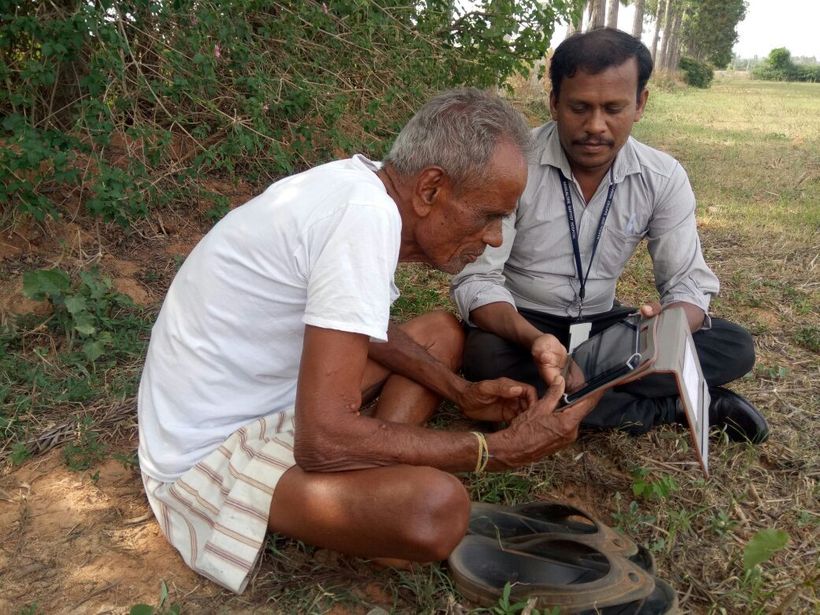
An interdisciplinary team of Baylor University researchers – from nursing and business information systems to art and video game design – and physicians from Bangalore Baptist Hospital in Bengaluru, India, were awarded a 21st Century Knowledge Initiative Grant from the U.S. India Education Foundation (USIEF) to develop a diabetes mobile health app to boost awareness and educate those in India who are most at risk for diabetes. The team is led by Shelby Garner, Ph.D., R.N., assistant professor in Baylor’s Louise Herrington School of Nursing, who has worked in India over the past six years to develop technological health resources. She cited statistics from the World Health Organization that show life expectancy in India is among the lowest in the South East Asian Region and is largely attributed to growing rates of non-communicable diseases, such as diabetes. Contextualized health education is one key to help raise awareness in the country, she said. “There is a need for culturally appropriate health education materials in India,” Garner said. “Our early research showed that technology, such as smartphones and internet accessibility, are widely available in India among health providers, but most technological educational resources were developed in the West and do not effectively translate to the Indian context.” Physicians from Bangalore Baptist Hospital will provide cultural context and help identify important medical content to be included in the app. “Our diabetes app will feature an interactive 3D animated video with gaming features to help educate patients at risk for diabetes,” Garner said. “Answers to questions addressed in the app include: What is diabetes? What happens if I have diabetes? How do I prevent and treat diabetes? What do I do now?” The app also serves as a data collection tool to help researchers determine if the video is improving participants’ knowledge on diabetes. Community health workers employed by Bangalore Baptist Hospital will use the app as they visit with people in rural villages and urban slums during door-to-door health education visits, Garner said. The research team will compare the app’s effectiveness with standard health educational resources previously used. Garner said the USIEF grant was awarded, in large part, due to the success of an earlier project that led to the development of a hypertension app. “Earlier this year, we tested the hypertension app among 346 people in one of the largest slums in Bengaluru, India, and in several rural villages surrounding Bengaluru,” she said. “The app was significantly effective in improving knowledge among participants. We used these results to justify the need to design more resources and applied for funding from the U.S. India Education Foundation.” From previous experience developing and employing the hypertension app, Garner said she knew this new project would require input from a variety of perspectives. “I’ve realized some of the ‘big picture’ challenges in health education, and it will take a team of experts to make this happen,” she said. Team members are: • Shelby Garner, Ph.D., R.N., assistant professor in Baylor’s Louise Herrington School of Nursing • Dr. Carol Elizabeth George, community health physician, Bangalore Baptist Hospital • Dr. Gift Norman, community health physician, Bangalore Baptist Hospital • Dr. Kingsly Victor, internal medicine physician, Bangalore Baptist Hospital • Hope Koch, Ph.D., associate professor of business information systems, Baylor’s Hankamer School of Business • Phil Young, Ph.D., assistant clinical professor of business information systems, Baylor’s Hankamer School of Business • Julia Hitchcock, M.F.A., associate professor of art, Baylor’s College of Arts & Sciences • Matthew Fendt, Ph.D., lecturer in computer science, Baylor’s School of Engineering and Computer Science The grant also will fund exchange teams of researchers and faculty from India to come to the U.S. and for Baylor team members to go to India to collaborate on the research for the next two years. The first team from India is due in late October. “We are really excited about the work we will do together with our Indian partners over the next two years,” Garner said. ABOUT BAYLOR UNIVERSITY Baylor University is a private Christian University and a nationally ranked research institution. The University provides a vibrant campus community for more than 17,000 students by blending interdisciplinary research with an international reputation for educational excellence and a faculty commitment to teaching and scholarship. Chartered in 1845 by the Republic of Texas through the efforts of Baptist pioneers, Baylor is the oldest continually operating University in Texas. Located in Waco, Baylor welcomes students from all 50 states and more than 80 countries to study a broad range of degrees among its 12 nationally recognized academic divisions. ABOUT LOUISE HERRINGTON SCHOOL OF NURSING The Baylor University Louise Herrington School of Nursing (LHSON) located in Dallas was established in 1909 as a diploma program within Baylor Hospital in Dallas, which is now Baylor University Medical Center, and in 1950 became one of the six degree-granting schools of Baylor University. The first Baccalaureate degrees were granted in 1950 establishing the school among the earliest baccalaureate nursing programs in the United States. In 1999, the School was renamed the Baylor University Louise Herrington School of Nursing after Louise Herrington Ornelas, a 1992 Baylor Alumna Honoris Causa, who made an endowment gift to the school. Accredited by the Commission on Collegiate Nursing, LHSON offers Bachelor of Science in Nursing (B.S.N.) degrees through a traditional program and FastBacc (one-year accelerated program). LHSON also offers an online Master of Science in Nursing (M.S.N.) Leadership and Innovation program, as well as Doctor of Nursing Practice (D.N.P.) programs to include Family Nurse Practitioner (F.N.P.), Nurse-Midwife (C.N.M.) and Neonatal Nurse Practitioner (N.N.P.). LHSON was featured in U.S. News & World Reportfor the 2018Best Graduate Schools ranking the D.N.P.program in the top 50 U.S.nursing schools at No. 46. The Baylor M.S.N.program is ranked at No. 56and the Nurse Midwifery Program ranked No. 10. Baylor’s M.S.N. in Nursing Leadership andInnovation Online Program ranked No. 39 in the 2018U.S. News Best Online Graduate Programs. For more information, www.baylor.edu/nursing.

Guinness World Record Holder Jon Bruney To Speak at Biohacker Summit in Toronto
(Toronto) Renowned Strongman and Fitness Expert to speak at Spark Biohacker Summit at Metro Toronto Convention Center on October 15th, 2018 Jon Bruney, creator of the “Pressing the Limits” motivational strength program, will appear in Toronto at the Spark Biohacker Conference. A devoted researcher in the pursuit of finding the edge in performance, Jon will speak about his experience using transcranial and intranasal light therapy. Jon, one of a number of elite athletes, has been working with Technology developed by Dr. Lew Lim, NMD, MBA and Founder & CEO of Vielight in Toronto. Dr. Lim will be on hand to answer questions about the broad base of international research behind photobiomodulation and what we know so far about it's mechanism. "With photobiomodulation, you can tap into the secrets of the nervous system, helping your body to push farther, to push harder, to push longer than you ever believed you could." Jon Bruney using Vielight photobiomodulation device at his Performance Training Center in Indiana Jon Bruney and Dr. Lew Lim, Founder and CEO of Vielight, will be available for questions at the Vielight exhibition booth held alongside the Biohackers Summit. For one-to-one interviews, please contact Edward D'Mello on 647-865-2803. Session Details Monday Oct. 15, 2018 1230PM - 130PM Metro Toronto Convention Centre South Building (Hall G) 222 Bremner Boulevard Toronto, Ontario M5V 3L9 About John Bruney John's work with competitive athletes includes Olympians and NFL players. He has been featured in Ripley’s Believe it or Not, The Guinness Book of World Records, shown nationwide on NBC’s America’s Got Talent, The Today Show, ABC’s To Tell the Truth, and TruTv’s Guinness World Records unleashed. A true renaissance man in the realm of strength-development, Jon Bruney is a best-selling author, world-class trainer, coach and motivational speaker. He is the author of the best-seller Neuro-Mass: The Ultimate System for Spectacular Strength and The Neuro-Grip Challenge: A Radical Program For Building Strength and Power in Your Upper Body. He also writes a training series called “Foundations”, featured in MILO, widely considered the world’s most prestigious strength training journal. Jon has been responsible for the design of numerous pieces of cutting-edge training equipment now in use around the world. Jon is a veteran of multiple trainer certification courses and was the first to achieve the grueling Battling Ropes Level 2 Certified status. He is also the co-owner of Submit Strength equipment. About the The Biohacker Summit The Biohacker Summit is the largest biohacking event in the world that connects well-being companies with medical professionals, technology experts, investors, entrepreneurs, health and nutrition enthusiasts, and other pioneers. Biohacking - better living through science, technology and nature - is a fast growing international trend. The aim of the conference is to make the world healthier and happier place, prevent disease, and extend human capabilities and lifespan. Media Contact Edward D'Mello M: 647-865-2803 E: edward@vielight.com #photobiomodulation #light #therapy #Toronto #Canada #Ontario #wellness #health #mentalhealth #quantifiedself #biohack #biohacker #mental #brain #body #sport #performance


Ethical Leadership Can Have Negative Consequences, Baylor University Researchers Say
Coupled with stress, ethical leadership can lead to employee deviance and turnover Ethical leadership is a good thing, right? Certainly, management experts say. But ethical leadership can have negative consequences, too, according to new research from management faculty in Baylor University’s Hankamer School of Business. A 2018 Baylor study published in the Journal of Business Ethics reveals that ethical leadership compounded by job-hindrance stress and supervisor-induced stress can lead to employee deviance and turnover. The research reflects the thoughts of 609 employees who were surveyed across two studies. “If someone is an ethical leader but induces stress, our research shows that his or her employees will feel less support,” said lead author Matthew Quade, Ph.D., assistant professor of management. “Thus, employees who do not feel supported are more likely to consider leaving their jobs or engage in workplace deviance – things like coming in late to work, daydreaming, not following instructions or failing to be as productive as they could be.” Quade said that ethical leadership is a good thing and often beneficial in terms of employee resources. An example would be a trusted supervisor who listens to her employees and has her employees’ best interests in mind. The trouble comes, he said, when supervisor-induced stress or job-hindrance stress enters the picture. “When those stressors are added, there is a depletion of resources,” Quade explained. “Many of the gains or benefits from ethical leadership are negated.” What does stress-inducing ethical leadership look like? Quade said it could be as simple as supervisors setting expectations too high or, in the interest of “following all the rules,” not allowing for any deviation from a process, even if a shortcut, still within the bounds of behaving ethically, would deliver a desired result. The researchers wrote: “Ethical leadership can be an exacting process of sustaining high ethical standards, ensuring careful practice and enforcement of all rules and meeting leaders’ lofty expectations, all of which can consume time and energy and be perceived by employees as overly demanding or an obstacle to job performance.” As part of the study, those surveyed were asked to what extent they agreed or disagreed with the following statements: My supervisor makes it so that I have to go through a lot of red tape to get my job done. Working with my supervisor makes it hard to understand what is expected of me. I receive conflicting requests from my supervisor. My supervisor creates many hassles to go through to get projects/assignments done. Working with him/her thwarts my personal growth and well-being. In general, I feel that my supervisor hinders my personal accomplishment. I feel that my supervisor constrains my achievement of personal goals and development. Quade said his team in no way wants to discourage ethical leadership. Research consistently shows such leadership is very beneficial, he said. But this new research shows that there are boundaries to those benefits. “This places quite an onus on appropriately managing the stress that comes from the leader and the job, in efforts to most fully realize the potential of ethical leadership,” the researchers wrote. The study listed some tips and takeaways for organizations and leaders. They include: Strike a balance between promoting ethical behavior and providing resources to help employees meet those standards. Encourage employees in word and deed by reducing ambiguity in ethical dilemmas that might otherwise drain resources. Model fair and ethical behavior. Communicate efficient methods to meet standards and reduce unnecessary steps or procedures. Equip and train leaders to balance the demands of leading ethically while not overburdening their employees. ABOUT THE STUDY “Boundary Conditions of Ethical Leadership: Exploring Supervisor-Induced and Job Hindrance Stress as Potential Inhibitors” is published in the Journal of Business Ethics. Study authors are Baylor University Hankamer School of Business faculty members Matthew Quade, Ph.D., assistant professor of management; Sara Perry, Ph.D., assistant professor of management; and Emily Hunter, Ph.D., associate professor of management. ABOUT BAYLOR UNIVERSITY Baylor University is a private Christian University and a nationally ranked research institution. The University provides a vibrant campus community for more than 17,000 students by blending interdisciplinary research with an international reputation for educational excellence and a faculty commitment to teaching and scholarship. Chartered in 1845 by the Republic of Texas through the efforts of Baptist pioneers, Baylor is the oldest continually operating University in Texas. Located in Waco, Baylor welcomes students from all 50 states and more than 80 countries to study a broad range of degrees among its 12 nationally recognized academic divisions. ABOUT HANKAMER SCHOOL OF BUSINESS Baylor University’s Hankamer School of Business provides a rigorous academic experience, consisting of classroom and hands-on learning, guided by Christian commitment and a global perspective. Recognized nationally for several programs, including Entrepreneurship and Accounting, the school offers 24 undergraduate and 13 graduate areas of study. Visit www.baylor.edu/businessand follow on Twitter at twitter.com/Baylor_Business.



Cities value cybersecurity but budget prevents investment
Although city governments increasingly rely on software programs to provide services such as 911 calls, service delivery and online bill payment, they may not have the proper cybersecurity policies in place to protect their systems, according to a recent nationwide survey of cities by Augusta University researchers. “We’re concerned first with the human factor of all issues,” said Dr. William Hatcher, director of Augusta University’s Master of Public Administration program and one of the survey’s authors. “Having trained employees is necessary to stop attacks or even make sure organizations are not tricked through phishing type schemes.” Almost 30 percent of surveyed cities have no formal cybersecurity policy, which would include rules on password creation, guidelines for employee training on computer security and procedures for reviewing the list of employees with access to sensitive systems, according to the survey. Of the cities that have a formal policy, the survey found that: - 17 percent don’t require in-depth background checks when employees are granted access to sensitive systems. - 18 percent don’t teach employees to recognize breaches. - 37 percent don’t provide ongoing training to employees on new computer security procedures. - 47 percent don’t review the list of employees who have security access on a regular basis. - 54 percent don’t work with an outside auditor to review their policies on an annual basis. The survey looked into cities nationwide with more than 10,000 people and received responses from 193 local governments. Based on the results of the survey, Hatcher says most cities understand the importance of cybersecurity but are not investing in vulnerable areas due to financial constraints. “Providing effective cybersecurity protection is expensive, and many municipalities have financial issues paying for the service,” Hatcher said. Hatcher ‘s research focuses on the connection between public administration and the development of local communities. Through his research, he tries to understand why public administration scholars and practitioners often have different views about the efficacy of certain administrative practices. His research has appeared in journals such as American Journal of Public Health, Journal of Public Affairs Education, Public Administration Quarterly and The Review of Regional Studies. Contact us to schedule an interview with Dr. Hatcher or learn more about his expertise. Source:

