
Experts Matter. Find Yours.
Connect for media, speaking, professional opportunities & more.
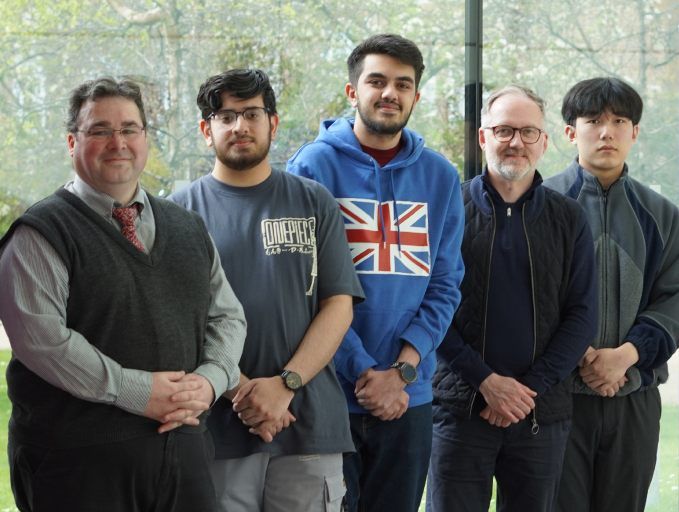
Aston University accounting students recognised by software developers
Students received a certificate and micro-credential from Tim O’Reilly Tim has pioneered the creation of the first auto-marked digital cloud financial skills (DCFS) 50 students voluntarily did the online course and took the final test. Accounting students at Aston University have received prizes from the leader in cloud accounting and financial management software. Tim O’Reilly, accountants partnership manager at Sage, visited the Accounting Department on Tuesday 25 April to meet with them. Tim has pioneered the creation of the first auto-marked digital cloud financial skills (DCFS) course supported jointly by Sage and the Association of Chartered Certified Accountants (ACCA). It gives successful students a certificate and micro-credential. Aston University accounting students used it for the first time in 2022/23 guided by senior teaching fellow, Jonathan Mills. 50 students voluntarily did the online course and took the final test. Professor Andy Lymer, head of the Accounting department at Aston University, said: “Tim was really impressed with the set of results and gave prizes to the three students that performed best overall in the DCFS course and the Accounting in Practice module. “I am really pleased with the success of the first run of this digital skills course and I look forward to inviting Sage representatives to return in the summer to strategise on expanding our work together to enhance employability and digital skills.”


Aston University appoints new Deputy Vice-Chancellor Academic
Professor Osama Khan has nearly 20 years’ experience as an academic leader and innovator He will lead academic strategy, new educational model and student experience strategy in line with Aston 2030 Strategy Osama will join Aston University in October 2023. Aston University has appointed Professor Osama Khan as its new Deputy Vice-Chancellor Academic. With a successful career in higher education for nearly 20 years, Professor Khan will be joining Aston University from the University of Surrey where he is currently Pro-Vice-Chancellor Academic, leading on education strategy, teaching excellence and student learning experience. In his new role, he will play a central part in the development of Aston University’s academic strategy in line with the University 2030 Strategy. Responsibilities will include leading the University's academic portfolio incorporating education, curriculum, digital offerings, careers and placements, library and information services, student experience and services. Educated at Independent University, Bangladesh, University of Surrey and University of Cambridge, Osama began his academic career as a lecturer (and then senior teaching fellow) at University of Surrey in 2004. He moved to Solent University in 2012, where he held a variety of roles including director of learning and teaching at Solent Learning and Teaching Institute. He was appointed the first Pro Vice-Chancellor, Students and Teaching at Solent University leading on curriculum, digital services, learning space transformation. He was appointed as Vice-Provost, Education at University of Surrey in 2019. Subsequently his remit extended to form the Pro Vice-Chancellor, Academic portfolio with responsibility for education, curriculum, student services, digital transformation, and learning spaces. He has 25 years of teaching experience in corporate finance at various renowned universities. Professor Aleks Subic, Vice-Chancellor and Chief Executive of Aston University, said: “I am delighted to welcome Osama to Aston University and the executive team at a crucial time when we are shaping our bold strategy for 2030 and beyond. “Osama is a proven academic leader and innovator, who has who has achieved sector leading outcomes in student experience and educational quality. His strong commitment to values-based leadership is aligned well with our approach to working with our people and the diverse communities we serve. “I look forward to working with Osama to position Aston University as the leading university in the United Kingdom for student experience, employability and social mobility.” Professor Osama Khan said: “Aston University's unwavering commitment to academic excellence, coupled with its dedication to equality, diversity and inclusion, resonates deeply with me. Moreover, I commend Aston University's efforts in narrowing the awarding gaps, striving for equity in education and promoting fairness in the academic journey, for it is through education that we empower generations and create lasting impact. “I am honoured to join this creative institution as its next Deputy Vice-Chancellor Academic, where we will prioritise inclusive education and foster an environment where every individual can thrive and succeed. “I eagerly look forward to working with our exceptional faculty, dedicated staff, and talented students to shape the next chapter of excellence through the new Aston University 2030 strategy. Together, we will transform lives, foster innovation and forge a path towards a brighter tomorrow." Professor Khan will be taking up his post in October 2023.

The management Knowledge Transfer Partnership (mKTP) with Beever and Struthers will help drive the firm’s digital transformation The 30-month programme will specifically aim to develop, embed and exploit smart data driven technologies It will enable the business to increase quality, productivity and capacity. Aston University has begun a management Knowledge Transfer Partnership (mKTP) with nationwide accountants and business advisors Beever and Struthers to help drive the firm’s digital transformation. A management Knowledge Transfer Partnership is built around identifying strategic management-based initiatives to increase business effectiveness and improve management practices. As part of the mKTP, led by Aston University in collaboration with Professor Brian Nicholson and Dr Sung Hwan Chai (Alliance Manchester Business School), Dr George Moyenda Salijeni (Aston Business School) and the team will conduct a comprehensive evaluation of Beever and Struthers' existing data systems. Following the assessment, specific methodologies will be proposed to ensure alignment between the mKTP and the firm's ongoing data systems. The 30-month programme will aim to develop, embed and exploit smart data driven technologies within the audit function, enabling the business to increase the quality, productivity and capacity to deliver additional insight and value to clients. Dr George Salijeni, a lecturer in accounting at Aston Business School and an expert in data analytics tools used in external audits and knowledge base supervisor in the mKTP, said: “This mKTP offers an opportunity to share and utilise knowledge and technical exposure which academics at Aston University and Alliance Manchester Business School have gained and generated over the years through undertaking multi-disciplinary research and engagements with practitioners and audit regulators on data driven technologies which include artificial intelligence. Potentially, this project generates insights, workflows which could impact and transform the way audits are performed by leveraging data driven analytics tools and models.” Michael Tourville, partner at Beever and Struthers, said: “Given that the business has been around for up to 125 years it is quite traditional in its approach, but we are now keen to embrace the opportunities that a truly digital transformation could offer. Although we are a firm with a long history, we are also an entrepreneurial business and are keen to grasp opportunities when we see them. This mKTP is all about giving our clients more insight and helping us navigate data far better too. The main improvements for us will come from increased efficiency and insight, but we will also be able to further improve the quality of the service we offer.” Professor Andy Lymer, head of the Accounting Department at Aston University, said: “Digital approaches to accounting are increasingly at the heart of how the accounting industry works – and therefore increasingly at the heart of what we teach and research related to this industry and its practices. This extremely innovative project will enable us to work with the partners in this programme to go in depth into an organisation exploring how the use of the latest developments in the use of digital tools such as advanced data analytics can further enhance the processes of audit. The experience and knowledge gained in this work will be brought back into the classroom for our students to benefit from also.”

Expertise Marketing and Content Marketing - Is There a Difference?
We often get asked the question about how Content Marketing compares to Expertise Marketing. It’s ironic that still to this day many of our academic clients don’t refer to what they do as “content marketing.” But corporate customers are well acquainted with the importance of developing content to build reputation, relationships and revenue. Adding to the confusion are all the names that are bantered about by marketing departments and agencies - There’s inbound marketing popularized by companies such as Hubspot. And there are more bespoke “Thought Leadership” programs that are often developed by outside agencies such as Weber Shandwick and Edelman. While there are a lot of common elements to these programs there are some important differences that we focus on when developing and launching Expertise Marketing programs with our institutional and corporate clients. Here’s a deeper dive to help you better understand the value of Expertise Marketing. Introducing Expertise Marketing Expertise marketing is the practice of making the knowledge and skills of your human resources more visible to your partners and audiences. It draws attention to the value that your people can bring as brand ambassadors and strategically leverages the work your experts are doing to tell a more personal story. In many cases, expertise marketing can also be used to showcase your strengths in research and innovation. Creating a stronger digital presence, expertise marketing more effectively uses your channels to connect with audiences such as media, customers, partners and donors. It builds a sense of trust with your customers and above all else, it helps establish your reputation as an industry leader. ex•per•tise mar•ket•ing 1. The practice of collectively promoting an organization’s experts as brand ambassadors to demonstrate their skills or knowledge. 2. Best practices to publish and connect The Value of Expertise Marketing Reputation - Positions research, client work, thought leadership perspectives and achievements in the context of relevant topics that are in the news. Market Awareness - Expertise marketing makes it easier for key audiences to find expert content and people in search engines and on the organization’s website. Audience Engagement - Provides more intuitive search features for visible content which can be expanded to include assets such as video, social, and publications to drive richer conversations with audiences. Metrics on performance in areas related to expert development, content contribution and audience engagement page views and inquiries can be tracked. Demand Generation - Increased number of direct leads/ inquiries from audiences such as: Customers/Students Industry Partners Alumni Donors Media New Employee Recruits Conference Organizers Talent - Better engage stakeholders, researchers & subject-matter experts in the development and distribution of content while improving recruitment and retention of talent. Internal Collaboration - Better coordinate the knowledge and resources across internal communications teams and other departments as they engage experts. Provide a faster, more efficient way to generate content for breaking news and events. Content Contribution - Increase the size of the organization’s digital footprint by aggregating more content and distributing it contextually to multiple websites and third-party databases. Efficiency - Help employees get their jobs done faster and more efficiently. Enable them to find information faster, speed up internal processes and foster collaboration among people in multiple locations. Leverage Current and Future Infrastructure - Properly integrated, new technology investments should integrate seamlessly to leverage existing/proposed infrastructure such as content management systems (such as WordPress™) and marketing automation systems (such as Hubspot) How is Expertise Marketing Different from Content Marketing? A More Human Approach: People buy from people. That’s why content that is more personalized and attributed to specific experts who are well-identified as expert sources is far more trusted than most company-sponsored content. A More Collaborative Process that Engages Employees: A more structured “win-win” model empowers experts to contribute their knowledge. Expertise marketing is a proven way to build culture and celebrate diversity which assists with talent retention and recruitment. An Efficient Way to Create More Content to Boost SEO & Website Traffic: Engaging your experts creates a larger hub of “owned” content that is proven to boost PageRank in search engines and site traffic. Expert content is used by organizations to enhance their “About Us” page, staff/faculty/physician directories, newsroom pages, research pages and speakers bureaus. Optimized Content Formats Better Connect with Audiences: A variety of short format, long format and visual content formats (such as expert profiles, blogs, Q&A and videos) are designed to engage specific audiences at various stages of the customer journey. Improved Calls to Action & Analytics Boost Demand Generation & Leads/Inquiries: Experts become more approachable as “lead magnets” that generate measurable inbound opportunities, avoiding common issues of lost customer leads due to poor processes and workflow. You might be surprised at how much value expertise marketing can bring to your organisation. The chances are, that the time you are currently spending on ineffective content marketing strategies will be greatly reduced with a redefined focus on expertise marketing. By putting the focus back on the skills and relevance of your experts, as people, you're not only making them more visible but also establishing your brand reputation which will simultaneously generate more leads and increase efficiency.




As technology continues to advance, so do the methods that hackers use to steal personal information. One such method that even the FBI has taken notice of is juice jacking, a technique where hackers use public charging stations to install malware onto your device or steal your personal information. The specific danger is very real, experts say. Steve Weldon, director of the Cyber Institute at Augusta University’s School of Computer and Cyber Sciences, said people need to understand there is risk when plugging a phone into a USB port at a public charging station. “USB uses pins for data and power. When we plug devices in to charge, the data pins are also connected,” said Weldon. “No big deal if we’re in an environment we trust. However, do we trust the public charging stations to have access to our data pins and being able to make data transfers? Probably not and that’s the gist of the recent warning.” There are ways to avoid the risk. “The best advice is to bring your own cables and adaptors. Then we can plug directly into power outlets,” Weldon said. If you must use a public charging station, he suggests using a data blocking USB cable. These cables only allow power to flow through, preventing any data transfer between the charging station and your device. Also, be aware if you are using your phone while charging it. “When using public charging stations we should, at a minimum, watch for strange behaviors, weird popups, and being asked questions about trusting the device or drive we’re connected to. Those are danger signs, and we’d want to disconnect quickly,” added Weldon. Another option to protect your phone from juice jacking is to use a wireless charger. These chargers do not require a physical connection between your device and the charging station. While wireless charging is typically slower than using a cable, it is a safe alternative when you’re on the go and need to charge your device. Keeping your personal information safe is crucial in today’s digital age. Protecting your phone from juice jacking is just one way to prevent hackers from accessing your sensitive data. Looking to know more? Connect with our expert today. Steven Weldon is the Director of Cyber Institute at the School of Computer and Cyber Sciences at Augusta University and is an expert in the areas of cellular and mobile technology, ethics in computer science, scripting and scripting and automation. Steve is available to speak with media - simply click on his icon now to arrange an interview today.


• Professor Stephen Garrett to discuss why the UK needs to up its game in maths education • He has a particular interest in the development of mathematical and computational solutions to real-world problems • Lecture will take place on Thursday 27 April at Aston University. The latest inaugural lecture at Aston University is to explore why the UK’s low level of mathematical skills don’t add up to a positive digital future. Professor Stephen Garrett will discuss why school-level mathematics is so important in many areas of life and will discuss how the UK needs to up its game in maths education at all ages for the modern digital world. Currently just half of all 16–19-year-olds study maths. Earlier this year the Prime Minister proposed that all students in England will study some form of maths to 18 to ensure that they leave school better equipped for the jobs of the future. Professor Garrett joined Aston University in spring 2022 as Pro-Vice-Chancellor and Executive Dean of the College of Engineering and Physical Sciences. Stephen said: “I’m concerned that too many people are being held back by poor maths – not just at work but in their personal lives too. “Improving maths skills at any age can bring confidence, open up more career options and benefit the local and national economy.” The professor’s research interests are at the boundary of applied mathematics with other disciplines and he has a particular interest in the development of mathematical and computational solutions to real-world problems. He is primarily known as a fluid dynamicist. As an academic leader, Stephen is particularly keen to develop synergies between teaching and research activities and believes the two should always be closely intertwined within the HE sector. His talk, My career in five equations, and the importance of mathematics education in the digital age will also explore the importance of some key areas of school mathematics in his research career. He will start with traditional classroom maths topics such as Pythagoras and trigonometry, through familiar sounding concepts and will link them to a model for fluid flows relevant to the aerospace sector. The free event will take place on the University campus at Conference Aston, on Thursday 27 April from 6 pm to 8 pm and will be followed by a drinks reception. To sign up for a place visit https://www.eventbrite.co.uk/e/an-inaugural-lecture-by-professor-aniko-ekart-tickets-516518760517 There are more details about mathematics courses at Aston University at https://www.aston.ac.uk/courses/mathematics

• Has potential to help geneticists investigate vital issues such as antibacterial resistance • Will untangle the genetic components shared due to common ancestry from the ones shared due to evolution • The work is result of a four-year international collaboration. Aston University has worked with international partners to develop a software package to help scientists answer key questions about genetic factors associated with shared characteristics among different species. Called CALANGO (comparative analysis with annotation-based genomic components), it has the potential to help geneticists investigate vital issues such as antibacterial resistance and improvement of agricultural crops. This work CALANGO: a phylogeny-aware comparative genomics tool for discovering quantitative genotype-phenotype associations across species has been published in the journal Patterns. It is the result of a four year collaboration between Aston University, the Federal University of Minas Gerais in Brazil and other partners in Brazil, Norway and the US. Similarities between species may arise either from shared ancestry (homology) or from shared evolutionary pressures (convergent evolution). For example, ravens, pigeons and bats can all fly, but the first two are birds whereas bats are mammals. This means that the biology of flight in ravens and pigeons is likely to share genetic aspects due to their common ancestry. Both species are able to fly nowadays because their last common ancestor – an ancestor bird - was also a flying organism. In contrast, bats have the ability to fly via potentially different genes than the ones in birds, since the last common ancestor of birds and mammals was not a flying animal. Untangling the genetic components shared due to common ancestry from the ones shared due to common evolutionary pressures requires sophisticated statistical models that take common ancestry into account. So far, this has been an obstacle for scientists who want to understand the emergence of complex traits across different species, mainly due to the lack of proper frameworks to investigate these associations. The new software has been designed to effectively incorporate vast amounts of genomic, evolutionary and functional annotation data to explore the genetic mechanisms which underly similar characteristics between different species sharing common ancestors. Although the statistical models used in the tool are not new, it is the first time they have been combined to extract novel biological insights from genomic data. The technique has the potential to be applied to many different areas of research, allowing scientists to analyse massive amounts of open-source genetic data belonging to thousands of organisms in more depth. Dr Felipe Campelo from the Department of Computer Science in the College of Engineering and Physical Sciences at Aston University, said: “There are many exciting examples of how this tool can be applied to solve major problems facing us today. These include exploring the co-evolution of bacteria and bacteriophages and unveiling factors associated with plant size, with direct implications for both agriculture and ecology.” “Further potential applications include supporting the investigation of bacterial resistance to antibiotics, and of the yield of plant and animal species of economic importance.” The corresponding author of the study, Dr Francisco Pereira Lobo from the Department of Genetics, Ecology and Evolution at the Federal University of Minas Gerais in Brazil, said: “Most genetic and phenotypic variations occur between different species, rather than within them. Our newly developed tool allows the generation of testable hypotheses about genotype-phenotype associations across multiple species that enable the prioritisation of targets for later experimental characterization.” For more details about studying computer since at Aston University visit https://www.aston.ac.uk/eps/informatics-and-digital-engineering/computer-science

Aston University teams up with eye care provider to reduce NHS patient backlog
Aston University and Eye Docs Ltd enter Knowledge Transfer Partnership to establish new shared-care regimes for eye care patients The new model will help patients access Eye Docs surgeons It will help reduce NHS waiting lists, outpatient clinic backlogs, improve patient care and deliver profits of over £8.8 million Aston University has teamed up with private ophthalmic services clinic, Eye Docs, to undertake a 32-month Knowledge Transfer Partnership (KTP), to help clear NHS surgery waiting-lists and outpatient backlogs. In the West Midlands, average NHS waiting times have increased to over 12 months due to the impact of the Covid-19 pandemic, with waiting list contracts ranging from 100 to 1,500 patients. A cross-disciplinary team from Aston University’s School of Optometry and Aston Business School will work with West Midlands-based company Eye Docs to create a ‘shared-care’ model as part of the KTP. A KTP is a three-way collaboration between a business, an academic partner and a highly qualified researcher, known as a KTP associate. The working model will encompass clinical optometry and management science expertise to identify which patient appointments could be undertaken in community practices and which need to be seen by Eye Docs surgeons. It is hoped this way of working will also help reduce pressure on the NHS - creating a more efficient and cost-effective model that will benefit all stakeholders from patients to clinicians. The Aston University team will be led by Professor Shehzad Naroo, professor of optometry, who brings expertise in leading multidisciplinary groups and managing projects that improve eye care service delivery. Professor Naroo has a long history of working with private clinics to improve delivery of eye care, increasing efficiency and widening the role of private clinics to support the NHS. He will be supported by Professor Prasanta Dey, professor in operations and information management, whose research interests are in project management, service operations management, supply chain management and applications of multi-criteria decision making in industry. Completing the team will be Dr Yang Zhao, senior lecturer in operations and information management, whose research interests are in business model design, digital business models, platform business models, digital innovation, digital healthcare and digitalisation in aging societies. Professor Shehzad Naroo, professor of optometry at Aston University, said: “It is a privilege to be involved in this KTP, which will enable Eye Docs to increase patient numbers to fully utilise theatre capacity by receiving more surgical referrals from local optometrists. “We’re thrilled to be able to help Eye Docs to offer community-based services to patients and help to reduce the burden on the NHS.” Professor Shah, consultant ophthalmic surgeon and co-owner of Eye Docs, said: “This partnership will allow us to adopt the latest research and expertise from a world-leading academic institute to develop new patient pathways and shared-care regimes, enabling us to grow our business and profitability, develop new services and improve patient care. “Working with a multidisciplinary team of clinical and business experts from Aston University will help us to achieve the aims of this project.”


Researchers fight cybercrime with new digital forensic tools and techniques
Irfan Ahmed, Ph.D., associate professor of computer science, provides digital forensic tools — and the knowledge to use them — to the good guys fighting the never-ending cyber-security war. Ahmed is director of the Security and Forensics Engineering (SAFE) Lab within the Department of Computer Science and VCU Engineering. He leads a pair of interrelated projects funded by the U.S. Department of Homeland Security (DHS) aimed at keeping important industrial systems safe from the bad guys — and shows the same tools crafted for investigating cyber attacks can be used to probe other crimes. The goal of cyber attacks on physical infrastructure may be to cause chaos by disrupting systems and/or to hold systems for ransom. The SAFE lab focuses on protecting industrial control systems used in the operation of nuclear plants, dams, electricity delivery systems and a wide range of other elements of critical infrastructure in the U.S. The problem isn’t new: In 2010, the Stuxnet computer worm targeted centrifuges at Iranian nuclear facilities before getting loose and infecting “innocent” computers around the world. Cyber attacks often target a portion of the software architecture known as the control logic. Control logic is vulnerable in that one of its functions is to receive instructions from the user and hand them off to be executed by a programmable logic controller. For instance, the control logic monitoring a natural gas pipeline might be programmed to open a valve if the system detects pressure getting too high. Programmers can modify the control logic — but so can attackers. One of Ahmed’s DHS-supported projects, called “Digital Forensic Tools and Techniques for Investigating Control Logic Attacks in Industrial Control Systems,” allows him to craft devices and techniques that cyber detectives can use in their investigations of attacks on sensitive critical infrastructure. Their investigation capabilities, he explains, is an under-researched area, as most of the emphasis to date has been on the prevention and detection of their cyber attacks. “The best scenario is to prevent the attacks on industrial systems,” Ahmed said. “But if an attack does happen, then what? This is where we try to fill the gap at VCU. And the knowledge that we gain in a cyber attack investigation can further help us to detect or even prevent similar attacks.” In the cat-and-mouse world of cyber security, the way cybercriminals work is in constant evolution, and Ahmed’s SAFE lab pays close attention to the latest developments by malefactors. For instance, an attacker may go for a more subtle approach than modifying the original control logic. An attack method called return-oriented programming sees the malefactor using the existing control logic code, but artfully switching the execution sequence of the code. Other attackers might insert their malware into another area of the controller, programmed to run undetected until it can replace the function of the original control logic. Attackers are always coming up with new methods, but each attack leaves evidence behind. The SAFE lab examines possible attack scenarios through simulations. Scale models of physical systems, including an elevator and a belt conveyor system, are housed at the SAFE lab to help facilitate this. The elevator is a four-floor model with inside and outside buttons feeding into a programmable logic controller. The conveyor belt is more advanced, equipped with inductive, capacitive and photoelectric sensors and able to sort objects. The tools and methods applied in cybercrime can be useful in tracking down other malefactors. That’s where Ahmed’s second DHS-funded project comes in. It’s called “Data Science-integrated Experiential Digital Forensics Training based-on Real-world Case Studies of Cybercrime Artifacts.” Ahmed is the principal investigator, working with co-PI Kostadin Damevski, Ph.D., associate professor of computer science. The goal is to keep law enforcement personnel abreast of the latest trends in the field of cybercrime investigation and to equip them with the latest tools and techniques, including those developed in the SAFE lab. “For example, investigators often have to go through thousands of images, or emails or chats, looking for something very specific,” Ahmed said. “We believe the right data science tools can help them to narrow down that search.” The FBI and other law enforcement agencies already have dedicated cybersleuthing units; the Virginia State Police have a computer evidence recovery section in Richmond. Ahmed and Damevski are arranging sessions showing investigators how techniques from data science and machine learning can make investigations more efficient by sorting through the mounds of digital evidence that increasingly is a feature of modern crime.


Innovative virtual practice offers continuous, coordinated and connected care ChristianaCare has launched Virtual Primary Care, a new health solution that offers the benefits of a long-term relationship with your primary care team, with the convenience of virtual care that can be accessed at home, at work or on the go, using a smartphone, tablet or other digital device. The practice is an offering of ChristianaCare’s Center for Virtual Health. “Virtual primary care in most markets does not establish an ongoing relationship between the patient and the provider — it’s on-demand care with the next available provider,” said Sarah Schenck, M.D., medical director of Virtualist Medicine at ChristianaCare. “ChristianaCare Virtual Primary Care is different. We offer a personalized approach in which patients have the attention of their care team who are all focused on their specific needs and health goals. Each care team knows their patients and is actively working to help them reach their personal health goals. And when patients need specialized care or services, our providers have access to ChristianaCare’s network and the ability to refer to the trusted services and specialists a patient might need outside of primary care.” The practice is accessible to residents of Delaware, Pennsylvania, Maryland and New Jersey, New York and Florida and available by monthly, quarterly or yearly subscription. Plans are available for people ages 5 and older and start as low as $35 per month. The subscription provides full access to virtual primary care services — with no additional fees or copays — including same-day appointments, extended hours on nights and weekends, secure text-messaging and the convenience of always-on care. Services that are not a part of primary care, such as emergency room visits, lab tests, diagnostic imaging and specialist referrals, are not included in the subscription and would be subject to the patient’s existing health insurance coverage. “At ChristianaCare we are reimagining health care by making it radically convenient and accessible, and by creating a unique and personal experience,” said Sharon Anderson, MS, RN, FACHE, ChristianaCare’s chief virtual health officer and president of ChristianaCare’s Center for Virtual Health. “The Virtual Primary Care practice goes beyond simply offering video visits to patients. We’ve transformed care so it no longer revolves around waiting for an appointment — it’s immediate, coordinated, continuous. Patients can now access virtual primary care 24/7 as well as a host of other health services — all through their computer, tablet or smartphone.” When individuals sign up, they’ll choose their care team of experts including a primary care provider, nurse and a patient digital ambassador (PDA). The patient digital ambassador serves as a personal health guide to assist individuals with registration and technology set-up for their virtual visits. As a care team member, the PDA is available as a personal health guide, while the primary care provider supports patients with their clinical care needs. Once enrolled, individuals will receive a welcome kit tailored to their needs with tools to assist in their care, such as monitoring blood pressure, weight and temperature. Benefits of ChristianaCare Virtual Primary Care: Schedule a virtual checkup, communicate using video, send photos through secure text messaging and discuss health concerns and treatment options. Schedule same-day appointments and enjoy extended hours on weekends. Get quick referrals to specialists. Create a personalized Working on Wellness Plan (also known as WOW plan) to help achieve healthy goals around stress management, exercise, nutrition, sleep and more. For more information, visit the ChristianaCare Center for Virtual Health or call 302-428-2400.
