
Experts Matter. Find Yours.
Connect for media, speaking, professional opportunities & more.

Planet 9 Doesn’t Exist, So Why Does It Matter How We Get There? Let Our Expert Explain.
Planet 9 is an oft-discussed hypothetical planet in the outer region of the solar system. A new study involving Florida Tech astrobiologist Manasvi Lingam helps illustrate how we could possibly get there. The study, “Can We Fly to Planet 9?” is from Lingam and researchers Adam Hibberd and Andreas Hein. The team discovered that using current, unmanned transportation methods, it would take 45 to 75 years to get to Planet 9, which is about 42 billion miles away from Earth. By comparison, Pluto, which is the ninth object from the Sun, is roughly three billion miles from Earth. The research and work of Lingam, Hibberd and Hein is also getting a lot of attention from websites like UniverseToday.com. The team also studied near-future transportation methods nuclear thermal propulsion and laser sails. Using nuclear thermal propulsion, it would take approximately 40 years to reach Planet 9. It would take merely six to seven years to reach Planet 9 using laser sail propulsion, which involves using light from lasers to propel the vehicle. In its research, the team used the principles of orbital mechanics, sometimes called spaceflight mechanics. They inputted the complex and nonlinear mathematical equations into a computer, and then solved those equations with some optimization constraints. “What I mean by the latter is that ideally you want to maximize or minimize some quantity as much as possible,” Lingam said. “You might say, ‘Well, I want to minimize the flight time of the spacecraft as much as possible.’ So, what we did is that we put in an optimization constraint. In this case, it happens to be minimizing the time of journey. You solve the mathematical equations for a spacecraft with this condition, and then you end up with the results.” Lingam is inspired by the trendsetting Voyager spacecraft missions of the late 1970s, and one of his goals is to gain additional information about other worlds in our solar system, in addition to Planet 9 Voyager still provides valuable information regarding the outer solar system, though by 2025 it is expected that there may no longer be sufficient power to operate its science instruments. “Any mission to Planet Nine would likewise not just provide valuable information about that hypothetical planet, but it would also yield vital information about Jupiter, because what we do in some of the trajectories is a slingshot or powered flyby around Jupiter,” Lingam said. “It could also provide valuable information about the Sun because we also do a maneuver around the Sun, so you would still be getting lots of interesting data along the journey. And the length of the journey is comparable to that of the functioning time of the Voyager spacecraft today.” If you're a reporter looking to know more - then let us help get you connected to an expert. Manasvi Lingam is an Assistant Professor in the Department of Aerospace, Physics and Space Sciences at the Florida Institute of Technology. He is an author and go-to expert for media when it comes to anything in outer space or out of this world - just recently he was featured in Astronomy.com where he was asked to answer the illusive question - Are we alone? Manasvi is available to speak with media - simply click on his icon now to arrange an interview today.


The University of Florida aims to bring a scientist to every Florida school
By Emma Richards It was the encouraging support of his 10th grade earth science teacher that led Bruce MacFadden to pursue his dream of becoming a scientist. Now an accomplished paleontologist, MacFadden is paying it forward as director of the UF Thompson Earth Systems Institute and its “Scientist in Every Florida School” program. The program connects more than 700 scientists to K-12 classrooms in 42 counties throughout the state, providing students and teachers alike with up-to-date science lessons that both inform and, hopefully, inspire future scientists. Teachers use the program’s online application portal to request a visit by a scientist to teach a specific concept. Teachers are then matched with a scientist with that expertise, who delivers the requested lesson in person or virtually. Participating scientists are vetted to ensure they can communicate clearly with audiences of varying education levels. The program benefits students, teachers and scientists, MacFadden said. Students get to see the amazing things scientists do. Teachers receive timely knowledge and professional development. And scientists get to give back to society and gain confidence in their ability to share research, even with the youngest students. “We want to let young people know that if they want to be a scientist and apply themselves, they can also be a scientist,” MacFadden said. “It’s a synergy between the scientists and the teacher,” he said in an interview on the From Florida podcast. “We do not have prescribed, off-the-shelf lesson plans, but instead we typically talk with the teacher and say, ‘What would you like to do?’” It is the only program that currently works throughout the state to deliver high-quality STEM instruction to teachers and students, particularly in public Title 1 schools. “We want to make sure that there’s a level playing field with the understanding and teaching about STEM in a larger context,” he said. “But for me, it’s more about earth system science so that all teachers and students can benefit from what we know about current research in this field.” Outreach conducted through the Thompson Earth Systems Institute focuses on those systems — the interaction of air, water, land and life, and human impacts. Another important aspect of the “Scientist in Every Florida School” program is showcasing what a 21-st century career in science can look like for people from a variety of different backgrounds and interests. MacFadden said graduate students serve as role models in their visits to schools. “We want to let young people know that if they want to be a scientist and apply themselves, they can also be a scientist,” MacFadden said. The program aims to get a scientist into every public school in Florida at least once. With more than 4,000 public schools in the state, the scientists have a lot of stops to make — though virtual visits have helped them reach distantly located schools. MacFadden said once the team accomplishes that feat, they’ll focus on expanding outreach to other states. “Right now, I’m totally focused on making a difference in Florida’s public education,” he said. To learn more about the Scientist in Every Florida School program, listen to the full episode on From Florida at this link. Listen to other episodes of the From Florida podcast here. To learn more about the Thompson Earth Systems Institute, visit this link.


James Webb Space Telescope Images Deliver New Look at Universe, Potential for Life in the Cosmos
On July 12, the National Aeronautics and Space Administration (NASA) unveiled its long-awaited first images from the James Webb Space Telescope, a cutting-edge tool sent out with the mission of furthering our understanding of the universe. The telescope delivered on its promise, depicting the cosmos more clearly than we’ve ever seen. Among the many in awe was Villanova astronomy and astrophysics professor Ed Guinan, PhD, who’s familiar with extraterrestrial discovery. In 1968, Guinan helped observe evidence of Neptune’s ring system and has been involved in research beyond our planet for over 50 years. “The first few photos are beautiful, showing highly detailed images of stars, galaxies, nebulae and gravitational lensed distant galaxies” Dr. Guinan said. “Some of the oldest galaxies formed as far back as 13-to-13.5 billion years, right after the Big Bang.” The latest images come almost seven months after Webb’s launch in December. A series of steps needed to be completed for the mission to be successful. “Many things could’ve gone wrong, and if something failed, it would be too far away to fix,” Dr. Guinan said. One of the photos featured a signature of water in the atmosphere of a distant sun-like star, showing the unique capabilities of Webb. Dr. Guinan, along with assistant astrophysics and planetary science professor Scott Engle, PhD, have been researching the potential habitability of Earth-sized exoplanets over the last decade, and he believes this telescope may be able to help bring clarity to finding life outside of our planet. “Several of these potentially habitable exoplanet systems are planned to be observed with the telescope to search for spectroscopic evidence of life,” Dr. Guinan said. “Webb is capable of answering these questions, whether these Earth-sized planets may be suitable for harboring complex life, possibly intelligent life.”


Meet the astrobiologist and her students who are searching for life on Mars
By Emma Richards, University of Florida From a young age, Amy Williams wondered if life existed beyond Earth amidst the dark abyss of space, stars and planets — a curiosity that years later landed her a career researching and exploring Mars. Williams, an assistant professor of geology and an astrobiologist at the University of Florida, works as a participating scientist on the Perseverance and Curiosity Rover Science Teams and previously served as a postdoctoral research associate at NASA’s Goddard Space Flight Center. As an astrobiologist and geobiologist, she uses techniques from geology, microbiology and chemistry to search for life beyond Earth. “Even as a little kid watching meteor showers with my family, I wondered if there was someone out there in the stars looking back at Earth.” “Even as a little kid watching meteor showers with my family, I wondered if there was someone out there in the stars looking back at Earth,” she said in an episode of the From Florida podcast. “It’s been a passion of mine my whole career and now it’s the most amazing opportunity to serve on both of the active Mars rover missions.” Williams’ journey to Mars began as a graduate student when a research professor gave her the opportunity to work on the NASA Curiosity mission. From there, Williams built her way up and is now a participating scientist working on day-to-day rover operations. Williams also is opening doors for graduate students at UF to work on Mars research, helping upcoming generation of scientists follow her path. She is specifically interested in involving women and underrepresented groups in her work. Based on her research, Williams said life on Mars, if found, will likely look less like Marvin the Martian and more like microbial life similar to bacteria on Earth. Curiosity landed on Mars in 2012 and Perseverance landed in 2021. The rovers are searching for potential life on Mars by going to habitable environments and searching for evidence of water and essential elements that could supported such life forms. Curiosity has spent nearly its entire mission exploring a large five-kilometer-tall mountain in Gale Crater known as Mount Sharp. The scientists can see Mars’ history and climate based on changes in the chemistry and sediments of the mountain. As for Perseverance, the rover is exploring Jezero Crater, with emphasis on its delta, a geologic deposit that is formed when water from a river flows into a lake. Perseverance will help collect rock and sediment samples from Mars that will be the first brought back to Earth. NASA is also working on a program to eventually send humans to Mars, which will likely take many decades; the first stage in the project will be returning humans to the Moon. “But in the meanwhile, these robots, these rovers that we send to the red planet, they are our proxy,” Williams said. “And looking through the robot rover’s eyes, the images that are returned to us, I recognize this is the closest I will ever be to standing on Mars and looking up at these beautiful geological units, looking up at an alien world that’s so familiar because the tenets of geology apply on Mars, the same as they do on Earth.” To hear more about the Amy Williams' Mars research, listen to the episode on From Florida at this link. Listen to other episodes in the "From Florida" series at this link. To learn more about her work, watch this video featuring Professor Williams:

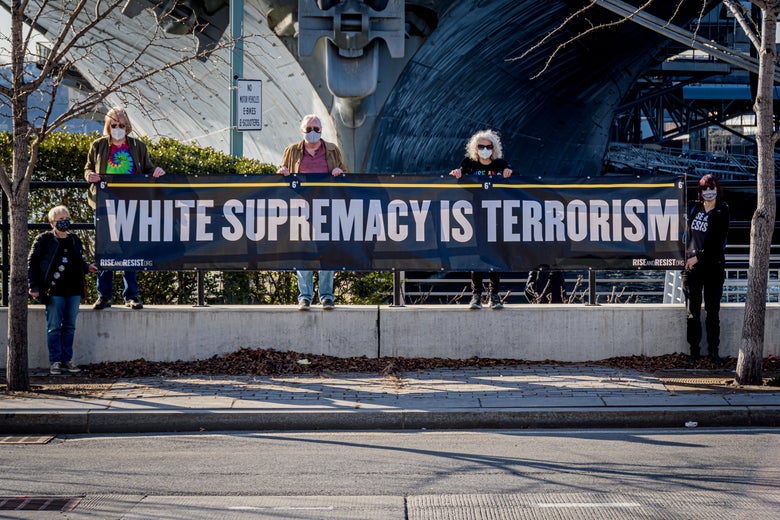
Expert Opinion: Understanding Whiteness to Understand White Supremacy
In the aftermath of last week's tragic shooting in Buffalo, many have described the violence as representative of a mental health crisis, growing extremism, hatred, and bigotry, likening manifestos left by shooters as the racist rhetoric of radicalized individuals. "But that conclusion is a pleasant fiction," writes Matthew Hughey -- a professor of sociology at UConn and a renowned scholar of racism and racial inequality in identity formation, organizations, media, politics, science, religion, and public advocacy -- in a powerful new essay for Slate. As part of his work as a researcher, Hughey examines the manifestos of white-supremacist shooters as well as their intersection with race, knowledge, media, power, religion, and science. To understand white supremacy and the violence it precipitates, Hughey explains, we need to first understand whiteness: The category of whiteness, like “race,” is a biological fiction with a social function. Whiteness emerged early in American history to rationalize exploitation. Early American colonists were slow to develop racial worldviews. But by the mid-1600s, philosophers and scientists like Bernard Varen, John Ray, and François Bernier began to publish ideas about African savagery and European civilization, which were progressively applied to resolve who should be the rulers versus the ruled. These ideas were codified into our legal system. In 1662, for instance, British statutory law conferred slavery with a biological status: Any child born to an enslaved woman would also be a slave. Over time, through a series of laws and social mores, a hierarchy that conferred legal privileges to “white” men, while stripping Black people and Native Americans of their humanity and standing in the legal and political arenas, was cemented. Put another way, whiteness is not an inherent identity so much as a consolidation of lofty biological, legal, and theological notions that serve to buttress the social and political power of people bearing lighter skin. As W.E.B. Du Bois points out in his 1920 essay “The Souls of White Folk,” whiteness is a modern concept: "The discovery of personal whiteness among the world’s peoples is a very modern thing. … The ancient world would have laughed at such a distinction. … This assumption that of all the hues of God whiteness alone is inherently and obviously better than brownness or tan leads to curious acts. … I am given to understand that whiteness is the ownership of the earth forever and ever, Amen! Now what is the effect on a man or a nation when it comes passionately to believe such an extraordinary dictum as this?" The effect is a Faustian bargain. And as a result, whiteness exists in a state of perpetual social anxiety. White people are taught that their biological, cultural, and/or God-given nature is to be “inherently and obviously better” than people of color and to have “ownership of the earth.” These ideals are, of course, so lofty that they are unachievable. Discontent is inevitable. Whiteness is a deal with the devil. Consequently, white people move neither into nor out of moments of racial anxiety, nor do they—despite the popularity of the cliché—experience flashes of “white fragility.” Whiteness does not wax or wane relative to racial pressures, cracking to expose either reactionary political movements or even the occasional mass shooting. Rather, whiteness is an omnipresent imbroglio; it cannot live up to the greatness it assumes it can naturally realize. Reconciling the peril that results from the inability to fully manifest white power necessitates a scapegoat. And so the crisis of whiteness is continually externalized onto racial “others.” This helps to explain why an increasing number of white people now believe they have been cheated out of their birthright—an inheritance of domination stolen by people of color. White nationalism and supremacy could not function under absolutist apartheid; it is an ideology and practice that requires the presence of people of color to justify its own shortcomings. White peril and white power go hand in hand. Professor Hughey is available for interviews -- click on his icon to contact him today.


Aston University experts to take part in Pint of Science 2022
Pint of Science, the world’s largest festival of public science talks, will run from 9 – 11 May Experts from universities, including Aston University, will take part across 32 UK cities Aston University academics will appear in front of audiences at Birmingham venues: The Woodman, Grain & Glass and Café Artum at Hockley Social Club. Tickets have gone on sale for Pint of Science 2022 which is returning on its 10th anniversary. The festival will bring thousands of scientists and their research out of the lab and into our pubs, cafes and community halls from 9 to 11 May 2022. Experts from universities in Birmingham including Aston University, Birmingham City University and University of Birmingham, will take part in 16 events across the city. The festival will take place in 32 UK cities, with events in hundreds of cities across 25 countries. Each event will provide a unique line up of talks, demonstrations and live experiments, held in a relaxed and informal environment. Aston University academics taking part in Pint of Science will appear in front of audiences at a number of Birmingham venues, including, The Woodman, Grain & Glass and Café Artum at Hockley Social Club. They will host talks on topics around the Pint of Science themes of: Beautiful Mind; Atoms to Galaxies; Our Body; Planet Earth; Tech me out; Our Society. Seven Aston University experts are leading talks including ‘The science of swearing’, ‘How much microplastic is in your pint: does it matter?’ and ‘How facial expressions guide our eating behaviour’. Dr Robbie Love, a lecturer in English at Aston University, who is taking part in Pint of Science 2022 and who is hosting a talk about the science of swearing said: “I am really looking forward to an evening of linguistic libations at Café Artum for Pint of Science 2022. “Swearing might seem like a bit of fun, but the science behind swearing shows us that it plays a really important role in human communication. Plus, I’m looking forward to hearing everyone’s favourite swear words!” Katie Edwards, a PhD student at Aston University who is taking part in Pint of Science 2022 said: “I am really looking forward for this year’s Pint of Science festival to chat about eating behaviour. “I will be talking about how other people's food enjoyment can impact our eating. “It is a great opportunity to hear about current scientific research whilst relaxing with a drink.” You can find out more about full line up of events in Birmingham, which includes experts from the University of Birmingham and Birmingham City University, here.


Why pollen season arrives earlier each year: Q&A with Georgia Southern biology professor Alan Harvey
As a seasonal allergy sufferer, Alan Harvey, Ph.D., biology professor in Georgia Southern University's College of Science and Mathematics, was curious what types of pollen were causing his sniffles and sneezes. As a scholar and educator, Harvey did what any curious mind would do — he began exploring the types of pollen in the region while trying to narrow down the culprit of his symptoms. What he didn’t expect to find was an interesting narrative that led to a collaborative art-science project and soon a full exhibit on pollen at the Georgia Southern Museum. Read on to learn more about Harvey’s research on pollen, upcoming exhibit, “Pollen Nation,” and why pollen season begins earlier each year. Q: Tell us about yourself — Who are you? What do you teach? How long have you been a professor here? A: I’m a professor and faculty member at Georgia Southern. This is my 23rd year here and I teach a variety of biology courses including field biology, invasive species and evolutionary ecology. Q: How long have you studied pollen and what interested you in studying this? A: I’ve not actually studied pollen for that long. I really wanted to figure out how to deal with my own severe allergies to it. Q: What is the most common pollen in our region? A: The most common pollen depends on the time of year. Any plant that produces flowers will produce pollen. But if you’re looking at a plant with nice, pretty flowers, that pollen is not going to be what you’d normally encounter or notice causing your allergies because that pollen is being transmitted by insects or other pollinators who are specifically being attracted by the pretty flowers. The kind of pollen that you do encounter is from plants that you wouldn’t even notice have flowers like pine, oak, maple and birch trees. Those are all wind-pollinated, so they don’t need pretty flowers. They’re not trying to attract anybody, they just have to produce a lot of pollen for the wind to blow around. This time of year, pine and oak are going to be the two common pollens. Q: When does pollen season usually begin in our region? A: It starts in the early spring and ends in late fall. And again, it’s different plants blooming during the course of that year. So this time of year, as I mentioned, is going to be pines and oaks. In the middle of the year, it will be more grasses, and toward the end of the year, it’s going to be things like ragweed. What scientists have discovered is that every year the pollen season starts earlier and lasts longer. Q: Why will it begin early this year? A: This is where we get into a sort of controversial subject, but basically, climate change issues are the main culprit in a couple of ways. First of all, plant growth is tied to temperature. So the earlier temperatures get warmer, the earlier in the year the plant is going to start actively growing and producing pollen. So, warmer temperatures are leading to earlier seasonal starts. Temperatures are warmer than they were at this time a few decades or 100 years ago. Q: Why is pollen important? A: It’s an essential component of sexual reproduction in plants, so in the absence of pollen, we would lose many, if not virtually all of the plants around us that we depend upon. It’s fundamentally important to life on Earth that those plants are able to continue to reproduce. In terms of its impact on known pollinators, when a bee visits a flower, it is, of course, looking for nectar that the plants produce, but they also are looking for pollen. So it’s a food source for a lot of animals as well. Q: What is an interesting fact or little-known fact about pollen? A: Pollen plays a role in some various religious ceremonies of other cultures. The one I’m most familiar with is in the Navajo Nation. In particular, corn pollen is at the core of a great many, if not virtually all, of the Navajo religious ceremonies. It’s also been used to solve crimes and there is a whole field of forensic pollen analysis. It’s also an important tool for paleontologists, anthropologists and archaeologists who are trying to understand past civilizations. Because pollen is incredibly resilient, it may be small, but it is darn near indestructible. You would need a pretty powerful microscope to see any of these, but with that tool, you can study pollen grains that are hundreds of millions of years old. They will last that long. They’re so, so tough. Q: Tell us about the new mural in the Biological Sciences Building — What inspired it? Who helped work on it? A: A number of years ago, a colleague in the Betty Foy Sanders Department of Art, Jeff Shmucki, and his wife Wendy Deschene and I came together and started collaborating on art-science projects because we realized we both are observers of the natural world, we just approach it from somewhat different ways. One of those projects was creating a mural of ecologically or environmentally important organisms surrounding students that they may not be aware of. For the first mural, we looked at salamanders of Georgia. We got a bunch of photographs of the salamanders and we cut them away from the background, blew them up and installed the murals. It was a big community project and students got involved in all phases of it. So I thought, ‘Well, that was really successful.’ What can we do next? And because I was in the middle of allergy attacks, I thought, ‘Well, what about pollen?’ Q: Tell us how the mural inspired your upcoming exhibit, “Pollen Nation,” at the Georgia Southern Museum. A: There are a lot of interesting layers to this basic idea of pollen that can’t really be shown in a mural, and the Georgia Southern Museum is a perfect place to explore those kinds of ideas in one common theme. Q: What can people expect to see at the “Pollen Nation” exhibit? A: There’ll be a lot of big, spectacular images of pollen and the plants that produce them. It’s going to be a mix of striking imagery and some interactive sort of game-like activities. You’ll also have the opportunity to look at some of the pollen in a microscope. Interested in learning more? Let us help. Allan Harvey, Ph.D., is available to answer your questions - simply reach out to Georgia Southern Director of Communications Jennifer Wise at jwise@georgiasouthern.edu to arrange an interview today.


Is it better to give than receive? Our expert explains the science behind holiday gift giving
It's the holiday season -- full of merriment and cheer and gift giving. But why do we give gifts? And why is it a ritual that cuts across cultures on just about every continent on Earth? UConn professor Dimitris Xygalatas, an expert in human rituals, details the social science behind the centuries old tradition of exchanging gifts in a new essay for The Conversation: From the shells exchanged by Pacific islanders to the toys and sweaters placed under Christmas trees, sharing has always been at the center of many ritual traditions. This is fundamentally different from other forms of material exchange, like trade or barter. For the Massim, exchanging a shell necklace for a shell armband is not the same as trading yam for fish, just as giving a birthday present is not the same as handing a cashier money to purchase groceries. This speaks to a more general rule of ceremonial actions: they are not what they appear to be. Unlike ordinary behaviors, ritual actions are nonutilitarian. It is this very lack of obvious utility that makes them special. Professor Xygalatas is an anthropologist and cognitive scientist at the University of Connecticut who specializes in some of the things that make us human, including ritual, sports, music, cooperation, and the interaction between cognition and culture. He is available to speak with media, answering all your holiday ritual questions. Click on his icon to arrange an interview today.

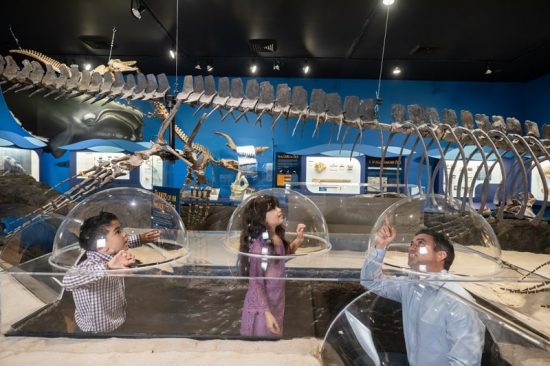
Georgia Southern University Museum reopens just in time to celebrate Earth Sciences Week
After nearly three years and following extensive architectural renovations, the Georgia Southern Museum, one of the longest-standing educational centers on the University's Statesboro Campus, has reopened. "It has been a long project, but well worth the journey," said Georgia Southern Museum Director Brent Tharp, Ph.D. "The upgraded facility and newly designed galleries represent a new era for the museum. Visitors will still find old friends, like the mosasaur, but exhibited in new more exciting ways, and will make new discoveries with never before exhibited artifacts in expanded permanent exhibits preserving the area's culture. We are really excited to be back open to the public." The Georgia Southern Museum serves as the premier institution interpreting the natural and cultural history of Georgia's coastal plain. The museum displays permanent exhibits and changing exhibits curated by the University's faculty and students, and provides a place where researchers can explore its collections and students of all ages can learn. As part of its reopening celebration, the Museum will recognize Earth Sciences Week with events featuring social media videos and interactive displays by Georgia Southern students, faculty and alumni. Highlighted events for Earth Sciences Week include: Oct. 12 - Earth Observation Day Oct. 13 - National Fossil Day Oct, 14 - Geoscience for Everyone Day Oct. 15 - Geologic Map Day Oct. 16 - International Archaeology Day Admission to the museum is $4 per person; however, for a limited time the museum also will accept donations for admission. Children 3 years of age and younger, museum members, and Georgia Southern students receive free admission. If you’re a journalist looking to cover Earth Sciences Week or talk to any of the many experts at the museum – then let us help. The researchers behind this study are available, simply reach out to Georgia Southern Director of Communications Jennifer Wise at jwise@georgiasouthern.edu to arrange an interview today.
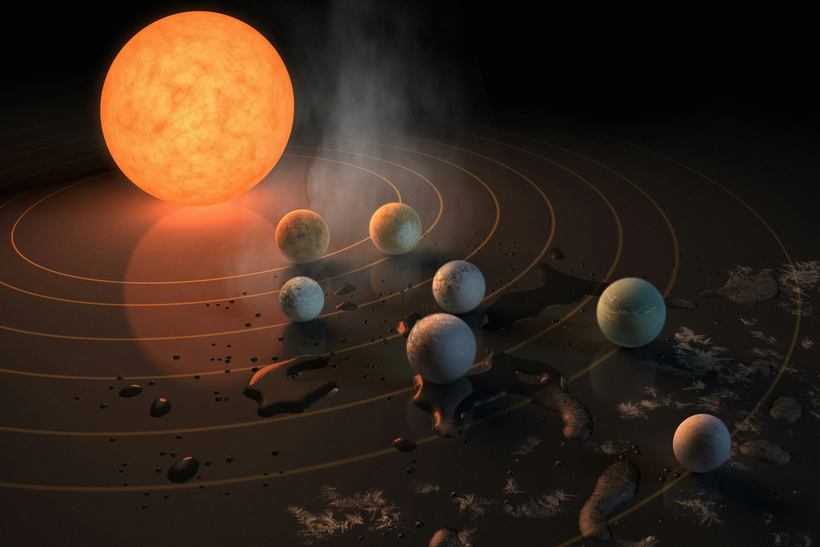
Could There Be a Ninth Planet?
A new study re-examined work from 2016 and proposed additional evidence of a ninth planet. While this investigation has been met with much skepticism, Scott Engle, PhD, assistant professor of astrophysics and planetary sciences at Villanova University, contends Planet Nine's existence is a possibility. "Proposing that the Solar System contains a yet undiscovered planet is always going to be a remarkable claim, so it makes complete sense that there's been a lot of excitement from the public and also a divided response from the field," says Dr. Engle. "This recent study certainly makes a more convincing claim than in 2016. The authors seem to understand the weight behind such a claim, and they appear to have aimed this study to address some of the claim's criticisms. Naturally, though, its existence is just an interesting possibility." If Planet Nine is confirmed, what would this change in the field of astronomy? Alongside the excitement of a new planet's discovery, a swell of studies would emerge to continue to investigate the planet. "First, we'll want to pin down the planet's orbit, which will continually improve as we track the planet over time. Once we get a good idea of its orbit, there's also the possibility of going back through the image archives—maybe we'll get really lucky, and Planet Nine photobombed some image that Hubble was taking of an unrelated object." Planet Nine would be unique, particularly because of its position so far from the Sun. "Theoreticians will have a field day determining if the planet formed that far from the Sun or if it formed closer to the Sun and 'migrated out' to its current distance... and then [picking apart the] implications those results have for the current structure of the Solar System and our theories on how it formed. Astronomers will also want to know the composition of Planet Nine—whether it 'belongs' with the Solar System or is a captured rogue planet." Can we expect any extraterrestrial discoveries? Before we start to imagine life on Planet Nine, Dr. Engle noted it is probably not habitable: "Likely not in any human sense of the word. There is a wide range of properties allowed by the latest results, but as the authors state, a gas giant seems probable. Also, the planet orbits at such a distance that it receives 1/57,000th the amount of sunlight that we receive here on Earth, or less." But a discovery of a ninth planet could spark novel findings and "eureka" moments. "The detection would also serve as a great reminder that even 'right in our own backyard' there are still incredible discoveries to be made," said Dr. Engle.