
Experts Matter. Find Yours.
Connect for media, speaking, professional opportunities & more.

Evaluating the Impact of Facebook's Ban on Vaccine Misinformation
A new Facebook policy has banned misinformation about all vaccines on its platform. Villanova University professor Jie Xu, PhD, who specializes in science and health communication, examined this decision. "On one hand, there clearly is a lot of mis/disinformation on social media regarding vaccines; some of them are simply uninformed and, of course, harmful to public health," said Dr. Xu. "On the other hand, many details relating to the COVID-19 vaccine, in my view, are still open to scientific debate." So, what determines what is labelled misinformation? Dr. Xu believes this is a complicated determination. "Science itself is evolving with falsification and revision to previous claims when new evidence comes in," Dr. Xu noted. "Who is to say that some claims deemed true at this moment won't be overturned in the future? What are the standards to be used in defining what is true information or misinformation? And perhaps more importantly, who are the 'fact-checkers' that are considered trustworthy to the majority of Americans?" However, there are some benefits to Facebook's decision. "On a more positive note, there is some preliminary evidence indicating that labeling misinformation on social media may help to alleviate the negative influence of vaccine misinformation claims," Dr. Xu said. "The challenge is that the people that are most susceptible to misinformation, and those that health professionals really want to reach out to, are the ones that have the least level of trust on this type of intervention. In some corners, this will likely to be viewed as violation to free speech and perhaps backfire." How does Facebook's banning align with free speech? "My understanding of free speech is that it's not that we don't pay a price for it—unless it's inciting violence, most information has been allowed to flow relatively freely—but it's that the alternative could be much worse," said Dr. Xu. "At the end of the day, we need to create an environment in which honest, open and critical conversations are welcomed, and we do need each other to find the truth."


Eliminating The Barriers To Telehealth & Patient Retention
During the ongoing national pandemic, healthcare is in a period of rapid evolution, bringing telehealth to the forefront of patient care. Telehealth is a proven strategy to improve health outcomes, but it’s gated behind socioeconomic privilege and leaves behind many of our community’s most vulnerable patients. One such disparity is the inability of many Americans to access digital health care. This silent epidemic affects lives daily. Many patients, especially those in rural communities, face obstacles when trying to get the care they need. From access to reliable transportation and affordable child care to financial instability and lack of culturally competent providers, there is no shortage of hurdles standing in the way of disadvantaged populations accessing quality care. Well-implemented telehealth services can offer a clear path through these common barriers to care while improving health outcomes and boosting patient retention. “We know that mobile health intervention is an effective tool for retaining patients in care, but it’s only as effective as it is accessible,” said Richard Walsh, our CEO. “It would be negligent to assume that every individual has access to the devices, internet, or knowledge necessary to engage in telemedicine.” Like other leaders in the industry, we know telehealth is a privilege, but at Continuud, we believe it should be a right.” As Nathan Walsh, our CXO, said, “During a public health crisis such as this, we have to be proactive in ensuring that underserved communities have access to the care that they need in every way possible.” Through our research and conversations with community health leaders, we have identified 4 common barriers to telehealth success: access to video-ready phones or tablets, access to a reliable & affordable internet connection, an understanding of how to use the device to access services, and trust in technology being used for health services. Our solution is to create a platform that not only solves these problems but also enhances the patient experience and drives the best possible outcome of telehealth intervention. Our platform, Access, provides 8-inch tablets with an unlimited data connection to patients. Each device ships with a secured environment and limited functionality customized by the health care provider to include the tools that patients need to access care. We have created a simple deployment and warehousing solution to make it easy for organizations to get started quickly. Our end-to-end deployment and recall services handle every aspect of the platform so organizations can remain focused on serving their patients. The platform supports patient-by-patient interface customizations, so each patient’s experience is tailored to their unique treatment plan. We have device insurance and same-day replacement built into the program to account for loss, theft, and damaged devices, so organizations will always have access to the inventory they need to serve their clients. At Continuud, we offer an integrated ecosystem designed from the ground up to enable health care providers to work more efficiently toward a common goal of driving positive health outcomes in their communities. Continuud is known throughout Indiana for our innovative approach to connecting high-risk populations to care and implementing strategic technology to help retain and learn from patients so providers can evolve with the needs of their patients. To learn more about our platform, click here to visit our homepage. If you would like to schedule a demo with our team to talk about the platform in greater detail, click here.


Japan Society Presents When Practice Becomes Form: Carpentry Tools from Japan
Installation view at the Takenaka Carpentry Tools Museum, Kobe, Japan. On the occasion of the 50th anniversary of Japan Society’s landmark building, the institution is pleased to present the new exhibition, When Practice Becomes Form: Carpentry Tools from Japan. The exhibition celebrates the spirit of architecture and craftsmanship through Japanese woodworking tools as well as architectural patterns and various models. The site-specific installation, conceived by the esteemed contemporary architect Sou Fujimoto in collaboration with Brooklyn-based Popular Architecture, reinterprets major themes from the exhibition and is in dialogue with the gallery’s spaces, highlighting an enduring connection between traditional Japanese wooden construction and modern architecture. Featuring hand tools and joinery techniques that have been used for hundreds of years to build Japan’s wooden architectural masterpieces (from temples and shrines to teahouses and bridges), the exhibition unpacks how the intangible qualities of craftsmanship, such as consummate experience, knowledge, and the honed skills of master carpenters, have been transformed into significant forms of architecture. A diverse array of tools—planes, chisels, saws—have played an important role in the development of architecture in Japan’s history, and this philosophy extends to Japan’s cultural heritage today. Integral to the process of making by master carpenters (tōryo) is their extensive knowledge of the local environment and of wood as a material. Using natural resources and learning from their predecessors’ practices, they construct buildings using a refined methodology. Their philosophy of sustainability—for example, joinery can be restored or repaired as needed by future craftspeople—has been handed down over generations. Themes emerging from the exhibition have been interpreted by the internationally acclaimed architect Sou Fujimoto. His firm, Sou Fujimoto Architects, is based in Paris and Tokyo, and has been selected as site design producer for the 2025 World Exposition in Osaka, Japan. Fujimoto has designed the Serpentine Gallery pavilion in London (2013) among other internationally recognized projects. For this exhibition, Fujimoto has worked with Popular Architecture to explore the coexistence of nature and architecture. “Japan Society has been a home of cultural exchange, and a meeting place of past and present. In this exhibition, traditional Japanese craftsmanship is revealed in a new light by the design of contemporary architect Sou Fujimoto, and it becomes a precious educational opportunity to learn from this history,” says Yukie Kamiya, Japan Society Gallery Director. The building of Japan Society’s headquarters, designed by the architect Junzo Yoshimura (1908–1997), a major figure in 20th century Japanese architecture, opened to the public in 1971, becoming New York City’s first permanent structure designed by a Japanese citizen. It will commemorate its 50th anniversary in 2021. The building resides on land donated by John D. Rockefeller 3rd (1906–1978), former President and Chairman of Japan Society, who sought to revitalize the organization’s activities after World War II. Rockefeller 3rd and Yoshimura first met in Japan in 1951, and their friendship for over two decades resulted in Japan Society’s current building in Manhattan. Since its opening, the building has continued to serve as the central platform for the interexchange of ideas, knowledge, and innovation between the U.S. and Japan within a global context. In 2011, the building was designated landmark status by the New York City Landmarks Preservation Commission. When Practice Becomes Form: Carpentry Tools from Japan explores the connections between techniques, tools, and forms from traditional practices in Japanese carpentry and contemporary design perspectives. Paying homage to Japan Society’s building, where the arts and cultures of Japan and the United States intersect, this exhibition delves into the artistry and craftsmanship of architectural practice. Complementing the exhibition is a series of related public programs, including lectures, a hands-on workshop, and gallery tours. A digital publication illustrated and designed by Nathan Antolik further expands upon the exhibition. This exhibition is organized by Japan Society in collaboration with Takenaka Carpentry Tools Museum, Japan. The exhibition design is by Sou Fujimoto, in collaboration with Popular Architecture as local architect. About Sou Fujimoto Born in Hokkaido in 1971, Sou Fujimoto graduated from the Department of Architecture, Faculty of Engineering at Tokyo University and established Sou Fujimoto Architects in 2000. He has won several international competitions, including his recent 1st prize for the 2014 International Competition for the Second Folly of Montpellier, France ("L'Arbre Blanc"). In 2019, he was selected as the master architect for the Tsuda University Kodaira Campus Master Plan development. Among his notable projects are the annual summer pavilion for the Serpentine Gallery in London (2013)—the youngest architect to receive the commission; House NA in Tokyo (2012); Musashino Art University Museum & Library (2010); and House N (2008). In 2012, he was part of the Japanese team that won a Golden Lion award for Best National Participation at the Venice Architecture Biennale for their design of alternative housing concepts for homes destroyed by the 2011 tsunami. Most recently, he was selected as site producer for the 2025 World Exposition in Osaka, Japan. About Popular Architecture Brooklyn-based Popular Architecture combines simplicity with innovation across multiple scales ranging from master plans to buildings, interiors, and products. The firm is directed by Casey Mack, RA, LEED AP. After completing his M.Arch at Columbia, Mack worked with the Office for Metropolitan Architecture in Hong Kong and New York. He has taught urban design at the New York Institute of Technology and Passivhaus housing at Parsons School of Constructed Environments. Currently, with the support of the Graham Foundation for Advanced Studies in the Fine Arts, he is writing the book Digesting Metabolism: Artificial Land in Japan 1954-2202 (Hatje Cantz Verlag, 2021).


Alternative Data Can Offer Insight into GameStop Action on Wall Street
Thomas Shohfi, an assistant professor in the Lally School of Management at Rensselaer, says that looking at alternative data can offer important insights into the turbocharged trading of GameStop. “Volatility in options on GameStop, Nokia, and AMC is exploding,” says Shohfi. “Short sellers are taking massive losses, covering their positions and pushing the stocks even higher. WallStreetBetters keep looking for soft spots in the hedge fund short portfolios to ‘blow up’ their value again and again. It’s a mob-fund mentality.” Working with a former student, Shohfi has analyzed trends from the WallStreetBets subreddit and other social media platforms. He can provide an astute understanding as to how investors have reached this moment, why this has happened, and what the impact that this event will have in the future. “Practitioners, investors, and analysts are always looking for an advantage,” according to Shohfi. “The biggest advantage that we see today is through alternative data. It’s just a rich environment to observe human behavior, incentives, and gender and disclosure effects that affect capital markets like we have seen with GameStop.”


Consumer Behavior Has Shifted Significantly During Pandemic, Survey Reveals
The COVID-19 pandemic has brought about significant shifts in people’s behaviors, from a sharp increase in telework and online commerce, to a significant decrease in the number of personal trips people make. Understanding the effects of these rapid changes on the economy, supply chains, and the environment is essential, as some of these behaviors will continue even after the pandemic has ended. José Holguín-Veras, the director of the Center for Infrastructure, Transportation, and the Environment at Rensselaer Polytechnic Institute, is part of a research team conducting a series of surveys in an effort to quantify and understand these unprecedented shifts. For instance, according to the team’s surveys, the number of monthly work trips people made during the start of the pandemic decreased by 60%. Post-pandemic, respondents believe they will still be making fewer work trips than before, down by 8.2%. Monthly grocery store trips decreased by 41.6% when the pandemic happened, with some people shopping less frequently and others shifting to grocery purchases online. Post-pandemic, survey respondents expect to return to the grocery store more often, but still less than before the pandemic began, by about 8.2%. In contrast, monthly delivery of groceries increased by 132.2% during the pandemic, a trend that may not disappear once the pandemic is over. Respondents expect that post-pandemic, their monthly grocery deliveries will still be 63.8% higher than before COVID-19. While all package deliveries increased during this pandemic period, the grocery delivery increase was the largest. The researchers hope their findings help policymakers develop future policies to offset not just the effects of COVID-19, but also the lasting changes that may result even after the pandemic has ended. Holguín-Veras is available to talk about the research team’s findings, and the importance of understanding these significant shifts.

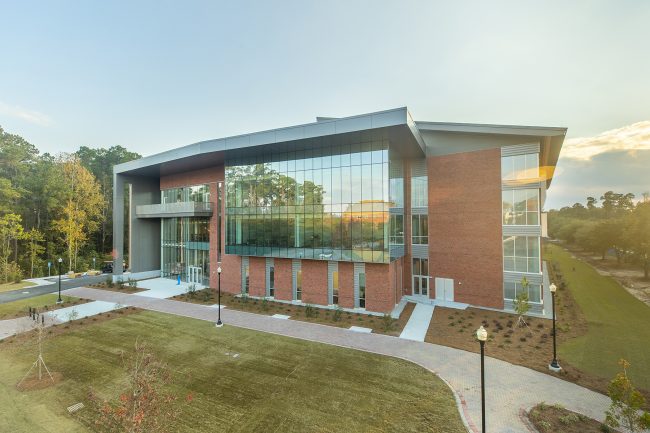
Last Friday, Georgia Southern officially opened its new Engineering and Research Building for students and researchers, a facility that will serve as the epicenter for engineering excellence and innovation in southeast Georgia. The building is designed to facilitate academic and institutional partnerships, inspire creative engineering and accelerate academic success for students in the College of Engineering and Computing. Through the instructional research labs and academic spaces that bridge theory and practice, students will be prepared to solve today’s challenges and to make tomorrow’s discoveries. “Today marks the culmination of years of forethought and investment from a number of state leaders, industry leaders and local advocates, who paved the way for us to be here,” said Georgia Southern President Kyle Marrero. “Leaders who, dating back to the 90s, could see the future of a growing industry, a state on the precipice of being a national leader in technology and innovation, and a critical need to develop talent in applied engineering across south Georgia.” The Engineering and Research Building’s sleek, contemporary environment defined by glass and natural light, soaring high-bay ceilings and modern, industrial feel is strengthened by new, industry-relevant equipment, instrumentation and technology that encourage active learning and sustainability. The highly efficient facility includes sustainable features that complements existing spaces on campus. The three-story building houses applied research spaces with a strong focus on manufacturing engineering, civil engineering, electrical and computer engineering, and mechanical engineering. The workspaces can be easily reconfigured for various uses, projects and applications and provide students with access to industry-grade equipment as well as expanded opportunities for undergraduate research. “The investment of the Engineering and Research Building solidifies Georgia Southern University’s commitment to students in providing a world-class education in the engineering field, while providing the space and resources necessary to facilitate such,” said student Kristifer Bell. “I am enthusiastic to continue my research work and look forward to the interdepartmental collaboration that will be encouraged through the housing of new student and faculty labs under one roof.” The full media release about this historic occasion is attached – and if you are a journalist looking to know more about this facility or Southern Georgia University -- simply reach out to Georgia Southern Director of Communications Jennifer Wise at jwise@georgiasouthern.edu to set and time and date.


Network Science Offers Key Insights into Polarization, Disinformation, and Minority Power
People tend to think of the arena of politics as being driven by human decision and emotions, and therefore unpredictable. But network scientists like Boleslaw Szymanski, a computer science professor at Rensselaer Polytechnic Institute, have found that the country’s political activity – from American society’s ever-growing partisan divide to its grappling with the spread of misinformation online – can be explained by abstract and elegant models. These models provide insights — and even answers — to a number of pressing questions: Is increasing access to information driving us apart? Can an entrenched minority ultimately prevail? Could structural changes be made that insulate us from misinformation and reduce the polarization that divides us? Szymanski studies the technical underpinnings of our choices, how we influence one another, and the impact of the algorithms we rely upon to navigate a growing ocean of information. His work has yielded fascinating insights, including research on how a committed minority will overcome less determined opposition and the development of a parameter to determine what drives polarization in Congress. Through his research on the influence of minority opinions, Szymanski found that when just 10 percent of the population holds an unshakable belief, it will ultimately be adopted by the majority of the society. “When the number of committed opinion holders is below 10 percent, there is no visible progress in the spread of ideas. It would literally take the amount of time comparable to the age of the universe for this size group to reach the majority,” said Szymanski, a computer science professor at Rensselaer Polytechnic Institute. “Once that number grows above 10 percent, the idea spreads like flame.” In his present work, Szymanski is researching tools for measuring the level of polarization in specific news sites, search engines, and social media services, and developing remedies, like algorithms that offer better data provenance, detect misinformation, and create internal consistency reasoning, background consistency reasoning, and intra-element consistency reasoning tools. “Informed citizens are the foundation of democracy, but the driving interest of big companies that supply information is to sell us a product,” Szymanski said. “The way they do that on the internet is to repeat what we showed interest in. They’re not interested in a reader’s growth — they’re interested in the reader’s continued attention.” With the political environment becoming increasingly bitter and dubious information becoming ever more prevalent, Szymanski is available to discuss his research on polarization, disinformation, and the power of a committed minority.


Lann Le, a senior in the Betty Foy Sanders Department of Art at Georgia Southern University, is drawing inspiration from public response to the COVID-19 pandemic for her senior thesis exhibition, “Good Without.” The interactive exhibition will explore what items people can live without, a choice many people have had to make due to the pandemic. Oct. 20th, a panel discussion related to the project took place over Zoom, featuring Professor of Art Rachel Green, Associate Professor of Education Katie Brkich, Ph.D., and Professor of Economics Richard McGrath, Ph.D. Audio from the discussion will be recorded and played throughout the exhibition. Le said she got the idea for the exhibition after seeing how society reacted to COVID-19 at the beginning of the pandemic in the U.S. “In March, I was told to stock up all necessities and saw shelves being emptied in hours,” she said. “I heard stories of struggles and issues associated with stores being closed, businesses paused, unemployment, stress, food shortage and boredom to name a few. I also saw some drop-off items at donation centers and also more online shopping. Here I question what we need and what we’re conditioned to need.” After getting approval from her professor, Bridget Conn, Le wanted to showcase items people believe they can live without. She approached students, professors and strangers on the internet and in person to ask what their choices would be. She also made a website and Instagram account to keep a log of images of the items. Both will continue to be updated until next August. Le’s exhibition, which will run from Nov. 9 to Dec. 4 in the Fine Arts Gallery on the Armstrong Campus, will feature physical items, photographs, audio and collages installed in an interactive environment. It has also been getting the attention of local media and was recently profiled in the Savannah Morning News. “Lann’s project is unique in that she is really embracing the practices of conceptual and interactive art,” Conn said. “This means that unlike traditional art media, where the artist is in control of making their own paintings or sculptures or the like, she is inviting strangers to direct the project by asking them to submit photographs or items that they have learned they are good without.” To learn more about the exhibition - simply visit the site below: If you are a journalist looking to learn more about this project or if you would like to arrange an interview - simply reach out to Georgia Southern Director of Communications Jennifer Wise at jwise@georgiasouthern.edu to set and time and date.

Researchers urge: Learn from (someone else’s) experience
Measuring your performance as a business is critical. If you want to grow and be successful, you need to understand what you do well—and not so well. To paraphrase a couple of old adages, we all learn from our mistakes and our experience. But in today’s bumpy and fast-changing business landscape, measuring performance can be tough; tougher still if yours is a complex organization or industry. Whatever you’re looking at to gauge your firm’s performance—whether it’s customer satisfaction, say, or repeat purchases—your measures might well be less than perfect. And that’s because of noise—abstruse or unreliable data that makes it hard to unpack key metrics accurately and to learn from them. How successful a firm is in negotiating this performance measure noise depends on how that firm learns, said Kristy Towry, John and Lucy Cook Chair and professor of accounting at Goizueta Business School. She has led a study that looks at the way organizations and the people in them manage their learning. And she finds that we’re way more adept at cutting through the noise when we learn from each other, rather than basing our learning on our own firsthand experience. What the study found: What Towry and her colleagues found was that when there’s a lot of noise in the data we’re working with, our strategic learning is considerably improved when our learning is vicarious—that’s to say, when we learn from each other. This is down to how much of the big picture we see, said Towry. And experiential learning can make us myopic. “We know from psychology and from the results of this study that experiential learning—basing what we learn mainly off our own firsthand experience—can limit us. Experience tends to make us over-focus on what is happening in the here and now or what has just happened. We forget what happened before and don’t build that into our decision-making.” Vicarious learning, on the other hand, helps us to see the bigger picture. “When we’re learning from each other, it’s also experiential, but the learning is augmented by other people’s experience, meaning that we have a broadened perspective," said Towry. "We’re better able to see the big-picture patterns and trends.” When there’s a lot of noise and complexity to negotiate, vicarious learning helps us make better decisions. And this has huge implications for businesses operating in today’s environment. “Our world is not cut and dried at the best of times. Right now we are dealing with the COVID-19 crisis and the fallout on world economies and trade. The business context for most firms operating in this context is very far from stable, so we can assume there’s a lot of complexity and noise affecting our performance indicators. And with so much change afoot, the experiences we are all having in the workplace are what I would call fairly idiosyncratic,” said Towry. “Business leaders should be very aware of this.” To optimize strategic learning and thrive in complexity, firms need to find ways to allow vicarious learning to happen, she said. That means thinking about how to break down barriers to knowledge sharing, be they organizational silos or emerging challenges associated with things like remote working. Sharing information, insight, and understanding is essential. Kristy L. Towry is John and Lucy Cook Chair and Professor of Accounting at Emory University's Goizueta Business School. To learn more about this research or to talk with Kristy – simply click on her icon now to arrange an interview today.


Businesses must have a strategy for a messy tomorrow
John Kim is a Senior Lecturer in Organization & Management at the Goizueta Business School at Emory University. He is a management consultant with more than 20 years of experience working with executives to make difficult decisions and implement sustainable change. Recently, John published a piece that details a ‘Strategy for a messy tomorrow’ where he outlines how businesses must have a strategy development and implementation for an unpredictable business world. The piece is attached and a must read, especially in these turbulent and unpredictable economic times. In the article, he focuses on three key points: 1.Beware of False Choices “One thing we try to teach here at the business school is to be careful of false choices. Business is incredibly dynamic. Every industry is now a technology business, and the corporate playbook that evolved to protect profits is quite outdated.” Kim notes that Thomas Friedman poetically described this new normal in his 2005 book The World is Flat, and over the last 15 years, competition has only accelerated because of the explosion of two resources: cheap money and data. Kim notes that it’s a great environment to start or fund a business because interest rates have been low for the last 10+ years. There are dozens of new entrants in all industries, and all parts of the value chain, who are often well-funded, flexible, and are not weighed down by legacy business models and assets. The big winners are the customers who have increasing choice, lower prices, and great value capture. 2.The Challenging Environment From his corporate experience, Kim sees two significant challenges to strategy implementation. First, senior leaders turn over quickly. “It’s hard to have consistency of vision and leadership and implementation when there is such a movement in the C-suite with someone moving in and someone moving out every 5–6 months. So, it’s not a surprise that a lot of strategies either don’t follow through or there are too many cooks in the kitchen, and strategy gets a little bit muddled as a result.” Secondly, when the strategy does eventually make it to the ground-floor and needs to be executed, things have often moved on, and the market responses are rarely the ones you expect. Riffing on Peter Drucker’s famous quote on uncertainty, Kim explains to his students that, “Instead of trying to think of something brilliant to do tomorrow, why don’t you think of something very actionable today that prepares us for what we know will be a totally messy, crazy, unpredictable tomorrow.” 3.A Business Executive’s Response The business executive’s job is to not only set the direction, build a climate of trust, and create the energy for change—but also to be willing to test the assumptions and constraints around a given problem. Increasingly the answers will lie outside of a given industry, and thus require leaders to be broader in their horizon-scanning and more open to alternative paths forward. If you are interested in learning more about why business do indeed need a a strategy for a messy tomorrow – the let us help. John Kim is available to speak regarding this topic – simply click on his icon now to arrange an interview today.
