
Experts Matter. Find Yours.
Connect for media, speaking, professional opportunities & more.

Cold Snap Allows Ice Boating to Return to LI
Associate Professor of Geology, Environment, and Sustainability Jase Bernhardt was interviewed by Greater Long Island TV about the tradition of ice boating on Long Island.


Farm but no fowl: How Florida aquaculture is growing the economy
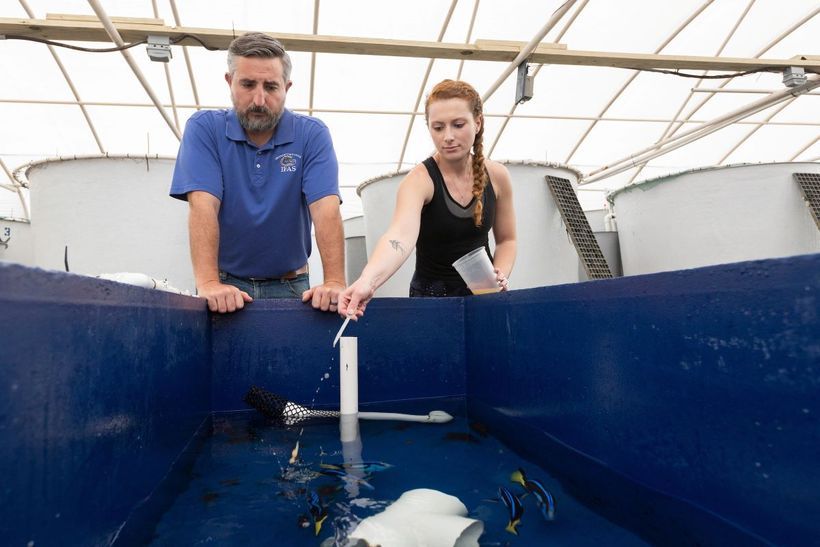
Florida’s thriving aquaculture industry is a vital part of the state’s economy, generating more than $165 million in sales annually and supporting jobs across rural and coastal communities. Recognized as agriculture by the Florida Legislature in 1993, aquaculture contributes to food security, environmental sustainability and economic resilience. “Just like terrestrial, land-based agriculture, aquaculture is the process of growing or raising a product,” said Shirley Baker, UF/IFAS professor of aquaculture and associate director of the School of Forest, Fisheries and Geomatics Sciences. “The people who do the work consider themselves farmers. Their products are simply plants and animals grown or raised underwater.” Overseen by the Florida Department of Agriculture & Consumer Services (FDACS), the industry includes an estimated 1,500 varieties of food fish, bait fish, mollusks, aquatic plants, alligators, turtles, crustaceans, amphibians, caviar and ornamental fish. With proper regulatory support, aquaculture can continue to be a driving force in Florida’s economy and environmental stewardship. The hallmark of Florida aquaculture is ornamental, or tropical fish, the saltwater and freshwater species bred for aquariums. In 2023, the sector generated more than $57 million, making the state the country’s top pet fish producer. In fact, 95% of ornamental fish in the United States come from the Sunshine State. About 90% of Florida’s ornamental fish are freshwater varieties. Farmers primarily raise live-bearing species in sterilized earthen ponds dug into loam or bedrock. They fill ponds with sexually mature fish called broodstock and harvest offspring using baited traps. Most egg-laying fish are grown in commercial hatcheries. Like ornamental fish, the demand for farmed seafood has grown as wild-caught sources are increasingly depleted. Globally, more than 50% of all seafood for human consumption is produced through aquaculture. “Seafood is considered one of the most in-demand sources of lean protein in the world, and it has to come from somewhere,” said Matthew DiMaggio, director of the UF/IFAS Tropical Aquaculture Laboratory in Ruskin. “The ocean can't produce any more than it already has, so aquaculture has to make up the deficit.” In Florida, as the number of fish farms and the scale of their operations have grown, the value of food fish sales has skyrocketed. Between 2018 and 2023, sales rose from $4 million to $26 million, a 550% increase. Some of the most common Florida food fish are tilapia, striped bass, cobia, pompano and red drum. They’re housed in various ways. Operations can include fiberglass ponds, vats and tanks inside greenhouses and recirculating systems occupying entire warehouses. Farmers typically start with fingerlings, or juvenile fish, purchased from reputable suppliers. Aquaculture farmers share their experiences Evans Farm of Pierson, Florida, is among the pioneering food fish farms in the state. Originally cattle farmers, the company expanded to sell tilapia, striped bass and caviar harvested from sturgeon. Fish are kept in filtered, recirculating ponds and long tanks known as raceways. They’re transported live to grocery stores and markets in vans outfitted with tanks and filtration systems. “Our fish are thriving, and they’re healthy. We grow them with great water quality, and we feed them excellent food,” said Jane Davis, who owns the business with her mother and brothers. “Although they’re raised in water, they’re no different than other agriculture crops, whether it's cattle, chickens or anything else.” Mollusks are another significant contributor to Florida aquaculture. While the sector includes oysters and scallops, clams are the dominating commodity; in 2023, they brought in $32 million of the state’s $43 million in mollusk sales. Clam farmers generally obtain grain-sized seed clams from hatcheries. The smallest varieties are initially cared for in nursery systems. Once the shells become large enough, they’re transferred to bags submerged off the coast. Cedar Key resident Heath Davis, no relation to Jane Davis, transitioned from fishing to clam farming in the mid-1990s. He and his father, Mike Davis, own Cedar Key Seafarms, one of the state’s leading wholesale clam distributors. “Before, as fishermen, we would go out and place nets wherever we thought the fish were,” Heath Davis said. “But clamming is like farming. We lease a 2-acre, underwater plot from the state and harvest the product from our designated field.” The Florida Aquaculture Plan In November, the Florida Aquaculture Review Council, the official conduit between FDACS and farmers, published the latest revision of the Florida Aquaculture Plan, a detailed list of research and development priorities. Florida’s climate, infrastructure, streamlined regulations and positive business environment have positioned the state to become the national leader in aquaculture, but innovation is required to remain competitive, according to the document. It’s a message Heath Davis echoed. “Aquaculture farming is such a huge part of Florida’s economy,” he said. “It could hold some of the answers needed to sustain the growing number of people living on this peninsula.”



Built-In Backup System Helps Muscles Counteract Fatigue
When you're running up stairs or out on a jog, your muscles eventually start to feel heavy and weak. That's fatigue setting in, a sign that the muscles’ energy reserves are becoming depleted. But a team of researchers led by Rensselaer Polytechnic Institute (RPI) biology professor Doug Swank, Ph.D., have discovered something surprising: certain muscle fibers have a built-in backup system that fights back against fatigue, potentially helping us keep going when we'd otherwise have to stop. The secret lies in a phenomenon called "stretch activation": when a muscle is stretched just before it contracts, it can produce a short burst of extra force. Stretch activation has been studied extensively in the context of insect flight muscle and heart muscle contraction in mammals, but its effects have long been assumed to be physiologically irrelevant for the big skeletal muscles we use for day-to-day activities like walking around. The new study, published in the Journal of General Physiology, shows that assumption was wrong, at least when it comes to certain fast-twitch muscle fibers used to produce quick, powerful movements. “For decades, stretch activation in skeletal muscle was considered physiologically insignificant because it contributes a relatively small amount of force under normal conditions," Swank said. "But we realized no one had tested what happens during fatigue, when the chemical environment inside muscle fibers changes significantly." The researchers tested individual muscle fibers from mice under three conditions: normal, early fatigue (with chemical changes that mimic the state of tired muscles), and severe fatigue. They found that while the fibers' normal force production dropped dramatically as expected, in certain fibers the stretch-activated force stayed the same or even increased. In the most fatigued state, stretch activation contributed up to 30% of the total force these fast-twitch fibers were generating. “What was dismissed as too small to matter may actually be an important fatigue-fighting mechanism that's been hiding in plain sight,” Swank said. The effect was specific to fast-twitch fibers, which are used to generate rapid, powerful movements like sprinting and jumping. Slow-twitch fibers, which are used during endurance tasks like long-distance running or cycling, are more fatigue-resistant to begin with, and showed almost no stretch activation response. Understanding how muscles naturally combat fatigue could eventually inform strategies for improving strength and endurance, whether for athletes, people with muscular disorders, or patients recovering from injury. Swank and his colleagues are following up on their findings by conducting more detailed explorations of how stretch activation contributes to force generation in both low-intensity and high-intensity exercise. The research is funded by a five-year, $2.7 million National Institutes of Health grant to Professor Swank.


Trim the Clutter, Keep the Cheer
The holiday season brings warmth, joy and a touch of magic into our homes, but it also can bring excess clutter, waste and energy consumption, making it hard to feel festive. However, there are simple and creative ways to decorate sustainably without sacrificing the festive spirit. Baylor University human sciences and design professor Elise King, M.I.D., M.A., an expert in interior design and built environments, says embracing sustainable decorations, changing to energy-efficient lights, eliminating clutter and reducing waste can help maintain a tidy, eco-friendly home – and create a holiday atmosphere that resonates with joy and meaning. “The holidays can often feel busy and stressful, so it’s helpful to focus on traditions and decorations that bring joy and add meaning to the season,” King said. By taking simple steps to reuse materials, reduce energy consumption and focus on what matters most, families can celebrate the season with both heart and mindfulness, King said. Decorating sustainably One of the easiest ways to approach sustainable decorating is by reusing or repurposing materials you already have or finding decorations at resale shops. "Upcycling items from thrift stores or turning last year’s Christmas cards into garlands are simple and creative ideas," King said. “Beyond thriftiness, these practices add a personal and nostalgic touch to decorations.” King also said that it is important to consider the lifecycle of a product, beyond just being recyclable. "Also consider elements such as durability/longevity, manufacturing processes, transportation, energy consumption and disposal,” she said. “I recommend people make the best-informed decisions they can, while also remembering not to let it become overwhelming. Switch to LED Christmas lights Changing from incandescent to LED Christmas lights is good for both style and sustainability. LED lights reduce energy usage, are more durable and typically last longer than incandescent. Plus, they have come a long way over the past few years. “The criticism used to be that LEDs had a blue hue and were ‘cold’ compared to incandescent,” King said. “That isn’t really the case anymore. You have to be particular about what you purchase, but several companies offer lights that are virtually indistinguishable from vintage lights.” A clutter-free peaceful mindset While holiday decorations create a festive touch around the house, they can add to the clutter and busyness, which ultimately takes away the joy, King said. Decluttering and organization can help create a peaceful environment. “Most people enjoy Christmas decorations, but over the years we tend to accumulate a lot of them,” King said. “Sadly, for many, the thought of decorating for Christmas no longer brings feelings of excitement and joy. Instead, we dread going into the attic, dragging out the tree and boxes of ornaments, checking strands of lights, fixing broken bulbs, etc., only to know that we’ll have to put it all back in about a month. "Keep decorations that bring joy and let go of what no longer feels fulfilling can make a big difference in decreasing the excess while emphasizing what is important to you and your family," she said. By clearing both physical and mental space, families can better prioritize the activities and moments that truly matter. Reducing paper use It can be difficult to go fully paperless because of gift wrapping, but there are ways to reduce paper in the holidays from reusing materials or gifting experiences. “You can reuse paper shopping bags or even cut up the bags or other paper you have around the house and wrap gifts,” King said. Gifting experiences rather than physical items is another growing trend. “I find that many people are interested in receiving or gifting experiences, which can also reduce wrapping needs,” King said. “Not only does this minimize waste, but it also emphasizes shared moments over material possessions.” King noted that since COVID, there has been a trend to go paperless and people tend to be more comfortable with virtual communication and remote collaboration in general, which can also eliminate the need for Christmas cards and other paper products.



Giving with Purpose This Holiday Season
As the season of giving draws near, many people are searching for meaningful ways to support the causes that matter most. From local food banks to global humanitarian organizations, charitable giving offers an opportunity to make a genuine difference – for the organization and for the donor. Two Baylor University experts in consumer behavior and philanthropy – James A. Roberts, Ph.D., The Ben H. Williams Professor of Marketing in the Hankamer School of Business, and Andrew P. Hogue, Ph.D., associate dean in the Office of Engaged Learning and founder of Philanthropy and the Public Good program – share five practical strategies to help donors give with intention and impact. Five ways to give more thoughtfully and effectively 1. Choose a cause that resonates with you Begin by considering the issues that matter most –education, hunger, health care, the environment or another area close to your heart. Once you identify your passion, take time to research organizations working in that space. Look for transparency, measurable results and a strong record of directing funds to mission-focused programs. “A helpful shortcut is to see whether a nonprofit receives repeat grants from charitable foundations,” Hogue said. “Those grants typically follow a rigorous evaluation process.” 2. Decide what you can comfortably give Giving should feel fulfilling, not stressful. Roberts and Hogue recommend reviewing your household budget and determining an amount that fits comfortably. Even small donations can accumulate into meaningful support over time. 3. Consider how often you want to give Think about whether a single contribution or ongoing support works best for you. Regular giving helps nonprofits plan ahead and maintain steady programming. “Consistent donations allow charities to allocate resources more effectively throughout the year,” Hogue said. 4. Automate your contributions Setting up recurring gifts through your bank or directly with a nonprofit keeps your generosity on track with minimal effort. Automatic withdrawals ensure reliability for the organization and ease for the donor. “It’s a simple way to make sure you don’t forget to give,” Roberts said, “and it provides charities with predictable support.” 5. Offer your time and talent if money is tight Financial support is just one form of generosity. Time, skills and personal networks can be equally valuable. “Donating your time and skills can be just as impactful,” Roberts said. “Whether you’re mentoring, sorting donations or helping at events, your presence matters.” Hogue added that giving enriches both the recipient and the giver: “Charitable giving is about making a difference in others’ lives while adding purpose and connection to your own.” His advice: start small, stay consistent and simply take the first step. “Giving is deeply rewarding,” Hogue said. “And as you grow in your generosity, keep a beginner’s mindset – there is always room to improve how we steward the resources entrusted to us.” Looking to know more or arrange an interview? Simply click on the expert's icon below or contact: Shelby Cefaratti-Bertin today.


Budget 25 – initial reactions related to personal financial wellbeing
As the director of the Aston Centre for Personal Financial Wellbeing, and a professor of taxation, I obviously take particular interest in the annual budget day as it sets a tone for much of the personal finance changes that are likely to occur in the near future. The lead up to this year’s budget had unprecedented levels of speculation with much of the press and commentators trying to get attention with ever more it seemed wilder guessing of what the chancellor might do – largely unhelpfully and worrying people and the markets unnecessarily. Almost all of this proved wide of the mark as the budget didn’t increase any of the main taxes at all, and where it might nudge National Insurance contributions (NICs) up for some, this won’t be for a few years and only in a small area (pension payments for employees) that won’t actually affect most people. Small and cautious steps to reform The reason for all this speculation of key changes needed was that everyone suspected there was a big hole in the national finances. This was shown not to be the case. In fact, predictions provided in the budget documents are we’d in fact be in budget surplus by the end of this parliament period even before the changes announced take effect. This was a surprise to many and meant the chancellor could actually focus on at least some small and cautious steps towards reforming how our tax, benefit and government spending systems work. What she proposed therefore is currently predicted will raise circa £26bn and give the government ‘head-room’ to cope with economic changes later rather than needed to fill a feared financial black hole now – good news all round! This meant what we actually got was lots of smaller changes with fewer ‘rabbit out of a hat’ big tax surprises than we have had in recent years – a welcome steadying trend I hope will continue. She also promised some short-term spending that can be paid for with a combination of extra borrowing now and with increased taxes later – again a trend of recent budgets. If these tax changes actually happen in the end, then it will be down to what happens between now and when these were proposed to commence – by no means a guarantee these will ever happen. Later budgets, or other rule changes in the future, could easily retract or counter them (all chancellors like to announce planned tax changes aren’t going to happen for obvious political gain reasons!). Income tax changes The largest share of the extra £26bn raised will come from extending the income tax thresholds for a further period – now to 2031. These have been fixed (at £12,570 for example for the point at which income tax starts to need to be paid on personal incomes) since at least 2023, some well before this. This matters, as, when wages rise due to inflation, people are not better off in reality (you get more income but things cost more), but may end up paying more tax than before as the thresholds haven’t increased with inflation to the same degree (what we call ‘fiscal drag’). As such, holding these thresholds fixed for longer will raise extra money for the government (predicted to be over £12bn a year in 2030-31 for example) – largely unnoticed as to many it doesn’t feel like the tax rise it clearly is. The threshold fixing extension announced today will mean that as many as 700,000 more people will start to pay some income tax when they wouldn’t currently, and up to 1 million more people will start to pay higher rates of tax than currently – all without being actually better off in real terms. Some call this stealth tax, but it feels very real when it starts to affect you if your total taxable incomes fall near these threshold levels. There were in total more than 70 other tax measure changes in this budget – a huge number and lots to get your head around. However, most of these will not affect most people and are relatively small in nature – targeted at making the tax system a little fairer (i.e. those on higher incomes, with more savings, dividends, receiving additional income from property they own etc – paying more taxes as a proportion of the total amount raised in tax from all sources). This is clearly welcome news (at least for those not being asked to pay this extra) in the current climate. The biggest changes for financial wellbeing As a research centre focusing on individual and family financial wellbeing, what do we think are the specifics announcements made that are most likely to affect people – several headline announcements are worth highlighting: - 1. The removal of the two-child limit on benefit eligibility is obviously a key headline – long touted as a key reason larger families are much more likely to be in poverty than smaller families. This is a key change that many Labour MPs wanted to see happen and the chancellor has delivered on it. This is very welcome news – although it won’t start to affect these families until after April 2026 to give time to bring these measures into place – but then predicted to lift 450,000 children out of poverty. 2. As part of making the tax system more progressive, a brand-new tax was announced on very expensive houses in England – to be snappily called the High Value Council Tax Surcharge (or HVCTS) – although expect it to be called the ‘mansion tax’ by everyone! The UK’s main local tax (council tax) isn’t going to be reformed as such in this change – despite being the target of much speculation that it is just too regressive to leave unreformed any longer after we haven’t revalued houses in most of the UK since 1991. This will instead be an additional tax, commencing in April 28, on those whose properties are valued (now) at £2m or more – with higher rates rising to those with properties over £5m. Clearly this will affect relatively few in most of the UK (only expected to affect 1% of properties nationally), but will affect some and will raise extra revenues (expected to raise circa £400m+ a year) to directly support provision of local services – much needed in many parts of the UK. 3. New taxes on electric cars – given fuel duty is not paid by those who drive electric cars (as they don’t buy petrol or diesel) there have been calls for new taxes to be charged to electric car drivers. While these cars may be better for the environment when driven, they continue to wear roads and contribute to congestion. The government is proposing a per mile charge from April 28 (to be called the Electric Vehicle Excise Duty or eVHD) for these vehicles which will be painful for electric car divers – not least as this cost as not known when purchase decisions were made. No-one likes a tax charged on something you have already made the decision to buy so expect this to be unpopular. It is proposed currently to cost EV drivers around £20/month – about half the rate of fuel duty on average – and expected to raise circa £2bn a year by 2030-31. I expect this tax will become more nuanced in future perhaps as technology enables perhaps different charges to be applied to use of congested city roads compared to open rural driving perhaps - we will see. 4. National Insurance deductibility for pension contributions via salary sacrifice schemes operated by many employers for their employees is to be capped at £2,000 (although only from April 29 – so no immediate effect). This now very widely used approach to making pension contributions if you are an employee that in effect avoids you having to pay NIC on this income going into your pension. For those with larger pension contributions the bit that can be made before NIC is due on the extra this will be capped in the future to £2,000 per year – again affecting those who receive higher pension contributions most and affecting those at the bottom of the income spectrum, little if at all (74% of employees are predicted not to be affected). Is this a breach of the Labour manifesto promises not to increase the main taxes? For some it certainly seems that way. What didn’t happen? There are many smaller measures to explore, or ones that are not coming into effect for the next year or more that might have been missed from the news headlines but that will almost certainly affect lots of people. To name just a few (including highlighting several things NOT going to happen – which will obvious not save people money per se, but help by not costing them more): - above inflation increases to national minimum (‘living’) wage for all age groups from April 2026 (+4.1% for those over 21)– although still not raising this to ‘real living wage’ levels. further extension of holding off on the 5p/litre fuel duty rise not increasing prescription charges (staying at £9.90 for the next year) confirming state pension rises by 4.8% from next April (worth £575/year) confirming £150 winter fuel payments again this winter to over 6 million homes freezing regulated rail fares – preventing the usual annual increases from January (the first time this has happened in 30 years) extending the government’s Help to Save scheme to more benefit recipients than previously No immediate impact for most Overall, this is therefore probably a welcome budget for many, those on lower incomes will likely get the most from these measures, if all are applied as proposed, but most won’t see much of an immediate impact immediately – and with the largest benefit likely to all on larger families in receipt of benefits from next April.


VR Technology Offers Lessons in Navigating a Snow Squall
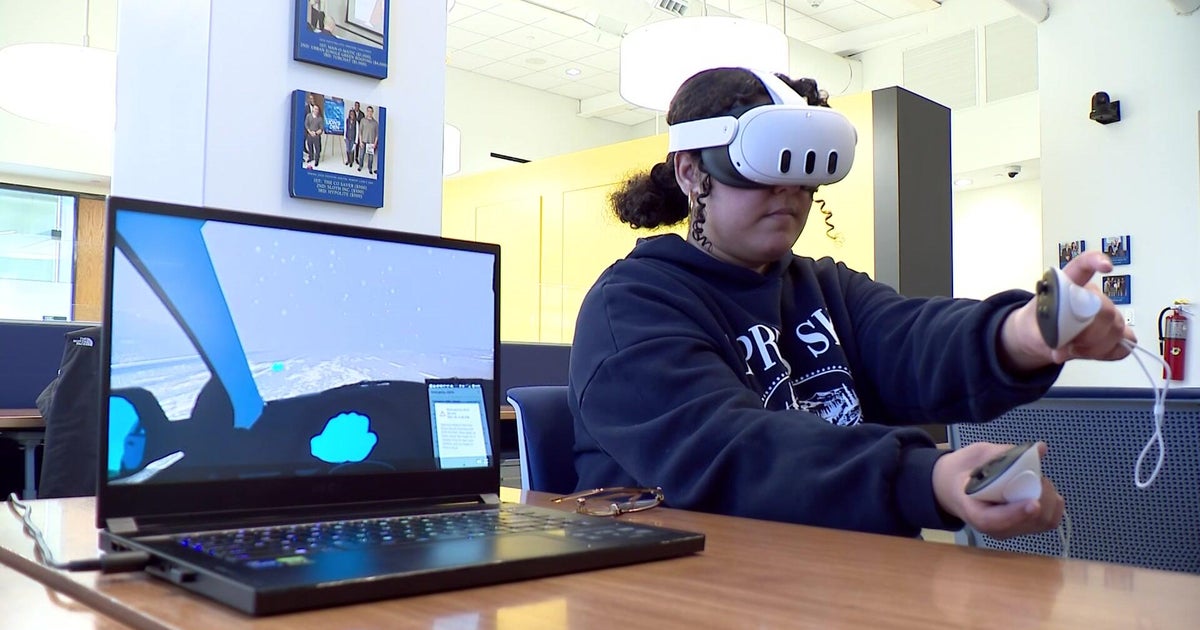
WCBS-TV, WPIX 11, and WNYW Fox 5 interviewed Dr. Jase Bernhardt, Hofstra associate professor of geology, environment, and sustainability, about his virtual reality program designed to teach the public about the danger of driving in a snow squall. Funded by a $100,000 Road to Zero Community Traffic Safety Grant from the National Safety Council, Dr. Bernhardt’s project emphasizes the importance of heeding emergency weather advisories and what drivers should do if they are on the road when a snow squall occurs. Users wear a headset and hold a device – like a video game controller – in each hand to replicate the movements of a steering wheel. Bernhardt’s collaborators include Assistant Professor of Sustainability Sasha Pesci; software developer Frank Martin ’22, ’23, who earned both a BS and an MS in Computer Science from Hofstra University; and John Banghoff and other meteorologists at the U.S. National Weather Service (NSW) Office, State College, PA.

How UF researchers are helping Floridians to build resilience
When Hurricane Idalia hit the Big Bend region of Florida in 2023, Jeff Carney and his team were watching. A coalition of architects, planners, and landscape architects led by Carney worked closely with the tiny Gulf island of Cedar Key, which is particularly vulnerable to hurricanes, to prepare for this moment. The researchers had modeled for city officials how a major storm would flood the city’s core services. “Idalia caused flooding exactly where the maps said it would, including city hall, the historic downtown, older homes, and many streets,” Carney said. After the storm, Cedar Key moved city hall to higher ground, as outlined in the plan. And just in time. Barely a year later, Cedar Key was hit even harder by Hurricane Helene. Between the storms, Carney’s group had worked with the city to refine their storm preparation. The new plan focused more on resilience-boosting projects, like improving drainage around the city. Cedar Key finalized their plans just weeks before Helene. “A lot of the projects we put forward in this plan are in the process of seeking additional funding after Helene,” Carney said. A professor of architecture at the University of Florida, Carney directs the Florida Institute for Built Environment Resilience, or FIBER. A research institute in UF’s College of Design, Construction and Planning, FIBER engages with communities to understand how the designs of buildings and cities expose Floridians to risks — not just storms, but also excessive heat, poor air quality, even a lack of health care. FIBER faculty then work with cities to mitigate these hazards. By preparing for emergencies, upgrading buildings, and providing targeted services, communities across Florida are bolstering the resilience of their residents, all with expert help from UF researchers. Preparing to weather big storms That kind of resilience is especially important for some of Florida’s most vulnerable residents. Older and poorer Floridians face higher-than-average risks from natural disasters and other environmental hazards. That vulnerability was apparent in Cedar Key as it weathered the last two hurricane seasons. Centered around aquaculture and tourism, Cedar Key seems in many ways to be thriving. Yet, with the feel of a small fishing village, roughly 13% of its nearly 1,000 full-time residents are considered to be financially disadvantaged, according to U.S. Census data. Poorer residents may also have a harder time walking away from coastal communities devastated by storms. With savings invested into damaged homes and jobs tied to the local area, less-wealthy residents often have no choice but to stay and rebuild. Carney’s team helps people see the opportunities for rebuilding with a clearer vision of a future where rising sea levels are a reality. “You capture people’s attention and excitement when you can offer them options that are not doomsday,” said Carney, who has been working in Pine Island and Matlacha in Southwest Florida’s Lee County to help residents affected by recent storms prepare for the future. “There’s a lot of opportunity for rebuilding as long as you don’t try to have it be business as usual. We help people see how redevelopment can provide a community asset for the future,” he added. “We try to paint the picture of all the possible scenarios so people can find their own comfort level. It puts them in the driver’s seat.” Aging with fewer choices While that kind of agency is empowering, it can be harder to come by as people retire and find themselves facing tough decisions on fixed incomes. That’s a common experience in Florida, which has a larger proportion of seniors than any other state, due in part to its popularity as a retirement destination. More than 10% of Americans over the age of 65 live below the federal poverty line. This population often finds themselves moving to less safe places as they age. “Older people with more social vulnerability — such as low income or poor health — have a tendency to move to worse places,” said Yan Wang, Ph.D., a professor of urban and regional planning in the UF College of Design, Construction and Planning. “They are more likely to move to places with less economic stability, with less access to health care, and with more exposure to extreme weather.” Wang and postdoctoral researcher Shangde Gao, Ph.D., recently published a study that uncovered the risks low-income seniors face when moving. Compared to their peers with higher incomes, poorer seniors were more likely to end up in neighborhoods lacking access to health care facilities. To address these kinds of disparities, UF Health has launched mobile health units that can reach people who have trouble traveling to health centers, including low-income seniors. The Mobile Outreach Clinic provides primary care and referrals for specialists. And the newly launched cancer screening vehicle, which serves all of North Central Florida, can help catch the disease in the early stages when it is easiest to treat. It’s not just finding health care that’s a struggle. Older adults from minority racial groups were also more likely to increase their exposure to poor air quality and to natural disasters like flooding and hurricanes when they moved, Wang and Gao discovered. “If we understand the trend and causes of these income disparities better, we could better prepare some places with more health care resources or better hurricane preparation for these older populations,” Wang said. Building safer, healthier homes That preparation is happening right now in Jacksonville, not just for big storms but for the everyday nuisances and hazards — even the ones people are exposed to in their own homes — that threaten people’s lives and health. The Jacksonville Restore and Repair for Resiliency research initiative was founded to address these kinds of risks while improving energy efficiency. The R3 initiative, as it’s known, is a home remodeling program organized by a slew of community partners and supported by FIBER research on the impact of housing quality on health. The project aims to keep longtime residents of the Historic Eastside in their homes while addressing the home hazards that put people at risk for medical complications like asthma attacks and emergency room visits. “The designs of buildings impact human health and well-being,” said Lisa Platt, Ph.D., the lead researcher with the Jacksonville program and an assistant professor of interior design with FIBER. “Our research is helping the team prioritize the home improvements that will benefit residents’ health the most.” Jacksonville’s Eastside faces a lot of challenges. The population is older than the city as a whole. Roughly three-quarters of residents are over the age of 60, and the poverty rate is over 40%. Yet more than a third of residents own their own homes. Often passed down from previous generations, some of the houses are now over a century old and struggle to keep the intense Florida heat and humidity out. Platt’s research has modeled how things like high heat days — only growing more common in a warming world —are associated with increased emergency room use and poor perceived physical and mental health. That science helps guide the community partners to prioritize providing air conditioning and better insulation to protect Historic Eastside residents. To date, the Jacksonville program is targeting up to 70 homes for renovation. Builders have fixed holes in roofs, replaced drafty windows, and hooked up air conditioning for the first time, keeping the heat and humidity at bay and protecting residents’ health. Now the R3 initiative is applying for federal grants to expand the program. “I think the best way to approach this kind of community action research is with humility and outreach. Community members have amazing expertise. I always say, ‘I can build models to analyze the problem, but you are the ones that are the experts,’” Platt said. “That’s where UF can be most useful, is coming in from a perspective of service.”

New findings from a recent survey conducted by CAA Manitoba (CAA MB) highlight a concerning trend: substance use, particularly cannabis, is on the rise both recreationally and behind the wheel. “Cannabis is more accessible than ever, and that means more Manitobans are not only choosing to drive after consuming it but are also getting behind the wheel soon after and expressing increased confidence in their ability to do so,” says Ewald Friesen, manager, government & community relations for CAA Manitoba. The data shows that 24 per cent of drivers admitted to consuming cannabis before driving, which is up six per cent from last year, while ten per cent of Manitobans reported driving after consuming cannabis in the past few months, a three per cent increase from 2024. Among cannabis-impaired drivers, most (63 per cent) say they drove within three hours of consumption, which is up 10 per cent from last year. Over a third of cannabis-impaired drivers acknowledged feeling high while driving. In addition to the survey conducted by CAA MB, a recent study with funding support from CAA, conducted by the University of Saskatchewan, examined 50 drivers aged 19 to 30 to assess how consuming edible cannabis influences collision risk. This age group of young drivers, identified as having the highest crash rates and a greater tendency toward risky driving behaviour, offers new insights into the impact of cannabis on driving. Drivers often have a false sense of confidence when driving high. This study examined how consuming edible cannabis affects collision risk. Findings indicate that critical driving skills, including reaction time, lane discipline, and speed control, were impaired even shortly after consumption. Contrary to popular belief that cannabis edibles take hours to take effect, this study shows that impairment is evident 90 minutes after consumption. When asked if they felt safe to drive after consuming edibles, only four per cent felt safe getting behind the wheel 90 minutes after eating an edible cannabis product. What is interesting about this is that in a controlled environment, young drivers feel unsafe driving under the influence of cannabis. However, the study conducted by CAA MB shows that drivers often have a false sense of confidence when they have driven high in the past. “This study marks an important first step in understanding how cannabis edibles impact driving performance,” adds says Friesen. “Too often, decisions about whether someone is fit to drive are made in the moment, relying on judgment rather than evidence. Cannabis impairment studies like this are essential. Each one brings new learnings that help us refine our approach and ensure that safety is never left to chance.” According to CAA Manitoba’s data, more drivers have reported feeling confident in their driving ability (77 per cent), which is up ten per cent from 2024. More drivers this year (33 per cent) also say that they are unsure about how much cannabis is needed for effects to kick in, up six per cent from 2024. Alarmingly enough, more than half of Manitobans are unaware that the penalties associated with driving under the influence of alcohol, drugs, or a combination of substances are the same. “Drivers may face enhanced roadside sanctions, including an administrative penalty of $700, vehicle impoundment, mandatory Ignition Interlock participation for one year, an impaired driver assessment and movement of 10 levels down the Driver Safety Rating scale,” says Friesen. “Depending on the severity of convictions, impaired drivers may be charged further under the Criminal Code of Canada.” This holiday season, CAA Manitoba is asking that those who do consume cannabis, alcohol or other drugs to plan ahead by making alternate arrangements, such as a designated driver or using a rideshare service, to get home safely. Methodology CAA MB The online survey was conducted by DIG Insights from June 27 to July 14, 2025, with 514 Manitoba drivers aged 19 and older. Based on the sample size of n=514 and with a confidence level of 95 per cent, the margin of error for this research is +/- 3%.) Methodology of University of Saskatchewan study The study collected extensive data from 50 young adult drivers (aged 19–30), resulting in 250 assessments across multiple realistic driving scenarios using a simulator after consuming a 10mg THC edible.



MEDIA RELEASE: New CAA Study Sheds Light on Edible Cannabis and Collision Risk Among Young Drivers
A recent study with funding support from CAA, conducted by the University of Saskatchewan, examined 50 drivers aged 19 to 30 to assess how consuming edible cannabis influences collision risk among young drivers. This demographic, which is known for having a higher tendency to engage in risky driving behaviour, currently holds the highest crash rates nationwide. “This study marks an important first step in understanding how cannabis edibles impact driving performance,” says Michael Stewart, Community Relations Consultant for CAA South Central Ontario. “Too often, decisions about whether someone is fit to drive are made in the moment, relying on judgment rather than evidence. Cannabis impairment studies like this are essential. Each one brings new learnings that help us refine our approach and ensure that safety is never left to chance.” The findings indicate that critical driving skills, including reaction time, lane discipline, and speed control, were impaired. Consumption times may vary to feel the effects of edible cannabis from driver to driver. However, the study found that impairment was most evident at 90 minutes after consumption, so its effects may not be noticeable until a motorist is already behind the wheel. When asked if they felt safe to drive after consuming edibles, only four per cent felt safe getting behind the wheel 90 minutes after eating an edible cannabis product. What is interesting about this is that in a controlled environment, young drivers feel unsafe driving under the influence of cannabis. However, a recent survey of 1,510 Ontario drivers from CAA SCO shows that drivers often have a false sense of confidence when they have driven high in the past. The perception of safety doesn’t match reality The survey found that the number of people admitting to cannabis-impaired driving in Ontario (nearly 20 per cent) has remained stable compared to last year. However, a concerning trend has emerged, with more cannabis-impaired drivers (78 per cent) saying they are confident in their driving abilities while under the influence – a 13 per cent overall increase from 2021. Why is this concerning? The perception of safety doesn’t match reality. More than a third of cannabis-impaired drivers acknowledged feeling high while driving, relying on their personal judgment for signs of impairment, such as drowsiness, slowed reaction time, or brain fog. “This misplaced confidence can lead to dangerous decisions, increasing the risk of collisions and endangering road users,” adds Stewart. “We must recognize that getting behind the wheel is not just a personal choice it’s a responsibility that affects the safety of everyone on our roads.” Growing issue of poly-use The research also points to a growing issue of poly-use, or the consumption of multiple substances and is on the rise. This trend adds another layer of complexity to road safety efforts, as the combined effects of different substances can further impair judgment and reaction times. Most respondents (57 per cent) say they consume cannabis in combination with other substances – most commonly, alcohol. However, painkillers, psilocybin, ecstasy, and MDMA are on the rise. CAA SCO continues to advocate for safer roads by encouraging motorists to make responsible choices. The message is clear: do not get behind the wheel when impaired. “While we’re all aware that alcohol-impaired driving can be dangerous, we should also take the same attitude towards cannabis-impaired driving,” says Stewart. “With the holiday season coming up, cannabis can be consumed legally and responsibly but should never be used when driving.” CAA is asking that those who do consume cannabis, alcohol or other drugs to plan ahead by making alternate arrangements, such as a designated driver or using a rideshare service, to get home safely this holiday season. Methodology The online survey was conducted by DIG Insights from June 27 to July 14, 2025, with 1,510 Ontario drivers aged 19 and older. Based on the sample size of n=1,510 and with a confidence level of 95 per cent, the margin of error for this research is +/- 2%.) Methodology of the University of Saskatchewan study The study collected extensive data from 50 young adult drivers (aged 19–30), resulting in 250 assessments across multiple realistic driving scenarios using a simulator after consuming a 10mg THC edible.
