
Experts Matter. Find Yours.
Connect for media, speaking, professional opportunities & more.

Dangerous new COVID variant could overwhelm hospitals, weaken immunity
Two new studies have found that the new COVID variant BA.2.86 could lead to more severe diseases than other Omicron variants. Jennifer Horney, one of the leading experts on the COVID-19 pandemic, can discuss the new variant and its potential impact on the healthcare system. Horney, professor and founding director of the University of Delaware's epidemiology program, made the following points: There are spikes now in all respiratory infections across the U.S. High rates of COVID-19 and seasonal infuenza especially among children and older adults could stress healthcare systems. New subvariants of COVID-19 could be severe. High hospitalization rates are occurring in countries with far higher vaccination rates in the US, perhaps due to reduced immunity. We need to continue to track new variants and focus on developing updated vaccines. Continued mutations will mean less protection from infection among those who have prior infections and vaccinations. To set up an interview, visit Horney's profile and click on the contact button.



Public health workers faced unprecedented threats during the pandemic
A new study led by Jennifer Horney, founder of the University of Delaware's Epidemiology program, shows that threats to public health workers nearly doubled after the COVID-19 vaccine was released in August 2021. The results, recently published in an open-access commentary in Public Health in Practice, demonstrate a strong need for expanded legal protections for all frontline workers. They also illustrate a need to boost the resilience of the public health workforce, which can be achieved through training, coping, protective services and media management. While public health workers have always received threats, including during the SARS and Zika outbreaks, the COVID-19 pandemic threats were different. “These threats were more personal in nature,” said Horney, a professor in UD's College of Health Sciences. “Due to the proliferation of social media and the politicization of the pandemic, for the first time, public health leaders were finding protesters on their doorsteps or were being doxed.” Horney and her team surveyed staff at state and local health departments in 23 states – most of them epidemiology or communicable disease staff. The initial online survey found that 25% of respondents said someone in their public health agency had received personal threats. That percentage practically doubled to 41% in a follow-up survey. Of those, respondents said nearly all the personal threats were lodged by members of the public. Almost 40% reported receiving political threats. The threats reported by public health workers who responded to the survey ranged from death threats to blame for COVID-19 deaths due to incompetence. Horney is available for interviews to discuss the study and other topics related to the public health response to COVID-19 and the impacts of natural disasters on public health. Click on her profile below to contact Horney and the UD media relations team.

Devastation beyond the storm: Hurricane Ian the latest disaster to cause increase in suicides
This week marks one year since Hurricane Ian decimated towns along Florida's Gulf Coast, erasing whole neighborhoods and claiming 160 lives. Recent research found that the toll could continue to rise. The Tampa Bay Times reported that six people have taken their lives since the Category 5 storm moved on from the area. Increases in the number of suicides after a disaster is sadly not an uncommon occurrence, according to research by the University of Delaware's Jennifer Horney, professor founding director of UD's epidemiology program. According to a study led by Horney in The Journal of Crisis Intervention and Suicide Prevention, suicide rates increased 23% when comparing the three-year period preceding a disaster to three years after an event. For all disaster types combined as well as individually for severe storms, flooding and ice storms, researchers found the suicide rate increased in both the first and second year following a disaster, then declined in the third year. Flooding saw suicide rates increase by nearly 18% the first year and 61% the second year before declining to the baseline rate after that. By contrast, the suicide rate following hurricanes rose in the first year — jumping 26% — then returned to the baseline in the second year. “Counties impacted by hurricanes saw the biggest increase in the rate of suicide in the first year, which makes sense because it's the most widespread type of disaster among those we examined,” Horney said. Horney's research focuses on the impacts of natural disasters on public health, as well as linkages between disaster planning and the actions communities and individuals take to prepare, respond and recover. To request an interview, click on her profile and use the contact button to connect with the researcher.

Potential health crisis in the wake of deadly storm and flooding in Derna, Libya
The number of fatalities and missing persons continue to mount after a storm caused massive flooding in the town of Derna, located in the northeast region of Libya. While search and rescue will remain the most urgent priority in the near term, addressing acute health needs will be a major factor in the wake of this disaster, said Jennifer Horney, founder and director of the epidemiology program at the University of Delaware. The collapse of two dams are likely to cause long-term water borne diseases of all types. With little existing health infrastructure in the area, treating and managing health will be extremely difficult. Safe food and water will be scarce. There is a strong possibility of infectious disease outbreaks and the spread of communicable disease. Other experts from UD's Disaster Research Center who can comment on the flooding in Libya: Tricia Wachtendorf: Disaster relief and donations, and alignment post-disaster – i.e., making sure donations that aren't needed don't flood the supply chain. Wachtendorf can also discuss evacuation decision-making, volunteer efforts, disaster response and coordination. Sarah DeYoung: Dealing with unsolicited infant formula donations, and infant and maternal health. Can also discuss pets in emergencies, infant feeding in disasters and decision-making in evacuation. Jennifer Trivedi: Long-term recovery and challenges for people with disabilities during disaster.


Georgia Southern University’s Institute for Health Logistics and Analytics (IHLA) and the Georgia Department of Public Health (DPH) have once again joined forces to reduce the spread of COVID-19 in confinement facilities across the state. DPH has awarded the IHLA a contract worth $10 million to complete a second year of work. “Throughout the pandemic, COVID-19 was a significant cause of illness and death among confinement facility residents and employees,” said Jessica Schwind, Ph.D., director of IHLA. “SARS-CoV-2, the virus that causes COVID-19, is still circulating and we need to continue to support these facilities in reducing viral transmission.” With the funding, the IHLA assists with the purchase and coordination of allowable COVID-19 mitigation items for enrolled facilities across the state of Georgia. The focus in year two of the project is to improve air quality and offer a seamless process for confinement facilities. Recipients do not incur any direct costs and the paperwork and the procurement process is handled entirely by Georgia Southern. “We work with each facility to determine what they need,” said Kathryn Stewart, budget manager at IHLA. “We then handle the ordering, payment and delivery. For facilities that need fairly standard supplies, we have an easy order form process. For those with complex requests, we work with them individually to make sure they receive the best solution for their particular needs.” Facilities in Georgia are eligible to receive $25,000 to $250,000 of COVID-19 mitigation supplies. The amount awarded is determined by the number of detainees each facility is licensed to hold. Eligible items include portable HEPA filter units to improve air quality, personal protective equipment and cleaning and disinfecting supplies. “We are really proud of the work this institute has accomplished,” said Carl Reiber, Ph.D., Georgia Southern’s provost and vice president for academic affairs. “Not only has the IHLA maintained a focus on public impact research, it is a shining example of the significant role Georgia Southern is taking on improving health across the state.” All eligible correctional confinement facilities, which includes adult prisons and jails, youth detention centers and holding cells in the state of Georgia, are encouraged to enroll, even if they received funding in the previous cycle. This project is supported by the Centers for Disease Control and Prevention’s Detection and Mitigation of COVID-19 in Confinement Facilities Epidemiology and Laboratory Capacity Grant Program, which provided a financial assistance award to the Georgia Department of Public Health. For more information and to enroll in the program visit the project's website: The IHLA at Georgia Southern provides comprehensive solutions to improve and advance the health of populations around the world. The institute specializes in planning, evaluation, capacity building and research services to enhance the health infrastructure in organizations and communities. To learn more or to speak with Jessica Schwind, Ph.D., director of IHLA - simply contact Georgia Southern's Director of Communications Jennifer Wise at jwise@georgiasouthern.edu to arrange an interview today.


With tourism, concerts and other forms of recreation experiencing blockbuster summers, it seems almost hard to believe that we were wearing masks, quarantining and dealing with other COVID-19 restrictions as recently as a year ago. But according to Jennifer Horney, professor and founding director of the University of Delaware's epidemiology program, the virus is far from gone, with waves hitting Japan and the Dominican Republic and a rise in cases in the southern part of the United States. In addition to providing expert analysis for national media on the pandemic, Horney focuses on the impacts of natural disasters on public health, as well as linkages between disaster planning and the actions communities and individuals take to prepare, respond and recover. A core faculty member with UD's Disaster Research Center, Horney has trained rapid response teams around the world to respond to outbreaks of novel and reemerging diseases, such as Influenza A H1N1. She recently published "The COVID-19 Response: The Vital Role of the Public Health Professional," which emphasizes the critical roles that the public health workforce played on the frontlines of the response to the COVID-19 pandemic.

Georgia Southern professor earns Fulbright US Scholar Award for 2023-2024
A noted Georgia Southern University public health professor has earned a Fulbright U.S. Scholar Program award in All Disciplines to Latvia for the 2023-2024 academic year from the U.S. Department of State and the Fulbright Foreign Scholarship Board. Yelena N. Tarasenko, DrPH, is a professor in the Department of Biostatistics, Epidemiology and Environmental Health Sciences at Georgia Southern’s Jiann-Ping Hsu College of Public Health. Her Fulbright project is titled “Strengthening research and teaching capacity in cancer prevention globally.” She will collaborate with personnel and students at the Faculty of Medicine and Institute of Clinical and Preventive Medicine at the University of Latvia, as well as colleagues at the International Agency for Research on Cancer to help improve cancer care coordination and screening in Latvia and 14 European countries participating in the “Towards gastric cancer screening implementation in the European Union” project. Given Tarasenko’s expertise in legal and cancer epidemiology, she will engage in (i) implementation research focused on cancer screening and patient navigation, and (ii) teaching activities focused on fostering research productivity (e.g., guest lecturing, curriculum development, advising, and mentoring). Tarasenko is among more than 800 U.S. citizens who will teach or conduct research abroad for the 2023-2024 academic year through the Fulbright U.S. Scholar Program. Fulbright scholars engage in cutting-edge research and expand their professional networks, often continuing research collaborations started abroad and laying the groundwork for forging future partnerships between institutions. Upon returning to their home countries, institutions, labs and classrooms, they share their stories and often become active supporters of international exchange, inviting foreign scholars to campus and encouraging colleagues and students to go abroad. As Fulbright Scholar alumni, their careers are enriched by joining a network of thousands of esteemed scholars, many of whom are leaders in their fields. Notable Fulbright alumni include 62 Nobel Prize laureates, 89 Pulitzer Prize recipients, 78 MacArthur Fellows and 41 who have served as a head of state or government. Since 1946, the Fulbright Program has provided more than 400,000 participants from over 160 countries – chosen for their academic merit and leadership potential – with the opportunity to exchange ideas and contribute to finding solutions to challenges facing our communities and our world. “This is a wonderful validation of Dr. Tarasenko’s scholarship and expertise, and another example of Georgia’s Southern’s expanding reputation for public-impact research,” said Carl Reiber, Ph.D., Georgia Southern University provost and vice president for academic affairs. “Fulbright scholars are among the world’s most talented academicians, and we congratulate Dr. Tarasenko for this achievement.” More than 800 U.S. scholars — faculty members, artists, and professionals from all backgrounds — teach or conduct research overseas through the Fulbright U.S. Scholar Program annually. In addition, over 2,000 U.S. students, artists, and early career professionals from all backgrounds in more than 100 different fields of study receive Fulbright U.S. Student Program awards annually to study, teach English, and conduct research overseas. “I’m excited to help expand our expertise on global health and develop a relationship with the only classical university in Latvia,” Tarasenko said. “This proposed project meets the university’s strategic pillars, as its leadership looks for ways to create and encourages opportunities for the exchange of teaching, research, scholarship, and professional development. It also meets the Jiann-Ping Hsu College of Public Health’s values and goals in terms of thinking globally and acting locally.” The Fulbright Program is the U.S. government’s flagship international educational exchange program and is supported by the people of the United States and partner countries around the world. The Fulbright Program is funded through an annual appropriation made by the U.S. Congress to the U.S. Department of State’s Bureau of Educational and Cultural Affairs. Participating governments and host institutions, corporations, and foundations around the world also provide direct and indirect support to the Program. In the United States, the Institute of International Education supports the implementation of the Fulbright U.S. Student and Scholar Programs on behalf of the U.S. Department of State, including conducting an annual competition for the scholarships. For more information about the Fulbright Program, visit https://fulbrightprogram.org. To connect with Yelena N. Tarasenko — simply reach out to Georgia Southern's Director of Communications Jennifer Wise at jwise@georgiasouthern.edu to arrange an interview today.
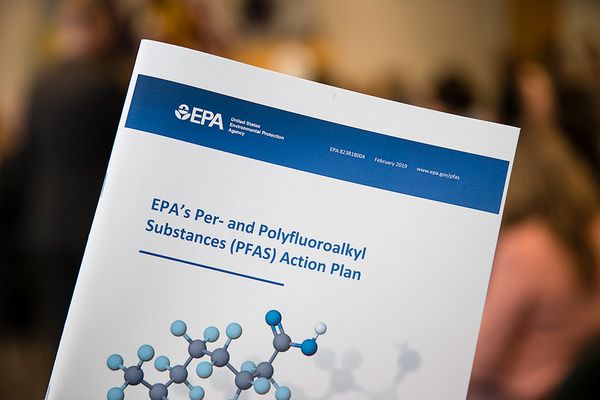
UCI expert: federal standards of chemicals in country's waterways
The Biden Administration announced today that they are prepared to finally set federal standards on the amount of PFAS chemicals in the country’s waterways. This is long overdue oversight into regulating chemicals, specifically perfluoroalkyl and polyfluoroalkyl substances, which when exposed to can cause debilitating, deadly diseases, and conditions such as cancer, liver damage, fertility and thyroid problems, asthma and more. For an expert source on this breaking news, Scott Bartell, MS, PhD, UC Irvine professor of environmental and occupational health, is available for interviews. For the past 25 years, Bartell has dedicated his research to quantifying human exposures and health effects caused by environmental contaminants such as PFAS – specifically the presence and epidemiology of PFAS in U.S. water sources. He is also the lead researcher on a study surveying Orange County, Calif. residents to find a link between PFAS and adverse health effects. To reach Prof. Bartell, reach out to Brianna Aldrich at brianna.aldrich@uci.edu or 760-809-5193.


Research suggests nutrition education should be on the curriculum of all medical students as well as other healthcare professionals Association for Nutrition develops new curriculum ready for medical students Aston University is one of the pioneers in delivering and embedding nutrition education as part of its medical school undergraduate programme. All healthcare professionals should study a curriculum of nutrition education during their studies in order to help better support public health – new paper suggests. Nutritional researchers from Aston University, with colleagues from other universities and leading nutritional groups, worked with the Association of Nutrition (AfN) to help develop a curriculum that can be rolled out amongst all undergraduate medical school students with potential for modules to be taught to other healthcare professional courses. The paper jointly published in the British Journal for Nutrition and BMJ Nutrition, Prevention and Health examined the development of a new curriculum aimed at undergraduate medical students and made recommendations on its roll out nationally, with a view to it subsequently being implemented into other healthcare courses. The AfN Undergraduate Curriculum in Nutrition for medical doctors has been designed to be presented to medical students as an integral part of their general undergraduate training, making it clear how nutrition interrelates with the study of other systems and contributes to an inclusive understanding of health and disease. Dr Duane Mellor, clinical dietitian and senior lecturer at Aston Medical School at Aston University and co-author on the paper, said: “At present, lifestyle related health problems from living with obesity, through to high blood pressure, type 2 diabetes, heart disease and several cancers can all be linked to diet across our communities. Whereas in hospitals around a third of patients coming in can be undernourished. “Nutrition and food play a key role to both keeping us healthy and helping to manage disease, which is why it is imperative we educate our future doctors and other health professionals about the role of nutrition in patient care.” The paper sets out not only the need for nutrition education and the gaps, but how it can be included as part of what is already a very busy and content heavy curriculum. It builds on areas of the curriculum where nutrition could even be used to help teach concepts such as epidemiology. It highlights how historically medical education along with the education of many health professionals not specialising in nutrition often have only a few hours of teaching on the subject. Dr Glenys Jones, deputy chief executive at the Association for Nutrition, who led the curriculum development project and is co-author on the recent paper, said: “Nutrition is a key and modifiable determinant of health and wellbeing, therefore it is essential our future medical and healthcare professionals are equipped to be able to identify when nutrition could be involved in a patient’s condition in order for this to form part of their care. “The curriculum is not designed to turn our doctors into nutritionists or dietitians, but to give them the knowledge and skills to be able to think about whether nutrition could be playing a role and having the confidence and knowledge of who, when and how to refer on to suitable nutrition professionals when this is needed.” Aston University is a pioneer in the key area of nutrition education of the future healthcare workforce. As one of few UK universities with a dietitian or nutritionist as part of the teaching team within its medical school, these skills are now being developed to benefit the training of other health professionals. Dr Mellor added: “As one of a few dietitians and nutritionists embedded into the teaching team at Aston Medical School, we have been able to integrate nutrition across our curriculum. “It is great to be able to highlight how nutrition links to the basic science areas such as biochemistry through to how you can encourage a patient to think about changing their diet in clinical skills". Aston University has also started to explore with the Association for Nutrition the potential need for nutrition education in other professions. From this an outline of a core curriculum for nutrition for a range of health professionals is in development. Dr Mellor also plans to work with colleagues to further develop nutrition teaching at Aston University, thus helping students across subjects such as optometry and pharmacy to gain a better understanding of nutrition and how it impacts on their areas of expertise. For more information about Aston Medical School please visit our website.



Expert Insight: President Biden’s COVID-19 ‘Rebound Positive’
UConn Health’s Dr. David Banach explains how a fully vaccinated and boosted person could test positive, negative, and positive again for COVID-19 within a 10-day span If anything, I would say this situation actually reinforces the importance of vaccination. — Dr. David Banach President Biden is back in isolation, testing positive again for COVID-19 despite testing negative a week after his initial positive test July 21. It may be a puzzling sequence, but there is an explanation. “It’s unlikely this is anything other than the original infection resurfacing,” says Dr. David Banach, infectious diseases physician and hospital epidemiologist at UConn Health. Biden’s physician says the president had been taking the antiviral drug Paxlovid, which is a standard treatment for those with COVID-19 who are considered “high-risk,” including older patients. Biden is 79. “It’s not unheard of for people to take Paxlovid, clinically improve, be antigen-negative, then ‘rebound’ a few days later as antigen-positive,” Banach says. Antigens are substances that cause an immune response. Antigen tests are commonly used in at-home testing and can yield results in 15 minutes by detecting antigens specific to COVID-19. Antigen tests differ from PCR (polymerase chain reaction) tests, which look for genetic material that indicates a COVID-19 infection. Due to the nature of his position, the president tests routinely. PCR testing generally is not recommended within 90 days of infection because if frequently remains positive positive for a prolonged period of time, even after patients recover and are no longer contagious, so Biden was given antigen testing instead. All signs point to the Paxlovid suppressing the antigens to undetectable levels, resulting in temporary negative results, followed by the “rebound.” As of Tuesday Biden’s only symptoms were a “loose cough,” according to a memo from his physician, Dr. Kevin O’Connor, who reported, “He remains fever-free and in good spirits.” The White House says the president is fully vaccinated and up-to-date on all his recommended boosters. “While this is another example of someone getting infected despite being is fully vaccinated and boosted, it’s important to understand the vaccines protected the president from serious illness from infection,” Banach says. “If anything, I would say this situation actually reinforces the importance of vaccination, especially for older people, those who are immunocompromised, or those with other health problems that could make them more vulnerable to serious illness.” Looking to know more about this topic - then let us help with your stories and coverage. Dr. David Banach is an expert on infectious diseases and epidemiology and is a leading expert on COVID-19 in America. To book an interview with Dr. Banach, click on his icon today.

