
Experts Matter. Find Yours.
Connect for media, speaking, professional opportunities & more.
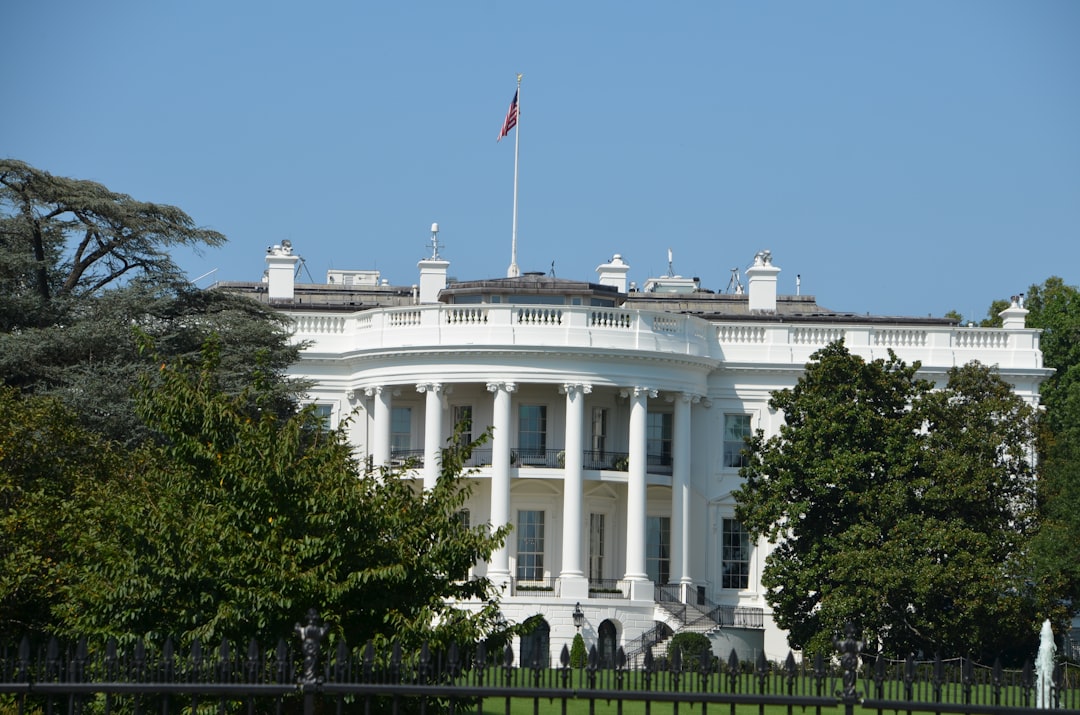
Covering the new Trump Administration - We can Help
With each day seems to come an new appointee to cabinet or significant role, a new policy twist and even the occasional walk back or withdrawal. The steps leading up to January 20, 2025 when Donald Trump resumes office as President of the United States will be getting a lot of coverage - and UC Irvine has it's own team of experts ready to lend their experience, perspective and expert opinion on what is happening. Louis DeSipio examines how democratic nations incorporate new members, including policymaking in the areas of immigration. Topics of Expertise: Foreign Affairs / NATO Immigration and Deportation Department of Education, EPA, Homeland Security, Department of Interior, NOAA, HHS and FDA Jeffrey Wasserstrom specializes in modern Chinese cultural history & world history, who has written on many contemporary as well as historical issues. Topics of Expertise: Foreign Affairs / NATO Free Speech Department of Education, EPA, Homeland Security, Department of Interior, NOAA, HHS and FDA Eric Swanson is an expert on inflation, recessions and what changes in interest rates mean for the economy. Topics of Expertise: Foreign Affairs / NATO Tariffs Impact of Downsized Government Senior's Health and Social Security Heidi Hardt is an expert on NATO, defense, security, foreign policy, organizations, the EU, UN, operations, gender, climate and change. Topics of Expertise: Foreign Affairs / NATO Climate Change Gender and LGBTQ+ Rights Tony Smith’s knowledge of politics includes Constitutional Law, the U.S. Supreme Court and election law. Topics of Expertise: Free Speech Department of Education, EPA, Homeland Security, Department of Interior, NOAA, HHS and FDA Jon Gould is a distinguished scholar in justice policy, social change and government reform. Topics of Expertise: Deregulation Gender and LGBTQ+ Rights All of these experts are available to speak with media - simply click on a profile now to arrange an interview time today.


NATO, Russia and a New Approach to Foreign Policy
The election of Donald Trump for a second time as the President of the United States may have come as a surprise to many, for world leaders it means an immediate shift when it comes to global issues. Trump campaigned on dealing with the war between Russia and Ukraine and the wars Israel is fighting on multiple fronts himself, and resolving these delicate and complex conflicts with little regard to those at NATO or other leaders around the world. Trump has also indicated that serious changes will be coming to how America handles trade -which will also put how his administration deals with President Xi Jinping in China and the newly elected President of Mexico, Claudia Sheinbaum in the spotlight on center stage. There is already a lot of speculation an even a few glimpses at what lies ahead for US foreign policy, and if you're a reporter covering the lead up to this much hyped event - then let our experts help with your coverage. Louis DeSipio examines how democratic nations incorporate new members, including policymaking in the areas of immigration. Jeffrey Wasserstrom specializes in modern Chinese cultural history & world history, who has written on many contemporary as well as historical issues. Eric Swanson is an expert on inflation, recessions and what changes in interest rates mean for the economy. Heidi Hardt is an expert on NATO, defense, security, foreign policy, organizations, the EU, UN, operations, gender, climate and change. Tony, Jeffrey, Eric and Heidi are available to speak with media - simply click on either expert's icon now to arrange an interview today.

Aston University is leading a new £5.5 million EU research project Will focus on converting fibre-optic cables into sensors to detect natural hazards Could identify earthquakes and tsunamis and assess civil infrastructure. Aston University is leading a new £5.5 million EU research project to explore converting existing telecommunication fibre-optic cables into sensors which can detect natural hazards, such as earthquakes and tsunamis, and assess the condition of civil infrastructure. The project is called ECSTATIC (Engineering Combined Sensing and Telecommunications Architectures for Tectonic and Infrastructure Characterisation) and is part of the Horizon Europe Research and Innovation Action (RIA), which aims to tackle global challenges and boost the continent’s industrial competitiveness. Converting telecom fibres into sensors requires new digital signal processing to overcome the limited data storage and processing capabilities of existing communication networks. To address this the project will use localised, high performance digital processing that will integrate artificial intelligence and machine learning. The researchers’ goal is to minimise algorithms’ complexity while providing extremely accurate real-time sensing of events and network condition. The new laser interrogation and signal processing technologies will be tested using existing fibre optic networks, including those underwater, in cities, and along railway infrastructure to assess their potential. Delivered by a consortium of 14 partners across seven countries, from academic and non-academic sectors, the research will start in February 2025 and will last three and a half years. The Europe-wide team will be led by Professor David Webb who is based in the Aston Institute of Photonic Technologies (AIPT). Professor Webb said: “There are more than five billion kilometres of installed data communications optical fibre cable, which provides an opportunity to create a globe-spanning network of fibre sensors, without laying any new fibres. “These traverse the seas and oceans - where conventional sensors are practically non-existent - and major infrastructures, offering the potential for smart structural health monitoring.” Professor Webb will be joined by fellow researchers Professor Sergei Turitsyn, Dr Haris Alexakis and Dr Pedro Freire. For media inquiries in relation to this release, contact Nicola Jones, Press and Communications Manager, on (+44) 7825 342091 or email: n.jones6@aston.ac.uk


EU-UK Trade Deal continues to stifle trade with 27% drop in exports since 2021
New report shows persistent stifling effects of the impact of the Trade and Cooperation Agreement on UK-EU trade relations Monthly data show a 27% drop in UK exports and a 32% reduction in imports to and from the EU between 2021 and 2023 Recommendations for policy interventions include to negotiate sector-specific deals, engage with individual EU countries, and work on reducing non-tariff barriers A comprehensive analysis by researchers at the Centre for Business Prosperity at Aston University reveals that negative impacts of the UK-EU Trade and Cooperation Agreement (TCA) have intensified over time. The new report, Unbound: UK Trade Post Brexit, also shows a 33% reduction in the variety of goods exported, with the agricultural, textiles, clothing and materials sectors most affected. To assess the impact of the UK-EU TCA, the authors analysed monthly import and export between the UK and the EU, from January 2017 to December 2023 and separated into pre- and post-January 2021 when the agreement came into force. The monthly data shows a 27% drop in UK exports and a 32% decline in imports from the EU. Lead author, Professor Jun Du of Aston University says: “The Trade and Cooperation Agreement introduced substantial barriers and there are ongoing and marked declines in the value and variety of UK exports and imports. Without urgent policy interventions, the UK’s economic position and place in the global market will continue to weaken.” The UK-EU TCA redefined trade and investment rules and market access between the UK and the EU. Since it came into force, the UK government has negotiated several trade agreements, but the EU remains the UK’s largest trade partner. Exports for most sectors have decreased since January 2021, although the impact is varied. Agrifood, textile and clothing and material-based manufacturing have been among the hardest hit, with substantial declines in both export value and the variety of products exported. At the same time, some sectors such as tobacco, railway and aircraft manufacturing have seen modest increases in varieties of products exported. On the import side, most sectors have shrunk in both value and variety, particularly agrifood products, optical, textile and material-based manufacturing. A few sectors, for example, ships and furniture, have demonstrated noticeable increases in import product variety. The large variations across different goods categories and EU trade partners underscore the uneven effects of Brexit and the TCA on UK-EU trade dynamics, highlighting the need to understand the nuances and come up with tailored strategies that address the unique challenges of each sector within the new regulatory environment. The researchers make recommendations, outlining how sector-specific negotiations, streamlining customs procedures with digital technologies and reducing regulatory divergence could mitigate some of the impacts. Dr Oleksandr Shepotylo, the report’s co-author says: “Our findings indicate a decoupling of the UK from key EU final goods markets, accompanied by a shift in UK supply chains toward geographically closer EU trading partners for exports and smaller countries for imports. “This shift raises concerns and underscores the urgent need for a strategic reconfiguration of UK supply chains to maintain competitiveness.” Professor Du continues: “The TCA has introduced considerable barriers to UK-EU trade, particularly through increased Non-tariff measures (NTMs). “Addressing these issues through targeted improvements to the TCA is crucial to ensuring that UK businesses remain competitive in the European market. A structured, multi-faceted approach is necessary.” To find out more about these findings, click here.


Cosmetic or Drug? The FDA's Classification of Sunscreen Limits Which Products Hit US Shelves
As stifling rays of sunshine beat down across the United States, it’s the time of year citizens flock to the store to load up on sun protection. It’s also the time of year consumers and media raise the annual question of why Europe is able to market sunscreen that contains more potentially effective ingredients, but the U.S. isn’t. The answer is not related to sunscreen or its ingredients, but rather how the country’s regulatory body – The Food and Drug Administration (FDA) – legally operates. “In order for the FDA to legally regulate products, those products are given classifying labels,” said Ana Santos Rutschman, a professor of law at Villanova University who studies health law. “A toothbrush, for instance, is labeled a medical device. That’s because it has to fit in one of the sources of authority of the FDA and the FDA, per the law, regulates drugs or medical devices.” Here is where it gets tricky. The FDA does not have to approve cosmetics, aside from certain color additives, before those products go to market. In the European Union’s European Medicines Agency (EMA), sunscreen is labeled as a cosmetic. Many other countries also classify it as such. In the U.S., however, sunscreen is labeled a drug because it has a therapeutic effect, and thus falls under the authority of the FDA. To make the classification system even more convoluted, some items are labeled as both a cosmetic and drug by the FDA. Shampoo, for instance, is inherently cosmetic. “But if it’s anti-dandruff shampoo, then it’s also a pharmaceutical,” said Santos Rutschman. “It’s super common for this to happen with a lot of products that you and I would not think are classified as drugs. It’s very natural under the regulatory regime that we have, but then it is very hard to bring anything to market – harder than other countries.” Case in point, sunscreen used in the EU that contains ingredients which may be more effective against certain types of ultraviolet rays cannot simply just come to market in the U.S. “If sunscreen fits the definition of a drug, then it must meet drug requirements,” said Santos Rutschman. “If you want a new drug to enter the U.S., you have to show efficacy and safety. But in order to do that, there must be clinical trials, and if those trials happened elsewhere, they would not conform to our domestic protocols. “Even if another country performed their own clinical trials, the odds the FDA would utilize the data are not incredibly high. If you think another country recognizes something we should, based on their data, then immediately this is going to raise questions of why we are deferring to a foreign regulator.” The FDA could go through the process of approving ingredients in question – and has indicated it will do so – but it’s a complicated process, and there is “also a matter of risk,” according to Santos Rutschman. “The FDA has always been less risk averse than its counterparts in Europe. I understand the market concerns, but this seems about right from a regulatory perspective… We aren’t talking about a specific drug that people need and cannot access. Sunscreen is available for the average American to purchase.” Barring an overhaul to the regulatory system in the U.S. to include an agency for cosmetics – an idea some argue has merit, but Santos Rutschman described as “not feasible” with the available funding – the only way Europe’s sunscreen would be available for Americans to purchase is if the FDA moved forward in regulating the ingredients. And that will continue to take time. “The FDA has never moved quickly on anything,” said Santos Rutschman. “It just can't.”



Sunday is the anniversary of Brexit - We're here with expert insights if you're covering
The United Kingdom's exit from the European Union, commonly known as Brexit, stands as one of the most significant geopolitical events of the 21st century. This topic matters to the public because it encompasses profound implications for international trade, immigration, legal frameworks, and political alliances. The ripple effects of Brexit are felt not only within the UK and the EU but also globally, making it a critical issue for journalists to cover. Brexit's impact spans numerous sectors and societal issues, providing a wealth of story angles, including: The economic impact of Brexit on the UK, EU, and global markets Changes in immigration policies and their effects on individuals and industries The evolving political landscape in the UK, including the rise of nationalism and regional independence movements The legal challenges and adaptations post-Brexit, particularly concerning trade agreements and regulatory standards The social and cultural consequences of Brexit, including shifts in public opinion and societal division The future of UK-EU relations and their broader implications for international diplomacy and cooperation As we continue to navigate the complexities of Brexit, journalists have the opportunity to explore these diverse and critical narratives, offering in-depth insights into the ongoing and far-reaching impacts of this historic event. Connect with an Expert about Brexit: Dr David Lowe Senior Research Fellow · Leeds Beckett University Dr Oleksandr Shepotylo Senior Lecturer, Economics, Finance and Entrepreneurship · Aston University Dr Patrycja Rozbicka Senior Lecturer · Aston University Dr Jo Michell Associate Professor of Economics · UWE Bristol Patrick L Young Executive Director · Derivatives Vision To search our full list of experts visit www.expertfile.com Photo credit: Rocco Dipoppa

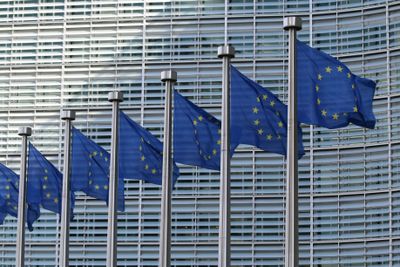
Two decades ago, the European Union welcomed ten new member states, including Cyprus, Czech Republic, Estonia, Hungary, Latvia, Lithuania, Malta, Poland, Slovakia, and Slovenia. This historic expansion not only reshaped the geopolitical landscape of Europe but also holds significance for global politics, economics, and cultural integration. Understanding this event's importance requires recognizing its impact on various fronts, from fostering regional stability to influencing trade dynamics and promoting cross-cultural exchange. Key sub-topics that may interest journalists and the public include: European Integration and Unity: Exploring how the expansion has contributed to the European Union's efforts towards unity, cooperation, and peace among member states. Economic Implications: Analyzing the economic effects of the expansion on both existing and new member states, including trade patterns, investment flows, and disparities in development. Political Dynamics: Investigating the political changes within the European Union, such as shifts in power dynamics, decision-making processes, and the challenges of governance in a larger union. Cultural Exchange and Identity: Examining the cultural exchange and diversity resulting from the inclusion of new member states, and how it has enriched the European cultural tapestry. Challenges and Achievements: Assessing the successes and ongoing challenges faced by the European Union post-expansion, including issues related to migration, integration, and institutional reforms. Future Prospects: Speculating on the future of the European Union, considering factors like potential further expansions, the rise of Euroscepticism, and the Union's role in global affairs. The 20th Anniversary of the Expansion of the European Union marks a significant milestone in the continent's history, offering journalists and the public alike a chance to reflect on the achievements, challenges, and the future trajectory of European integration. Connect with an Expert about the EU: Carolyn Dudek Professor of Political Science · Hofstra University Dr Martin Brenncke Lecturer in Law · Aston University David R. Dorondo Professor · Western Carolina University To search our full list of experts visit www.expertfile.com Photo Credit: Guillaume Périgois

Veterinary deal would increase UK agrifood exports to EU by more than a fifth, research shows
A veterinary deal would increase agri-food exports from the UK to the EU by at least 22.5%, say researchers Agri-food exports overall are worth £25 billion to the UK economy, but the two years since the new trading rules were put in place have seen a fall of 5% in exports to the EU from 2019 levels, during a period where the sector has otherwise grown. Team from Aston University and University of Bristol have analysed trade deals and export figures worldwide to estimate impact of a new veterinary deal on UK–EU exports A veterinary deal with the European Union could increase UK agricultural and food exports by over a fifth, according to new research. The team, from Aston University’s Centre for Business Prosperity and the University of Bristol, analysed the agricultural and veterinary aspects of trade deals around the world to estimate their impact on exports. They then modelled the potential impact of different types of agreement on UK exports to the EU. Veterinary Agreements specifically focus on regulations and standards related to animal health and welfare, as well as to the safety of animal-derived products such as meat, dairy, and seafood. They aim to align, harmonise, or recognise veterinary requirements and certifications, and reduce the number of inspections between countries to facilitate the safe and efficient trade of live animals and animal products. The EU–UK Trade and Cooperation Agreement (TCA), implemented in January 2021, eliminates tariffs and quotas but does not remove non-tariff barriers to trade. These can be particularly burdensome for agricultural and animal-derived food (agri-food) exports, involving complex rules and requirements, production of extensive documentation and veterinary checks. The UK agri-food sector is a cornerstone of the UK economy, with exports worth £25 billion and employing 4.2million people. Although the sector is growing overall, exports to the EU shrank in 2022 by 5% compared to 2019, in part due to the new trade arrangements. This has led to calls for an EU–UK veterinary agreement from business and agri-food organisations, including the Confederation of British Industry, British Chambers of Commerce, UK Food and Drink Federation, Chartered Institute of Environmental Health and British Veterinary Association. Analysing data from the World Bank on 279 trade agreements and export statistics from over 200 countries, the researchers found that shallow agreements, that went little further than provisions already covered by World Trade Organisation (WTO) rules, had significant negative impacts on agri-food exports. However, where trade agreements went beyond WTO provisions to include more commitments on sanitary and phytosanitary (SPS) measures (which aim to protect countries against risks relating to pests, diseases and food safety) and were legally enforceable, they had a robust, positive impact on exports, particularly exports of animal products and food. Applying this to the UK–EU relationship, the team estimate that a veterinary agreement that went beyond the existing TCA provisions would increase agri-food exports from the UK to the EU by at least 22.5%. Imports from the EU would also increase by 5.6%. In the 203 countries studied for the research, positive effects of deep trade deals that included provisions on agriculture took between 10 and 15 years to manifest. But the UK might not have to wait so long, according to report co-author Professor Jun Du, Director of Aston University’s Centre for Business Prosperity. “There is no blueprint out there that mirrors the UK–EU relationship. Most veterinary agreements are agreed as part of a trade deal between countries that haven’t previously had close alignment and it takes a while for the benefits to take effect. “Until recently, the UK had frictionless agri-food exports to the EU, so it’s possible that a supplementary veterinary agreement to reduce some of the frictions created by Brexit could allow trade that previously existed to pick up again quite quickly.” However clear the economic arguments, the legal and political barriers to a veterinary agreement still remain. The researchers address these in their report, suggesting that the best format for the additional measures would be as a supplementary agreement to the TCA. The key question for the UK government in negotiating such an agreement would be what the EU demanded in return. “The closest model is the EU-Swiss relationship, which sees Switzerland largely follow EU law,” said report co-author from the University of Bristol, Dr Greg Messenger. “That’s unlikely to be an option for the UK. As we wouldn’t expect to eliminate all paperwork, we could both agree that our rules meet each other’s standard for phytosanitary protection. As most of our rules are still essentially the same as the EU, that wouldn’t require any major change, though we’d have to agree a greater level of coordination in relation to the development of new rules.” The report was written jointly by Professor Du, Dr Messenger and Dr Oleksandr Shepotylo, senior lecturer in economics, finance and entrepreneurship at the Centre for Business Prosperity, Aston Business School.

In Poland, the Debate Over Solidarity's Legacy Continues
On November 13, 2023, Poland’s parliament convened for the first time since a centrist-progressive coalition won a legislative majority, ending the eight-year rule of the right-wing Law and Justice party. The recent political shift has been heralded by some as the most significant since 1989, when the then-Soviet-controlled government allowed the country’s first elections in over four decades. That year, an anti-authoritarian movement called “Solidarity” seized all but one seat in the Senate and every contested seat in the Sejm (or lower chamber). A stunning rebuke for the Soviet regime, the landslide victory effectively signaled the end of Communism in Poland—and served as a harbinger of the Eastern Bloc’s collapse. Gerald Beyer, PhD, is a professor of Christian ethics in Villanova University’s College of Liberal Arts and Sciences, the instructor of the class “Solidarity and Peacebuilding in Central and Eastern Europe” and the author of Recovering Solidarity: Lessons from Poland’s Unfinished Revolution. He recently shared his thoughts concerning the parallels being drawn between 1989 and 2023, the complicated legacy of Poland’s anti-Communist struggle and what can be gleaned from studying and reconsidering the Solidarity movement. Q: As a new Polish government takes shape, how would you describe the current political situation in the country? Dr. Beyer: At the present moment, Poland finds itself at a major crossroads. Like the United States, the country is very divided, politically speaking. On the one hand, you have people who believe that Poland has turned away from the European Union (EU) to a troubling extent and backslid into authoritarianism under the Law and Justice party’s rule. So, you have a significant portion of Polish society who believe that this recent election [in October] was about protecting democracy and ensuring the future of democracy in the country. On the other hand, you have an equally significant portion of the population who think democracy has not been in peril—and that, in this year’s election, what’s at stake was a sense of Polish national values and national sovereignty. Q: Is there any credence to the new legislative majority’s claims that the Law and Justice party “overstepped” while in governance? DB: I think there’s reason to ask that question. The EU has sanctioned Poland during the present ruling party’s tenure for weakening the autonomy of the judicial system, and there has been concern over the ruling party exerting undue influence on state-based Television Poland (TVP). Poland, however, has a very vibrant free press—and has since 1989… I would contend that there’s been some backsliding on measures that would not score well on the democracy metrics, but I would not say that Poland has been existing under an authoritarian regime. Q: Do you consider this year’s election comparable to the election of 1989? DB: It’s certainly one of monumental significance. You may have noted the turnout of 74-plus percent. That’s historic for Poland, that massive turnout. At the same time, the overthrow of the Communist system in ’89 stands out as a unique and discrete moment in Polish history. So, there are ways that a comparison can be made, but there are ways in which I don’t believe it’s particularly apt. Q: What makes tying the events of 1989 and 2023 a complicated issue? DB: Whether or not 2023 is directly comparable to 1989 is a matter of perspective, and there are a number of different perspectives that exist in Poland today. Since the fall of Communism, there has been an ongoing conflict over Solidarity, its history and its legacy, and various political actors and parties have claimed their objectives are in concert with the values and principles of the movement. In this year’s election, the Law and Justice party’s candidates presented themselves as guarantors of freedom, which was at the heart of the Solidarity movement, by stressing their opposition to external forces like the EU. In addition, during their time in leadership, the party’s officials worked to institute a number of social welfare programs that were designed to help people economically, providing something akin to what Catholic social teaching calls a “family living wage.” So, they were actively trying to raise the standard of living in a way that was arguably analogous to Solidarity. On the other side of this equation, the election-winning opposition parties emphasized their status as defenders of democracy—once again, a core tenet of Solidarity. As we discussed, many members of that alliance and their supporters felt that the independent judiciary had been stifled by the Law and Justice-run government; they also voiced concerns about the free press. On both sides, there has existed and continues to exist a sense that they are the ones best suited, maybe even solely suited in the current political landscape, to carry on Solidarity’s legacy and to ensure Poland thrives. Herein lies the source of conflict. Q: Despite the ongoing debate over Solidarity’s legacy, are there any lessons from the movement’s history that might prove helpful today? DB: Sadly, much of Poland’s current political acrimony can be traced to the “war at the top” that emerged within Solidarity in the wake of 1989, when longstanding tensions within the movement manifested in political rivalries. Once united, anti-Communist organizers became adversaries in the years after the Soviet regime’s dissolution, laying the groundwork for the divisive rhetoric of the current day. Looking beyond what’s transpired over the past three decades, however, I think much can be learned from Solidarity in its early years and at its core. When the movement first took shape, its central aim was attaining a society characterized by unity among differences. And, to achieve this end, its leaders and supporters recognized the “necessity of dialogue,” a concept frequently invoked in Father Józef Tischner’s The Spirit of Solidarity. Given the stark divides that currently define Polish politics, I think these origins and these concepts should be revisited—and that it’s important to look at Solidarity not just as a political moniker, but as an objective and a virtue. Personally, I believe that people can change. And if they are reacquainted with the principles that inspired and guided their struggle for freedom and democracy, perhaps Poland’s elected officials can change for the better.

Expert reaction to the UK AI Safety Summit
Today the UK government announced a "world first agreement" on how to manage the riskiest forms of AI. It focuses on so-called "frontier AI" - what ministers consider highly advanced forms of the tech - with as-yet unknown capabilities. The agreement, signed by countries including the US, the EU and China, was announced at the UK's AI Safety Summit. Dr Alina Patelli, Senior Lecturer in Computer Science, Aston University, comments: “A summit on AI safety is long overdue. As is the case with all groundbreaking technologies, AI’s transformative potential for public good is only matched by its risks, which are unlikely to be successfully avoided, if AI tech design and deployment are left unregulated and therefore open to misuse, either intentionally or accidentally. The scope of the summit is appropriate, reflective of Government’s cautious approach to managing interactions with AI safety experts from multiple nations and disciplines: the summit focus is kept narrow, to five objectives only, and the number of participants is wisely limited to 100, to keep the conversation productive.” What is likely to come out of this summit? “The summit’s main output will most likely be a bare-bones regulatory document comprising (1) a shared understanding of AI (i.e., a generally accepted definition of the term reflective of all summit participants’ views, not just those of tech experts), (2) a list of major risks associated to AI misuse, both in terms of potential damage as well as likelihood of becoming a reality, and (3) a policy draft outlining the core elements that a yet-to-be-developed governance framework should include.” What AI safety could/should look like? “Although it would be premature to venture a definition of AI safety ahead of the summit, one thing that is certain is that a comprehensive, therefore effective, AI regulatory framework would encompass more than just laws. Non-legally binding codes of conduct, tech design and development processes that are bound by moral and ethical values, both in the commercial ecosystem, as well as when it comes to individual entrepreneurs, revised open-access licenses under which AI should be used in the public domain, etc. are equally important pieces. The best way to integrate all these in a cohesive, overarching governance plan is perhaps a topic to explore in one of the post-summit events.” What are the potential practicalities for a route forward towards safe AI? “The practical way to systematically regulate AI is incremental. Initially, the development and application of those AI tools deemed to be high-risk will most likely be restricted to controlled environments, where the potential benefits justify the risks and where sound mitigation procedures can be quickly and effectively enforced to mitigate those risks. As regulations become better prescribed, AI’s (safe and legal) application space will gradually expand, making its benefits available to larger groups of people without any of the downsides.” To interview Dr Alina Patelli or request further details contact Nicola Jones, Press and Communications Manager, on (+44) 7825 342091 or email: n.jones6@aston.ac.uk