
Experts Matter. Find Yours.
Connect for media, speaking, professional opportunities & more.
Boris, Brexit and What’s Next for Britain in 2020?
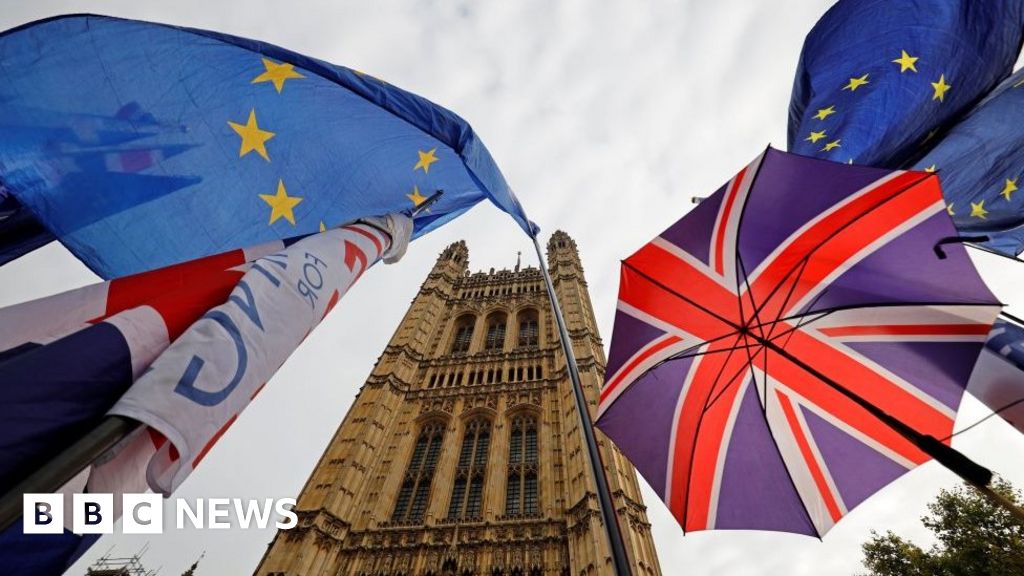
A few short months ago, it looked as if Boris Johnson had accepted a fool’s role in becoming the third Prime Minister in four years. He went all in, campaigned hard and wound up with a solid majority and a mandate to remove Britain from the European Union by the end of January 2020. It’s been an astounding turn of events for a country that was left politically hamstrung and a Tory party seemingly lost at sea. But what’s next for Britain and beyond? What are the actual consequences to leaving the EU? Has Britain just opened the door to other unhappy members who may be contemplating an exit? And did Johnson’s opponents, the media and the public underestimate his political strength – and what lessons can be learned from it? There are a lot of questions out there – and if you are covering, let our experts help with your stories. Dr. Glen Duerr's research interests include comparative politics and international relations theory. Glen is available to speak to media regarding this topic– simply click on his icon to arrange an interview.



Locking down your data. Are lawmakers finally waking up to the importance of privacy?
Data collection and data control are becoming international issues. As the lucrative and important pieces of customer data collection become a priority for major tech and software companies – privacy and protection is now emerging as the key issue for international legislators. Just recently, Microsoft had to update several of its agreements with cloud customers and re-classify its role in Europe. Last month, as part of an enquiry that opened earlier this year, the European Data Protection Supervisor (EDPS) expressed 'serious concerns' over whether the relevant contractual terms were compliant with GDPR, and over Microsoft's role as a data processor or data controller for EU institutions. The report followed the publication of a series of papers by the Dutch Ministry of Justice and Security, suggesting that Office 365 was breaching GDPR by collecting 'functional and diagnostics data', including email subject lines and text run through a spell-checker. Microsoft has now acknowledged its position as a data controller - which has a higher bar for ensuring user data - when it comes to the provision of enterprise services. "In the [Online Services Terms] OST update, we will clarify that Microsoft assumes the role of data controller when we process data for specified administrative and operational purposes incident to providing the cloud services covered by this contractual framework, such as Azure, Office 365, Dynamics and Intune," says Julie Brill, Microsoft's corporate vice president for global privacy and regulatory affairs and chief privacy officer. "This subset of data processing serves administrative or operational purposes such as account management; financial reporting; combating cyber attacks on any Microsoft product or service; and complying with our legal obligations." Forbes Magazine – November 18 Data collection and control are becoming big issues on a global scale as more and more governments are looking for consumer protection while companies are seeking the profit that comes from the information customers provide voluntarily and sometimes unwillingly . Are you a reporter covering technology, privacy and data collection and control? Did you know that there is value in the results of spell-checkers and document review tools? If you have questions or need an expert source for insight and perspective – let us help. Dr. Rachel Cummings is an expert in data privacy, algorithmic economics, optimization, statistics, and information theory. Dr. Cummings is available to speak with media regarding data privacy and other topics, simply click on her icon to arrange an interview.



Are Germany’s economic walls crumbling? Let our experts explain the potential consequences.
As the saying goes … where there’s smoke, there is usually fire. And as trade wars, Brexit and overall global uncertainty crash like waves across the planet – there might be another sure sign we are headed for a global economic slowdown. Germany, the engine that runs Europe, may very well be in recession. “A technical recession is defined as two consecutive quarters of negative growth, and Germany saw a 0.1% drop in the April-to-June period. In its monthly report, the Bundesbank said that with falling industrial production and orders, it appears the slump is continuing during the July-to-September quarter. “The overall economic performance could decline slightly once again,” it said. “Central to this is the ongoing downturn in industry.” Deutsche Bank went further Monday, saying “we see Germany in a technical recession” and predicting a 0.25% drop in economic output this quarter.” August 20 – Associated Press So, what will this mean for the EU, and economies far and wide? Do Americans need to be concerned? Is this just a stumble or is the world about to fall into another economic collapse? If you are a reporter covering the economy and need an expert for your stories – let us help. Jeff Haymond, Ph.D. is Dean, School of Business Administration and a Professor of Economics at Cedarville and is an expert in finance and trade. Dr. Haymond is available to speak with media regarding this topic – simply click on his icon to arrange an interview.


In what was once a wide field to replace the fallen British Prime Minister Theresa May has now become a race for Boris Johnson to lose. As the outspoken and bold British MP looks to unite his party, pull Britain from the EU by the end of October and defeat Labour in the next election – what will his presence at 10 Downing Street mean for his country, Europe the rest of the world? Britain is one of the cornerstones of the west, but what will a wildcard like Johnson mean? What’s his background and do people need to know more about the man who will reside in the chair as historic figures like Tony Blair, Margaret Thatcher and Sir Winston Churchill? If you are covering and need to no more – that’s where we can help. Dr. Glen Duerr's research interests include nationalism and secessionism, comparative politics, and international relations theory. Glen is available to speak to media regarding Boris, Brexit and Britain – simply click on his icon to arrange an interview.
What's next in the Kim Jong-Un and Donald Trump saga?
North Korea continues to test missiles and the latest appears to be the most advanced yet. North Korea said the new missile reached an altitude of about 4,475 km (2,780 miles) - more than 10 times the height of the International Space Station - and flew 950 km (590 miles) during its 53-minute flight. So, what's next? How will Donald Trump react? What about other countries like Canada and the EU? Our Experts at Insights Consulting have the answers for your story. Source:
