
Experts Matter. Find Yours.
Connect for media, speaking, professional opportunities & more.

AU study shows participation in civil society groups lowers suicide rates
A new study by Lance Hunter, PhD, professor of social science in Augusta University’s Pamplin College of Arts, Humanities, and Social Sciences, reveals a direct link between voluntary involvement in civil social groups and a lower risk of suicide. In the study, published in Cross-Cultural Research, Hunter looked at data gathered from 2000 to 2019 from 156 countries with varying levels of development from Africa, Asia, Australia, Europe, North America and South America and found that participation in civil society groups, both political and non-political, may produce positive social and psychological benefits that are associated with lower suicide rates. September is National Suicide Prevention Month, during which mental health advocates, prevention organizations and other community groups promote suicide prevention awareness. “The greater the voluntary participation in civil society groups within the country, the lower the suicide rates are for that country,” said Hunter. “Voluntary civil society participation is a great way for people to connect with other individuals with similar interests and possibly find meaning and purpose to some degree. That in turn decreases feelings of social isolation, which can decrease the likelihood of suicidality or suicide.” Based on the research, he noted that social isolation is a major factor in suicide ideation and attempted suicide but it’s not the only factor. “It is important to note there are many psychological, biological, social and mental health factors that can contribute to suicide risk. Civil society participation and social isolation are just two factors among many that can affect suicidality,” said Hunter. Meredith Rausch, PhD, associate professor in the College of Education and Human Development’s Department of Research, Counseling and Curriculum, said research shows ideation and deaths by suicide in the United States tend to rise between February and April and again in August and September. “I have found the change in seasons often leads to people feeling overwhelmed when it comes to thinking about enduring another season,” said Rausch. “While the advent of spring or autumn may seem enjoyable or hopeful to some people, others find it to represent an entirely new season and the idea of experiencing that is exhausting.” Rausch also notes it’s important to note how these times of the year also coincide with the academic year, causing an increase in bullying, frustration with academics or other negative experiences for school-aged children. According to a 2023 study by the World Health Organization, more than 700,000 people worldwide die each year by suicide, and suicide is the fourth-leading cause of death among people 15 to 29 years old. Interested in learning more - let us help. Lance Hunter, PhD, is available to speak with media about this important topic - simply click on his icon to arrange an interview today.


Amid Detainees' Release, Putin Flaunts Power and Flouts Western Influence
On August 1, the United States, Russia, Germany and three other European nations engaged in an historic 24-person East-West prisoner exchange. The largest such swap since the end of the Cold War, the multi-country deal secured the release of three prominent American detainees: Wall Street Journal correspondent Evan Gershkovich, corporate security executive Paul Whelan and Radio Free Europe/Radio Liberty editor Alsu Kurmasheva. It also freed a dozen Russian opposition leaders, incarcerated in their native country for challenging Vladimir Putin and his authoritarian regime. Lynne Hartnett, PhD, is the chair of Villanova University’s Department of History and an expert on modern Russia, protest movements and dissidents in exile. Recently, she shared some insights on the Kremlin's decision to release the American and Russian prisoners—as well as the egotism, oppressive tendencies and political posturing that drove their detention. Q: The arrests and sentencings of Gershkovich, Whelan and Kurmasheva have been described as "outrageous," "a mockery of justice" and reflective of "a total disregard for basic freedoms." What prompted Putin and the Russian government to detain these individuals? Dr. Hartnett: For Putin, seizing Gershkovich, Whelan and Kurmasheva was a power play. They were pawns for him to use when he deemed it convenient. If they could be used in a prisoner swap, they would be. But if that time never arrived, their incarceration, suffering and even potential deaths were inconsequential to him. Their arrests were also a signal that, in Russia, Putin's authority is uncontested. These were American citizens, and around the world, a U.S. passport opens doors: It holds power; it provides access; and it affords its holder protection. But the arrests of Gershkovich, Whelan and Kurmasheva were Putin’s attempt to demonstrate the limits of American influence. They were meant as a signal that, in Russia, a U.S. passport becomes meaningless if it serves Putin to make it so. Q: In recent years, the Russian government has seemingly worked to rehabilitate the reputations of figures like Josef Stalin, who infamously used the Soviet Gulag to stifle opposition and criticism. Is Putin's use of detentions as a political cudgel similar? DH: The show trials of the Stalinist era are frequently referenced. However, it should be stressed that those were largely intended for domestic consumption. They were used to justify the Communist elites' repression of fellow citizens by broadcasting "evidence" that enemies lurked within. The trials of Americans like Gershkovich and Brittney Griner [a professional basketball player detained on smuggling charges] were designed to show the world, not just Russians, that Putin's regime would not be cowed—even if the person being tried had fame and a powerful enterprise, like the Wall Street Journal or the WNBA, supporting them. Q: The New York Times recently ran a piece on the Russian dissidents released, claiming "hopes are high [they] will breathe new life into a fragmented opposition force." What do you anticipate these political players' activism will look like in the coming years, especially in exile? DH: As in the Imperial and Soviet periods, Russian censorship prevents any news or opinions that are not the government's from coming to light. As Putin has dismantled political opposition in Russia and tightened his grip on any vestiges of civil society in the country, there is little hope that a powerful opposition movement can gain momentum without outside support. This is where the Russian dissidents living abroad come in. They will ensure that a vision for another type of Russia is articulated. At the end of the 19th and the beginning of the 20th centuries, political exiles smuggled illegal newspapers and journals into the Russian empire to instill hope in their compatriots, to give them some indication that a nation beyond the autocracy was achievable. This, in my opinion, is the role that Russian dissidents living in exile must have today. They must provide the vision. They must provide the hope. While they cannot change the system on their own—they need a movement en masse—the dissidents abroad are needed to demonstrate that a nation without Putin and his repressive regime is possible. This is certainly not an easy venture, and it will require extraordinary sacrifices to be made a reality. However, it may be the Russian people's only hope.


Cosmetic or Drug? The FDA's Classification of Sunscreen Limits Which Products Hit US Shelves
As stifling rays of sunshine beat down across the United States, it’s the time of year citizens flock to the store to load up on sun protection. It’s also the time of year consumers and media raise the annual question of why Europe is able to market sunscreen that contains more potentially effective ingredients, but the U.S. isn’t. The answer is not related to sunscreen or its ingredients, but rather how the country’s regulatory body – The Food and Drug Administration (FDA) – legally operates. “In order for the FDA to legally regulate products, those products are given classifying labels,” said Ana Santos Rutschman, a professor of law at Villanova University who studies health law. “A toothbrush, for instance, is labeled a medical device. That’s because it has to fit in one of the sources of authority of the FDA and the FDA, per the law, regulates drugs or medical devices.” Here is where it gets tricky. The FDA does not have to approve cosmetics, aside from certain color additives, before those products go to market. In the European Union’s European Medicines Agency (EMA), sunscreen is labeled as a cosmetic. Many other countries also classify it as such. In the U.S., however, sunscreen is labeled a drug because it has a therapeutic effect, and thus falls under the authority of the FDA. To make the classification system even more convoluted, some items are labeled as both a cosmetic and drug by the FDA. Shampoo, for instance, is inherently cosmetic. “But if it’s anti-dandruff shampoo, then it’s also a pharmaceutical,” said Santos Rutschman. “It’s super common for this to happen with a lot of products that you and I would not think are classified as drugs. It’s very natural under the regulatory regime that we have, but then it is very hard to bring anything to market – harder than other countries.” Case in point, sunscreen used in the EU that contains ingredients which may be more effective against certain types of ultraviolet rays cannot simply just come to market in the U.S. “If sunscreen fits the definition of a drug, then it must meet drug requirements,” said Santos Rutschman. “If you want a new drug to enter the U.S., you have to show efficacy and safety. But in order to do that, there must be clinical trials, and if those trials happened elsewhere, they would not conform to our domestic protocols. “Even if another country performed their own clinical trials, the odds the FDA would utilize the data are not incredibly high. If you think another country recognizes something we should, based on their data, then immediately this is going to raise questions of why we are deferring to a foreign regulator.” The FDA could go through the process of approving ingredients in question – and has indicated it will do so – but it’s a complicated process, and there is “also a matter of risk,” according to Santos Rutschman. “The FDA has always been less risk averse than its counterparts in Europe. I understand the market concerns, but this seems about right from a regulatory perspective… We aren’t talking about a specific drug that people need and cannot access. Sunscreen is available for the average American to purchase.” Barring an overhaul to the regulatory system in the U.S. to include an agency for cosmetics – an idea some argue has merit, but Santos Rutschman described as “not feasible” with the available funding – the only way Europe’s sunscreen would be available for Americans to purchase is if the FDA moved forward in regulating the ingredients. And that will continue to take time. “The FDA has never moved quickly on anything,” said Santos Rutschman. “It just can't.”


#ExpertSpotlight: Who is Vladimir Putin?
In the intricate arena of global politics, the life of Vladimir Putin stands as a pivotal narrative, encapsulating the rise of one of the most influential and controversial leaders of our time. This topic is not only newsworthy because of Putin's significant impact on international relations and global security but also due to the profound influence he wields over Russia’s political landscape and its socioeconomic dynamics. Understanding Putin’s life, leadership style, and strategic decisions offers critical insights into current geopolitical tensions, energy politics, and global governance. The biography of Vladimir Putin presents multiple angles that are of substantial interest to a broad audience, including: Early Life and Rise to Power: Exploring Putin's background, education, and career trajectory that led to his ascendancy in Russian politics. Leadership Style and Governance: Analyzing Putin's approach to leadership, his consolidation of power, and the mechanisms he uses to maintain political control. Domestic Policies and Economic Impact: Assessing the domestic policies implemented during Putin’s tenure, their impact on the Russian economy, and public opinion within Russia. Foreign Policy and Geopolitical Influence: Investigating Putin's foreign policy strategies, his influence on international relations, and key events such as the annexation of Crimea and involvement in Syria. Human Rights and Democratic Challenges: Examining issues related to human rights, freedom of speech, and the state of democracy under Putin’s rule. Energy Politics and Economic Leverage: Understanding Russia’s role in global energy markets, Putin's use of energy resources as a tool of political influence, and the economic implications for Europe and beyond. The life of Vladimir Putin offers journalists a rich tapestry of storylines that delve into the complexities of his leadership and its far-reaching consequences on both national and global stages. Connect with an Expert about Russia and Vladimir Putin: Glen Duerr, Ph.D. Professor of International Studies · Cedarville University Lynne Hartnett, PhD Associate Professor and Chair of History | College of Liberal Arts and Sciences · Villanova University Craig Albert, PhD Professor of Political Science and Graduate Director of the Master of Arts in Intelligence and Security Studies · Augusta University Stephen Dyson, Ph.D. Professor of Political Science · University of Connecticut Erica Frantz Assistant professor of political science · Michigan State University To search our full list of experts visit www.expertfile.com Photo credit: ANTIPOLYGON YOUTUBE


Aston Institute of Membrane Excellence’s Dr Matt Derry was joined by Dr Alan Goddard and France-based research partner Dr Mona Semsarilar They discussed the BIOMEM project, which received £3m from the European Innovation Council (EIC) Pathfinder programme BIOMEM will develop a bioinspired membrane to selectively extract compounds from water (like finding a favourite chocolate in a box) In the latest Aston Institute for Membrane Excellence (AIME) podcast, three researchers discuss the international BIOmimetic selective extraction MEMbranes (BIOMEM) project and how it will feed into AIME’s work. BIOMEM will develop a bioinspired membrane technology to selectively extract compounds from water, using 50-75% less energy than current state-of-the-art nanofiltration technologies. The membranes will work at low pressures and at low concentration of the target molecule. Podcast host Dr Matt Derry was joined by fellow AIME researcher Dr Alan Goddard and Dr Mona Semsarilar from the French National Centre for Scientific Research (Centre national de la recherche scientifique (CNRS)). The BIOMEM project, which involves collaborators from across Europe, is being led by Dr Torsten Bak from Danish company Aquaporin, with Dr Goddard the research lead at Aston University. Dr Goddard explained: “You might want to work on a biotechnology process where you've made a high value chemical that you want to extract from a complex mix, and at the moment you might have to concentrate your solution up, and you might have to do six or seven filtration steps. We want a filter that does it in a single step using a biological transporter. “And if you can do that in a single step in a platform technology, you'll make all these brilliant biotech processes more commercialisable, reduce your reliance on petrochemicals, and to maybe oversell what we can do, save the planet.” Dr Derry likened it to a quick way to find your favourite chocolate in a box at Christmas. Rather than scrabbling through, taking out one type at a time until you find your favourite, the process can immediately separate it out with minimal effort. Aquaporin has developed a membrane that can selectively transport only water molecules to quickly purify water, which is already in use across the world, and even out of this world, for space missions. Dr Bak and the team will bring their membrane expertise to the project. The team at CNRS, led by polymer scientist Dr Semsarilar, is working on a number of projects for BIOMEM, including developing a type of crystalline material called trianglamine, which they can modify through chemical processes to be hydrophobic or hydrophilic to make things like water channels or adsorption sites, which can be embedded in polymer network for purification processes. Other researchers at AIME, including Dr Derry and Professor Paul Topham, will work on the ‘glue’ to stick the biological elements of the membranes to the non-biological polymer matrix. BIOMEM will also benefit from the input of partners across Europe including dsm-firmenich, University of Copenhagen and Tampere University. The podcast was recorded just after the project kick-off meeting with all the project partners, which was held at Aston University in May 2024. Listen to the full podcast on the Aston Originals YouTube page.




Today is Victory in Europe Day (VE Day) - Our history #experts are here to help with your stories
Victory in Europe Day marks a monumental moment in human history, signifying the end of World War II in Europe and the dawn of a new era of peace and reconstruction. This event matters to the public as it commemorates the sacrifices made by millions and celebrates the triumph of freedom over tyranny. VE Day offers a plethora of compelling story angles that resonate with a broad audience: The human stories behind the victory: tales of courage, resilience, and sacrifice The significance of VE Day in shaping post-war geopolitics and international relations Commemorative events and ceremonies honoring veterans and their legacies Reflections on the lessons learned from World War II and their relevance today The cultural impact of VE Day on art, literature, and popular culture Continuing efforts for reconciliation and remembrance across generations As we mark Victory in Europe Day, journalists have an opportunity to delve into these rich narratives, shedding light on the enduring legacy of the Greatest Generation and the ongoing quest for peace and freedom worldwide. Connect with an Expert about WWII and Victory in Europe Day (VE Day): Colin Rafferty Associate Professor · University of Mary Washington Patrick Jung, Ph.D. Professor · Milwaukee School of Engineering Marc Gallicchio, PhD Professor and Mary M. Birle Chair in History | College of Liberal Arts and Sciences · Villanova University Kara Dixon Vuic LCpl. Benjamin W. Schmidt Professor of War, Conflict, and Society in 20th-Century America · Texas Christian University Stephen Sloan, B.B.A., M.A., PhD. Director of Institute for Oral History, Associate Professor of History · Baylor University To search our full list of experts visit www.expertfile.com Photo Credit: Galt Museum & Archives

Dr Carl Senior identified two types of smile – affiliative and reward – given by political leaders during the last UK general election in 2019 The eventual winner, Boris Johnson, was found to display the affiliative smile, which acts to align voter behaviour The study is the first to look at how supporters of election losers react to the eventual winner. New research led by Aston University’s Dr Carl Senior has found that the type of smile used by a political leader can influence voters to support them and their political agenda. There are many different types of smile, and the researchers, which also included Professor Patrick Stewart from the University of Arkansas, US, Professor Erik Bucy from Texas Tech University, US, and Professor Nick Lee from Warwick Business School at the University of Warwick, UK, focused on two in particular – the ‘reward’ smile and the ‘affiliative’ smile. They used videos from political leaders from the 2019 UK general election, which was won by the Conservative party, then led by Boris Johnson. The Labour party, then led by Jeremy Corbyn, came second. Jo Swinson was the leader of the third-placed Liberal Democrat party. The ‘reward’ smile is the genuine, or felt smile, associated with joy and enthusiasm. It is the smile most likely to be contagious with onlookers, and has been linked to higher levels of trust. The ‘affiliative’ smile, meanwhile, communicates approachability, acknowledgement, and appeasement. It is associated with an affinity towards the onlooker and is thought to be important for developing cooperative relationships. The researchers selected volunteers professing to be supporters of each of the three main parties and showed them the same video footage of the three leaders – Johnson, Corbyn and Swinson – before and after the 2019 election. The team assessed the emotional response to the different smiles for the candidates, whether positive (happiness and affinity) or negative (anger and distress). When shown footage of election winner Johnson’s affiliative smile after the election, people in all groups showed an increase in happiness and affinity compared to when they were shown the footage before the election. Supporters of the losing parties showed an overall decrease in the negative effect. It was only this affiliative smile which was found to act as a mechanism to align voter feelings and behaviour to the dominant, or winning, political message. The reward smile did not have the same effect. Supporters of Labour showed an increased level of anger and distress when viewing Johnson’s reward smile after the election compared to before it. The effects for Corbyn and Swinson were less marked, showing that they failed to significantly change voters’ responses to them. Their appeal was somewhat fixed and failed to match Johnson’s charm. Johnson tapped into the voters’ feeling of annoyance about the slow Brexit process with his ‘Get Brexit done’ slogan, while Corbyn’s position was ambiguous. Swinson’s party was pro-Europe but lacked Johnson’s performative abilities to link a strong message to his nonverbal communication. Previous work by various researchers has shown that observers judge leadership traits and behaviour, or a lack thereof, from non-verbal cues such as facial expressions. However, there has, until now, been little research outside the US on the effect of facial displays on voter behaviour. Dr Senior said: “The human smile can convey both rewarding and affiliative social intent and thus has significant utility in politics, where the ability to bond with and reassure voters is vital to electoral success. We are in an unprecedented year as there are numerous elections scheduled to take place across several continents. The outcome of these campaigns will have a significant impact on millions of people across vast geopolitical regions. Given that almost all politicians involved in these election campaigns will make full use of broadcast media to reach voters, it is crucial to understand the effectiveness of their non-verbal displays in shifting voting preference.” Professor Lee said: “The individual appeal of party leaders has become increasingly influential. A smile can’t win an election on its own. But Johnson’s personal appeal transcended party policies, connecting with people who hadn’t planned to vote for him. “The upside for today’s politicians is that charisma is not an innate quality. It can be taught. By paying attention to their facial behaviour and ensuring they display the right smile in the right context, they can still leverage the power of emotional responses. It is something leaders of all organisations can learn.” The researchers say more work is required to understand how smiles work together with other verbal and nonverbal displays to generate affinity in voters and convey social dominance to other leaders. PLOS ONE DOI: 10.1371/journal.pone.0301113
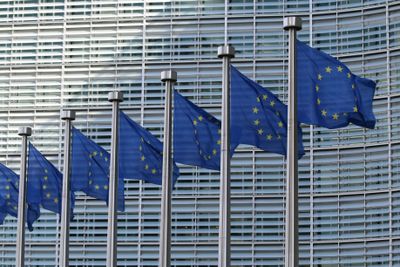
Two decades ago, the European Union welcomed ten new member states, including Cyprus, Czech Republic, Estonia, Hungary, Latvia, Lithuania, Malta, Poland, Slovakia, and Slovenia. This historic expansion not only reshaped the geopolitical landscape of Europe but also holds significance for global politics, economics, and cultural integration. Understanding this event's importance requires recognizing its impact on various fronts, from fostering regional stability to influencing trade dynamics and promoting cross-cultural exchange. Key sub-topics that may interest journalists and the public include: European Integration and Unity: Exploring how the expansion has contributed to the European Union's efforts towards unity, cooperation, and peace among member states. Economic Implications: Analyzing the economic effects of the expansion on both existing and new member states, including trade patterns, investment flows, and disparities in development. Political Dynamics: Investigating the political changes within the European Union, such as shifts in power dynamics, decision-making processes, and the challenges of governance in a larger union. Cultural Exchange and Identity: Examining the cultural exchange and diversity resulting from the inclusion of new member states, and how it has enriched the European cultural tapestry. Challenges and Achievements: Assessing the successes and ongoing challenges faced by the European Union post-expansion, including issues related to migration, integration, and institutional reforms. Future Prospects: Speculating on the future of the European Union, considering factors like potential further expansions, the rise of Euroscepticism, and the Union's role in global affairs. The 20th Anniversary of the Expansion of the European Union marks a significant milestone in the continent's history, offering journalists and the public alike a chance to reflect on the achievements, challenges, and the future trajectory of European integration. Connect with an Expert about the EU: Carolyn Dudek Professor of Political Science · Hofstra University Dr Martin Brenncke Lecturer in Law · Aston University David R. Dorondo Professor · Western Carolina University To search our full list of experts visit www.expertfile.com Photo Credit: Guillaume Périgois

Success Is Sweet: Ferrero's Crown Jewel, Nutella, Turns 60
Six decades ago, on April 20, 1964, the first jar of Nutella left Gruppo Ferrero's factory in the Italian town of Alba. In its gooey wake, the chocolate-hazelnut treat would spread across continental Europe, and then the world, like a healthy schmear on toast. Today, Nutella is the crown jewel of Ferrero's confectionary empire, propping up a business that generates roughly 17 billion euros in revenue each year. Annually, a whopping 365,000-plus tons of the stuff are sold across 160 countries, and nearly one quarter of all hazelnuts harvested are devoted to its production. Luca Cottini, PhD, is an associate professor of Italian in Villanova University's College of Liberal Arts and Sciences and an expert on modern Italian culture, history and society. He also is the author of a book on Michele Ferrero, the mastermind behind Nutella and its meteoric rise: Il fabbricante di cioccolato. To mark the iconic Italian brand's 60th anniversary, Dr. Cottini shared some thoughts on its Willy Wonka-like creator, early (accidental) origins and recipe for international success. Here's a taste: Q: According to Business Insider, a jar of Nutella is sold every 2.5 seconds—just about the time it takes to finish this sentence. How did we get so "nuts" for Nutella, anyway? Dr. Cottini: Well, much of the success of Nutella relates to its novelty, to the idea of spreadable chocolate. At one point, to think that spreading chocolate would be popular was as crazy as to predict that spreadable coffee would be a hit. The idea developed because, in the mid-to-late 1940s, Michele Ferrero's father Pietro was to combine the scarcity of cocoa in his area with hazelnuts, which was the ingredient most available in Alba. It seemed like condemnation that they should have only hazelnuts. Well, he combined them with cocoa to produce this mix—it's called "gianduja" in Italian—and he sold it. But when the Ferreros sold it in southern Italy, they had a problem: The chocolate was melting with the summer heat; and a lot of the workers in Naples, to not waste it, started to spread it on slices of bread. And it's interesting. The Ferreros have a completely non-moralistic approach to failure. You sell chocolate; it melts. This is somewhat embarrassing. But their approach was instead to see this situation as the beginning of a new idea, of a new concept. Q: Is Nutella's story unique in this respect? DC: Several Italian innovators have similar stories to the Ferreros', especially during the 1930s. [Salvatore] Ferragamo, for instance, developed the wedge shoe because there was a shortage of steel, with an embargo imposed on Italy. So, he used Sardinian cork as a replacement, and that generated the wedge shoe. [Guccio] Gucci, during a leather shortage, started using hemp and decorating the hemp with a double "G," and that became the trademark of the company. [Alfonso] Bialetti, who produced the modern coffeepot, used the only metal that was allowed during Fascism, which was aluminum, since the Partito Nazionale Fascista would not import iron or prime metals. But Bialetti took this poor, hybrid ore and made it something that could become valuable. And so, he invented the moka coffeepot in 1933, which is one of the symbols of Italian design. That’s one of the keys of the Italian model of entrepreneurship: producing objects that are not just trendy for one season, but eventually become evergreen or classic. Q: What inspired the name "Nutella?" DC: It was the product of 18 years of research. For all intents and purposes, "Nutella" first came out in 1946. It was called "SuperCrema" and, before that, "Cremalba." But in 1962, there was a law in Italy that prevented companies in the food industry from using prefixes like "super" or "extra." So, that led Ferrero—by then, under the leadership of Michele Ferrero—to figure out a new alternative to SuperCrema. At the same time, the company was expanding into Germany and France, and they needed a brand name that could be pronounced easily. So, Ferrero joined the "ella" sound from mozzarella, stella, caramella—Italian words that people could recognize—with the word "nut," like the English "nut," which gave their product an international feel. It's really a "glocal" [global and local] name. It was conceived as a very rooted enterprise with a global horizon. Q: In 1964, were Ferrero's global ambitions practical? DC: It was honestly a bit of a gamble. In 1957, the European Economic Community was established, which is the beginning of the European Union. And that same year, Michele Ferrero organized in Rome the first conference of his company, which was by then somewhat national, to plan exportation in Europe. In the Italy of the 1950s and 1960s, this was very pioneering. Michele Ferrero was actually one of the first businesspeople to export products to Germany in the 1950s, at a time when there was a lot of resentment against Italians because of everything that happened during the Second World War. So, he entered this incredibly difficult market, and still today, Ferrero and Nutella are strong. Q: What do you think accounts for Nutella's continued popularity, 60 years after its introduction? DC: Michele Ferrero thought of his products as speaking products. It's something very common to the automobile industry in Italy. This is characteristic of Ferrari and Lamborghini; they produce cars that are appealing not just because they're "super cars," but because they say something. Nutella is a food that says something. When someone puts it on the table, it compels people to jump in and share their own stories—of trying it with a friend, of having it on a hike or of taking part in "Nutella Day." Today, if you're in the market for a chocolate-hazelnut spread, you might find products that are even better than Nutella. Actually, surely better. But they will never replicate the appeal and the grasp that Nutella has. Because Nutella has that aura of storytelling and mythmaking other products simply don't have.


New book explores minority languages in the digital age
Heritage Languages in the Digital Age. The Case of Autochthonous Minority Languages in Western Europe offers invaluable insights for educators, activists, policymakers and researchers The book describes the challenges faced by minority languages in today's interconnected world and asks whether digital communication could potentially reverse the decline of smaller and lesser used languages A researcher from Aston University has co-edited a book that explores the intricate relationship between technology, language policy and cultural identity, presenting case studies of digital communication in smaller languages such as Breton, Gaelic, Faroese, Frisian, Lombard, Low German, and Welsh. Heritage Languages in the Digital Age asks whether digital communication can help to prevent language loss of smaller languages and offers invaluable insights for educators, activists, policymakers and researchers navigating the challenges faced by minority languages in today's interconnected world. Edited by Gertrud Reershemius, a professor of linguistics and language contact at Aston University, and Birte Arendt from Greifswald University in Germany, the book's central focus is on minority languages which are facing a declining number of speakers and a loss of communicative domains in an increasingly globalising world. As these languages contend with the dominance of majority languages, stakeholders such as teachers, language activists, planners and researchers are re-evaluating traditional media strategies, language policies and teaching methodologies to counteract language shift trends. The book also discusses how online communities influence language usage and cultural exchanges for minority speakers and advocates for adaptive language policies and innovative teaching methods to support minority languages and bilingualism while fostering linguistic pride and identity. Professor Gertrud Reershemius said: “The languages examined in this book are still spoken by a considerable number of speakers and enjoy varying forms of institutional, legal, financial and ideological support. “While the overall numbers of speakers may be declining, their significance in identity construction and cultural commodification processes is undeniably growing. “As the global discourse on language diversity and cultural preservation gains momentum, this book serves as a comprehensive resource for understanding and addressing the multifaceted challenges and opportunities facing minority language communities.” You can purchase a copy of Heritage Languages in the Digital Age here.