
Experts Matter. Find Yours.
Connect for media, speaking, professional opportunities & more.

New £1.5 million healthcare simulation facilities to open at Aston University
New clinical simulation facilities for medical, pharmacy and optometry students are set to open in 2022 Including an ocular simulation unit facility which will be the only one in Europe, as part of further investment in clinical facilities in the College of Health and Life Sciences at Aston University. The facilities are part funded by the Office for Students which awarded the University £806,226 to set up a ‘high fidelity’ simulation A&E room with further expenditure by Aston University on an ocular simulation unit. Aston Medical and Pharmacy School students will be able to practise in emergency settings using high quality manikins where they will simulate treating patients for acute conditions such as a heart attack or learning how to intubate a patient onto a ventilator. The high-fidelity acute care simulation room will be equipped with recording facilities, a debrief room and control room. The funding will allow for the purchase of other training equipment such as a hospital grade bed and single task trainer simulation equipment. For example, male and female catheterisation models, pelvic and rectal trainers, venepuncture arms, breast trainers and abdominal trainers. Professor Liz Moores, deputy dean of the College of Health and Life Sciences, said: “We are really excited to have the support from both the Office for Students and Aston University in building these state-of-the-art facilities for our students and can’t wait to start using them. “The acute care simulation room will allow us to simulate a variety of emergency resuscitation scenarios that are very difficult to teach in real life situations, such as heart attacks, acute breathlessness and severe allergic reaction and will be of great value in training students of medicine and pharmacy.” Students in the School of Optometry will also be equipped with simulation facilities to carry out treatment on patients. Professor James Wolffsohn, head of the School of Optometry said: “The ocular simulation facility at Aston University will be unique in Europe, allowing students to refine their skills in examining the health of the front and back of the eyes and to experience a wide range of eye disease. “One of the simulators even allows them to utilise their smartphone to practice at home. They can gain direct feedback and be assessed by the simulators, allowing more flexible, diverse and intensive learning than can be achieved with clinical practice placements.” It is hoped these facilities will help plug some of the gaps in clinical placements that are currently affecting students since the COVID-19 pandemic. As a result of the pandemic, alternative ways are being explored to gain high quality authentic ‘clinical’ experiences, whilst not exposing patients, staff, or students, to risk. The health crisis has also increased pressure on the NHS creating a need for alternative but appropriate training facilities, to ensure that students are fully prepared for the medical profession. The simulation facilities are due to be open in time for the September 2022 intake of students.


Brexit caused a large negative effect on UK trade pre-pandemic - new Aston University research
Professor Jun Du and Dr Oleksandr Shepotylo analysed the causal effect of Brexit on the UK’s services trade between 2016 and 2019 They found the UK experienced an average shortfall of £18.5 billion worth of services exports for each of those years Transport, Travel, Insurance and Telecom sectors experienced significant decline post-2016 No significant decline was found in other services including intellectual property, construction and financial. New research from economics experts at Aston University has found Brexit has caused a largely negative effect on UK services trade since the EU referendum. Professor Jun Du and Dr Oleksandr Shepotylo, from Aston Business School, analysed the causal effect of the Brexit referendum on UK’s services trade over the period between 2016 and 2019, in comparison to other major services exporters. They found the uncertainty associated with the UK-EU trade negotiations following the referendum caused harms to the UK services economy as a whole, reducing firms’ exports of services. This damages the competitiveness of services sectors which make up a lion’s share of the UK economy in terms of gross output, value-added and jobs. Professor Du and Dr Shepotylo used a Synthetic Difference in Differences (SDID) estimator to construct a counterfactual of the UK, had it not voted leave in 2016, to compare its services exports performance. This was done by comparing the actual performance of the UK with the modelled performance of a country that looks much like the UK, but did not vote to leave the European Union. They found Brexit resulted in the UK experiencing an average shortfall of £18.5 billion worth of services exports every year between 2016 and 2019 relative to what it would have been, had the UK remained in the EU. The impact varied considerably between different types of services. The UK’s exports in the category of transport, travel, insurance and telecom services saw a statistically significant decline following the referendum. No significant decline was found in business, intellectual property, construction, financial or personal, cultural and recreational services. In addition, Professor Du and Dr Shepotylo did not find evidence to suggest that UK businesses have redirected exports in services from the EU markets to those outside the EU, which is in contrast to exports in goods. The research suggested that Ireland has benefited significantly during this period, with growth in post-Brexit services exports up by £24 billion annually over 2016 to 2019 in the country compared to the counterfactual scenario if Brexit did not occur. This translates to 14.75% of Ireland’s 2019 total services exports, with growth clustered largely in the telecoms, business, intellectual property, and insurance sectors. Jun Du, professor of economics at Aston Business School, said: “Brexit marked a rupture in the highly integrated UK-EU services markets that had been developed during the UK’s membership of the single market. However, the UK’s strength in services was not reflected in the government’s ambitions for the sector in the EU-UK trade negotiations that followed the referendum. “There are other winners besides Ireland in some post-Brexit services areas. The Netherlands have increased considerably in ‘Business’ and ‘Intellectual Property’ exports. “Spain has seen growth in ‘Travel and transport’ services exports. Germany has gained in ‘Transport’, ‘Insurance’, ‘Telecom’ and ‘Intellectual Property’ services exports. While Ireland seems to have done exceptionally well in relation to the export of ‘Telecom’ services, a sharp contrast emerges to the lost exports not just from the UK, but also from the Netherlands, Switzerland and France.” Dr Oleksandr Shepotylo, a senior lecturer in economics, finance and entrepreneurship at Aston University, co-wrote the working paper and said: “UK services exports are 5.7% lower than they would be without Brexit. It reflects an overall decline of the UK as a place for doing business. “What economists tend to agree on is that the UK’s exit from the EU’s custom union and single market may have more significant impacts on services than goods, and more severe impact on post-Brexit regulated services than unregulated services. “It will take some time for the full impact of Brexit on UK services to emerge. Freedom of movement and data flow in some areas between the UK and EU could remain restricted. Stability, transparency and regulatory consistency in financial markets could be challenged. But new opportunities might surface. “Continued trade negotiations and dialogues regarding trade liberalisation are essential with the EU and large, fast-growing markets beyond Europe. Crucial to understanding these impacts will be reliable data and rigorous analysis. Our modelling of marked losers and winners in post-Brexit services trade provides new evidence for an open discussion of the post-Brexit trade in services.” You can read the full working paper HERE


Citizen Science project set to explore the microbiome of kitchen chopping boards
Researchers in the College of Health and Life Sciences at Aston University have been awarded funds to explore the microbiome of the kitchen chopping board with the help of ‘citizen scientists’. The grant is from UK Research and Innovation (UKRI) and the Food Standards Agency (FSA) as part of a larger project to investigate food standard challenges. The new citizen science project plans to recruit participants from underrepresented communities in the West Midlands to investigate levels of foodborne bacteria in the home and produce educational materials for their communities. Citizen science projects put the public at the heart of the research process. Rather than being the subjects of the research, citizens are actively involved in collecting and analysing data, and even deciding what questions they want to ask and co-developing the approaches with researchers citizen science also gives participants the opportunity to directly contribute to scientific research and influence policy. The research team in the School of Biosciences will recruit citizen scientists through its students, who will act as ambassadors in their own households and communities. The team will create methods for sampling bacteria from chopping boards and gather their observations with their team of citizen scientists and ambassadors. This will enable the researchers to identify the bacteria present and determine their antimicrobial resistance (AMR) profiles, providing opportunities for ambassadors and citizens to perform lab research. The researchers, alongside their ambassadors and citizens, will then co-design and disseminate educational materials on food hygiene tailored to their target communities and based on the findings of the study. Dr Alan Goddard, senior lecturer in the School of Biosciences and project lead, said: "Many foodborne infections begin in the home, often through poor hygiene where chopping boards provide an opportunity for raw foods to cross-contaminate. “This is why this project is an exciting opportunity to work with our students and communities to investigate a microbiological problem that causes significant disease every year. By working with the public, we get privileged access to authentic environments and can ensure our solutions are appropriate." At present, around 40 per cent of outbreaks of foodborne infections in Europe occur at home, with approximately 2.4 million cases of food poisoning occurring in the UK annually, leading to 180 deaths. A common source of such infections is poor food hygiene, with chopping boards, where raw foods may cross-contaminate, playing a key role in the infection chain. Misunderstandings, or poor food hygiene, may therefore contribute a significant disease burden. Professor Anthony Hilton, executive dean of the College of Health and Life Sciences said: “This exciting project brings together the expertise of University researchers with the natural inquisitiveness of members of the public to co-develop and undertake a research project which has the potential for real impact in reducing the burden of foodborne disease in the home.” The FSA and UKRI have awarded a total of £200,000 to fund six projects in order to bring the public and researchers together to investigate food standards challenges. All six projects include exploring the bacteria on home grown produce, parents testing the safety of baby formula, and people with food hypersensitivities analysing the allergens in food bought online. The citizen science projects are all linked to the FSA’s Areas of Research Interest themes, covering issues such as antimicrobial resistance (AMR), food hypersensitivity and food safety and hygiene in the home. The funding was delivered in collaboration with the Biotechnology and Biological Sciences Research Council (BBSRC) and the Economic and Social research Council (ESRC), both part of UKRI. It is part of a wider effort to coordinate activities and develop a joined-up approach to tackle the challenges of maintaining safe food in the UK. Professor Robin May, Chief Scientific Advisor for the FSA said: "I’m delighted that the FSA is supporting these exciting citizen science projects across the country. In addition to delivering invaluable data, these projects will allow the communities we serve to help build the evidence on which policy decisions are made. We are committed to using science and evidence to tackle the latest food-related issues and citizen science is a fantastic way of doing this." The citizen science project investigating the microbiome of the kitchen chopping at Aston University will start in January 2022, concluding in July 2022.

How rabbits help restore unique habitats for rare species
European wild rabbits are a ‘keystone species’ that hold together entire ecosystems – according to researchers at the University of East Anglia. Our campus is home to hundreds of rabbits and Prof Diana Bell, from our School of Biological Sciences, has been researching them for more than 30 years. Now, she is one of the lead researchers on a new report which aims to restore and protect at-risk wildlife habitats which are rabbit dependent. The report shows how their grazing and digging activity keeps the ground in a condition that is perfect for sustaining other species that would otherwise move on – or die out. But their numbers are declining regionally, nationally and globally. And they are even being classed as endangered in their native region, the Iberian Peninsula. The findings come as efforts to save England’s most threatened species from extinction are turning the tide for wildlife in Norfolk and Suffolk thanks to the Shifting Sands project. Shifting Sands is one of 19 projects across England that make up the national Back from the Brink initiative. Together, these projects aim to save 20 species from extinction and benefit over 200 more. Lead partner of the rabbit work-stream and rabbit expert Prof Diana Bell, from UEA’ School of Biology, said: “The Breckland-based Shifting Sands project was set up to save some of the region’s rarest wildlife. “After several years of hard work by this multi-partner project, the fortunes of species classed as declining, rare, near-threatened or endangered are now improving in the Brecks. “The project has seen species recover in record numbers – including endangered beetle and plants, one of which is found nowhere else in the world. “Rabbits are incredibly important because their grazing and digging activity keeps the ground in a condition that is perfect for sustaining other species. “Sadly, rabbit populations have declined dramatically in the UK and across Europe, and the European wild rabbit is now listed as endangered in its ancestral Iberian Peninsula range. Their decline is largely due to a spill-over of new viruses from commercially bred rabbits. “The Shifting Sands project has shown us how important rabbits are to entire ecosystems, and it is vital that these habitats are conserved and protected. “We encouraged a rabbit revolution in the Brecks and we have produced a toolkit in partnership with Natural England to help landowners of similar rabbit-dependent habitats to do the same.” “Simple cost-effective ways of encouraging rabbits include creating piles of felled branches, known as brush piles, and banks of soil.” Monitoring over the past three years has shown the interventions are working, with evidence of significantly higher amounts of rabbit activity. Prof Bell said: “Our work resulted in evidence of rabbit activity in significantly higher numbers. 91 per cent of brush piles showed paw scrapes and 41 per cent contained burrows. Even when burrows did not form, the brush piles helped expand the range of rabbit activity.” The UEA research team worked in collaboration with Natural England, Forestry England, Plantlife, Breckland Flora Group, Norfolk Wildlife Trust, Suffolk Wildlife Trust, Butterfly Conservation, Buglife, the Elveden Estate and the RSPB to deliver this ambitious partnership project. It has seen five kilometres of ‘wildlife highways’ created, more than 100 specimens of rare plants re-introduced, habitat created and restored across 12 sites, species encouraged, and landscape-management practices improved. As a result, seven species of plant, bird and insect are increasing in number and many more are benefiting in turn. Among those species recovering are rare plants such as the prostrate perennial knawel that is unique to the Brecks, basil thyme and field wormwood. The endangered wormwood moonshiner beetle, lunar yellow underwing moth and five-banded digger tailed wasp are also increasing. All these species are identified in the UK’s Biodiversity Action Plan as being priorities for conservation. The open habitat maintained by rabbits supports two rare plants: the prostrate perennial knawel – found nowhere else in the world – and field wormwood. Pip Mountjoy, Shifting Sands project manager at Natural England, said: “The Brecks were described by Charles Dickens as “barren”. They are anything but. Their 370 square miles of sandy heathland, open grassland and forest support almost 13,000 species, making it one of the UK’s most important areas for wildlife. “That wildlife is under threat. Felling trees and encouraging a species that is often considered a pest may seem a strange solution. But in this instance, carefully managed ‘disturbance’ is exactly what this landscape and its biodiversity needs.” “The project’s interventions have provided a lifeline for this unique landscape, and shown how biodiversity can be promoted by ‘disturbing’ places – not just by leaving them alone. “ “These rare habitats are becoming overgrown and species are declining as a result of changing land management practices and human impacts. It’s our responsibility to restore and maintain these spaces for nature. Some of these species exist only here and, if lost, will be lost forever.” Established in 2017 with £4.7m from the Heritage Lottery Fund and £2.1m from other bodies, Back from the Brink was the first nationwide co-ordinated effort to bring together charities, conservation organisations and government bodies to save threatened species. More information about the Brecks, Shifting Sands, Back from the Brink and a toolkit to help rabbit conservation is available via www.naturebftb.co.uk.

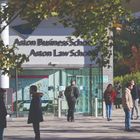
Aston Business School to host hybrid conference on tax
• The Tax Research Network (TRN) annual conference will run from 8 – 10 September both in person and online • The focus of the three-day event will be on tax research and education • Over 80 speakers and delegates from across Europe, USA, India, New Zealand and South Africa will take part in the event with around half livestreamed on YouTube Aston Business School (ABS) will host the prestigious Tax Research Network (TRN) annual conference this week. The TRN is one of the main global groupings of those interested in tax research and education with around 500 members worldwide. The event, which is sponsored by the Chartered Institute of Tax (CIOT) and the ICAEW Charitable Funds, will run from 8 – 10 September both in person and online. Two days (8-9 September) will focus on tax research and the third day (10 September) on tax education which will be a series of workshops looking at different current issues in teaching tax. Over 100 speakers and delegates from across Europe, USA, India, New Zealand and South Africa will take part in face-to-face keynote speeches and panel discussions in Aston Business School with around half live-streamed on YouTube. Professor Andy Lymer, who is head of accounting at Aston University and chairing the event, said: “I am delighted that Aston Business School is hosting the Tax Research Network’s (TRN) annual conference. “This is their annual conference which is usually a face-to-face event but was virtual last year and this year hybrid. “Our hybrid approach is a first for ABS with a mix of face-to-face lectures and live-streamed parts interlaced with pre-recorded paper and keynote and panellist contributions. “Aston University will be represented by various academics including Dr Carlene Wynter who is chairing a session on tax and housing linked to the work she did last year with others at the university on social housing and tax as well as presenting a paper.” The schedule includes Dyfed Alsop, CEO of the Welsh Revenue Authority and Stephanie Gray, head of income tax and reserved tax unit in the Scottish Government and various workshops from speakers including Phyllis Alexander (Bournemouth University) on developing international tax teaching in light of current trends in this area towards developing fairer tax systems and Nicky Thomas (University of Exeter) and Terry Filer (Swansea University) on innovations in teaching tax including making use of VR and Lego. You can book your place(s) here. The full schedule for the conference is available here. Full details of the parallel sessions are available here.
UCI experts can discuss unfolding crisis in Afghanistan
UCI faculty members Dr. Heidi Hardt, associate professor of political science, and Dr. Mark LeVine, professor of modern middle eastern history, are available to speak about the crisis in Afghanistan. Dr. Heidi Hardt Dr. Hardt can talk about NATO's contribution to Afghanistan, implications for NATO's legitimacy, security concerns for Afghan women and provide broader context on military interventions and operations. She can address more specific questions related to the two decades long allied operation. About Dr. Hardt: Dr. Hardt has expertise in transatlantic security, national security and European security and defense, including NATO, the EU and OSCE. Issue areas include transatlantic security cooperation, collective defense, crisis management, military operations (e.g. Afghanistan), coalition warfare, strategy, learning, adaptation, organizational change, gender and diplomacy. She's the author of two books: NATO's Lessons in Crisis: Institutional Memory in International Organizations (Oxford UP, 2018) and Time to React: The Efficiency of International Organizations in Crisis Response (Oxford UP, 2014). She's the recipient of a 2021-2022 Council on Foreign Relations International Affairs Fellowship and will soon be working as a foreign policy fellow for the Office of Congresswoman Katie Porter. Contact: hhardt@uci.edu Dr. Mark LeVine Dr. Levine was in Kabul in 2019. His point of view on Afghanistan includes: • “Why did the US abandon the embassy when the agreement with the Taliban specifically allowed to diplomatic staff to remain in Afghanistan and there was no imminent threat by the Taliban to the embassy and in fact the US was coordinating with them. They could have certainly kept the lights on and not looked like cowards running, which set the tone for everything else.” • “It seems pretty clear that there was an internal military coup. The Taliban did not just waltz into Kabul without coordination with senior military people who are already handing over parts of the country to them in the days before. Some kind of deal had been worked out behind the scenes and without the knowledge of the president, which is why he felt he had no choice but to flee.” About Dr. LeVine: Dr. LeVine completed his Ph.D at NYU’s Dept. of Middle Eastern Studies in 1999, after which he held postdoctoral positions at Cornell University's Society for the Humanities and the European University Institute's Robert Schuman Centre for Advanced Studies, in Florence, Italy before coming to UCI. His research and teaching focus on the following issues: histories, theologies and political and cultural economies of the Middle East and Islam in the modern and contemporary periods; Palestine/Israel; cultural production, revolution and resistance in the Middle East and Africa; modern and contemporary Iraq, Egypt, Tunisia and Morocco; art and conflict in West Africa (especially Ghana and Nigeria, but also Senegal, Mali and Kenya); comparative studies of imperialism and colonialism, urban planning and architecture (history and theory); critical theory and globalization studies with a comparative focus on popular cultures and religion in Europe and the Muslim world; peace and conflict studies; and comparative nationalisms. Contact: mlevine@uci.edu


Brexit: UK services are losing out to EU rivals – but Asia could be big winner
"Seven months after Britain’s exit from the EU, the chilly effects on UK trade are being felt. Total exports of UK goods and services were down by 13% (£36 billion) and imports down 22% (£66 billion) for January to May 2021 compared to the same period in 2019." Professor Jun Du, Aston Business School Singapore looks like one of the big winners from Brexit. joyfull In a separate new ONS report into UK services, exports and imports fell 12% and 24% in the first quarter of 2021 compared to the same period in 2019. To some extent this is due to the pandemic, but the decline with EU countries was more severe (exports down 15% and imports by 39%), which suggests Brexit was relevant too. The difference between services exports to EU and non-EU countries was particularly marked in sectors like construction (-43% vs +24%), maintenance and repair (-62% vs +11%), and manufacturing services (-40% vs -12%). It seems to confirm that the UK’s services offering has been made less competitive by the EU-UK Trade and Cooperation Agreement hardly covering such business. This has left EU members free to decide whether to allow different UK providers into their markets. But as we shall see, other services exporting countries outside the EU may also benefit as a result. In our recent paper, Ireland looked like the big winner. It has probably benefited from firms relocating and business being re-routed from the UK, not to mention low corporation tax and a young well-educated workforce. Between 2016 and 2019, Ireland’s services exports rose 24% (that’s €144 billion or £123 billion), driven by financial services, IT and transport. Speculation still abounds about which other EU cities will benefit in the medium term. Amsterdam surpassed London as Europe’s largest share-trading centre in January by absorbing much trade in euro-denominated assets, though London has been back on top recently. Other potential winners include Frankfurt (banking), Luxembourg (banking and asset management) and Paris (financial, professional and business services). Even a less serious contender like Berlin can attract tech talents thanks to its culture clusters and affordability. On the other hand, most financial traders have so far remained in London. The city is still strong in hosting stock market flotations and other forms of capital raising. And the flow of financial jobs out of London has been a fraction of what remainers predicted. A four-year regulatory transition period for areas like data protection and electronic trade will undoubtedly be helping. London vs EU rivals is only half the story. James Padolsey/Unsplash, CC BY-SA Yet all this misses a bigger picture, namely that Europe’s ability to provide services may have been weakened overall. Imagine a group of US investors wants to invest £1 billion in European shares and other financial assets. In the past it might have set up a fund in London, making use of the city’s network of lawyers, accountants, bankers and other finance professionals, while filtering some of the work to specialists in, say, Paris and Frankfurt for issues related to France and Germany. But now Brexit means the fund can’t invest in certain EU securities from London. The investors would have to set up a second fund in, say, Dublin to get exposure to all the EU assets they want. The additional expense and time involved makes them decide it will be more lucrative to set up an Asia-focused fund in Singapore instead. When you multiply this effect across every sector, it is potentially huge. Certainly some investors will decide to either switch attention from the UK to EU countries, or to live with the extra cost of doing business across both the UK and EU. But others are deciding that an opportunity somewhere else in the world now looks more attractive. The danger is that this adds up to a global shift in economic weight over time. In fact, we could be seeing signs of this already. Winners and losers In follow-on research that we have yet to publish, we have been analysing the services exports of the major service providers in Europe and globally, using trade data jointly collected by the World Trade Organization (WTO) and the Organisation for Economic Cooperation and Development (OECD). The data shows the UK was and is the biggest services exporter in Europe and second only to the US worldwide, but appears to have been losing ground since Brexit. Ireland and the Netherlands are the major growth stories in Europe, while China, India and Singapore are leading the way elsewhere. Services exports by country, 2019 vs 2015 Trends in services exports. Left: 2015 data in solid coloured bars; 2019 change in yellow markers. Right: Green bars represent accelerating service growth; red bars represent decelerating growth. BaTIS The UK’s services growth trend fell 11% in the 2016-2019 period compared to 2010-15. This backs up our recent published research finding that the UK’s global share of exported services fell from 8.9% in 2005 to 7% in 2019. Meanwhile, France, Spain, Italy and Belgium’s growth has also been declining, while Germany, the Netherlands, Switzerland, Luxembourg, Austria and also the US were static. Ireland was the fastest growing services exporter among all, but Singapore and India gained momentum too. Strikingly, we see increasing growth in Asia between 2016 and 2019 in sectors like travel, financial, IT and creative services. This includes extraordinary growth in Singapore in finance, business, insurance and pension provision, and also in China in numerous segments. It looks like nothing short of a boom. Shanghai has been on the up and up. Krzystsztof Kotkowicz, CC BY-SA This may partly reflect the industrial transformation taking place in the Asian developing world from manufacturing to services. It may also capture a long-term shift of services centres from the west to the east – a reshuffle on a truly global scale. But at the same time, it’s evidence that Brexit has weakened the UK as the European centre for services. Yes, business shifted to Ireland (and Luxembourg) to some extent, but that could be hiding a wider collective setback. The question for the years ahead, for the UK and its European services peers, is whether they can come up with arrangements that help maintain their collective strengths – and to what extent they can exploit opportunities elsewhere, particularly on developing countries, where US services providers have traditionally been far ahead. This article was co-written by Professor Jun Du and Dr Oleksandr Shepotylo.

Fat: why are we so confused about whether or not we should include it in our diet?
You’d be forgiven for being confused about whether or not you should eat fat. For a long time, people were told to stay well away from it entirely. But lately, fat seems to be back on the table – but only certain types of fat. With so many conflicting messages about which types of fat to eat, it’s no wonder many people are confused about whether or not they should it. Here are just a few reasons why the advice about fat is so confusing – and how much fat you should really eat. Some fat is essential in our diet as it gives us energy and helps us absorbs certain vitamins, including vitamin A, D and E. But there are many different types of fats and eating too much of certain types can be harmful to us. Unsaturated fats (also called monounsaturated or polyunsaturated) are known as “good” fats and are important for helping us lower cholesterol and keep our heart healthy. Unsaturated fats can be found in foods such as avocados, olive or peanut oils, and fish. But saturated fats can be bad for us when eaten in excess, and can raise cholesterol and increase risk of heart disease. Trans fats can also increase cholesterol levels. Foods that contain saturated and trans fats include butter, cheese, bacon, biscuits and fried foods. Fat is important Many health authorities worldwide agree fat is an important part of a healthy diet – but that we should only get so many calories daily from fats. The World Health Organization (WHO) recommends people get no more than 30% of their daily calories from fat – of which only 10% of daily calories should be from saturated fats, and less than 1% from trans fats. The UK’s recommendations are much the same, limiting saturated fats to only 10% of our daily calorie intake – around 30g per day for men (around 270 calories) and 20g for women (around 180 calories). But in Europe, health recommendations suggest fat should comprise between 20-35% of our total daily calories. There’s also no recommendations for how many calories should be from saturated or trans fats – just that these should be limited. In the US, people are only advised to limit saturated fat intake to less than 10% of daily calories. So while there seems to be agreement in how much fat people should eat, the slight variations in these recommendations – as well as variations in how much of certain types of fat we should eat – might explain the confusion over whether or not we should eat fat and how much of it we should eat. Misleading advice If all the different recommendations weren’t confusing enough, there’s also a lot of information out there that’s either too simplistic or incorrect. This makes the recommendations about eating fat all the more complicated. For example, the Joint British Societies (which publishes recommendations to help people reduce their risk of cardiovascular disease) recommends that only around 10% of a person’s total fat intake should come from saturated fats. As typically we consume 30-40% of our calories from fat, and international and government bodies recommend that around 30% of daily calories should come from fat, limiting saturated fats to 10% of this would mean they’d make up only 3% of our day’s calories. This would amount to little more than about 7g of saturated fat -– around two teaspoons of butter. This differs from many other recommendations – such as from WHO – which states 10% of all the calories people eat daily should come from saturated fats. It’s also unclear whether such a strict restriction of saturated fats would have any benefit and would be difficult for many people to achieve as a variety of healthy foods – such as olive oil – can also contain saturated fats. There’s also a lot of advice that’s too simplistic, which can be inadvertently misleading. For example, one tip the British Heart Foundation recommends for swapping saturated for unsaturated fats is to use a spray oil or measuring oils, instead of just pouring it straight from the bottle. But this doesn’t account for the fact that different types of oil have different saturated fat levels. Sunflower oil, for example, is already low in saturated fat, so using less would significantly reduce calories but only modestly reduce saturated fat levels. Other advice from the British Heart Foundation includes avoiding frying foods and switching to semi-skimmed milk. But focusing on methods that have a minimal effect on saturated fat levels can make it more confusing to know which foods (and fats) to avoid. The easiest way to avoid saturated fats is avoiding foods like pies, cakes and biscuits. These foods are high in saturated fats and tend to be the greatest sources of them in most peoples’ diets. Getting the right amount Research suggests that we should get around a third of our energy from fat – two-thirds of which should be unsaturated fats. Of course, certain food sources will contain different types of fats, and different levels of fats. For example, avocados and pies are both high in fat. But avocados are high in healthy monounsaturated fats, which are good for heart health and can lower cholesterol. Pies, on the other hand, are high in saturated fats, which can be bad for your heart and cholesterol levels. The easiest way to make sure you’re eating enough of the right fats is to avoid foods that contain saturated and trans fats – such as butter, hard cheeses, pies, biscuits, pastries, cakes, processed meats and crisps. These foods are also high in salt, carbohydrates and sugar, so can also have other health harms such as increasing risk of high blood pressure. Instead, try including sources of healthy fats – such as avocados, olive oil, nuts and fish. This will ensure that you’re not only getting enough fat in your diet, but that you’re getting the right kind of fats (around 75g a day for women and 90g for men).


Victory for Kim Leadbeater, relief for Keir Starmer. Peter Byrne/PA Images/Alamy Stock Photo Parveen Akhtar, Lecturer in Political Science, Aston Centre for Europe at Aston University, dissects the close vote. The Batley and Spen by-election was a close contest that went right down to the wire with few commentators risking calling the result before it was announced. At 5:25am it was declared. Kim Leadbeater was the new Labour MP for Batley and Spen, beating her nearest rival, the Conservative candidate Ryan Stephenson, by 323 votes. It was close but a clear victory for Labour. Leadbeater’s acceptance speech was always going to be poignant. This was the seat held by her older sister, Jo Cox, at the time of her murder in 2016. Cox, who won the seat for Labour in 2015, was killed by a terrorist who held extreme right-wing views and targeted Cox because of her work with refugees. But what was striking – if also sobering and shocking in equal measure given the context – was that Leadbeater also had recourse to thank West Yorkshire police for their protection of her during the campaign. “Sadly”, she said, “I have needed them more than ever.” In fact, even before her victory had been declared, she released a statement pointing to the “intimidation and violence of those who had convened in the constituency with the sole aim of sowing division”. Discord, division and dirty tricks A total of 16 candidates put their hats in the ring for the race in Batley and Spen – a number of whom represented far-right political parties. But it was the presence of George Galloway standing as an independent for the Workers Party which seriously threatened to undermine Labour’s chances of retaining the seat it had held since 1997. Galloway was determined to woo traditional Labour supporters, including the significant Muslim constituent in Batley and Spen. Capitalising on escalating tensions in the Middle East, Galloway sought to paint the Labour leader Sir Keir Starmer as anti-Muslim. His intention was to set up the vote as a referendum on Starmer’s leadership, to split the Labour vote and ultimately force Starmer out of office. To this end, he also attempted to attract white working-class voters by building a narrative of the Labour leader as “woke” rather than for the working class. In the run-up to July 1 there were deeply disturbing reports coming out of Batley and Spen detailing the intimidation and abuse of candidates. There were accusations of dog-whistle racism and homophobia, fake leaflets and foul play. The campaign descended into one of the most bitter and divisive by-elections of recent years. Tracy Brabin, who had won the seat after the murder of Cox and whose win in the West Yorkshire mayoral election triggered the by-election, described witnessing her group of canvassers “being egged, pushed and forced to the ground and kicked in the head”. It was by no means the only time such disturbing strategies have been exploited. In fact, similar divisions were present in the 2015 general election in Bradford West, an election in which Galloway was again present, this time fighting to retain his seat. At a hustings at the university, the then conservative candidate, George Grant, captured the “wild west” nature of the campaign by likening it to a 19th-century rotten borough rather than a 21st-century parliamentary democracy. That election too descended into discrediting individuals and delving into their private lives rather than concentrating on the issues faced by people on the ground. Changing nature of campaigns Electioneering is by its very nature divisive, effectively asking the electorate to vote for party or candidate A and not party or candidate B. But dirty tricks or underhand tactics used to discredit opponents are by no means inevitable. And yet, while the notion of a sense of fair play and decency may be engraved in the nation’s idea of itself, the 2019 general election demonstrated how easy it is to resort to electioneering in bad faith in the age of social media. From faking fact checks to manipulating videos, the 2019 election threw up a whole catalogue of ways in which to unduly undermine political opponents. Indeed, divisive and personal campaigns may become more prevalent in an era of online campaigning. Something not unique to the UK, of course. The 2020 US presidential election was also divisive in nature as were the state elections in India’s West Bengal earlier this year. In Batley and Spen, in the end, as the Leadbeater pointed out in her speech, the people voted for hope not hate. Yet the constituency is deeply divided and will take much work to bring together. Leadbeater was the only major candidate on the ballot box who was local to the area. While the others leave, she remains, in her words, “the best person” to get on with the job of reconciliation.

New York and Tokyo: Global Cities as Essential Hubs for Our Collective Future
Throughout, cities have faced repeated pronouncements of their demise. Yet, as centers of soft power, cities adapt, persevere, and ultimately, reinvent themselves to thrive. Photo: Orbon Alija / Getty Images On August 24, 2020, in the dog days of the New York summer and at the peak of the COVID-19 pandemic, comedian Jerry Seinfeld wrote an op-ed for The New York Times titled "So You Think New York Is 'Dead' (It's not.)" The king is dead, long live the king! "Real, live, inspiring human energy exists when we coagulate together in crazy places like New York City," wrote Seinfeld. Cities change, "They mutate. They re-form. Because greatness is rare. And the true greatness that is New York City is beyond rare." In fact, megacities around the world have been experiencing similar trends related not just to the novel coronavirus--climate change, natural disasters, population shifts, and transformations in business, infrastructure, and transportation will all shape the contours of the 21st century. New York City's own history--when and why it has been pronounced "dead" during the last century--is instructive in and of itself. Other megacities of consequence should take note and take heart, especially Tokyo, which will be under the microscope in a new way as it prepares to host the Olympic Games in today's unprecedented environment. History repeats itself In the tensions of living in the present time, it's easy to forget New York City's long history of disaster, recovery, growth, and innovation--the 1918-19 influenza epidemic, the seasonal threat of polio, the scourge of HIV-AIDS, and the current pandemic, all define the city's history. In October 1975, New York City, America's largest and wealthiest city, narrowly averted bankruptcy. Refused rescue by the federal government and President Gerald Ford, the city was saved only through the beneficence of the city's own Teacher's Retirement System pension fund, which made up a $150 million shortfall. The next day, the Daily News headline shouted "Ford to City: Drop Dead." We survived, and we thrived! Then there was 9/11, 20 years ago this September, when the U.S. rallied around the city. New Yorkers cheered as heavy equipment driven from across America arrived to help clear the devastation, and were joined by the entire nation in mourning those who were lost. Along came the 2008 financial crisis, sounding another death knell for New York. Today, we know from past history that what has closed will reopen, or be reborn in a different form. And we'll be here to celebrate. Global cities generate soft power Like Tokyo, London, or Paris, New York is a global center for arts and culture, a place where diverse creative arts flourish and inspire people in close proximity, where there is always space for tradition and innovation, and a place, too, for those who come for entertainment. But whether in Japan, Europe, or America, whether in the arts, innovation, or civil society, the soft power of a global city is so much more than the sum of its parts. It is a treasure trove of history, a platform for the future, a home for diversity, and an incubator for social change. What is soft power and why do we need it? The term "soft power" was crafted by Harvard political scientist Joseph Nye in the 1980s, and is now widely used in a foreign policy context. As a 2004 Foreign Affairs review of Nye's book, Soft Power; The Means to Success in World Politics noted: "Nye argues that successful states need both hard and soft power--the ability to coerce others as well as the ability to shape their long-term attitudes and preferences... But overall, Nye's message is that U.S. security hinges as much on winning hearts and minds as it does on winning wars." Almost two decades later, soft power--the cultural, intellectual, and social bonds that bring diverse countries and societies together for mutual understanding--has become a critical component of American foreign policy. This is especially important for the U.S.-Japan alliance, as most recently evidenced by Hideki Matsuyama's thrilling Masters Tournament win and President Biden hosting Prime Minister Yoshihide Suga as the first head of state to visit the White House during his tenure. As I've written before, based on my experience from the State Department, "innovative and entrepreneurial partnerships based on shared objectives--economic growth, stability, and more--will be the engine for increased security and prosperity." In other words, the future of diplomacy will not only be national, but subnational, where megacities like Tokyo and New York will shape their own destinies based on the partnerships that their leaders--political, business, and civil--can forge together in the best interests of their constituents. Japan Society and New York As the President and CEO of Japan Society, my work is to take the Society's mission into its second century, to be the deep connection, or kizuna, that brings the United States and Japan together through its peoples, cultures, businesses, and societies. From our New York headquarters, which opened to the public 50 years ago, we are looking toward the next half century knowing that we will be defined not so much by our now-landmarked building but by our digital and ideational impact. Our future can only be enhanced by continuing to exchange with our friends in Tokyo and beyond. Long before soft power was defined, in the radical days of 1960s New York, Japan Society supported international exchange in the arts between Japan and the U.S. through fellowships and grants to Japanese artists and students, among them Yayoi Kusama, Yutaka Matsuzawa (Radicalism in the Wilderness: Japanese Artists in the Global 1960s), Shiko Munakata (Improvisation in Wood: Kawamata x Munakata, fall/winter 2021), and many others who made history in the arts in both the U.S. and Japan. Now, performing arts commissions and gallery exhibitions at Japan Society build on and evolve U.S.-Japan cultural exchange even as Japanese traditional and contemporary artists have been mainstreamed into New York's major cultural institutions. Our work continues--in arts and culture, education, business, and civil society. Even as the COVID pandemic recedes through continued social distancing practices and increasing vaccinations, the changes it has wrought on the ways we work and communicate are here to stay. Remote work, flexible schedules, and collaboration and connectivity across time zones all predate the pandemic but were scaled up at a rate that was previously unimaginable. While physical borders closed to travelers, virtual ones opened --and technology has allowed us to engage and convene with those near and far like never before. We at Japan Society are committed to finding new connections and building new bridges outside of New York City, starting with Tokyo and then the rest of the world. Our 37 other Japan-America sister societies across the United States have much to offer even as New York remains an essential global stage and financial platform. Partnerships will ultimately define the future of which global hubs thrive and where populations gravitate post-COVID. As we continue our mission for the future of the world, and for the U.S.-Japan alliance, I'm incredibly optimistic for Japan Society and for New York City's long-term evolution. This article was originally published in the Tokyo Metropolitan Government.

