
Experts Matter. Find Yours.
Connect for media, speaking, professional opportunities & more.

Georgia Southern University names David Owen as new dean of the College of Arts and Humanities
David Owen, Ph.D., will join Eagle Nation on July 1 to serve as the new Dean of the College of Arts and Humanities (CAH). “I am pleased to welcome David to Georgia Southern as the next generation of leadership for the College of Arts and Humanities,” said Provost and Vice President for Academic Affairs Carl Reiber, Ph.D. “David brings with him a wealth of knowledge and understanding in analytical and philosophical foundations that will prepare our students for vital roles in their professional communities.” Owen comes to Georgia Southern from the University of Louisville, where he has served as the interim dean of the College of Arts and Sciences since 2020. Among his many achievements, he transitioned the college to a new enrollment-based budget model, led the development of a three-year retention plan, and led morale improvement efforts among the College. While interim dean, Owen oversaw a budget of $62 million, including $4.8 million in funded research grants and a fundraising campaign that raised $4.3 million in 2021-2022. Prior to becoming interim dean, he was the chairperson of the Department of Philosophy at the University of Louisville. He is a three-time alumnus of the University of Illinois at Chicago, where he received his B.A., M.A. and Ph.D. “I am truly excited to be joining Georgia Southern as dean of the College of Arts and Humanities,” said Owen. “In my meetings, I found the faculty and staff of the College to be extraordinarily talented, and deeply committed to student success. The importance of the arts and humanities to a vibrant civic culture has never been more clear, and I look forward to working with the faculty and staff in CAH, Provost Reiber, colleagues from across campus, and alumni and friends of the college to advance the impact CAH has on students’ lives, on the wider community, and on civic culture.” To connect with David Owen or to learn more about Georgia Southern University — simply reach out to Georgia Southern's Director of Communications Jennifer Wise at jwise@georgiasouthern.edu to arrange an interview today.


Georgia Southern professor earns Fulbright US Scholar Award for 2023-2024
A noted Georgia Southern University public health professor has earned a Fulbright U.S. Scholar Program award in All Disciplines to Latvia for the 2023-2024 academic year from the U.S. Department of State and the Fulbright Foreign Scholarship Board. Yelena N. Tarasenko, DrPH, is a professor in the Department of Biostatistics, Epidemiology and Environmental Health Sciences at Georgia Southern’s Jiann-Ping Hsu College of Public Health. Her Fulbright project is titled “Strengthening research and teaching capacity in cancer prevention globally.” She will collaborate with personnel and students at the Faculty of Medicine and Institute of Clinical and Preventive Medicine at the University of Latvia, as well as colleagues at the International Agency for Research on Cancer to help improve cancer care coordination and screening in Latvia and 14 European countries participating in the “Towards gastric cancer screening implementation in the European Union” project. Given Tarasenko’s expertise in legal and cancer epidemiology, she will engage in (i) implementation research focused on cancer screening and patient navigation, and (ii) teaching activities focused on fostering research productivity (e.g., guest lecturing, curriculum development, advising, and mentoring). Tarasenko is among more than 800 U.S. citizens who will teach or conduct research abroad for the 2023-2024 academic year through the Fulbright U.S. Scholar Program. Fulbright scholars engage in cutting-edge research and expand their professional networks, often continuing research collaborations started abroad and laying the groundwork for forging future partnerships between institutions. Upon returning to their home countries, institutions, labs and classrooms, they share their stories and often become active supporters of international exchange, inviting foreign scholars to campus and encouraging colleagues and students to go abroad. As Fulbright Scholar alumni, their careers are enriched by joining a network of thousands of esteemed scholars, many of whom are leaders in their fields. Notable Fulbright alumni include 62 Nobel Prize laureates, 89 Pulitzer Prize recipients, 78 MacArthur Fellows and 41 who have served as a head of state or government. Since 1946, the Fulbright Program has provided more than 400,000 participants from over 160 countries – chosen for their academic merit and leadership potential – with the opportunity to exchange ideas and contribute to finding solutions to challenges facing our communities and our world. “This is a wonderful validation of Dr. Tarasenko’s scholarship and expertise, and another example of Georgia’s Southern’s expanding reputation for public-impact research,” said Carl Reiber, Ph.D., Georgia Southern University provost and vice president for academic affairs. “Fulbright scholars are among the world’s most talented academicians, and we congratulate Dr. Tarasenko for this achievement.” More than 800 U.S. scholars — faculty members, artists, and professionals from all backgrounds — teach or conduct research overseas through the Fulbright U.S. Scholar Program annually. In addition, over 2,000 U.S. students, artists, and early career professionals from all backgrounds in more than 100 different fields of study receive Fulbright U.S. Student Program awards annually to study, teach English, and conduct research overseas. “I’m excited to help expand our expertise on global health and develop a relationship with the only classical university in Latvia,” Tarasenko said. “This proposed project meets the university’s strategic pillars, as its leadership looks for ways to create and encourages opportunities for the exchange of teaching, research, scholarship, and professional development. It also meets the Jiann-Ping Hsu College of Public Health’s values and goals in terms of thinking globally and acting locally.” The Fulbright Program is the U.S. government’s flagship international educational exchange program and is supported by the people of the United States and partner countries around the world. The Fulbright Program is funded through an annual appropriation made by the U.S. Congress to the U.S. Department of State’s Bureau of Educational and Cultural Affairs. Participating governments and host institutions, corporations, and foundations around the world also provide direct and indirect support to the Program. In the United States, the Institute of International Education supports the implementation of the Fulbright U.S. Student and Scholar Programs on behalf of the U.S. Department of State, including conducting an annual competition for the scholarships. For more information about the Fulbright Program, visit https://fulbrightprogram.org. To connect with Yelena N. Tarasenko — simply reach out to Georgia Southern's Director of Communications Jennifer Wise at jwise@georgiasouthern.edu to arrange an interview today.
Georgia Southern adding two engineering doctorates this fall
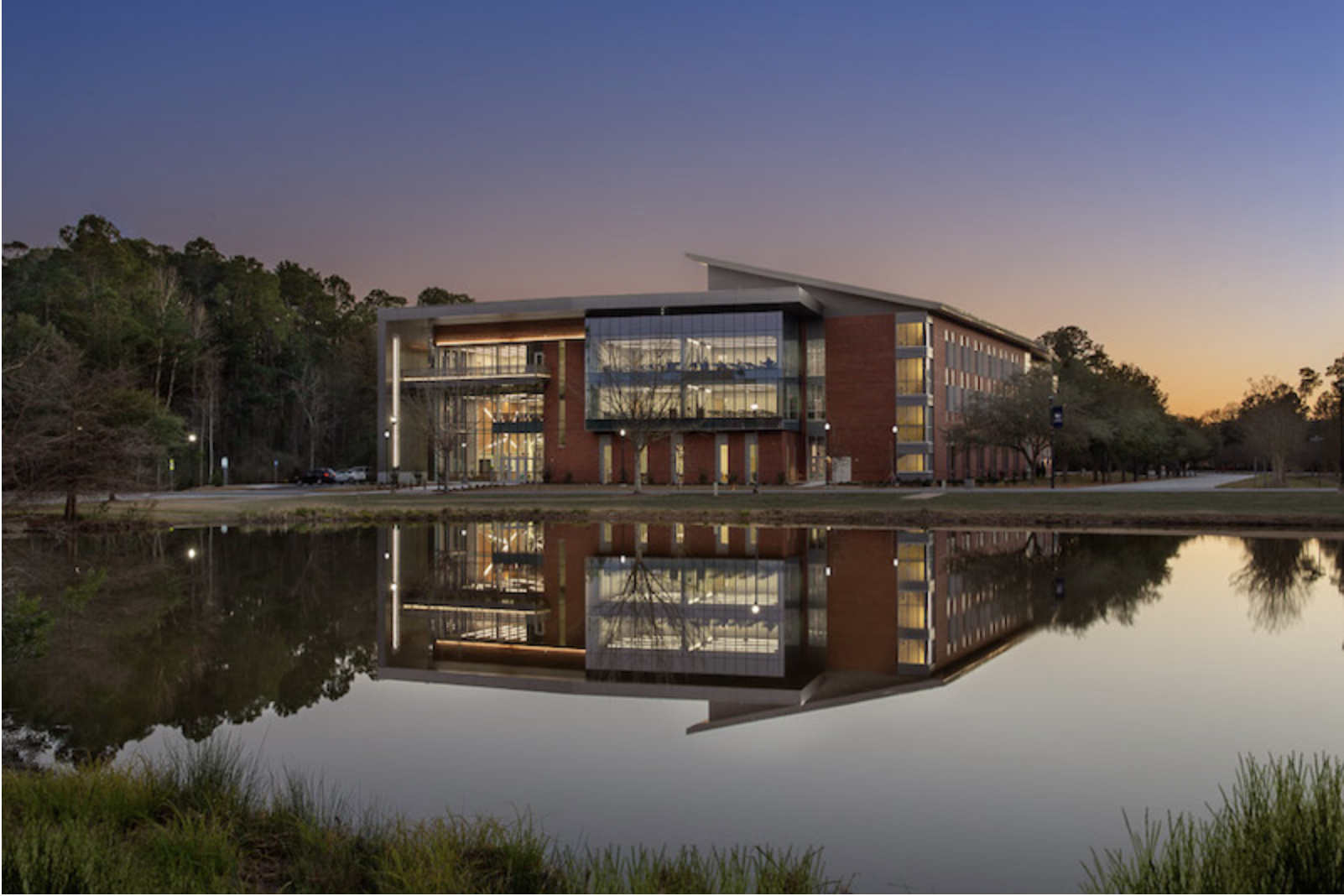
Georgia Southern University is launching two new engineering doctorates – a Ph.D. in applied computing degree and a Ph.D. in engineering – after approval of the programs this week from the University System of Georgia’s Board of Regents. With almost 4,000 students in its programs, Georgia Southern’s Allen E. Paulson College of Engineering and Computing identified the need for the new graduate degrees to sustain growth in the discipline, continue to aid workforce development in the region, add substantially to the university’s research capabilities, and provide additional teacher-scholars for Georgia. “In line with Georgia Southern’s Strategic pillars, the new Ph.D. programs will greatly enhance the University’s research capabilities and further advance key partnerships in the region,” said Carl Reiber, Ph.D., Georgia Southern’s provost and vice president for academic affairs. “A strong Ph.D. program improves faculty recruiting and is a prerequisite for applying for research grants from sources such as the National Science Foundation, the National Institutes of Health, the Department of Energy and the Department of Defense.” The proposed engineering Ph.D. program will have concentrations in civil, electrical, advanced manufacturing and mechanical engineering, and will fuel future multidisciplinary research synergies with other departments and centers within Georgia Southern in fields such as natural sciences, environmental sustainability, public health and education. Greater scholarly collaborations with sister institutions within the university system and beyond are also envisioned. The Ph.D. in engineering program will have a positive impact on the economic and technological development of Southeast Georgia, contributing significantly to the growth of the I-16 technology corridor. The Ph.D. in applied computing degree program will be offered jointly by the Department of Computer Science and the Department of Information Technology within the Allen E. Paulson College of Engineering and Computing at Georgia Southern Universit. The program will provide students with the requisite foundation to conduct basic and applied research to solve advanced technical problems in computing foundations, cybersecurity and machine learning. The program aims to promote the education of individuals who will become exceptional researchers, high-quality post-secondary educators, and innovative leaders and entrepreneurs in the field of applied computing. It will advance research and the generation of new knowledge in applied computing and support the growing knowledge-based economy in Southeast Georgia. The mission of the Ph.D. in applied computing degree program is to ensure student, graduate and faculty success by preparing graduates with the skills and depth of knowledge to advance the computing disciplines through application and scholarship. It will mentor students who will support faculty in their scholarly pursuits as they prepare to assume professional computing and computing-related positions that utilize their applied technical skills, problem-solving aptitude and scholarly abilities upon graduation. “The addition of these two new degree programs is part of Georgia Southern University’s commitment to be a world-class institution that provides a population of advanced graduates who can contribute to regional economic development and public-impact research,” Reiber said. “The programs will enhance the vitality and growth of the bachelor’s and master’s computer science and information technology degree programs by expanding the academic and research missions of the Allen E. Paulson College of Engineering and Computing." For more information about these new engineering doctorates coming to Georgia Southern this fall research or to speak with Carl Reiber, Ph.D., Georgia Southern’s provost and vice president for academic affairs — simply reach out to Georgia Southern's Director of Communications Jennifer Wise at jwise@georgiasouthern.edu to arrange an interview today.

Health Professions Academic Building on the Armstrong Campus in Savannah Georgia’s only public medical school has received funding approval to open a new four-year campus in Savannah, an expansion that will provide greater access to education and training for medical students and ease the state’s ongoing shortage of physicians. The new campus of Augusta University’s Medical College of Georgia (MCG) is expected to enroll its first students on the Armstrong Campus of Georgia Southern University by Fall 2024, pending approval by the Liaison Committee on Medical Education, the accrediting body for medical schools in the U.S. and Canada. The campus will be located in the existing Armstrong Center and the Health Professions Academic Building of Georgia Southern’s Waters College of Health Professions. Located down the street from Savannah’s St. Joseph’s Hospital, it would be MCG’s third four-year campus in Georgia. The MCG educational experience is anchored at its main campus in Augusta, with another four-year campus located in Athens in partnership with the University of Georgia. “Georgia ranks 40th in the nation for both the number of active physicians and the number of primary care doctors,” Georgia House Speaker Jon Burns said. “Georgians experience this reality every day. Increasing opportunities within the University System of Georgia allows Augusta University’s Medical College of Georgia to educate and train more students and meets a clear need to make sure our communities receive better health care. Georgia needs more doctors, and I’m proud we are making this investment in our future.” The Board of Regents of the University System of Georgia (USG) on Tuesday approved $1.7 million for renovations at Georgia Southern’s Armstrong Campus to help make the new campus a reality. The money was included in the fiscal year 2024 state budget passed earlier this year by the Georgia General Assembly and signed by Gov. Brian Kemp on May 5. “We’re grateful to Governor Kemp, Speaker Burns, Lt. Gov. Jones and the General Assembly for their support in helping MCG and the university system expand one of the best public medical colleges in the nation and help get more doctors into our local communities,” USG Chancellor Sonny Perdue said. Four-year campuses provide the full spectrum of medical education, from basic sciences to clinical experiences. “This campus expansion is a momentous milestone for Augusta University and the Medical College of Georgia, standing as a testament to the unwavering support we have received from Speaker Burns, state Rep. Butch Parrish, Governor Kemp, the entire General Assembly and Chancellor Perdue,” said Augusta University President Brooks A. Keel, PhD. “Through this collaboration, we are forging a brighter future for health care in Georgia and fulfilling our shared commitment to producing more doctors for our state. I extend my deepest gratitude to all those who have championed this vision, including St. Joseph’s/Candler Health System, whose exceptional partnership has provided invaluable clinical experiences for our students. Together, we are bolstering the state’s medical community and strengthening Southeast Georgia’s access to quality health care.” MCG’s statewide educational model also has students learning at two-year, clinically focused regional campuses in every corner of the state, including the Southeast Campus, established in 2011 and based at St. Joseph’s/Candler in Savannah, and Southeast Georgia Health System in Brunswick. Other regional campuses include the Southwest Campus based in Albany and the Northwest Campus based in Rome. “This partnership with Augusta University and the Medical College of Georgia is another example of how together, the governor, our legislators, the University System of Georgia and Georgia Southern University are collaborating to meet the growing needs of Southeast Georgia,” added Georgia Southern University President Kyle Marrero. “These programs on our Savannah campus further Armstrong’s history of being a leader in training health care professionals and complement our efforts to expand nursing education and develop our future physician assistant program.” Through this partnership, Georgia Southern is providing approximately 23,000 square feet of instructional and lab space in its Armstrong Center and the Waters College of Health Professions’ Health Professions Academic Building. This includes 10,000 square feet of dedicated student group workspace and faculty and staff offices and 13,000 square feet of shared anatomy lab and large classroom space. The renovations include the creation of a new anatomy lab within the Health Professions Building, as well as minor renovations and new furniture, fixtures and equipment for the student group workspace and faculty and staff offices. The new campus would allow MCG to accept 40 more students per year, increasing its class size, already one of the nation’s largest, to 304 students per class. “As the state’s only public medical school, it is both our responsibility and commitment to produce more doctors for Georgia, and this growth in our class size is one way we can fulfill what I consider to be our most critical mission” said MCG Dean David Hess, MD. “This expansion would not be possible without the support of Governor Kemp, the Georgia Legislature, the University System of Georgia, Augusta University President Brooks Keel, and our colleagues at Georgia Southern University. I am also thankful for the unwavering support of St. Joseph’s/Candler Health System, including its CEO Paul Hinchey and chief medical officer Dr. Julia Mikell, a 1976 MCG graduate. Physicians and staff at St. Joseph’s/Candler have been exceptional educational partners, serving as a home base for our Southeast Campus, and providing rich clinical experiences for our third- and fourth-year students, for well over a decade. I know that commitment will extend to students at this new four-year campus.” “This is a sentinel event not only for the future of health care in Georgia, but also for Savannah and the region,” added Paul P. Hinchey, president and CEO of St. Joseph’s/Candler. “We have had a great relationship with MCG for more than a decade and our physicians have been instrumental as faculty in teaching third- and fourth-year students in Savannah. SJ/C has also served as a longstanding clinical site for nursing students from Georgia Southern and from the Armstrong campus. Creating a four-year medical school campus in Savannah will strengthen the medical community in Savannah and throughout Southeast Georgia. I want to thank Speaker Burns, Dr. Hess and the University System of Georgia for making this great vision a reality.” “I am excited to help build a campus that will continue MCG’s mission of educating the next generation of physicians,” said Elizabeth Gray, MD, associate dean at MCG’s Southeast Campus, based in Savannah and Brunswick. “I am confident that Georgia Southern will be an exceptional educational partner, and am excited to continue working with the leadership, physicians and staff at our longtime partners St. Joseph’s/Candler to help increase the number of physicians in this area of the state and beyond.” Interested in learning more? For more information about this exciting new development — simply reach out to Georgia Southern's Director of Communications Jennifer Wise at jwise@georgiasouthern.edu to arrange an interview today.
Aston University appoints new Deputy Vice-Chancellor Academic
Professor Osama Khan has nearly 20 years’ experience as an academic leader and innovator He will lead academic strategy, new educational model and student experience strategy in line with Aston 2030 Strategy Osama will join Aston University in October 2023. Aston University has appointed Professor Osama Khan as its new Deputy Vice-Chancellor Academic. With a successful career in higher education for nearly 20 years, Professor Khan will be joining Aston University from the University of Surrey where he is currently Pro-Vice-Chancellor Academic, leading on education strategy, teaching excellence and student learning experience. In his new role, he will play a central part in the development of Aston University’s academic strategy in line with the University 2030 Strategy. Responsibilities will include leading the University's academic portfolio incorporating education, curriculum, digital offerings, careers and placements, library and information services, student experience and services. Educated at Independent University, Bangladesh, University of Surrey and University of Cambridge, Osama began his academic career as a lecturer (and then senior teaching fellow) at University of Surrey in 2004. He moved to Solent University in 2012, where he held a variety of roles including director of learning and teaching at Solent Learning and Teaching Institute. He was appointed the first Pro Vice-Chancellor, Students and Teaching at Solent University leading on curriculum, digital services, learning space transformation. He was appointed as Vice-Provost, Education at University of Surrey in 2019. Subsequently his remit extended to form the Pro Vice-Chancellor, Academic portfolio with responsibility for education, curriculum, student services, digital transformation, and learning spaces. He has 25 years of teaching experience in corporate finance at various renowned universities. Professor Aleks Subic, Vice-Chancellor and Chief Executive of Aston University, said: “I am delighted to welcome Osama to Aston University and the executive team at a crucial time when we are shaping our bold strategy for 2030 and beyond. “Osama is a proven academic leader and innovator, who has who has achieved sector leading outcomes in student experience and educational quality. His strong commitment to values-based leadership is aligned well with our approach to working with our people and the diverse communities we serve. “I look forward to working with Osama to position Aston University as the leading university in the United Kingdom for student experience, employability and social mobility.” Professor Osama Khan said: “Aston University's unwavering commitment to academic excellence, coupled with its dedication to equality, diversity and inclusion, resonates deeply with me. Moreover, I commend Aston University's efforts in narrowing the awarding gaps, striving for equity in education and promoting fairness in the academic journey, for it is through education that we empower generations and create lasting impact. “I am honoured to join this creative institution as its next Deputy Vice-Chancellor Academic, where we will prioritise inclusive education and foster an environment where every individual can thrive and succeed. “I eagerly look forward to working with our exceptional faculty, dedicated staff, and talented students to shape the next chapter of excellence through the new Aston University 2030 strategy. Together, we will transform lives, foster innovation and forge a path towards a brighter tomorrow." Professor Khan will be taking up his post in October 2023.


Expertise Marketing and Content Marketing - Is There a Difference?
We often get asked the question about how Content Marketing compares to Expertise Marketing. It’s ironic that still to this day many of our academic clients don’t refer to what they do as “content marketing.” But corporate customers are well acquainted with the importance of developing content to build reputation, relationships and revenue. Adding to the confusion are all the names that are bantered about by marketing departments and agencies - There’s inbound marketing popularized by companies such as Hubspot. And there are more bespoke “Thought Leadership” programs that are often developed by outside agencies such as Weber Shandwick and Edelman. While there are a lot of common elements to these programs there are some important differences that we focus on when developing and launching Expertise Marketing programs with our institutional and corporate clients. Here’s a deeper dive to help you better understand the value of Expertise Marketing. Introducing Expertise Marketing Expertise marketing is the practice of making the knowledge and skills of your human resources more visible to your partners and audiences. It draws attention to the value that your people can bring as brand ambassadors and strategically leverages the work your experts are doing to tell a more personal story. In many cases, expertise marketing can also be used to showcase your strengths in research and innovation. Creating a stronger digital presence, expertise marketing more effectively uses your channels to connect with audiences such as media, customers, partners and donors. It builds a sense of trust with your customers and above all else, it helps establish your reputation as an industry leader. ex•per•tise mar•ket•ing 1. The practice of collectively promoting an organization’s experts as brand ambassadors to demonstrate their skills or knowledge. 2. Best practices to publish and connect The Value of Expertise Marketing Reputation - Positions research, client work, thought leadership perspectives and achievements in the context of relevant topics that are in the news. Market Awareness - Expertise marketing makes it easier for key audiences to find expert content and people in search engines and on the organization’s website. Audience Engagement - Provides more intuitive search features for visible content which can be expanded to include assets such as video, social, and publications to drive richer conversations with audiences. Metrics on performance in areas related to expert development, content contribution and audience engagement page views and inquiries can be tracked. Demand Generation - Increased number of direct leads/ inquiries from audiences such as: Customers/Students Industry Partners Alumni Donors Media New Employee Recruits Conference Organizers Talent - Better engage stakeholders, researchers & subject-matter experts in the development and distribution of content while improving recruitment and retention of talent. Internal Collaboration - Better coordinate the knowledge and resources across internal communications teams and other departments as they engage experts. Provide a faster, more efficient way to generate content for breaking news and events. Content Contribution - Increase the size of the organization’s digital footprint by aggregating more content and distributing it contextually to multiple websites and third-party databases. Efficiency - Help employees get their jobs done faster and more efficiently. Enable them to find information faster, speed up internal processes and foster collaboration among people in multiple locations. Leverage Current and Future Infrastructure - Properly integrated, new technology investments should integrate seamlessly to leverage existing/proposed infrastructure such as content management systems (such as WordPress™) and marketing automation systems (such as Hubspot) How is Expertise Marketing Different from Content Marketing? A More Human Approach: People buy from people. That’s why content that is more personalized and attributed to specific experts who are well-identified as expert sources is far more trusted than most company-sponsored content. A More Collaborative Process that Engages Employees: A more structured “win-win” model empowers experts to contribute their knowledge. Expertise marketing is a proven way to build culture and celebrate diversity which assists with talent retention and recruitment. An Efficient Way to Create More Content to Boost SEO & Website Traffic: Engaging your experts creates a larger hub of “owned” content that is proven to boost PageRank in search engines and site traffic. Expert content is used by organizations to enhance their “About Us” page, staff/faculty/physician directories, newsroom pages, research pages and speakers bureaus. Optimized Content Formats Better Connect with Audiences: A variety of short format, long format and visual content formats (such as expert profiles, blogs, Q&A and videos) are designed to engage specific audiences at various stages of the customer journey. Improved Calls to Action & Analytics Boost Demand Generation & Leads/Inquiries: Experts become more approachable as “lead magnets” that generate measurable inbound opportunities, avoiding common issues of lost customer leads due to poor processes and workflow. You might be surprised at how much value expertise marketing can bring to your organisation. The chances are, that the time you are currently spending on ineffective content marketing strategies will be greatly reduced with a redefined focus on expertise marketing. By putting the focus back on the skills and relevance of your experts, as people, you're not only making them more visible but also establishing your brand reputation which will simultaneously generate more leads and increase efficiency.




Aston Medical School given full approval by the General Medical Council
Aston Medical School has been given full approval by the General Medical Council (GMC), meaning they can award degrees to graduating students for the first time this year. The Medical School at Aston University completed the GMC’s rigorous quality assurance process, which began in 2016. The decision, ratified by the GMC’s Council, means Aston Medical School can be added to the list of UK bodies able to award a primary medical qualification. The approval means that from this summer, medical graduates from Aston University will be added to the medical register and will be able to join the UK’s healthcare workforce as doctors. Aston Medical School welcomed its first students in 2018 and will be graduating its first cohort of students at its graduation ceremonies taking place in July 2023. The school was built on the ethos of educating medical professionals of the future, those who come from a wide cross section of society, and in particular those from disadvantaged communities where they have traditionally faced more barriers to accessing and completing medical education. Professor Helen Cameron, Dean of Medical Education at Aston Medical School, said: "This is a really exciting moment for Aston Medical School, and we are delighted for our students, especially our pioneer cohort who will graduate in July with an Aston University medical degree and contribute to the UK's healthcare workforce. Our focus on providing excellent education and support to a diverse range of students, including those from disadvantaged communities, has been at the heart of our mission since the school's inception. “We are proud that through commitment, team-work, and partnership with our students, we have met the GMC's rigorous quality assurance standards and we look forward to continuing to educate the healthcare leaders of the future.” Professor Aleks Subic, Vice-Chancellor and Chief Executive of Aston University, said: "Receiving full approval from the General Medical Council is a significant milestone for Aston Medical School and Aston University in general, and a testament to the hard work and dedication of our faculty, staff and students. “This achievement enables us to continue our mission of developing the next generation of medical professionals, with a particular focus on promoting diversity and inclusion in healthcare education and improving healthcare in the community. “We are proud to be adding new exceptional talent to the UK’s healthcare workforce and look forward to the contributions our graduates will make to the field." Professor Colin Melville, the GMC’s Medical Director and Director of Education and Standards, said: “The GMC maintains high standards and has a very rigorous process before a new medical school can award primary medical qualifications to its students. Aston University has worked hard, over a number of years, to meet our quality assurance standards. I’m delighted that, thanks to that hard work, they now have GMC approval to award medical degrees.” The GMC oversees both undergraduate and postgraduate medical education and training in the UK. Any institution looking to establish a new medical school or training programme must demonstrate it meets the GMC’s standards by being subject to an extensive period of quality assurance.

Aston University hosts campus reunion for Malaysian alumni
A group of Malaysian alumni visited Aston University for a special reunion with the University alumni team on 4 May. During the visit, the Malaysian alumni group enjoyed a variety of activities, including meeting with the alumni relations and development team. The group was also taken on a campus tour, which included visits to the library and the Students' Union building which opened in May 2019. Whilst touring the campus the alumni group had the opportunity to meet with faculty members and learn about the latest research being conducted at Aston University. They also had the chance to catch up with old friends, reminisce about their time at the University and share stories about their current work and lives. Professor Aleks Subic, Vice-Chancellor and Chief Executive of Aston University, said: "We were delighted to welcome our Malaysian alumni back to campus and hear about their experiences since graduation. “Our alumni are an important part of our University community, and we are proud of their achievements and contributions to economies and societies worldwide. We are committed to building strong relationships with our alumni networks around the world." The group of Malaysian alumni included graduates of the University who have gone on to hold executive positions in different industries: Tan Sri Al Amin, chairman of SME Corporation Malaysia, a government agency for the development and enhancement of SMEs Datuk Mustaza, a retired former CEO of Senai Desaru Expressway Berhad Datuk Adnan, chairman of the board of directors of RPM Engineers Sdn Bhd Ir Abdul Rashid Haron, technical director of Transafe Consult Sdn Bhd Dr Wan Maimun, president of Wanita Industri Binaan Malaysia, a company that aims to facilitate the participation and success of women in the Malaysian construction industry. Kerrie Holland, executive director of alumni relations and development at Aston University, said: "It was fantastic to see so many alumni returning to campus, catching up with old friends, and sharing their stories. We look forward to seeing them again soon, either on campus or at one of our alumni events."

#Expert Insight: Price Image Formation: When is HILO low?
When consumers choose where to shop, they often consider a store’s price image —does the store have a reputation for having lower or higher prices than its competitors? A store’s reputation for lower prices doesn’t happen by chance. Choosing a pricing strategy is one of the biggest pricing decisions a retailer makes. In “When is HILO Low? Price Image Formation Based on Frequency versus Depth Pricing Strategies,” a recently published paper in the Journal of Consumer Research, co-authors Ryan Hamilton, associate professor of marketing, Ramnath Chellappa, associate dean and Goizueta term professor of information systems and operations management, and Daniel Sheehan, associate professor of marketing and supply chain at the University of Kentucky’s Gatton College of Business and Economics, explore a gap in existing pricing strategy research. “Our research doesn’t threaten the validity of the previous research,” said Hamilton, “but what it does do is point to the limited generalizability of the previous research.” This is because previous pricing strategy research used the same research paradigm: It emphasized consumers’ perspectives as they compared prices simultaneously across multiple stores. Hamilton, Chellappa, and Sheehan wondered what would happen if they studied consumers as they compared prices of products within a store, instead of across stores. When they did so, the authors found that “many of the prominent findings of previous research are reversed,” they wrote. “We propose that when stores’ prices are evaluated one at a time, or in isolation, consumers will rely on the most salient contextual clues available—within-category price information—when forming a price image.” For example, rather than research the price of peanut butter across multiple grocery stores, shoppers often evaluate the price of peanut butter by comparing the prices of the brands on the shelf in front of them. To illustrate their point, the authors explore two basic pricing strategies: a frequency pricing strategy and a depth pricing strategy. Every Day Low Pricing (EDLP) is a frequency strategy where stores offer small price advantages over their competitors on many items. Walmart employs an EDLP strategy. A common depth strategy is a high-low (HILO) pricing strategy. HILO offers infrequent, but deep, price advantages over competitors. Macy’s utilizes this strategy. “The conventional wisdom is that EDLP equals low price,” explained Hamilton. But he and his co-authors argue that in a non-theoretical environment, the effectiveness of EDLP strategies is less clear. The trio hypothesized that the context in which consumers encounter prices has important implications. Specifically, that the frequency advantage of EDLP identified in earlier research was limited to those scenarios where customers were able to simultaneously compare prices across multiple stores. In contrast, they argue that a depth advantage, one resulting from HILO pricing, will be more likely when consumers evaluate store prices separately. “Without simultaneous comparisons across stores, consumers shift from using across-store prices as reference points to using within-category reference prices. As a result of this shift, deep price advantages are easier to evaluate than frequent price advantages and therefore more influential on customers’ formation of price image,” they write. “Because our theoretical account is based on within-category external reference prices, we predict that a depth store is likely to be evaluated as having a lower price image than a frequency store even when consumers are exposed to the prices of just one store,” they write. The authors tested their hypothesis using six separate experiments. All but one of the experiments studied national brands commonly found in grocery stores. (The other experiment used televisions.) In the experiments where participants saw store prices simultaneously, the experiment replicated the frequency advantage noted in previous research. But when participants did not have simultaneous price information across stores, the previous findings didn’t hold “What we found is that if you distance those prices comparisons even a little bit -showing a price on one webpage and then seeing a price on another webpage - that’s enough to completely reverse the findings,” explained Hamilton. In an isolated setting, “a couple of really low prices” will better communicate a store’s low-price image, said Hamilton. “That’s the big story.” While excited about the findings of their research, Hamilton is quick to point out the limits of their hypothesis, such as when pricing information isn’t readily available or when the consumer isn’t familiar with the brands of the product they wish to buy. “People want a simple answer that works everywhere, but it’s more nuanced than that,” said Hamilton. “This [hypothesis] is going to work better under certain set of circumstances than others because people process price information differently.” The insights aren’t only useful for retailers. While using a store’s price image to shop can be efficient from a consumer standpoint, assuming that the prices are low solely because the store has a reputation for low prices isn’t always the case. A retailer’s price image has vulnerabilities. Not everything at Costco is cheaper than it is at Whole Foods. Southwest Airlines may not always be cheaper than Delta Air Lines. “If you’re shopping for things you really care about,” advised Hamilton, “it might be worth doing more across-store price comparisons.” Chellappa is excited about how the paper addresses gaps in traditional economic models of pricing. “While much research in economics and information systems focuses on the availability of information for price comparison, the cognitive aspect of ‘how’ consumers compare and process such information is only explicated by studies such as ours. Looking at pricing through a behavioral lens, capturing consumers’ real shopping behavior reveals great insights that will be useful for firms,” he said. Interested in learning more about consumer behavior and Price Image Formation Based on Frequency versus Depth Pricing Strategies? Then let us help with your coverage and questions. Ryan Hamilton and Ramnath Chellappa are both available to speak regarding this important topic - simply click on either expert's icon now to arrange an interview today.




Goizueta Faculty Member Uncovers Impact of Remote Learning on Educational Inequality
In 2020, the world went into lockdown. Learning in school became learning from the couch. Rather than listening to teachers in-person behind a desk, high school students had to find a computer to stream their lectures and lessons. What happens to educational inequality in a digital-first, remote-learning environment? Whereas students are traditionally bound by their brick-and-mortar schools and the limitations of funding in those areas, what happens when the walls are removed and students have access to the teachers, knowledge, and peers from other areas? Ruomeng Cui and co-researchers, Zhanzhi Zheng from University of North Carolina at Chapel Hill and Shenyang Jiang from Tongji University, decided to find out. In their 2022 paper, currently under review, Cui and her colleagues looked at the performance of high school students in developing and developed regions of China. We thought that remote learning might reduce the inequality gap in education because when students are learning off-line, they’re restricted by their local resources. “It’s quite obvious that developing regions don’t have good resources, experienced teachers, or competitive peers—they often have inferior educational resources in comparison to developed regions,” explains Cui, associate professor of information systems and operations management. “We thought the accessibility of remote learning could help reduce this knowledge gap and help students in developing regions improve their learning outcomes.” Analyzing Education in Developed and Developing Areas The idea for the paper, “Remote Learning and Educational Inequality,” published earlier this year, stemmed from another of Cui’s papers, which looked at the academic productivity of women as a result of the COVID-19 lockdowns. “We wanted to study whether the switch to remote learning impacts educational inequality. Does it make it better or worse?” says Cui. “We are the first ones to offer empirical evidence on such a granular level about a large-scale data set.” The group analyzed the Chinese college entrance exam from 2018 through 2020, which students take during the last few weeks of high school; the test score is a requirement for undergraduate admission in China. It’s common for high schools to announce the number of students who scored 600 or higher (out of 750 total points). Using 1,458 high school exam results from 20 provinces, the group found that in 2020, when remote learning became the norm, “the number of students scoring above 600 points in developing regions increased by 22.22 percent,” in comparison to developed regions. Remote learning significantly improved learning outcomes of students in developing regions. We should think about encouraging the adoption of remote learning in education However, Cui and her co-researchers wanted to go a step further. Because the entrance exams are summaries of student data, they surveyed 1,198 students to drill down and ensure that these results came from remote learning rather than other factors. Respondents were asked to rate aspects of their remote-learning experience, such as access to digital devices, their proficiency in using software, how reliable their internet was, how they interacted with peers and teachers, and their access to online educational resources. The researchers found that students in developing regions were able to better connect with peers and teachers, and the students believed that “their learning efficiency was greater” because of the remote learning. Education inequality is not only a problem in China. It’s everywhere. It’s across the world. Having access to better educational resources online can be applied anywhere. However, the one caveat to their findings: Remote learning is beneficial, but students need devices and the infrastructure to support online learning, which is often lacking in developing regions or underserved areas. “We need to support, build, and develop the digital technology capability that enables the effectiveness of remote learning,” says Cui. Are you a reporter looking to know more about the impact COVID had on education and how inequality plays a role in how we educate students during a pandemic? Then let us help with your coverage and questions. Ruomeng Cui is an Associate Professor of Information Systems & Operations Management at Emory University's Goizueta School of Business. Ruomeng is available to speak with media regarding this topic - simply click on her icon now to arrange an interview today.
