Experts Matter. Find Yours.
Connect for media, speaking, professional opportunities & more.

Craig M. Harvey, Ph.D., has been selected to serve as the new dean of the Allen E. Paulson College of Engineering and Computing beginning July 1. “I am excited to welcome Dean Craig Harvey to Georgia Southern University as the next generation of leadership for the College of Engineering and Computing,” said Carl L. Reiber, Ph.D., provost and vice president for academic affairs. “Dean Harvey brings with him an understanding of what a vibrant and growing research university will need to move to the next level as our region expands in its engineering and computing needs.” Harvey comes to Georgia Southern University from Louisiana State University, where he serves as the associate dean for academic affairs of the College of Engineering, professor of Industrial Engineering and is the holder of the Donald W. Clayton University Professorship. He brings to Georgia Southern a wealth of knowledge in leadership, student growth and expansion and advanced engineering studies. “It will be a great honor to serve as the next dean of the Allen E. Paulson College of Engineering and Computing, a college that prepares graduates in engineering, construction and computing to be ready to take on the challenges facing Georgia and the country in the 21st century,” Harvey said. “I look forward to working with faculty, staff, students, alumni and industry to position the college to meet the future demands in both education and research in the state where my engineering career began.” His research interests include human computer interaction, usability engineering, human collaboration within complex environments, human factors engineering and safety engineering. Harvey worked full time as a maintenance engineer and captain at Grand Forks Air Base in North Dakota and served in the United States Air Force Reserves while earning a Ph.D. in industrial engineering from Purdue University. He holds a bachelor's in industrial engineering from Georgia Institute of Technology and a master's in industrial engineering degree from Purdue University in West Lafayette, Indiana. For more information — simply reach out to Georgia Southern Director of Communications Jennifer Wise at jwise@georgiasouthern.edu to arrange an interview today.

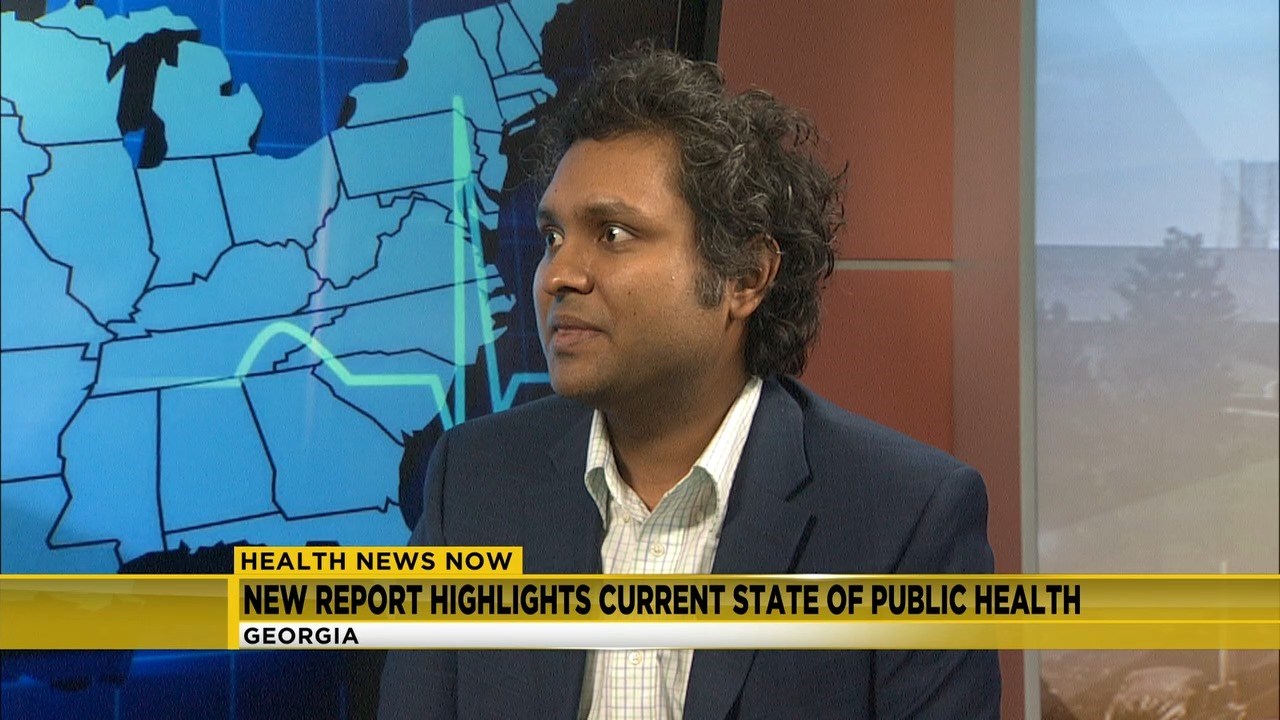
Augusta University’s second annual Healthy Georgia Report has been released, offering a snapshot of health in the Peach State as compared to not only neighboring states, but also the entire country. While Georgia’s population is doing well in some key health factors, researchers also found areas that could benefit from more awareness and public policy action. Biplab Datta, PhD, assistant professor in the Institute of Public and Preventive Health and the Medical College of Georgia’s Department of Population Health Sciences, collaborated with other IPPH faculty and staff to update the report and add new categories this year. The goal of the report is to connect with lawmakers, community leaders and researchers, stimulate conversations about public health needs and promote action, such as greater community engagement, research for informing effective policies and appraisal of required funds. “We need to make lawmakers aware of the public health situation in the state of Georgia,” said Datta. “We hope this report will help identify areas that need policy attention. It can also play an important role in bridging the gap between researchers and policymakers.” Using 2021 data from the Behavioral Risk Factor Surveillance system, the National Survey of Children’s Health, the American Community Survey and the Center for Disease Control and Prevention’s COVID Data Tracker website, the report was compiled on numerous health topics. Some categories studied include high cholesterol, hypertension, obesity, arthritis, asthma, cancer, cardiovascular diseases, alcohol consumption, diabetes and more. It also broke down each category by age, sex, race, income level and other socioeconomic indicators to get a full representation of the data. New to the study this year is an in-depth look at health insurance coverage, COVID-19 vaccinations, breastfeeding, child maltreatment, and unmet healthcare need of children. Georgia ranks 49th in the nation when it comes to health insurance coverage. That was a surprise to Datta. “I didn’t expect the numbers to be that bad, but I think it also indicates the scope of work that we need to undertake to improve insurance coverage in Georgia,” he said. Another surprise was the low rate of flu vaccination in Georgia. “We know there is a difference between whites and Blacks in the U.S. But when we look at and compare Black people in Georgia with Blacks in the rest of the southeastern states, we see the flu vaccination rate was significantly lower among Blacks in Georgia. This is an issue that warrants further research to understand the underlying causes of such disparity,” said Datta. As it was a year ago, hypertension remains a concern. There are several issues involved when talking about hypertension but there are also straightforward ways to improve the condition Datta said. “I think one of the core components of hypertension control is just changing some behavioral stuff. If we just reduced the sodium content in our daily diet, if we do regular physical exercise for a certain amount of time that will significantly improve our hypertension management. Community-level initiatives to make people aware of these things can make a real difference,” said Datta. Residents in Georgia are doing better in several areas such as obesity, cancer rates, asthma prevalence and depressive disorders. Datta said it’s important to recognize these improvements so we can learn from them. “We need to figure out where we are doing well and use that experience in areas where we are not doing so well. It will help us move toward the right direction.” He added it’s important to always be looking for ways to evolve the study, and that includes adding new categories when enough data is available. “We didn’t cover sexually transmitted diseases in this year’s report, which we would like to add when data will become available. We’d also like to add teenage pregnancy, maternal health issues, gun violence and opioid use,” he said. Looking to learn about health in the Peach State? Then let us help. Biplab Datta is available to speak with media regarding this important topic. Simply click on his icon now to arrange an interview today.



Georgia Southern University’s Staff Council Professional Development Committee, in coordination with the Office of Military and Veteran Services, will offer Green Zone Training to faculty and staff on the Statesboro and the Armstrong campuses in February. “This training will highlight our military-connected student population, military culture and experiences, and help participants recognize obstacles these students face in higher education,” said Georgia Southern Director of Military and Veteran Services George Fredrick, Ed.D. “In addition to the Georgia Southern Military Resource Center, Green Zone Training will assist in identifying other campus resources that are available for students, staff and faculty.” Georgia Southern currently has more than 3,500 military-affiliated students across its three campuses in Statesboro, Savannah and Hinesville. Jodi Middleton Kennedy, director of the Office of Leadership and Community Engagement, benefitted from last year’s session. “Green Zone Training is an amazing opportunity for staff to learn not only how we can support military-connected students, but also some of the unique obstacles they face as students navigating their educational journeys,” she stated. “It is clear that George Fredrick and his team in Military and Veteran Services are passionate about their roles, and it was amazing to be able to connect with a panel of students and hear about their personal experiences as Georgia Southern students.” University Academic Success Coach Lydia Hinkle also thought it was advantageous to participate in Green Zone Training for multiple reasons. “It is important to be aware of the different types of students we serve and what their needs are so that we can better assist them as staff members,” said Hinkle. “As staff members, we should want to do these kinds of training opportunities so that we can support these students as best as we can. Not only does it increase your value as an employee to be able to understand your students better, but it increases our appeal as a university if we, as a whole, are known to be extremely knowledgeable and supportive of this student population. “I did learn a lot about what our students from this population need and would like to see happen, and brought some information back to my department on how we can better assist these students.” During the Green Zone Training in Savannah, recipients of three Military Spouse Scholarships totaling $10,000 will also be recognized. Green Zone Training will take place on the Statesboro Campus on Thursday, Feb. 2, in the Williams Center and on the Armstrong Campus in Savannah on Feb. 9 in the Ogeechee Theatre. Both events take place from 9:30 to 11:00 a.m. For more information about Green Zone Training or to arrange an interview with Georgia Southern's Director of Military and Veteran Services George Fredrick - simply reach out to Georgia Southern Director of Communications Jennifer Wise at jwise@georgiasouthern.edu to arrange an interview today.

Georgia Southern University’s College of Science and Mathematics has been awarded a six-year grant of $493,065 from the Howard Hughes Medical Institute (HHMI) Inclusive Excellence 3 (IE3) initiative. Georgia Southern is among a select group of 104 schools that have received an HHMI IE3 grant to support diversity, equity and inclusion. “Science is about building, witnessing and collaborating with each other, which is why Georgia Southern is so proud to receive this grant,” said Georgia Southern Provost and Vice President of Academic Affairs Carl Reiber, Ph.D. “Our inclusive initiatives are breaking down the walls that have separated science from interested students.” The HHMI IE3 initiative challenges U.S. colleges and universities to increase student participation in sciences, focusing especially on populations who have been historically underrepresented in the field. The Georgia Southern IE3 leadership team includes: Karelle Aiken, Ph.D, (program director), Tricia Muldoon Brown, Ph.D., (co-director) Sara Gremillion, Ph.D., (co-director), Checo Colón-Gaud, Ph.D., Issac Taylor and Delana Schartner, Ph.D. “The IE3 initiative is tapping into the transformative power of collaboration; the ability of a critical mass to drive cultural change. As such, an ingenious mandate of this grant is that its 104 institutional awardees work on their goals in teams of Learning Community Clusters (LCC),” said Aiken. Georgia Southern’s IE3 LCC hub, LCC4, includes 13 other institutions from across the U.S., all of whom are seeking to answer a specific challenge: How can an institution evaluate effective inclusive teaching, and then use the evaluation in the rewards system including faculty promotion and tenure? The IE3 initiative has been rolled out in two phases. The most recent award marks the beginning of the second phase and so, the work of the Georgia Southern team and their LCC4 colleagues is ongoing. At Georgia Southern, over the next six years the IE3 initiative will support training for faculty and student-leaders centered on inclusive teaching strategies and the effective evaluation of those strategies; an annual COSM IE3 Spring Speaker Series (established in 2022); the continued development of a new faculty mentorship program piloted in 2022 by Inclusive Excellence Faculty Fellows; student- and faculty-led initiatives geared toward cultivating inclusive learning environments; and more. Looking to know more - then let us help. For more information or to arrange an interview with Carl Reiber or anyone from the Georgia Southern IE3 leadership team - simply reach out to Georgia Southern Director of Communications Jennifer Wise at jwise@georgiasouthern.edu to arrange an interview today.
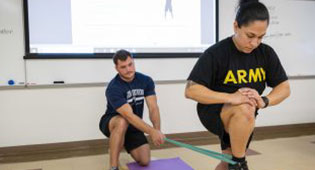
What began in 2016 as a partnership between Georgia Southern University and the Third Infantry Division at Fort Stewart has become a nationally recognized educational and research program with $5.68 million in federal funding to improve soldier health and performance to ensure force readiness. Now called the Soldier Performance and Readiness (SPAR) program, this Georgia Southern project aligns with the U.S. Army’s Holistic Health and Fitness (H2F) initiative and represents a multifaceted partnership with the Army to provide onsite training that decreases musculoskeletal injuries; deliver an online certificate program in tactical fitness for college credit; collaborate with the Army’s Research Institute for Environmental Medicine (USARIEM); and develop programs to enhance and assess cognitive performance in tactical situations. The initial partnership program to prevent musculoskeletal injuries was delivered at first to small cohorts to implement new practices in the physical training of their squads and platoons in a train-the-trainer model. Results were so encouraging, the program expanded at Fort Stewart and to training brigades at Fort Benning last year with the assistance of $1.5 million in Department of Defense funding. Studies show significant preparedness and financial benefits from reducing musculoskeletal injuries to soldiers during drilling and training exercises. In April 2020, officials determined that 58,000 soldiers (the equivalent of 13 Brigade Combat Teams) had injuries that classified them as non-deployable. In 2019, more than half of soldiers experienced a new injury, resulting in 10 million limited-duty days. Musculoskeletal injuries account for nearly 25% of all military injuries and approximately $557 million in acute patient care. Most of these injuries were associated with fitness training-related activities Georgia Southern’s online Tactical Athlete Certificate program was first offered in 2020 and is available exclusively to soldiers on active duty, in the National Guard or reserve. Through a series of three courses, the program teaches foundational exercise and biomechanical concepts, strength and conditioning principles, and rehabilitation. The coursework parallels the Army’s Master Fitness Trainer curriculum, with additional rehabilitation principles, and teaches soldiers how to develop evidence-based and well-rounded physical training programs while minimizing risk of musculoskeletal injury. Certificate completion provides soldiers with nine college credits with Georgia Southern, potential promotion opportunities in the Army, and preparation for the National Strength and Conditioning Association’s TSAC-F exam. “By sharing knowledge, expertise and experience between our faculty and doctoral students with soldiers, drill instructors, and brigade combat fitness teams to create aligned programs that improve tactical performance and force readiness, the SPAR program has become a national model of public-impact research,” said Christopher Curtis, Ph.D., Georgia Southern’s vice provost for research. “We are excited about the future of this partnership. We relish the significant support and encouragement we receive from the Army commands at Fort Stewart, Fort Benning, USARIEM, and the Training and Doctrine command (TRADOC), and we are grateful to Congressman Carter and his fellow members of the Georgia Congressional delegation who have advocated for the value of the partnership on our behalf.” The progress and continued success of this program would not have been possible without several years of support from the Georgia Congressional Delegation and especially the leadership and support of Congressman Buddy Carter, who represents Fort Stewart and the Armstrong Campus of Georgia Southern in Savannah. “Providing for our nation’s defense is the number one responsibility of the federal government. Innovation and research, which is what these dollars will fund at Georgia Southern, will improve working conditions for our brave servicemen and women by providing them with top-of-the-line training and resources,” said Rep. Buddy Carter (R-GA). “I am a proud supporter of Georgia’s military community and am happy that the federal government is investing in these necessary programs.” SPAR programming allocated in the FY23 federal budget will enable Georgia Southern to: Develop protocols and expand delivery of the onsite musculoskeletal injury prevention training and the Tactical Athlete Certificate to commands at Fort Gordon in Augusta and to the Georgia National Guard. Develop and deploy similar online certificate programs for soldiers in Cognitive Performance and Nutrition to further support the Army’s H2F program. Host a national conference on “Charting Future Readiness Needs” in partnership with the U.S. Army Training and Doctrine Command and U.S. Army Forces Command that will bring together other research universities who also work in partnership with the Army. Work with the Army commands to develop specific academic degree programs to meet the specific H2F professional workforce needs at the brigade level. Army officials estimate approximately 3,000 personnel will need graduate degrees or advanced certifications in the next six years. Develop a Tactical Performance Research Lab in Savannah to support the fundamental research and innovation activities of Georgia Southern’s Tactical Performance Group that supports the Army’s H2F program as well as translational research to apply the knowledge and practices broadly to law enforcement and other first responders. Looking to know more - then let us help. Christopher Curtis is available to speak to media - for more information simply click on his icon here or reach out to Georgia Southern Director of Communications Jennifer Wise at jwise@georgiasouthern.edu to arrange an interview today.


Looking to the skies over the next week or so, you may see something you will not see again for 50,000 years. This occasional visitor, C/2022 E3 (ZTF), also known the “green comet,” will make its closest approach to Earth Feb. 2. We asked Csaba Palotai, aerospace, physics and space sciences associate professor, and Amelia Brumfield, graduate research assistant, about the green comet, what we can learn from it, where to look for it and more. Q: Why is this comet green? Palotai: The composition of a particular comet determines what the color is. This one has most likely diatomic carbon in it, and then that carbon comes out and interacts with the sunlight. Certain photochemical processes take place and that gives it the green color. This is not for every comet. Q: Why haven’t we seen this comet in 50,000 years? Brumfield: It has a very eccentric orbit. Our orbit, we go around the sun every year, but this comet, its orbit is on a scale of thousands and thousands of years. There's a chance that no one's ever seen it. Dr. Palotai had mentioned that it might have come by during the ice age. It might not even have passed by Earth (to be visible) at that time, if it did. So, it won't be back and if it does even come back, we're going to be long gone. It's just a cool chance to see something that maybe no one's ever seen before and might never ever get to see again. What can we learn from this comet? Palotai: This comet has an interesting orbit and then people study this orbit after the discovery of the comet. They figure it out that this is coming from a part of the solar system called the Oort Cloud (named for the Dutch astronomer who first described it, Jan Oort). This region of the solar system is not well understood because it is very far from us, so actually we haven't seen any objects in this region. It is thought that there are about, give or take, a trillion icy objects in this region. Some of them are smaller ones, some of them are bigger ones. And the only way we know about these things is that whenever comets like this come from that region. Q: When is a good time to view this comet? Palotai: In the next few days, or maybe in the next couple of weeks or so is the greatest chance to observe it. You need several factors to have a comet to be visible with a naked eye, starting with clear, dark skies. Beyond the naked eye, if you have binoculars or a smaller telescope, you should also be able to see it. Q: Where can you view this comet? Brumfield: You can still see it between the Little Dipper and the Big Dipper, and then around Jan. 30 it should be closer to the North Star, so you can look for it in that area of the sky. And the best time to view it is very late at night, so between midnight and dawn. And then the closest approach is going to be Feb. 2, but that doesn't necessarily mean that's going to be the best time to view it. If you're a reporter covering the green comet, let us help with any of your questions about this rare celestial phenomenon. Csaba Palotai is available to speak with you. Simply click on his icon now to arrange an interview today.


A.I. and Higher Education: The Rise of ChatGPT
ChatGPT. Maybe you’ve heard of it. Colleges and universities certainly have. It’s the chatbot that uses artificial intelligence (A.I.) technology to generate sentences based only on a brief prompt, writing anything from college-level papers to fanfiction. And as one might expect, the popular chatbot is taking the academic world by storm, raising questions about trust, academic integrity and even the future of college admissions. We turned to Seth Matthew Fishman, PhD, Assistant Dean of Curriculum and Assessment and associate teaching professor in the Department of Education and Counseling at Villanova University, to get his thoughts. Q: What makes ChatGPT different and why is it causing such a stir? Dr. Fishman: The use of chatbots is not a new debate in higher education. But ChatGPT and other similar free software certainly add a complex layer that we are only just now starting to have conversations about. There will be an ongoing debate about trust—Who wrote the material we are reading? To what extent if any, will it impact faculty members? There are also A.I. digital images, graphics, and design—To what extent do these programs impact our creative arts and design programs? I think these fields will mostly embrace A.I., though I can see issues of copyright infringement and artist control/attribution. Q: How are other chatbots being used in academic settings? DF: A.I. use already impacts higher education. If you ask any faculty member teaching a foreign language that requires a translation, they will have tales of work submitted by students who use online translation software. But benefits do exist for students and faculty regardless—we’re able to interact a bit more with others, reducing some language barriers. I expect we will see hundreds of articles about ChatGPT’s impact on education; there are likely several dissertations underway, and I expect to see ChatGPT and similar software cited in papers and likely even in authorship groups. Q: What will the impact of ChatGPT be on the college application and admissions process? DF: I think we’ll see conversations from college admissions professionals on the impact of ChatGPT on higher education admissions. For example, key components of college applications such as essays and writing samples may be impacted. And ChatGPT may also be used to write some rather good letters of recommendation. Q: What does the future hold? Will ChatGPT and similar A.I. programs maintain popularity? DF: I’m curious if A.I. will be used to generate employment cover letters. Additionally, many corporations already use A.I. to sift through candidate applications to narrow down their applicant pools. It may continue to transcend academia. I also expect to hear more from our philosophy and ethics experts to help us better understand the societal and educational implications of using A.I. in these ways. And these kinds of conversations will be had with our students to engage them as partners in the learning experience. We will probably generate new ideas and different perspectives from doing just that.


Expert Q & A: Florida Tech faculty experts discuss the Artemis mission and why it matters
Artemis 1 Launch Starts New Lunar Exploration and Research The Artemis 1 mission has hit its halfway point. The uncrewed capsule Orion is orbiting the moon in the first spaceflight of NASA’s Artemis program. Over the entire Artemis program, NASA plans to establish the first long-term lunar presence via a base camp on the moon, then will use what was learned from the moon development for a mission to send the first astronauts to Mars. Founded as a school providing classes for the pioneering space technicians at what would become NASA, Florida Tech has been closely associated with the space program since its inception. The Artemis mission is no different, as over 25 Florida Tech alumni are working on the mission as part of the Exploration Ground Systems crew. We spoke with Florida Tech aerospace, physics and space sciences assistant professor Paula do Vale Pereira, Ph.D., and Don Platt, Ph.D., associate professor of space systems, about the Artemis mission, what it could mean for future missions and more. Q: What makes the Artemis rocket and mission significant? Pereira: The Space Launch System (or SLS for short) is the rocket that is central to the Artemis mission. The SLS will be the third rocket in history to be capable of launching humans to the Moon. Previously, the American Saturn V and Soviet N1 had that capability – none of the four N1 launch attempts were successful, though. Thus, the SLS could become the second rocket to ever fly humans to the Moon. The SLS has been under development for over a decade and one of its key technological differences from Saturn V is the focus on long-term, sustained access to the lunar surface. The SLS will power the Orion capsule to lunar orbit, where it will dock to the Lunar Gateway (currently under development). The Gateway will be a small space station orbiting the Moon and will have docking ports for the Orion capsule and different lander modules, such as SpaceX’s Starship. This coordinated infrastructure means that the SLS needs to carry only the Orion capsule and the crew, instead of having the carry the lander, command and service modules, as the Saturn V did. Because they don’t need to bring all these other modules with them, a larger quantity of useful equipment and extra crew members can be brought along, opening doors for a longer and even more productive human presence on the Moon. The SLS rocket also has other architectures which, instead of carrying humans, can carry large amounts of cargo to the Gateway, which can then be transferred to the lunar surface. This cargo capacity will be fundamental in building the infrastructure necessary for humans to strive on the Moon. Platt: Indeed, the SLS will be the largest launch vehicle ever flown and will put on a spectacular show on the Space Coast. This Artemis I mission will also test out the Orion capsule in deep space for an extended mission. The capability for the capsule to support human life in deep space will be demonstrated. As well, there are mannequins onboard Orion with radiation sensors in them. They will measure the radiation exposure in deep space and around the Moon to help verify how much radiation human astronauts may be exposed to. And I would add, much like the shuttle opened up Low Earth Orbit for all of humanity, Artemis will do the same for lunar exploration. Q: What is the significance of Artemis to NASA-sponsored space exploration? Platt: Artemis is the next major NASA human space program. It is also NASA’s first program to go back to the Moon since Apollo. It is designed to be the first in multiple efforts to expand human presence in space beyond Low Earth Orbit. It is also significant in that it has a goal to land the first woman and first person of color on the Moon. So, this is an inclusive program to hopefully involve all of humanity in future human space exploration and one day settlement. Q: How can moon-orbiting mission of Artemis help future space exploration? Platt: We need to demonstrate modern capabilities to get large spacecraft that can support human exploration to the Moon. The first step is to place them in orbit to test them out and soon to get astronauts experience in that environment as well. Much like Apollo 8 first orbited the Moon before humans landed on the Moon in Apollo 11 we are now testing and demonstrating new technology and capabilities first in lunar orbit. Pereira: I personally think the most important development in the Artemis mission is the coordination between different providers, especially the commercial partnership with companies such as SpaceX, Blue Origin and Lockheed Martin. The commercial partners will provide the lander systems which will take the astronauts from the Lunar Gateway to the lunar surface, a level of dependable trust that has only recently started to be common in NASA’s history. If you're a reporter looking to know more about this topic, let us help. Dr. Platt is available to speak with media regarding this and related topics. Simply click on his icon now to arrange an interview today. Contact Director of Media Communications Adam Lowenstein at adam@fit.edu to schedule an interview with Dr. do Vale Pereira.


#Expert Research: New National Science Foundation and NASA-Funded Research Investigates Martian Soil
Studies have shown crops can grow in simulated Martian regolith. But that faux material, which is similar to soil, lacks the toxic perchlorates that makes plant growth in real Red Planet regolith virtually impossible. New research involving Florida Tech is examining how to make the soil on Mars useful for farming. Andrew Palmer, co-investigator and ocean engineering and marine sciences associate professor, along with Anca Delgado, principal investigator and faculty member at Arizona State University’s Biodesign Swette Center for Environmental Biotechnology, and researchers from the University of Arizona and Arizona State University, are participating in the study, “EFRI ELiS: Bioweathering Dynamics and Ecophysiology of Microbially Catalyzed Soil Genesis of Martian Regolith.” This National Science Foundation and NASA-funded project will use microorganisms from bacteria to remove perchlorates from Martian soil simulants and produce soil organic matter containing organic carbon and inorganic nutrients. Martian regolith contains high concentrations of toxic perchlorate salts that will impede plant cultivation in soil, jeopardizing food security and potentially causing health problems for humans, including cancer. Researchers will look at different bacterial populations and how well they are able to process and break down the perchlorates, as well as what kind of materials they produce when they do. They’ll also look at different temperatures and moisture conditions, as well as in the presence or absence of oxygen. Students in the Palmer Lab will receive the simulants after this process, try to replicate it, and then test how well the perchlorate-free regolith is able to grow plants. A challenge the researchers face is how they remove the toxic salts, as well as if they can remove all of them. Palmer cautioned that the possibility that removing the perchlorates does not necessarily mean the regolith is ready for farming. “You can’t make the cure worse than the disease, so we have to be ending up with regolith on the other side that’s better than when we started,” Palmer said. “We can’t trade perchlorates for some other toxic accumulating compound. Just because we’re removing the perchlorates doesn’t necessarily mean that we’re going to make the regolith better for plants. We might just make it not toxic anymore. How much does it improve is really what we’re trying to figure out.” Even without perchlorates, there are significant challenges to growing crops in Martian soil. While researchers have grown plants in simulated regolith, the regolith is not good for plant growth, as in addition to a lot of salts, it has a high pH and is very fine, which means it can ‘cement’ when wet, suffocating plant roots. Being able to grow in the soil instead of using hydroponics could also provide a more efficient, cost-effective solution. “There is always the option of hydroponic growth of food crops, but with a significant distance to Mars and the lack of readily available water, we need a different kind of plan,” said ASU’s Delgado. “If there is a possibility to grow plants directly in the soil, there are benefits in terms of water utilization and resources to get supplies to Mars.” Some of the microbial solutions the team is proposing could also help with studies of soils on Earth. “The best soils for agriculture on earth, they were taken up decades ago, and so now we’re trying to farm on new land that’s not really meant for agriculture, if you think about it,” Palmer said. “So, as we think about ways to convert it into better soil, I think this research helps teach us how to do that, but it also inspires.” The research will also allow Florida Tech students to get hands-on space agriculture experience. “We’re going to be training the grad students and the undergraduates who are going to be the researchers who take on those new challenges, so I think one of our most important products are going to be the students we train,” Palmer said. “We’ll deliver Mars soil, but we also deliver, I think, a future group of researchers.” If you're a reporter looking to know more about this topic - then let us help with your coverage. Dr. Andrew Palmer is an associate professor of biological sciences at Florida Tech and a go-to expert in the field of Martian farming. Andrew is available to speak with media regarding this and related topics. Simply click on his icon now to arrange an interview today.


Expert Perspective: Unpacking the Innovation Process
Have you ever looked at a table or chair, stool, or other household item and thought, “I can use this another way”? If you have, you might be an innovative hacker, someone who operates from a product-first search process, which is the opposite of the “classic” problem-solving method. Tian Chan, assistant professor of information systems and operation management, worked with long-time friend and fellow researcher, Shi-Ying Lim, assistant professor of information systems and analytics at the National University of Singapore, to see if starting with a product generates more novelty (or uniqueness). And they used IKEA furniture as the basis for their research. “Problem-first searching is the ‘classic’ way we think about problem solving. It starts with a problem, such as needing a swing, before identifying possible solutions, like a person turning an IKEA stool into a swing,” explains Chan. Whereas product-first searching “starts with a product in mind,” such as this IKEA hacker having a stool and wanting to make it into something different, then “searching through alternative needs” to identify the most viable option for the stool’s new life. This same method of problem-solving created the jogging stroller, says Chan. It just took one parent, frustrated with pushing a standard four-wheel stroller, to invent a more effective stroller for runners. Ultimately, the research, which involved hours upon hours of searching for examples of IKEA hacking, revealed that traditional, problem-first thinking remains the most effective way to both solve a problem and create a novel, new use for an item. However, product-first searching presents many opportunities for creative uses of everyday things. IKEA hacking is popular for a few reasons: The furniture is popular, inexpensive, and usually requires self-assembly. - Tian Chan It’s particularly the self-assembly aspect that invites novel uses for common items. During his research, Chan uncovered examples of people taking an IKEA coffee table, flipping it upside down, and attaching it to the ceiling for pets to perch from. “Users are endowed with such a large variety of interesting problems,” says Chan. “Companies should look toward users if they wish to more effectively identify novel uses for their existing products.” Interested in knowing more? Tian Chan is an Assistant Professor of Information Systems & Operations Management at the Goizueta Business School at Emory University. Simply click on his icon now to connect with him today.