
Experts Matter. Find Yours.
Connect for media, speaking, professional opportunities & more.

Lecturer Carol Jordan, left, and student Anna Bryan assist with a vitamin D assay as part of a study on racial disparities and cardiovascular health. Researchers in the Waters College of Health Professions (WCHP) at Georgia Southern University are studying why Black adults in America are 30% more likely to die from cardiovascular disease (CVD) than white adults through a study on racial disparities and cardiovascular health. Faculty and graduate students in the University’s Biodynamics and Human Performance Center and Medical Laboratory Sciences program have teamed up to examine the biological basis for these racial differences to aid in the development of effective prevention and treatment strategies. “More than half of this racial disparity may be attributed to substantially greater rates of high blood pressure and vascular dysfunction in Black adults,” said Greg Grosicki, Ph.D., principal investigator on the study and assistant professor in WCHP). The team is examining the difference in skin pigmentation, which can influence cardio preventive vitamin D levels. Through the use of an enzyme-linked immunosorbent assay (ELISA), a biochemical test to measure antibodies, antigens, proteins and glycoproteins in biological samples, the team is able to measure vitamin D levels in plasma samples. By pairing vitamin D values with measures of skin pigmentation and the team’s comprehensive assessments of cardiovascular health, they are able to determine whether low vitamin D levels may be contributing to higher blood pressure and vascular dysfunction in Black adults, which will help inform future interventions and therapeutic strategies seeking to alleviate racial disparities in CVD. The ELISAs were purchased using a Graduate Student Organization grant awarded to Josiah Frederic, a graduate student studying sports medicine. The research team consists of both faculty and students from the Department of Health Sciences and Kinesiology as well as the Department of Diagnostic and Therapeutic Sciences. Team members include the following: Brett Cross, graduate sports medicine student Joe Vondrasek, graduate sports medicine student Josiah Frederic, graduate sports medicine student Zoe Lincoln, undergraduate health science student Peter Gaither, graduate sports medicine student Wesley Blumenburg, graduate sports medicine student Andrew Flatt, Ph.D., assistant professor Greg Grosicki, Ph.D., principal investigator and assistant professor Amy Frazier, lecturer Carol Jordan, clinical coordinator and senior lecturer Anna Bryan, undergraduate medical laboratory sciences student If you're a reporter looking to know more about this important research - then let us help. Greg Grosicki, Ph.D., is available to speak with media - simply reach out to Georgia Southern Director of Communications Jennifer Wise at jwise@georgiasouthern.edu to arrange an interview today.


Georgia Southern launches Asian Studies Digital collection
Georgia Southern University Libraries and Nalanda Roy, Ph.D., recently launched a digital collection, “An Integral History: Asian Studies Digital Archive.” The archive provides a curated collection of multidisciplinary resources in support of the Asian American and Pacific Islander community in the United States. Contributions are curated from Digital Commons, the University’s open-access institutional repository, and highlight Georgia Southern’s scholarly and cultural assets related to the Asian Studies minor. The collection represents faculty and student research, books, videos, community resources and campus events. “The Asian Studies Digital Archive is an important addition to Georgia Southern’s collections because developing an understanding of other cultures will create a cultural awareness,” said Roy, an associate professor of international studies and Asian politics and coordinator of the University’s Asian Studies program. “It will also teach us to have more meaningful interactions with others around us, and celebrate our differences and similarities.” Each May, Asian American and Pacific Islander Heritage Month is observed to recognize the Asian Americans and Pacific Islanders who have contributed to American history, society and culture. The Asian Studies Digital Archive will carry that legacy forward, and continue to grow, as faculty are encouraged to participate in the initiative. “As the coordinator of the Asian Studies program at Georgia Southern University, creating the Digital Archive has been a dream project,” said Roy, who is a Certified Diversity Executive and a former Inclusive Excellence Faculty Fellow at Georgia Southern. “I am very happy to work with the Georgia Southern Libraries to create a resource that will be helpful to both the Georgia Southern and local communities.” For more information on the Asian Studies Digital Archive, visit: Facts about Asian American and Pacific Islander Heritage Month *U.S. Census Bureau 1978 — Congress passed a resolution creating Asian/Pacific American Heritage Week. 1992 — The observance expanded to a month (May), timed to coincide with two important milestones in Asian/Pacific American history: arrival of the first Japanese immigrants in the United States (May 7, 1843) and completion of the transcontinental railroad on May 10, 1869 (the majority of workers who laid the tracks were Chinese immigrants). 2020 — Total Asian population in the U.S. is roughly 6% or 20 million. 5.1 million — The estimated number of the Asian population of Chinese, except Taiwanese, descent in the U.S. in 2020. The Chinese (except Taiwanese) population was the largest Asian group in the U.S. 690,000 — The estimated number of total Native Hawaiian and Other Pacific Islander population in the U.S. 607,010 — Native Hawaiian residents make the largest NHPI group in the U.S If you're a reporter looking to know more about "An Integral History: Asian Studies Digital Archive" - then let us help with your coverage and stories. Nalanda Roy, Ph.D., is available to answer your questions - simply reach out to Georgia Southern Director of Communications Jennifer Wise at jwise@georgiasouthern.edu to arrange an interview today.

Faculty from Georgia Southern University’s Jiann-Ping Hsu College of Public Health (JPHCOPH) have secured a federal grant totaling more than $1.8 million from the U.S. Department of Health and Human Services to promote inclusive excellence in health informatics and health equity. With the goal of empowering minority students through education, JPHCOPH’s Professor and Department Chair Gulzar Shah, Ph.D., as principal investigator, and Associate Dean for Academic Affairs Nandi Marshall, DrPH, as co-investigator, received the grant as part of the $7.98 million award for the TRIUMPH (Training in Informatics for Underrepresented Minorities in Public Health) consortium, which included three other universities and four public health organizations. “This initiative will help our college foster collaborations and community engagement involving influential public health agencies, academic institutions, community organizations and public health agencies,” stated Shah. “It will assist with paid practical experience for students and the practicum sites, and better prospects of job placements for the graduates. The grant will also involve health informatics capacity-building in the current public health workforce in Georgia.” In addition, the grant will help facilitate a new fully online concentration in public health informatics within the University’s existing Master of Public Health (MPH) program. This concentration will feature new courses focused on health information systems, data analytics and public health data visualization for evidenced-based practice. The courses will also be available as elective options for students in the Doctor of Public Health program. As well, the award also provides several graduate assistant opportunities to support students enrolled in the new MPH concentration. If you're a reporter looking to know more about this important topic - then let us help with your coverage and stories. JPHCOPH’s Professor and Department Chair Gulzar Shah, Ph.D, is available to answer your questions - simply reach out to Georgia Southern Director of Communications Jennifer Wise at jwise@georgiasouthern.edu to arrange an interview today.

Social media interaction and well-being during a public health crisis
Yvette Wohn, assistant professor at New Jersey Institute of Technology, examines how social media and mobile technologies are used for social support, which includes emotional, informational and financial support — managing both personal and professional relationships. Wohn‘s research area is in human-computer interaction (HCI) and computer-mediated communication. She studies the role of algorithms and social interactions in livestreaming, esports and social media and how they influence well-being. Wohn is conducting research on how physical and social space influences the well-being and productivity of people living or working in enclosed spaces. Some of her experiments look at the effects of simulated nature via digital windows. As Wohn notes, "Seeing nature is important to maintain well-being. In a nutshell, seeing nature on a big screen, even if you know it is fake, can help elevate mood." Wohn is also the principal investigator of two NSF-funded projects examining the role of content moderators on social media, whose role is to keep online spaces positive and factual. Wohn is available to speak with media on topics related to how people use different technologies and social media to connect during these times. To request an interview, click on the button below.


How should we measure faculty expertise? This week the UK provides its answer to this question via its highly significant and formal (government-directed) assessment of academic research - which grades academic teams on a scale of 1* to 4* for their ability to deliver, share and create impact globally outstanding research. This process is known as the REF (the Research Excellence Framework) - and the results will be publicly released this Thursday (12th May) with universities themselves finding out how they’ve performed in advance today (Monday 9th May). The process was last carried out 8 years ago and has been delayed by a year due to the pandemic. Why is the Research Excellence Framework (REF) Significant? The Research Excellence Framework steers the level of UK public funds - allocated via research councils - that will be invested in research for each academic department (or so-called “Unit of Assessment”) for the next few years. It is also a way of comparing performance against other universities that are offering similar research expertise, and of strengthening (or weakening) global research reputations. During the next three days, UK universities will be digging into the detail of their REF gradings and the accompanying feedback. There will be some very nervous university leaders and research heads delving into why this peer-assessed review of their research has not gone as well as they expected and why their percentages in each of the four grade areas have dropped - or even been given the “unclassified” career-damaging stamp. How are the REF Scores for Universities Determined? The measurement process is based on three aspects: Quality of outputs (such as: publications, performances, and exhibitions), Impact beyond academia The environment that supports research The preparation, participation, and assessment process takes a massive amount of time, attention and energy. Last time (2014) there were 1,911 submissions to review. Research teams, designated REF leaders and senior staff will have spent long hours across many months preparing their submissions and making sure they are presenting hard evidence and the best case possible to meet the above criteria at the highest possible level. There are 34 subject areas that are covered in the latest REF - and three tiers of expert panels (some with about 20 or more senior academics, international subject leaders, and research users) will have reviewed each submission and compared notes to come to decisions. How do these Key Categories within the REF Contribute to the Rating for a University? The Research Excellence Framework is actually an intensive and highly important approach to expert assessment. These are the key factors and their definitions (with the assigned weighting of each of the criteria in steering final grades): Outputs (60%): the quality of submitted research outputs in terms of their ‘originality, significance and rigour’, with reference to international research quality standards. This element will carry a weighting of 60 per cent in the overall outcome awarded to each submission. Impact (25%): the ‘reach and significance’ of impacts on the economy, society, culture, public policy or services, health, the environment or quality of life that were underpinned by excellent research conducted in the submitted unit. This element carries a weighting of 25 per cent. Environment (15%): the research environment in terms of its ‘vitality and sustainability’, including the approach to enabling impact from its research, and its contribution to the vitality and sustainability of the wider discipline or research base. This element accounts for 15 per cent. Taking a Closer Look at the Categories - Are We Focusing Enough on Research Impact? In 2014 a formal review was carried out in order to improve and evolve the REF process which made a number of recommendations. Most notably the weighting for “impact” was increased by five percent, with “outputs” being reduced by the same percentage. This is certainly a recognition that the external contribution difference that research makes is more important - but is it enough? Should there be greater emphasis on the return on investment from a beneficiaries and user experience perspective? Many argue that academic research should retain a strong element of ‘”blue sky” experimentation - where outright evidence of impact may take several years (even decades) and so can’t demonstrate such immediate value. A particularly notable benefit of the timing of the COVID-19 pandemic and the effect of this in REF deadlines has allowed the extended assessment period for ‘proof of impact’ from 1 August 2013 to 31 December 2020. This is an extension from the previous end date of 31 July 2020. The extension has been put in place to enable case studies affected by, or focusing on the response to, COVID-19 to be assessed in REF 2021. Going back to the original question: how should we measure faculty expertise? It will be interesting to monitor the views and responses of university leaders and faculty members at the end of this week as to whether they feel that - standing back from it all - this UK-centric method of measurement is the best that can be done, a neat compromise or isn’t really what we really need. For more information on the Research Excellence Framework visit www.ref.ac.uk/ Justin Shaw Justin is UK and Ireland Development Director for ExpertFile and Chief Higher Education Consultant at Communications Management. An authority on University strategy and communications, he has worked in and with leadership teams at UK universities for over 30 years. In his role he has advised universities on how to promote their expertise and on communications strategies related to the REF.



Does medical marijuana work? Florida consortium seeks answers
By Emma Richards A consortium of nine universities in Florida, led by faculty at the University of Florida, is in the early stages of investigating the effectiveness of marijuana as a medical treatment. Almut Winterstein, a professor at the University of Florida who also serves as the director of the Consortium for Medical Marijuana Outcomes Research, says there is promising data on pain therapy and epilepsy but much still to learn about cannabis as a medical treatment. The Consortium for Medical Marijuana Outcomes Research is assessing the drug’s risks and benefits for different medical conditions and its safety and side effects when used alone or in conjunction with other prescription medications. “What I can tell you is that right now there is promising and fairly solid data that supports the use of medical marijuana as an adjuvant for pain therapy,” said Almut Winterstein, a professor in the College of Pharmacy at UF who also serves as the director of the consortium. “And there’s also evidence that supports the use for certain types of epilepsy.” As for other conditions, the impacts of medical marijuana are still unknown. The Florida State Legislature created the consortium in 2019, four years after enacting legislation that permits use of marijuana for certain clinical conditions. Currently, 37 states have a medical marijuana program, though the programs vary as far as how and to whom cannabis can be prescribed. But, Winterstein said, little is known about marijuana’s clinical safety and effectiveness. “I think that the Legislature was really forward looking in creating something that supplements the research that is currently not sufficient,” she said in an episode of the From Florida Podcast. The consortium will also gauge who is using and able to access medical marijuana and determine the benefits and drawbacks of different dosages. To do so, the group is working on three primary branches of research. The first area is a competitive grants program that funds researchers across all participating universities. The second branch is M3, or Medical Marijuana and Me, a new study that will track patients from their first use of medical marijuana for a year to assess their experiences. “That will give us ideas about what type of dosage, form and product do patients eventually end up on,” Winterstein said. “That is a very empirical approach because we have no head-to-head comparison of what works better or worse, but we can capture patients’ experiences, what they think works, what doesn't, what kind of side effects they might experience and so on.” Finally, what Winterstein calls the consortium’s “biggest baby and most important baby” is the Medical Marijuana Outcomes Research Repository, known as MEMORY. The repository will allow researchers to use de-identified dispensing data from the Department of Health to monitor health outcomes of the large population of 700,000 registered medical marijuana patients. These data will give researchers insight on cannabis safety and effects, whether positive or negative, linking to healthcare utilization, such as hospitalization or emergency department visits. The consortium is hosting the second annual Cannabis Clinical Outcomes Research Conference May, 19-20 in Orlando, where researchers will discuss the latest research on medical marijuana. “We are really trying to get people interested in this topic,” Winterstein said. “And in particular making sure that they have access to objective information that really allows them to make the right decision with respect to the use of medical marijuana.” To hear more about the consortium’s medical marijuana research, listen to the episode on From Florida at this link. Listen to other episodes in the From Florida podcast here. Read a recent article quoting Professor Winterstein here:



With an estimated 1.5-million faculty in the US and a near 50,000 growth in UK-based academics in the last decade (to 225,000), universities and colleges have a whole range of interests and expertise on offer. In fact, despite rumours to the contrary, academia is a large and growing global ‘industry’. If you’re responsible for external relations, communications, marketing, civic engagement, knowledge exchange - or any other aspect of external engagement or “connectedness” in a university or college - then the ability to choose which faculty experts you selectively promote and publicise can be a very tough assignment. I’ve had first-hand experience with this. I was once in that very position - trying to keep up with the opportunities and the expectations afforded by 800 academics at just the one mid-sized UK institution where I worked. With the benefit of that firsthand experience and having since worked with more than 100 higher education institutions in the UK, Europe and North America, here are a few observations and also a few tips on how to organize your expertise: Approach #1: The Focus on Expertise Clusters An approach taken by some universities nowadays is to promote their expertise as a group of “grand challenges” or “beacons of excellence” - drawing together as many areas of research expertise under (usually) three or four headings. While identifying “token clusters” of expertise for focus and prioritisation may seem logical, this approach doesn’t really work. It may help with internal politics but it fails to generate enough precision to be relevant to various communities such as the media and industry. Approach #2: Selectively Promoting Key Experts One trap that universities can also fall into is to focus on a small group of academics who appear to be more suitable to promote. The reasoning for this approach is often driven by the need to have a manageable number for internal communications/press office staff to work with. The easy route to take is to just work with academics who are more keen to work with comms staff in promoting their work and who are already at ease in speaking to the media. Selection of experts on these factors, while important, isn’t the optimal way to build up the profile for the institution with key audiences. First off, this approach often doesn’t yield the diversity that audiences such as journalists and potential student and faculty recruits want to see represented. This approach will also miss the mark if it just plays to popular disciplines or hot topics. Being more inclusive to promote a wider range of disciplines and specialized topics is better value all round. Approach #3: The Faculty “Expertise Audit” I’ve seen institutions make many mistakes in positioning their faculty as experts, given it’s a proven way to differentiate brand, build profile and reputation. That’s why I’ve started to work with several universities on what I refer to as a “faculty expertise audit”. This brings a more structured process that helps prioritize key areas of research expertise and identify specialist experts. The audit also looks at the resources and overall capacity that universities have available to support an “expertise marketing” program that optimizes all these elements to significantly boost performance. Start with The Business Case for Expertise At the heart of this more structured, targeted audit approach is ensuring you are generating “return-on-investment” and “value-for-effort.” A good starting point is to ask: Where is the budget coming from? Where is current and expected demand for your programs? When starting this assessment, you have to think longer than a year out. Instead, look very hard and in detail at the next three to five years (the typical cycle of research investment and university strategies) and identify which expertise is most likely to solve the problems and consequential explorations that governments, industry, benefactors/donors, and funding agencies will want to support. I’m not saying that research areas without such sizable levels of predicted investment should be ignored - far from it - but we are in a competitive climate and universities now have to secure ‘orders’ (for applied and contracted expertise) that will ensure institutional sustainability and success. In turn, that success will allow investment in other areas that are socially vital but financially a weaker bet as regarded by funding sources. Having proven where research funding is most available, pressing and externally directed, then the audit is designed to identify and match the institution’s research talent to these requirements. These audits involve shortlisting, enlisting and then coaching the appropriate academic experts. The best results come from one-to-one sessions with academics which create buy-in and yield a more detailed marketing plan to leverage your experts. While more inclusive, this is an efficient process designed to create a “shared roadmap” for where the university and the academic both want to take their expertise. A large part of this roadmap then covers off other important activities such as creating a more discoverable and engaging online presence with enriched academic profiles that perform far better than the traditional “faculty directory.” Keeping online academic profiles fresh, content-rich, jargon-free, and compelling makes the job of expert ‘mining’ so much easier. Developing a sustained program of content with an organized lead generation process is also necessary. These extra steps are where many universities miss the mark. The result is a significant loss of inbound opportunities for research grants, consulting revenues, academic collaborations as well as local and global media coverage. I recently spoke with a Vice Chancellor of a prominent UK University who admitted that they as an institution deserved a failing grade when it came to promoting their faculty research achievements, saying that he “doubted any of their academics would be happy with the way their work was being promoted online.” This is an important aspect of the faculty audit. As a consultative process, it is non-threatening and we’re listening to staff and academics. That not only enriches the information the University has to promote its brand better, it also helps to enlist the support of the academic community who see that the university cares and that it is getting their input to put together a plan – both for the university and for individual academics. The academic is happy (they understand the value for them personally and for their institution); the University is happy (it is able to focus and prioritise its expertise in an evidence-based manner), and Communications and press office staff are happy (they have so more to work with in connecting the work of the University to a variety of local and global communities). The Benefits of A Faculty Audit Having completed many of these, I’ve seen very clearly, the results of a well run Faculty Audit process that without exception yield an excellent return on investment. Here are just some of the benefits to consider: Greater Insights: Gain a deeper understanding of the hidden strengths and opportunities within your academic ranks. Better Planning: A detailed report from a Faculty Audit enables a more strategic approach to planning where faculty research and expertise can support various programs within the University - such as industry engagement, media coverage and recruitment. Building Trust: When conducted by a third-party, a Faculty Audit is seen as more credible and less prone to perceptions of internal bias. More Engaged Faculty: Increased collaboration with faculty is gained through a more consultative process that builds “shared awareness” and enables more proactive support of their research. Increased Capacity: Producing more proactive content with faculty yields better results in terms of media coverage, research engagements, etc. Demonstrate Diversity: A better understanding of expertise that goes beyond the “usual suspects” to engaging a more diverse set of faculty to promote the University. News Coverage: Positioning your faculty and their research in a more relevant way aligns with the interests of the outside world and what's on the mind of outsiders. Less Stress: A more proactive, well structured plan helps everyone to synchronise activities better versus scrambling too much to meet deadlines in the “here and now.” Is a Faculty Audit Right for Your Institution? Here are some key considerations when evaluating the value of a Faculty Audit for your institution. You are ideally suited to undertake a faculty expertise audit if: You have a stretched workload where there's little capacity for proactive comms. You're tending to turn to the same academics for expert commentary in the media or elsewhere. You tend to get complaints (or mild mutterings) about not supporting academics enough. You don't have time to get to know the range of academic experts in your institution - especially new arrivals or eager early career academics. You've adopted an 'inside out approach' rather than one that engages with the interests of the outside world and what's on the mind of outsiders. There's weak management of expectations with the academic community - and a need for clarity and shared pathways for publicity. You're operating too much in the here and now and don't have the time to plan for future events, milestones and opportunities. You want to be more strategic in your comms and engagement - and make a real difference via attracting interest, income and investment. You don't have an integrated approach to comms (where content can be repurposed and recycled). You want more global reach and presence and can exploit digital tools to enable this. Additional Resources Academic Experts and the Media (PDF) This report, based on detailed interviews with some of the most media-experienced academics across the UK and United States draws on their experiences to identify lessons they can share in encouraging other academics to follow in their path. Download the UK Report Here Download the US Report Here The Complete Guide to Expertise Marketing for Higher Education (PDF) Expertise Marketing is the next evolution of content marketing. Build value by mobilizing the hidden people, knowledge and content you already have at your fingertips. This win-win solution not only gives audiences better quality content, but it also lets higher ed organizations show off their smarts. Download Your Copy Click Here for Additional Resources

Why pollen season arrives earlier each year: Q&A with Georgia Southern biology professor Alan Harvey
As a seasonal allergy sufferer, Alan Harvey, Ph.D., biology professor in Georgia Southern University's College of Science and Mathematics, was curious what types of pollen were causing his sniffles and sneezes. As a scholar and educator, Harvey did what any curious mind would do — he began exploring the types of pollen in the region while trying to narrow down the culprit of his symptoms. What he didn’t expect to find was an interesting narrative that led to a collaborative art-science project and soon a full exhibit on pollen at the Georgia Southern Museum. Read on to learn more about Harvey’s research on pollen, upcoming exhibit, “Pollen Nation,” and why pollen season begins earlier each year. Q: Tell us about yourself — Who are you? What do you teach? How long have you been a professor here? A: I’m a professor and faculty member at Georgia Southern. This is my 23rd year here and I teach a variety of biology courses including field biology, invasive species and evolutionary ecology. Q: How long have you studied pollen and what interested you in studying this? A: I’ve not actually studied pollen for that long. I really wanted to figure out how to deal with my own severe allergies to it. Q: What is the most common pollen in our region? A: The most common pollen depends on the time of year. Any plant that produces flowers will produce pollen. But if you’re looking at a plant with nice, pretty flowers, that pollen is not going to be what you’d normally encounter or notice causing your allergies because that pollen is being transmitted by insects or other pollinators who are specifically being attracted by the pretty flowers. The kind of pollen that you do encounter is from plants that you wouldn’t even notice have flowers like pine, oak, maple and birch trees. Those are all wind-pollinated, so they don’t need pretty flowers. They’re not trying to attract anybody, they just have to produce a lot of pollen for the wind to blow around. This time of year, pine and oak are going to be the two common pollens. Q: When does pollen season usually begin in our region? A: It starts in the early spring and ends in late fall. And again, it’s different plants blooming during the course of that year. So this time of year, as I mentioned, is going to be pines and oaks. In the middle of the year, it will be more grasses, and toward the end of the year, it’s going to be things like ragweed. What scientists have discovered is that every year the pollen season starts earlier and lasts longer. Q: Why will it begin early this year? A: This is where we get into a sort of controversial subject, but basically, climate change issues are the main culprit in a couple of ways. First of all, plant growth is tied to temperature. So the earlier temperatures get warmer, the earlier in the year the plant is going to start actively growing and producing pollen. So, warmer temperatures are leading to earlier seasonal starts. Temperatures are warmer than they were at this time a few decades or 100 years ago. Q: Why is pollen important? A: It’s an essential component of sexual reproduction in plants, so in the absence of pollen, we would lose many, if not virtually all of the plants around us that we depend upon. It’s fundamentally important to life on Earth that those plants are able to continue to reproduce. In terms of its impact on known pollinators, when a bee visits a flower, it is, of course, looking for nectar that the plants produce, but they also are looking for pollen. So it’s a food source for a lot of animals as well. Q: What is an interesting fact or little-known fact about pollen? A: Pollen plays a role in some various religious ceremonies of other cultures. The one I’m most familiar with is in the Navajo Nation. In particular, corn pollen is at the core of a great many, if not virtually all, of the Navajo religious ceremonies. It’s also been used to solve crimes and there is a whole field of forensic pollen analysis. It’s also an important tool for paleontologists, anthropologists and archaeologists who are trying to understand past civilizations. Because pollen is incredibly resilient, it may be small, but it is darn near indestructible. You would need a pretty powerful microscope to see any of these, but with that tool, you can study pollen grains that are hundreds of millions of years old. They will last that long. They’re so, so tough. Q: Tell us about the new mural in the Biological Sciences Building — What inspired it? Who helped work on it? A: A number of years ago, a colleague in the Betty Foy Sanders Department of Art, Jeff Shmucki, and his wife Wendy Deschene and I came together and started collaborating on art-science projects because we realized we both are observers of the natural world, we just approach it from somewhat different ways. One of those projects was creating a mural of ecologically or environmentally important organisms surrounding students that they may not be aware of. For the first mural, we looked at salamanders of Georgia. We got a bunch of photographs of the salamanders and we cut them away from the background, blew them up and installed the murals. It was a big community project and students got involved in all phases of it. So I thought, ‘Well, that was really successful.’ What can we do next? And because I was in the middle of allergy attacks, I thought, ‘Well, what about pollen?’ Q: Tell us how the mural inspired your upcoming exhibit, “Pollen Nation,” at the Georgia Southern Museum. A: There are a lot of interesting layers to this basic idea of pollen that can’t really be shown in a mural, and the Georgia Southern Museum is a perfect place to explore those kinds of ideas in one common theme. Q: What can people expect to see at the “Pollen Nation” exhibit? A: There’ll be a lot of big, spectacular images of pollen and the plants that produce them. It’s going to be a mix of striking imagery and some interactive sort of game-like activities. You’ll also have the opportunity to look at some of the pollen in a microscope. Interested in learning more? Let us help. Allan Harvey, Ph.D., is available to answer your questions - simply reach out to Georgia Southern Director of Communications Jennifer Wise at jwise@georgiasouthern.edu to arrange an interview today.
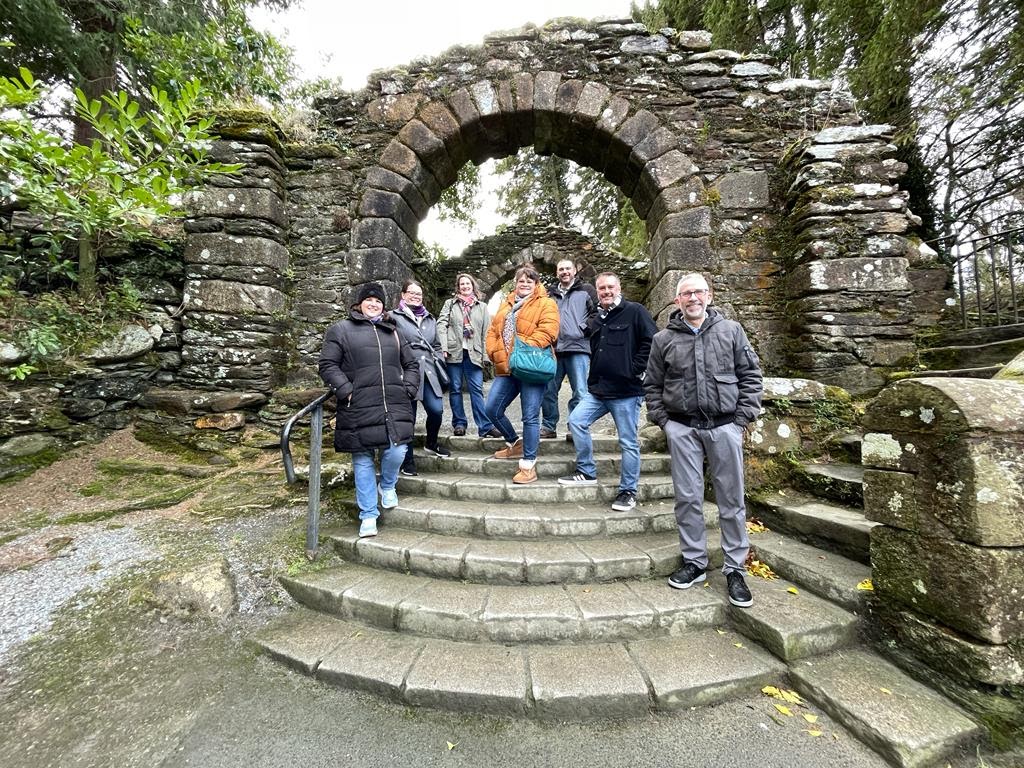
$100K student scholarship pool available for 2022 summer courses in Ireland Six professors from Georgia Southern University’s College of Education (COE) recently broadened their horizons during a trip to Ireland as they learned from and shared insight with instructors and educational leaders in the Wexford County community. Led by Howard Keeley, Ph.D., director of the University’s Center for Irish Research and Teaching, COE faculty traveled to Georgia Southern’s learning center in Wexford, Ireland, to observe Irish educational settings and exchange ideas with local leaders just ahead of a summer study abroad program opportunity for Georgia Southern students in which $100,000 of scholarship funding is available. “The main thing we did was get in front of leaders in the education space in Ireland,” stated Keeley. “We spoke to a number of folks who are either principals or vice principals or, in some way, senior administrators in a variety of schools including all-boys, all-girls, religious, secular and mixed schools.” The group included Catherine Howerter, Ph.D., associate professor of elementary and special education; Kip Sorgen, Ph.D., assistant professor of leadership, technology and human development; Alex Reyes, Ph.D., assistant professor of middle grades and secondary education; Amanda Wall, Ph.D., associate professor of middle grades and secondary education; Betsy Barrow, Ed.D., assistant professor of middle grades and secondary education; and Dan Calhoun, Ph.D., professor of leadership, technology and human development. Reyes, who trains pre-service and in-service teachers to work with culturally and linguistically diverse students, was excited to travel to Wexford after a study abroad program in Czech Republic she spearheaded with Wall was canceled in March 2020 due to the pandemic. Intrigued by Ireland, a plurilingual country, she was curious to see how Wexford’s environment might benefit students culturally. “I thought it was really exciting,” said Reyes. “All of the street signs are in Irish, even though English is the main language spoken. That prioritizing of that cultural heritage is fascinating. It was great to learn that the students in their primary and secondary schools take Irish language and culture as a subject every year.” She was especially motivated by a field trip to an Irish-language school, Meanscoil Gharman, which serves middle and high school students. With the exception of one daily class in English, teachers and students conducted all lessons in Irish. “It was really interesting to see that perspective,” she said. “There has been a revitalization of that culture. I thought that was fascinating to see how that can be handled in school.” In addition, Reyes was duly impressed with the country’s prioritization of social and emotional literacy for children, and the mandated well-being hours that are incorporated into daily school routines as a result of the pandemic. A program that promotes hygiene and an anti-bullying campaign also fit into the wellness curriculum. “It really impressed me that as a nation they prioritize the wellness of students, and how language and cultures can really be supported in a meaningful way,” Reyes said. “It’s affirming to see a proactive approach that has positive outcomes. Now, thinking ahead, we can look at how we can create opportunities for our students to experience this kind of approach.” Sorgen, who teaches in the educational leadership program at Georgia Southern, was interested in Ireland’s professional preparation. “None of them had advanced degrees, like what we offer at Georgia Southern,” noted Sorgen. “Learning about how to be a principal in Ireland is on-the-job training. In Georgia, there are specific educational requirements for our school administrators guided by professional standards. In Ireland, they generally ascend through the ranks, which makes professional mentoring essential to their success. We are exploring ways our educational leadership students could learn from Irish administrators about their experience, specifically with mentoring.” He also foresees the international partnership as a two-way exchange. “Given educational leadership programs are not common in Ireland, our faculty are considering ways in which we could use our expertise to foster leadership development of principals and teachers in Wexford,” said Sorgen. “We would utilize the Georgia Southern Wexford campus to host some of these sessions, furthering Georgia Southern’s relationship within the Wexford community.” Keeley also arranged meetings with education policy makers, including an extended meeting with an Irish congressman who is a representative for the County of Wexford in the Irish national parliament and chairs the joint committee for the Irish equivalent of the House and Senate Committee on education and higher education. “That was a tremendous opportunity for our faculty to talk to somebody at the highest level of government in Ireland, creating Irish state policy on education,” said Keeley. “And I know from the feedback we got from our College of Education colleagues that particularly for those in higher education, that to them was a really useful, next-step experience.” The trip exceeded expectations. “It was a fantastic learning experience for everyone,” said Keeley. “We had lots of high-level and also very practical experiences, and I could see our College of Education team thinking, ‘How can I bring what I’m learning, what I’m experiencing in this moment, into my classroom, into my curriculum, into my prospective study abroad courses in a way to build student success for our Georgia Southern folks.’ I think it was a great visit.” Complementing the faculty’s trip, a COE Irish study abroad program on diverse education in Ireland was recently approved for Summer 2022 and will give education students the opportunity to take one or two courses with the study abroad component. This will be a part of a broader study abroad program in Wexford, presented by the Honors College and the Center for Irish Research and Teaching, with assistance from the Office of the Provost and the Office of Global Engagement. The costs for undergraduate students at Georgia Southern’s Wexford campus will be offset by a $100,000 scholarship fund with awards of $1,000 for each student accepted into the program. “For students traveling to Wexford, Ireland, this summer, we will be able to defray the cost of the program through a generous travel scholarship through the Georgia Southern University Foundation,” said Dustin Anderson, Ph.D., associate provost for Student Success. “The donation makes these the most affordable multi-week programs that we ever have been able to offer.” Keeley is thrilled the gifts from generous donors will enable a number of students to earn valuable global experiences. “For students to have an opportunity to have international lives is powerful, and it’s powerful in ways that sometimes we can’t even predict,” he said. “Just the very fact of being abroad is going to change any of us, right? It can have a really transformative effect to feel a sense that, you know, as a student, ‘I can do this,’ and then a sense after the fact, ‘I did this,’ and just that in itself is educational. Giving students a safe space in Wexford, Ireland, to grow and feel that they are in a sense global citizens and bring the best of America, bring the best of Georgia, bring the best of the states from Savannah to Ireland, and learn to be an ambassador. That’s wonderful.” In addition to the education courses, students will also be able to choose from a Wexford-Savannah honors inquiry and an interdisciplinary program open to all students on human migration with courses in geography, religious studies, public health and a CORE study abroad course. Students interested can learn more about the program by clicking here and can email Kristin Karam in the Office of Global Engagement for more information about the scholarships. Georgia Southern University-Wexford is a global hub for learning housed in a historic building constructed in 1812. The space now features state-of-the-art classrooms and student apartments. Georgia Southern is the first public university in the United States to open an outreach learning facility in Ireland. If you're a reporter looking to know more about this initiative, then let our experts help. Howard Keeley, Ph.D., is the director of the Center for Irish Research and Teaching at Georgia Southern University. He is available - simply click on his icon now to arrange an interview today.


Georgia Southern now one of nation’s Top Ten Military Friendly® Schools
Georgia Southern University has earned a 2022-2023 Top Ten Military Friendly® distinction by Viqtory. Georgia Southern ranked at number nine on the Top Ten list. Being named a Military Friendly School is nothing new for Georgia Southern University, having earned a gold-level distinction for the past 10 years. “We are extremely proud to be recognized as being among the 10 most military friendly universities in the country, especially after learning that more than 1,800 schools participated in the survey,” said Georgia Southern University President Kyle Marrero. “With our connections to Fort Stewart, and the fact that about 10% of our student body is military-connected, we have a responsibility to ensure our people and our processes are attuned to the needs of those who are serving selflessly, who are retired or who are related to a veteran or active-duty service member. My thanks to all our faculty and staff who have worked hard to earn this recognition.” Institutions earning the Military Friendly® School designation were evaluated using both public data sources and responses from a proprietary survey. More than 1,800 schools participated in the 2022-2023 survey with 665 earning special awards for going above the standard. Georgia Southern University has a strong and proud history of supporting veterans, current-serving military personnel and their families, and has accumulated many awards for its dedication to the military community. Information and resources are available on the Military and Veteran Services webpage. “We are honored to receive such a significant recognition as a Top Ten Military Friendly® institution,” said retired Col. George Fredrick, Ed.D., director of Military and Veteran Services. “Georgia Southern University maintains strong ties to the military forces in our region, specifically Fort Stewart, Hunter Army Airfield, the Marines, the Georgia National Guard, the Air Force, and the Coast Guard. We proudly serve our veterans and their families while on their academic journeys. We are indebted to our faculty, staff, students and communities for their continued support of our military-connected student population.” Methodology, criteria and weightings were determined by Viqtory with input from the Military Friendly® Advisory Council of independent leaders in the higher education and military recruitment community. Final ratings were determined by combining the institution’s survey scores with the assessment of the institution’s ability to meet thresholds for student retention, graduation, job placement, loan repayment, persistence (degree advancement or transfer) and loan default rates for all students and, specifically, for student veterans. “Military Friendly® is committed to transparency and providing consistent data-driven standards in the designation process,” said Kayla Lopez, national director of Military Partnerships, Military Friendly®. “Our standards provide a benchmark that promotes positive outcomes and support services that better the educational landscape and provide opportunity for the Military Community. This creates a competitive atmosphere that encourages colleges to evolve and invest in their programs consistently. Schools who achieve awards designation show true commitment in their efforts, going over and above that standard.” The 2022-2023 Military Friendly® Schools list will be published in the May and October issue of G.I. Jobs magazine and can be found at www.militaryfriendly.com. Retired Col. George Fredrick is available to answer your questions - simply reach out to Georgia Southern Director of Communications Jennifer Wise at jwise@georgiasouthern.edu to arrange an interview today.