Experts Matter. Find Yours.
Connect for media, speaking, professional opportunities & more.

When Luis Quiroga-Nuñez, Ph.D was appointed director of Florida Tech’s Ortega Observatory and its primary tenant – a non-functioning, 32-inch telescope – in 2023, he decided it was time to provide astronomy students and others a window to space. The observatory is already a base for research across a spectrum of cosmic exploration through disciplines such as astronomy and astrophysics, heliophysics, planetary science and astrobiology. However, current students have yet to see the stars up close, as the aging telescope, commissioned in 2008, has sat dormant for the last several years. With restoration, the telescope could be a powerful tool to train students to use professional telescopes and make observations – critical skills that will help prepare them for their future careers. It soon became apparent, however, that this was no simple task. The restoration would necessitate reverse engineering on a large scale to even understand how to fix and upgrade the telescope, much less actually repair it. It would also, as Quiroga-Nuñez wisely recognized, be its own powerful educational opportunity, providing unique hands-on learning opportunities for students in the College of Engineering and Science. “We are an institute of technology. We have perfectly capable people, like these young students, ready to join hands-on projects, get crazy and start to be creative.” Luis Quiroga-Nuñez With various issues to tackle and eager to support home-grown expertise, Quiroga-Nuñez and Lee Caraway, Ph.D, an instructor in the department of electrical engineering and computer science, recruited students with varied backgrounds, from astronomy to electrical engineering and computer science. Students could apply what they learned in class and grow their portfolios with a real-world project, the sort of experiential learning that is a hallmark of a Florida Tech education. Some improvements have been made, but the project remains an exciting puzzle for students and faculty alike. Here’s how they are doing it. An Interdisciplinary Project In January 2023, Quiroga-Nuñez partnered with Caraway to rebuild the telescope from the inside out. They say the conversation started over lunch, sketching ideas on a napkin. With various issues to tackle and eager to support home-grown expertise, Caraway and Quiroga-Nuñez recruited students with varied backgrounds, from astronomy to engineering to computer science. “This is about as real-world as you can get without leaving school. We have this giant piece of technology that is not working. Figure out why,” said recent graduate Adrianna Agustin ’24, who helped update the telescope’s communication system. “All of those problem-solving skills will directly translate to wherever we go in the future.” The project’s multidisciplinary nature also boosts collaboration between both sides of the college. “We keep integrating different parts of the university and involving students in a project that we were blinded by,” Quiroga-Nuñez says. “We sit between the scientists and the engineers.” And there’s no shortage of tasks. In addition to the refurbishment, Quiroga-Nuñez and Caraway are also completing routine telescope maintenance, with students taking on adjacent projects around the observatory. With the telescope repair, each student is given their own task, such as redesigning a small clip that supports the dome’s electric current, reviewing the conditions of the finder’s lens or understanding how analog devices control the telescope’s focus. This allocation allows each student to claim their own individual contribution to the greater telescope puzzle. Opening a Time Capsule The telescope’s biggest issues were mechanical and electrical, all exacerbated by age. Its motors were decades old and naturally failing, Caraway said. These motors controlled the telescope’s right ascension and declination – essentially, its ability to move. The chaotic interior also involved multiple individual systems with dozens of wires. And the circuits controlling the motors, which dated back to the 1980s, were also failing due to age. As Caraway noted, his students are sweeping off “dust older than them.” “The technology back then simply did not exist to control the motors, run the diagnostics and make it all happen,” Caraway explained. “They’re not designed to run 30 years.” Additionally, the computer program that controlled the motors was outdated and did not meet to the university’s security requirements. Given all this, the team needed to develop a new communication system for the telescope, starting with the computer software. They decided instead of purchasing an upgraded computer system, they could build and program their own in-house from scratch. Next, once the new computer was up and running, it needed motors to command. Marisa Guerra ’24 worked on a senior design project involving a robotic arm whose motor structure was the same as the telescope’s. She crafted a blueprint for the telescope’s new motors using what she learned for her capstone project. At the same time, Agustin worked on developing a cleaner communication system between the computer to the motors. Her senior design research focused on electric vehicles and their internal circuit systems, and she could replicate something similar within the telescope – but not without digging through the decaying electronics first. “We had to reverse engineer and actually redraw the circuits, which was good practice because a lot of the time, for senior design at least, you don’t really have to design a new circuit. You are just kind of puzzle-piecing it together,” Agustin said. “But with this circuit, all of them were bad.” Using Guerra’s and Agustin’s senior design research, the team reprogrammed the telescope’s circuits. What once took 20 wires to operate now only takes two. They also reduced the weight of the telescope’s motors from 40 pounds to just 2 pounds. Once the communication system was finished, the team was just waiting for mobility. And on a day in Spring 2024, thanks to the refurbished system, they were able to create movement within the telescope for the first time in years. “I didn’t even know if that device could move internally,” Quiroga-Nuñez says. The moment was celebrated, but the team knew this success triggered a new challenge. It was time to tackle high astrometric precision – a crucial element of properly tracking movement in space. “We are pointing to tiny points in the sky. If we do not track that properly, we are going to be lost in the universe,” Quiroga-Nuñez says. The Value of Time Perfecting precise movement is expected to take some time, but that’s not a bad thing, Quiroga-Nuñez says. He believes that a lengthy timeline will offer more value in the long run because it will give even more students a chance to get involved. Besides, its primary purpose will be to teach students how to use a telescope and allow them to make observations and prepare for their future careers. Ultimately, Quiroga-Nuñez predicts that the telescope could pick up its first image from space in about a year if everything stays on track. However, the team still has a lot of ground within the telescope to uncover, with an unpredictable number of potential troubleshooting challenges. For example, while rebuilding the motor, they discovered that the internal mirror that illuminates the telescope’s visuals was in poor condition – it needed cleaning and new aluminum to reflect enough light to see the telescope’s imagery, Agustin explains. So, the team had to remove the mirror and ship it to New York for refurbishment – a process that took several months. Once the mirror is reinstalled, they can return to their quest for better precision. The mirror is just one example of unpredictability in reverse-engineering. Ultimately, dedicating more time to understanding and solving the unforeseen challenges allows more students to participate in the telescope’s journey, Quiroga-Nuñez says. “This is like a big Lego for them,” he says. “They are learning the process, and the students, I think, will have found a very valuable life experience.” If you're interested in connecting with Luis Quiroga-Nuñez, director of Florida Tech’s Ortega Observatory - simply contact Adam Lowenstein, Director of Media Communications at Florida Institute of Technology at adam@fit.edu to arrange an interview today.


University-wide mental health services strengthened by Georgia Southern’s JED Campus initiative
As a result of Georgia Southern’s commitment to increasing student awareness and access to mental health resources, the University has recently been named a full JED Campus (JED) Member university. Georgia Southern recently completed a four-year partnership with JED, a national collegiate mental health program that guides colleges through a collaborative process of building comprehensive systems, programs and policy development with customized support to build upon existing student mental health, substance use and suicide prevention efforts. Along with the JED efforts, Georgia Southern has significantly increased student awareness and access to mental health resources. A recent report shows that 83% of Georgia Southern University students agree that the administration is listening to the concerns of students around health and wellness. This is a 15% increase since 2020. In 2020, the University System of Georgia launched several system-wide initiatives and resources to increase the mental health awareness and resources for all of its institutions. One of these initiatives was to fund the enrollment of all institutions in the JED Campus program. This included the creation of a JED campus team, an initial campus mental health climate study conducted by the Healthy Minds Institute on behalf of JED, the completion of a Georgia Southern self-study, a campus site visit by JED and the development and completion of a four-year strategic plan. “Engaging in the four-year JED Campus process has enabled Georgia Southern to strengthen and expand its university-wide commitment to the mental health of our students, faculty and staff,” said Jodi K. Caldwell, Ph.D., Counseling Center executive director & JED Campus team lead. “The JED team remains committed to growing Georgia Southern’s efforts in providing awareness, education, resources and support for the well-being of our community. We are grateful to the University System of Georgia, whose support funded this opportunity for all USG institutions and to the support of our Georgia Southern administration.” Recently, the University has increased awareness and resources through programs like the H.E.R.O. Folder. Students aware of mental health outreach efforts grew from 40% to 60%, and those knowing where to seek professional help increased from 78% to 84%, according to the JED feedback report. Additional findings can be found in the full report at the bottom of this article. Georgia Southern will now be considered an alumni of the program, and will continue several of the programs and initiatives launched with JED. If you're interested in learning more about Georgia Southern's partnership with JED and want to book time to talk or interview with Jodi Caldwell then let us help - simply click on her icon now contact Georgia Southern's Director of Communications Jennifer Wise at jwise@georgiasouthern.edu to arrange an interview today.


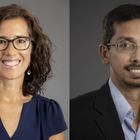
NASA Asks Researchers to Help Define Trustworthiness in Autonomous Systems
A Florida Tech-led group of researchers was selected to help NASA solve challenges in aviation through its prestigious University Leadership Initiative (ULI) program. Over the next three years, associate professor of computer science and software engineering Siddhartha Bhattacharyya and professor of aviation human factors Meredith Carroll will work to understand the vital role of trust in autonomy. Their project, “Trustworthy Resilient Autonomous Agents for Safe City Transportation in the Evolving New Decade” (TRANSCEND), aims to establish a common framework for engineers and human operators to determine the trustworthiness of machine-learning-enabled autonomous aviation safety systems. Autonomous systems are those that can perform independent tasks without requiring human control. The autonomy of these systems is expected to be enhanced with intelligence gained from machine learning. As a result, intelligence-based software is expected to be increasingly used in airplanes and drones. It may also be utilized in airports and to manage air traffic in the future. Learning-enabled autonomous technology can also act as contingency management when used in safety applications, proactively addressing potential disruptions and unexpected aviation events. TRANSCEND was one of three projects chosen for the latest ULI awards. The others hail from Embry-Riddle Aeronautical University in Daytona Beach – researching continuously updating, self-diagnostic vehicle health management to enhance the safety and reliability of Advanced Air Mobility vehicles – and University of Colorado Boulder – investigating tools for understanding and leveraging the complex communications environment of collaborative, autonomous airspace systems. Florida Tech’s team includes nine faculty members from five universities: Penn State; North Carolina A&T State University; University of Florida; Stanford University; Santa Fe College. It also involves the companies Collins Aerospace in Cedar Rapids, Iowa and ResilienX of Syracuse, New York. Carroll and Bhattacharyya will also involve students throughout the project. Human operators are an essential component of aviation technology – they monitor independent software systems and associated data and intervene when those systems fail. They may include flight crew members, air traffic controllers, maintenance personnel or safety staff monitoring overall system safety. A challenge in implementing independent software is that engineers and operators have different interpretations of what makes a system “trustworthy,” Carroll and Bhattacharyya explained. Engineers who develop autonomous software measure trustworthiness by the system’s ability to perform as designed. Human operators, however, trust and rely on systems to perform as they expect – they want to feel comfortable relying on a system to make an aeronautical decision in flight, such as how to avoid a traffic conflict or a weather event. Sometimes, that reliance won’t align with design specifications. Equally important, operators also need to trust that the software will alert them when it needs a human to take over. This may happen if the algorithm driving the software encounters a scenario it wasn’t trained for. “We are looking at how we can integrate trust from different communities – from human factors, from formal methods, from autonomy, from AI…” Bhattacharyya said. “How do we convey assumptions for trust, from design time to operation, as the intelligent systems are being deployed, so that we can trust them and know when they’re going to fail, especially those that are learning-enabled, meaning they adapt based on machine learning algorithms?” With Bhattacharyya leading the engineering side and Carroll leading the human factors side, the research group will begin bridging the trust gap by integrating theories, principles, methods, measures, visualizations, explainability and practices from different domains – this will build the TRANSCEND framework. Then, they’ll test the framework using a diverse range of tools, flight simulators and intelligent decision-making to demonstrate trustworthiness in practice. This and other data will help them develop a safety case toolkit of guidelines for development processes, recommendations and suggested safety measures for engineers to reference when designing “trustworthy,” learning-enabled autonomous systems. Ultimately, Bhattacharyya and Carroll hope their toolkit will lay the groundwork for a future learning-enabled autonomous systems certification process. “The goal is to combine all our research capabilities and pull together a unified story that outputs unified products to the industry,” Carroll said. “We want products for the industry to utilize when implementing learning-enabled autonomy for more effective safety management systems.” The researchers also plan to use this toolkit to teach future engineers about the nuances of trust in the products they develop. Once developed, they will hold outreach events, such as lectures and camps, for STEM-minded students in the community. If you're interested in connecting with Meredith Carroll or Siddhartha Bhattacharyya - simply click on the expert's profile or contact Adam Lowenstein, Director of Media Communications at Florida Institute of Technology at adam@fit.edu to arrange an interview today.


From spacesuits to style icons: University of Delaware fashion grads make their mark on the industry
One of the best measures of a college program is where their alums land after graduation and beyond. In addition to the impressive list of soon-to-be degree holders who have already landed excellent jobs, the University of Delaware's fashion and apparel studies program can boast a roster of alums who now have prominent positions with some of the industry's most iconic companies as well as major retailers. Faculty at UD can talk about the materials that make up the proverbial fabric of their hidden gem of a program on the campus in Newark, Delaware. A quick snapshot of what some of the alums are up to: • Two students who have developed materials for space programs, including one who developed spacesuit textiles for future lunar missions. • A fashion merchandising graduate degree holder who now is a point person for sustainability at Tapestry, the home of iconic brands like Coach and Kate Spade. • High ranking executive at Target Brands. • An alum with a resume that includes Ralph Lauren and now Steve Madden. • Textile assistant with The Kasper Group, whose portfolio includes Nine West, Anne Klein, Kasper, Le Suit and Jones New York. Among this year's graduates is a star field hockey player from Argentina who landed a job at fashion retailer Moda Operandi; an award-winning student who will continue her pursuit of "changing the world" and making the fashion industry more sustainable as a graduate student at UD; and an entrepreneurship minor who paired her experience playing volleyball with design research that resulted in more comfortable apparel for athletes. To speak to one of these past or future graduates, contact mediarelations@udel.edu. Faculty from the program are also available for interviews: Huantian Cao, professor and department chair; Sheng Lu, professor and graduate director; and Brenda Shaffer, associate chair and undergraduate director.



An Expert Guide to the Papacy and Pope Francis
The death of Pope Francis marks a pivotal moment for the Catholic Church, ending a papacy that redefined the Church's relationship with the modern world. As the College of Cardinals prepares to gather in conclave, Catholics across the globe are closely watching to see whether the next pontiff will build upon Francis' legacy or chart a new course. The following experts are available to provide insight into a range of related topics, including Pope Francis' enduring impact and what lies ahead for the world's 1.4 billion Catholics: Massimo Faggioli, PhD Professor, Theology and Religious Studies Dr. Massimo Faggioli is a world-renowned expert on the history and administrative inner workings of the Catholic Church, with specific expertise in the papacy, Vatican II, the Roman Curia, liturgical reform, new Catholic movements and Catholicism and global politics. As quoted on NPR: "Historically, we see in different conclaves a certain swinging of the pendulum. What the conclave and the next pope cannot do is to ignore and deny the changing features of global Catholicism, which is much less European, much less white, less North American and more Global South..." Kevin Hughes, PhD Chair, Theology and Religious Studies Dr. Kevin Hughes is a leading historical theologian, offering insights into the life, legacy and impact of Pope Francis. He can also speak to the significance of the Pope in Catholicism and the influence of his teachings on the global Catholic Church. As quoted on Scripps News: "[Pope Francis' selection] was really the Church extending beyond the limits of its European imagination. His Latin American identity was really crucial to embracing a new moment within the Church and opening the door in so many ways, and I think he bore witness to that throughout his papacy." Jaisy Joseph, PhD Assistant Professor, Systematic and Constructive Theology Dr. Jaisy Joseph is a trained ecclesiologist, able to address a wide range of topics relating to the papacy, conclave process and Catholic Church. Previously, she has commented on the Church's presence in Asia and the Global South, offering expert commentary on its growth, challenges and shifting influence. As quoted by ABC News Digital: "[The election of someone from the Global South would be] a move in that direction of how to be a global church. That move from a Eurocentric church to a truly global church—I think that's what Francis really inaugurated." Patrick Brennan, JD Professor of Law; John F. Scarpa Chair in Catholic Legal Studies Professor Patrick Brennan is an expert on the conclave process and the main rules that govern it. He can also speak to topics such as the contemporary and historical importance of secrecy in the conclave, what the cardinals may be looking for in the next Pope and the factors that cause similarities and differences from one conclave to the next. As quoted on Fox 29's Good Day Philadelphia: "The purpose of the general congregation is for the cardinals, who don't know each other in some cases, to get to know each other better as they learn about the current state of the Church and together decide on the needs of the Church and priorities for the new pontificate." Brett Grainger, ThD Associate Professor, Study of Spirituality and American Religious History Dr. Brett Grainger is a go-to source for discussions of the changing face and role of modern spirituality in America. He serves as an expert on contemporary religious trends and can also speak to the broader public reaction to Pope Francis' passing, especially outside of the Catholic faith. As quoted by Courthouse News Service: "People are disaffiliating from a tradition—that doesn't necessarily mean in fact that they don't believe in God anymore...What's more important is 'Is this giving me life? Is this making my life more meaningful? Is this giving me the kind of energy and purpose that I'm looking for?' That's where religion is going." Michael Moreland, JD, PhD Professor of Law and Religion; Director, Eleanor H. McCullen Center for Law, Religion and Public Policy Dr. Michael Moreland is a renowned scholar of constitutional law, religious freedom, public policy and ethics. He can provide expert commentary on items related to the Catholic right and the state of religious politics in the United States. As featured on NBC News Digital: Michael Moreland said the mass appeal of "Conclave" captured how, even in a secular modern age, there is still pervasive intrigue around "the ancient rituals of the Catholic Church." "The significance of the theological and spiritual aspects of Catholicism and this process of electing a pope was kind of reduced into partisan politics," he said. Ilia Delio, OSF, PhD Josephine C. Connelly Endowed Chair in Christian Theology Sister Ilia Delio addresses topics in her work such as theology and evolution, technology and human becoming and understandings of Catholicity in a world of complexity. She can provide expert insight into Laudato si', Pope Francis' position on the environment, the relationship between science and religion and integral ecology. As featured in the National Catholic Reporter: "We are clearly an Earth in crisis," with a reversal necessary to secure a sustainable future, said Ilia Delio... Delio posed a series of questions: about the relationship between religion and science; what Laudato si', and Christianity more broadly, can offer ecological movements; and whether the concept of kinship or creation as family might better reflect humanity's place within nature than "care for creation." To speak with any of these faculty experts, please contact mediaexperts@villanova.edu.




Virtual reality training tool helps nurses learn patient-centered care
University of Delaware computer science students have developed a digital interface as a two-way system that can help nurse trainees build their communication skills and learn to provide patient-centered care across a variety of situations. This virtual reality training tool would enable users to rehearse their bedside manner with expectant mothers before ever encountering a pregnant patient in person. The digital platform was created by students in Assistant Professor Leila Barmaki’s Human-Computer Interaction Laboratory, including senior Rana Tuncer, a computer science major, and sophomore Gael Lucero-Palacios. Lucero-Palacios said the training helps aspiring nurses practice more difficult and sensitive conversations they might have with patients. "Our tool is targeted to midwifery patients,” Lucero-Palacios said. “Learners can practice these conversations in a safe environment. It’s multilingual, too. We currently offer English or Turkish, and we’re working on a Spanish demo.” This type of judgement-free rehearsal environment has the potential to remove language barriers to care, with the ability to change the language capabilities of an avatar. For instance, the idea is that on one interface the “practitioner” could speak in one language, but it would be heard on the other interface in the patient’s native language. The patient avatar also can be customized to resemble different health stages and populations to provide learners a varied experience. Last December, Tuncer took the project on the road, piloting the virtual reality training program for faculty members in the Department of Midwifery at Ankara University in Ankara, Turkey. With technical support provided by Lucero-Palacios back in the United States, she was able to run a demo with the Ankara team, showcasing the UD-developed system’s interactive rehearsal environment’s capabilities. Last winter, University of Delaware senior Rana Tuncer (left), a computer science major, piloted the virtual reality training program for Neslihan Yilmaz Sezer (right), associate professor in the Department of Midwifery, Ankara University in Ankara, Turkey. Meanwhile, for Tuncer, Lucero-Palacios and the other students involved in the Human-Computer Interaction Laboratory, developing the VR training tool offered the opportunity to enhance their computer science, data science and artificial intelligence skills outside the classroom. “There were lots of interesting hurdles to overcome, like figuring out a lip-sync tool to match the words to the avatar’s mouth movements and figuring out server connections and how to get the languages to switch and translate properly,” Tuncer said. Lucero-Palacios was fascinated with developing text-to-speech capabilities and the ability to use technology to impact patient care. “If a nurse is well-equipped to answer difficult questions, then that helps the patient,” said Lucero-Palacios. The project is an ongoing research effort in the Barmaki lab that has involved many students. Significant developments occurred during the summer of 2024 when undergraduate researchers Tuncer and Lucero-Palacios contributed to the project through funding support from the National Science Foundation (NSF). However, work began before and continued well beyond that summer, involving many students over time. UD senior Gavin Caulfield provided foundational support to developing the program’s virtual environment and contributed to development of the text-to-speech/speech-to-text capabilities. CIS doctoral students Fahim Abrar and Behdokht Kiafar, along with Pinar Kullu, a postdoctoral fellow in the lab, used multimodal data collection and analytics to quantify the participant experience. “Interestingly, we found that participants showed more positive emotions in response to patient vulnerabilities and concerns,” said Kiafar. The work builds on previous research Barmaki, an assistant professor of computer and information sciences and resident faculty member in the Data Science Institute, completed with colleagues at New Jersey Institute of Technology and University of Central Florida in an NSF-funded project focused on empathy training for healthcare professionals using a virtual elderly patient. In the project, Barmaki employed machine learning tools to analyze a nursing trainee’s body language, gaze, verbal and nonverbal interactions to capture micro-expressions (facial expressions), and the presence or absence of empathy. “There is a huge gap in communication when it comes to caregivers working in geriatric care and maternal fetal medicine,” said Barmaki. “Both disciplines have high turnover and challenges with lack of caregiver attention to delicate situations.” UD senior Rana Tuncer (center) met with faculty members Neslihan Yilmaz Sezer (left) and Menekse Nazli Aker (right) of Ankara University in Ankara, Turkey, to educate them about the virtual reality training tool she and her student colleagues have developed to enhance patient-centered care skills for health care professionals. When these human-human interactions go wrong, for whatever reason, it can extend beyond a single patient visit. For instance, a pregnant woman who has a negative health care experience might decide not to continue routine pregnancy care. Beyond the project’s potential to improve health care professional field readiness, Barmaki was keen to note the benefits of real-world workforce development for her students. “Perceptions still exist that computer scientists work in isolation with their computers and rarely interact, but this is not true,” Barmaki said, pointing to the multi-faceted team members involved in this project. “Teamwork is very important. We have a nice culture in our lab where people feel comfortable asking their peers or more established students for help.” Barmaki also pointed to the potential application of these types of training environments, enabled by virtual reality, artificial intelligence and natural language processing, beyond health care. With the framework in place, she said, the idea could be adapted for other types of training involving human-human interaction, say in education, cybersecurity, even in emerging technology such as artificial intelligence (AI). Keeping people at the center of any design or application of this work is critical, particularly as uses for AI continue to expand. “As data scientists, we see things as spreadsheets and numbers in our work, but it’s important to remember that the data is coming from humans,” Barmaki said. While this project leverages computer vision and AI as a teaching tool for nursing assistants, Barmaki explained this type of system can also be used to train AI and to enable more responsible technologies down the road. She gave the example of using AI to study empathic interactions between humans and to recognize empathy. “This is the most important area where I’m trying to close the loop, in terms of responsible AI or more empathy-enabled AI,” Barmaki said. “There is a whole area of research exploring ways to make AI more natural, but we can’t work in a vacuum; we must consider the human interactions to design a good AI system.” Asked whether she has concerns about the future of artificial intelligence, Barmaki was positive. “I believe AI holds great promise for the future, and, right now, its benefits outweigh the risks,” she said.

A Bumpy Ride Ahead for HigherEd
A confluence of political, economic, and social challenges is threatening the very fabric of US universities. In both red and blue states, the political and economic headwinds facing institutions are fierce, public skepticism is high, and social media has become a polarizing battleground of filter bubbles filled with mis/disinformation. Universities find themselves squeezed by funding cuts, scrutinized by lawmakers, and caught in cultural crossfire. This presents a unique challenge for communications professionals. In this era of declining trust and “alternative facts,” they need to be hyper-informed, adapt quickly, and boldly emphasize the critical value institutions have in society. Communications should function as a vital link, bridging this growing divide between town and gown. In red and blue states, the political and economic headwinds hitting higher education are fierce, public skepticism is high, and social media has become a polarizing battleground of filter bubbles filled with mis/disinformation. It's important to note that throughout history, universities often emerge stronger and more deeply connected to the public during times of turbulence. Universities played a key role in partnering with the government to implement Roosevelt's New Deal, helping with emergency relief and agricultural programs. They helped democratize education with the GI Bill after World War II. They responded to societal demands during the civil rights era. Most recently, they played a key role in public health amidst the COVID-19 pandemic. Campus communicators have a unique set of skills and a vital responsibility to steer their institutions through these tough times. But the road ahead will be hard. The New Reality for Campus Communicators Cuts to Research Funding The lifeblood of academic innovation—research dollars—is under threat. The new political regime in Washington is looking to cut billions in federal research funding. A sudden cap on NIH indirect costs (slashed to 15% from an average of 28%) will have a profound impact on programs. Many researchers report that major grants are frozen or are expected to shrink. This “budget axe” isn’t theoretical for research universities—it’s biting right now. Communicators must convey what’s at stake: essential contributions such as groundbreaking science, community health programs, and innovation pipelines that fuel the economy hang in the balance as money gets tighter. Increasing State Oversight & Regulation In state capitals, politicians are muscling into campus affairs like never before. Republican-controlled statehouses are overhauling higher education governance, introducing over 150 bills in 35 states aimed at tightening control over public institutions. Even tenure is threatened. In the past year, lawmakers in seven states moved to eliminate or curb tenure and impose stricter post-tenure reviews – an unprecedented encroachment on academic freedom. New laws and proposals are creating oversight committees, mandating changes to the curriculum, and even threatening funding for programs out of political favor. The message from some state capitols is clear: “We’re watching you.” This surge in oversight and regulatory meddling means university communicators must navigate an increasingly fine line, demonstrating transparency and accountability at every turn to appease regulators while fiercely defending their institution’s academic autonomy. Political Pressure and DEI Backlash Diversity, equity, and inclusion initiatives are under open attack. What began as partisan rhetoric has evolved into concrete threats – and actions – against campus diversity efforts. Dozens of states have passed or proposed laws to defund DEI offices, ban diversity training, or restrict teaching about race and gender. The result? An “inconsistent and confusing landscape” for colleges as they respond to swelling political pressure. The campaign against campus DEI has dramatically accelerated in 2025, turbocharged by signals from the Trump administration pushing to eliminate DEI efforts across government and higher ed. According to The Chronicle of Higher Education 270 campuses in 38 states have already scaled back or dismantled some DEI programs under this pressure. For communications teams, the DEI backlash creates a messaging minefield. They must affirm institutional values of inclusion and support for marginalized groups, even as those very programs face hostile scrutiny from powerful critics. Threats to the Federal Department of Education In Washington, the unthinkable is suddenly on the table: the U.S. Department of Education itself is in the crosshairs. President Trump has made good on campaign promises by signing an executive order to dismantle the Department of Education. While outright abolition requires Congress, the administration has already laid off nearly half of the department’s staff and moved to strip the agency to its bare bones. “We’re going to shut it down… it’s doing us no good,” Trump declared. This unprecedented move could upend federal support and guidelines for universities – from financial aid administration to civil rights enforcement – leaving states to fill the void. Communications professionals must reassure students, faculty, and the public that education won’t grind to a halt if federal oversight wanes. It’s a communications tightrope: acknowledging the potential for massive change while conveying stability in the university’s core mission. After all, even if Washington pulls back, universities still answer to accreditation bodies and the public trust. The Misinformation Deluge on Social Media The information ecosystem has never been more chaotic – or more dangerous. Universities are grappling with viral misinformation and disinformation that can ignite campus controversies overnight. In the age of TikTok rumors and politicized Twitter (or “X”) feeds, false narratives spread like wildfire before facts can catch up. Recent campus incidents have shown how quickly truth gets muddled: one university saw fake reports about a protest spread widely. At the same time, another dealt with a gross misinterpretation of a student gathering that went viral. Photos and videos are routinely ripped out of context or deliberately edited with misleading labels. The public, meanwhile, is “bombarded with misinformation” online and growing distrustful of experts. For higher ed communicators, countering misinformation means fighting a two-front war: rapidly correcting falsehoods about their institution and proactively pushing out accurate, compelling content to capture attention before the rumors do. Economic Uncertainty and Budget Turbulence. Even aside from targeted funding cuts, universities are feeling economic whiplash. Inflation, endowment fluctuations, and post-pandemic enrolment dips have collided to squeeze campus finances. Many institutions face structural deficits and tough choices about programs and staffing. In fact, according to the Chronicle of Higher Education, two-thirds of colleges now show at least one sign of financial stress – a startling statistic that underscores how widespread the budget crunch has become. From flagship public universities to small private colleges, hiring freezes and spending cuts are the order of the day. Every dollar is scrutinized by trustees and legislators alike. Communications pros must now operate in a climate of fiscal anxiety, where messages about any new initiative or expense can trigger questions about priorities. The task at hand is to highlight the university’s economic stewardship and continued value to students and the community, even as belts tighten. It’s critical to communicate that the institution is navigating the storm responsibly—protecting its academic core and maximizing the impact of every precious dollar. Demands to Prove Real-world Impact “What is higher ed really doing for society?” In 2025, that question echoes from state capitols, donors’ boards, and kitchen tables across America. Universities are under intense pressure to demonstrate the real-world value of their research and teaching like never before. Lawmakers openly discuss ROI (return on investment) for degrees and research grants, seeking data on graduates’ earnings and innovations spawned per taxpayer dollar. Public confidence in higher education has been shaken – a recent Gallup survey found Americans’ confidence in colleges has plummeted to 36%, down from 57% in 2015. Many believe in personal value (a college degree for better jobs) but doubt that higher education delivers for the greater good. In short, the public is skeptical whether campus research and scholarship are worth the cost. University communicators must do more than publicize exciting discoveries – they must connect the dots for people. Every media release, story, or tweet should answer: Here’s how this university’s work benefits you, your community, and the world. Whether it’s a medical breakthrough, a tech startup from the lab, or a student project solving a local problem, the mandate is clear: show impact or risk losing support. In my next post, I'll provide a detailed blueprint to help communications professionals proactively plan and organize their teams for the road ahead. This actionable framework will help you better identify where you can add value for your institution where it needs it the most and confirm your critical role as a trusted resource. To your success! Upcoming Speaking Events April 23 PRSA Virtual Workshop "Cutting Through the Noise: What Thought Leadership Strategies are Working in Today’s Environment” Register Here June 8 IABC World Conference, Vancouver “The Thought Leadership Blueprint: Why & How to Build a High-Impact Program” Register Here Sept. 12-13 PRSA East Central Conference, Cleveland “The New Comms Leadership Skillset” Register Here About ExpertFile ExpertFile is revolutionizing how organizations connect their experts to journalists, podcasters, and conference organizers who need to find credible experts on tight deadlines…fast. Featuring experts on over 50,000 topics, our free Apple and Android mobile app is the go-to resource for journalists at media outlets such as the New York Times, CNN, NPR Radio, Fox News, BBC, The Guardian, ABC News, CBC, AXIOS and Time Magazine. For over a decade, our award-winning software platform has been helping marketing departments better manage and promote their online thought leadership to reach a wider audience. Clients include Carnegie Mellon University, ChristianaCare Health, Villanova University, Aston University and Emory University. Learn more at: expertfile.com/getstarted



March Madness: Experts comment on picking underdogs, prop bets and economic benefits
Why do people pick underdogs when filling out their brackets for the NCAA men's and women's basketball tournaments? How do people consume March Madness? How does the tournament benefit host cities and teams economically? University of Delaware experts have the answers. The following UD faculty members can provide their expertise for journalists working on stories about the tournaments. • Jackie Silverman, assistant professor of marketing: Why people might have chosen underdogs still hanging around in their brackets, • John Allgood, instructor of sport management: How people consume March Madness (streaming vs. cable TV) and how major collegiate sports events can help brand individual schools. Contact UD media relations to reach him. • Tim DeSchriver, associate professor of sport management: Sports gambling (including prop bets) and advertising targets. • Matthew Robinson, professor of sport management: Economic benefits of the host city. • Matt McGranaghan, assistant professor of marketing: Consumer attention span during commercial breaks. To reach these experts directly and set up interviews, visit the expert profiles below and click on the contact button.


Annual Healthy Georgia Report looks at public health in the Peach State
The fourth edition of the “Healthy Georgia: Our State of Public Health” report has been released by the Institute of Public and Preventive Health in Augusta University’s School of Public Health. Within the 64 pages of the report is a snapshot of how healthy Georgians are compared to citizens across the 12 states that make up the Southeastern Region (Alabama, Arkansas, Florida, Georgia, Kentucky, Louisiana, Mississippi, North Carolina, South Carolina, Tennessee, Virginia and West Virginia) and the entire United States. The 2025 edition addresses 31 health topics and has been expanded this year to include multimorbidity; long COVID-19; HIV, chlamydia, gonorrhea and syphilis infection rates; opioid and methamphetamine drug use; suicides; and vaping. Biplab Datta, PhD, assistant professor in the Department of Health Management, Economics, and Policy in SPH, heads up the team of IPPH faculty and staff who create the report each year. Datta credits Jen Jaremski, research associate, and Kit Wooten, public health analyst, with handling much of the work of bringing the report to life. Together, Jaremski and Wooten collected and organized all of the needed assets and organized the 64-page document, preparing it for print and the web. “Every year we strive to present data in a way that policymakers may find helpful in making policy choices,” Datta said. “There are several new topics that were added to this year’s report and some of those are concerning for the state of Georgia, particularly the communicable diseases like HIV, chlamydia, gonorrhea and syphilis. High prevalence rates of these conditions in Georgia, compared to the rest of the U.S. and the Southeastern Region, warrant attention of the public health community.” Georgia has the second-highest rate of HIV infections in the U.S., fourth-highest rates of gonorrhea, sixth-highest for chlamydia and 13th for syphilis. Something that is also new in this year’s report is a comparison of numbers from 2019, or before the COVID-19 pandemic began, compared to after the pandemic for certain conditions. Also coming out of the pandemic, the report looks at how long COVID has affected Georgians, with the state ranking 24th in the nation for rates of long COVID. According to the U.S. Centers for Disease Control and Prevention, long COVID is defined as a chronic condition that occurs after COVID-19 infection and is present for at least three months. On top of looking at comparisons between Georgia and the Southeast and the nation, Datta noted a clearer picture is starting to emerge concerning the difference in urban and rural areas within the state. “For several chronic conditions, like hypertension, diabetes and multimorbidity, we clearly see a striking difference between rural and urban residents of Georgia,” Datta said. Hypertension affects 44.1% of adults in rural Georgia compared to 35% in urban areas, while diabetes affects 17.5% of adults in rural Georgia compared to 12.3% of those in urban areas. Hypertension and diabetes are major risk factors for cardiovascular disease, which affects 12.2% of adults in rural areas compared to 8.3% of adults in urban areas of Georgia. “Hypertension and diabetes are the major risk factors for heart disease, which is the leading cause of death in the U.S. and worldwide, so these are some concerning numbers to see,” Datta said. Multimorbidity, which is when a person has multiple chronic conditions, including obesity, asthma, chronic obstructive pulmonary disease, depression, kidney disease, diabetes, hypertension, high cholesterol, cardiovascular disease, cancer, skin cancer and arthritis, affects 57.4% of adults in rural Georgia compared to 49% of adults in urban areas of the state. These rates are significantly lower than the rest of the Southeast but on par with the rest of the country. When comparing Georgia to the U.S. national average, adults in Georgia have lower rates of cancer and methamphetamine use but higher rates of childhood asthma and adult obesity. At the same time, rates of adult asthma and adult obesity among Georgians were comparable to the averages seen in the Southeast. Interestingly, while adult health insurance coverage was significantly lower than the U.S. national and Southeast Regional averages, the child health insurance coverage in Georgia was comparable to both national and regional averages. The Healthy Georgia Report is the only report of its kind in the state Looking to know more or connect with Biplab Datta, PhD? Then let us help. Dr. Datta is available to speak with media regarding this important topic. Simply click on his icon now to arrange an interview today.


A Beginner’s Guide to Expertise Marketing
Audiences today are consuming more digital content than ever, but they’ve also become far more discerning. Algorithms, AI search summaries, and social platforms have changed how information is discovered and trusted. The result is that organizations often get caught up in pushing out content quickly—only to be overlooked when it lacks depth or credibility. From misinformation to shallow click-driven posts, audiences are quick to disengage. What they’re seeking now are authoritative voices backed by proven expertise. That’s where Expertise Marketing comes in: a strategy focused on showcasing real knowledge, research, and experience in ways that build trust, attract attention, and strengthen reputation. According to Edelman’s Trust Barometer Study, experts play a vital role in establishing credibility amongst audiences and developing more meaningful interactions with businesses and organizations. As far back as their 2019 report results showed that 56% of people trust businesses as a source of news and information while only 47% trusted the government. On top of that, they also reported that 73% of participants were worried about false information or fake news being used as a weapon. This distrust has only gotten worse since COVID and the polarizing politics of recent years. With this in mind, there’s a real opportunity for knowledge-based organizations to step up and show their smarts through expertise marketing. What is Expertise Marketing? Expertise marketing is the practice of making the knowledge and skills of your human resources more visible to your partners and audiences. It draws attention to the value that your people can bring as brand ambassadors and strategically leverages the work your experts are doing to tell a more personal story. In many cases, expertise marketing can also be used to showcase your strengths in research and innovation. Creating a stronger digital presence, expertise marketing more effectively uses your channels to connect with audiences such as media, customers, partners and donors. It builds a sense of trust with your audiences and above all else, it helps establish your reputation as an industry leader. Expertise Marketing Defined: The practice of collectively promoting an organization's experts as brand ambassadors to demonstrate their skills or knowledge. Best practices to publish and connect organizational expertise in ways that foster internal discovery, collaboration, shared knowledge and diversity. Activities that leverage expertise to nurture conversations and connections with audiences such as media, customers, partners, government and funding agencies. How to Make Your Expertise More Visible Properly executed, expertise marketing is about harnessing your in-house expertise and making it more visible. By delivering comprehensive, relevant information in a visually engaging format, you can create a window into your organization that helps audiences better understand your offering and encourages more meaningful conversations. Here are three areas where expertise excels: On Your Website There’s a good chance that you already created touchpoints for expertise marketing but they’re just not optimized for audiences. For example, many organizations are unaware that the “About Page” is the second most visited page on a website and may overlook its potential for attracting audiences. Other webpages that strongly benefit from expert content include: Speaker’s Bureaus Media Rooms Employee Directories Faculty Directories Blogs Employee Intranets Awards Recognition Research & Technology Transfer Through Search Engines Content marketing and search engine optimization (SEO) go hand-in-hand – and it’s key to making your expertise more visible. In Google’s search algorithm, factors like trust and authority are significantly impacted by items such as content and expertise. While SEO is no small task, tools like the ExpertFile Platform are designed to make aggregating and optimizing expert content as seamless as possible. In addition, organizations can also improve their rankings by: Identifying and showcasing a range of expertise Using rich media to display expert content Regularly updating your website with expert content Producing content related to current trends and emerging news Through Distribution Networks Showcasing your experts isn’t just about hosting profiles on your own website—it’s about ensuring they are discoverable where key audiences are already looking. By publishing expert content on dedicated search engines such as expertfile.com and the ExpertFile Mobile App, organizations dramatically expand their reach beyond their immediate networks. These channels are designed for the very audiences that matter most—media, event organizers, research partners, donors, and prospective clients—who are actively searching for credible voices to inform stories, shape agendas, and build partnerships. Leveraging these distribution networks amplifies visibility, positioning your experts as go-to authorities well beyond the boundaries of your institutional website. In The Media For many organizations, media opportunities are an afterthought but it’s the perfect way to highlight your expertise and attract a broad range of audiences. Media outlets are constantly on the hunt for topic-specific experts to speak at conferences, weigh-in on their editorials and enhance the overall quality of their reporting. By making your experts more visible to this audience, you’re not only building your brand reputation as an industry authority but you’re also creating opportunities for new revenue. Starting an Expertise Marketing Program Bringing an expertise marketing program to life starts by taking a deeper look at your human resources and pinpointing the people in your organization who can support your expertise marketing initiatives. This post on Identifying Expertise is a great starting point for understanding what makes someone an expert and how you can position them for various tasks in your expertise marketing program. From there, it’s about getting buy-in from key stakeholders, collaborating across departments to surface expert content and strategizing with your team about where your expertise is best served. Download The Complete Guide to Expertise Marketing For a comprehensive look at how expertise marketing benefits the entire organization and drives measurable return on investment, follow the link below to download a copy of ExpertFile’s Complete Guide to Expertise Marketing for Corporate & Professional Services, Higher Education Institutions, Healthcare Institutions or Association & Not-for-Profits.