
Experts Matter. Find Yours.
Connect for media, speaking, professional opportunities & more.

‘Shining a light on Colour Blindness’ competition winner unveils light sculpture at Aston University Winner 10-year-old Leo Evans helped unveil the feature of footballer Tyrone Mings The competition helped highlight the challenges of colour blindness - particularly in sport. A light sculpture named after the Aston Villa footballer Tyrone Mings has been unveiled at Aston University as part of a campaign to help raise awareness of colour blindness. In the UK there are approximately 3 million colour blind people (about 4.5% of the entire population), most of whom are male. Worldwide, there are estimated to be about 300 million people with colour blindness. The competition, ‘Shining a Light on Colour Blindness’, was launched by non-profit organisation Colour Blind Awareness and supported by various football club charities - including the Aston Villa Foundation. Young supporters were asked to take part by drawing a colourful picture of their favourite footballer. The winning entry was then made into a light feature. The winning artwork, which came from the Aston Villa Foundation, was transformed into a light feature and was selected to go on display inside the Aston University Vision Sciences building in the paediatrics bay, as part of the ongoing partnership between the Aston Villa Foundation and Aston University. Colour Blind Awareness is a non-profit organisation designed to highlight the relevance and impact of colour vision deficiency amongst those that live with it - including the challenges in sport. The organisation is part of an EU-funded project, Tackling Colour Blindness in Sport. Competition winner, 10-year-old Leo Evans from Erdington, helped unveil the light sculpture alongside Professor Anthony Hilton, pro-vice-chancellor & executive dean of the College of Health and Life Sciences. Professor Hilton said: “We are delighted for Leo, his winning drawing of Tyrone Mings looks fantastic as a light sculpture and we are proud to host it in our Vision Sciences building for our students, staff and visitors to enjoy, whilst raising awareness about colour blindness.” Commenting on his winning drawing, Leo said: “I am very proud that my picture won the competition and that Tyrone Mings liked it. I now better understand what being colour blind means and I hope my picture has helped someone else.” Cheryl Evans, Leo's Mum, said: “I couldn't be prouder of Leo and the fact that his drawing is of his favourite player Tyrone Mings makes it even more special. This competition has meant that as a family we have had many conversations about colour blindness and it has educated us all more on this topic. Well done Leo!” Kathryn Albany-Ward, CEO at Colour Blind Awareness CIC, said: “Aston Villa Foundation’s entry from Leo charmed the judges and who were delighted to award it first prize. We’re very grateful to Aston University for hosting the light feature and can’t wait to see it displayed. We hope its location in the Vision Sciences Department will help raise more awareness of a condition which affects 8% of boys and 0.5% of girls worldwide, impacting on their education and ability to perform to their best in sport if left unsupported.” Leo was met and congratulated by the head of the Aston Villa Foundation, Guy Rippon, and foundation manager, Ross Alexander. Ross said: “The Aston Villa Foundation would like to say a big congratulations to Leo for his amazing achievement! This is a really proud moment for Leo and we are thrilled that he was inspired by his favourite Aston Villa player. “It has also been a pleasure to have supported Colour Blind Awareness, who have done some great work in highlighting such an important and relevant topic during our coaching team’s workforce development. The support has culminated in a competition that was won by Leo, a participant in one of our Football in the Community holiday sessions. “The stunning light feature of Tyrone Mings will now be housed at Aston University for all to see and we are grateful for the University’s ongoing support with the Club.”


What Are Cardiac Arrest and Heart Attack?
Fast Action Saves Lives. When Buffalo Bills safety Damar Hamlin collapsed during an NFL game against the Cincinnati Bengals, it brought urgency to knowing signs of a cardiac arrest and what to do in case of a medical emergency involving the heart. It’s a common misunderstanding that cardiac arrest and heart attack are the same. They are different, but both are very serious heart problems and require fast action to save lives. "I think the very best bit of news for Mr. Hamlin is that the emergency medical technicians got to him very quickly." Heart attack and other conditions, including a rare type of trauma called commotio cordis, may disrupt the heart’s rhythm and lead to cardiac arrest. Commotio cordis can occur from a severe blow to the chest as in a sports injury. What is cardiac arrest? Cardiac arrest happens when the heart malfunctions and stops beating unexpectedly. Cardiac arrest is triggered by an electrical malfunction in the heart that causes an irregular heartbeat known as arrhythmia. The heart’s cardiac conduction system – or “electrical” system – is a specialized network of heart cells that keeps it beating regularly and effectively. With the heart’s pumping action disrupted, it cannot pump blood to the brain, lungs or other organs. Cardiac arrest often happens to people who didn’t know they had a heart problem. Symptoms of cardiac arrest Seconds after a cardiac arrest, a person becomes unresponsive, is not breathing or is only gasping. Death can occur within minutes if the victim does not receive treatment. Causes of cardiac arrest Cardiac arrest can run in families. People who have a family history of sudden cardiac death have a higher risk for sudden cardiac death. Other health problems can increase the chance of a deadly heart rhythm including: Heart disease (coronary artery disease). A heart attack. Heart failure. Hypertrophic cardiomyopathy. This makes the heart thicker and larger than normal. Blow to the chest that disrupts the heart rhythm as in commotio cordis. Speak with your health care provider to learn if you have a health problem that raises your risk of cardiac arrest; treatment of that problem may help lower your risk. Medicine often can control the heart rhythm. Helping someone having a cardiac arrest Cardiac arrest can be reversible in some victims if treated within a few minutes. Health professionals, family or friends and even strangers may be able to help a person right away who has cardiac arrest. First, call 911 and start CPR right away. Click here for CPR basics, including videos. Then, if an Automated External Defibrillator (AED) is available, use it as soon as possible. AEDs are often available in airports, malls, and other public places. Click here for how to use an AED. If two people are available to help, one should begin CPR immediately while the other calls 911 and finds an AED. In the ambulance and hospital, the person will receive emergency care. This care keeps the heart and lungs working to prevent damage to the body due to lack of oxygen. Doctors will try to find the cause of the cardiac arrest to prevent another one. AEDs are portable, life-saving devices designed to treat people experiencing sudden cardiac arrest, a medical condition in which the heart stops beating suddenly and unexpectedly. What is a heart attack? A heart attack occurs when blood flow to the heart is blocked. A heart attack is a circulation problem with the heart. A heart attack occurs when part of the heart muscle does not get enough blood and oxygen. This part of the heart starts to die. Symptoms of a heart attack The most common symptom of a heart attack is chest pain or pressure. Some people describe it as discomfort, squeezing, or heaviness in the chest. Other symptoms may be immediate and may include intense discomfort in the chest or other areas of the upper body, shortness of breath, cold sweats, nausea or vomiting. Some people feel symptoms in other parts of their upper body such as: Pain or discomfort in your back, jaw, throat, upper belly or arm. Sweat, feeling sick to your stomach or vomiting. Trouble breathing. Feeling lightheaded or suddenly weak. A racing or fluttering heartbeat. More often, though, heart attack symptoms start slowly and persist for hours, days or weeks before a heart attack. Unlike with cardiac arrest, the heart usually does not stop beating during a heart attack. The longer the person goes without treatment, the greater the damage. Heart attack symptoms in women can be different than men (shortness of breath, nausea/vomiting, and back or jaw pain). Address heart attack symptoms immediately Even if you’re not sure it’s a heart attack, call 911 if you have symptoms. Every minute matters. Emergency medical services staff can begin treatment when they arrive — up to an hour sooner than if someone gets to the hospital by car. These professionals also are trained to revive someone whose heart has stopped. Patients with chest pain who arrive by ambulance usually receive faster treatment at the hospital, too. Click here for CPR training classes held by the American Heart Association in your area.



ChristianaCare Rated a High Performing Hospital for Maternity by U.S. News & World Report
ChristianaCare is the only health system in Delaware to earn the High Performing designation from U.S. News ChristianaCare has earned the highest award for maternity care that a hospital can achieve from U.S. News & World Report in its 2022-23 ratings for Best Hospitals for Maternity Care. Rated as a High Performing Hospital, ChristianaCare was the only health system in Delaware to earn this esteemed honor. Christiana Hospital at ChristianaCare’s Newark Campus is the only high-risk delivering hospital in the First State offering Level III neonatal intensive care. More than 6,100 babies are born at Christiana Hospital each year. The U.S. News Best Hospitals for Maternity Care methodology is based entirely on objective measures of quality, such as C-section rates in lower-risk pregnancies, newborn complication rates, exclusive breast milk feeding rates, early elective delivery rates and vaginal birth after cesarean (VBAC) rates, among other measures. “When we announced plans seven years ago to build the ChristianaCare Center for Women’s & Children’s Health, we affirmed our commitment to provide superior-quality care for women and infants in our region,” said Matthew Hoffman, M.D., MPH, FACOG, Marie E. Pinizzotto, M.D., Endowed Chair of Obstetrics and Gynecology at ChristianaCare. “This prestigious recognition is an affirmation that patients who choose to give birth at ChristianaCare will have access to the very best services and expertise to ensure a safe delivery and a healthy baby.” Just two years ago ChristianaCare opened the Center for Women’s & Children’s Health, an eight-story, approximately 400,000-square-foot tower at Christiana Hospital. The center uses the most up-to-date, evidence-based models of care, with improved integration of services and the space to offer innovative patient-centered care for mothers, babies and families. One of the most significant features of the new center is a state-of-the-art neonatal intensive care unit (NICU), featuring private rooms with sleep-in space for families. Christiana Hospital is one of the only hospitals in the United States to provide “couplet care” in the NICU, keeping the mother and baby together even if they both require medical care. This is based on a European model demonstrating that moms are more likely to breastfeed in this environment, which is particularly important in the early development of children. “We best achieve optimal health and flourish when we are able to begin our lives as healthy newborns,” said David Paul, M.D., chair of ChristianaCare’s Department of Pediatrics. “Building this transformative women’s and children’s hospital was a way to invest in the future of our community’s children. In addition to our outstanding caregivers and the care we provide within the walls of the hospital, this facility is a monumental step forward in enabling us to care for moms and babies, and we are delighted that U.S. News has recognized what a special place it is.” Other innovative features at the center include: Expanded labor and delivery suites. Private rooms for mothers and families after delivery. A spacious, multi-level Ronald McDonald Family Room to support families with infants who are in intensive care. Expanded OB/GYN emergency services area and new labor lounge. Separate admitting and discharge areas for the convenience of our patients. A tranquil family rooftop garden that provides spaces for play and relaxation. Vibrant sibling play spaces with interactive displays and artwork, and open community spaces for health education and programs. U.S. News’ annual evaluation is designed to assist expectant parents and their doctors in making informed decisions about where to receive maternity care. U.S. News evaluated nearly 650 hospitals that provide high-quality labor and delivery services for uncomplicated pregnancies for its 2022-2023 Best Hospitals for Maternity Care. Fewer than half of all hospitals that offer maternity care and participated in the survey received a High Performing designation. “When expectant parents are considering their options for welcoming a baby to the world, the Best Hospitals for Maternity Care are designed to help them identify hospitals that excel in delivering babies for uncomplicated pregnancies,” said Ben Harder, chief of health analysis and managing editor at U.S. News & World Report. “A hospital that has earned a High Performing designation may be a good option for parents, in consultation with their medical provider, to consider.” Excellence in Maternity Care Built on Experience and Research ChristianaCare’s Center for Women’s & Children’s Health includes Delaware’s most experienced maternity team, and it is also a significant research institution. Since opening, the Center for Women’s & Children’s Health participated in a significant study that found that treating mild chronic hypertension with medications is beneficial and safe for mother and baby. Published in The New England Journal of Medicine, the world’s foremost medical journal, the study has the potential to change the standard of care for some pregnant women, as it represented the first time that comprehensive, evidence-based data showed the benefits of treating mild forms of chronic hypertension during pregnancy. “Our commitment to research is a path to better caring for our community,” said Dr. Hoffman, a co-author in the study. About ChristianaCare Headquartered in Wilmington, Delaware, ChristianaCare is one of the country’s most dynamic health care organizations, centered on improving health outcomes, making high-quality care more accessible and lowering health care costs. ChristianaCare includes an extensive network of primary care and outpatient services, home health care, urgent care centers, three hospitals (1,299 beds), a freestanding emergency department, a Level I trauma center and a Level III neonatal intensive care unit, a comprehensive stroke center and regional centers of excellence in heart and vascular care, cancer care and women’s health. It also includes the pioneering Gene Editing Institute. ChristianaCare is nationally recognized as a great place to work, rated by Forbes as the 2nd best health system for diversity and inclusion, and the 29th best health system to work for in the United States, and by IDG Computerworld as one of the nation’s Best Places to Work in IT. ChristianaCare is rated by Healthgrades as one of America’s 50 Best Hospitals and continually ranked among the nation’s best by U.S. News & World Report, Newsweek and other national quality ratings. ChristianaCare is a nonprofit teaching health system with more than 260 residents and fellows. With its groundbreaking Center for Virtual Health and a focus on population health and value-based care, ChristianaCare is shaping the future of health care.

Podcast: UK’s first non-white prime minister is ‘big moment’ – but can Rishi Sunak survive?
Academic focuses on importance of UK having its first prime minister of Indian descent Rishi Sunak’s personal family history could be seen as a testament to the ‘British dream’, as he is also ‘richest man’ ever to sit in the House of Commons But his ability at restoring economic stability and tackling cost-of-living crisis will decide his fate at the polls Having the first non-white leader of the UK is undoubtedly a “big moment” in the history of British politics, according to an academic at Aston University. But, although he may be able to count on the British Asian vote at the next general election, Rishi Sunak faces a major challenge to remain in No 10 due, in part, to the growing number of Conservative MPs intending to stand down. Mr Sunak’s rise to become Britain’s first Asian and first Hindu leader has been discussed by Dr Parveen Akhtar, a senior lecturer and deputy head of politics, history and international relations at Aston University. Dr Akhtar, who has studied across Europe and authored a book on British Muslim politics, was speaking as part of the latest episode in the 'Society matters' podcast series, presented by journalist Steve Dyson. She said Rishi Sunak benefitted from a “privileged upbringing”, but also married into wealth in the form of the daughter of Indian billionaire N R Narayana Murthy, co-founder of information technology company Infosys. With the couple having a combined wealth of £730 million, Parveen said Rishi Sunak can “allegedly lay claim to another title – the richest man to ever sit in the House of Commons”. A “scandal” over his wife’s non-domiciled tax status had even threatened to end Sunak’s career less than a year ago. But she added: “Whatever the mixed feelings are around his personal fortune, this is nevertheless a big moment. Becoming the first non-white leader of the UK is important. It’s important for the country and it’s important for the UK’s ethic minority communities too.” Dr Akhtar, who is currently writing a new book on the politics of Pakistan and Pakistanis abroad, said Rishi Sunak’s paternal grandparents were from Gujranwala, which is in present-day Pakistan. Sunak, himself, was born in Southampton, but his father Yashvir, a family doctor, and mother, Usha, a pharmacist who studied at Aston University, were born and brought up in present-day Kenya and Tanzania respectively.However, they joined an exodus of Asians from East Africa in the second half of the last century, fuelled by Idi Amin’s wholesale expulsion of Asians from Uganda in 1972. Sunak’s “cultural affinity” lies with his Indian roots, Dr Akhtar said, including being a practising Hindu, and he himself had said that ‘British Indian’ is what he ticks on the census. She added: “The Sunaks’ personal family history could be read as a testament to the British dream: the idea that the UK is a land of opportunity where, no matter who you are, if you work hard, you can make it right to the top. The formula for success is simple: head down, hard work perseverance.” While Sunak was privately educated at Winchester, and went on to study at both Oxford University in England and Stanford University in the US, he has spoken about various jobs, including being a waiter in an Indian restaurant. Dr Akhtar said that, in some ways, the Conservative Party has a “lot to be proud of” when it comes to promoting ethnic minority colleagues, as reflected by three key posts in Liz Truss’s short-lived administration, and Suella Braverman as the current Home Secretary. Sunak’s own heritage could prove to be an asset in strengthening ties and negotiating trade deals with other countries, with India’s Prime Minister referring to him as the ‘living bridge’ of UK Indians, and US President Joe Biden describing his success as a ‘ground-breaking milestone’. But can an unelected Sunak win the next election amidst soaring inflation and the cost-of-living crisis? Dr Akhtar replied: “These are challenging times to be at the helm of the ship, a ship which many in his party appear to be jumping off, given the number of Conservative MPs who have announced their intention not to stand at the next general election. “If, in the coming months, people feel further fiscal pain, if there are prolonged strikes by teachers and nurses, firefighters and railway workers, if the NHS is overwhelmed this winter, then no matter how slick Sunak’s PR messaging, he will not be elected come election time.”

Baylor Expert: Finding Work-Life Balance with Remote Work
Before March 2020, the idea of remote work was not a realistic option for many businesses. However, the COVID-19 pandemic changed options drastically for employees almost overnight, and the remote work experiment began. Fast forward to today, and traditional work styles are no longer considered the only option and many employees are looking for the freedom to choose where they work. Remote work is generally viewed positively, but it has its own distinct set of challenges, and businesses that help employees respond to these challenges will benefit with a more productive and healthier workforce, said remote/hybrid work expert Sara J. Perry, Ph.D., The Ben Williams Professor of Management at Baylor University’s Hankamer School of Business. This is especially important as remote work continues to be a popular option. According to a Gallup poll conducted in August 2022, 34% of employees prefer to work exclusively remote, 60% said they would like a hybrid model and only 6% would like to return to a traditional full-time on-site model. Two keys to success for remote work: flexibility and intentionality Perry has researched the issues around changes to the workplace for over a decade. In a recent article, Interruptions in Remote Work: A Resource-based Model of Work and Family Stress, published in the Journal of Business and Psychology, Perry and her research team surveyed 391 couples to understand the difficulties in finding the balance between work and family when at least one of them works from home. The research shows the keys to success for remote work are flexibility and intentionality. “You can't have a one-size-fits-all; it has to be a nuanced approach,” Baylor University's Sara J. Perry said. Perry identified two risks to successful remote working: Increased interruptions from family members Blurring of work life with family life Develop healthy break habits Unexpected work interruptions make it difficult to focus on the work tasks, and the lack of boundaries between work and family can turn job duties into a non-stop endeavor for the remote employee. These interruptions can cause frustration, a lack of focus and difficulties getting back on task that can eventually put stress on family relationships. “The simple act of establishing effective breaks during work hours can help people sustain their well-being and job satisfaction without sacrificing productivity. The negative effects of not establishing healthy break habits include increased stress for the employee and their family,” Perry said. “If you’re using your breaks wisely, the study suggests that those intentional breaks reduce the damage that interruptions.” A good place to start for remote employees is incorporating some non-work goals into breaks throughout the workday, which can be as simple as starting or finishing a household chore. According to Perry, these activities make a difference in overall stress, engagement and productivity. Breaks focused on self care are also important to include throughout the workday. “Meditating or taking a nap makes you feel restored because you are doing things that make you feel accomplished and give your brain a break from your actual work,” Perry said. Employers also have an important role to play in establish a habit of intentional work breaks. “A lot of people say, ‘I never take breaks,’ or ‘I don't take enough breaks,’” Perry said. “By offering staff the autonomy to plan their own workday that includes breaks without guilt, employers also benefit. Reducing the stress of struggling to maintain a work-life balance will also reduce burnout.” Understanding how to overcome these and other remote work challenges requires employers and employees be “intentional about meaningful communications and connections,” Perry said. She added that leaders who recognize the importance of work versus family time can help employees to develop strategies that allow them to grow and learn while maintaining a healthy balance between work and family.


Preterm Birth and Lifelong Health
November is Prematurity Awareness Month—a month that places a spotlight on the current state of maternal and infant health in the United States and globally. According to the nonprofit March of Dimes, one in 10 babies is born preterm each year in the U.S. But what does that mean, and why do we need to consider gestation period post-birth? We sat down with Michelle Kelly, PhD, CRNP, CNE, FAANP, associate professor of nursing at Villanova University's M. Louise Fitzpatrick College of Nursing, to discuss and explain the importance of preterm education for lifelong health. Q: To begin, what qualifies as preterm birth? Dr. Kelly: A full-term pregnancy lasts 40 weeks. Infants born before the completion of 37 weeks of gestation are preterm. And there are levels of prematurity: Extremely preterm: Infants born before the completion of 25 weeks of gestation. Very preterm: Infants born before the completion of 32 weeks of gestation. Moderately preterm: Infants born between 32-34 weeks of gestation. Late preterm: Infants born between 34-36 weeks of gestation. Q: Why do health practitioners need to be aware of gestation history? DK: Understanding the potential long-term physical and mental health implications is essential to mitigating the risks. Clinicians cannot change the reality that someone was born early. However, clinicians can utilize that information in treatment decisions. Instituting treatment or therapies early can help minimize the expression of that risk and improve future health. Q: What are the health risks for children born prematurely? DK: The earlier an infant is born, the greater the risk to their overall health and development. And while it is much better to be born at 35 weeks instead of 25 weeks, it does not mean that those born closer to term escape all risks. During infancy and childhood, a preterm birth can cause difficulty with breathing, feeding, gaining weight appropriately and achieving important developmental milestones. Research suggests that children and adolescents born at any level of prematurity are at risk for challenges in school, conditions that require physical or behavioral therapy as well as conditions typically associated with immature body systems, such as respiratory issues like asthma. Additionally, long-term follow-up studies indicate that risk continues into adolescence and adulthood. Q: What are some long-term issues that stem from being born preterm? DK: Adolescents and adults born preterm continue to be at risk for reduced lung function, wheezing and asthma. Research findings suggest that there are also cardiovascular risks, particularly an increased incidence of hypertension (high blood pressure). Additionally, an increased incidence of mental health conditions, specifically anxiety and depression, are associated with preterm birth. All these increased risks are modifiable with early recognition and treatment. Q: What recent research has been conducted and what strides have been made to improve the lives of those born preterm? Is the prognosis for those born preterm positive? DK: Today's NICU environment is vastly different from the NICU of the past. Premature babies born in the last 20 years have survival rates that exceed 95 percent for all but the earliest of gestational ages. Increased attention to developmentally supportive care, breastfeeding, kangaroo care and the recognized importance of family presence in the NICU is now the standard of care. Research and advocacy aimed at supporting families touched by prematurity and raising awareness of healthcare providers and K-12 educators are gaining international attention. While being born preterm presents lifelong risks, identifying and communicating one's status with health practitioners early and often allows for effective treatment and positive outcomes.


MEDIA RELEASE: CAA Insurance launches Auto Extension Insurance in Manitoba
New market expansions mean more Canadians have flexibility and choice from a trusted brand for their auto extension insurance needs. CAA Insurance is proud to announce the expansion of its Auto Extension Insurance into Manitoba and is now the underwriter for the same coverage in Saskatchewan. A top-up to the basic mandatory coverage available in the market, CAA Auto Extension Insurance allows policyholders more flexibility and choice to protect their vehicles and their family members “Life is unpredictable, and sometimes, basic coverage just isn’t enough,” says Matthew Turack, President, CAA Insurance. “That’s why we set out to develop a product that meets individual needs and the changing lifestyles of people who live on the prairies.” In Manitoba, CAA Insurance has entered the auto extension insurance market in the prairie province for the first time. The CAA Auto Extension Insurance product includes five new to-market coverages such as; Claim Forgiveness, Tire Pothole and Puncture Protection, Family Pet Protection, Emergency Expenses, and Personal Property coverage. Other available coverage includes auto loss of use, replacement cost coverage, extra liability coverage, reduced deductibles, and more. It is also the first time CAA Insurance is underwriting Auto Extension Insurance in Saskatchewan. CAA’s Auto Extension Insurance does not replace the mandatory coverage found through provincial government insurers but instead is a way for people to enhance their policy and give them more peace of mind. Policyholders may also be eligible for special discounts to save money including a CAA Member Discount, Winter Tire Discount, Multi-Vehicle Discount, and Multi-Line Discount. “As one of Canada’s most trusted brands, customers can enjoy peace of mind knowing they have the extra protection they need at the best possible price from a company they can trust,” says Turack.



It’s time to embrace it: We’re in peak fall mode. But other than Instagram photos of crimson foliage and shearling boots, how does mainstream society observe the season? Two words: pumpkin spice. AdAge reports that the seasonal flavor is now a $500 million annual industry. So, what gives? "Seasonal products or limited-time offerings have a long history in marketing," says Tyler Milfeld, assistant professor at the Villanova School of Business. "These products are designed to connect to a broader cultural context." And pumpkin spice is undoubtedly a part of Western fall culture. Candles, snacks, drinks, eye shadow palettes, dog treats… the list goes on. But what drives consumer interest? Is it the packaging? The taste? The coziness factor? "Because of their seasonal or limited-time nature, products like these inspire consumer urgency, brand connection and word-of-mouth, three cornerstone marketing objectives," says Milfeld. "For example, candy companies have a long affiliation with the holidays through seasonal packages and flavors." But let’s be honest, there’s no pumpkin spice without Starbucks. "Starbucks' pumpkin spice latte is a terrific example of an in-season tie-in. Starbucks has leveraged consumer demand for the product by creating a buzz around the latte’s debut," says Milfeld. "It's interesting how pumpkin spice latte fans made videos and posted on social media about the launch date! In this way, product marketing is delivered through influencers, social media, and popular press. This year's product debuted in late August, allowing the brand a long run-up to the peak period." And it’s no coincidence that we see seasonally branded items popping up the most in grocery stores and restaurants. "Food products are ideal for seasonal offerings because certain ingredients enjoy strong associations with certain times. For instance, consumers associate cranberry with the Thanksgiving and Christmas seasons," Milfeld says. "These products become cultural touchstones because they connect to a specific flavor, ingredient, recipe or color associated with the season and become an experience—for example, picking up a peppermint milkshake on the way home from holiday shopping or getting a 12-pack of cranberry splash for an extended family gathering. Marketers reinforce these usage occasions to strengthen the association for subsequent seasons. The product then becomes a tradition itself and a seasonal icon." The anticipation of a product's return becomes a marketing event. Thus, the holiday and consumer product become inextricably entwined. So, here's to the "basic" PSL lovers amongst us. Enjoy your festive treat without that extra side of embarrassment. After all, we're just celebrating the season.

MEDIA RELEASE: Motorists are urged to slow down and stay alert for trick-or-treaters this Halloween
As Halloween approaches, motorists can expect even the quietest streets becoming busy with trick-or-treaters. To ensure everyone has a safe and fang-tastic night, CAA South Central Ontario (CAA SCO) is reminding motorists to be extra vigilant while driving in areas with higher volumes of pedestrians. “In the excitement of dressing up in costume and going trick-or-treating, children may not always be looking out for oncoming traffic,” says Michael Stewart, community relations consultant, Government and Community Relations, CAA SCO. “With this in mind, it’s important for motorists to slow down, obey all traffic signs and continually scan not only the road ahead, but also driveways, front yards and the spaces between parked cars.” With the majority of trick-or-treating happening after dark, visibility is key for both motorists and pedestrians. Motorists are advised to turn their headlights on 30 minutes before sunset and keep them on when it’s dark while pedestrians should opt for makeup instead of masks to not obstruct their vision. “Trick-or-treaters can also help make themselves more visible to motorists by choosing brightly coloured costumes instead of all-black ones as well as using reflective items and accessories while trick-or-treating,” adds Stewart. CAA is offering free reflector tags at CAA Stores in south-central Ontario that can be attached to backpacks and jackets. Find your nearest CAA Store here and stop by to get up to four free tags per family. CAA is also reminding all road users to take extra caution as daylight saving time ends at 2 a.m. on Sunday, November 6. The return to standard time means fewer daylight hours and reduced visibility for both motorists and pedestrians. What motorists can do to stay safe: Always look for pedestrians crossing the road. Be alert and attentive while driving and yield to pedestrians at crosswalks, school crossings and crossovers. Mind your blind spots. Be aware of blind spots when making turns at intersections. Stay focused and vigilant behind the wheel. Put the phone away, reduce your speed and obey speed limits in residential neighbourhoods. Be cautious and considerate. Be alert around stopped transit vehicles and be courteous to pedestrians with different mobility needs that may require more time to cross. Use your lights. Motorists should use their full lighting system when it gets dark and in low visibility situations. What pedestrians can do to stay safe: Remain on the sidewalk. Sidewalks give pedestrians a designated space to keep them safe. If no sidewalk is present, you should walk on the far-left side of the road. Always be aware of your surroundings. Avoid distractions and be alert while crossing the street. Follow the flow. Follow signals and only cross at designated locations or crosswalks. Stop, look, and listen. Ensure all traffic has come to a complete stop before crossing the road. Always remember to look both ways before crossing. Be visible. Make eye contact with motorists before crossing—never assume that drivers can see you or know your intentions. Pedestrians should also wear bright or reflective clothing or accessories at night to help with visibility.

Adding Onsite Primary Care Practice in Cancer Center Earns National Innovator Award
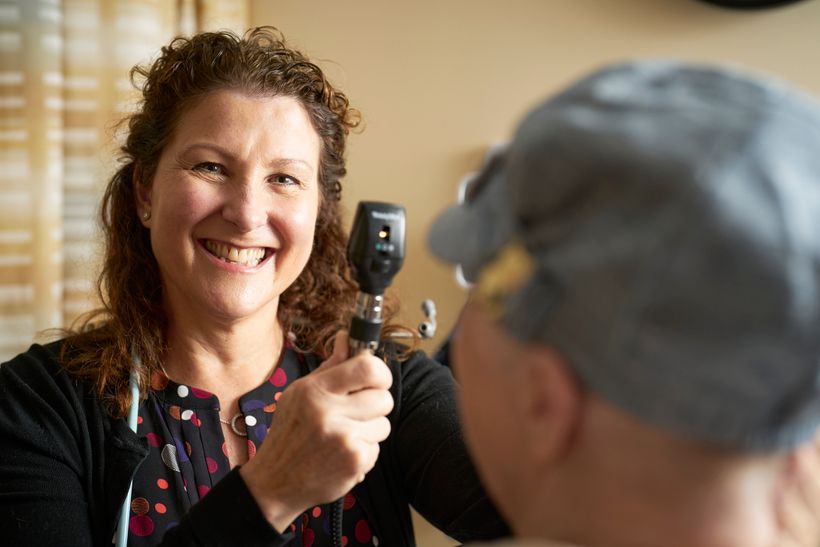
ChristianaCare’s Helen F. Graham Cancer Center & Research Institute is the recipient of The Association of Community Cancer Center’s (ACCC) 2022 Innovator Award for its person-centered model of care that embeds a primary care provider in the cancer center for patients undergoing treatment who do not have a primary care provider. The Graham Cancer Center is among the first cancer programs in the nation to offer a program of this kind to its patients. “Earning the prestigious ACCC Innovator Award for our primary care practice is an accomplishment that belongs to our entire cancer care team which has worked long and hard to develop this unique program designed to improve our patients’ long-term health,” said Nicholas J. Petrelli, M.D., Bank of America endowed medical director of the Helen F. Graham Cancer Center & Research Institute. Patients diagnosed with cancer frequently have one or more concurrent chronic diseases, including heart disease, high blood pressure, COPD and diabetes. Cancer treatment can make these chronic medical problems worse, so it is important for patients to continue to see a primary care provider during their treatment, which can also help eliminate unnecessary emergency department visits. The new Primary Care Practice builds on the success of the Graham Cancer Center’s Oncology Express Unit, a program that offers urgent care to cancer patients in distress during treatment. “We conducted an informal survey that found as many as 15 percent of our patients did not have their own primary care provider,” said Cancer Program Clinical Director Cindy Waddington, MSN, RN, AOCN. “Having a primary care provider onsite working closely with the entire cancer care team helps ensure that essential patient care beyond cancer treatment is not delayed,” Waddington said. Patients are referred to the practice by their oncologists for any non-cancer health concerns. Since opening in January 2021, the program has received referrals to care for 234 patients. “Primary care in oncology has been a long-standing challenge for cancer patients and cancer programs,” said Family Nurse Practitioner Debra Delaney, RN, MSN, ACNS-BC, FNP-BC, who provides primary care services at the Graham Cancer Center. “Thankfully, we’ve been able to solve that challenge by addressing the whole person and promoting healthy living for the long-term.” Delaney helps patients manage their chronic medical conditions by monitoring their labs, refilling prescriptions and coordinating and communicating about any referrals they many need. “Following their cancer treatment, we help our patients transition to another practice, so they can continue to receive care for their primary care needs,” she said. The ACCC featured the program on its BuzzBlog. According to the ACCC, Innovator Award winners demonstrate the ability to advance the goals of improving access, quality and value in cancer care delivery, while also providing replicable solutions for other cancer programs and practices.
