
Experts Matter. Find Yours.
Connect for media, speaking, professional opportunities & more.

The Meaning Behind Hanukkah Meals
As families around the world prepare to celebrate Hanukkah, University of Rochester professor Nora Rubel can expound on the deeper stories behind the holiday’s foods, rituals, and evolving traditions. Rubel, a scholar of Jewish studies and chair of the Department of Religion and Classics, specializes in how Jewish identity is expressed through everyday practices and food. For instance, her work explores how dishes like latkes and sufganiyot (fried jelly donuts) carry meanings beyond the kitchen. “Food is one of the most powerful ways communities tell their stories,” Rubel says. “During Hanukkah, the foods we make and share help us remember the past, celebrate resilience, and connect with one another.” Hanukkah runs from Dec. 14 through Dec. 22 this year. Oil at the Heart of Hanukkah: Why Fried Foods Matter Many people recognize the holiday through its signature fried foods. But Rubel notes that these traditions developed over centuries and vary widely across cultures. • Ashkenazi Jews typically serve potato latkes. • Sephardic and Mizrahi communities prepare sufganiyot, bimuelos, zalabiya, and other fried sweets. • Some families incorporate dairy dishes, drawing on medieval interpretations of the Hanukkah story. What unites these foods, Rubel explains, is the symbolism of oil, which commemorates the miracle at the heart of the Hanukkah story. Many Ways to Celebrate Rubel emphasizes that Hanukkah is not a monolithic holiday. Its rituals, from lighting the menorah to singing blessings and exchanging gifts, vary across communities and generations. Some families add new traditions such as: • Hosting “latke tasting” gatherings • Experimenting with global Jewish recipes • Incorporating social justice themes into nightly candle-lighting • Sharing stories of family immigration and heritage “Hanukkah is a living tradition,” Rubel says. “It continues to evolve, and food is one of the ways people reinterpret what the holiday means for them today.” A Resource for Understanding Jewish Life Rubel’s broader scholarship focuses on American Jewish life, cultural memory, and how religious identities are shaped in the home as much as in the synagogue. She is a go-to resource for journalists covering holiday practices, regional Jewish cuisines, and the meaning behind rituals that shape the season, and is featured in “Family Recipe: Jewish American Style,” a new documentary now airing on PBS stations across the United States. Rubel is available for interviews throughout the Hanukkah period and beyond, and can speak to how traditions differ in Jewish communities around the world, the evolution of Hanukkah in American culture, and contemporary interpretations of rituals and identity. Click on Rubel's profile to connect with her.



Budget 25 – initial reactions related to personal financial wellbeing
As the director of the Aston Centre for Personal Financial Wellbeing, and a professor of taxation, I obviously take particular interest in the annual budget day as it sets a tone for much of the personal finance changes that are likely to occur in the near future. The lead up to this year’s budget had unprecedented levels of speculation with much of the press and commentators trying to get attention with ever more it seemed wilder guessing of what the chancellor might do – largely unhelpfully and worrying people and the markets unnecessarily. Almost all of this proved wide of the mark as the budget didn’t increase any of the main taxes at all, and where it might nudge National Insurance contributions (NICs) up for some, this won’t be for a few years and only in a small area (pension payments for employees) that won’t actually affect most people. Small and cautious steps to reform The reason for all this speculation of key changes needed was that everyone suspected there was a big hole in the national finances. This was shown not to be the case. In fact, predictions provided in the budget documents are we’d in fact be in budget surplus by the end of this parliament period even before the changes announced take effect. This was a surprise to many and meant the chancellor could actually focus on at least some small and cautious steps towards reforming how our tax, benefit and government spending systems work. What she proposed therefore is currently predicted will raise circa £26bn and give the government ‘head-room’ to cope with economic changes later rather than needed to fill a feared financial black hole now – good news all round! This meant what we actually got was lots of smaller changes with fewer ‘rabbit out of a hat’ big tax surprises than we have had in recent years – a welcome steadying trend I hope will continue. She also promised some short-term spending that can be paid for with a combination of extra borrowing now and with increased taxes later – again a trend of recent budgets. If these tax changes actually happen in the end, then it will be down to what happens between now and when these were proposed to commence – by no means a guarantee these will ever happen. Later budgets, or other rule changes in the future, could easily retract or counter them (all chancellors like to announce planned tax changes aren’t going to happen for obvious political gain reasons!). Income tax changes The largest share of the extra £26bn raised will come from extending the income tax thresholds for a further period – now to 2031. These have been fixed (at £12,570 for example for the point at which income tax starts to need to be paid on personal incomes) since at least 2023, some well before this. This matters, as, when wages rise due to inflation, people are not better off in reality (you get more income but things cost more), but may end up paying more tax than before as the thresholds haven’t increased with inflation to the same degree (what we call ‘fiscal drag’). As such, holding these thresholds fixed for longer will raise extra money for the government (predicted to be over £12bn a year in 2030-31 for example) – largely unnoticed as to many it doesn’t feel like the tax rise it clearly is. The threshold fixing extension announced today will mean that as many as 700,000 more people will start to pay some income tax when they wouldn’t currently, and up to 1 million more people will start to pay higher rates of tax than currently – all without being actually better off in real terms. Some call this stealth tax, but it feels very real when it starts to affect you if your total taxable incomes fall near these threshold levels. There were in total more than 70 other tax measure changes in this budget – a huge number and lots to get your head around. However, most of these will not affect most people and are relatively small in nature – targeted at making the tax system a little fairer (i.e. those on higher incomes, with more savings, dividends, receiving additional income from property they own etc – paying more taxes as a proportion of the total amount raised in tax from all sources). This is clearly welcome news (at least for those not being asked to pay this extra) in the current climate. The biggest changes for financial wellbeing As a research centre focusing on individual and family financial wellbeing, what do we think are the specifics announcements made that are most likely to affect people – several headline announcements are worth highlighting: - 1. The removal of the two-child limit on benefit eligibility is obviously a key headline – long touted as a key reason larger families are much more likely to be in poverty than smaller families. This is a key change that many Labour MPs wanted to see happen and the chancellor has delivered on it. This is very welcome news – although it won’t start to affect these families until after April 2026 to give time to bring these measures into place – but then predicted to lift 450,000 children out of poverty. 2. As part of making the tax system more progressive, a brand-new tax was announced on very expensive houses in England – to be snappily called the High Value Council Tax Surcharge (or HVCTS) – although expect it to be called the ‘mansion tax’ by everyone! The UK’s main local tax (council tax) isn’t going to be reformed as such in this change – despite being the target of much speculation that it is just too regressive to leave unreformed any longer after we haven’t revalued houses in most of the UK since 1991. This will instead be an additional tax, commencing in April 28, on those whose properties are valued (now) at £2m or more – with higher rates rising to those with properties over £5m. Clearly this will affect relatively few in most of the UK (only expected to affect 1% of properties nationally), but will affect some and will raise extra revenues (expected to raise circa £400m+ a year) to directly support provision of local services – much needed in many parts of the UK. 3. New taxes on electric cars – given fuel duty is not paid by those who drive electric cars (as they don’t buy petrol or diesel) there have been calls for new taxes to be charged to electric car drivers. While these cars may be better for the environment when driven, they continue to wear roads and contribute to congestion. The government is proposing a per mile charge from April 28 (to be called the Electric Vehicle Excise Duty or eVHD) for these vehicles which will be painful for electric car divers – not least as this cost as not known when purchase decisions were made. No-one likes a tax charged on something you have already made the decision to buy so expect this to be unpopular. It is proposed currently to cost EV drivers around £20/month – about half the rate of fuel duty on average – and expected to raise circa £2bn a year by 2030-31. I expect this tax will become more nuanced in future perhaps as technology enables perhaps different charges to be applied to use of congested city roads compared to open rural driving perhaps - we will see. 4. National Insurance deductibility for pension contributions via salary sacrifice schemes operated by many employers for their employees is to be capped at £2,000 (although only from April 29 – so no immediate effect). This now very widely used approach to making pension contributions if you are an employee that in effect avoids you having to pay NIC on this income going into your pension. For those with larger pension contributions the bit that can be made before NIC is due on the extra this will be capped in the future to £2,000 per year – again affecting those who receive higher pension contributions most and affecting those at the bottom of the income spectrum, little if at all (74% of employees are predicted not to be affected). Is this a breach of the Labour manifesto promises not to increase the main taxes? For some it certainly seems that way. What didn’t happen? There are many smaller measures to explore, or ones that are not coming into effect for the next year or more that might have been missed from the news headlines but that will almost certainly affect lots of people. To name just a few (including highlighting several things NOT going to happen – which will obvious not save people money per se, but help by not costing them more): - above inflation increases to national minimum (‘living’) wage for all age groups from April 2026 (+4.1% for those over 21)– although still not raising this to ‘real living wage’ levels. further extension of holding off on the 5p/litre fuel duty rise not increasing prescription charges (staying at £9.90 for the next year) confirming state pension rises by 4.8% from next April (worth £575/year) confirming £150 winter fuel payments again this winter to over 6 million homes freezing regulated rail fares – preventing the usual annual increases from January (the first time this has happened in 30 years) extending the government’s Help to Save scheme to more benefit recipients than previously No immediate impact for most Overall, this is therefore probably a welcome budget for many, those on lower incomes will likely get the most from these measures, if all are applied as proposed, but most won’t see much of an immediate impact immediately – and with the largest benefit likely to all on larger families in receipt of benefits from next April.


Why Are Canadian Banks Not Protecting Seniors? The $40 Billion Dollar Question
After an 89-year-old Victoria man lost $1.7 million to phone scammers despite bank red flags, retirement expert and authour, Susan Pimento, exposes a critical protection gap: while U.S. banks like Bank of America offer "Trusted Contacts" (designated people banks call to verify suspicious transactions) for all accounts, Canadian banks restrict this safeguard to investment accounts only—leaving everyday banking vulnerable where most fraud occurs. In Canada, senior fraud is vastly underreported (RCMP estimates only 5-10% surface), and banks are treating this as a cost issue rather than a moral crisis. Susan Pimento is available for interviews to discuss practical solutions, industry insights from her decades of work within financial institutions, and why Canadian banks are failing to implement a simple fix that could save seniors' life savings. Connect with her directly through ExpertFile to schedule TV, radio, podcast, or print interviews. As I was polishing this post for Canadian Financial Literacy Month, another senior fraud story flashed across my screen. This one stopped me cold. According to this CBC story, an 89-year-old man in Victoria, B.C., was tricked into handing over nearly $1.7 million of his life savings in a months-long phone scam. The caller claimed to be from the fraud department at CIBC and said he was helping with a national money-laundering case. (Spoiler: he wasn't.) Despite red flags and staff awareness, the bank still allowed large in-person withdrawals. He was told to buy gold bars — yes, actual gold bars — with drafts of up to $395,000, which couriers then collected like some twisted Uber Eats retirement fraud. Every week in Canada, we see another heartbreaking headline: a senior sends thousands, sometimes millions, to a scammer pretending to be their grandchild, the CRA, or — the ultimate irony — their bank. These scams targeting seniors don't require fancy hacking. They rely on fear, isolation, and misplaced trust. Once the money's gone, it's gone—no refund policy. And here's the kicker: what we're reading about is just the tip of the iceberg. For seniors, fraud now ranks as the top crime, and most fraud goes unreported—especially in this demographic. In a previous post, I showed how the data suggests the real figures could be 10 to 20 times higher than what's officially reported. The RCMP estimates that only 5-10% of fraud victims come forward. Many victims never speak out due to embarrassment, fear, or confusion. Translation? For every story that makes the news, countless others suffer in silence. How The Banking Industry Can Actually Fight Fraud I've worked within financial institutions for decades. Let's just say I understand how the process works. Banks have billion-dollar tech stacks, layers of compliance, and advanced fraud detection systems that can flag a suspicious $47 transaction in milliseconds. But the solution for this type of fraud isn't a multimillion-dollar algorithm or a new "AI-powered fraud prevention dashboard." Instead, it's a human-based approach called a Trusted Contact. What's a "Trusted Contact," Anyway? It's not an app, a chatbot, or some new gadget that requires a firmware update every Thursday. It's a person. Someone you trust — a family member, attorney, accountant, or another third-party who you believe would respect your privacy and know how to handle the responsibility of communicating with your bank in your best interests if something suspicious occurs. They don't access your money or view your accounts. They can't see that you spent $47 at the LCBO last Tuesday (Your secret is safe). They're simply your human safety net — a fraud wing person, if you will. The Origins of the Trusted Contact The concept began in the U.S. in 2018, when FINRA mandated investment firms to request a Trusted Contact Person. Canada followed in 2022, when the Canadian Securities Administrators introduced similar guidance for investment accounts. What things can be discussed with a trusted contact? As its name implies, a Trusted Contact is a designated person who is inherently trusted by the individual (and has no authority to transact business on a client’s account), so there is little to no danger that any reasonable disclosure would violate a client’s trust or give rise to any material issue.” What Canadian Banks Are Doing...And Not Doing Here's the good news. If you invest through Wealthsimple, RBC Direct Investing, TD Direct, or BMO InvestorLine, you can already designate a Trusted Contact. But here's where it gets ridiculous: RBC Direct might have that security feature — but your regular RBC chequing account? Not so much. That protection vanishes the moment Mom or Dad logs into their everyday banking. And that's where most fraud actually occurs. It's like installing a state-of-the-art security system on your front door but leaving the back door wide open with a welcome mat that says "Scammers Enter Here!" Fraud in Canada for Banks is Still a Budget Item: Not a Moral Crisis Here's the uncomfortable truth: For banks, fraud is considered a "cost of doing business." And since most of those losses are borne by customers, not the bank, there isn't much urgency to innovate. The Big Five earned over $40 billion in total last year. They have the means to care. They're not particularly motivated to actually do so. The Big Opportunity for Banks: Add a Little Humanity to the System Banks like to boast about their AI, blockchain, and next-gen fraud analytics. But most scams don't occur because of breached firewalls — they happen because of breached hearts. A Trusted Contact provides an additional simple, low-tech layer: human verification. Picture this: The bank spots an unusual transaction — a large new payee, an international wire transfer, or a sudden gold-bar purchase (it happens). Instead of sending another automated text alert, the system could ask: "This looks unusual. Would you like us to confirm with your Trusted Contact before proceeding?" or “Just a heads-up: scammers often use urgent or unusual requests. Prefer we run this by your Trusted Contact before we proceed?” That's it. One additional step. One extra set of eyes. One brief conversation could save someone's life savings. This isn't about limiting independence — it's about safeguarding autonomy. Ensuring your decisions are genuinely yours, not the scammer's. Banks could even call it "Senior Protection Mode." I'd sign up tomorrow. Heck, I'd pay extra for it. (Shhh, don't tell them that.) Here's the Proof Trusted Contacts Work: Bank of America Did It In 2022, Bank of America became the first major bank to extend Trusted Contacts beyond investment accounts to everyday banking clients. Customers can now add a trusted person the bank can call if something seems wrong, if they can't reach you, or if staff suspect undue influence. That person can't access your money — they're just the human speed bump before disaster: one simple form, one phone number, and much heartbreak avoided. If Bank of America can do it, why can't ours? Canadian banks already have the tech — and indeed the profits — to make it happen. What's Holding Canada's Banks Back? Cue the usual excuses: "Our legacy systems can't handle that." Sure — some of your code still thinks "Y2K" is an active threat. But if you can build an app that tracks my latte points and sends me notifications about my "spending insights," you can add one field for a Trusted Contact. "Privacy laws make it risky." Nope. FINRA and the CSA already provide safe-harbour protections. With consent, banks can legally contact a Trusted Person. Just add a checkbox. You love checkboxes. You make us check dozens of them every time we update our password. "Customers haven't asked for it." They're asking now. Loudly. With megaphones. And pointing at stories like the Victoria gentleman who lost $1.7 million in gold bars. The business case has historically been weak because most fraud losses affect customers, not the bank's balance sheet. But here's the catch: every fraud story damages trust. And in banking, trust is supposed to be the core of the business. For Canadian Banks There's a Competitive Advantage in Caring Rolling out a Trusted Contact feature isn't just good ethics; it's good business. Imagine the marketing campaign: "We don't just protect your password — we protect your peace of mind." Seniors would love this. So would their kids. That's multi-generational loyalty money can't buy. If EQ Bank or any challenger brand wanted a PR home run, this would be it. It's Time to Take Action on Fraud To the Banks: Stop waiting for regulators to force your hand. Lead. Be the first to offer Trusted Contacts for all customers — not just investors. You have the framework, the talent, and the budget. You absolutely do not need another consultant to tell you this is the right thing to do. To Policymakers: The Financial Consumer Agency of Canada should update its Code of Conduct to include a mandatory Trusted Contact option for all customers, safe-harbour rules allowing banks to pause suspicious transactions, and annual public reporting on outcomes. Because sunshine is the best disinfectant, even in banking. To Consumers: Don't wait for policy — be the policy. Ask your bank today if you can add a Trusted Contact. If they say no, ask why not — and post it. Loudly. Talk to your family. Choose your Trusted Person now. Write your MP or MPP and ask why U.S. banks protect seniors better than ours. Remember the $3 ATM Fee Rebellion? Canadians once revolted over paying $3 to access their own money at ATM's. We later got no-fee accounts, digital challengers, and a whole new generation of more innovative banking. If we can rally over an ATM fee, surely we can rally to protect our parents and grandparents from losing their life savings. Fraud isn't an inevitable part of aging — it's a solvable problem. And Trusted Contacts are one of the simplest, most human solutions we have. Don't Forget Two-Factor Authentication for the Soul Adding a Trusted Contact won't stop all fraud — let's be clear about that. But it will go a long way toward slowing it down, adding a common-sense pause, and potentially saving even one senior from losing any part of their hard-earned money. It's unfortunately too late for that gentleman and his family in BC, but it's not too late for countless others. This won't crash legacy systems or drain bank profits. It just adds a little humanity back into banking — right where it belongs. Because the best kind of security isn't just two-factor authentication. It's two people who care. And if we don't care about protecting our elders, who exactly do we care about? Sue Don’t Retire…Re-Wire! Want to become an expert on serving the senior demographic? Just message me to be notified about the next opportunity to become a "Certified Equity Advocate" — mastering solution-based advising that transforms how you work with Canada's fastest-growing client segment.


Holiday Anxiety Is Real — Here’s How People Can Actually Stay Sane This Season
The holidays promise joy, warmth, and “quality time,” but for many people they also deliver a cocktail of stress, expectations, forced cheer, family politics, and receipts longer than a CVS bill. Between travel chaos, financial pressure, social burnout, and attempting to assemble toys designed by engineers who clearly hate humans, holiday anxiety is soaring. The good news: experts who study mental health, behaviour, and stress management say there are ways to keep your nerves intact — and maybe even enjoy yourself along the way. Why the Holidays Stress People Out (Science Says It’s Not Just You) Adults report higher levels of stress in November and December than almost any other time of year. Common triggers include: Financial expectations: gifts, gatherings, travel, meals, and the sudden belief that every present needs to be “meaningful.” Time pressure: too much to do, too few days on the calendar. Social overload: introverts, extroverts, and “I’m-just-here-for-the-food-verts” all feel it. Family dynamics: every family has at least one person who always “starts something.” Nostalgia vs. reality: the pressure to create a “perfect holiday,” despite the fact that perfect holidays only exist in movies and greeting cards. Experts note that people often skip their routines (sleep, exercise, healthy meals) and then wonder why their stress spikes. The season demands more of people while simultaneously removing their coping mechanisms. Practical Ways to Reduce Holiday Anxiety — Backed by Psychology (and Common Sense) 1. Lower the Bar: “Good Enough” Is a Holiday Gift to Yourself Researchers consistently find that perfectionism fuels anxiety. A store-bought pie, a slightly messy house, or wrapping gifts in whatever paper you can find at 11 p.m. will not derail the season. 2. Set Boundaries (Even With the Loud Relatives) Experts often emphasize that saying “no” is one of the most effective stress-management tools. Fewer events, fewer obligations, fewer emotional landmines. 3. Budget Before You Shop Financial therapists note that anxiety drops when people pre-set limits and stick to them. You don’t need a MasterCard bill that arrives in January carrying the emotional weight of a Greek tragedy. 4. Protect Your Recharge Time A short walk, fresh air, or 10 minutes of solitude is not selfish — it’s psychological maintenance. Mental-health researchers recommend intentionally scheduling downtime before the calendar fills itself. 5. Keep Expectations Realistic Not every moment will be magical. Not every conversation will be smooth. Not every plan will unfold as imagined. Experts say acceptance, not forced positivity, lowers stress significantly. 6. Focus on Meaning, Not Perfection Studies show that people feel calmer when they shift their focus toward connection, gratitude, and small moments rather than elaborate performances of holiday cheer. Holiday Angles for Journalists The psychology behind holiday anxiety — what triggers it and why it’s so universal How family systems and old patterns surface at holiday gatherings The economics of holiday stress — debt, spending pressure, and emotional spending How introverts (and extroverts) navigate holiday overload differently Why holiday nostalgia makes people emotionally sensitive Healthy boundary-setting during family events How immigrant, multicultural, and blended families are reshaping holiday expectations Let's get you connected to an expert. The holiday season is increasingly fast-paced, commercialized, and socially demanding. Many people feel pressure to present a perfect life at a time when burnout, financial strain, and mental-health challenges are higher than ever. Helping audiences understand holiday stress — and giving them practical, research-grounded strategies — can make a measurable difference in their emotional well-being. For journalists covering mental health, family dynamics, holiday culture, or stress-management trends, ExpertFile’s roster of psychologists, counsellors, behavioural scientists, and wellness experts can offer insights, interviews, and real-world advice to support your reporting. Find your expert here: www.expertfile.com

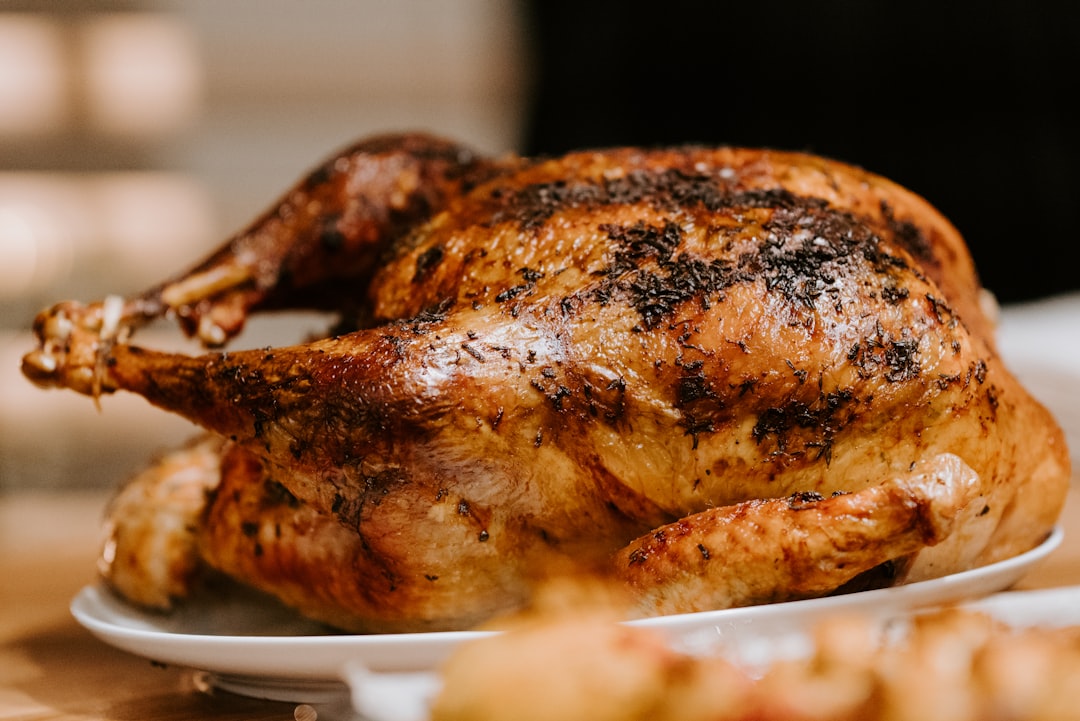
#ExpertSpotlight: Why Do We Eat Turkey at Thanksgiving?
Thanksgiving is all about tradition — family gatherings, fall colours, and the annual moment where someone at the table says, “I swear the turkey was bigger last year.” But why this bird? Why not ham, roast beef, or something simpler that doesn't require hours of basting, brining, and YouTube tutorials from chefs with suspiciously perfect kitchens? It turns out, the turkey’s rise to holiday fame is a tale packed with practicality, politics, early marketing, and a few misconceptions that have stuck around longer than the leftovers. Turkey: The Accidental Icon While popular myth suggests the Pilgrims dined on turkey in 1621, historical accounts are vague. They definitely ate wild fowl — which could’ve been turkey, duck, or goose. But practical realities sealed the deal later on: Turkeys were plentiful: In the 1800s, wild turkeys roamed North America in massive numbers. They were big, available, and cheaper to raise than cows or pigs. Big bird = big table: A turkey could feed a crowd without sacrificing dairy-producing animals. Practicality wins again. Seasonal timing: Turkeys matured in the fall, just in time for an annual feast. Nature set the menu before Pinterest ever could. Sarah Josepha Hale: The 19th-Century Queen of Thanksgiving One of the biggest reasons turkey ended up on the national table? A woman named Sarah Josepha Hale — journalist, author, and relentless advocate for making Thanksgiving a national holiday. Hale spent decades campaigning, writing hundreds of letters, and filling her magazine with Thanksgiving recipes (including turkey). When Abraham Lincoln finally proclaimed the first national Thanksgiving in 1863, Hale’s influence helped cement turkey as the centrepiece. In other words: The “Mother of Thanksgiving” was also the Mother of Modern Turkey Marketing. The Power of Tradition (and Leftovers) By the 20th century, turkey was the default. Norman Rockwell painted it. Grocery stores promoted it. Manufacturers created special roasting pans for it. And millions of families quietly wondered whether it was worth the effort. Yet the turkey holds its place because: It symbolizes abundance It satisfies enough people to avoid mutiny Its leftovers power the real Thanksgiving tradition: sandwiches Great Story Angles for Journalists The forgotten role of Sarah Josepha Hale — the woman who shaped a national holiday How turkeys became big business — and how Thanksgiving drives Canada/U.S. poultry economics Turkey myths vs. facts — no, tryptophan alone doesn’t knock you out How immigrant communities reinterpret Thanksgiving menus What the “perfect” turkey says about North American food culture Why It Matters Today Thanksgiving remains a cultural anchor — a moment where millions gather over a shared meal whose main dish has become iconic, symbolic, and occasionally overcooked. Understanding how turkey became the star of the table opens conversations about food history, national identity, environmental sustainability, cultural adaptation, and of course… the annual debate over stuffing inside or outside the bird. For journalists exploring food history, cultural traditions, or holiday trends, culinary experts on ExpertFile can provide deeper context, historical insight, and delicious perspectives to bring your stories to life. Find your expert here: www.expertfile.com

Worked Through Thanksgiving? That’s a Burnout Red Flag, Not a Badge of Honor
If your Thanksgiving weekend included answering work emails from a guest room, sneaking Slack replies between courses, or “just finishing one thing” while your family watched a movie, you’re not alone. But Craig Selinger, an executive function coach who works with high achievers, says it’s a warning sign, not proof of commitment. “More and more of my clients tell me they ‘took time off’ - but then admit they were checking in on everything from their phones,” Selinger says. “They come back to work exhausted, frustrated with their families, and confused about why they don’t feel refreshed.” He doesn’t see this as a time-management failure. He sees it as a boundary failure fueled by an always-on culture. “Old technology stayed in one place,” he explains. “A desktop in a home office was easy to walk away from. Now, work follows you onto the couch, into your in-laws’ living room, and onto the plane ride home. Unless you deliberately decide when you’re not available, the default is ‘always working, never actually off.’” After holidays like Thanksgiving, Selinger helps clients reflect on a few key questions: Did you actually have any fully work-free hours or days? Did your phone stay with you during meals and family time - and did you feel pulled to check it? Do you feel like you rested, or like you just changed locations while staying on call? “If the honest answers are uncomfortable, that’s valuable data,” he says. “It means your relationship with availability needs attention.” Instead of telling high performers to “just unplug,” Selinger works with them to redesign their availability ahead of the next holiday crunch: Setting clear out-of-office messages that specify when they’ll be offline and when they’ll check in. Agreeing with their team on what counts as a true emergency and which channel should be used for it. Creating short, non-negotiable deep-rest windows - for example, no work apps from 5-9 p.m. on certain days, or one weekend day that’s completely work-free. “When people see that they can set smart boundaries and still be respected and effective, that’s usually the turning point,” Selinger says. “They stop confusing constant responsiveness with real value.” With December’s year-end push approaching, he believes now is the time for high performers to recalibrate. “Treat this past Thanksgiving as a test run,” he suggests. “If you didn’t get the rest you needed, don’t just shrug it off. Use it as the moment you decide to draw a clearer line before the next holiday - for your performance and for the people who actually sat across the table from you.” About the Expert Craig Selinger is an executive function coach who works with founders, executives, families, and high-achieving students. He specializes in digital distraction, productivity, and helping people build realistic boundaries in an always-on work culture. Craig is part of the Executive Function Coaching Community at Offline.now



Experts share practical guidance for a healthier, happier holiday season
The holiday season is a time of tradition, connection and celebration – but it also brings its own set of challenges, from food safety concerns to emotional stress. University of Delaware experts are available to speak with reporters and provide practical, research-backed guidance to help audiences make the most of the season. Avoid common food safety mistakes Holiday meals are a centerpiece of celebration, but preparing them safely is essential. Diane Oliver, UD Health and Well-being Extension agent, has identified the top five mistakes people make when handling and preparing turkey – and how to avoid them. She can offer timely food safety tips to ensure families enjoy their meals without risk. Protect your mental well-being The holidays can stir up complex emotions as families come together. UD psychology professors Franssy Zablah and Zachary Meehan can provide expert insight into how to maintain mental wellness, manage stress, and set healthy boundaries during holiday gatherings. Find genuine holiday joy Beyond checklists and shopping, how do people actually experience lasting happiness during the holidays? Assistant professor Amit Kumar can share research-backed strategies on pursuing meaningful, authentic joy rather than fleeting holiday pressure. Preserve your decorations for years to come Family ornaments and decorations often carry sentimental value. Art conservation expert Debra Hess Norris can explain how to properly store and care for holiday decorations so they remain vibrant and intact year after year. Connect with these experts All of these University of Delaware experts are available for media interviews and commentary. Reporters and editors interested in speaking with them can reach out to mediarelations@udel.edu for a quick response and support.



Is Your Phone About to Ruin Thanksgiving Dinner?
Thanksgiving is supposed to be about connection. But for a lot of families, the quiet guest at the table is everyone’s phone. Licensed marriage and family therapist Gaea Woods says the damage rarely comes from one big fight about tech. It’s the drip of small moments: someone telling a story while another person scrolls, a partner checking notifications mid-sentence, a teen disappearing into their screen. “Every time that happens, the signal is: my phone has part of my attention right now,” Woods explains. “Over the course of a holiday, that can add up to people feeling unseen or unimportant.” Instead of laying down hard-and-fast “phone rules” for the whole family, Woods suggests starting with your own intentions and leading by example. One simple move: say it out loud. “I’m going to leave my phone in the other room so I can focus on being present and spending time with you all. I invite you to do the same.” “There’s no pressure, no shaming,” Woods says. “You’re naming what matters to you and opening the door for others to join you.” Woods emphasizes that the goal isn’t perfection. It’s micro-moments of presence: a few minutes of eye contact, one conversation where everyone’s really listening, a shared laugh that isn’t about something on a screen. “Most families don’t need another rule,” she says. “They need a way to say: I care about you, and I want more of you here with me right now. Thanksgiving is a beautiful time to practice that.” About the Expert Gaea Woods is a licensed marriage and family therapist who helps couples and families navigate communication breakdowns, digital “third-wheel” dynamics, and everyday phone habits that quietly erode intimacy - especially during high-stress times like the holidays. Gaea is part of the Offline.now Relationship Stress expert community.


Want a Better Thanksgiving? Start With a Screen Break
For many families, Thanksgiving weekend has quietly become a four-day screen marathon: football, streaming, shopping, scrolling through sales, and group chats buzzing in the background. Personal development coach Mark Diamond has spent decades seeing what happens when people take a different approach. After running a tech-free camp for 25 years, he’s watched kids and adults transform when phones disappear and the outdoors becomes the main event. “You can actually feel nervous systems reset,” he says. “People sleep better, they laugh more, and they have the kinds of conversations that just don’t happen when everyone’s half-present on their devices.” Diamond believes Thanksgiving is one of the easiest times of year to test what he’s learned - without asking anyone to give up the game or the parade. “You don’t have to cancel screens,” he says. “You just have to make sure they’re not the only thing you remember about the weekend.” He suggests families experiment with one simple offline tradition they can repeat every year: Everyone helps with the meal - put on some good music and try to learn to cook! Hear family stories - instead of talking about trending videos, have some questions ready to learn about the lives of relatives you don't see so often. A tech-free walk before or after dinner - leave phones at home or in pockets on airplane mode. An outdoor game (even in colder weather) - touch football, a scavenger hunt for younger kids, or a quick “around the block” relay. A “no scroll, just snap” rule - photos are fine, but posting and scrolling wait until the next day. When people are already together, Diamond notes, it’s actually easier to introduce new traditions. “You can say, ‘This year, let’s try 30 minutes of no screens while we do X.’ It feels like a shared experiment, not a punishment.” The real payoff, he says, isn’t just fewer hours online. It’s the memories and inside jokes that come from doing something real together, not just watching the same screen side by side. “We’re not going to remember every highlight reel or Black Friday deal,” Diamond says. “We remember the time we got caught in the rain on a walk, or when somebody’s throw went wildly off course and everyone burst out laughing.” In his coaching work, Diamond helps people who feel “glued to their phones” design lives where brief, meaningful offline moments are built in — starting with accessible opportunities like holiday weekends. “Thanksgiving is a perfect low-stakes test. If one tiny offline tradition makes the day feel better, that’s powerful feedback. You can carry that forward into December, and into the new year.” About the Expert Mark Diamond is a personal development coach and founder of a long-running tech-free camp. He focuses on outdoor wellness, sustainable behavior change, and helping people reconnect to happiness and real-world experiences in an age of constant screens. Mark is part of the Offline.now expert directory, contributing to the community supporting better parental modelling for device use.


The keys to holiday happiness: Gratitude, giving and genuine connection
The holiday ads insist that it’s the time for cheer, buying gifts and reconnecting with friends and family. Various factors – social media, remote work, politics – have made that more difficult than ever. There is hope: Research by the University of Delaware's Amit Kumar shows the path to genuine happiness this season. Kumar, assistant professor of marketing in UD's Lerner College of Business & Economics, offered the following three strategies. Gratitude: • Gratitude and giving thanks has benefits for both the giver and the receiver. It makes both parties feel good, and provides a real-life human connection at a time when those are hard to come by. "Investing in doing is a better route to social connection than spending on having." - Amit Kumar A shift in gift buying strategy: • Experiences can make for better gifts than trinkets, coats, jewelry or other items. There's a better chance of social connection if you're doing something rather than giving something. Type less, talk more: • It's important to keep in touch, but reconnecting during the holidays through a phone call or face-to-face interaction (virtually or in person) has a better chance of strengthening our bonds. More information on Kumar, who is also an assistant professor of psychological & brain sciences, can be found on his website. To contact Kumar directly and arrange an interview, visit his profile and click on the contact button. Interested reporters can also send an email to MediaRelations@udel.edu.