
Experts Matter. Find Yours.
Connect for media, speaking, professional opportunities & more.
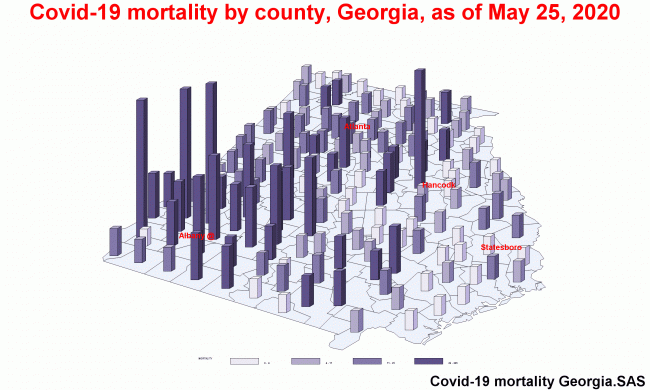
Graduate students in the Jiann-Ping Hsu College of Public Health at Georgia Southern University analyzed mortality data to reveal that a county in southwest Georgia is dealing with deaths from COVID-19 at a rate higher than most other counties in the country. The students found that the mortality rate of 305 per 100,000 residents (as of May 28, 2020) for Terrell County in southwestern Georgia, is 50% higher than that of New York state’s Nassau County, the documented highest rate in New York. The three other Georgia counties that are highest in terms of mortality rate are Hancock, Early and Dougherty counties. Three out of these four are in southwest Georgia, around the Albany area. That accounts for almost half of the 10 counties in the United States with the highest mortality rate, which is defined as a measure of the frequency of occurrence of death among a defined population. However, it’s interesting to note that none of Georgia counties reached the top 20 in terms of incidence and the death numbers per 100 confirmed Covid-19 cases, said professor Dr. Jian Zhang, a veteran medical epidemiologist. “Georgia is doing pretty well to stop the spread of the virus, and hospitals in Georgia are doing well to save hospitalized COVID-19 patients. The high mortality rate, in this case, may be deeply rooted in the historical burden of poverty in Georgia,” Zhang said. The findings are part of a service-learning project Zhang led. A six-student group formed the surveillance team that began running a real-time COVID-19 numbers in his Public Health Surveillance class. If you are a journalist covering COVID-19 and would like to learn more about this research taking place at Georgia Southern University – then let us help. Dr. Jian Zhang has worked with the Chinese Centers for Disease Control and Prevention, and the World Health Organization prior to moving to the United States.



And the award goes to … Georgia Southern University receives two Emmy nominations
The National Academy of Television Arts and Sciences Southeast Chapter has recognized Georgia Southern University’s Multimedia Development Center (MDC) with two professional Emmy award nominations. Nominated for the Emmy awards were Art Berger, Best Technical Director for Georgia Southern football, baseball and basketball, and Ben Powell, Best Technical Director for Georgia Southern basketball. Berger, director of the MDC, said the nominations are a result of a collaborative effort among the student and staff team. The MDC’s mission is to provide students with professional opportunities and deliver excellence in media programming. Students working at the MDC receive hands-on experience delivering more than 150 live streaming events a year including commencement and Georgia Southern football. “We are very proud of our collaboration with Georgia Southern Athletics and our two Technical Director 2019-2020 Emmy award nominations,” said Berger. “These awards reflect the quality and the outstanding dedication of our students and our staff in delivering high-quality ESPN programming. We are extremely proud of our continued excellence in bringing Emmy level ESPN programming to Georgia Southern University.” The MDC has previously received eighteen Emmy nominations as well as five professional wins including best director, best sports director, and best technical director, and two Emmy awards for best audio with the Georgia Southern Symphony. The National Academy of Television Arts and Sciences is a professional organization for individuals in the television and broadcasting industry. If you are journalist and would like to know more about this story - simply reach out to Georgia Southern Director of Communications Jennifer Wise at jwise@georgiasouthern.edu to arrange an interview.
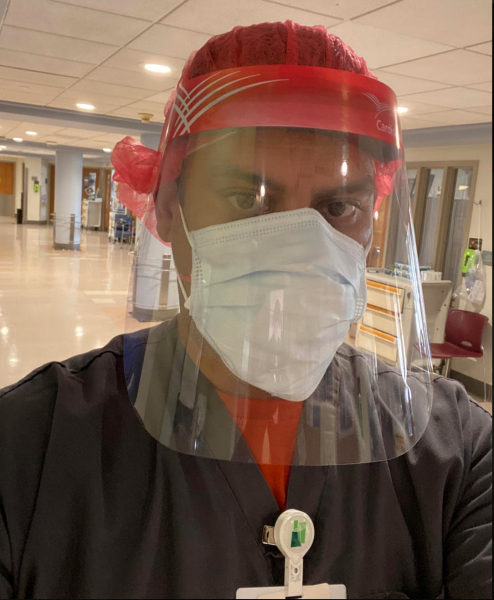
When the first cases of the novel coronavirus arrived in Chatham County, Georgia, Rafael Agosto, who has been a respiratory therapist at St. Joseph’s/Candler Hospital in Savannah for 17 years, had to recalibrate his approach to lung care. “Initially, it was kind of wild because we didn’t know what to expect and how to manage any of these patients,” said Agosto. “What are we looking for, and how do we treat this?” The primary role of a respiratory therapist is to assist patients who have trouble breathing by administering oxygen, managing ventilators and measuring lung function, among other methods. COVID-19 symptoms include fatigue, fever, cough and shortness of breath, and at the onset, Agosto and his colleagues raced to stabilize patients who tested positive for the precarious disease. “We were trying to keep them oxygenated,” he said. “It was sort of like pneumonia, but we wouldn’t treat it like a normal pneumonia because it’s like a deadly pneumonia. Patients were declining very fast so you didn’t have time like you normally would with other patients. And they were of all ages. That’s what was so scary.” While grappling with patient care, Agosto and his co-workers were also dealing with fear for their own safety with exposure to the virus in such close proximity. St. Joseph’s/Candler, Agosto’s employer since he graduated with a B.S. in respiratory care from Georgia Southern University’s Armstrong Campus in 2003, made it a priority to outfit the health care workers with proper personal protection equipment (PPE), Agosto said. “That was scary but they made sure we had what we needed,” he explained. “Safety was the number one key. So the proper PPE, it was everything. We had all of it. A face shield, goggles, scrub cap and masks. They were not comfortable at all. At least here when I wore them I had downtime, but in Boston, holy moly, my face was bruised.” Agosto registered for a four-week rotation with a crisis nurse staffing company that placed him at Good Samaritan Medical Center in Brockton, Massachusetts, a suburb of Boston. COVID-19-related deaths in Massachusetts were outpaced only by New York and California, and Brockton was the second hardest-hit community in the state. “The reason I went was the opportunity to help patients, number one, and to learn how they were managing their ventilator patients there so it could help here,” he explained. On April 19, Agosto reported to the facility, suited up for his first 12-hour shift. “I was in complete shock when I got in there,” Agosto said. “The ICU was full. Every single floor was possible for COVID.” The hospital averaged 80 to 90 cases throughout his stay, and the intensive care unit remained full. Days were hectic and taxing; lunch was an afterthought. His focus was on keeping patients off of ventilators, as global reports show that more than half of ventilated coronavirus patients don’t survive. Yet, “it started becoming hard to get them off ventilators,” and his group often didn’t have a choice but to put patients on 100% oxygen. Stress didn’t let up, but Agosto found moments of solace in interactions with patients. “I would walk into patients’ rooms and they all kept telling me the same thing — they’re scared,” he said. “Because they don’t know anything. It’s like a ghost town because the nurses are running around. Patients felt they weren’t being seen much.” In response, Agosto offered his undivided attention. “That’s one thing that made me feel really good,” Agosto continued. “Just to sit there and talk with them for a few minutes. Or just listening to them. That’s what we’re here for, and they were appreciative.” Agosto returned to Savannah healthy and with a new oxygen delivery device to share with his co-workers at St. Joseph’s/Candler. His manager ordered the devices to serve local patients. “The most important thing I took out of this is that it’s serious, and people are doing everything they can,” Agosto said. “They’re putting their lives in jeopardy for the patients, and I’m glad I had the opportunity to do that.” The accomplishment of his goals in a time of crisis and his continued dedication as a respiratory therapist leave Agosto fulfilled. “I didn’t get sick,” he said. “I helped as much as I possibly could. I did what I wanted to achieve. I’m so happy and blessed because I still love my job.” If you’re a journalist covering COVID-19 and how Georgia Southern University is helping mitigate the spread of this virus – then let us help. Barry Joyner, Ph.D., is the dean of Georgia Southern University’s Waters College of Health Professions - simply click on his icon to arrange an interview today.


Governmental response to the pandemic shuttered much of the regional economy toward the end of the first quarter of 2020, stated Michael Toma, Ph.D., Fuller E. Callaway professor of economics, in Georgia Southern University’s Q1 2020 Economic Monitor. Economic growth ground to a halt as seven of the eight indicators of current economic activity in the region fell. Significant declines were recorded in airplane boardings, hotel sales and port activity. The business forecasting index fell sharply in the first quarter, as initial claims for unemployment insurance skyrocketed during the last week of March. All six leading indicators declined, and further signs of economic damage will be forthcoming in second quarter data, noted Toma. “Looking ahead, the regional economy will experience sharp contraction in the second quarter, likely extending into the third quarter of 2020,” he continued. “The speed of rebound and recovery will be influenced primarily by how people react to governmental easing of restrictions on business activity. More substantial economic recovery will be delayed until such time that business owners, employees and consumers develop a greater level of comfort interacting with each other in the public domain.” If you are a reporter looking to know more about the Georgia economy, including areas such as: Regional expansion Employment trends Tourism and Expected deterioration of local business Then let our experts help with your coverage. Michael Toma, Ph.D., is Georgia Southern University's Fuller E. Callaway professor of economics and is available to speak with media about this topic – simply click on his icon to arrange an interview.
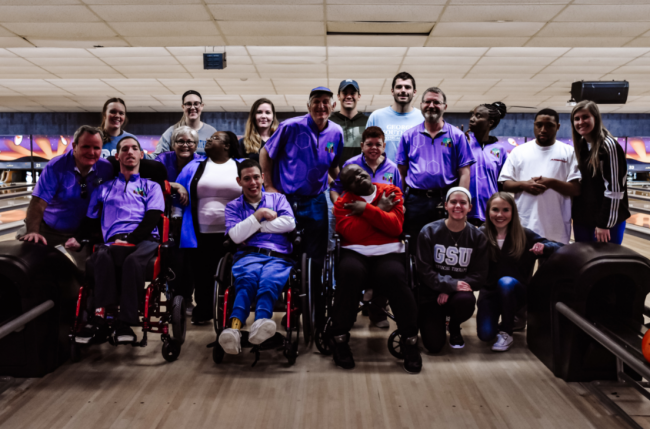
Twelve students in the Doctor of Physical Therapy (DPT) program at Georgia Southern University were awarded scholarships totaling more than $17,000 from the Savannah American Business Clubs (AMBUCS). “This is a recognition of the dedication we have to AMBUCS and helping others in our community,” said scholarship recipient and AMBUCS student leader Alexandra Adams. “Most of us are paying for our education with loans, and the scholarship helps relieve some of the financial burden that comes with pursuing a graduate degree. I am very thankful that AMBUCS has considered me for this scholarship the past two years.” The organization has hosted a League of Exceptional Bowlers on Saturdays for more than 50 years. The DPT students join the Savannah AMBUCS league to assist bowlers with physical and intellectual disabilities to promote an inclusive and competitive environment. In addition to the hands-on experiences, DPT students have the opportunity to interact with different members of the community. “It shows our commitment to the inclusion of our community and our passion for encouraging movement for everyone, despite their limitations, to increase their quality of life,” Adams said. “The program reinforces our classroom training, as well as, enhances our communication skills with others. Each member of our DPT program gets as much of a benefit from attending AMBUCS as the bowlers do.” A century-old membership organization dedicated to helping people with disabilities, the Savannah AMBUCS awards scholarships to students pursuing careers in the allied health professions and who volunteer with AMBUCs. If you’re a journalist looking to cover this story or would like to learn more about the physical therapy and other programs at Georgia Southern University – then let us help. Barry Joyner is the dean of Georgia Southern University’s Waters College of Health Professions - simply click on his icon to arrange an interview today.
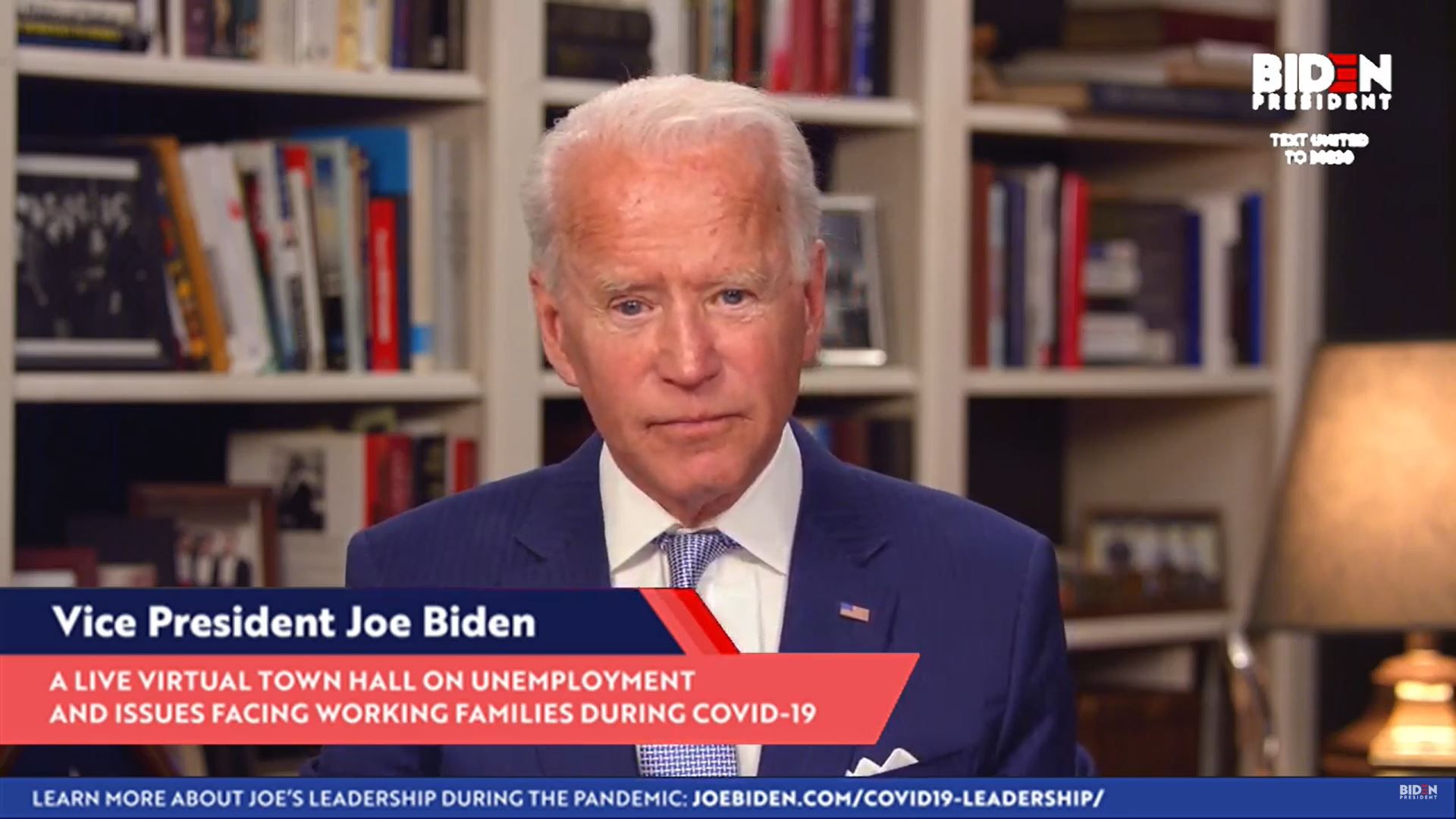
According to some, the election is pretty much already over. There is no way Joe Biden can lose and there is absolutely no way Donald Trump can win. The thing is a lot of people said that four years ago about Hillary Clinton. There is a path to victory for Joe Biden, but unseating a sitting president is no easy task. It will take swinging several red states blue and not focusing on areas where President Trump may have fallen out of favor. What to watch Rust Belt's traditional battlegrounds: Trump’s chance of winning Michigan, which he carried by 11,000 votes in 2016, has been significantly reduced by the impact of COVID-19 in the state, which has suffered the fourth most deaths in the country. Pennsylvania has almost been as hard hit as Michigan (fifth most deaths). Of the three Rust Belt states, Trump is best positioned in Wisconsin, where his job approval has remained higher than the national average. West and South emerge as new Democratic base: Seven western states — California, Colorado, Hawaii, Nevada, New Mexico, Oregon and Washington — are firmly in the Democratic column. Six states in the South and Southwest — Arizona, Florida, Georgia, North Carolina, Texas and Virginia — are in various stages of becoming blue states. Outside of Virginia, which has already become a blue state, Arizona is the state most likely to transition to a Democratic base state as early as November. May 17 – Axios But as much as the playbook seems obvious – there will be pitfalls, landmines and barriers along the way. It is expected that this upcoming election will be divisive, expensive, and close. And President Trump has proven to be an effective and relentless campaigner. If you are covering – then let our experts help with your questions and stories. Mark Caleb Smith is the Director of the Center for Political Studies at Cedarville University. Mark is available to speak with media regarding the DNC Primary, running mates and the upcoming election. Simply click on his icon to arrange an interview.


As the COVID-19 pandemic unfolded and healthcare organizations began experiencing shortages of personal protective equipment (PPE), faculty, staff and students at Georgia Southern University stepped up to fulfill a need. Making use of the 3D printers on the Statesboro and Armstrong campuses, as well as at the FabLab at the Business Innovation Group’s (BIG) downtown Statesboro location, the campus communities quickly began production of protective face shields and respirators. “We can’t afford to sit back and wait for things to happen,” said Dominique Halaby, DPA, director of the BIG. “We have to make them happen. We have this responsibility to make a difference, to be a part of that front line, whether it’s immediately in our community, our state or our respective area.” To date, the Department of Manufacturing Engineering has sent 200 3D-printed protective face shields with headbands to Augusta, Georgia, for healthcare workers at Augusta Medical Center, while the BIG has sent 100 face shields and 10 “Montana Masks,” a 3D-printable respirator filtration mask that can be fitted to a healthcare provider’s face and sanitized between uses, to Atlanta-area hospitals. The Department of Mechanical Engineering on the Armstrong Campus has also printed Montana Masks that will be delivered to workers in the St. Joseph’s/Candler Hospital System (SJCHS) in Savannah, Georgia, while the Respiratory Therapy Program in the Waters College of Health Professions donated 10 ventilators to the Georgia Emergency Management Agency. “I am unbelievably proud of our faculty, staff and students who have their own families to take care of, but are putting themselves on the line to help our medical professionals in this time of critical need,” said Mohammad Davoud, Ph.D., dean of the Allen E. Paulson College of Engineering and Computing. Wayne Johnson, Ph.D., professor of mechanical engineering, believes providing these materials to the Savannah community during a time of critical need is reinforcing a longtime commitment to the region. “The Armstrong Campus of Georgia Southern has a long history of working within the Savannah community, and during this pandemic, it was especially important for mechanical engineering faculty and students at the Armstrong Campus to step up during a time of great need,” said Johnson. “ Our work with SJCHS to develop, test and donate 3D-printed respirators may also lead to other research and development collaborations in the post-COVID-19 future.” In addition to benefiting area healthcare workers, Johnson believes this project is a great way for students to put their classroom skills into practice. If you would like to learn more about how the students, staff and faculty at Georgia Southern University are helping out during the COVID-19 crisis – the let our experts help. Wayne Johnson is an expert in additive manufacturing, mechatronics, biomechanics and engineering education. He is available to speak with media about this great initiative, simply click on his icon to arrange an interview today.
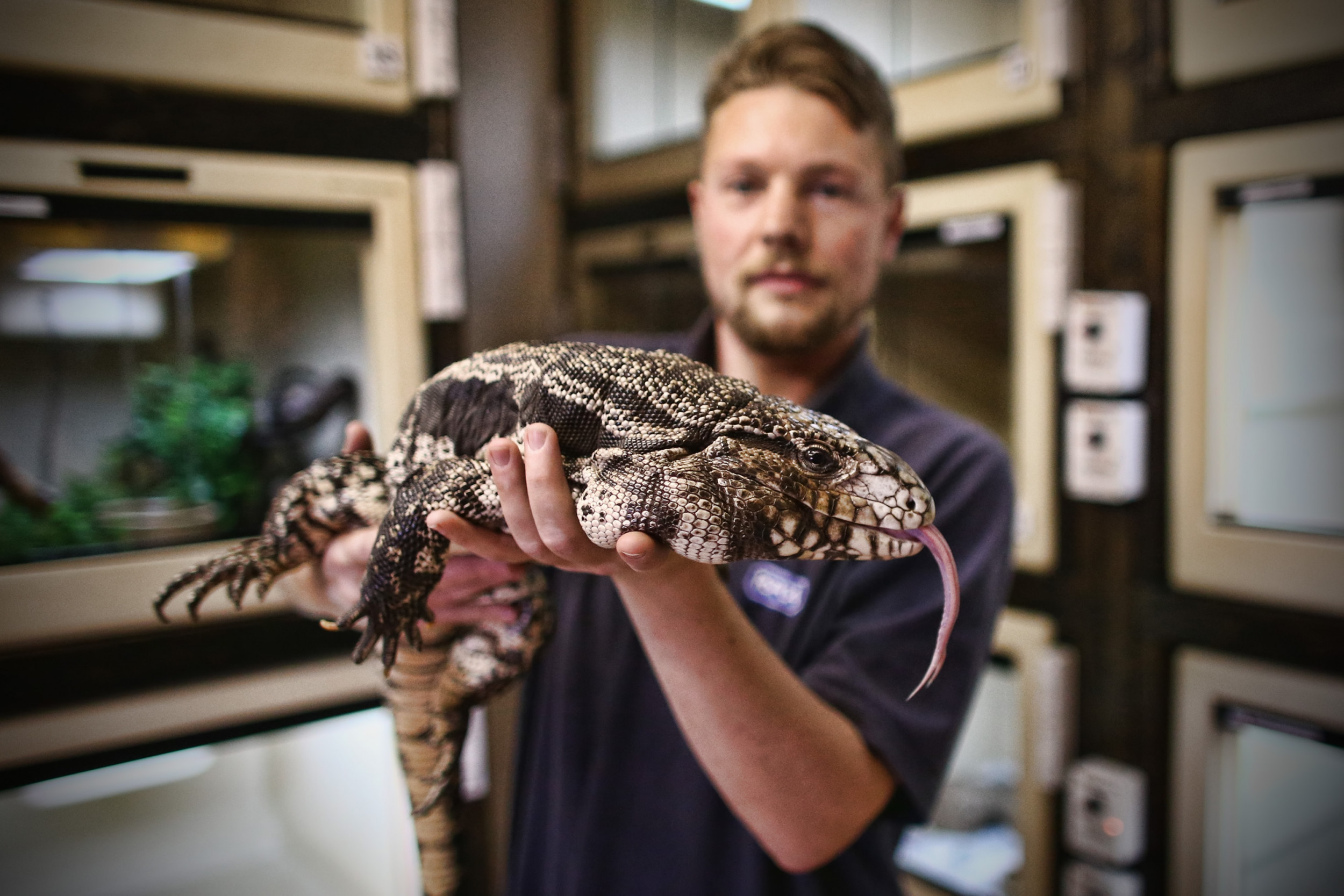
Leaping lizards! Let our experts tell you about the latest invasive species to be found in Georgia
What’s four feet long, weighs ten pounds and is eating its way across two Georgia counties? If you guessed the Argentine black and white tegu – you’d be right. "It has become established as an exotic invasive species in several sites in South Florida and we now believe in the Toombs and Tattnall counties of Georgia," said Georgia Department of Natural Resources biologist John Jenson. "We're trying to remove them from the wild, because they can have a negative impact on our native species." The Argentine black and white tegu can grow to be up to 4 feet long and weigh 10 pounds or more. The species can be identified by its mottled black-and-white coloring, which is arranged in a banded pattern across its back and tail. Hatchlings also display a bright green color on their heads. This tends to disappear around the time they reach a month old. While the species is known to lash out if threatened, it is not considered aggressive toward people. The biggest problem it presents is towards existing wildlife. The species is notorious for stealing burrows. Tegus also possess an indiscriminate and edacious appetite that can include the eggs and young of other species. "They eat just about anything they want, plant and animal matter, and one of their favorite foods are eggs from ground-nesting animals such as gopher tortoises—our protected state reptile—birds, including turkeys and quails," said Jenson. May 14 - Newsweek Invasive species are not new to Georgia or the southern states, but there are a lot of questions still to be asked: What endangered species are threatened by the presence of these lizards? What can be done to remove them? How quickly will they breed and spread? And are there any natural predators that can assist DNR authorities naturally? If you are a journalist covering this subject – then let our experts help. Steve Hein is the director of the Center for Wildlife Education at Georgia Southern University. He’s an expert in Georgia wildlife and is available to speak with media about invasive species in the state – simply click on his icon to arrange an interview.

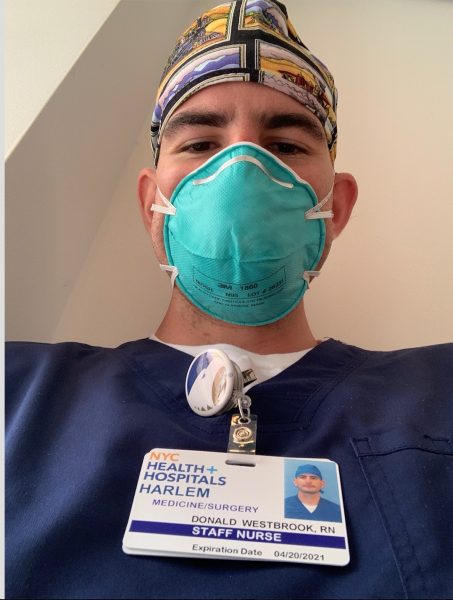
Diary of a COVID-19 crisis nurse in NYC: A Georgia Southern student’s first job
On May 1, Tucker Westbrook could finally sleep in. He’d been on duty as a COVID-19 crisis nurse at Harlem Hospital Center in New York City for 11 consecutive days, with a routine that began before the sun came up and ended long after the city had gone dark. Most mornings, he’d wake at 5:45 am., center himself with prayer and meditation, eat breakfast, and hop on a bus in time to clock in for his shift at the largest public hospital in Central Harlem by 7 a.m. Each day as he entered the halls of the facility’s surgical floor, which was transformed into a COVID-19 holding unit for the larger part of his three-week work rotation, he was unsure of what he’d encounter. Just weeks earlier, Westbrook, a May 2019 Georgia Southern University nursing graduate from Butler, Georgia, accepted a short-term contract to assist with the Coronavirus pandemic in the epicenter of the U.S. outbreak. This was Westbrook’s first professional job, following what was supposed to be a yearlong mission trip in Southeast Asia, but was cut short due to the pandemic, and nothing could fully prepare him for the impact of his initial experience. “The first day, I thought, ‘I’m not prepared for this,’” he admitted. “Those first few days I was on pins and needles and thought, ‘how am I going to mess up?’” The stakes were high. By the time he arrived in New York City, thousands had already been hospitalized, and many had died. Seasoned nurses and doctors were depleted and morale was low across the city, he explained on the phone as he looked out over a desolate Times Square from his hotel window. “They asked me, ‘why did you come here?’” Westbrook recalled. “And I said that I wanted to be, hopefully, a light in this dark place right now. The patients, the doctors, the nurses, the nursing assistants, the janitorial assistants — my goal is to learn everyone’s names and greet them with a smile behind my mask.” A friend encouraged Westbrook to look for a temporary nursing job upon his return from abroad. When he applied for highly competitive positions with a crisis staffing agency, he requested placement in an area hard hit by the pandemic. “Just like Southeast Asia, I wanted to go where there was the biggest need, and I had enough gifts to meet that need,” Westbrook said. This was Westbrook’s first trip to New York, and he stepped into a scene where images of makeshift morgues and ventilator shortages splashed across the media came to life in front of him. “It has been surreal to see,” he said. Assigned to provide cluster care to potential COVID-19-positive patients for minimal exposure, Westbrook also focused on simple acts of kindness to help ease increased anxiety among the patients. “That might be things as small as giving a wet rag to wipe their face,” Westbrook said. “It may be filling their jars with ice cold water in the morning. Whatever might help them feel more comfortable.” Westbrook’s patients were diverse: a teenage gunshot victim who sobbed at the prospect of being infected with the virus; an adult male who discussed intimate thoughts about death with his family over the phone; and a woman who was depressed until Westbrook sat with her so she didn’t feel alone. Experiencing humanity in its most delicate form was life-defining. “I was learning more about nursing care but also continuing to serve (my patients) beyond simply giving them medicine,” Westbrook said. “I was able to advocate for them with the doctor, especially without their families there. I’m learning how to go above and beyond, and what our job responsibilities are. I want to keep growing and learning to continue to give care to my patients.” The hospital staff also offered enormous support and guidance to Westbrook, who almost two weeks into the job felt exponentially more confident in his abilities. “If you had told me about any of this I wouldn’t believe it,” he said. “It has been incredible. I did not think I could do that at all, and here I am on the other side. This was such a lofty and high goal to complete this and do well. I’m thankful to even be here and have this opportunity.” Westbrook credits his father for encouraging him to study nursing, and Georgia Southern faculty for their expert instruction, which he put to use in New York, as well as their sage advice. “I wasn’t sure I was going to get my license,” he said. “My desire to become a doctor or a missionary became more and more compelling, but my professors assured me that it would be worthwhile to pursue my license, and they were right.” Following a quarantine in his family’s home, Westbrook will begin pre-medicine classes at Georgia Southern this summer. If you are a journalist looking to know more about Tucker’s story or the nursing program at Georgia Southern University – let us help with your coverage. Barry Joyner is the dean of Georgia Southern University’s Waters College of Health Professions - simply click on his icon to arrange an interview today.

As the race for the White House continues, speculations are growing on who former Vice President Joe Biden will have as his running mate. As of late, the direction Biden is being shown is to choose a woman of color. After a devastating start to the Democratic primary, Biden’s campaign was revived when black voters in South Carolina and throughout the south overwhelmingly sided with him. Now that he is the presumptive Democratic nominee, black voters and leaders are pressing for him to pick a black woman as his running mate. Biden launched a committee last week to begin vetting possible candidates for the vice presidency, a process he has said will likely last through July. He has already committed to picking a woman. But black voters and leaders say he needs to go further and pick a black woman. They argue that Biden’s success – and that of the Democratic Party as a whole – depends on black people turning out to vote in November. They want a tangible return for their loyalty to the democratic party. Political analysts like Augusta University Political Science Professor Dr. Gregg Murray say Sen. Kamala Harris from California and former Georgia governor candidate Stacey Abrams are the two standout choices that fit this bill. Although Harris and Abrams each bring positives to Biden’s campaign, Murray says they both have some baggage. “Harris is respected in the senate and including Abrams on the ticket could help the Democrats penetrate the traditionally GOP voting south,” said Murray. “However, Harris has an unfavorable record among critics of criminal justice reform and Abram’s lost in Georgia’s governor’s race raises questions on her electability beyond her home territory. I’m sure Biden’s team will consider all the facts before making their final decision.” As campaigns need to revamp and reconsider strategy in an election run in the wake of a pandemic, getting the ticket in order might come sooner than later. And if you are a reporter covering this topic, then let our expert help. Murray, professor of political science at Augusta University, is available to talk about the upcoming election. Murray’s research focuses on political behavior and psychology with specific interests in voter mobilization and turnout. He is also executive director of the Association for Politics and the Life Sciences. He has been featured on CNN and is a go-to for national media covering campaigns. Click on his name to request an interview.
