
Experts Matter. Find Yours.
Connect for media, speaking, professional opportunities & more.
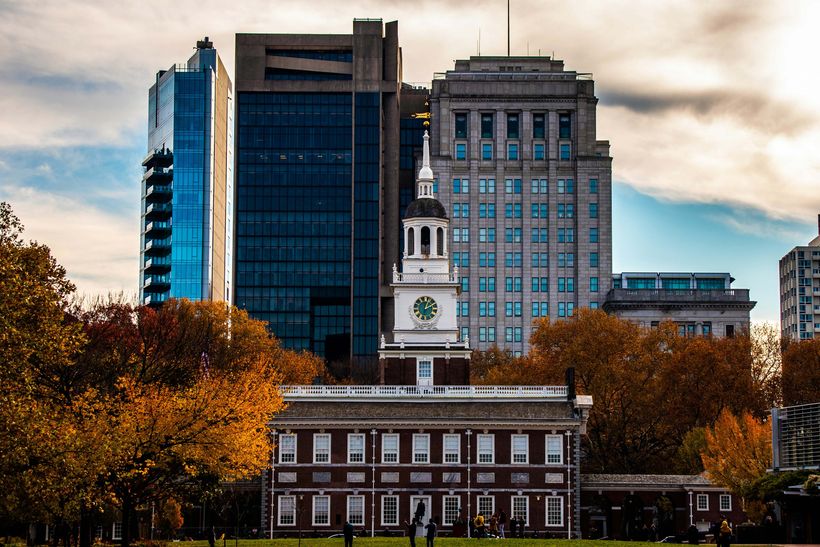
Ahead of America250, Villanova Historian Reveals How Independence Hall Almost Didn't Survive
Philadelphia’s Independence Hall has long occupied an outsized place in the American imagination. The space where the Continental Army was established, the Declaration of Independence adopted and the United States Constitution ratified, the site was once described by President Abraham Lincoln as the source “where were collected together the wisdom, the patriotism, the devotion to principle, from which sprang the institutions under which we live.” In July, these hallowed grounds will yet again take center stage, as the country observes its semiquincentennial, or America250, celebration. In due course, House lawmakers will gather at the landmark for a special commemorative event, mayors from across the U.S. will march to the gates in a show of civic pride and solidarity, and thousands of visitors will flock to the site daily in appreciation for its significance to the cause of “Life, Liberty and the pursuit of Happiness.” However, while Independence Hall’s role in the national saga will go widely remarked and recognized, the building itself has a story that remains largely unknown. According to Whitney Martinko, PhD, associate professor of History and director of the Albert Lepage Center for History in the Public Interest at Villanova University, the “cradle of American democracy” almost never survived the country’s infancy. “Early on, the challenge was about two things,” says Dr. Martinko, who specializes in public history, historic preservation and the early U.S. “One was about ownership of what was called the ‘Old State House,’ because it was the former statehouse in the colony of Pennsylvania. And the second was about the development of the city around it.” As Dr. Martinko explains, in the early 19th century, Independence Hall—then the Old State House—was under the control of the Commonwealth of Pennsylvania, which had shifted its governmental seat from Philadelphia to Harrisburg in 1799. To fund the construction of a new capitol building in the wake of the move, Pennsylvania legislators seriously contemplated selling the site to private enterprise, with the surrounding area undergoing a development boom. “Today’s Independence Mall was built up entirely,” says Dr. Martinko. “In the 18th century, it was full of buildings, shops and houses, and by the 19th century, it had become a huge furniture district and a heart of commerce in many ways.” As plans were drawn up to deliver the hall to the highest bidder, local resistance quickly emerged. Opposed to the landmark’s loss, citizens of Philadelphia and municipal leaders rushed to the defense of the building and its lawn, arguing that their preservation entailed a necessary public good. “Everyone looked to this site as the heart of the new nation. It’s a historic site. It’s an important building. People thought of it as one of the great pieces of Georgian architecture at the time,” says Dr. Martinko. “It was also seen as a civic space, as people gathered there on Election Day. And its lawn was highly valued, with green, open space considered important even then, for air circulation. So, it was really seen as a political space, a civic space and a green space that was important for the well-being of Philadelphians and the health of Philadelphia.” Deliberations over the fate of Independence Hall would continue for a period of five years, up until 1818. After a spirited public campaign, a settlement was finally reached when the City of Philadelphia purchased the plot from the Commonwealth of Pennsylvania for $70,000 (roughly $1.85 million in today’s currency). In essence, the deal would forevermore secure Independence Hall’s place within the pantheon of great American shrines, parks and monuments. However, in a terrific irony, it would also eventually lead to the loss of a different piece of history: Between 1950 and 1967, the 19th-century development projects that once threatened Independence Hall became a casualty of the city’s efforts to make the “birthplace of America” an urban focal point, with the creation of Independence Mall. “Those buildings were all torn down in the mid-20th century, when Ed Bacon and the City Planning Commission decided to make Independence Hall a major attraction,” says Dr. Martinko. “There were debates surrounding this issue as well. The Jayne Building was one of the 19th-century buildings that was demolished and that is most well-known. So, there’s this sense of preserving 18th-century history through the demolition of 19th-century architecture.” As the nation approaches its 250th anniversary, the near loss of Independence Hall and the removal of its 19th-century neighbors stand as striking examples of the ways in which what we value, and how much we value it, evolves over time. What’s more, the historic threats to Philadelphia’s most famous site serve as a poignant reminder of the delicate nature of public memory and preservation—and the fact that the places we treasure today may not always be with us tomorrow. “Even though it seems absurd to us now, we’re still seeing debates over the line between redevelopment and connection with the past,” concludes Dr. Martinko. “It’s not that no one saw the value of Independence Hall, or that they didn’t see it as historic. It was just this debate that a lot of very reasonable people continue to have today: Is this what really needs to be preserved? And how should it be preserved?”



America at 250: CMU Experts Explore the Ideas, People and Events That Shaped a Nation
Throughout 2026, the United States will commemorate the 250th anniversary of its founding, a milestone that is prompting reflection on the nation's history, its defining moments, and the people and ideas that continue to shape its future. From the founding principles of democracy and constitutional rights to social movements, innovation, and overlooked stories from America's past, Carnegie Mellon University scholars and experts offer timely insight into the issues and events driving the national conversation. Whether reporting on anniversary celebrations, historical milestones, or the enduring impact of America's past on today's challenges, CMU experts are available to provide informed analysis and historical context. What CMU Experts Can Help You Cover From founding documents to untold histories, CMU experts can speak to the full range of topics for America at 250. The Document in the Archive One of only five known copies of the 1792 Bill of Rights is held at Carnegie Mellon University. As America marks its 250th anniversary, this rare artifact is on public display -- and the story behind it connects directly to debates about rights, citizenship, and constitutional interpretation that are as live today as they were in the founding era. The Constitution on Trial For 250 years, the Supreme Court has been the ultimate interpreter of America's founding documents. But how justices write those decisions -- the rhetoric, the emotion, the moral grandstanding -- shapes how law is understood and applied for generations. What does the language of fundamental rights decisions tell us about American democracy? The History That Was Left Out Official celebrations tend to center on the founders. But historians have spent decades recovering the stories of enslaved people, women, immigrants, and communities whose contributions shaped the nation and whose experiences complicate the triumphant narrative. Dr. Edda Fields-Black's 2025 Pulitzer Prize-winning book on Harriet Tubman and the Combahee River Raid is a reminder of just how much of that history is still being uncovered. What does a fuller American history look like at 250? Suffrage, Memory, and the Myth We Tell The story of how American women won the right to vote is one of the most retold in the country's history -- and one of the most mythologized. As the nation reflects on 250 years of democracy, what does the suffrage movement really tell us about how America progresses, and how it remembers its own progress? Covering America at 250? Carnegie Mellon University's historians, legal scholars, archivists, and subject matter experts are available for interviews, background briefings, and commentary on the people, events, and ideas that have shaped the United States over the past 250 years - and what that history means today.


UConn Expert Weighs In on FIFA's Hottest New Timeout
For the first time in FIFA World Cup history, every match at the 2026 tournament includes mandatory three-minute hydration breaks midway through each half. Introduced as a player welfare measure amid concerns about extreme summer temperatures across North America, the breaks have quickly become a much discussed development in the tournament. Coaches, players, broadcasters, sports scientists, and fans are all weighing in on the impact the stoppages have on player safety, game flow, strategy, and even commercial opportunities. The conversation has intensified as several matches have been played in challenging heat conditions and prominent coaches have publicly questioned whether the mandatory breaks alter the rhythm of the sport. At the same time, medical experts continue to emphasize the risks posed by heat stress and dehydration during elite athletic competition, particularly in tournaments spanning multiple climates and venues. Experts like UConn's Douglas Casa have been front and center when the media call for insight and perspective. The three-minute mandatory hydration breaks are meant to protect players, and referees, from extreme heat illness and help them maintain their physical performance. In that time, players can cool off and replenish lost water and salt from sweating, but how effective it is depends on how aggressive the cooling methods are. That could mean putting wet, cold towels on the exposed parts of a player's body, such as the neck, head, back and arms. If done well, that could reduce their body temperature by about 0.22 F (0.12 C) per minute, said Douglas Casa, CEO of the University of Connecticut's Korey Stringer Institute who also co-signed the letter to FIFA. "Some people can tolerate a little more fluids comfortably and then do intense exercise. Some people can't because it sloshes around in their stomach and they don't feel super comfortable, so they might not drink as much in such a short period of time," he added. The time, he said, dictates the volume of impact, whether from fluid or cooling, and "that's why we're suggesting doing something like five or six minutes, because it just makes such a big impact when you're dealing with a change of that magnitude." June 18 - NPR Douglas Casa is a professor of kinesiology and chief executive officer of UConn’s Korey Stringer Institute. He is a leading authority on research, advocacy, and education about exertional heat stroke View his profile While the standardized breaks represent a major step forward for player welfare, some leading heat illness experts argue the new policy does not go far enough. Dr. Douglas Casa, a professor of kinesiology at the University of Connecticut and chief executive officer of the Korey Stringer Institute, expressed skepticism regarding the efficacy of such brief intervals. Dr. Casa warned that prolonged, high-intensity physical exertion causes a rapid spike in core body temperature, which dramatically degrades athletic performance and increases the risk of exertional heat illness. He noted that a mere three minutes from whistle to whistle provides insufficient time for optimal physiological cooling and active rehydration, recommending instead that tournament officials expand the mandatory breaks to five or six minutes. Faced with these demanding environmental conditions, several competing national teams are taking proactive measures to gain a competitive edge. Multiple countries have expanded their technical staffs to include specialized sports scientists tasked exclusively with designing aggressive heat-acclimatization and thermal-management strategies. According to Dr. Casa, these data-driven preparation strategies will likely play a monumental role in determining player durability and ultimately crowning the world champion. June 09 - NBC News Covering? We can help. Douglas Casa, who leads UConn's renowned Korey Stringer Institute, is available to discuss: The science behind hydration and cooling breaks in elite sport Heat illness risks facing World Cup athletes Whether mandatory breaks are sufficient to protect players How extreme weather is changing sports medicine and event management The balance between player safety, competition, and fan expectations Check out the video below featuring Doug Casa explaining what happens when the human body gets too hot. Media interested in speaking with Doug Casa can contact the UConn media relations team to arrange an interview.



Chihuly’s Glass Abloom at Meijer Gardens
Frederik Meijer Gardens is hosting Chihuly at Meijer Gardens through Nov. 1, 2026 - the only temporary Chihuly exhibit in the country and one of only two in the world this year. Most creative passions have their roots in childhood—and such is the case with Dale Chihuly’s great love of flowers. The artist fondly recalls his mother’s large and exuberant garden in Tacoma, Washington, known as one of the most beautiful in the neighborhood. Memories of his mother’s garden have influenced much of Chihuly’s work, with the bursting colors and blooming forms matching the fecundity of flora. Another inspiration for Chihuly’s flowering glass forms is the famed Blaschka Collection of glass flowers at Harvard University’s Museum of Natural History, which he encountered while studying sculpture on the East Coast. His avowed love of Vincent van Gogh’s vibrant flower paintings provides another source for Chihuly’s expressive floral artworks. Michigan’s largest‑ever Chihuly exhibition marks long-awaited return to Meijer Garden MLive/Grand Rapids Press April 30, 2026 “The exhibition offers an unprecedented opportunity to lose yourself in Chihuly’s career and in individual pieces,” said Suzanne Ramljak. “It’s hard to describe how experiential it is.” Chihuly’s many exhibitions in conservatories and botanical gardens—including repeatedly at Frederik Meijer Gardens & Sculpture Park—further testifies to the ways his art speaks directly to nature. Meijer Gardens’ 2026 presentation of CHIHULY at Meijer Gardens features a number of the artist’s floral-based series, including his Venetians, Ikebana and Fiori. Below are images of a few of the blooming glass pieces visitors encounter inside the Chihuly: Radiant Forms indoor gallery exhibition, while his outdoor installations revel in the company of flowers. VENETIANS Chihuly’s opulent Venetians series, begun in the late 1980s, is both a celebration of the Italian city that fueled his glass art and of nature’s endless bounty. Several of these baroque vessels are adorned with vegetative forms and stylized flowers in colors that rival that of a garden palette. IKEBANA In 1989, Chihuly began his Ikebana series inspired by Japan’s traditional art of flower arranging. Chihuly’s bold variations on this tradition features sculptural vases of every imaginative shape, containing expressive flowers not to be found in any handbook of botanical species. Chihuly continued his exploration of Japanese flower arranging in a number of innovative glass-on-glass paintings, which are also on view in the Radiant Forms exhibition. FIORI AND MILLE FIORI Chihuly’s profusion of floral forms continues in his Fiori (Italian for “flowers”) and Mille Fiori (“a thousand flowers”) series. Whether shown as singular stalks or amassed on a platform as a riotous glass garden, the artist’s Fiori both celebrate the vitality of nature and the endless creative possibilities of glass. Massive, fantastic Chihuly exhibition opens in Grand Rapids Detroit Metro Times May 1, 2026 “It’s a different piece every day, when the sun hits it and flashes out from its tips, or when it’s darker and deeper in color,” Suzanne Ramljak says. “And that, I must say, is really the pleasure and the power of an outdoor sculpture park that we have. It is an outdoor museum, and it’s alive … when you put art outdoors, nature adds a whole other dimension of life and color.” When Chihuly’s ongoing series of Fiori are set outdoors—in the landscape as with Mottled Trumpet Flowers or gathered within a floating Fiori Boat—his opulent floral forms gain dynamism through the interplay with living organisms. CHIHULY at Meijer Gardens Presented by Macatawa Bank runs through Nov. 1. General admission tickets include access to all outdoor Chihuly installations across the campus. The indoor CHIHULY: Radiant Forms requires a separate timed-entry ticket ($9 adults, $5 children ages 3–13 and members receive a 10% discount). For exhibition tickets and a schedule of related events and programs, visit MeijerGardens.org/Chihuly. Suzanne Ramljak is Director of Curatorial Affairs at Frederik Meijer Gardens & Sculpture Park, where she has worked since 2022. Ramljak previously was curator at the American Federation of Arts, New York, overseeing the development of traveling museum exhibitions and scholarly publications. View her profile. If you are looking to cover CHIHULY at Meijer Gardens, connect with Suzanne below.


World Cup 2026: Hofstra experts on the science, health, and business behind the tournament.
The 2026 FIFA World Cup comes to the New York metro area, and Hofstra University is ready. From the training room to the boardroom, Hofstra faculty bring research-backed expertise to the stories journalists are chasing this tournament season. Featured Topic The Cultural Game Why soccer means what it means and what this World Cup moment represents The World Cup has always been about more than the game. Brenda Elsey, Professor of History, studies soccer as a cultural and political force across the Americas -- from grassroots identity to gender and power. She can speak to what this tournament represents as a historical moment, on and off the field. Expert Brenda Elsey - History Featured Topic Health and Performance on the World Stage Expert insight on what it takes to compete and recover at a World Cup. Competing at this level means managing the body and the mind across weeks of high-stakes matches with almost no recovery time. Hofstra's health and kinesiology faculty are your sources for the stories behind the performance. Experts Jayne Ellinger - Athletic Training Katie Sell - Exercise Physiology Anna Len - Physical Therapy Genevieve Weber - Mental Health Featured Topic Beyond the Pitch What the World Cup does to cities, economies, and public health systems From local business impact and tourism economics to disease surveillance and emergency preparedness - Hofstra faculty are ready to talk. Experts Andy M. Forman - Marketing & Tourism Lauren Hindman - Management Martine Hackett - Population Health Meshack Achore - Population Health





Brexit at 10: A Decade After the Vote That Changed Britain
On June 23, 2016, voters in the United Kingdom made a historic decision that would reshape the country's relationship with Europe and reverberate around the world. Ten years later, Brexit remains one of the most significant political and economic events of the modern era, with its effects still being felt across trade, immigration, governance, and international relations. While the United Kingdom formally left the European Union in 2020, debate continues over Brexit's long-term impact. Supporters point to greater national sovereignty and independent trade policy, while critics highlight economic challenges, labour shortages, and new barriers to commerce. The referendum's legacy has also influenced political movements beyond Britain, sparking broader conversations about globalization, national identity, and the future of multinational institutions. As policymakers, businesses, and citizens assess a decade of change, experts are examining what Brexit has achieved, where it has fallen short, and what it reveals about the evolving relationship between democracy, economics, and national sovereignty. Covering - we can help! We have experts available to discuss the origins of Brexit, its lasting consequences, and what the next decade may hold for the United Kingdom and Europe. Topic and Questions to Consider: The political history and causes of Brexit U.K.–European Union relations Trade, investment, and economic impacts Immigration and labour market policy Nationalism, populism, and democratic movements The future of Scotland, Northern Ireland, and the United Kingdom Britain's role in global affairs after Brexit Lessons from Brexit for policymakers around the world Key Questions What factors drove the Brexit vote in 2016? How has Brexit changed Britain's economy and trade relationships? What impact has Brexit had on immigration and labour markets? Has Brexit strengthened or weakened the United Kingdom's global influence? How have Scotland and Northern Ireland been affected? What lessons can other countries learn from Brexit? Could the U.K. and European Union move toward closer cooperation in the future? What does Brexit reveal about voter attitudes toward globalization and national sovereignty? Our leading experts can provide analysis on the political, economic, and social legacy of Brexit, the evolving relationship between the United Kingdom and the European Union, and the broader implications for democracies navigating questions of identity, sovereignty, and international cooperation. Connect with an expert today:
World Cup 2026: Story Angles Beyond the Pitch
The 2026 FIFA World Cup will be one of the biggest sports stories of the year, with matches underway across Mexico, Canada and the United States. But the story will reach well beyond the field. As the tournament moves from city to city, it will bring host communities, public agencies, local businesses and civic leaders into the spotlight. That creates a wide range of story angles for journalists, from public health and safety, tourism and economic impact to sports technology, fan culture, athlete performance, national identity and the politics of international sport. Institutions using ExpertFile are helping media cover these broader World Cup stories through dedicated Topic Authority Hubs, Spotlight posts and expert profiles featuring trusted sources across health, business, technology, public policy, culture and sport. Featured World Cup Expert Hubs With the World Cup coming to the New York metro area, Hofstra University’s hub brings together experts on athlete health, recovery, injury prevention, mental performance, public health, tourism, local business impact and the cultural history of soccer. Explore Hofstra’s World Cup 2026 Hub. Source: Hofstra University The University of Delaware’s hub focuses on player safety, concussion research, sports analytics, tourism, youth development, fan behavior, shared experiences and the science behind elite competition. Explore the University of Delaware’s World Cup 2026 Hub. Source: University of Delaware Carnegie Mellon University’s hub looks at the tournament through the lenses of geopolitics, diplomacy, sports marketing, fan engagement, AI, robotics, biomechanics, human performance and emerging sports technologies. Explore Carnegie Mellon’s World Cup 2026 hub. Source: Carnegie Mellon University Emory University’s Goizueta Business School hub explores World Cup 2026 through the business of the tournament, including host city economics, ticket pricing, fan engagement, sports marketing, global sponsorship, brand strategy and the rise of the player brand. Explore Goizueta Business School’s World Cup 2026 hub. Story Angles As coverage plans take shape, these are some of the World Cup 2026 story angles journalists may want to explore. The Topic Authority Hubs featured above offer a helpful starting point, with Spotlight posts and expert profiles connected to many of these issues. Journalists can also search directly on expertfile.com to find additional academic experts who can bring depth, context and clarity to their coverage. The politics behind the tournament The World Cup is never just about sport. It can become a global stage for diplomacy, national pride, protest, soft power and political tension, with countries not only competing on the field but also presenting themselves to the world. For journalists, that creates timely story opportunities around national identity, international relations and the political flashpoints that often surface around major global sporting events. The next generation of fans A World Cup can shape how young people connect with sport, family, community and national identity. For many children and teenagers, this may be the first tournament they experience in a big way — at school, at home, in their community or through local soccer programs. The mental pressure of representing a country Few sporting events carry the emotional weight of the World Cup. Players are not just competing for clubs or contracts. They are carrying national expectations in front of a global audience, often under intense media and social media scrutiny. The science of movement under pressure World Cup matches are full of moments that happen almost too quickly to see: a sudden change of direction, a hard landing, a collision, a late tackle, a split-second decision to accelerate or pull back. Experts can help explain the biomechanics behind elite soccer movement, how the body absorbs stress during competition, and why injuries such as ACL tears and concussions remain such important issues at the highest level of the game. How technology is changing the game AI, sports analytics, wearables, robotics, motion tracking and virtual experiences are changing how soccer is played, trained, analyzed and watched. Some of this technology is visible to fans. Much of it is happening behind the scenes. The hidden science behind the tournament Some of the most important parts of the World Cup are easy to overlook. Playing surfaces, stadium preparation, natural grass requirements, turfgrass systems and venue logistics all play a role in the quality of the tournament. What host cities gain — and what they have to manage The World Cup can bring major attention to host cities, along with increased demand on hotels, restaurants, transportation systems, small businesses and public services. The story is not only how many people visit, but who benefits and what remains after the tournament moves on. Sports analytics in action Data is now part of how elite soccer is understood, taught and analyzed. From performance trends to real-time decision-making, analytics can help explain what is happening inside the game and how teams, coaches and analysts evaluate play at the highest level. Soccer as culture and identity For many fans, soccer is tied to family, community, immigration, history and belonging. The World Cup offers a chance to tell stories about fan culture, grassroots soccer, Latin American soccer history, gender and power in the sport, and why watching together can feel so meaningful. Public health and mass gatherings Millions of fans travelling across borders and gathering in stadiums, fan zones and public spaces create important public health questions. Cities need to think about disease surveillance, emergency preparedness, health system readiness and health equity — all while hosting one of the most visible events in the world. About ExpertFile ExpertFile helps organizations become the most trusted and visible source of expertise in an AI-driven world. The platform combines expert profiles, content publishing, inquiry management, analytics and media distribution into a single Visible Authority infrastructure - enabling universities, healthcare organizations, corporations and associations to improve how their expertise is discovered, cited and engaged across search engines, AI assistants and media channels. Built-in workflow orchestration, governance controls and compliance oversight help organizations reduce risk and achieve greater impact with existing resources. Trusted by leading institutions including Carnegie Mellon University, the Massachusetts Institute of Technology (MIT) and ChristianaCare, ExpertFile helps organizations unlock the full value of their expertise at scale. The ExpertFile Mobile App connects journalists, conference organizers, policymakers, researchers and industry partners with authoritative expertise across more than 50,000 topics.

The Grace to Fail: My MBA Journey (Part 3)
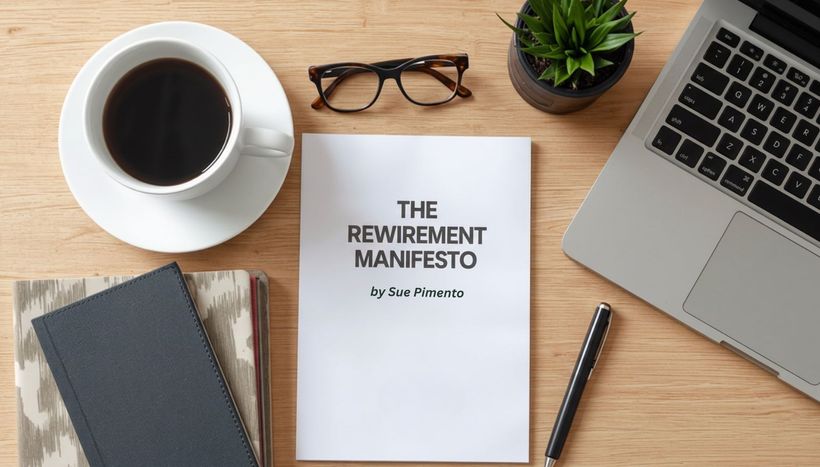
I have a confession to make. My wife Bonnie and I are addicts. Not the kind that requires an intervention, exactly, but close. We are addicted to home improvement. We are always planning the next upgrade, the next project, the next thing to tear apart and make better. It gives us genuine pleasure and a profound sense of accomplishment. Bonnie leads most of these endeavours. She is remarkably capable with power tools and can pull off a tool belt like she is strutting down a Home Depot runway (aisle). Our shared obsession has even spawned a series of Facebook posts called the 2 Capable Women, where we document everything from felling trees to the deeply humbling art of Ikea assembly. So there we were, driving in traffic, and Bonnie was telling me about her next project: removing the circa-1960 wood panelling and replacing it with modern shiplap. Mid-conversation, she went quiet for a moment and said, almost to herself, “I guess I need to allow myself the grace to fail.” I nearly drove off the road. You must understand something about Bonnie. She is a self-declared perfectionist. Not casually. She is committed to being a perfectionist at being a perfectionist. So, hearing those words come out of her mouth, unprompted, while discussing a renovation project, was like hearing your accountant quote Oprah. It stopped me completely. The truth has a certain ring to it. I heard that bell loud and clear. Because sometimes wisdom does not arrive in a lecture hall or a leadership book or a TED talk. Sometimes it arrives in a car, in traffic, from the person sitting next to you holding a coffee and thinking about shiplap. That phrase has not left me since. Many of us do this. We replay mistakes endlessly, convinced that self-criticism is somehow productive. We lie awake revisiting conversations and missteps, assuming that if we beat ourselves up long enough, we will emerge wiser. All we accomplish is a thorough self-beating followed by self-flagellation. Lots of noise. Zero progress. Zero calories burned. This is not just a problem for people climbing mountains or starting businesses. It plays out in perfectly ordinary moments. You send an email and immediately wish you had worded it differently. You make a comment at dinner that lands wrong and spend three days replaying it. You make a small error at work and carry it around like luggage for a week. The inner courtroom convenes regardless. Most of us are not failing spectacularly. We are just living, occasionally getting things slightly wrong, and treating that as evidence of something deeply and permanently wrong with us. It is not. It is just Tuesday. I have been thinking about this a lot lately because I am in the middle of my MBA at the Sprott School of Business. I wrote about My MBA at age 69 in Part I and Part II. Back in graduate school after four decades in the workforce, opportunities to feel uncomfortable, uncertain, and occasionally like you have wandered into the wrong building are plentiful. A recent assignment on crafting Team Charters and enhancing my leadership skills inspired me to write a personal manifesto for my graduate studies and to take a closer look at myself. You can read mine here. While working through it, I made a surprising discovery. Most of the commitments I was making to myself had nothing to do with school. They were about life. Read the instructions carefully. Ask for help sooner. Pay attention to what your emotions are trying to tell you. Trust your experience. Hold yourself to your own standards. And this one, which stopped me cold, and sounded very familiar: Allow yourself the grace to fail. There was that bell again. Those six words turned out to be the most important thing I wrote. Not because failure is something to celebrate, but because the willingness to risk it is the price of admission for virtually everything worth doing. Failure is not a topic most of us rush toward. It is about as pleasant as stubbing your toe in the dark. Yet every meaningful thing I have ever done required me to risk it. Starting a new career. Leading a sales team. Launching a business. Climbing a mountain. Writing a book. Going back to school at 69. None of it came with guarantees. All of it came with uncertainty, mistakes, and moments where I genuinely wondered whether I had lost my mind. The jury is still out on some of those. The irony is that failure and growth are inseparable. Dweck (2006) found that people who view setbacks as learning opportunities rather than evidence of inadequacy are more likely to persevere and ultimately succeed. Duckworth (2016) agreed, and in Grit, one of my favourite books, long-term success depends less on talent and more on the willingness to keep going after things fall apart. Neff (2023) added that people who respond to failure with self-compassion rather than harsh self-judgment show greater improvement and are more likely to try again. The friction produced by failure is often exactly what generates learning, but only if we give ourselves enough grace to stay in the game. I see this everywhere. Professionals are staying in jobs they no longer enjoy because starting over feels too risky. Retirees hesitate to try something new because they might not be good at it right away. Students who will not ask a question because they do not want to appear uninformed. And if I am being honest, I see it in myself. Every time I hesitate to contribute to class because everyone else seems younger and sharper. Every time I catch myself wondering whether I belong in the room. One exercise has helped me enormously. When I catch myself spiralling into negative self-talk, I imagine my five-year-old self standing beside me, listening. Would that little girl feel encouraged? Not a chance. So why do we think inner dialogue helps us? A recent example: I made a point in a meeting that got a polite nod and complete silence. You know the silence. The one that could mean anything from “interesting” to “what on earth did she just say?” I replayed that moment for two days. Eventually, I asked a colleague how the meeting had gone, and she said she barely remembered it. The forensic investigation was conducted entirely in my own head. I am not suggesting we lower our standards. We should hold ourselves accountable, learn from our mistakes, and strive to do better. But there is a meaningful difference between accountability and cruelty. Between reflection and rumination. Between learning from a mistake, and building a summer cottage on top of it, and checking in every long weekend. I worry about what this means for the generation behind us. Research by Professor Gabriel Rubin at Montclair State University found that despite living in one of the safest periods in history, Gen Z perceives risk virtually everywhere (Rubin, 2023). They have grown up knowing that at any moment, someone has a phone. One stumble, one terrible dance move, and the clip is posted before you catch your breath. Permanent, searchable, shareable public failure is something entirely new, and the consequences are showing up in surprising places. Monocle magazine noted young people standing completely still on nightclub dance floors, phones in hand, unable to lose themselves to the music. The club has become a stage, and the crowd has become the content. Instead of dancing, people film. Instead of connection, there is performance. This is not a small thing. Dancing is how humans have always signalled availability, built trust, and found each other. It requires a willingness to look slightly absurd. If we have raised a generation so terrified of being captured mid-stumble that they will not move to the music, we have handed surveillance culture a victory it does not deserve. Calculated risks lead to new opportunities, foster innovation, and teach lessons that comfort never could (Rubin, 2023). Risk aversion makes short-term sense. As a way of life, it quietly closes doors that were never meant to stay shut. Give yourself and the young people around you, explicit permission to be unpolished in public. To dance badly. To say the wrong thing and survive it. The phone will always be there. So, fortunately, will the music. Here is what I keep learning inside this MBA: wisdom arrives disguised as failure. The assignments that challenge me teach me more than the ones that come easily. The questions I most resist asking are usually the most important. I did not expect graduate school to teach me this. Then again, I did not expect to be here at seventy. I no longer think in terms of Wins and Losses. Those categories are too simple. I think in terms of Wisdom and Learning. Success builds confidence. Setbacks build insight. Both move us forward. Read that again. So the next time you find yourself at two in the morning replaying something you said three days ago, ask whether your five-year-old self would find your internal monologue useful. If the answer is no, offer yourself a little grace. Which brings me back to Bonnie. Last weekend, she pulled off that 1960s panelling. Every last piece. It was messy and uncertain, and at several points she was unsure what she would find underneath. There were surprises. There were moments of doubt. She kept going anyway. By the end of the weekend, the shiplap was going up, clean and bright and exactly right. She did not do it perfectly. She did it anyway. And it is beautiful. That is the whole lesson, right there, delivered by a woman with a pry bar and a tool belt, on a weekend in June. Failure is not the enemy. Most of the time it is just fear wearing a funny hat. And if you are lucky, it will teach you something genuinely worth knowing. Sometimes it comes from a research paper. Sometimes it comes from your wife, in a car thinking out loud about shiplap. Either way, listen for the bell. Writing my manifesto was one of the most clarifying things I did this year. Not because it solved anything, but because it forced me to decide, on paper, who I was going to be when things got hard. I want that for you, too. So I created the ReWirement Manifesto: a simple template for anyone navigating a new chapter, a big transition, or simply a Tuesday that did not go as planned. It is not a bucket list. It is not a vision board. It is a set of honest commitments you make to yourself, in your own words, that you can return to when your inner courtroom calls you to order. Download your free ReWirement Manifesto template here. Fill it in. Keep it somewhere you can find it. And the next time you are staring at a wall of 1960s panelling, wondering if you are in over your head, remember: the grace to fail is not a consolation prize. It is the whole point. Don’t Retire…Re-Wire! Sue My Book is Now Available for Pre-Order I hope you will consider pre-ordering a copy of Your Retirement Reset for you, a friend or loved one. It's available September 8, 2026 published by ECW Press - You can now order at Indigo or Amazon. And if you love supporting Canadian booksellers, please also check with your local independent bookstore. Most can easily order it for you.



From Economic Crisis to Global Influence: The Evolution of the G7
The world's attention is once again focused on the G7 as leaders meet this week in Évian-les-Bains, France. The summit brings together the leaders of Canada, France, Germany, Italy, Japan, the United Kingdom, the United States, and representatives of the European Union to discuss some of the world's most pressing challenges, including Ukraine, economic stability, artificial intelligence, global security, and international development. From Economic Crisis to Global Leadership Forum The G7 traces its origins to 1975, when leaders from six industrialized democracies met in Rambouillet, France, amid economic turmoil following the 1973 oil crisis. The gathering was designed to create an informal forum where leaders could have candid discussions about economic recovery, inflation, energy security, and trade. Canada joined the following year, creating what became known as the G7. Unlike formal international organizations, the G7 has no permanent headquarters or treaty structure. Its influence comes from the economic and political weight of its members and the ability of leaders to coordinate policy responses to global challenges. Major Milestones in G7 History 1975 – Rambouillet, France The first summit established a new model for direct dialogue among world leaders during a period of economic uncertainty. 1980s – Managing Economic Volatility Summits focused heavily on inflation, energy security, trade liberalization, and coordination among major economies as globalization accelerated. 1998 – Expansion to the G8 Russia joined the group, transforming it into the G8 and reflecting hopes for greater post-Cold War cooperation. 2002 – Kananaskis, Canada Following the September 11 attacks, security and counterterrorism became central themes. The summit also launched major international development initiatives. 2014 – Return to the G7 Russia was suspended following its annexation of Crimea, and the forum returned to its current G7 structure. 2023 – Hiroshima, Japan Leaders met in the world's first city devastated by an atomic bomb, reinforcing commitments to peace, international security, and nuclear non-proliferation. 2025 – Kananaskis, Canada The summit marked the 50th anniversary of the first G7 gathering and focused on energy security, digital transformation, emerging technologies, and strengthening international partnerships. Why the G7 Still Matters While the global economy has evolved dramatically since 1975, the G7 remains a critical venue for coordination among advanced democracies. The agenda has expanded far beyond economics to include climate policy, international security, public health, emerging technologies, cybersecurity, artificial intelligence, and responses to international conflicts. This year's summit in France reflects that evolution. Alongside discussions on Ukraine and global economic imbalances, leaders are expected to focus on the opportunities and risks presented by AI, debt challenges facing developing nations, and growing geopolitical tensions around the world. Connect With An Expert Journalists covering the 2026 G7 Summit, international relations, global governance, economic diplomacy, trade policy, international security, or the evolving role of multilateral institutions can connect with experts from your institution through ExpertFile. Whether examining the summit's historical significance or its impact on today's geopolitical landscape, expert insight can help provide context behind the headlines. Visit all of our experts at www.expertfile.com
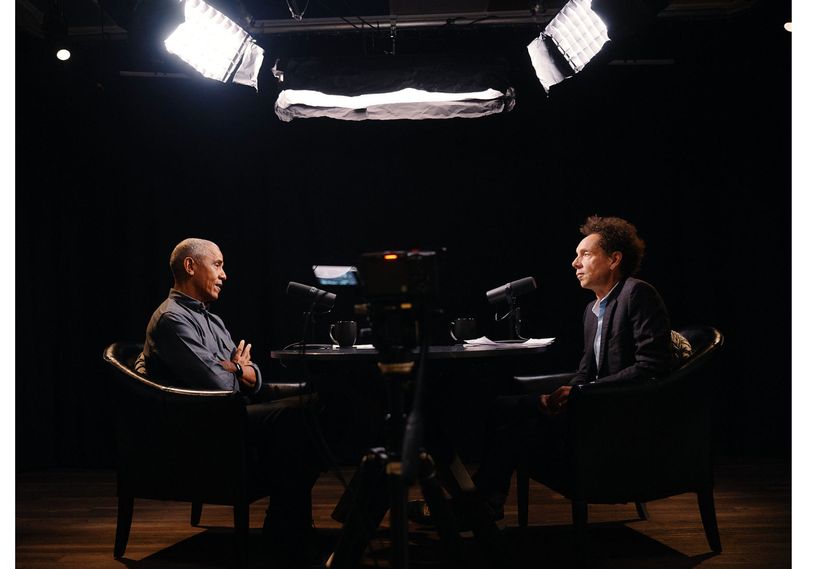
Reconstruction Reconsidered: Manisha Sinha Brings Historical Context to New Obama Podcast Series
As the United States marks its 250th anniversary, a major new podcast series is drawing renewed attention to the Reconstruction era and its lasting impact on American democracy. Reconstruction: The Unfinished Promise, hosted by Malcolm Gladwell and featuring former President Barack Obama, examines the turbulent decades following the Civil War and the ongoing struggle to define citizenship, equality, and political participation in the United States. Among the historians featured in the series is Manisha Sinha, a leading scholar of the Civil War, abolition, and Reconstruction. Her participation brings decades of research and scholarship to a national audience at a time when Americans are revisiting the people, events, and ideas that shaped the nation. Manisha Sinha is the James L. and Shirley A. Draper Chair in American History at UConn and past president of the Society for Historians of the Early American Republic. She is an expert in American political history, the Civil War, and Reconstruction. View her profile Sinha is the author of The Rise and Fall of the Second American Republic: Reconstruction, 1860–1920, a widely acclaimed examination of Reconstruction that challenges conventional timelines and interpretations of the era. Her work argues that Reconstruction was not confined to the years immediately following the Civil War, but instead represented a broader struggle over democracy, citizenship, civil rights, and political inclusion that continued well into the twentieth century. In interviews discussing her research, Sinha has emphasized the transformative nature of Reconstruction and its importance in understanding the development of modern America. Her scholarship explores how debates over voting rights, constitutional protections, racial equality, and citizenship during Reconstruction continue to influence public life today. As interest in Reconstruction grows through America 250 programming and broader public discussions about democracy and civil rights, Sinha's expertise offers valuable historical context for understanding the era's enduring significance. Connect with an Expert Manisha Sinha is available to discuss: The history and legacy of Reconstruction Why Reconstruction remains relevant today The concept of America's "Second Republic" The evolution of citizenship and voting rights in the United States The relationship between Reconstruction, civil rights, and democratic reform Historical perspectives connected to America 250 commemorations How historians are rethinking the traditional timeline of Reconstruction For journalists and audiences seeking deeper insight into one of the most important periods in American history, Sinha offers expert analysis on the debates, achievements, and unresolved questions that continue to shape the nation more than 150 years later.
